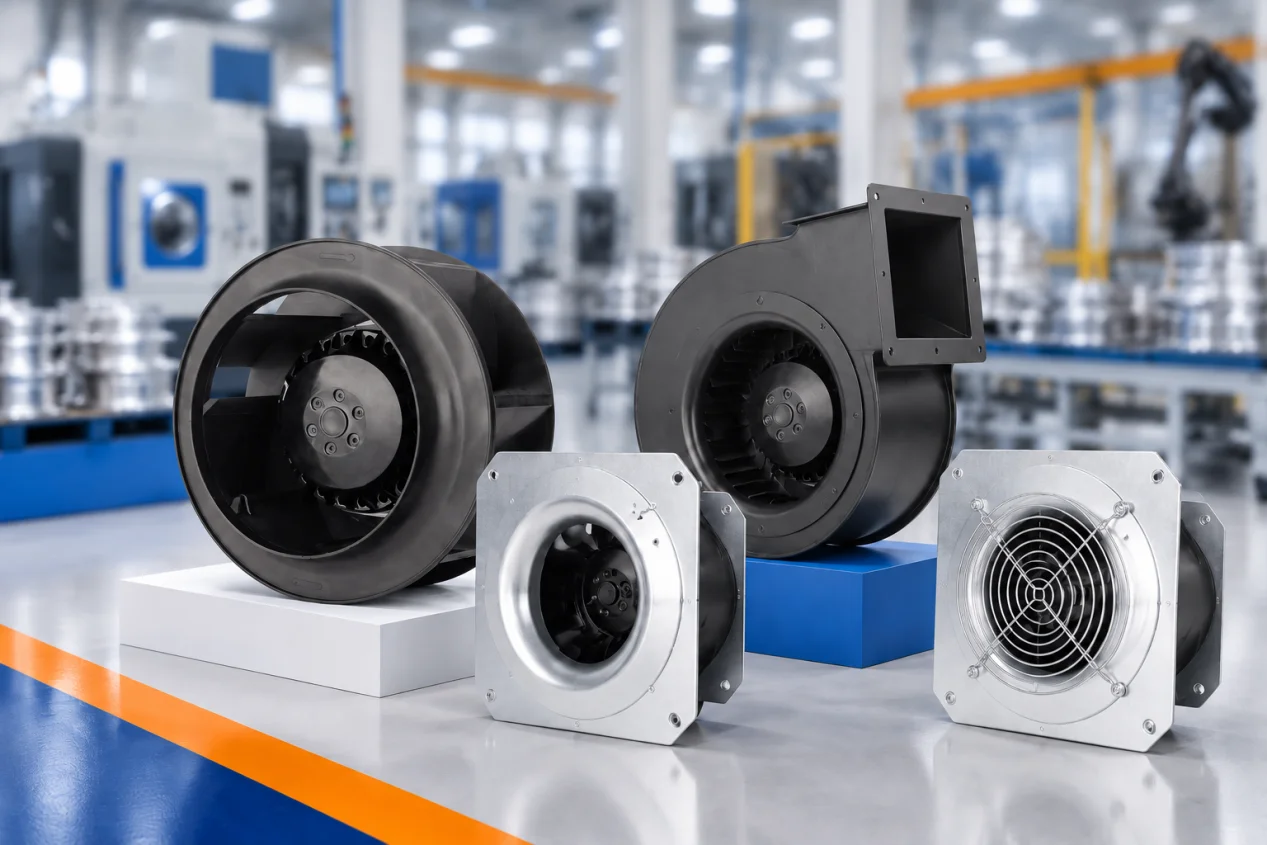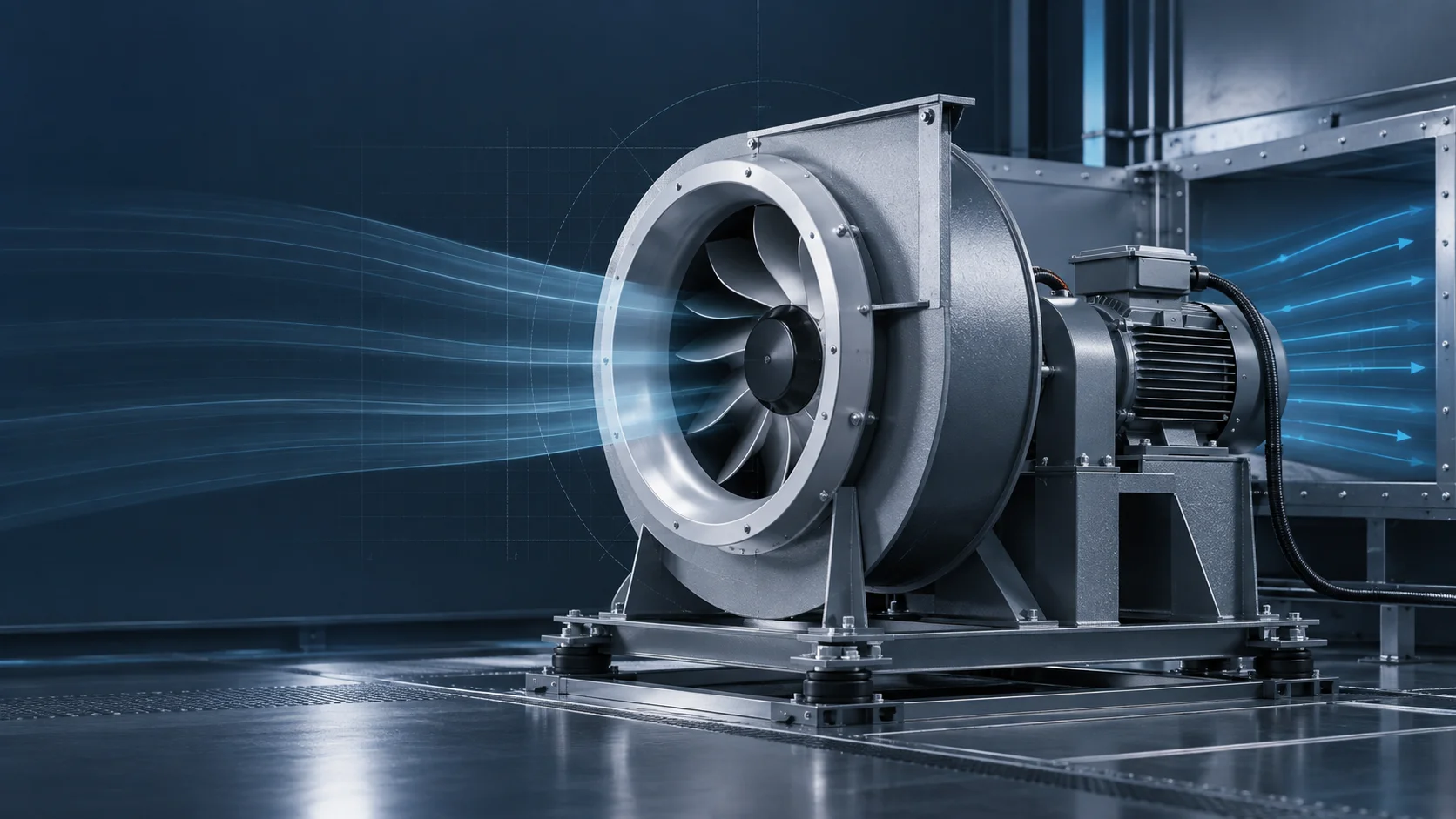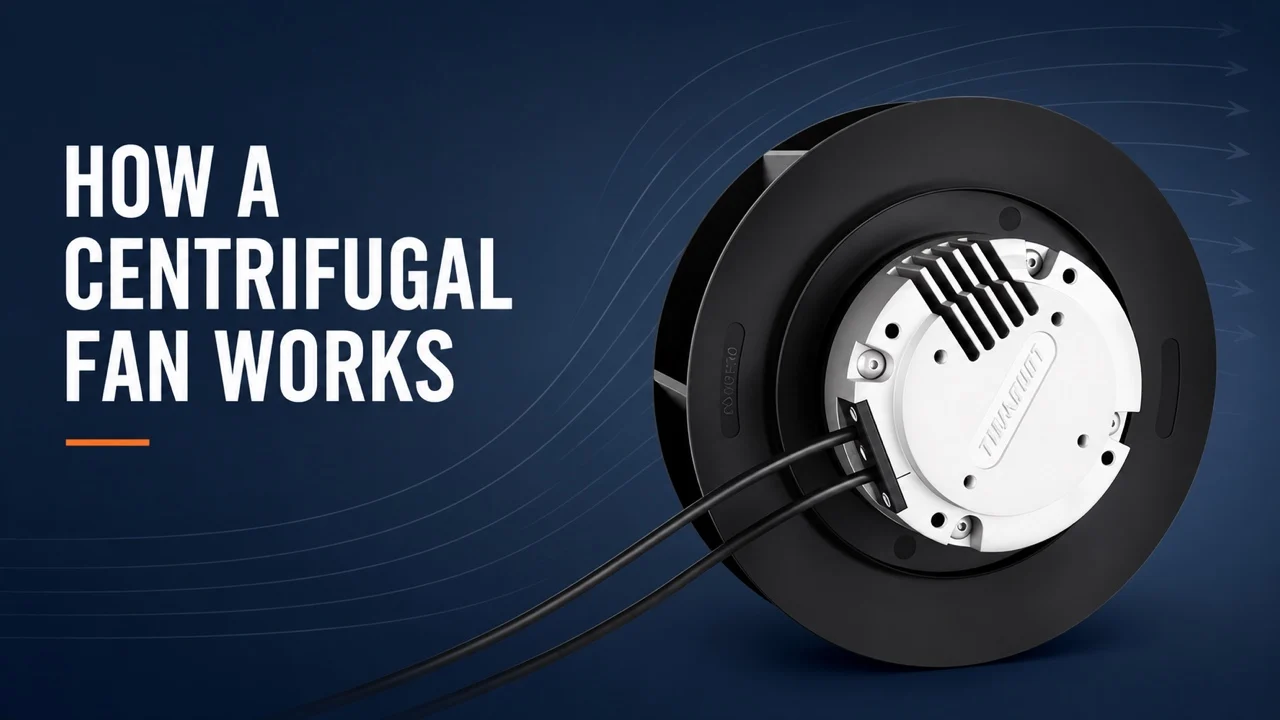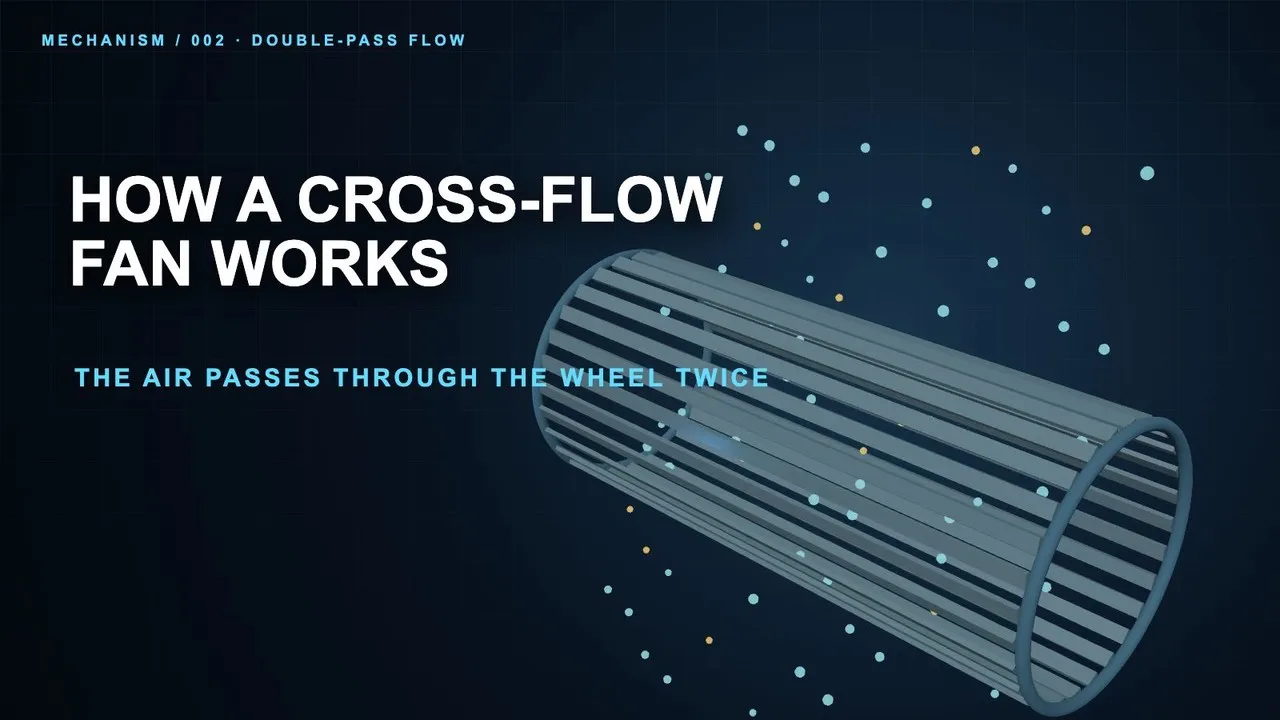
What the OEM specified
A major HVAC OEM needed 10,000 axial fans a year for condenser units, in two sizes, with PA66-GF fan blades specified by name.
That last part is unusual. Customers normally give us a duty point and leave material to us. So a mandated choice is worth checking rather than simply accepting.
The two sizes
- A 500mm model moving 11,000 m3/h on 380V three-phase at 60Hz.
- Next, a 400mm model moving 4,100 m3/h on 220V single-phase at 60Hz.
- Meanwhile both needed an ambient range of -30C to +60C.
- Both ship as complete assemblies, with guard grille and integrated AC motor.
- Finally, CE marking for European market access.
Two supplies across two sizes means different tiers of their product line. Meanwhile the volume tells you cost per unit was under real pressure.
Why PA66-GF fan blades were the right call
The motor choice was straightforward. An AC external rotor motor is compact and cheap at this volume. Furthermore it matched what they asked for.
Certainly an EC variant would give efficiency and integrated control. However, the AC solution met their cost target. At 10,000 units a year, that target is not negotiable.
Checking the mandated material
Many standard axial fans use pressed sheet metal. Consequently PA66-GF fan blades deserved a proper look rather than a nod.
They held up on three counts. First, corrosion resistance beats untreated steel, which matters on a condenser sitting outdoors. Second, they weigh considerably less, so start-up torque falls and the bearings carry less stress.
Third, and this is the volume argument, PA66-GF fan blades suit injection molding well. At 10,000 units a year, a molded blade gives repeatability that a pressed one struggles to match.
What we contributed
Here the material was theirs. Meanwhile the blade profile was ours.
So we developed a five-blade profile reaching both airflow targets inside the specified power envelopes. The 400mm pairs with a 550W single-phase motor; the 500mm with a 1500W three-phase one.
Meanwhile both carry Class F insulation and a thermal cutout, covering the +60C ambient limit and a jammed rotor alike.
What it cost
Temperature headroom, in principle. PA66-GF fan blades have a lower ceiling than steel. Consequently the +60C limit here is a material limit rather than a motor one.
For a condenser that is comfortable. However, an application seeing hot exhaust rather than ambient points back at metal. So check which case you are in before copying this choice.
Technical Specifications
Two models sit below, one per size. Notably the supplies differ, which is a product tier decision rather than an engineering one.
Model: LWAA4D400S-6PEB-01-00
| Parameter | Value |
|---|---|
| Nominal Voltage | 220 VAC |
| Frequency | 60 Hz |
| Speed | 1500 RPM |
| Power Input | 550 W |
| Max Airflow | 3940 m³/h / 2318 CFM |
| Noise Level | 54 dB(A) |
| Protection Class | IP55 |
| Insulation Class | Class F |
| Operating Temperature | -30°C to +60°C |
| Life Expectancy (L10) | 30,000 Hours @ 40°C |
Model: LWAA4D500S-6PEB-01-00
| Parameter | Value |
|---|---|
| Nominal Voltage | 380 VAC |
| Frequency | 60 Hz |
| Speed | 1720 RPM |
| Power Input | 1500 W |
| Max Airflow | 11,000 m³/h / 6471 CFM |
| Noise Level | 83 dB(A) |
| Protection Class | IP55 |
| Insulation Class | Class F |
| Operating Temperature | -30°C to +60°C |
| Life Expectancy (L10) | 30,000 Hours @ 40°C |
Technical Documentation
The following documents were generated and approved as the final deliverables for this project phase. They provide all necessary data for system integration and procurement.
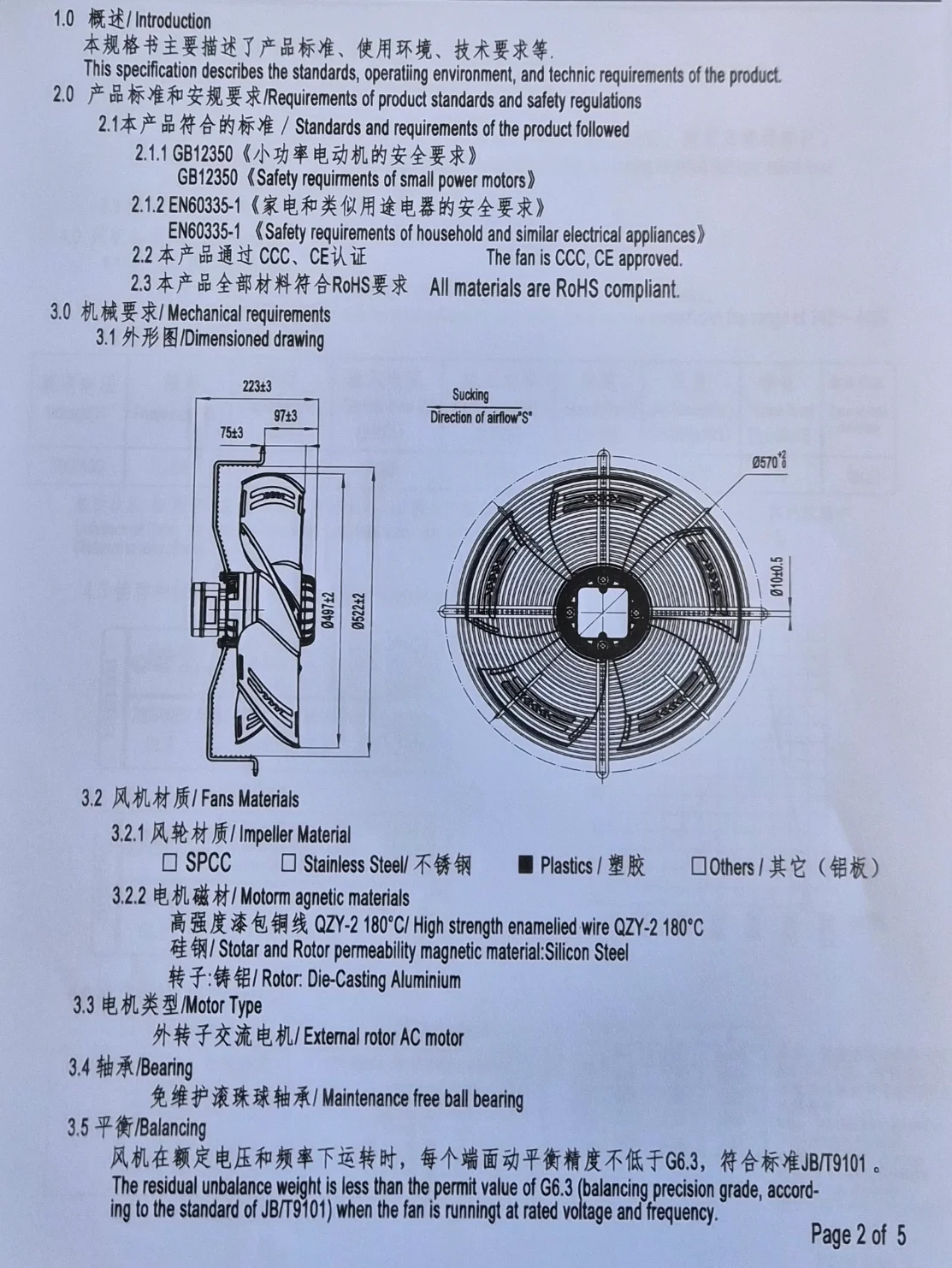
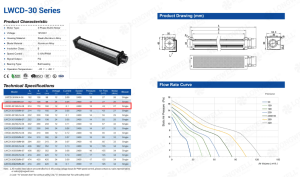
The engineering drawing for the 500mm model (LWAA4D500S) provides critical dimensions for mechanical integration into the customer’s equipment chassis.
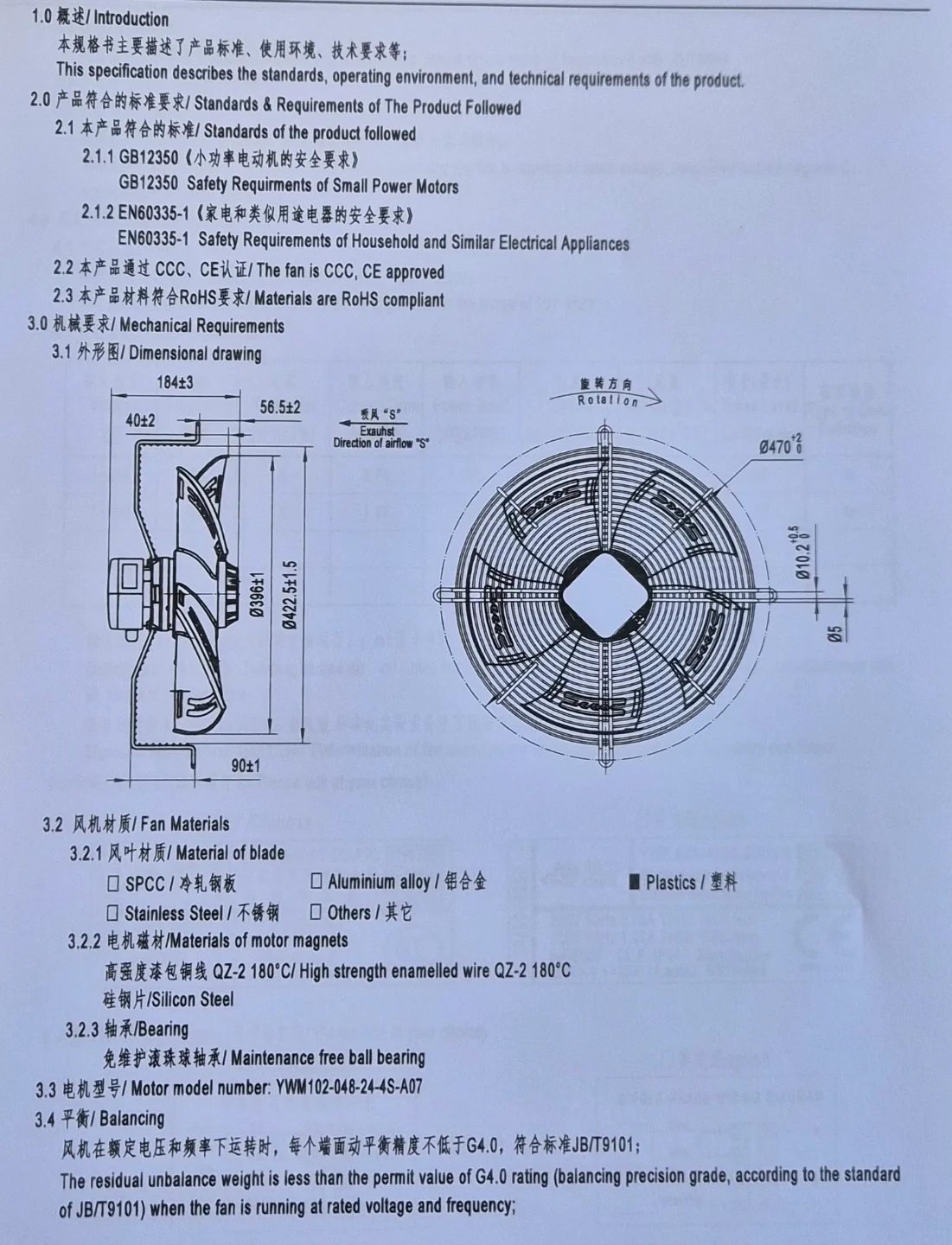
The drawing for the 400mm model (LWAA4D400S) details its compact external rotor motor design and mounting hole pattern.
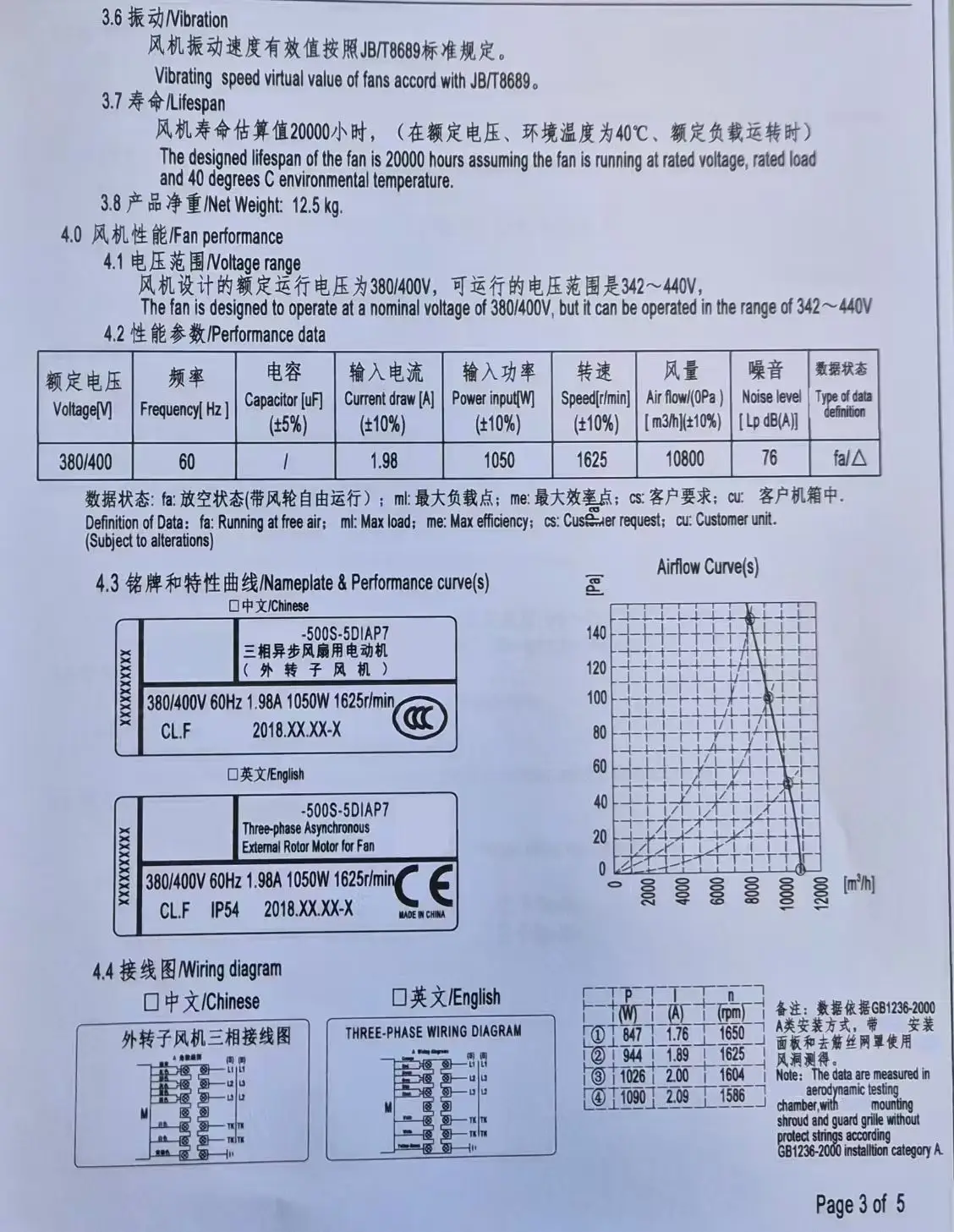
- LWAA4D500S-6PEB-01-00 Specification Sheet (PDF): Final approved specification sheet for the 500mm model, containing performance curves, electrical data, and certifications for engineering review.
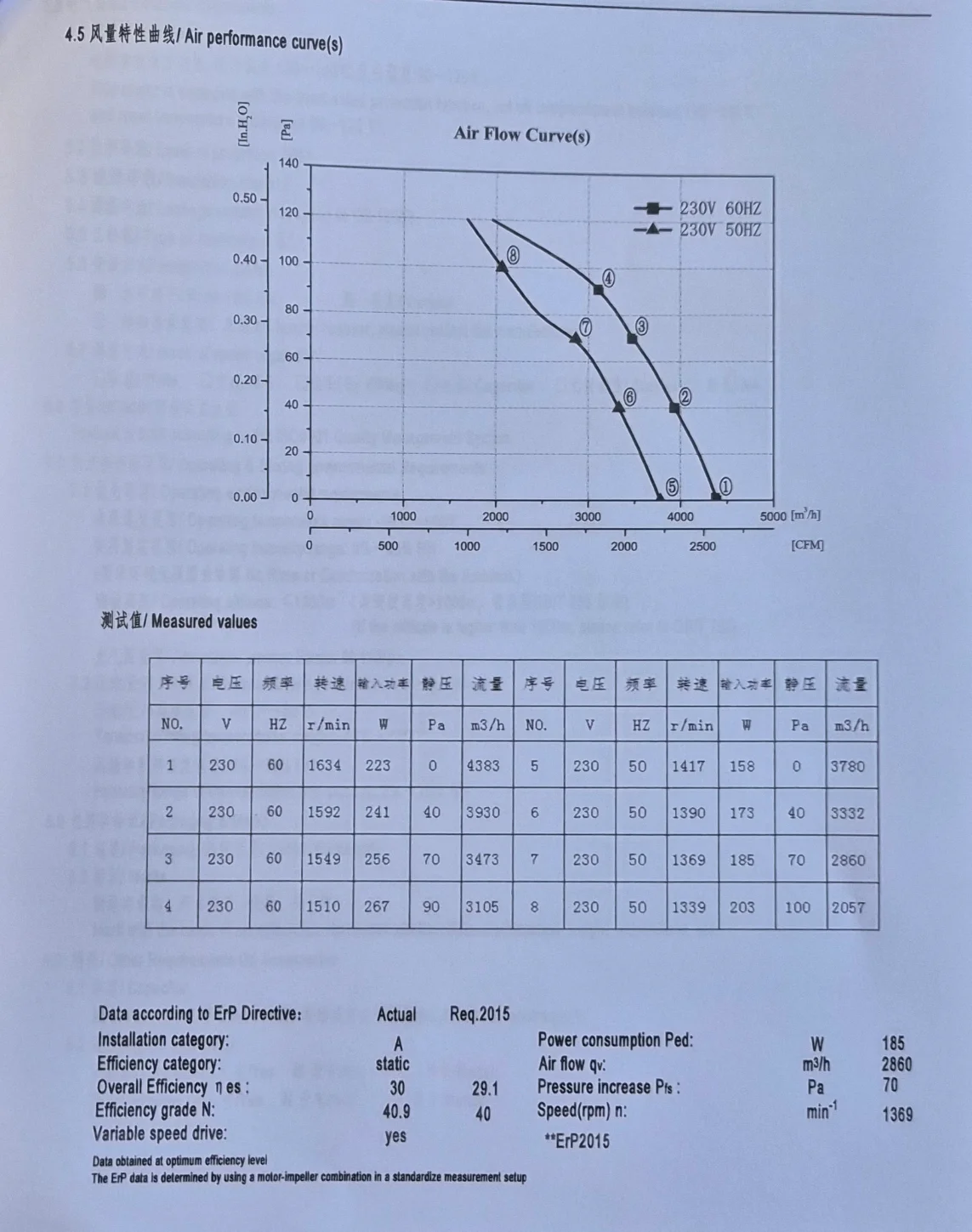
- LWAA4D400S-6PEB-01-00 Specification Sheet (PDF): Final approved specification sheet for the 400mm model, providing all technical data required by the OEM’s design team.
- LWAA4D400S-6PEB-01-00 Source File (DOCX): The source document for the 400mm fan specification, useful for integration into the customer’s internal documentation systems.
Choosing a blade material
Blade material gets decided by habit more often than by analysis. So these are the questions worth asking.
- Ask what the airstream temperature is, not the ambient. PA66-GF fan blades handle condenser duty comfortably. A fan pulling hot exhaust is a different case, and that is where metal earns its place.
- Weigh corrosion against your actual environment. Untreated steel corrodes outdoors and near coasts. Glass-filled nylon does not, and it avoids the coating cost that treated steel adds.
- Let volume inform the choice. Molded blades repeat well and get cheaper with quantity. Pressed blades suit lower volumes where tooling cannot be amortised. Below a few thousand a year that calculation often reverses.
- Consider rotor weight, not just blade cost. A lighter rotor means lower start-up torque and less bearing load, which shows up as service life rather than as a line on the quotation.
See our axial fan range, the condenser fan section, or fan blades. Appliance safety follows IEC 60335-1.
Questions about this project
When is pressed steel the better blade material?
Where the airstream runs hot, where the blade may be struck by debris, or at low volumes that cannot justify mold tooling. Steel tolerates temperature and impact better. It also corrodes outdoors unless treated, and it is heavier, so the choice follows the environment rather than a preference.
What is the temperature limit on glass-filled nylon blades?
It depends on grade, loading and duration rather than on a single number. On this project the assembly is rated to a +60C ambient, which suits condenser duty. If your airstream carries heat rather than ambient air, send us the actual temperature and we will confirm the material against it.
Does a lighter rotor really extend bearing life?
Yes, in two ways. Lower mass means less radial load on the bearings continuously, and lower inertia means less stress during each start. On equipment that cycles frequently, the second effect matters more than people expect.
Why two different supplies for two fan sizes?
Because they serve different tiers of the same product line. Smaller units sell into installations with single-phase power available; larger ones go where three-phase exists. Keeping one fan family across both means one supplier and one set of documentation rather than two.
Technical Documentation & Resources
Got a duty point you need matched?
Tell us the airflow, the pressure and the space you have. Then we mark your duty point on a tested curve and send the drawing back. Meanwhile samples and custom spec sheets take up to 90 days. Since 1990 we have supplied OEMs across HVAC, refrigeration and industry.
Browse Related Products:
🏆 ISO 9001 / ISO 14001 / ISO 45001 | CE (TÜV) | UL/ETL | ATEX Zone 21/22 | AMCA 210/211 / ISO 5801 tested