If you’re sourcing fans for industrial or commercial applications, one of the most common questions you’ll encounter is: how do I choose the right fan blades? For engineers, OEM designers, HVAC professionals, and project managers, selecting the correct fan blade material is essential for maximizing efficiency, longevity, and reliability industrial cooling systems.
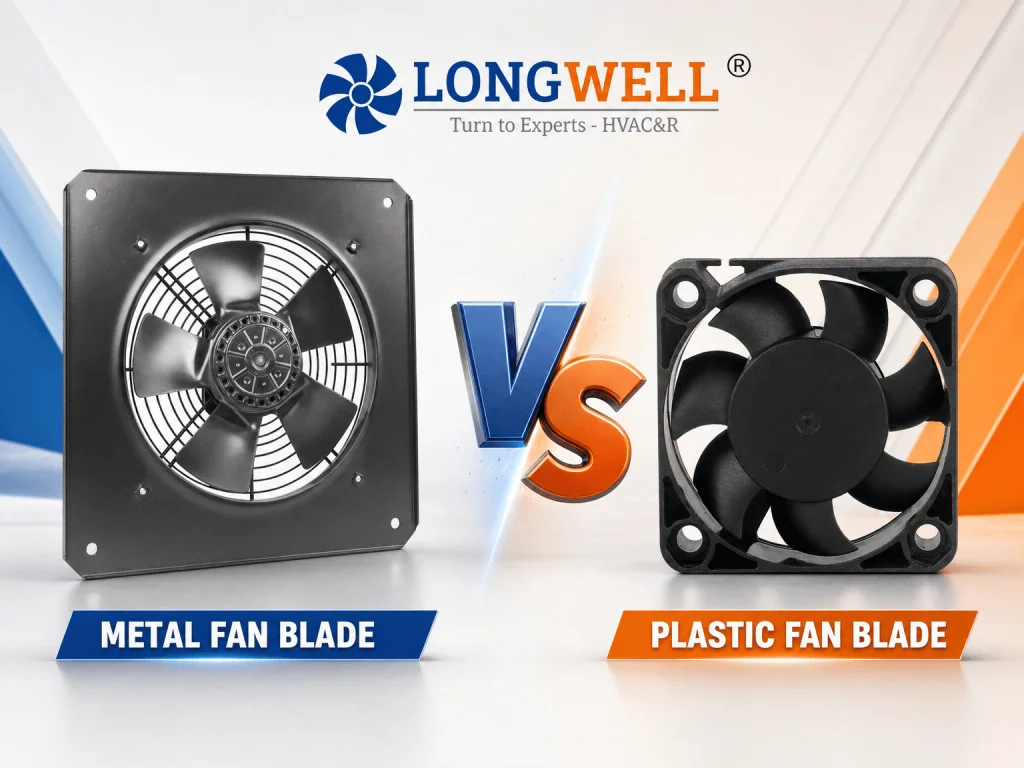
Both metal fan blades and plastic fan blades have unique advantages and in many industrial setups, they are used complementarily to meet diverse operational requirements. This guide explores their differences and helps you make an informed decision for your next industrial or commercial fan project.
What is Fan Blade for Industrial Cooling?
A fan blade is one of the most crucial components in an industrial fan, which is responsible for generating and directing airflow within the fan assembly. Its design, size, and material directly influence the air motion pattern, volume, and velocity, which in turn affects the overall efficiency and effectiveness cooling and ventilation in industrial or commercial environments.
Fan blades are not just simple rotating surfaces – they are engineered with precise aerodynamic profiles to optimize airflow while minimizing energy loss. The blade pitch, curvature, and number of blades all contribute to achieving the desired airflow performance.
The material of the fan blade plays a critical role in its durability, noise level, energy consumption, and suitability for specific environmental conditions. We’ll explore more in the following content.
Understanding Fan Blade Materials
Choosing the right fan blade material is critical for the performance, durability, and energy efficiency of industrial cooling systems. Fan blades are typically made from metal or plastic, each designed to meet specific operational requirements and environmental conditions. Understanding metal fan blades and plastic fan blades will help you select the best option for your application.
What is Metal Fan Blade?
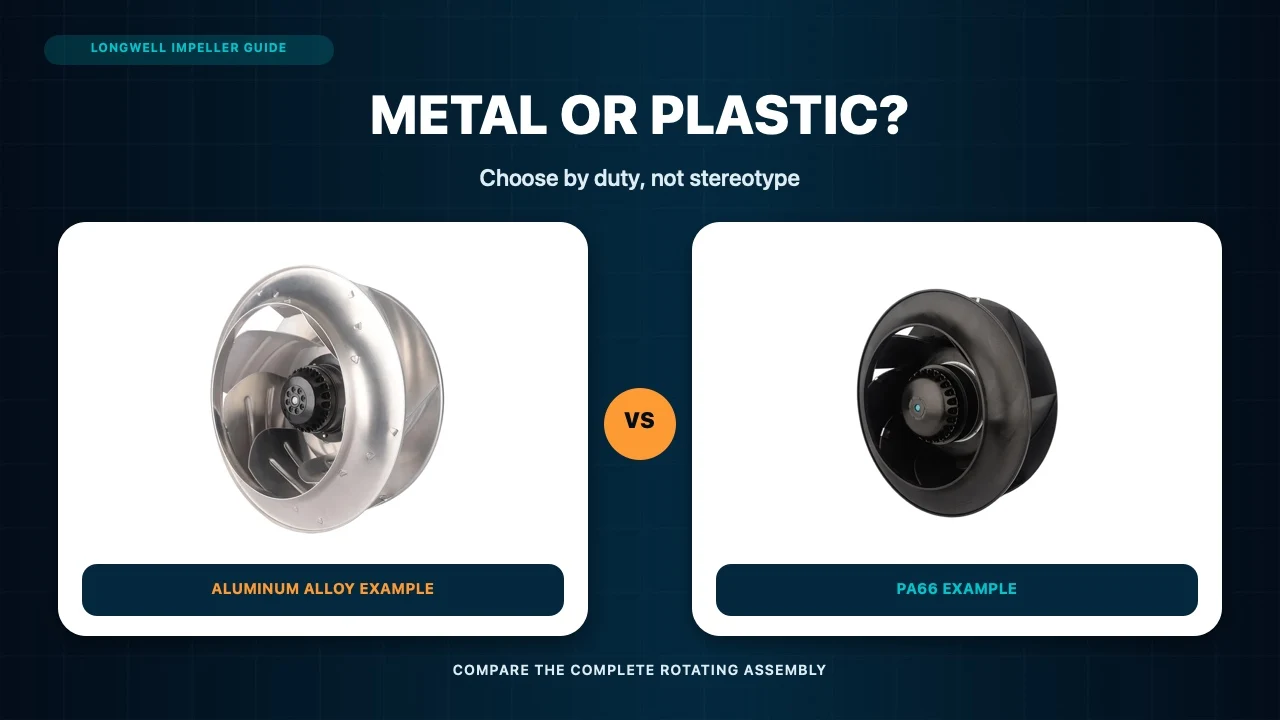
Metal fan blade is usually made from aluminum, steel, or galvalume-coated alloys. These blades are engineered for heavy-duty industrial applications where strength, heat resistance, and durability are very essential. Metal fan blades are usually used in industrial HVAC, manufacturing facilities, and high-temperature industrial environments, where they can handle high airflow volumes and resist mechanical stress.
Pros of Metal Fan Blades
- Excellent Heat Resistance: Metal fan blades can maintain structural integrity and operate reliably in high-temperature environments or fluctuating environments. They are ideal for industrial applications where heat can compromise the performance of other materials.
- Heavy-duty Resistance: Designed to handle high airflow and pressure, metal blades are perfect for demanding industries like oil and gas, power generation, and large-scale manufacturing, where robust ventilation and cooling are critical.
- High Durability: Metal fan blades are highly resistant to wear, deformation, and mechanical impact, making them suitable for continuous operation under harsh conditions.
- Long Lifespan: With proper maintenance, metal fan blades offer years of consistent operation and reliable performance, reducing downtime and replacement costs over time.
Cons of Metal Fan Blades
- Corrosion Risk: Metal blades can rust or corrode in humid, moist, or chemically aggressive environments. They often require protective coating or stainless steel construction to maintain longevity but the cost can be higher.
- Higher Fan Noise Levels: Due to their weight and rigidity, metal fan blades can generate more vibration and acoustic energy, resulting in higher operational noise compared to lighter plastic fan blades.
- Heavier Weight: The increased mass of metal blades may require stronger motors and can slightly increase energy consumption, particularly in large systems.
- Higher Initial Cost: Typically more expensive than plastic alternatives.
What is Plastic Fan Blade?
Plastic fan blades are made from ABS, polycarbonate, or nylon, designed for lightweight, corrosion-resistant, and quieter operation. These blades are ideal for moderate-duty industrial cooling, HVAC systems, and environments with high humidity.
Pros of Plastic Fan Blades
- Lightweight: Plastic fan blades are significantly lighter than metal, which reduces motor bearing and energy consumption. This makes them ideal for applications where energy efficiency and ease of installation are important.
- Corrosion-Resistant: Plastic is naturally immune to rust and resistant to moisture, chemicals, and other corrosive environments. This makes plastic blades especially suitable for chemical manufacturing, HVAC systems, and humid or coastal facilities.
- Quieter Operation: Plastic fan blades generate less noise and vibration than metal blades, providing a quieter working environment.
- Cost-Effective: Plastic blades have a lower upfront cost and are easier to manufacture and install.
Cons of Plastic Fan Blades
- Lower Durability: Plastic blades are generally less suitable for extreme heat or heavy mechanical stress, with most materials starting to deform above approximately less suitable for extreme heat or mechanical stress. Most plastic fan blades can deform above 80°C (176°F).
- Potential Deformation: May warp or crack under high-temperature or high-pressure conditions.
- Limited Heavy-Duty Use: Plastic is not ideal for very large industrial fans or systems with high airflow and pressure requirements, where metal blades would be more reliable.
- Size constraints: Maintaining the structure of large plastic fan blades will require additional reinforcement.
- Shorter Lifespan: Typically wears out faster under demanding industrial environments.
Metal Fan Blades vs Plastic Fan Blades Comparison Chart
Explore the detailed comparison chart below to understand the key differences between metal and plastic fan blades, helping you make an informed decision.
| Features | Metal Fan Blades | Plastic Fan Blades |
| Material | Aluminium, steel, galvalume-coated alloys | ABS, polycarbonate, or nylon |
| Weight | Heavier | Lighter |
| Temperature Range | Excellent; suitable for high-heat environments | Limited temperature range |
| Blade Size | Have larger blades | Typically have smaller blade sizes |
| Corrosion Resistance | Requires coatings or stainless steel to prevent rust | Naturally resistant to moisture and chemicals |
| Noise Level | Can be louder due to weight and vibration | Quieter due to light weight and flexibility |
| Upfront Cost | Higher upfront cost | Lower upfront cost |
| Best Applications | Industrial HVAC, oil & gas, aerospace, high-heat machinery, Heavy-duty industrial fans, high airflow, high-temperature processes | Electronics cooling, HVAC, food processing, medical, telecom, HVAC systems, chemical plants, moderate-duty cooling |
Metal Fan Blades vs Plastic Fan Blades for Industrial Cooling
Choosing between metal and plastic fan blades for industrial cooling depends on several key factors, including operating environment, airflow requirements, noise considerations, and budget. Both materials have advantages and limitations, and the best choice often depends on your specific application.
Metal fan blades are ideal for heavy-duty, high-temperature, and high-pressure industrial systems, providing durability and long-term reliability.
Plastic fan blades are perfect for moderate-duty applications, particularly where corrosion resistance, lightweight design, and quieter operation are priorities.
In many complex industrial settings, a combination of metal and plastic fan blades is often employed to achieve the best balance of durability, efficiency, and noise control, ensuring optimal performance and energy savings across the industrial cooling system.
How to Choose the Right Fan Blade for Your Industrial Cooling?
Selecting the right fan blade is essential for ensuring maximum cooling efficiency, energy savings, and long-term reliability in industrial systems. To make an informed decision, consider the following factors:
- Operating Environment: Choose metal fan blades for high-temperature or abrasive conditions, and opt for plastic fan blades for moist, humid, or chemically aggressive environments.
- Airflow Requirement: Metal fan blades are stronger and maintain performance under heavy loads, ideal for large industrial fans with high airflow or pressure needs. Plastic blades are lighter, easier to install, and provide sufficient airflow for moderate applications.
- Medium-duty fans: Plastic blades are lighter, easier to install, and provide sufficient airflow for moderate applications.
- Noise Consideration: Plastic fan blades are ideal for noise-sensitive environments, and metal blades are more suitable for heavy-duty environments.
- Cost: If your industrial cooling system allows for a higher upfront investment, metal fan blades are ideal due to their durability and long-term reliability. If your project has a limited budget, plastic fan blades provide a cost-effective solution while still delivering adequate performance for moderate-duty applications.
- Hybrid Solutions: In complex industrial systems, combining metal and plastic fan blades can provide the best balance of durability, energy efficiency, and noise reduction.
LongWell Fan – Your Reliable Fan Manufacturer
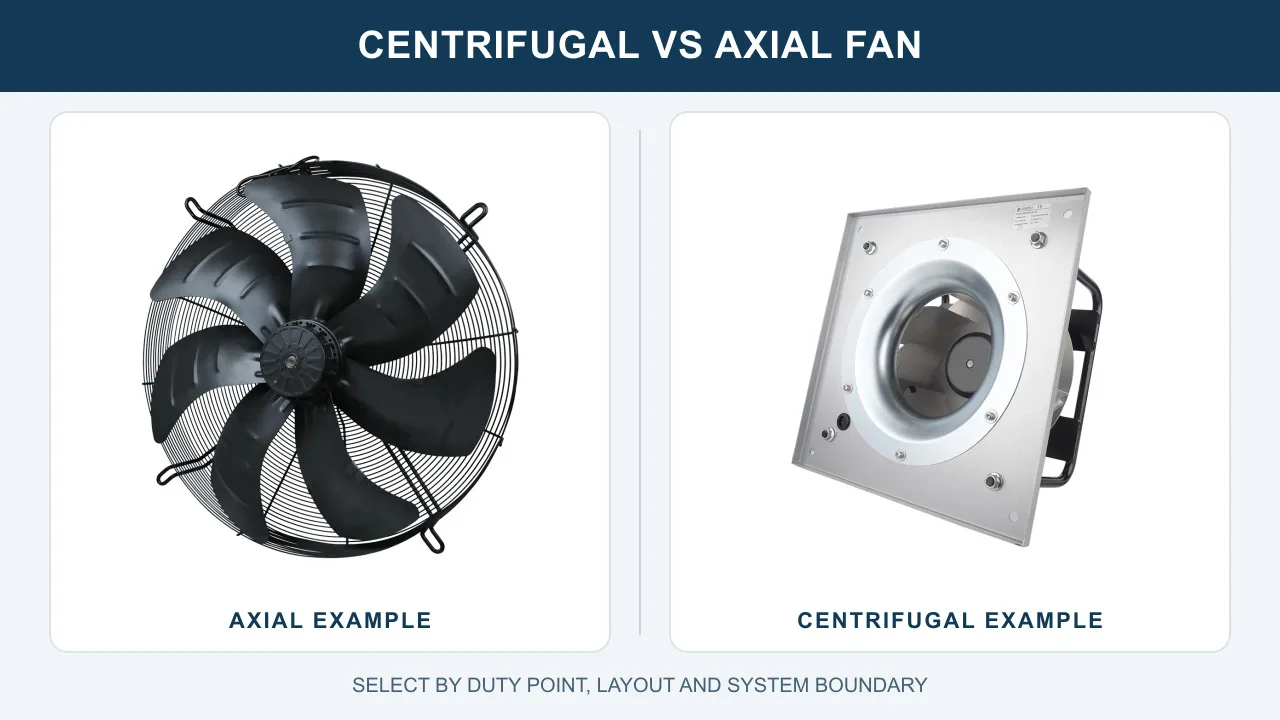
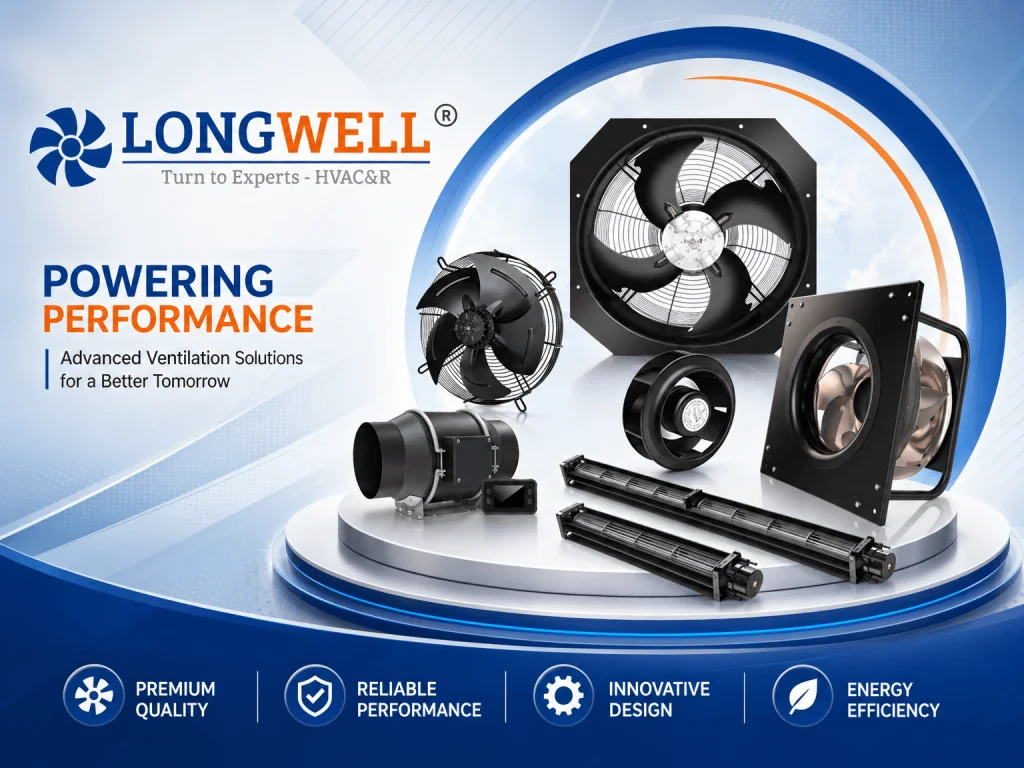
At LongWell, we specialize in providing high-quality industrial and commercial fans, designed to deliver maximum performance, durability, and energy efficiency. Whether you need metal or plastic fan blades, backward-curved or forward-curved designs, axial or centrifugal fans, we offer solutions tailored for HVAC systems, industrial cooling, and specialized ventilation applications.
With years of experience, our team ensures that every fan meets stringent quality standards, helping engineers, OEM designers, and facility managers achieve optimal airflow, reliable operation, and cost-effective performance.
FAQs
1. Are metal fan blades better than plastic fan blades?
Neither material is inherently better than the other – they are designed for different operational environments.
2. Are there different types of fan blades?
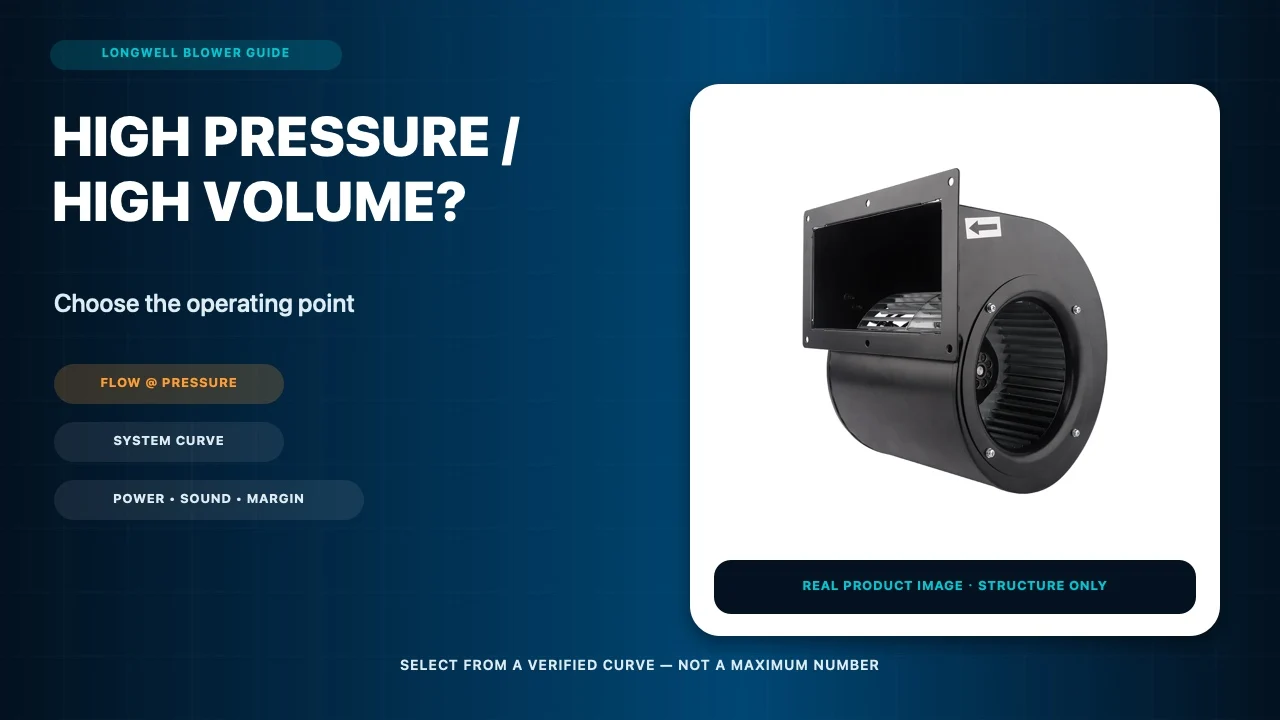
Fan blades can also be classified into backward-curved blades and forward-curved blades. The former is designed for low-pressure and high-volume airflow systems and the latter is used for high-pressure industrial fans.
3. Can plastic fan blades be used in high-temperature industrial applications?
Plastic fan blades are generally not recommended for high-temperature environments, as most plastics can soften or deform above 80°C (176°F).
4. Can metal and plastic fan blades be used together?
Yes, in many complex industrial systems, a combination of metal and plastic fan blades is used. This hybrid approach allows you to balance durability, noise reduction, corrosion resistance, and energy efficiency, optimizing performance for systems with multiple zones or varying environmental conditions.
Choose the right fan blade
Longwell manufactures 72 fan blades and impellers in-house. Send airflow, static pressure and voltage — an engineer replies with a matching model, performance curve and price within one working day.