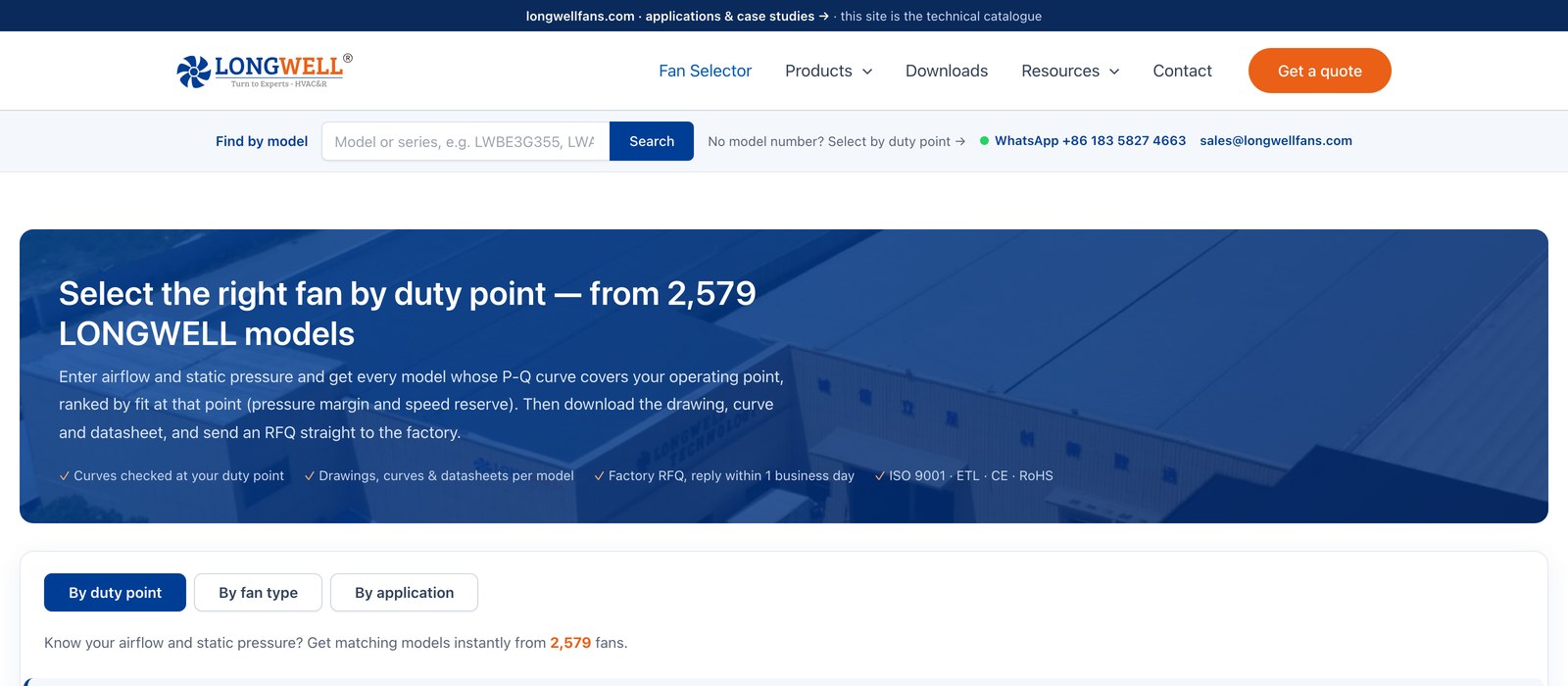
Fan selection software has been part of the specifying engineer’s toolkit for thirty years, and most fan manufacturers offer one. The programs differ in detail, but they share a shape: a desktop application or a registered web portal, opened when a project is already well defined, producing a submittal for one manufacturer’s range. That shape suits a consultant preparing a formal submittal. It suits an OEM designer, a buyer checking a replacement, or an engineer comparing three sizes on a Friday afternoon much less. This article sets out what the second group needs from a selection tool, and how the LONGWELL Fan Selector was built around those needs.
Two kinds of users, two kinds of tools
A classic selection program answers the question which fan from this range meets this specification, and produce the documents for it. It assumes the user has time to install or register, knows the product families, and will accept a form on the way to the curve. The result is thorough and slow.
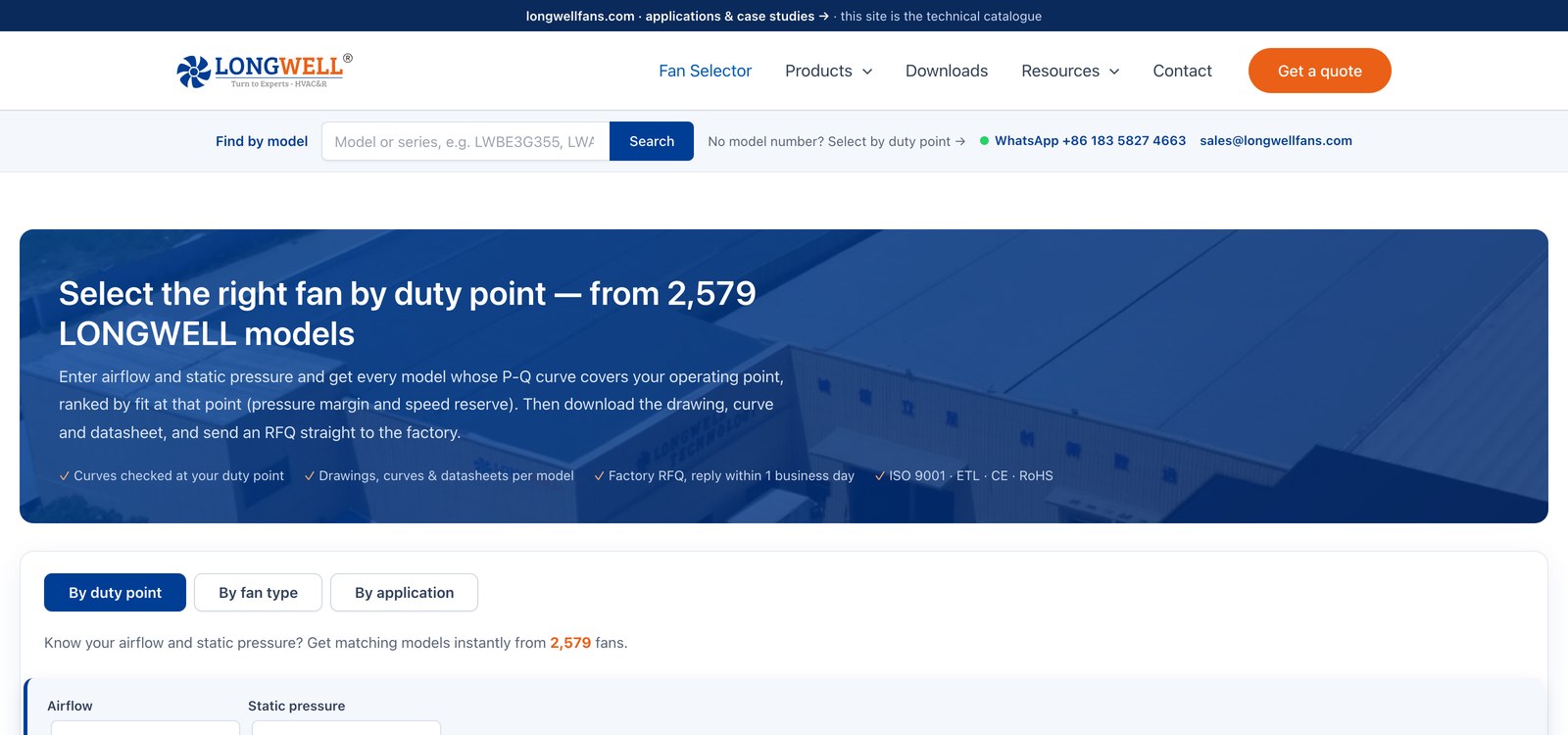
The other question is faster and more common: what covers 8,000 m³/h at 600 Pa, what is the margin, and can I have the drawing now. It is asked from a browser, sometimes on a phone, often by someone who will not enter a company e-mail address to find out whether a range is even relevant. An online selector that answers in seconds, with no gate, is the right tool for that question.
What engineers need from an online fan selector
| Need | Why it matters | How the LONGWELL selector handles it |
|---|---|---|
| Instant access | A tool behind an install or a registration is opened once a month; a tool in a browser tab is opened ten times a day. | Runs in the browser, no account, no e-mail gate. |
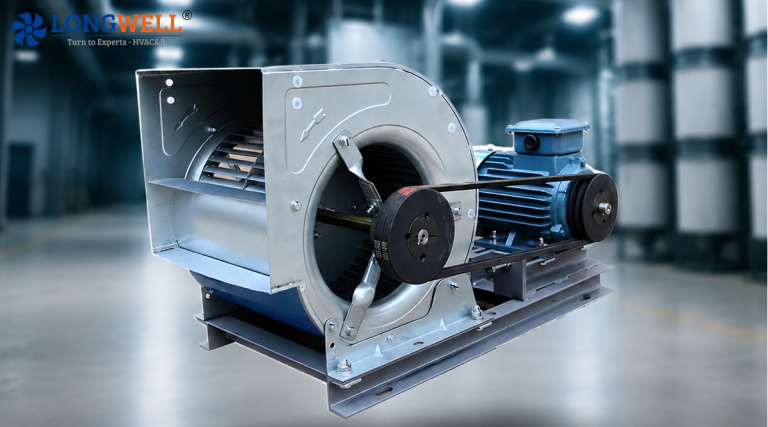
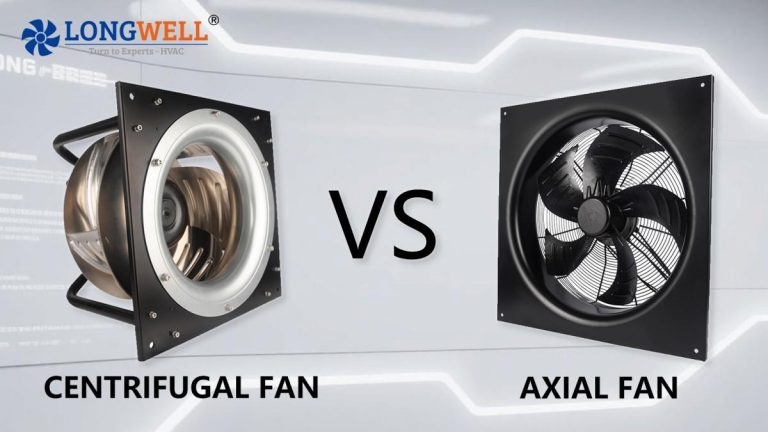
| Duty-point search across the whole range | Browsing families one by one hides the cross-family alternatives (an EC plug fan next to an AC forward-curved blower). | Every model with a curve is checked at the entered airflow and static pressure; 2,579 models, Ø25–1,000 mm. |
| Margin, not just pass/fail | A fan that barely clears the point stalls when the filter loads; a fan with 80 % reserve is oversized and inefficient. | Pressure at point and margin on every row; 10–25 % highlighted as the comfort band, under 8 % flagged tight. |
| Speed grades and reserve | EC fans are selected on a grade, and a grade in reserve is a design safety factor that costs nothing. | Lowest grade that clears the point, with the number of higher grades in reserve. |
| Honest data labels | A digitised catalogue curve and a wind-tunnel curve are not the same evidence. | Each result says digitised or measured; models without a curve are marked as nameplate estimates. |
| Files without a detour | The drawing is needed the moment a candidate looks right. | Datasheet, catalogue page, dimensional drawing and wiring diagram on the model page; STEP and SolidWorks on request. |
| Something to send to colleagues | Selections are approved by people who were not in the tool. | PDF selection report and a shareable summary link, both without a form. |
| A path to a quotation | The selection is only useful when it turns into a sample or an order. | RFQ list with quantities, one submission, engineer reply within one business day. |
Where a desktop program still wins
Fairness matters here. A full selection program offers things an open web selector does not: acoustic spectra per octave band, system-effect corrections, motor and drive sizing inside the tool, and automatically generated submittal sheets in a house format. If you are producing a formal submittal for a consultant-led tender, you will want those, and a LONGWELL engineer will produce them for the shortlisted model on request. The online selector is designed to get you to that shortlist in a minute, not to replace the engineering review.
How the LONGWELL selector ranks a result
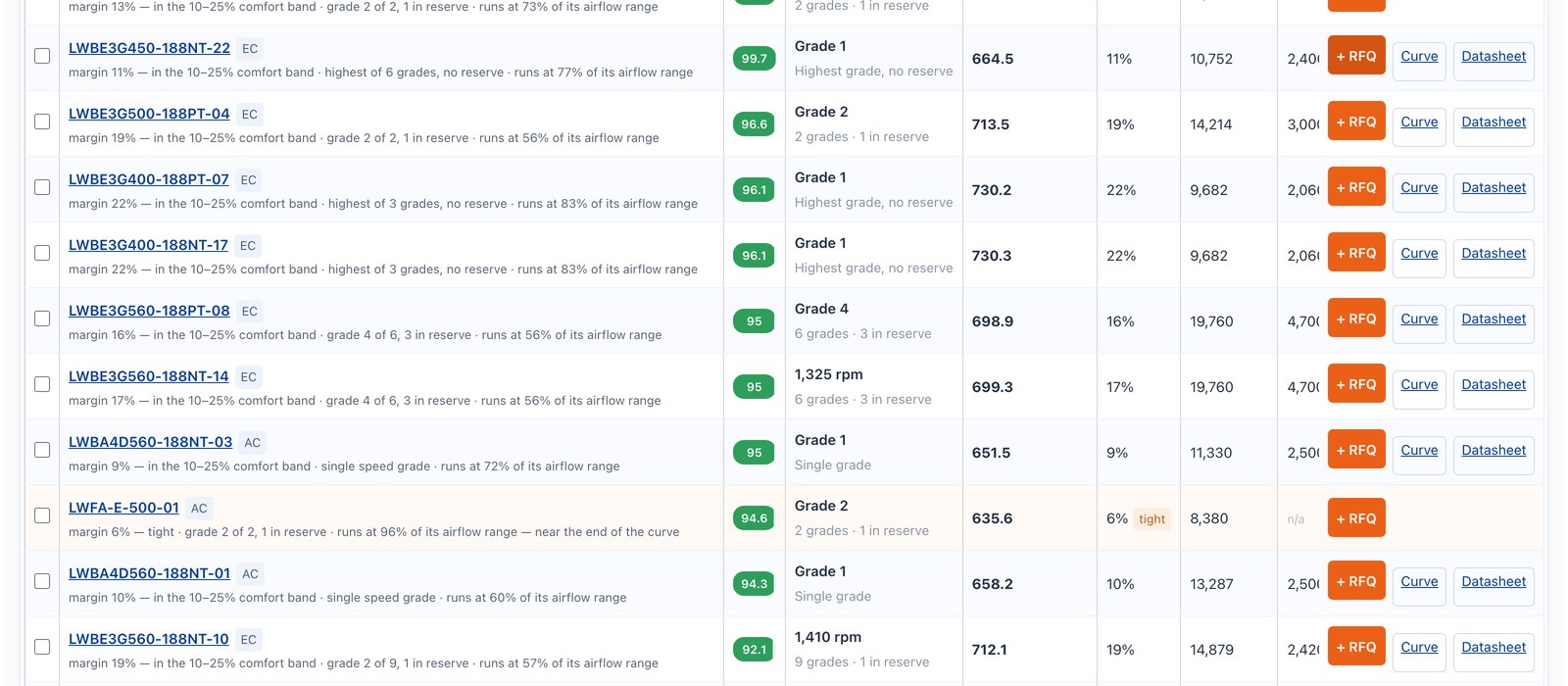
The match score on each row is built from three parts: the static-pressure margin at your point (best inside 10–25 %), the number of speed grades left in reserve, and a penalty for fans that would run at a small fraction of their airflow range, because an oversized fan runs off its efficient region and is louder and dearer than it needs to be. The score sorts the list; the columns next to it let you disagree with it. Every model page then repeats the check on the curve itself, so the number you quote in a design note comes from the curve, not from a summary.
What the selector does not claim
- Curves are digitised from the published catalogue at standard air unless labelled measured. The system resistance depends on your ductwork; confirm the operating point on site or with the engineer.
- Power and noise in the table are nameplate values, not values at your duty point.
- Where a model has no curve in the library, the pressure at your airflow is estimated from the nameplate maxima and marked as an estimate.
Those limits are printed on the results page, because a selection tool that hides its assumptions costs more time later than it saves now.
Try it on a real duty point
Type an airflow and a static pressure at select.longwellfans.com. If you prefer to read the method first, the guide How to select a fan by duty point walks through the same example step by step, and Fan curve margin explained covers the 10–25 % rule in detail. Have a competitor’s model number instead of a duty point? The cross-reference guide maps it to the LONGWELL equivalent.