Recovering Fan Motor Clearance in a Cooling Unit
The client needed a 30mm cross flow blower for a small control box. Their space was very tight. The old motor fouled the metal cover, leaving no fan motor clearance. Its square coil stuck out too far for the fan motor clearance available. So they asked us to recover the fan motor clearance. In short, they did not want to change the box size. Meanwhile, the cooling needs were strict. The system needed exactly 71 m³/h of air.
Also, the fan had to spin at 2400 RPM on a 230V rail. The unit runs indoors. Therefore, local safety rules asked for a 95°C heat switch. This switch had to sit inside the motor. Finally, the gaps inside had to meet standard rules like GB/T 13933-2008. We had to rethink the design. First, we checked the old fan frame. Next, we looked at how heat moves near the motor. Every change had to keep the unit cool and safe.
Choosing the Best Motor Angle
We looked at two ways to fix the 30mm cross flow blower. First, we thought about moving the whole motor to the other side. However, we quickly dropped this idea. Flipping the fan means building new metal brackets. Furthermore, it changes how air hits the parts that need cooling. Instead, we chose to turn the motor in place. This approach keeps the fan blade right where it is. So, we focused just on the motor block.
Turning the 30mm Cross Flow Blower Motor
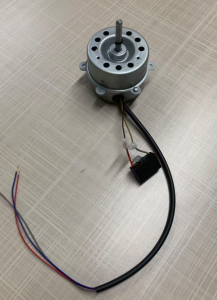
The AC motor has a square shape. Next, we found we could rotate it by 90 degrees. This turn moves the large coil away from the metal wall. Meanwhile, the fan shaft stays still. First, we built a 3D model of this change. Then, we checked the new fit on the client’s step file. The new angle worked perfectly.
Even so, turning the motor brought a new issue. It changed where the power wires come out. Consequently, the old wire path failed. Therefore, we made the cables 500 mm long. The longer wires easily reach the main power board. We also put the 95°C heat switch inside the coils. In short, the client got the same 71 m³/h airflow. We tested it to AMCA 210-16 methods. Finally, they achieved a materially lower cost by keeping their old metal box.
Technical Specifications
| Voltage | 230 V |
| Frequency | 50 Hz |
| Speed | 2400 RPM |
| Air Volume | 71 m³/h |
| Bearings | Ball bearing |
| Input Power | 11 W |
| Cable Length | 500 mm |
| Impeller Dimensions | 30 mm diameter, 300 mm length |
| Thermal Protection | 95°C protector included |
The table below lists the 30mm cross flow blower specs. The 71 m³/h air volume row is the most vital metric. It shows the new motor angle keeps the cooling power exact.
Reference: AMCA 210 covers the test method behind these figures.
Technical Documentation
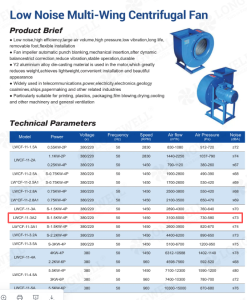
Original Specification Drawing
This first sheet shows the starting fan size and power needs.

Next, this CAD image shows how the motor turns to fit the box.
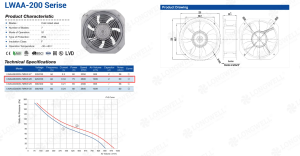
Final Specification Drawing
Finally, this drawing shows the new 500 mm wires for the factory floor.
How to Fix a Tight Chassis
Do you have a 30mm cross flow blower that hits your metal case? Next, try these tips before you buy a new fan.
- First, measure the gap from the fan motor to your wall.
- By contrast, remember that many AC motors have square or odd shapes.
- Therefore, turning the motor often fixes the fit at a materially lower cost.
Related: Cross Flow Fans.
Common Questions
Q: Why does turning the motor change the wire exit? A: The coils sit fixed inside the motor shell. So, when you rotate the square motor by 90 degrees, the wire block moves too. Therefore, you must order longer wires, like the 500 mm leads we used here.
Q: Does the new motor angle lower the fan speed? A: No. The 230V AC motor still runs at 2400 RPM. Meanwhile, the internal magnets push the blade exactly as before.
Consequently, the 30mm cross flow blower still moves 71 m³/h of air. Q: What happens if the motor touches the metal case? A: A blocked motor gets very hot. Furthermore, it cannot shed its heat well. Therefore, we added a 95°C heat switch to stop the unit before it fails.
Technical Documentation & Resources
Fan motor clearance problems end in a mounting change, not a new fan. Browse our axial fans range, the AC axial fans section, or EC axial fans.
Have a Similar Fan Requirement?
Longwell’s engineering team delivers custom spec sheets and samples within 90 days. Since 1990, we have supplied EC fans and blowers to OEMs across HVAC, cold chain, data center, and industrial applications worldwide.
Browse Related Products:
🏆 ISO 9001 / ISO 14001 / ISO 45001 | CE (TÜV) | UL/ETL | ATEX Zone 21/22 | AMCA 210-16 / ISO 5801 tested
Choose the right cross flow fan
Longwell manufactures 495 cross flow fans in-house. Send airflow, static pressure and voltage — an engineer replies with a matching model, performance curve and price within one working day.