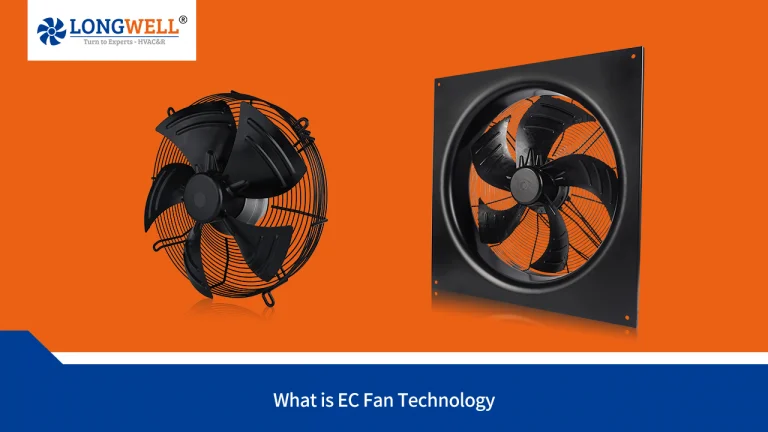
Effective ventilation is essential for maintain indoor air quality, controlling humidity, and remove in residential, commercial, or industrial environments. Both of duct fans and exhaust fans can move air, but they have distinct characteristics and applications. This article will explore the key differences between duct fans and exhaust fans, focusing on their functionality, installation method, static pressure, airflow performance, noise level, and energy efficiency.
What is Duct Fan?
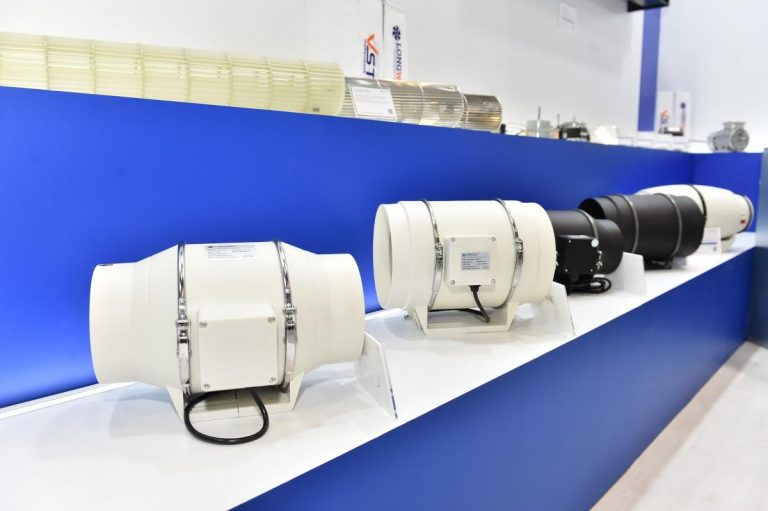
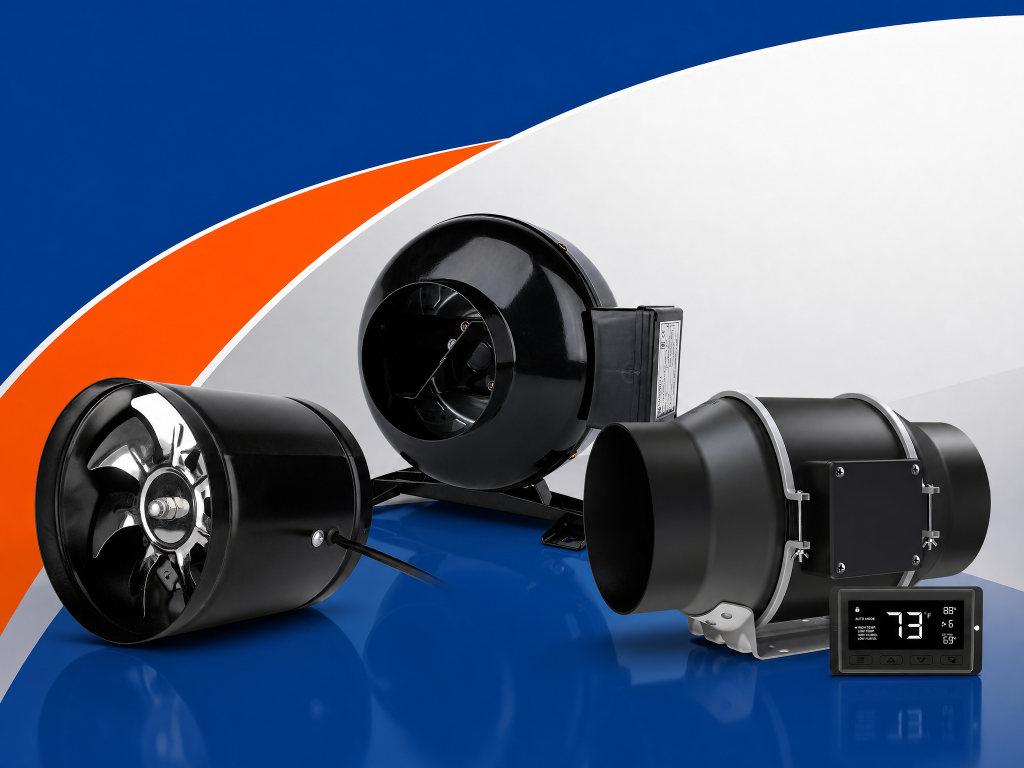
A duct fan, also known as inline fan or inline duct fan, is designed to be installed within a ductwork in ventilation systems. The duct fan is positioned along the ductwork to boost airflow where distance, bends, or system resistance have caused pressure to drop off.
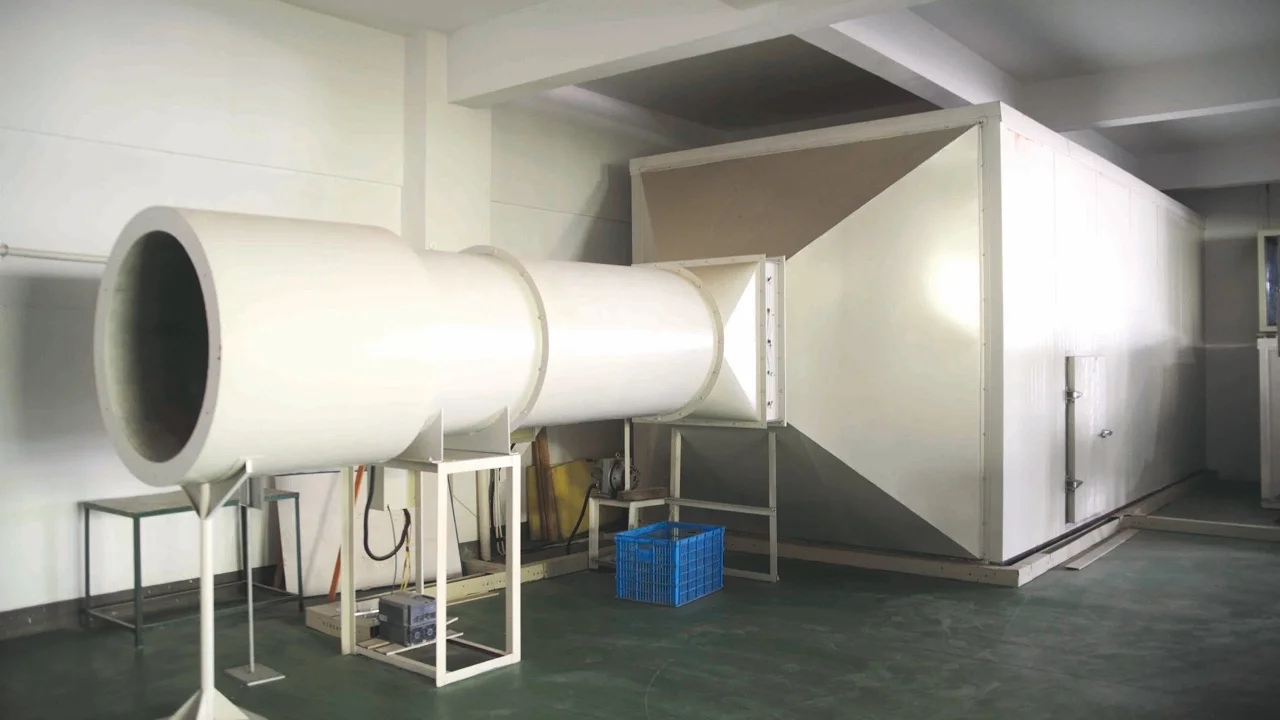
The duct fan usually contains a cylindrical housing, motor, and fan blades. The cylindrical housing can fit well with the ductwork, which plays an important role in long air distribution systems in HVAC systems, greenhouses, and commercial ventilation projects. Inline duct fans are powered by axial or mixed-flow impellers depending on the pressure requirements, and increasingly, by external rotor motors (such as EC motors) for speed control and energy efficiency. The installation is also straightforward: cut the duct, insert the fan, connect power, and the fan moves air. With duct fans, ventilation systems can overcome static pressure loss over long distance and keep the optimal airflow.
What is Exhaust Fan?
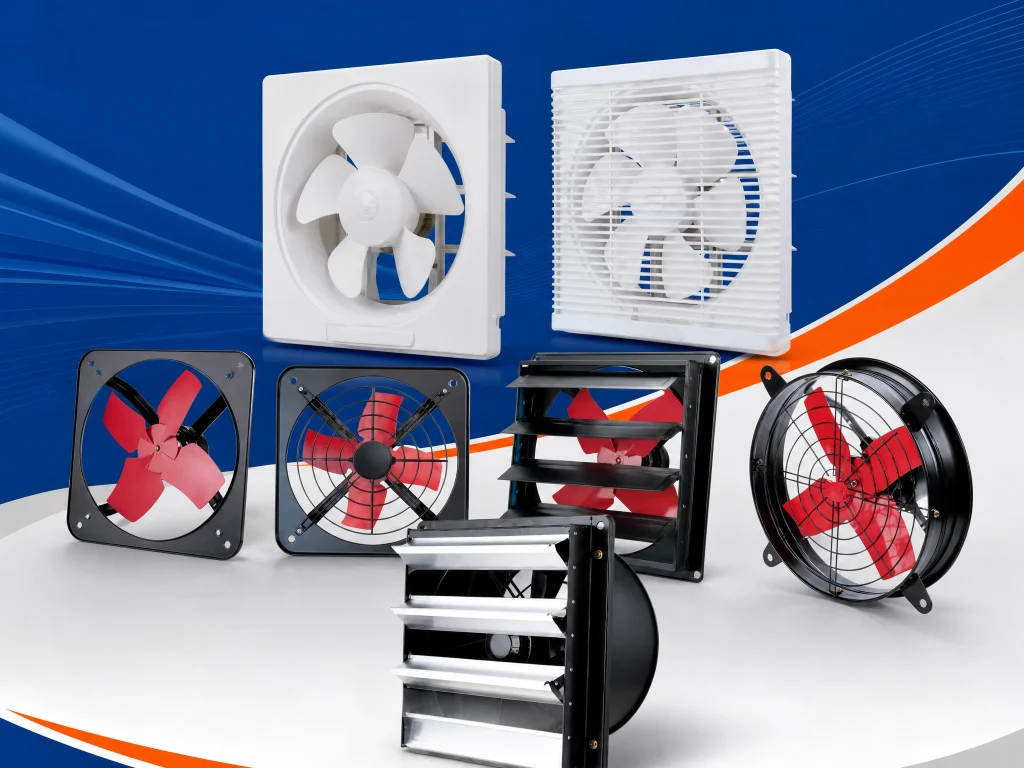
Unlike the duct fan, an exhaust fan is designed to be mounted on walls, ceilings, or windows. The job of the exhaust fan is to remove unwanted contaminated air such as humid, smoke, stale, and odors to help prevent the growth of mold.
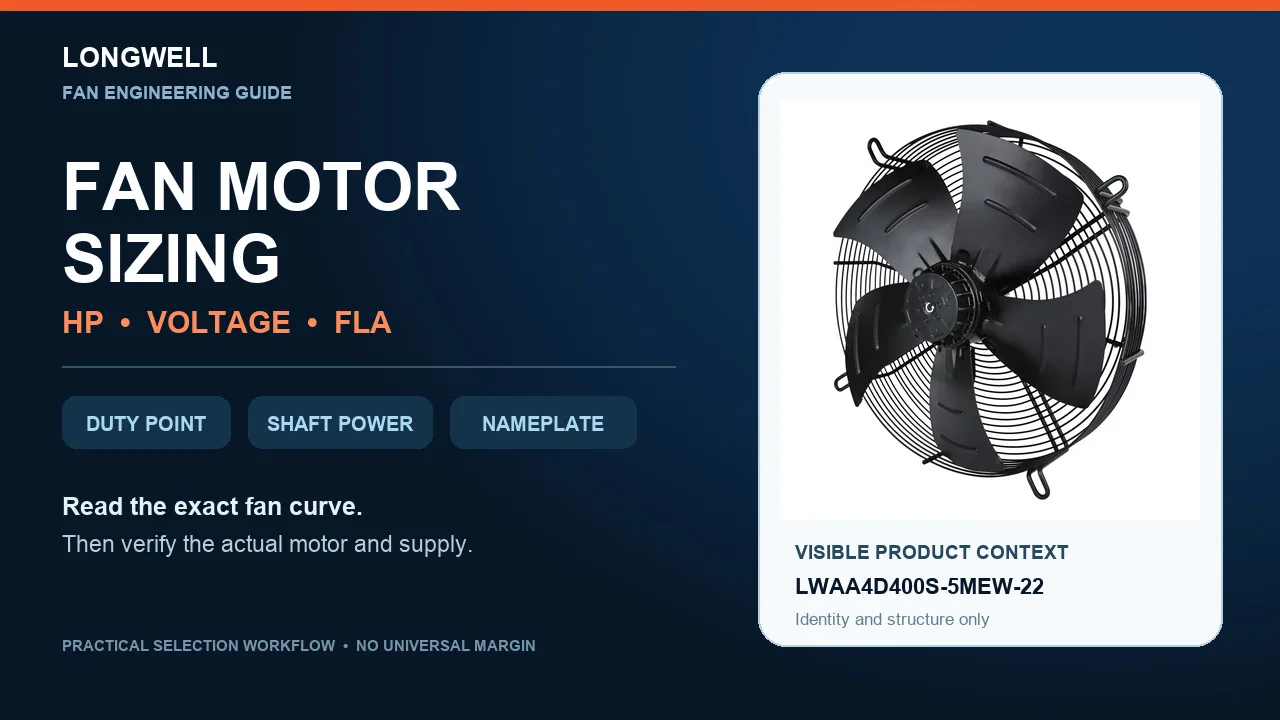
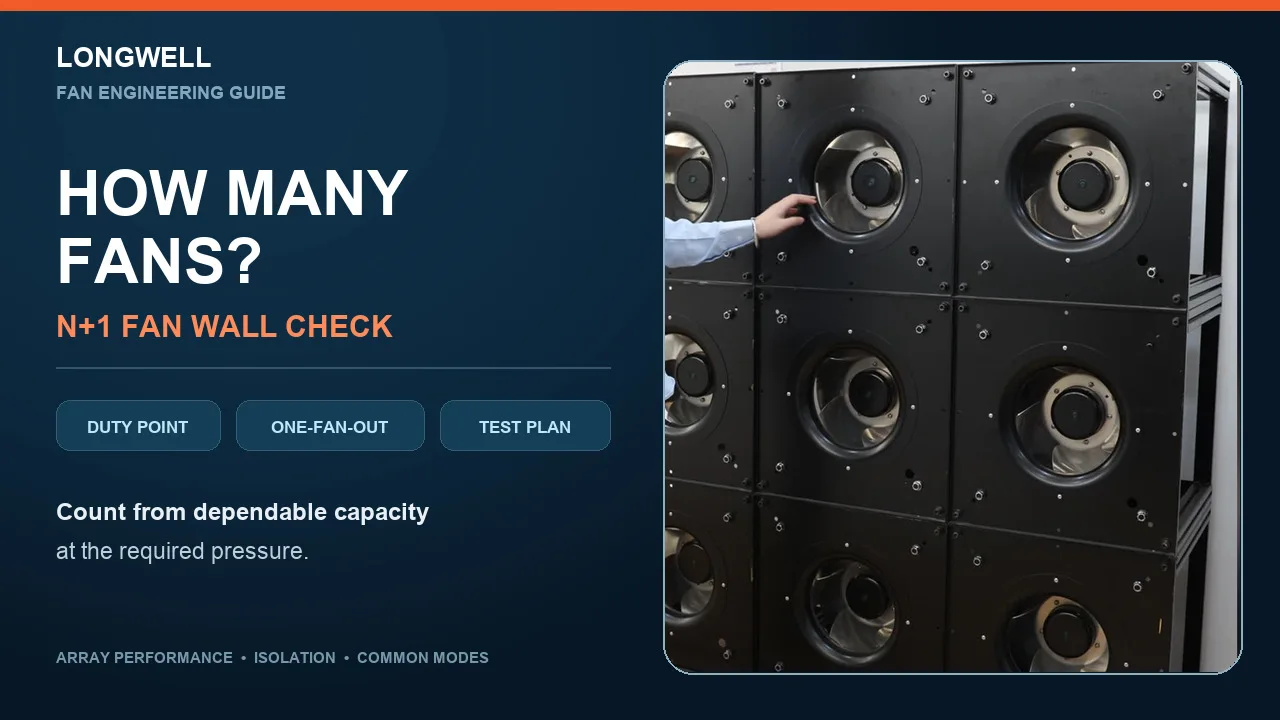
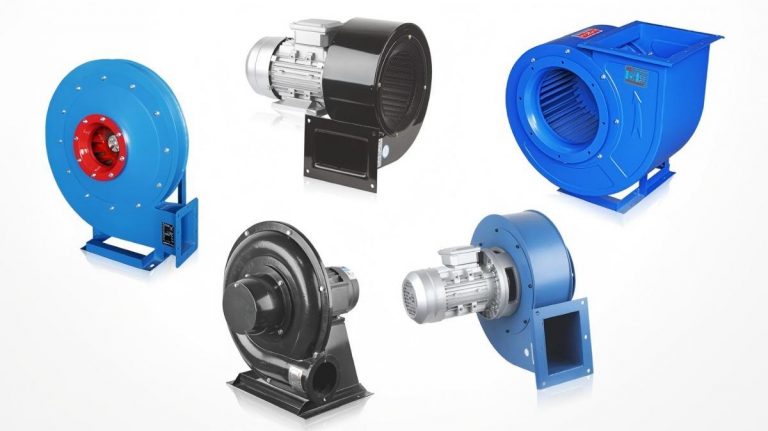
Exhaust fans also consist of motor, blades, and housing. The motor powers the blades to draw air from the room. These are the fans you see in bathrooms, laundry rooms, commercial kitchens, factory floors, and anywhere else that needs to get rid of air that doesn’t belong. They can be axial (typical in residential bath fans and window exhausts) or centrifugal (common in commercial and industrial setups where external wind pressure or longer discharge ducts add resistance).
Unlike duct fans, exhaust fans are designed with intake grilles, backdraft dampers, and weather-resistant housings — because one end of the fan lives outside, rain, wind, birds, and bugs are all part of the operating environment.
Duct vs Exhaust Fan: Key Differences
The short answer of differences between duct and exhaust fans is that the duct fan is designed to sit inside a duct fan and boost airflow along the path, and the exhaust fan is designed to mount at the wall, ceiling, or roof, and pull air out of the space. We’ll dive into more comparison details between duct and exhaust fans in the following content.
Functionality
Duct fans are used to move air through ductwork system especially in large HVAC projects. Duct fans allow for even air distribution in ventilation projects to keep consistent temperatures and air quality. Exhaust fans are used to remove humid, stale, or contaminated air from the specific area to keep indoor air quality and prevent moisture buildup. Unlike duct fans, exhaust fans focus on removing unwanted air rather than distributing conditioned air through a building.
Installation
Duct fans are installed inside the ductwork. They are usually positioned between duct sections, near air supply or return points, or other points to help overcome resistance in the ducts and maintain proper airflow. Duct fans are integrated into the existing duct system, so it requires modification to the duct structure to provide enough installation space, connections, and airflow alignment.
Exhaust fans are usually installed in the ceiling, walls, or other termination points based on the room layout or fan purpose. The installation of exhaust fans usually requires cutting openings through walls, ceilings, or roofs and adding extra vents or ducts to move unwanted air out of the room.
Static Pressure Capability
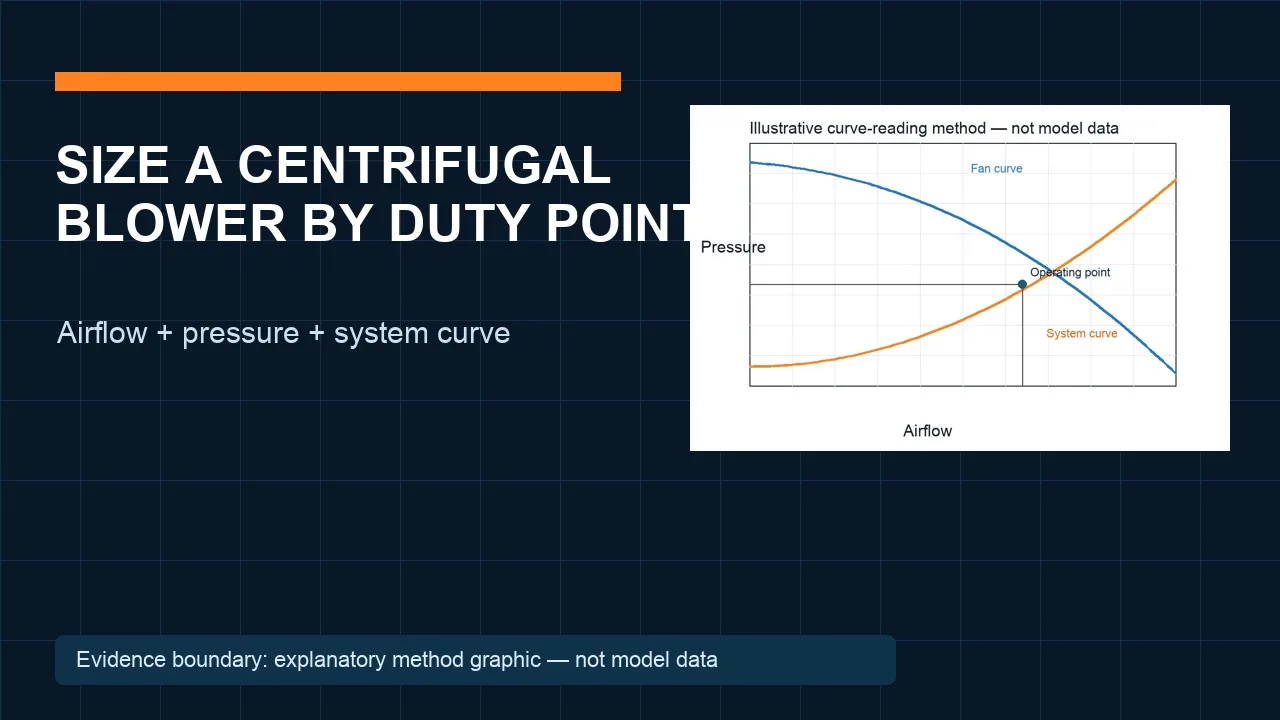
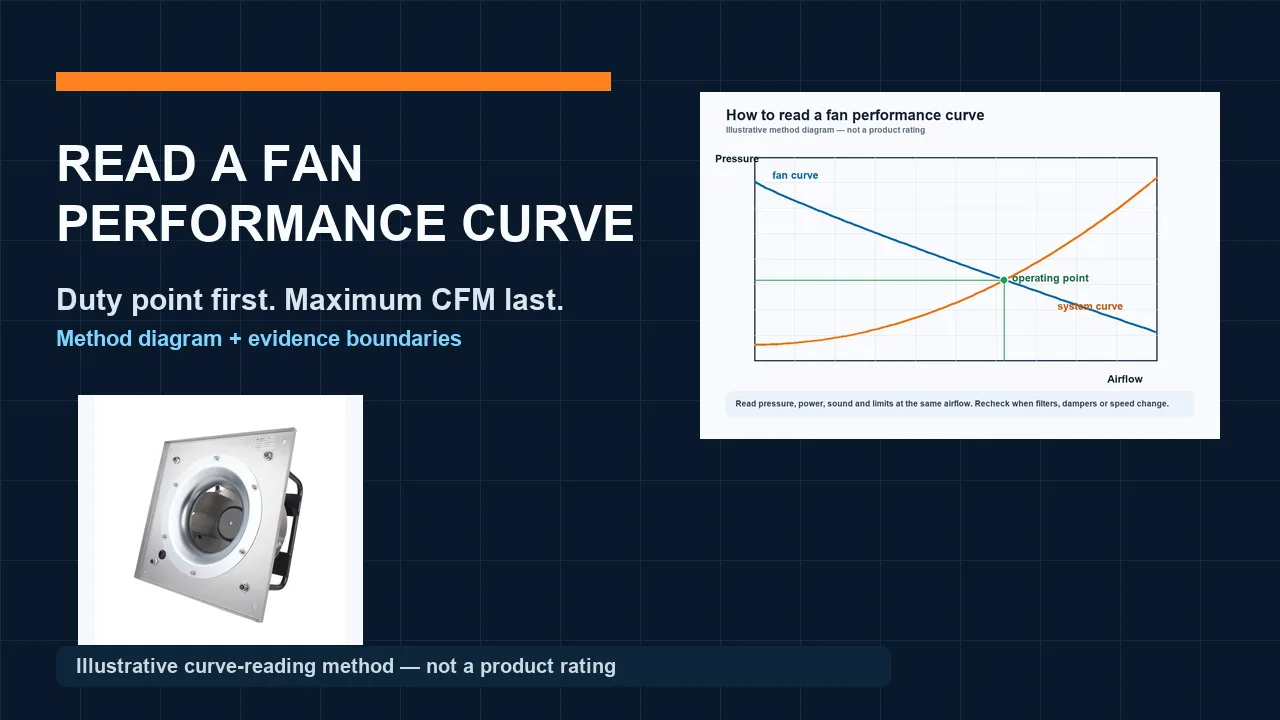
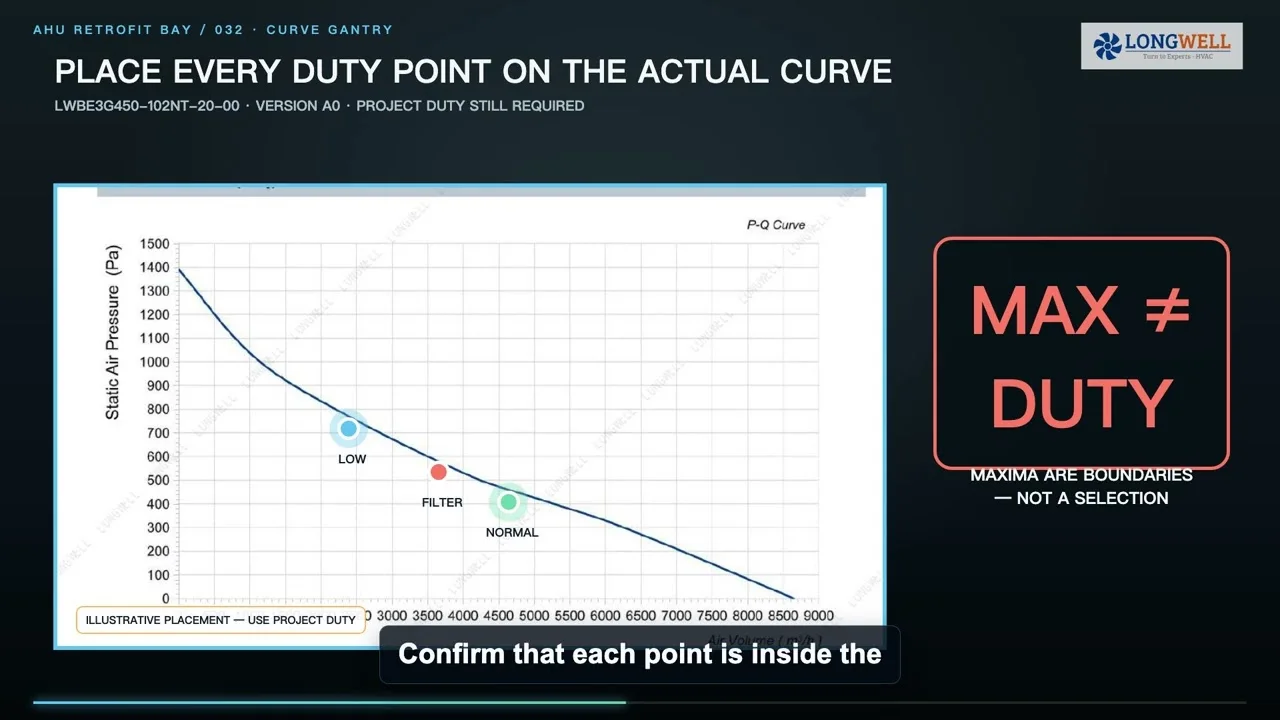
When air travels through the long duct, bends, heat exchangers, grills will increase, and the airflow performance will be reduced. Duct fans are built for low-to-medium static pressure. Most inline duct fans use axial or centrifugal impeller, which move large volumes of air efficiently. Typical operating range: 0.2 to 1.0 in. wg (50–250 Pa). Centrifugal duct fans are especially preferred in large HVAC system.
Exhaust fans cover a much wider pressure range because the category itself is broader. A residential axial exhaust fan might operate at 0.1–0.4 in. wg — barely more than free air. But a commercial centrifugal exhaust fan can generate 2–6 in. wg (500–1500 Pa) or higher, pushing through long discharge ducts, grease filters, HEPA stages, or wind-induced back pressure.
Airflow
Duct fans help overcome resistance over long duct runs to ensure that the conditioned air can reach its area. Duct fans can be used to both supply or return air based on different duct system configuration, providing stable and consistent air circulation throughout residential, commercial, and industrial ventilation systems.
By contrast, exhaust fans create a negative pressure by expelling air from indoor to outdoor. This air movement helps remove unwanted contaminants and encourage fresh outdoor air.
Noise Level
Duct fans are quieter in the occupied space. The motor and impeller live inside the duct, so the duct walls themselves act as an acoustic enclosure. What reaches the room is attenuated — typically 10–20 dB lower than an equivalent exhaust fan mounted directly in the ceiling. However, the actual noise performance of a duct fan depends on proper system design and ductwork installation. Incorrect fan sizing can also affect the noise performance.
Exhaust fans are louder because the intake side is open to the room. There’s nothing between the impeller and the occupied space except a thin grille. The fan’s motor noise, blade pass frequency, and airflow turbulence all project directly into the room. So, it is important to choose the right exhaust fan with lower noise level to minimize disturbance in environments such as bathrooms, hotels, and residential buildings.
Energy Efficiency
Neither fan type is inherently more efficient. What determines efficiency is the motor technology and how well the fan is matched to its operating point.
Duct fans increasingly use EC (electronically commutated) motors with external rotor designs. These motors are inherently more efficient than AC shaded-pole or PSC motors — often by 30–50% — and they support variable speed control (0–10V, PWM) natively.
Exhaust fans are more of a mixed bag. The residential end of the market is dominated by cheap AC shaded-pole motors — inexpensive, but inefficient (often 20–30% motor efficiency). Move up to commercial models and EC motors become standard, bringing the same efficiency and controllability advantages as duct fans.
Duct vs Exhaust Fan Comparison Chart
| Features | Duct Fan | Exhaust Fan |
| Placement | Inside the ductwork | Wall, ceiling, roof openings |
| Primary Function | Boost airflow over long duct runs | Extract air from the room to outdoor |
| Airflow Direction | Along duct axis | Through mounting surface |
| Impeller type | Axial or mixed-flow | Axial, centrifugal (forward/backward/radial) |
| Noise at point of use | Lower | Higher |
| Motor technology | EC common, AC available | AC shaded-pole (residential), EC (commercial) |
| Installation type | Mechanical — duct cutting, inline integration | Structural — wall/ceiling/roof penetration, weatherproofing |
| Typical applications | HVAC boosting, multi-room ventilation, grow rooms, commercial kitchen duct boost | Bathroom, kitchen, laundry, factory exhaust, garage ventilation |
When to Use Duct or Exhaust Fans?
When to Use a Duct Fan?
Go with a duct fan when airflow is dropping off halfway through the system and the problem isn’t the fan at either end — it’s the distance and resistance in between. If you meet the following situation, use a duct fan.
- Long duct runs where a single air handler can’t maintain airflow end-to-end
- Multi-room ventilation systems needing balanced distribution
- Commercial kitchen exhaust where duct length and grease filters add resistance
- Grow rooms and indoor farms where consistent airflow across the space is non-negotiable
- HVAC booster applications — pulling or pushing air into under-ventilated zones
When to Use an Exhaust Fan
Go with an exhaust fan when the task is simple: pull air out of a space and send it outside. The fan is at the boundary, the job is clear. If you meet the following situation, use the exhaust fan.
- Bathroom, laundry, utility closet, small kitchen — point-source extraction with a short discharge path.
- Wet environments have sealed housings, corrosion-resistant blades, and the backdraft damper prevents outdoor humidity from creeping back in when the fan is off.
- Odors, fumes, or contaminants need to leave the building now. Industrial exhaust, lab ventilation, welding fume extraction — the fan’s proximity to the source matters. The shorter the path from contaminant to outdoors, the better.
- Installation needs to be simple. Surface-mounted exhaust fans go in with basic framing, a hole in the wall, and an electrical connection. No duct modifications, no inline access panels.
LONGWELL Duct and Exhaust Fans
LONGWELL Duct Fan Product Lineup: Each targets a different set of trade-offs between efficiency, noise, power, and cost – so the lineup spans quiet residential duty to heavy industrial throughput. LONGWELL’s newest line uses in-house EC motor technology, manufactured start-to-finish in the company’s own facility. Available in 4″, 5″, 6″, and 8″ sizes, the series targets applications where control, efficiency, and project flexibility matter — indoor grow rooms, precision equipment cooling, dehumidification, and HVAC balancing. Rapid prototyping support is available to shorten the validation cycle for project-specific configurations.
LONGWELL Exhaust Fan Product Lineup: LONGWELL exhaust fans cover bathroom, poultry, and industrial applications. For detailed exhaust fan specifications and a complete model list, contact LONGWELL directly or request the product catalog. The exhaust fan and duct fan lines are designed to work together in combined systems — duct fans for mid-path air movement, exhaust fans for extraction at the boundary.
Custom OEM Solutions
LONGWELL supports OEM-specific configurations across the duct fan and exhaust fan range. Custom requests include high-temperature-rated fans for industrial ovens and furnaces, ultra-low-noise fans for medical equipment, stainless steel roof ventilators for corrosive environments, and purpose-built dimensions and control interfaces for integration into larger systems. The rapid prototyping capability on the EC duct fan series shortens the validation cycle for custom projects.
FAQs
Is an inline duct fan louder than an exhaust fan?
No — inline duct fans are almost always quieter at the point of use because the motor and blades are inside the duct
What size fan do I need?
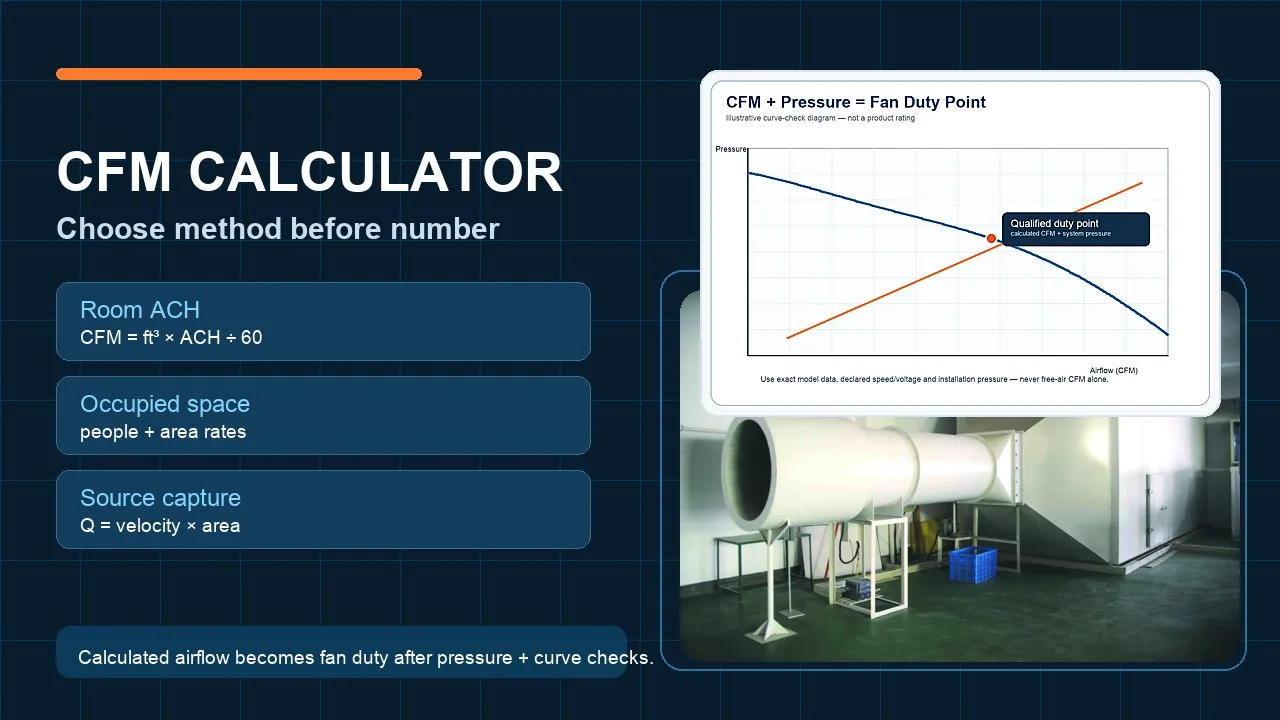
Calculate the room volume (L x W x H) and multiply by the target air changes per hour (ACH). Divide by 60 for CFM. Size for the system curve, not the catalog number.
Which one is suitable for bathrooms?
Exhaust fans are usually more suitable for bathrooms as they expel moisture and ordors right in the room.
Does LONGWELL offer both duct and exhaust fans?
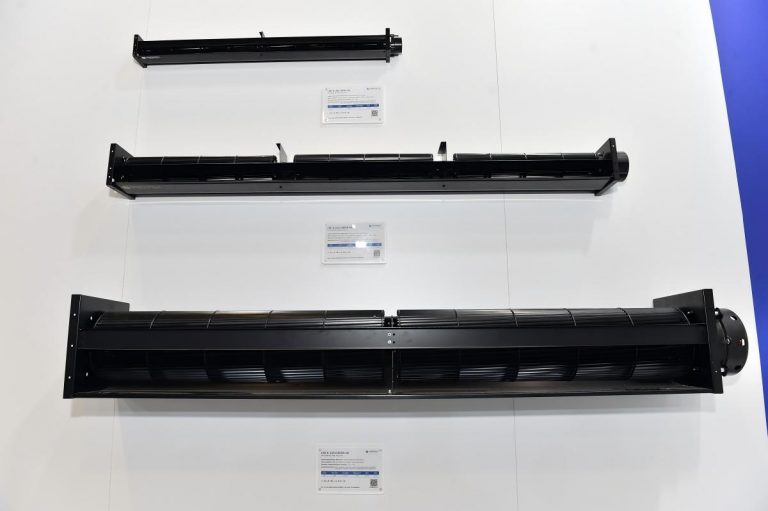
Yes, LONGWELL provides inline duct fans and exhaust fans to meet different ventilation projects. Besides, LONGWELL is well known for its centrifugal fans, cross flow fans, and axial fans.
Choose the right duct fan
Longwell manufactures 254 duct fans in-house. Send airflow, static pressure and voltage — an engineer replies with a matching model, performance curve and price within one working day.