What the OEM needed
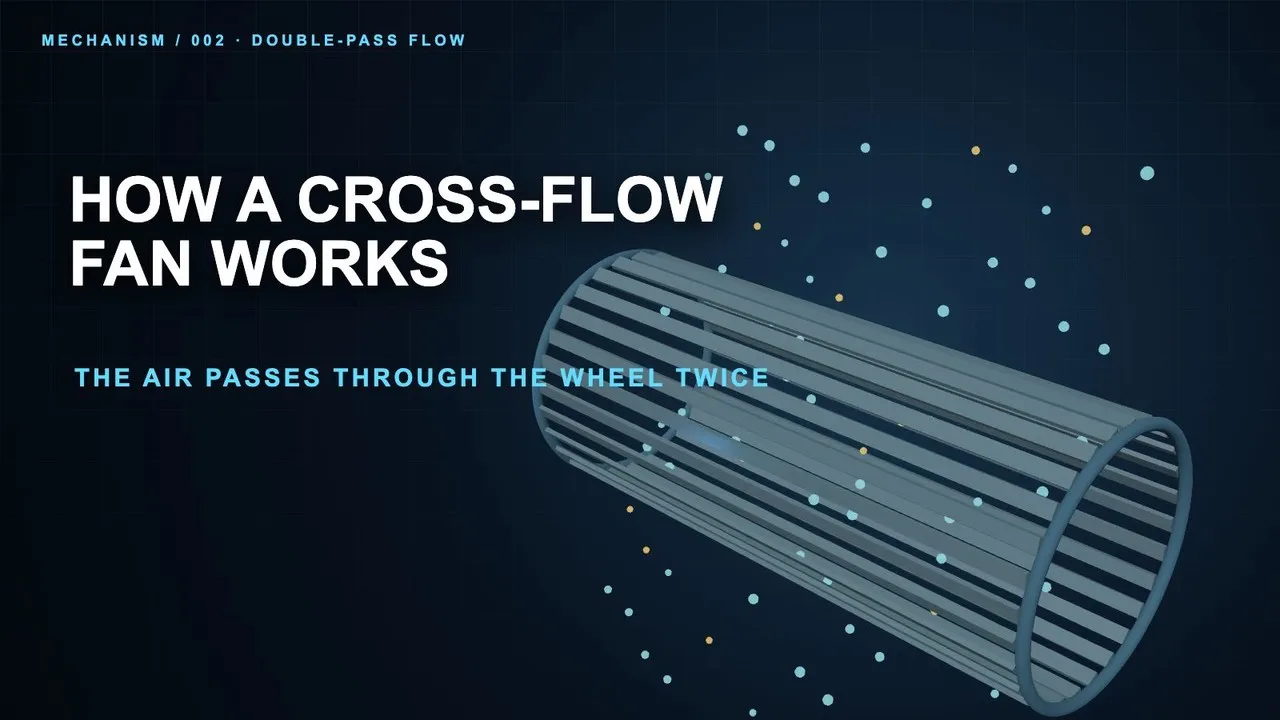
A high-volume OEM needed a 71mm cross-flow impeller for a new consumer tower fan. In practice that meant new high-volume impeller tooling.
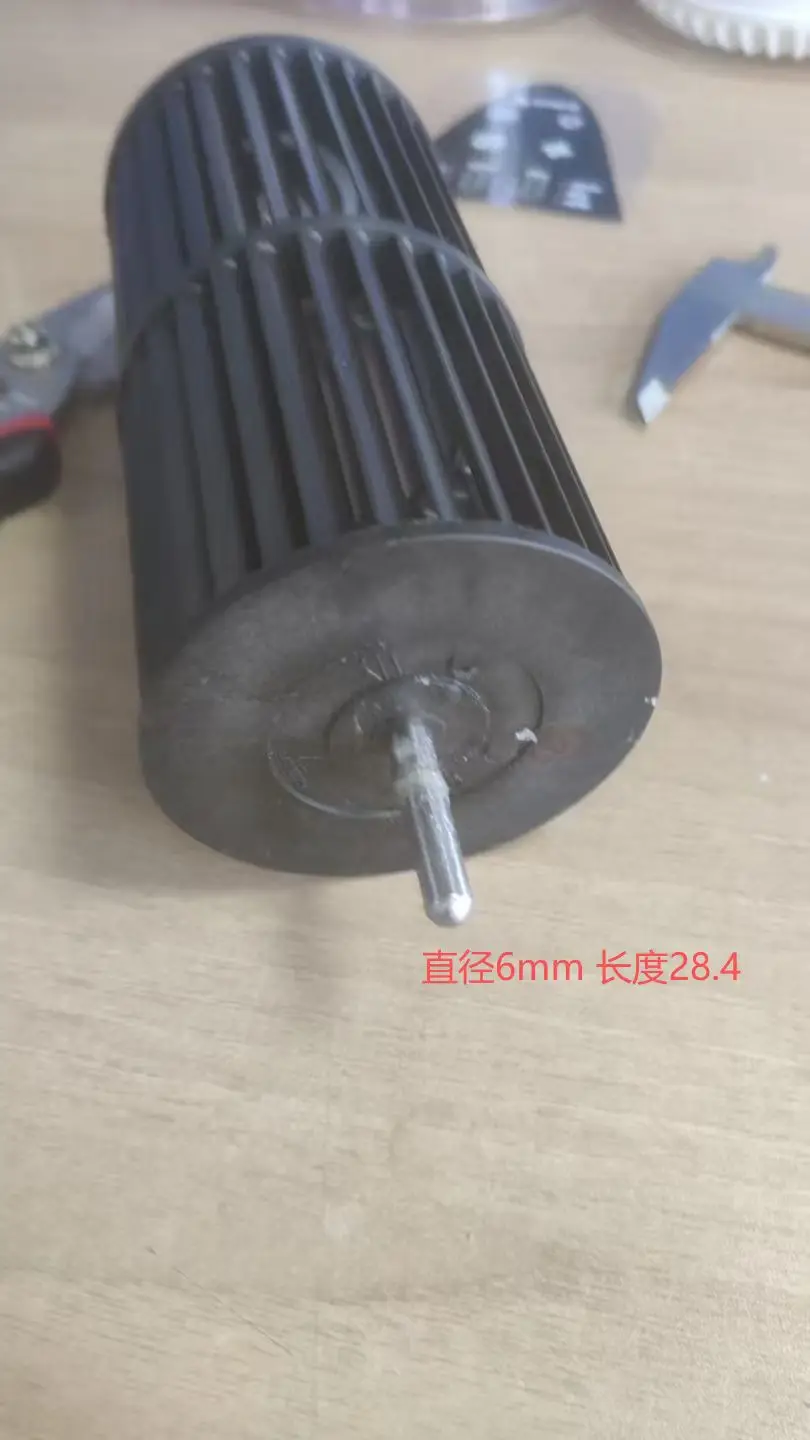
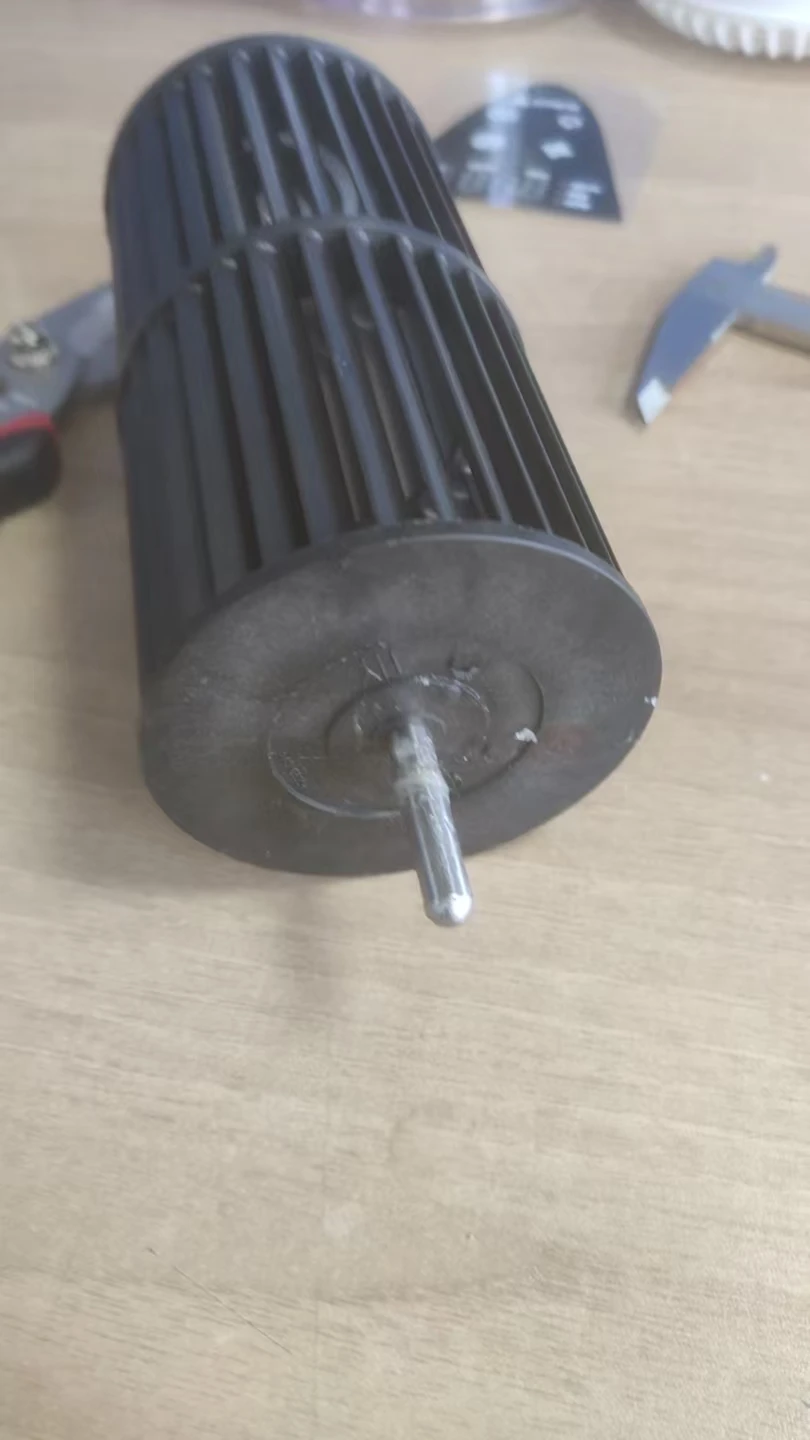
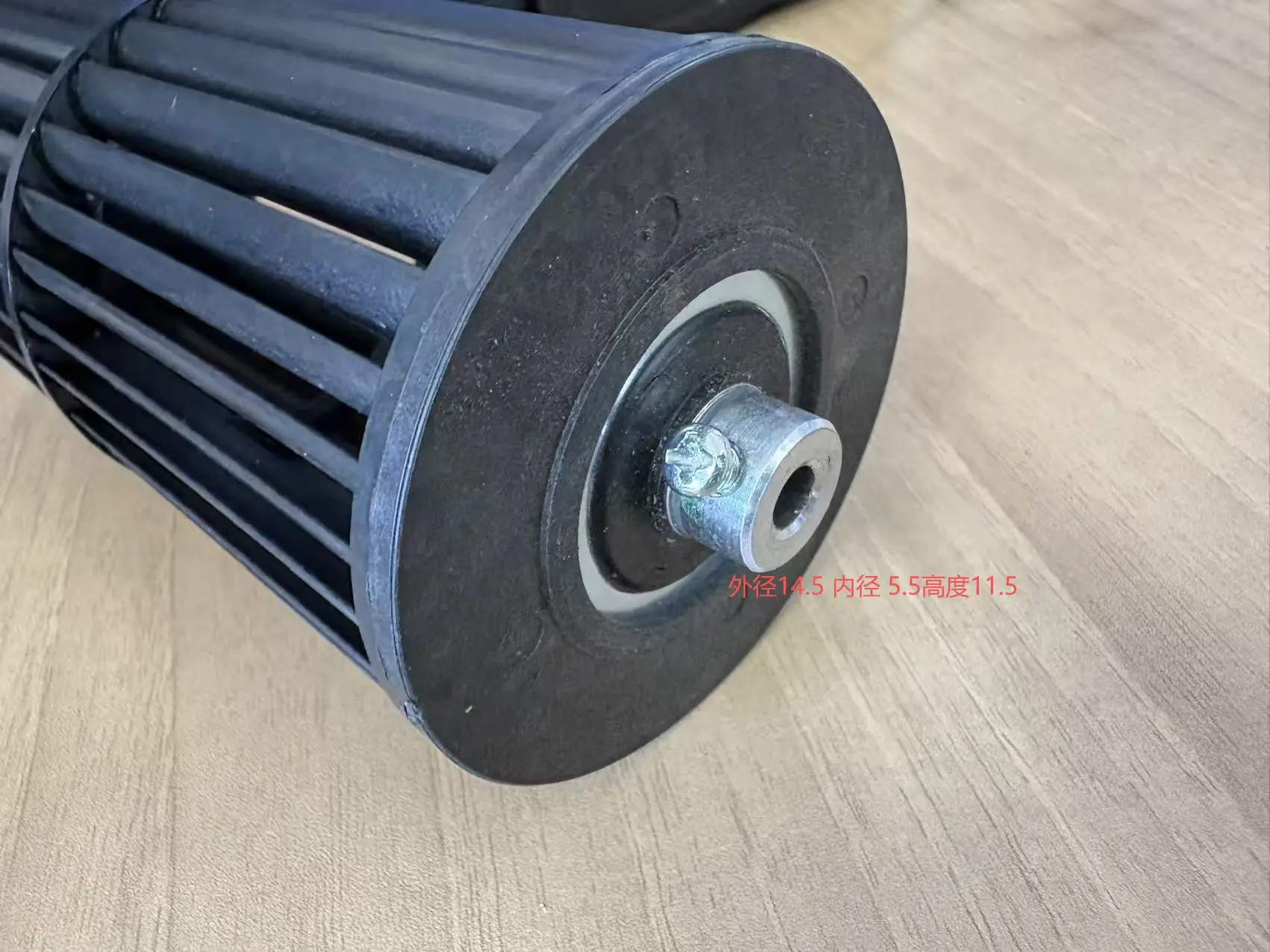
They sent a physical sample plus dimensions from their housing: 144mm long, with a 6mm steel shaft extending 28.4mm into an 11.5mm sleeve.
Annual demand was 300,000 units.
What that quantity changes
At 300,000 a year, the question stops being whether one impeller works. Instead it becomes whether the three hundred thousandth matches the first.
- First, absolute consistency across a production run of that size.
- Next, cost-effective production at scale.
- Meanwhile low acoustic output, since this sits in a living room.
- Finally, a component deliverable, ready to drop into their assembly.
No noise figure was given. Even so, a consumer tower fan makes the requirement obvious: if people can hear it, they will not buy the next one.
What high-volume impeller tooling has to solve
The dimensions were easy. However, consistency at volume was the actual project.
Material, chosen for stability not cost
Certainly standard ABS was considered, because it is cheap. Even so, we rejected it.
ABS creeps under sustained load, so the impeller deforms slowly and drifts out of balance. Instead we specified glass-filled acrylonitrile styrene, which holds its shape and keeps the part running true.
Blade geometry, not copied
Copying the sample would have been the fast route. However, a sample tells you what the previous part was, not what it should be.
We ran the blade profile, angle and spacing through simulation using our AcousticFlow approach, tuning them to cut tonal noise and turbulence at the outlet. Consequently the impeller arrives acoustically optimized, which makes the OEM job of hitting a product noise target easier rather than harder.
The mold is the real deliverable
This is where high-volume impeller tooling earns its cost.
A multi-cavity mold must fill every cavity identically, cool evenly, and release parts straight over 144mm. Firstly, gate placement decides how plastic flows and where it knits. Secondly, cooling channel layout decides whether the part warps as it solidifies.
Get either wrong and the parts are individually acceptable yet collectively inconsistent. Consequently balance varies, and varying balance means some units are noisier than others.
Balancing every part
After molding, each impeller goes through two-plane dynamic balancing to a G6.3 grade.
Every part, not a sample. On a consumer product the reject that escapes is the one that generates a return. Meanwhile returns at 300,000 units a year cost more than any sampling plan accounts for.
What it cost
Investment and lead time. High-volume impeller tooling is a real capital item, and it takes weeks to build and prove out.
That is only worth it at volume, which this project has. By contrast, for a few thousand parts a year the arithmetic reverses. Then a simpler tool or a different process is the better answer.
Technical Specifications
Note the balancing grade below. On a consumer product, that row is what high-volume impeller tooling ultimately has to hold.
| Parameter | Value |
|---|---|
| Longwell Part Number | LWPI-Φ71×144-01 |
| Impeller Type | Cross-Flow Impeller |
| Impeller Diameter | 71 mm |
| Impeller Length | 144 mm |
| Material | AS+GF (Acrylonitrile Styrene + Glass Fiber) |
| Shaft Diameter (Client Spec) | 6 mm |
| Shaft Length (Client Spec) | 28.4 mm |
| Balancing Grade | G6.3 |
Technical Documentation
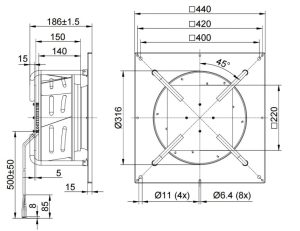
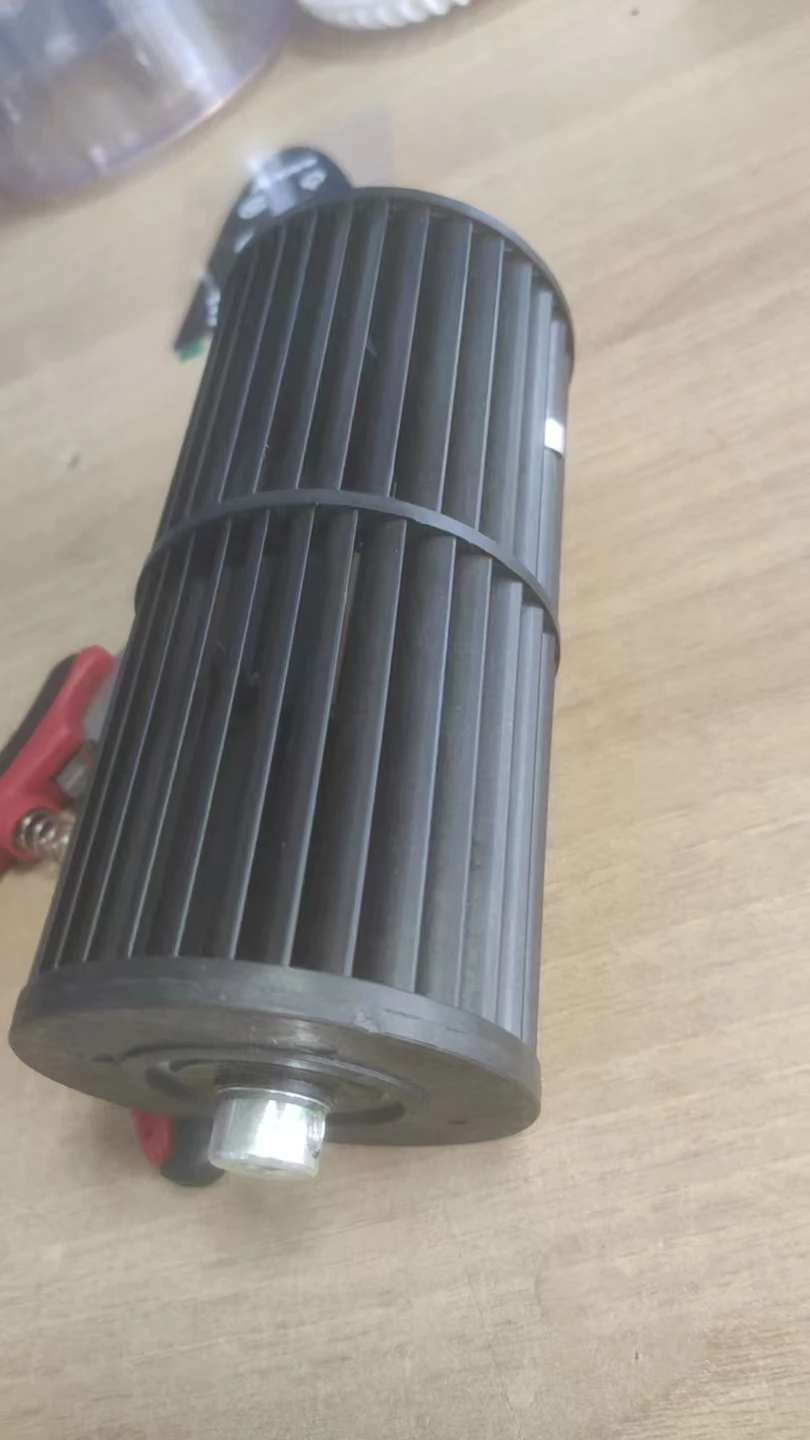
The following images detail the dimensional specifications provided by the customer and form the basis for the final Longwell engineering drawing.
If you are sourcing a molded part at scale
Sourcing a molded part at scale differs from sourcing a machined one. So these are the questions worth asking.
- Ask how many cavities and how they are balanced. A multi-cavity mold only helps if every cavity fills the same. Ask how cavity-to-cavity variation is controlled and measured, because that variation becomes your product variation.
- Ask whether balancing is 100% or sampled. At consumer volumes a sampling plan lets a proportion of unbalanced parts through by design. Whether that is acceptable depends on your return rate tolerance, and it is a decision worth making consciously.
- Do not send a sample and expect a copy. A physical sample tells a supplier the dimensions. It does not tell them the duty, the noise target, or which features matter. Send the requirement alongside it.
- Price the tooling against the volume before committing. High-volume impeller tooling pays back over hundreds of thousands of parts. Below that, ask about existing tools or alternative processes rather than funding a new mold.
See our cross flow impeller range, the fan impeller section, or cross flow fans. Balance grades follow ISO 21940.
Questions about volume molding
Why does gate placement matter on an impeller?
Because it sets how molten plastic flows through the cavity, and therefore where the material knits together and how internal stress distributes. Poor placement leaves weld lines in the wrong places and residual stress that releases as warp after ejection. Over 144mm of length, small warp translates directly into imbalance.
What does G6.3 mean for a consumer product?
It is a standard balance grade that sets permissible residual unbalance relative to rotor mass and speed. At this size and speed it keeps vibration below what a person notices in a quiet room, and it protects the motor bearings from the cyclic loading that shortens their life.
Could a cheaper plastic work at this volume?
It would mold fine and pass initial inspection. The problem appears later: unfilled ABS creeps under load, so the impeller deforms slowly and drifts out of balance. At 300,000 units a year, even a small percentage returning is more expensive than the material saving.
How long does new tooling take?
Weeks rather than days, since a precision multi-cavity mold has to be built, trialled, measured and corrected before production. Build that into your launch schedule. If the timing is tight, ask early whether an existing tool comes close enough to bridge the first orders.
Sizing something comparable?
Share the airflow, pressure, voltage and control interface, and we come back with a tested curve and a drawing. Meanwhile custom work runs to 90 days for spec sheets and samples. Since 1990 Longwell has supplied fans to HVAC and industrial OEMs.
Browse Related Products:
🏆 ISO 9001 / ISO 14001 / ISO 45001 | CE (TÜV) | UL/ETL | ATEX Zone 21/22 | AMCA 210/211 / ISO 5801 tested
Choose the right fan impeller
Longwell manufactures 10 fan impellers in-house. Send airflow, static pressure and voltage — an engineer replies with a matching model, performance curve and price within one working day.