Solving a Tight Fit with Custom Centrifugal Fan Mounting Hardware
We received a request to redesign the centrifugal fan mounting hardware on the
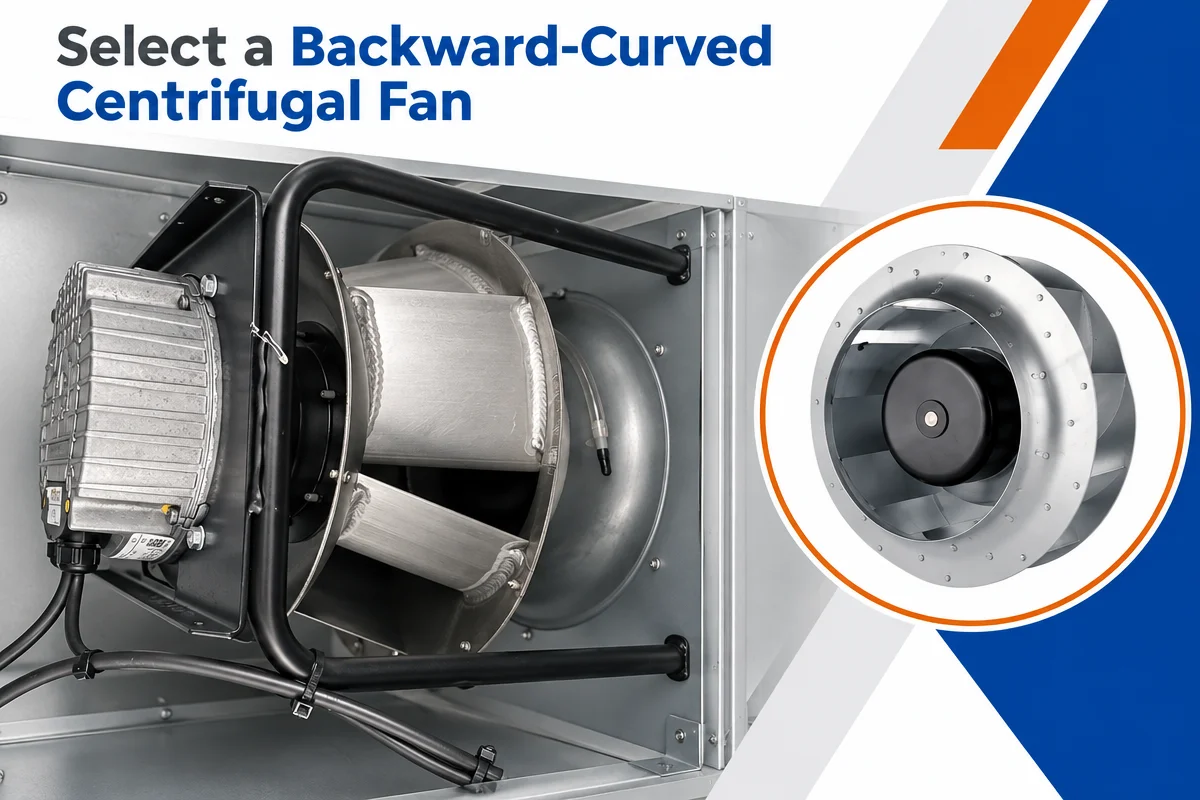
centrifugal fan mounting hardware for a tight HVAC unit. The customer needed to replace the standard fixed rods on a 225mm backward curved fan. First, they wanted to remove the default metal supports. Instead, they asked for male-female hex standoffs. Specifically, these standoffs required a threaded stud on one end and a threaded hole on the other. Next, they wanted the inlet plate to feature M6 through-holes. Therefore, the centrifugal fan mounting hardware could bolt directly to their existing cabinet wall without extra brackets.
Furthermore, this outdoor application carried strict size limits. The modified unit had to fit inside a 270 by 270 mm footprint. Meanwhile, the overall depth had to stay strictly under 130 mm. The cooling system required an airflow of 1300 m3/h to overcome internal pressure drops. Consequently, the fan needed to run reliably on a standard 230 VAC supply. It also had to work outdoors in ambient temperatures from -25 C to 60 C. Finally, we tested the new assembly to AMCA 210-16 methods. This testing ensured the modified equipment would meet UL 507 safety guidelines for the final buyer.
Selecting the Centrifugal Fan Mounting Hardware
When faced with unusual chassis sizes, we explore several design paths. First, we considered adding a separate sheet metal adapter plate. However, this plate added 15 mm of depth. This extra depth broke the strict 130 mm limit. Next, we looked at pressing standard threaded inserts into the base plate. Even so, that method did not provide the required gap from the cabinet wall. Consequently, we chose custom male-female hex standoffs made from 304 stainless steel.
Then, we changed the factory tooling to drill the requested M6 through-holes in the inlet plate. Ultimately, this specific
centrifugal fan mounting hardware allowed the buyer to drop the centrifugal fan mounting hardware straight onto their cabinet studs.
Balancing Speed and Acoustic Costs
Changing the frame supports alters how a fan handles vibration. Furthermore, locking the frame with rigid M6 hardware required a motor control update. Specifically, we lowered the maximum speed from 3600 RPM to 3300 RPM. Therefore, we protected the deep groove ball bearings from early wear caused by the stiff metal path.
By contrast, this speed drop slightly reduced the maximum airflow. The air delivery fell from 1360 m3/h to 1320 m3/h. Meanwhile, the static pressure actually increased. It rose from 906 Pa to 1040 Pa because the impeller ran closer to the modified inlet ring.
Finally, this rigid setup carried a clear acoustic cost. The stiff stainless steel standoffs sent more vibration directly into the frame. As a result, the sound pressure level jumped from 71 dB(A) to 80 dB(A). Still, the customer accepted this 9 dB(A) penalty. They needed the exact physical fit for their industrial plant more than a quiet operation.
Technical Specifications
| Nominal Voltage | 230 VAC |
| Voltage Range | 184~276 VAC |
| Frequency | 50/60 Hz |
| Speed | 3300 RPM |
| Current | 1.6 A |
| Power Input | 220 W |
| Airflow (Max) | 1320 m3/h (775 CFM) |
| Static Pressure (Max) | 1040 Pa |
| Noise Level (LpA) | 80 dB(A) |
| Ambient Temperature | -25 C to 60 C |
| Protection Type | IP55 |
| Insulation Class | Class B |
| Impeller Material | PA6+GF30% |
| Speed Control | 0~10VDC / PWM |
| Soft Start Delay | < 15 seconds |
The static pressure and noise rows show the true cost of this redesign. Specifically, dropping the speed for the new mounting geometry sacrificed acoustic performance to gain higher pressure.
Reference: AMCA 210 covers the test method behind these figures.
Technical Documentation
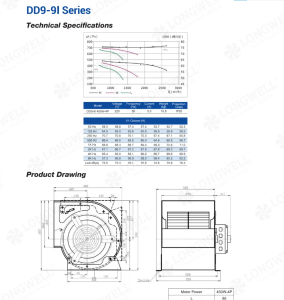
longwell-lwbe3g225-092ps-04-technical-doc-01.pdf shows the baseline performance before we made structural changes.
longwell-lwbe3g225-092ps-04-spec-sheet-02.pdf provides the final approved engineering data for the modified unit.
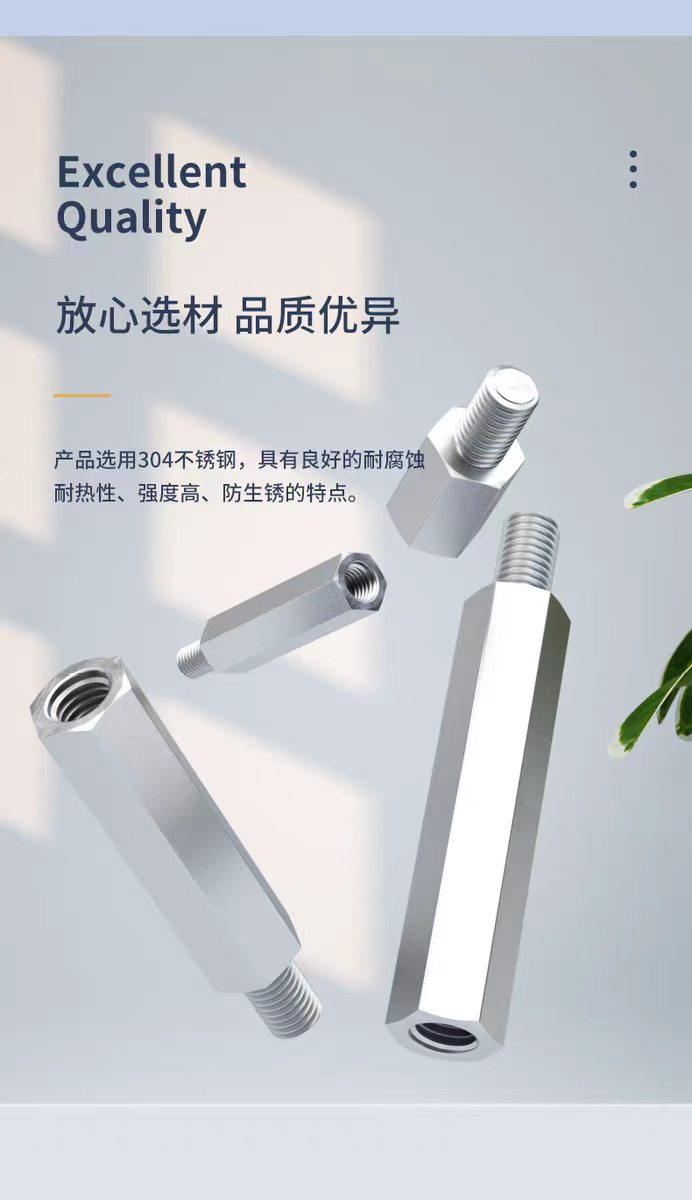 displays the male-female stainless steel standoffs required for the chassis.
Designing Custom Standoffs for Tight Cabinets
- First, measure your exact chassis bolt pattern before you request new centrifugal fan mounting hardware. A small error here ruins the entire installation process.
- Next, always verify your total depth limit inside the cabinet. Adding long standoffs pushes the impeller too close to the opposite wall. This mistake quickly chokes your airflow and drops your static pressure.
- Furthermore, expect a serious noise increase when you remove rubber isolators. Rigid metal standoffs push motor vibrations directly into your sheet metal cabinet. This effect turns your thin cabinet walls into a loud acoustic amplifier.
Related: Centrifugal Fans.
Common Questions About Fan Standoff Modifications
Q: Why did the noise jump to 80 dB(A) when the fan speed dropped? A: The rigid male-female standoffs build a hard metal bridge directly to the cabinet. Consequently, normal motor vibrations travel straight into the sheet metal panels. This hard connection amplifies noise much faster than the 300 RPM speed drop reduces it.
Q: Can drilling M6 through-holes weaken the fan frame? A: Making standard holes bigger removes metal from the inlet plate flange. However, staying within 1.5 times the pilot hole width usually keeps the frame strong. We test these limits during the prototype phase to ensure the frame survives heavy vibration.
Q: What is the maximum safe length for a motor standoff? A: We limit custom standoff length to 50 mm for heavy fan units. Beyond that length, side forces can snap the metal bolts under heavy vibration. Therefore, deep cabinets usually need a custom sheet metal bracket instead to distribute the weight.
Technical Documentation & Resources
Browse our centrifugal fans range, the backward-curved fans section, or forward-curved fans.
Have a Similar Fan Requirement?
Longwell’s engineering team delivers custom spec sheets and samples within 90 days. Since 1990, we have supplied EC fans and blowers to OEMs across HVAC, cold chain, data center, and industrial applications worldwide.
Browse Related Products:
🏆 ISO 9001 / ISO 14001 / ISO 45001 | CE (TÜV) | UL/ETL | ATEX Zone 21/22 | AMCA 210-16 / ISO 5801 tested
Choose the right centrifugal fan
Longwell manufactures 1,130 centrifugal fans in-house. Send airflow, static pressure and voltage — an engineer replies with a matching model, performance curve and price within one working day.