The Harsh-Climate Blower Replacement Challenge
The customer brought us a strict retrofit task. They needed to replace a broken YWL2D-150 unit inside an existing HVAC setup. So, the new blower had to fit exactly into the old space. First, the system required a precise 380V forward centrifugal fan. This 380V forward centrifugal fan had to move between 420 and 900 cubic meters of air per hour. Next, the 380V forward centrifugal fan needed a built-in mounting bracket. It also required a strong metal intake grill to block large dust particles and debris.
Environmental limits revealed a tough application. The site demanded a lower working limit of -30 degrees Celsius. Therefore, the fan likely operates in an outdoor industrial unit or a harsh winter climate. A normal indoor blower cannot handle these deep freezing temperatures. Furthermore, the upper limit stood at 60 degrees Celsius. This broad temperature range requires special care during the engineering phase.
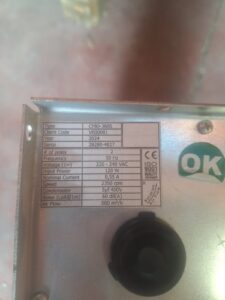
Meanwhile, the customer shared their strict performance ceilings. The old part used 180 watts of power and pulled 0.5 amps. It peaked at 375 Pascals of static pressure. By contrast, the engineering team had to meet clear modern safety rules. The new unit needed CE certification to pass customs. Next, we had to test airflow performance to standard ISO 5801 methods. Finally, the design had to comply with strict EN 60335-1 safety standards for electrical appliances.
Engineering the 380V Forward Centrifugal Fan Retrofit
First, our engineering team studied the old performance curve. The customer wanted to keep the exact same 2600 RPM speed. Next, we looked at their strict physical footprint limit. We had to choose between using a smaller impeller or keeping the baseline 150-millimeter size. A smaller wheel would certainly reduce the noise profile. However, it would fail to hit the required air pressure. Therefore, we kept the exact 150-millimeter wheel and the original dual-flange bracket design. This choice guaranteed a fast drop-in fit for the field technicians.
Boosting Static Pressure Capability
The existing system showed a major functional flaw. It peaked at just 375 Pascals of maximum static pressure. Over time, field filters trap heavy dirt and block normal airflow. Consequently, the internal system resistance grows rapidly. If the blower lacks enough pressure, the air simply stops moving. So, we designed the new LWFA2D150-092ST-03-00 unit to push a much higher limit. It reaches an impressive 443 Pascals of static pressure. This extra 68 Pascals provides a vital safety buffer. It keeps cool air flowing even when ducts get extremely dirty.
The Cost of Higher Performance
However, this performance boost forced a direct engineering trade-off. You cannot create more air pressure at the same speed for free. First, the extra mechanical work requires more raw electrical energy. The original motor ran on just 180 watts. By contrast, our upgraded motor draws 240 watts of power. This higher power usage is the exact real-world cost of better pressure stability. Even so, we optimized the internal winding design carefully. We successfully kept the operating current at 0.46 amps. Therefore, it stays safely below the customer’s 0.5-amp hard control board limit.
Ensuring Long-Term Cold Reliability
Finally, we addressed the deep freeze risk. Standard bearing oil turns thick and hard at -30 degrees Celsius. If that happens, the motor burns out fast during a cold morning start. Instead, we chose special maintenance-free deep groove ball bearings. These tough bearings easily survive freezing starts. They deliver a proven 40,000-hour life at 40 degrees Celsius room ambient conditions. Furthermore, we added an internal thermal disconnect. If the rotor ever jams completely, the power cuts off between 150 and 160 degrees Celsius. This simple safety feature prevents dangerous electrical fires inside the cabinet.
Technical Specifications
| Parameter | Value |
|---|---|
| Nominal Voltage | 380 VAC (Range: 342-418 VAC) |
| Frequency | 50 Hz |
| Speed | 2600 RPM |
| Current | 0.46 A |
| Input Power | 240 W |
| Airflow (Max) | 568.5 m3/h / 334 CFM |
| Static Pressure (Max) | 443 Pa |
| Noise Level | 62 dB(A) |
| Ambient Temperature Limit | -30°C to 60°C |
| Insulation Class | Class B |
| Protection Type | IP44 |
| Certifications | CE, RoHS, Reach |
First, the static pressure and ambient temperature numbers dictated the mechanical design choices. Consequently, hitting 443 Pa ensures airflow remains perfectly stable even when duct resistance naturally increases. Meanwhile, the strict -30 degrees Celsius rating guarantees safe cold-weather motor starts. Finally, the IP44 protection class and Class B insulation keep the electrical core safe. They block minor dust and water splashes.
Reference: AMCA 210 covers the test method behind these figures.
Technical Documentation
First, review the approved 380V forward centrifugal fan specification and wiring instructions. Download the full performance data PDF.
Next, examine the required mechanical dimensions. 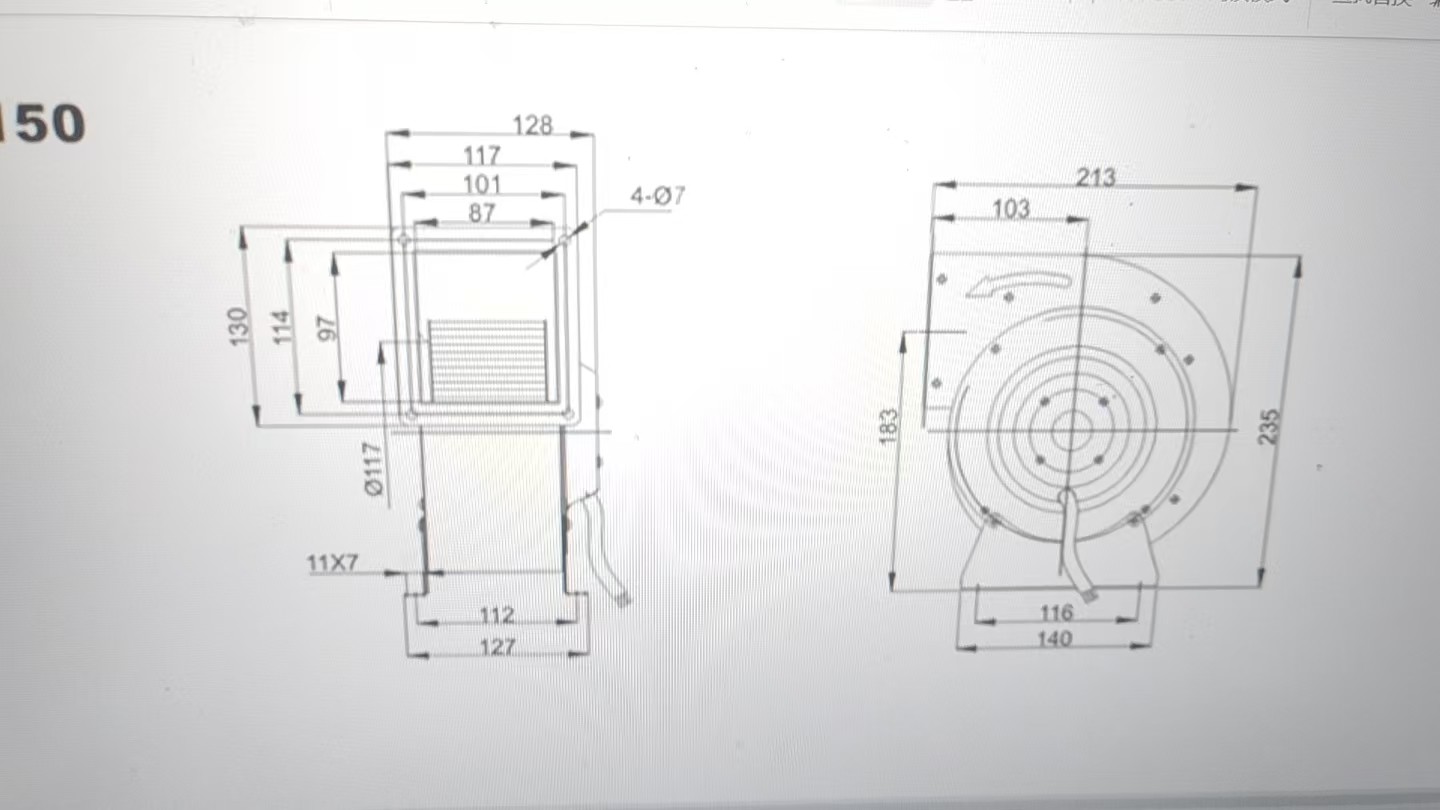
Furthermore, check the physical bracket layout. 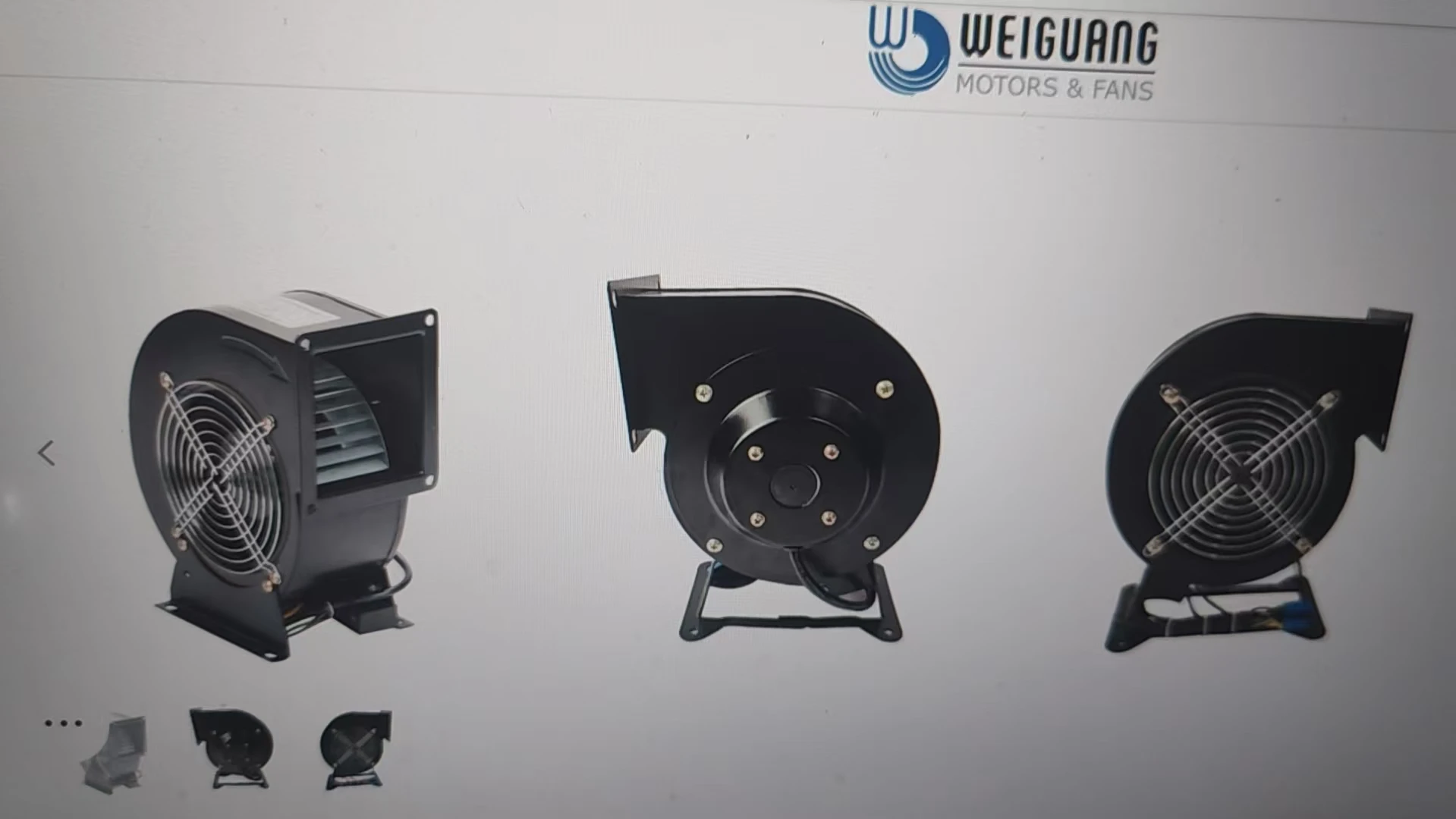
Finally, view the original motor performance limits. 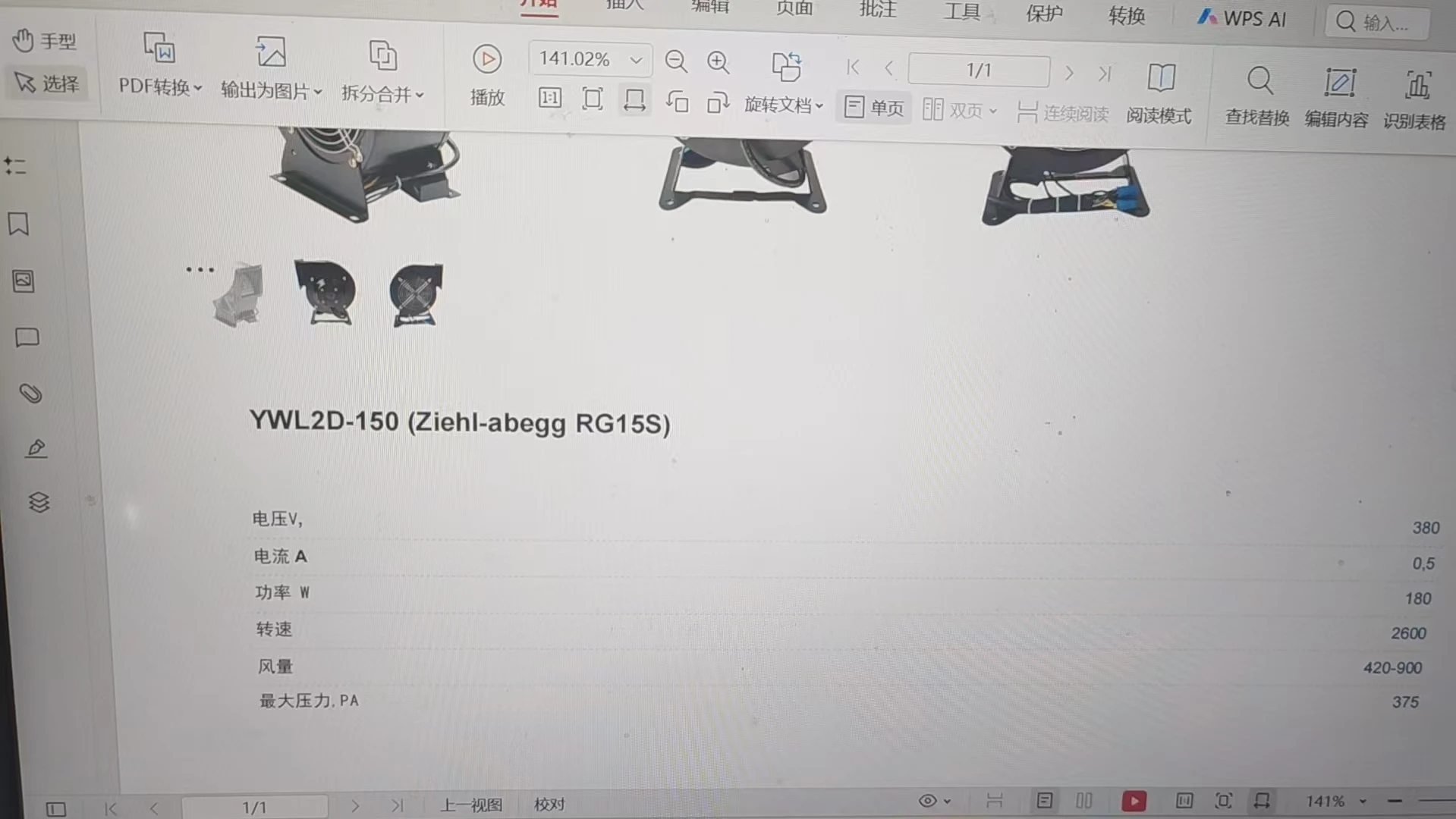
Specifying a Replacement 380V Forward Centrifugal Fan
When you specify a replacement 380V forward centrifugal fan, you must check several hidden details. A simple mechanical size match often leads to early field failures.
- First, track your exact voltage and phase type. A three-phase 380V system demands very specific wiring and grounding rules to prevent motor damage.
- Next, measure the actual maximum current limit of your existing control board. A stronger replacement blower might draw more power and trip your local safety breakers.
- Furthermore, confirm the lowest winter temperature at the actual installation site. Extreme cold climates require special bearing grease to stop the metal shaft from seizing.
- Finally, check if the old unit uses an integrated metal bracket. You must send your supplier clear photos and dimensions so the new part bolts right into the same holes.
Related: Centrifugal Fans.
Frequently Asked Questions
Browse our centrifugal fans range, the backward-curved fans section, or forward-curved fans.
Have a Similar Fan Requirement?
Longwell’s engineering team delivers custom spec sheets and samples within 90 days. Since 1990, we have supplied EC fans and blowers to OEMs across HVAC, cold chain, data center, and industrial applications worldwide.
Browse Related Products:
🏆 ISO 9001 / ISO 14001 / ISO 45001 | CE (TÜV) | UL/ETL | ATEX Zone 21/22 | AMCA 210-16 / ISO 5801 tested
Choose the right centrifugal fan
Longwell manufactures 1,130 centrifugal fans in-house. Send airflow, static pressure and voltage — an engineer replies with a matching model, performance curve and price within one working day.