Key Feature
- Efficient Design: Vane axial fans work very well. They can move a lot of air at different pressures.
- Versatile Applications: You can use these fans in many locations. This includes factories, mines, and large areas like atriums and stadiums.
- Quiet Operation: Vane axial fans are made to be quiet. This is good for places where low noise is important.
- Design Options: There are several options to choose from. You can pick between direct drive or belt drive types. You can also select fixed or adjustable blade pitch to meet your needs.
- Durable Construction: Vane axial fans are made to be sturdy. They use strong materials like steel or aluminum.
Introduction
In ducted ventilation systems, vane axial fans help deliver the required airflow while overcoming resistance from ducts, filters, and dampers. These fans work well at moving a large amount of air at medium to high pressures. This is why they are helpful for general ventilation in big buildings and for industrial jobs that need strong airflow. The way they are designed includes vanes that are positioned carefully. This design helps generate a strong and directed flow, which improves how well air moves.
What are Vane Axial Fans?
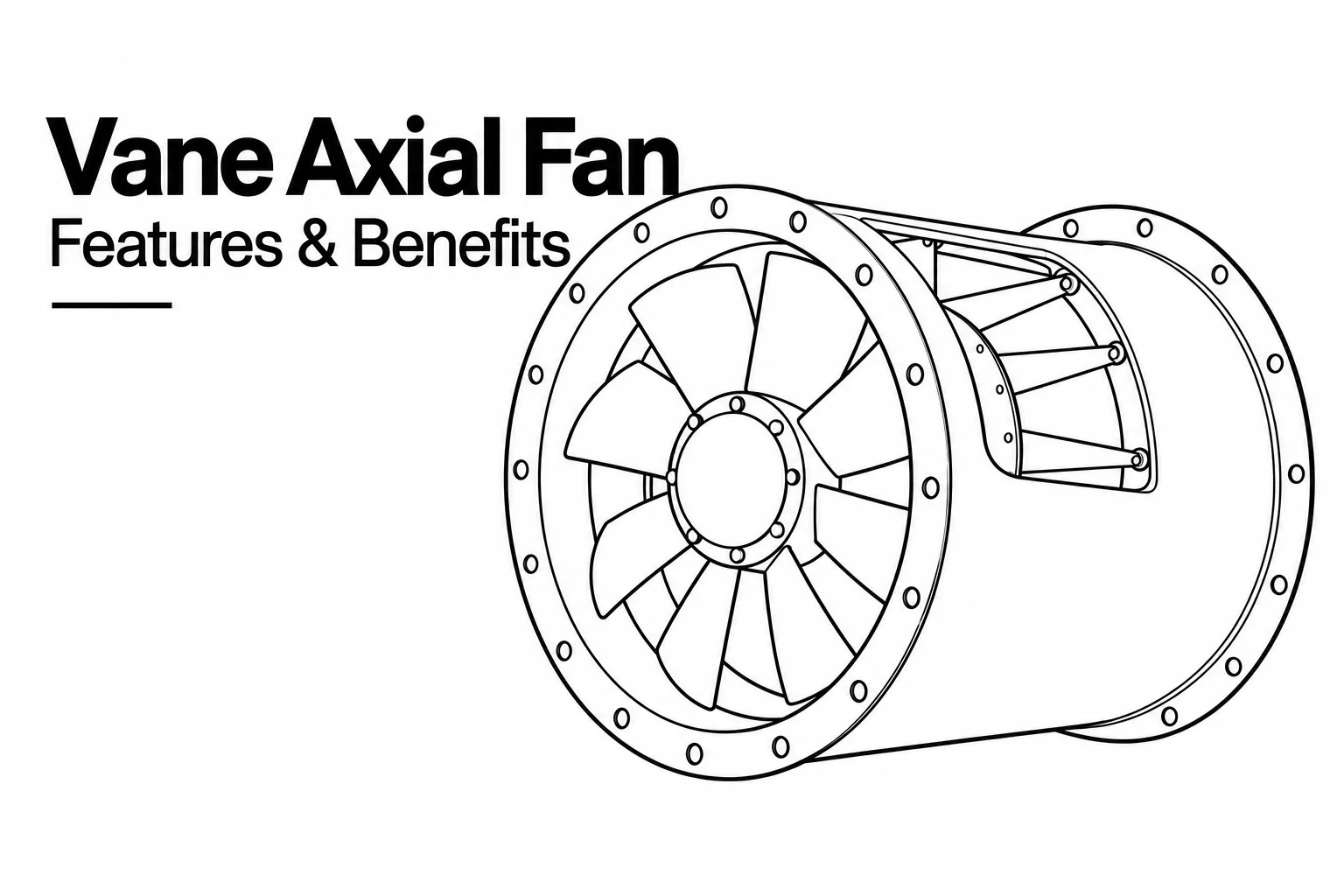
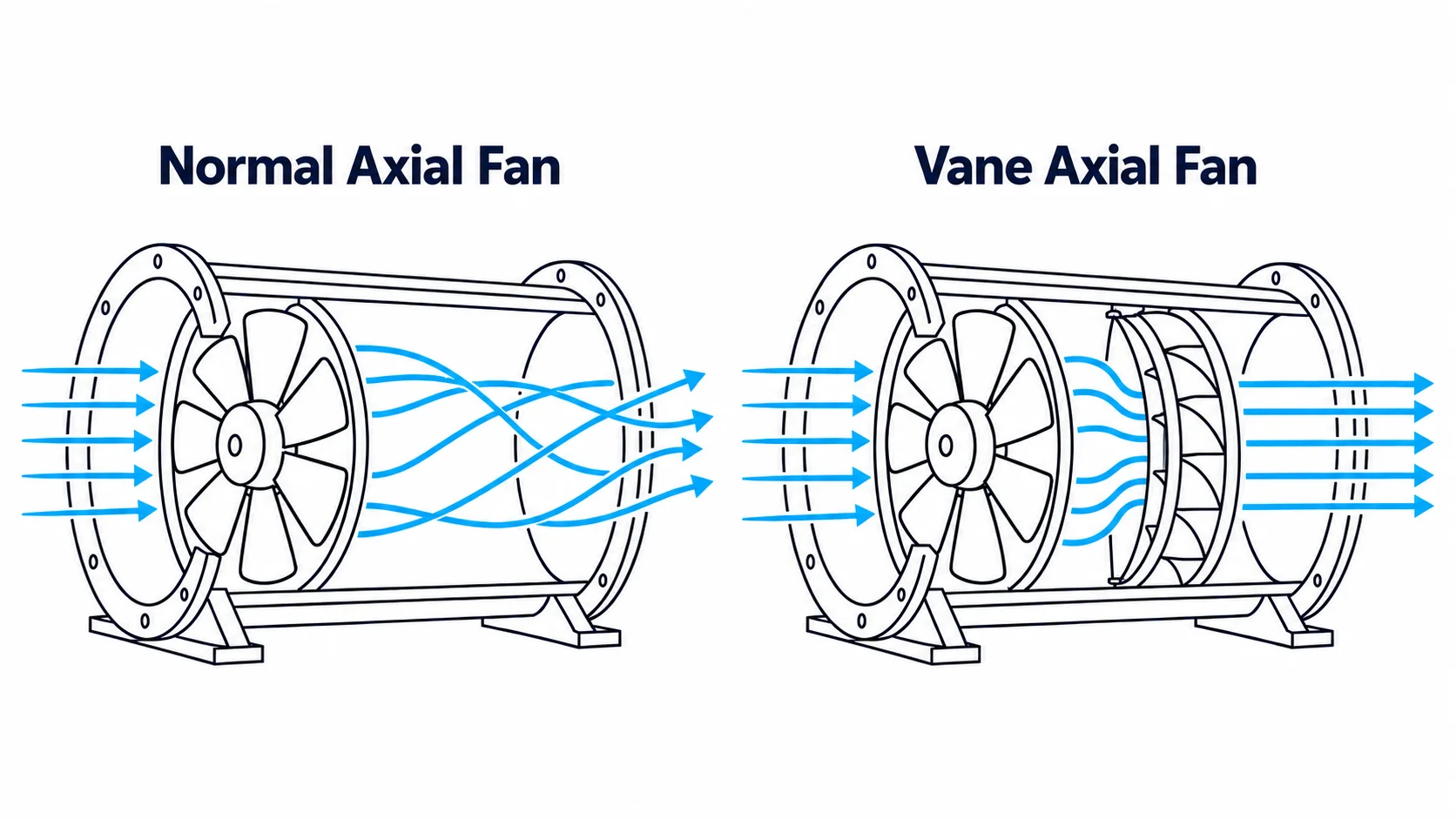
Vane axial fans are a special kind of axial flow fan. There are several vanes on the discharge path of the airflow. These help turn swirling airflow into direct and linear flow. These fans are excellent for moving large amount of air and provide moderate to high pressure. Sectors like mining and tunnel ventilation, as well as large spaces with big ventilation systems, can gain a lot from using these fans.
Key Components
To understand how an axial fan works, it’s important to know its main parts. The most important part is the impeller. This is a spinning hub that has several blades. These blades help to move the air. The shaft holds the impeller in place and lets it turn. A motor usually drives this shaft.
The housing holds the impeller and motor. It helps to shape and direct the airflow. This makes it easier for air to come in and go out. A key part of vane axial fans is the fixed vanes at the discharge end. These vanes play a vital role. They change the swirling airflow from the impeller into a straight, axial flow. This change helps the fan operate more efficiently.
How Does Vane Axial Fan Work?
Vane axial fans are simple to understand and very effective. A motor usually turns the fan directly. This motion moves the blades of the impeller. As the blades move through the air, they create axial flow. They pull air in from the inlet and push it out along the rotation axis. At the discharge end, there are also fixed guide vanes. These help make the airflow more directed and straight.
The performance of vane axial fans depends a lot on blade pitch. Blade pitch is the angle at which the blades are set. This angle affects how much air the fan moves and the pressure it creates. Many axial fan models allow you to change the blade pitch. This feature makes the fans versatile and good for different needs.
Fixed vs. Adjustable Pitch Vane Axial Fans
Vane axial fans are mainly of two types. Each type meets different needs for various uses.
| Feature | Fixed Pitch | Adjustable Pitch |
| Blade Angle | Pre-set during manufacturing | Can be modified in the field |
| Flexibility | Less versatile | Highly adaptable to changing conditions |
| Applications | Constant airflow requirements | Variable airflow scenarios, system balancing |
| Maintenance | Typically simpler | May require periodic adjustments |
When deciding between fixed and adjustable blade pitch, several factors come into play. Think about how much control you need over the airflow. It’s also important to consider possible future changes to the system. Lastly, think about how precise you want to be in managing the airflow.
Applications of Vane Axial Fans
Commercial Building Ventilation
In commercial buildings, vane axial fans can supply fresh air or extract stale air through ductwork. Their inline arrangement can be useful where the ventilation layout requires airflow along a straight duct path. Selection should account for duct resistance, available installation space, and noise requirements.
Industrial Supply and Exhaust Ventilation
Factories and workshops may use vane axial fans to supply replacement air or exhaust heat from production areas. They can be suitable for systems that need high airflow through ducts and other components. Where the air contains dust, corrosive substances, or flammable materials, the fan requires construction and approvals appropriate to those conditions.
Tunnel and Underground Ventilation
Vane axial fans can provide supply or exhaust airflow in ducted tunnel and underground ventilation systems. Their pressure capability helps move air through extended ventilation routes. However, these applications require project-specific selection. For example, for underground projects with explosion risks, assessment should includes air conditions, operating duty, and any emergency ventilation requirements.
Large Facility Ventilation
Warehouses, exhibition halls, and sports facilities may use vane axial fans as part of a centralized supply or exhaust system. Their compact inline configuration can help integrate substantial airflow into the duct layout. The required airflow should be calculated from occupancy, heat loads, and ventilation needs.
Engineered Smoke Exhaust Systems
Vane axial fans may be used for smoke exhaust when the specific model is tested and approved for the required temperature and operating duration. A standard ventilation fan should not be assumed suitable for smoke control. Selection must follow the project’s fire safety design and applicable requirements.
Conclusion
In conclusion, knowing how vane axial fans work and what benefits they offer can be very helpful. These fans have parts made for high efficiency and strong performance. This makes them important for industrial use. Whether you choose fixed or adjustable pitch models, vane axial fans give you reliable air movement. To make them last longer, regular maintenance is essential. If you need trusted suppliers of vane axial fans in the United States, there are good options available for you. Look into vane axial fans to improve your air circulation.
Frequently Asked Questions
How do vane axial fans differ from other axial fans?
Vane axial fans are special types of axial fans. They have straightening vanes at the discharge. These vaneaxial fans help to change the swirling airflow from the impeller. Because of this, the airflow becomes more focused and creates a linear flow. This is what makes them different from regular axial flow fans.
What are the main applications of vane axial fans?
Vane axial fans are great for moving large volumes of air. They work well for general ventilation in big spaces. This includes places like atriums, halls, and industrial areas that need a lot of airflow.
Can vane axial fans be used in residential settings?
Vane axial fans are often found in companies and factories. There are also compact axial inline fans that can be used as well. These fans are perfect for homes that don’t need high CFM (cubic feet per minute) performance.
Maintenance tips for prolonging the life of your vane axial fan
Check the fan housing often for dirt or debris. Clean the blades when needed. Look at the fan drawings and guidelines from the manufacturer to know when to lubricate. Make sure there is enough space around the blade tips.
Where to find reliable vane axial fan suppliers in the United States?
A quick search for “vane axial fan suppliers” or “industrial blowers” will show you many options. Try to find suppliers that are AMCA certified. They need to offer clear details about their products. This should include the sizes and materials they use for their shafts.
Choose the right axial fan
Longwell manufactures 1,048 axial fans in-house. Send airflow, static pressure and voltage — an engineer replies with a matching model, performance curve and price within one working day.