In HVAC systems, fans are one of the most crucial components. Different types of fans are used to provide the power for the HVAC system. Their airflow, static pressure, efficiency, noise level, and control performance can directly affect how the entire system operates. This is why choosing a fan supplier should not be treated as a one-time purchase. A strong supplier can provide service from fan selection, prototype testing, engineering-based adjustments, and tailored fans. A long-term supply partnership allows HVAC OEMs to maintain more consistent system performance and reduce repeated work. This guide explains how HVAC OEMs can build a long-term partnership through co-engineering, performance review, quality management, supply continuity, and long-term product development.

Why Long-Term Supply Partnerships Matter for HVAC OEMs?
Maintain Consistent HVAC Performance
Once a fan has been selected and integrated into an HVAC system, replacing it becomes a complex decision. Fans are closely integrated with the design and performance of HVAC equipment. A suitable replacement fan may offer similar performance s at a more competitive cost. However, small differences in motor speed, impeller design, fan curve, or installation details can still slightly shift the actual operating point. For this reason, replacement projects should include technical parameter comparison, compatibility checks, and sample testing of the complete equipment.
A long-term supplier is familiar with the equipment performance. This advantage enables the consistent application of approved materials, drawings, production processes, and inspection standards across different production batches. When a fan needs to be adjusted, both engineering teams can work from existing data instead of restarting the selection process.
Reduce the Risk of Supplier Changes
Changing an HVAC fan supplier is not simple. A replacement fan may need new samples, airflow testing, noise evaluation, control compatibility checks, installation adjustments, and certification review. Tooling, wiring, mounting structures, and technical documents may also need to be updated. This additional work might increase the OEMs’ integration cost and delay the release schedule.
A stable and long-term cooperative relationship gives HVAC OEMs more time to manage product changes. The supplier can retain all the documents and communicate before any changes affect mass production.
Build the Partnership Through Co-Engineering
Application-Based Fan Selection
The co-engineering begins with the selection of the fan. HVAC OEMs should provide the supplier with a clear demand for the operating point. The system parameters include required airflow, static pressure, power supply, motor type, installation dimensions, and so on. For equipment intended for different markets, certification and regional electrical requirements must be considered as part of the selection process.
The supplier provides more than only a fan. An experienced OEM fan supplier can use this information to compare suitable fan types. The same fan can operate differently depending on system characteristics. In some cases, the best solution may be a standard model. In others, the application may require some modifications to standard models.
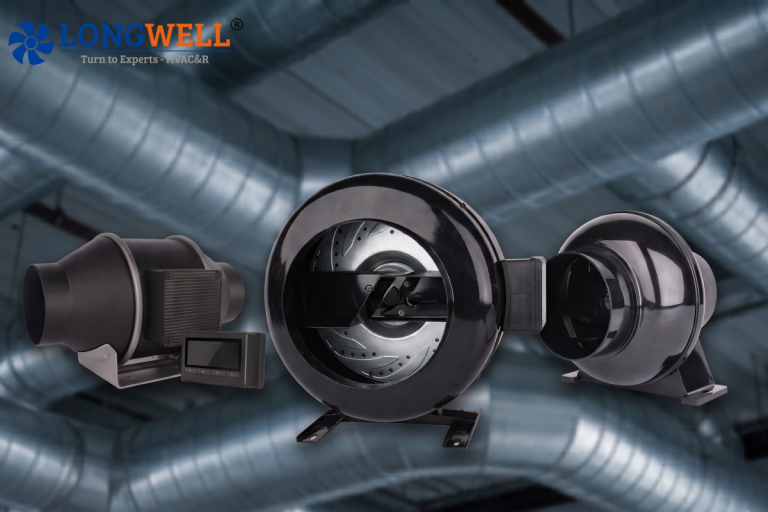
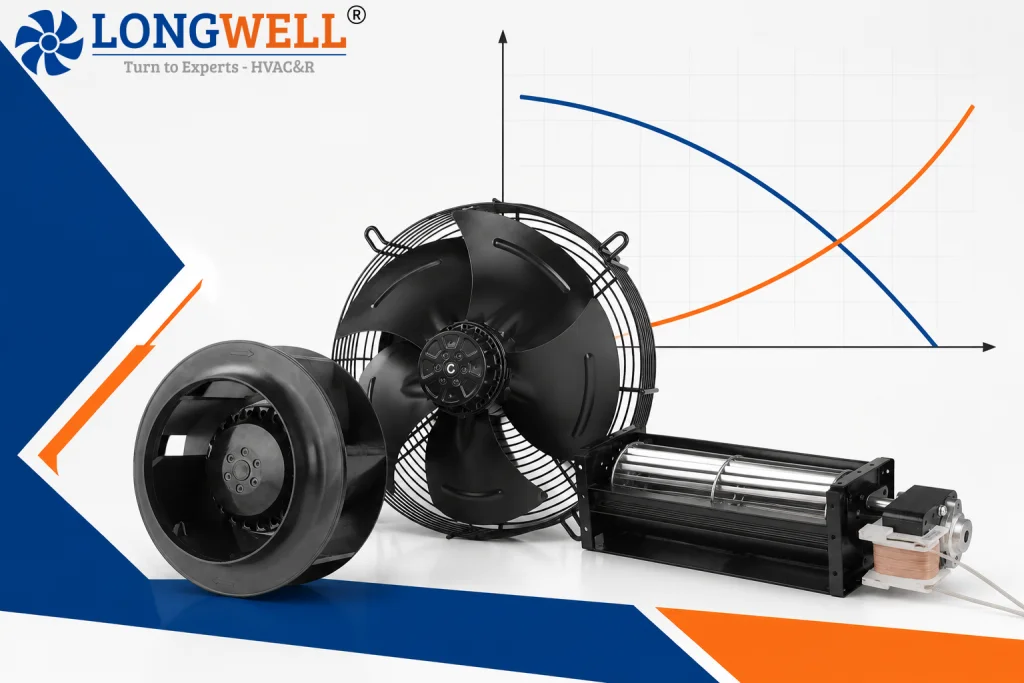
LONGWELL engineering solutions include 9 main areas, from data centers to residential ventilation. For commercial HVAC applications, LONGWELL offers a combination of fans, including centrifugal fans and axial fans. The LWBE3G series backward-curved centrifugal fan with a 3G biomimetic blade profile provides at least 88% efficiency. The LWAA series EC axial fans offer stable airflow volume for outdoor condensers. LONGWELL provides assistance in selecting fans for customers’ specific requirements.
Engineering and Customization Support
When the standard model cannot satisfy the requirements, whether the supplier can offer customization support becomes an important factor. Good customization support is not simply accepting every design request. The supplier also needs to assess whether the proposed change will affect airflow performance, motor load, noise, service life, certification, or production cost.
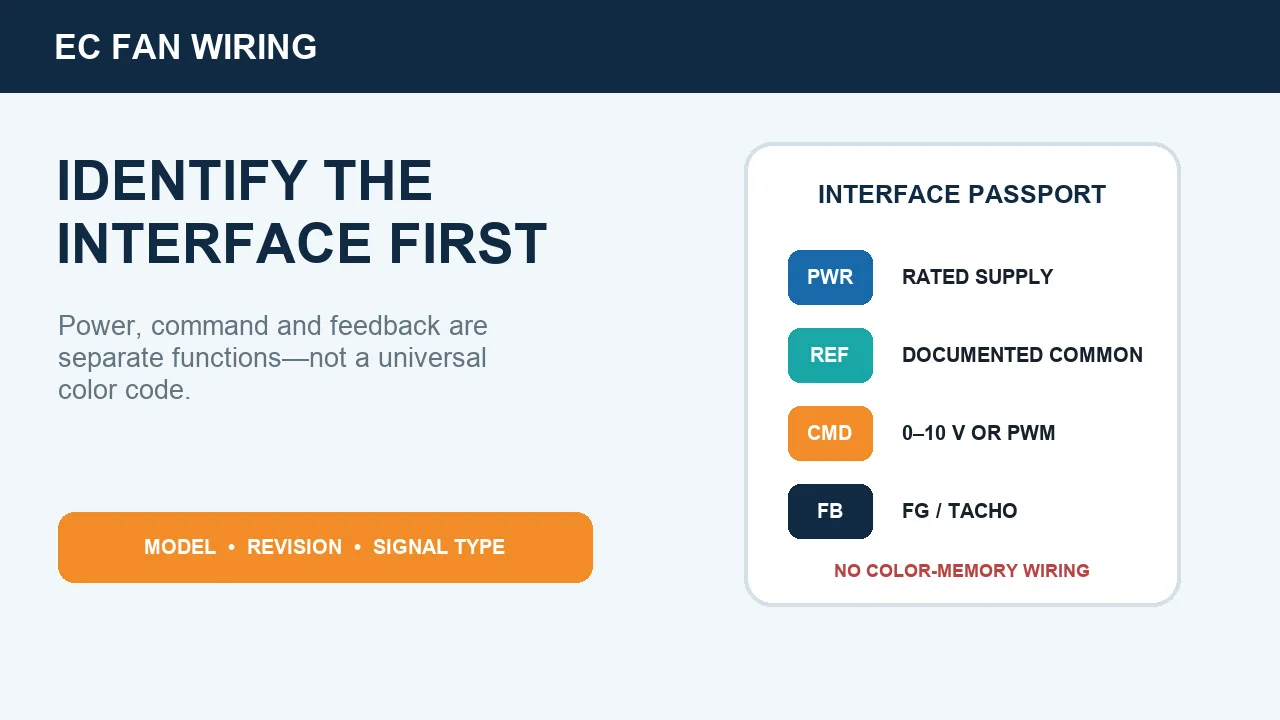
An OEM fan supplier should be able to review the equipment layout and identify which parts of the fan need to be modified. This may include the impeller, motor, housing, mounting frame, inlet ring, cable length, connector, control interface, or software settings. For EC fans, customization may also involve 0–10 V, PWM, or RS485 communication, as well as speed limits and fault feedback functions.
Test Prototypes in HVAC Systems
Before mass production, testing prototypes is necessary. CFD simulation is used before physical testing to evaluate airflow distribution and pressure loss. Based on these results, engineers can adjust the fan for a better fit in the HVAC systems.
Testing plans should also reflect the requirements of the target market. The ventilation system for the European market should meet the EU Regulations No. 1253/2014 and 1254/2014. For individual fans, ErP 2026 restrict with an electric input power to 125 W – 500 kW. The OEM fan supplier should therefore provide verified efficiency, power, speed-control, and part-load performance data for applicable fan models according to the updated ErP. For North America, residential ventilation products should be tested under the HVI certification to verify airflow, sound, and energy performance.
Review and Optimize the Fan Solution
The HVAC OEM and fan supplier review the test data together and compare the results with the target efficiency. Any aspect that fails to meet the requirements should be traced back to the cause rather than simply increasing the rotational speed of the fan.
For example, insufficient airflow may result from higher-than-expected system resistance. Excessive noise may come from turbulence, vibration, motor settings, or interaction between the fan and surrounding structure. Depending on the findings, engineers may adjust the impeller, motor speed, control parameters, mounting method, inlet geometry, or internal airflow path. Each modification should be followed by another round of verification.
Plan for Mass Production
Before mass production, final drawings, bills of materials, motor parameters, control settings, inspection methods, and acceptance limits must be confirmed by both sides. A sample can be retained to guide production and incoming inspection. The quality-control plan includes impeller dimensions, balance, airflow performance, electrical input, noise, vibration, and mounting interfaces. Any material or process change should require documented review and both side approval before implementation.
The HVAC OEM and fan supplier should also agree on production schedules. A small pilot batch is often useful for verifying production consistency and assembly compatibility before full-scale orders are released. This preparation reduces variation between batches and helps the supplier maintain stable quality as order volumes increase.
Strengthen the Partnership
Review and Improve Fans Performance
Actual operating data from HVAC OEMs can provide insights that are not visible during prototype testing. When sharing this information with the fan supplier, both sides can review whether the fan is still operating within the intended performance range.
The operating conditions and market demands of HVAC systems will change over time. After the production of the fans is launched, OEMs and suppliers maintain long-term cooperative relationships. Thus, regular technical reviews are conducted to seize the opportunities for product improvement.
Resolve Problems
Quality or performance issues need to be addressed through a series of systematic processes. Simply replacing the faulty fan temporarily will not solve the problem. The OEM provides clear information about the affected models, production batches, operating conditions, and fault symptoms. Meanwhile, the supplier can track materials and production records, analyze the root cause, and propose corrective measures. Thereby achieving a mutually beneficial cooperative relationship.
Maintain Quality and Supply Continuity
Establish a Standardized Production Setup
A customized fan may require several adjustments. Once the final design has passed system testing and entered stable volume production, the HVAC OEM and fan supplier should convert it into a standardized production model. Both parties reached an agreement on the key characteristics that must be controlled during the production process.
Standardizing a customized fan does not turn it into a general catalog product. It remains a project-specific solution for the HVAC OEM, but it can be produced repeatedly through a controlled and documented manufacturing process. This gives the OEM the benefits of customization while maintaining the consistency and efficiency expected from a mature production model.
Quality Inspections
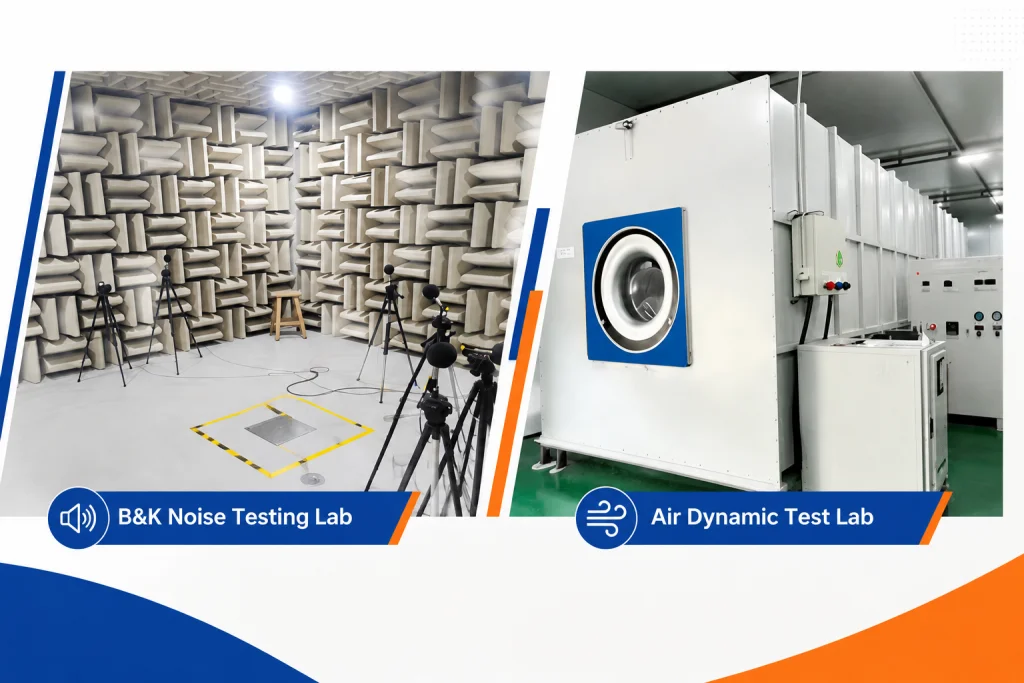
Incoming materials, critical production processes, and finished products can be controlled through IQC, IPQC, and OQC procedures. Depending on the fan type, the quality control inspections may include service-life testing, motor endurance checks, and impeller balancing in accordance with ISO 1940.
For special environments, selected units should be tested under conditions close to their intended use. High-temperature fan samples may be evaluated across the specified temperature range to verify the stability of the bearings, impeller, housing, and motor thermal protection. Fans for corrosive applications can undergo ISO 9227 salt-spray testing. The IP65 or IP66 models may require extended operation in high-humidity conditions. Explosion-proof configurations should also be verified against the approved certification and material requirements.
Performance sampling is equally important. Airflow, static pressure, motor efficiency, voltage compatibility, power input, noise, and vibration should be compared with the approved specification. For customized AHU fans, for example, the OEM and supplier may agree on an acceptable performance deviation for sampled units. These records confirm that later production batches continue to match the fan originally validated in the HVAC system.
LONGWELL: Long-Term HVAC Fan Partner
LONGWELL supports HVAC OEMs beyond the initial fan purchase. Our engineering team works with customers throughout product design, fan integration, testing, mass production, and future product upgrades. For new HVAC projects, LONGWELL can recommend a suitable fan type and specification based on airflow, static pressure, installation space, operating environment, and control requirements. Engineering support may include 3D models, CAD drawings, system resistance analysis, CFD evaluation, mounting recommendations, wiring diagrams, and customized control solutions.
LONGWELL also helps OEMs evaluate replacements for fans supplied by other manufacturers. We once helped a European HVAC OEM replace the brand of the fan. After replacing the fan with the EC fan from LONGWELL, we not only saved on procurement costs but also improved energy efficiency. The entire transition process was smoothly completed within three months without affecting normal production.
Compliance support is matched to the product and target market. Available certifications and documentation may include CE, UL/ETL, ErP, RoHS, REACH, CCC, PSE, KC, BIS, EAC, ATEX/IECEx, and relevant IP protection ratings. LONGWELL can also help customers review regional requirements and identify additional certification work needed before market entry. Submit the request, and LONGWELL’s engineering team will reply within 1 business day.
FAQs
How do EC motors improve HVAC system efficiency?
EC motor can adjust rotation speed based on the real-time system needs. Variable-speed control also allows HVAC equipment to respond more accurately to changes in pressure, airflow, temperature, or occupancy while lowering noise at reduced operating speeds.
What certifications must an OEM fan supplier deliver?
The required certifications depend on the fan model and target market. HVAC OEMs may request CE, UL, ETL, RoHS, and REACH certifications.
How does co-engineering accelerate HVAC product development?
Co-engineering allows the HVAC OEM and fan supplier to review the operating point, installation space, control requirements, and environmental conditions early in the project.
What does an OEM fan supplier mean?
An OEM fan supplier manufactures fans that are integrated into another company’s equipment. Such companies usually sell complete HVAC units. The supplier may provide standard models, customized configurations, or complete ODM development support.