The Production Line Problem
Engineers face strict limits during an ec exhaust fan retrofit. First, they must match existing spaces. In this project, a customer needed to fix ventilation on an active production line. Their old units were standard AC fans.
These old fans ran 24 hours a day without stopping. Consequently, this heavy schedule totals roughly 7,000 to 8,000 operating hours a year. So, the customer wanted a new fan that used much less power. Next, the new fan had to move the exact same amount of air to keep the line cool.
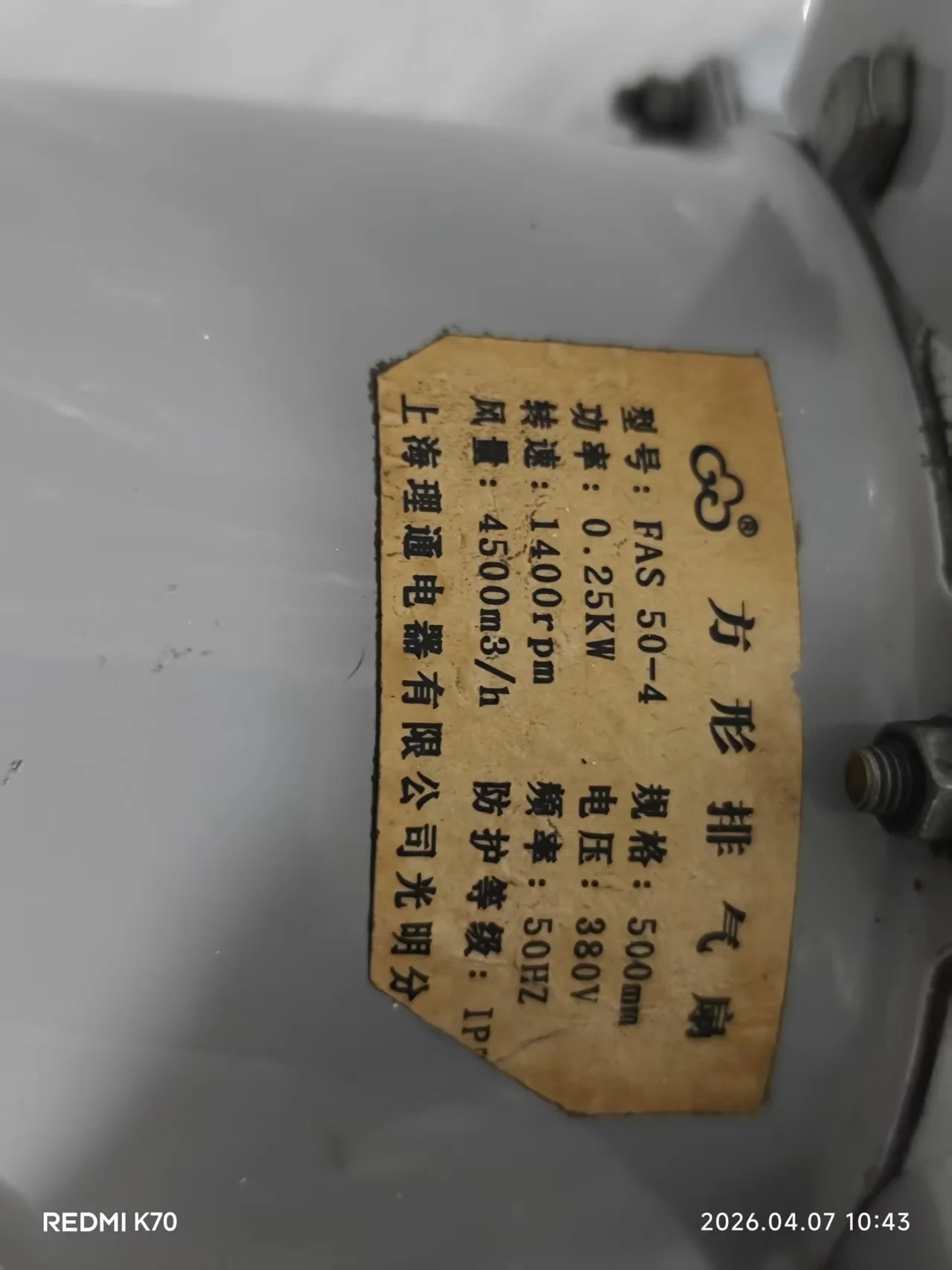
First, we checked the old equipment tags. The outgoing fan used a three-phase 380V, 50Hz power supply. It spun steadily at 1,400 RPM. Furthermore, it drew 250W of power to move 4,500 m3/h of air.
We then looked at the physical size limits. The old fans sit in square cutouts on a large metal frame. Therefore, any replacement must fit a 600 mm by 600 mm space exactly. We could not change this frame.
The customer asked us to drop the existing louvers from the design. Louvers normally block backdrafts. However, they also block airflow and create drag. Finally, the new fans must survive constant factory use.
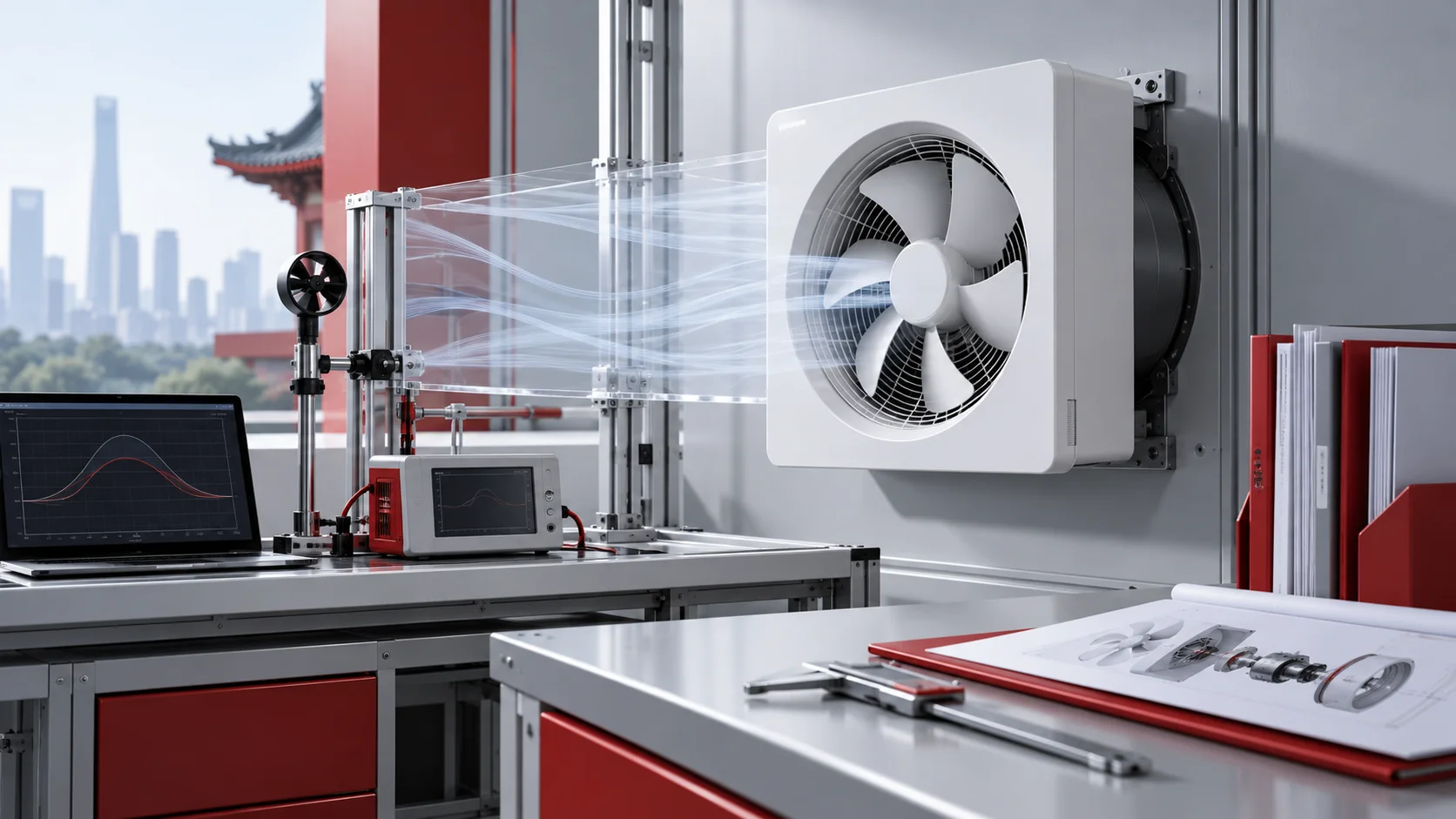
Any new fan must meet strict performance rules. Therefore, we rely on tests done TO AMCA 210-16 methods. This testing confirms the fan truly hits the 4,500 m3/h mark. Without real testing, the factory might overheat.
Engineering the ec exhaust fan retrofit
Changing from an AC motor to an EC motor during an ec exhaust fan retrofit forces engineers to make hard choices. First, you must balance power savings against physical fit. We looked at a few options before picking a final design for this specific job.
Matching the Square Mounting Space
First, we thought about using a normal axial fan with a standard wire grille. We rejected this idea quickly. The factory line already has exact square holes cut into the metal. Modifying that old sheet metal takes too much time. Instead, we picked a custom 600 mm by 600 mm square metal wall plate. This specific size lets the new fan drop right into the old bolt holes. Therefore, the factory avoids costly downtime during installation. Furthermore, the thick plate stops unwanted vibration from the spinning blades. Next, this flat plate forms a tight seal against the factory wall.
Removing Louvers to Cut Resistance
Next, we changed the airflow path to save energy. The old setup used outer louvers to block wind when the fan stopped. We removed them entirely at the customer’s request. Losing these louvers removes weather protection. However, this fan runs 24 hours a day indoors. Consequently, a backdraft is never a real problem here. By removing that physical block, we lowered the static pressure. So, the fan pushes the air much more easily. Finally, a lower static pressure means the motor works less to move the same air volume.
Motor Selection and Power Savings
Picking a three-phase 380V EC motor carries a materially higher cost than buying a basic AC motor. Even so, the long-term math makes sense for a factory running all day. We kept the 1,400 RPM speed exactly the same. We also matched the 4,500 m3/h airflow requirement. The EC motor runs much more efficiently than the old design. Furthermore, the missing louvers reduce the working load. Therefore, the new fan only needs 200W of input power. The old fan needed a full 250W. By contrast, the new fan saves 50W on every single unit. Over 8,000 hours a year, this drop saves a massive amount of power across the whole plant. Finally, we named this final engineered unit the LWEE500(20″)SP-405.
Technical Specifications
| Airflow | 4,500 m3/h |
| Input Power | 200 W |
| Speed | 1,400 r/min |
| Voltage | 3~380 V |
| Frequency | 50/60 Hz |
| Dimensions (Panel) | 600 x 600 mm |
| Dimensions (Depth) | 248.5 mm |
| Life Expectancy | 40,000 hours |
The table below shows the exact final numbers for the LWEE500(20″)SP-405 fan. First, we focused heavily on the input power limit for this ec exhaust fan retrofit. The new EC design drops the required power to just 200W. Next, it successfully maintains the exact 4,500 m3/h airflow target. So, the factory gets the exact same cooling for less energy. Furthermore, the table lists a solid 40,000-hour life span. Therefore, this fan will easily last for years of non-stop factory use. The original unit only supported 50Hz power. By contrast, the new fan handles both 50Hz and 60Hz. Finally, this dual rating offers extra flexibility for different regional power grids.
Reference: AMCA 210 covers the test method behind these figures.
Technical Documentation
Engineers need exact documents to confirm the design. First, we provide the old nameplate image below. This image proves the original 250W power draw and 4,500 m3/h airflow.
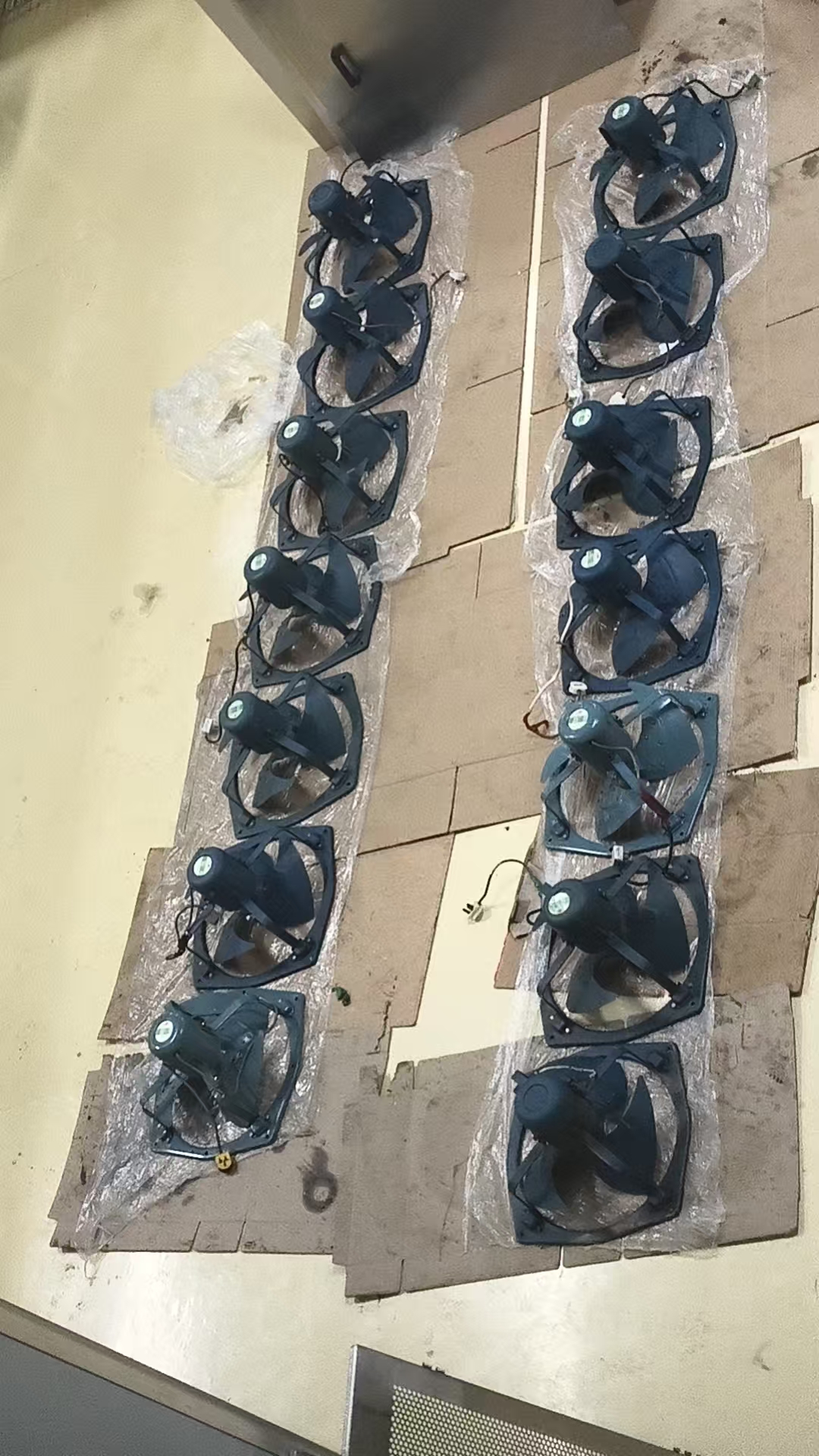
Next, we show the new fans ready for assembly. These fans feature the required 600 mm square mounting plates. Therefore, they guarantee a perfect drop-in installation.
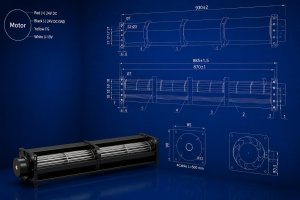
Furthermore, we include the official engineering drawing. This PDF provides the exact dimensions and electrical details needed by the field installers.
LWEE500(20″)SP-405 Engineering Drawing
Finally, we show the factory framework. This photo highlights the rigid 600 mm boundary constraint that guided our entire design process.
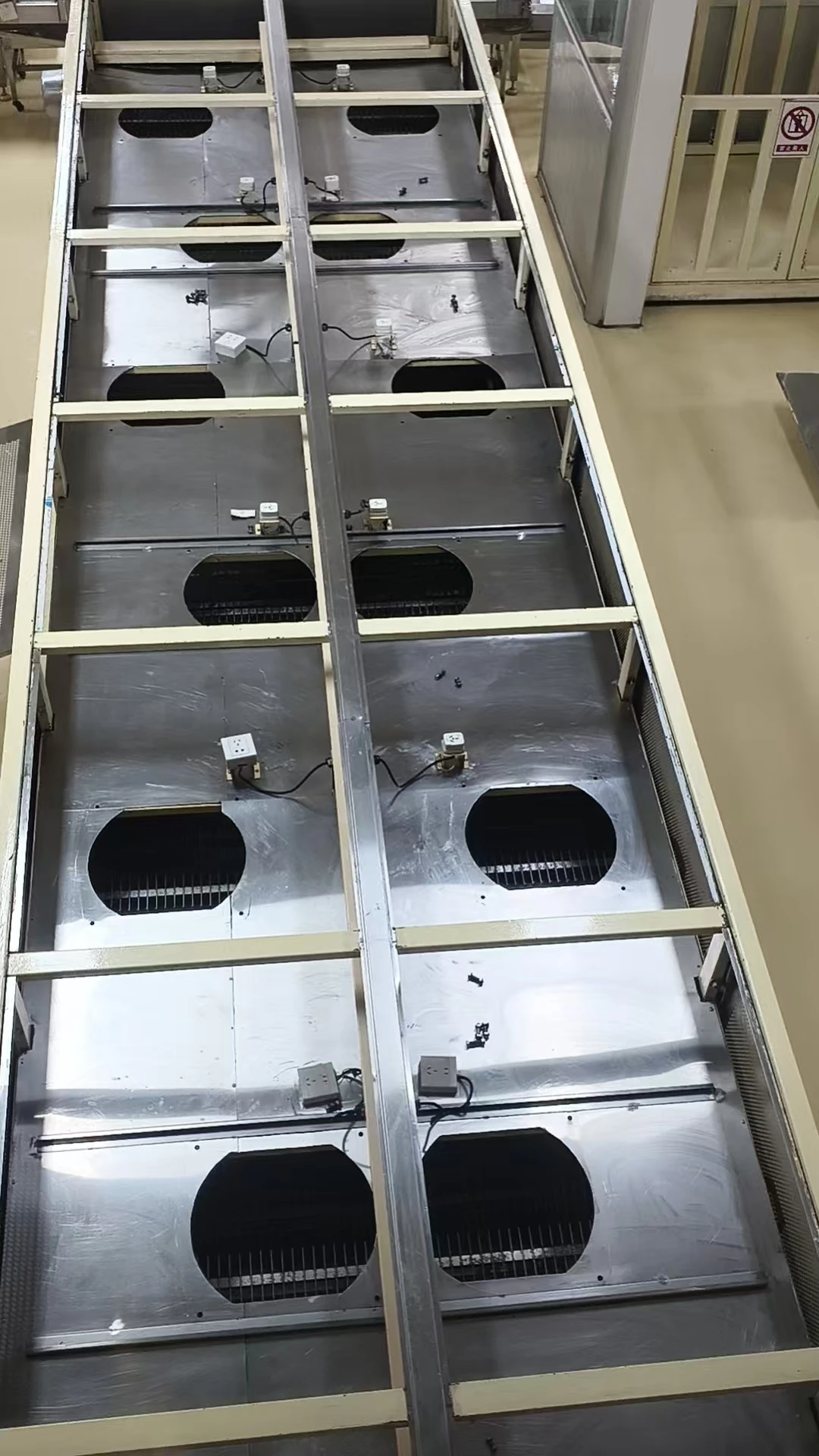
Specifying an Upgrade for Continuous Production
Engineers planning a similar ec exhaust fan retrofit can follow a few simple rules. First, check your exact physical limits before ordering parts.
- First, measure the exact mounting space before requesting quotes. Next, a 500 mm fan blade often needs a 600 mm square plate to cover the hole completely.
- Next, question every extra part on the fan. If the unit runs all day indoors, removing louvers drops the air resistance. Therefore, the motor works less and saves power.
- Furthermore, calculate your total operating hours carefully. Paying more for an EC motor makes immediate financial sense at 8,000 hours a year. By contrast, a backup fan rarely runs enough to justify the upgrade cost.
- Finally, check the electrical supply at the wall. Replacing a three-phase 380V AC fan requires an EC motor built specifically for that higher voltage. First, verify the voltage before selecting a motor.
Our team can match custom mounting plates in-house, which cuts your lead time significantly. Finally, reviewing these details ensures your project succeeds on the first try.
Related: Exhaust Fans.
Engineering Questions on an ec exhaust fan retrofit
Technical Documentation & Resources
Browse our axial fans range, the AC axial fans section, or EC axial fans.
Have a Similar Fan Requirement?
Longwell’s engineering team delivers custom spec sheets and samples within 90 days. Since 1990, we have supplied EC fans and blowers to OEMs across HVAC, cold chain, data center, and industrial applications worldwide.
Browse Related Products:
🏆 ISO 9001 / ISO 14001 / ISO 45001 | CE (TÜV) | UL/ETL | ATEX Zone 21/22 | AMCA 210-16 / ISO 5801 tested
Choose the right exhaust fan
Longwell manufactures 241 exhaust fans in-house. Send airflow, static pressure and voltage — an engineer replies with a matching model, performance curve and price within one working day.