Replacing AC Motors in Strict Cabinet Spaces
A commercial HVAC builder asked us to design a dc fan coil blower for their existing equipment. First, they sent mechanical drawings for six different unit capacities. Specifically, these included horizontal concealed duct types and vertical exposed floor units. We needed to replace their older AC motors with 0-10V controllable direct current models.
Next, we reviewed the hard dimensional limits. For example, the horizontal units strictly enforce a 235 mm peak height. Meanwhile, the input voltage rail remained at 220V. Therefore, the fan required internal electronics to bridge the AC supply to the DC motor.
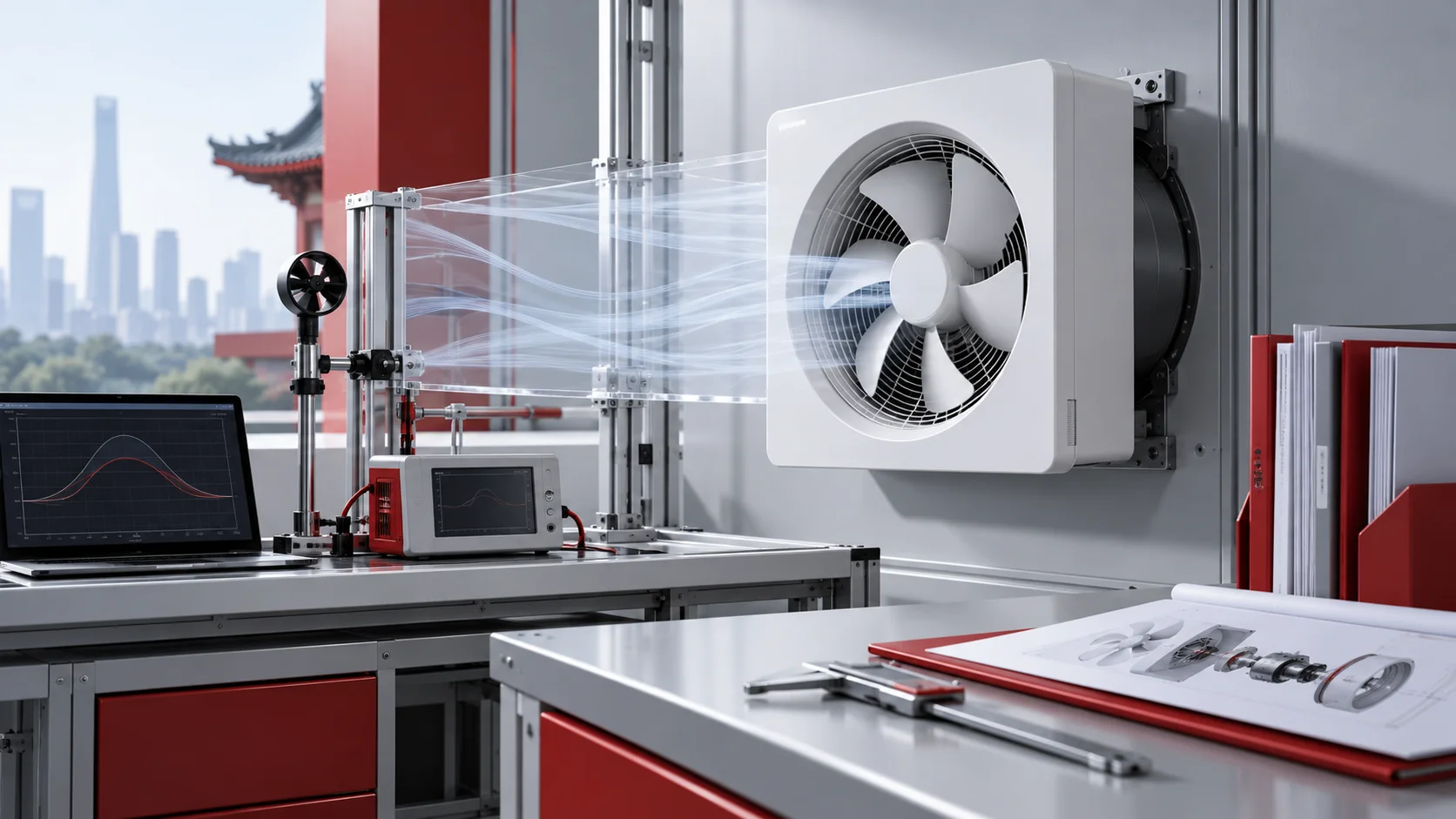
By contrast, adding an external power supply box was impossible. The cabinet space constraints left no room for extra hardware. Finally, the largest model needed to push 680 m³/h of airflow while keeping noise below 46 dB. We tested the baseline aerodynamics to AMCA 210-16 methods before we started.
Furthermore, any new design had to pass standard electrical safety checks. The customer needed this done fast without changing their sheet metal. So, we had to match the original mounting points exactly.
Engineering the dc fan coil blower Upgrade
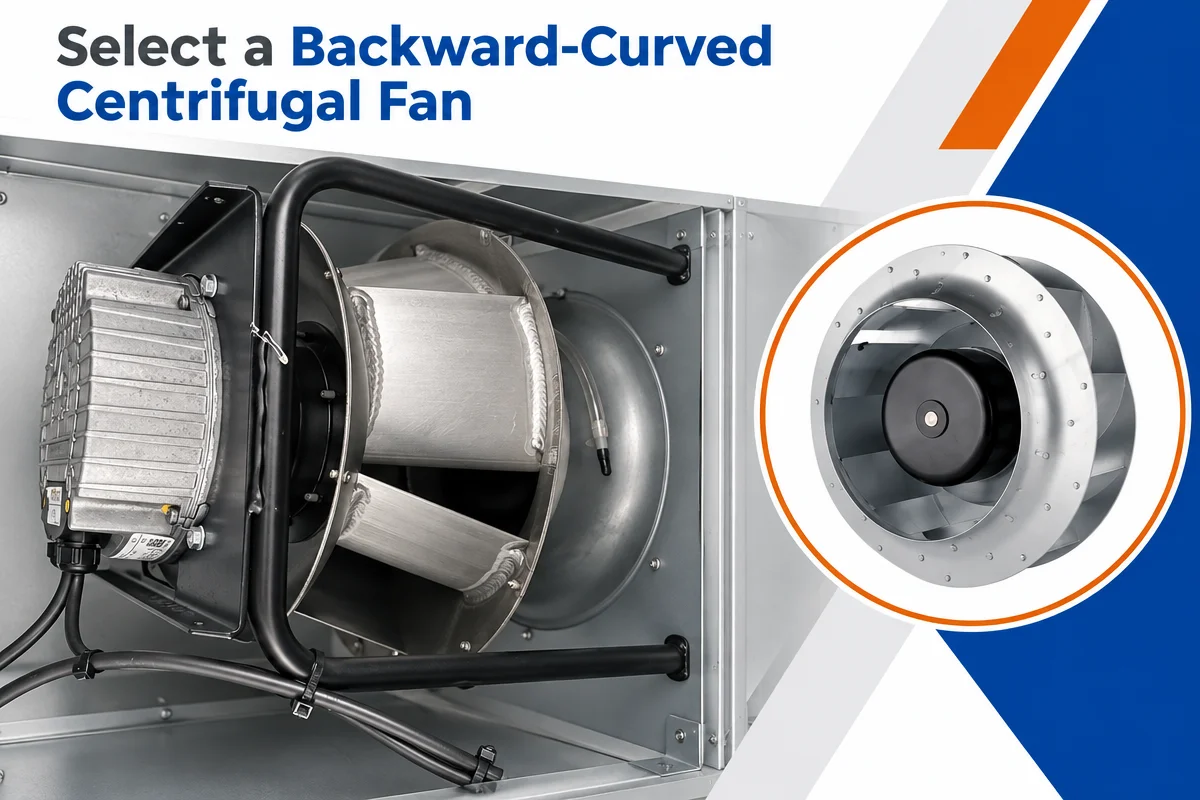
We faced two main paths for converting these AC blower units. First, we looked at a bare brushless motor paired with a separate driver board. We rejected this layout quickly. It forces the customer to find a safe mounting spot for the extra hardware. Instead, we selected a SmartEC motor with an integrated drive. This motor connects directly to the 220V mains. Then, it accepts the 0-10V signal natively.
Managing the Mechanical Envelope
However, putting the power conversion electronics inside the motor shell increases its total length. Consequently, a longer motor pushes the two forward-curved centrifugal wheels further apart. This expansion threatened to violate a major rule. The LWFP-68WA-DC model has a strict 960 mm width limit.
So, we redesigned the central motor bracket. We chose to recess the mounting points into the frame. By doing this, we maintained the exact original dimensions. Therefore, the customer avoided redesigning their entire cabinet assembly.
Making Trade-offs for Fit and Control
Naturally, integrating the drive hardware carries a distinct cost. The SmartEC motor demands a higher material spend than the old shaded-pole setup. Furthermore, the sealed onboard electronics require careful thermal monitoring.
Therefore, we capped the peak power draw at 81 W to keep internal temperatures safe. Next, we verified the acoustic profile at the highest speed setting. A heavier rotor can sometimes increase vibration. Even so, our testing confirmed the unit stays under the 46 dB limit.
Delivering the Final Parameters
Ultimately, the unit delivers exact airflow modulation. It achieves this without forcing sheet metal changes. In short, the customer gets the modern 0-10V control they wanted. Meanwhile, the factory installation process remains exactly the same. First, operators slide the new blower into the existing slots. Next, they connect the primary 220V power and the separate control wires. Finally, the system powers up without any external driver boxes.
Technical Specifications
| Model | Style | Voltage (V) | Airflow (m³/h) | Power (W) | Noise (dB) | Width (mm) | Height (mm) |
|---|---|---|---|---|---|---|---|
| LWFP-68WA-DC | Horizontal | 220 | 680 | 81 | 46 | 960 | 235 |
| LWFP-51WA-DC | Horizontal | 220 | 510 | 64 | 44 | 860 | 235 |
| LWFP-34WA-DC | Horizontal | 220 | 340 | 40 | 50 | 760 | 235 |
| LWFP-68LM-DC | Vertical | 220 | 680 | 81 | 46 | 980 | – |
| LWFP-51LM-DC | Vertical | 220 | 510 | 64 | 44 | 640 | – |
| LWFP-34LM-DC | Vertical | 220 | 340 | 40 | 50 | 790 | – |
The 235 mm height constraint dictated the scroll housing size we could fit. Even so, the blowers hit the required 680 m³/h target at peak voltage. Furthermore, the 81 W limit ensures the internal electronics survive long operating cycles. First, the horizontal versions maintain the strict height rule. Next, the vertical versions use a slightly taller envelope where space allows. Therefore, the final airflow matches the original specification perfectly. By contrast, an inferior motor choice would have reduced the total output.
Reference: AMCA 210 covers the test method behind these figures.
Technical Documentation

This image outlines the six customer equipment configurations requiring the update immediately.
longwell-wi-6929168951-spec-sheet-01.pdf
This document contains the dimensional drawing for the horizontal 68WA model.
longwell-wi-6929168951-technical-doc-02.pdf
Mechanical engineers need this schematic to verify mounting points on the 51WA variant.
longwell-wi-6929168951-spec-sheet-03.pdf
This sheet details the 34LM vertical unit parameters for system integrators.
longwell-wi-6929168951-spec-sheet-05.pdf
Here is the complete specification for the vertical 68LM floor unit.
longwell-wi-6929168951-spec-sheet-06.pdf
This file provides the electrical limits for the horizontal 34WA blower.
longwell-wi-6929168951-technical-doc-07.pdf
Procurement teams should reference this print for the 51LM floor-standing dimensions.
Applying This to Your AC Conversion Project
- Measure the exact gap between the existing blower housing and the cabinet walls. First, integrated motors often require slightly longer shafts. Therefore, you must account for this before ordering parts.
- Verify your control strategy before specifying the motor type. Next, a pure 0-10V signal needs proper isolation from the high-voltage lines. Otherwise, electrical noise can disrupt the speed commands.
- Ask the supplier if they manufacture the motor and the forward-curved impellers themselves. Consequently, you can request custom brackets without extending the lead time.
Related: HVAC Systems.
Engineering FAQs
Technical Documentation & Resources
Browse our blowers range, the exhaust blowers section, or centrifugal blowers.
Have a Similar Fan Requirement?
Longwell’s engineering team delivers custom spec sheets and samples within 90 days. Since 1990, we have supplied EC fans and blowers to OEMs across HVAC, cold chain, data center, and industrial applications worldwide.
Browse Related Products:
🏆 ISO 9001 / ISO 14001 / ISO 45001 | CE (TÜV) | UL/ETL | ATEX Zone 21/22 | AMCA 210-16 / ISO 5801 tested
Choose the right speed regulator
Longwell manufactures 5 speed regulators in-house. Send airflow, static pressure and voltage — an engineer replies with a matching model, performance curve and price within one working day.