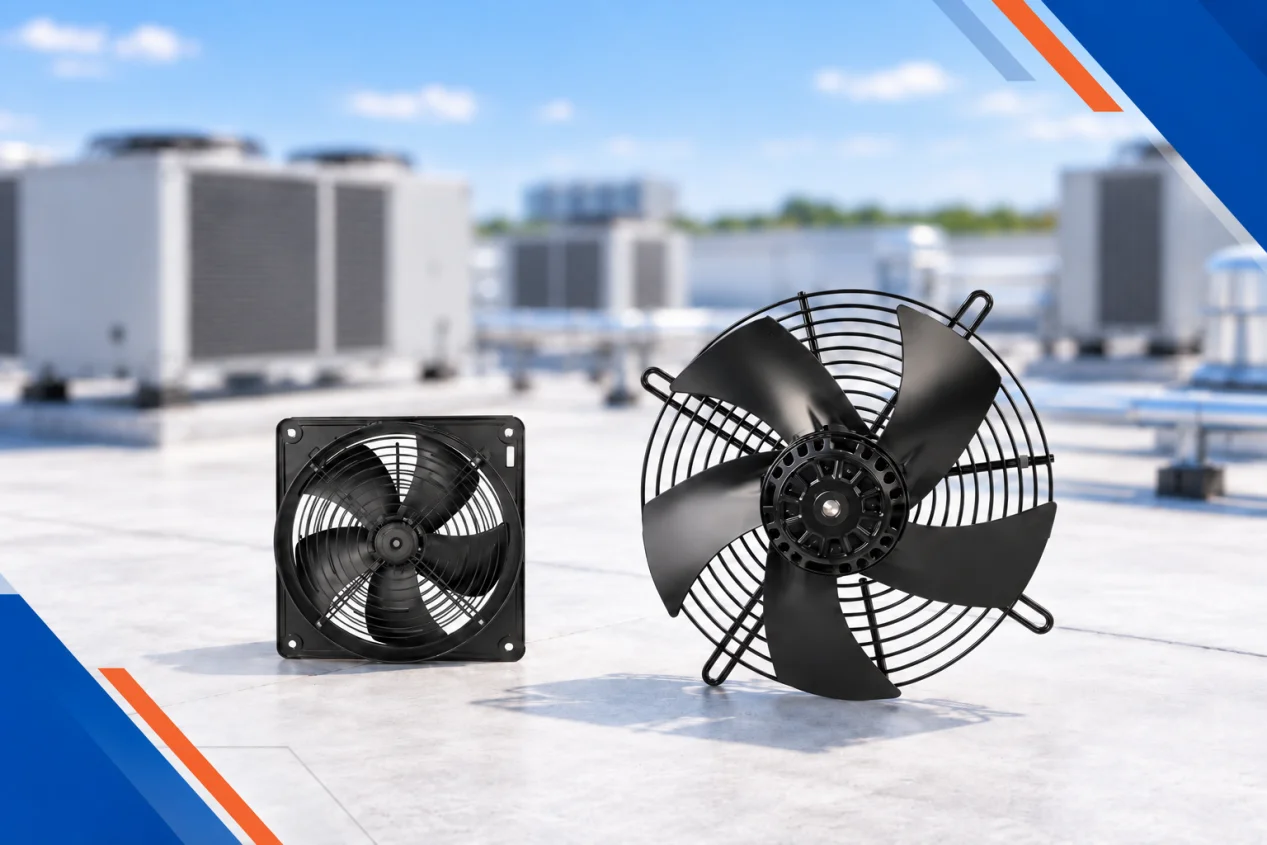
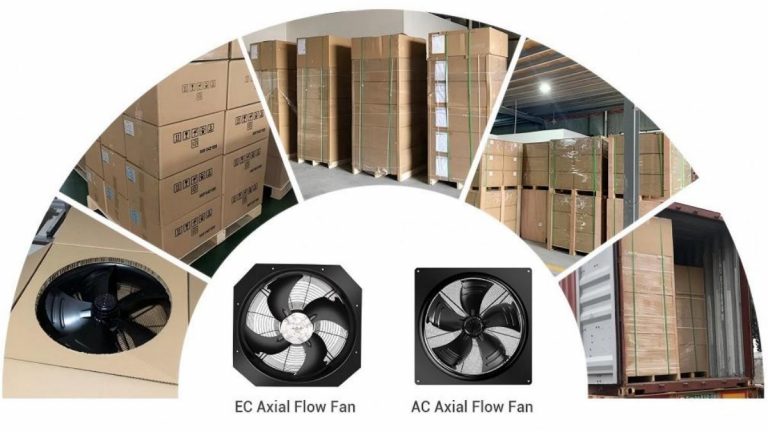
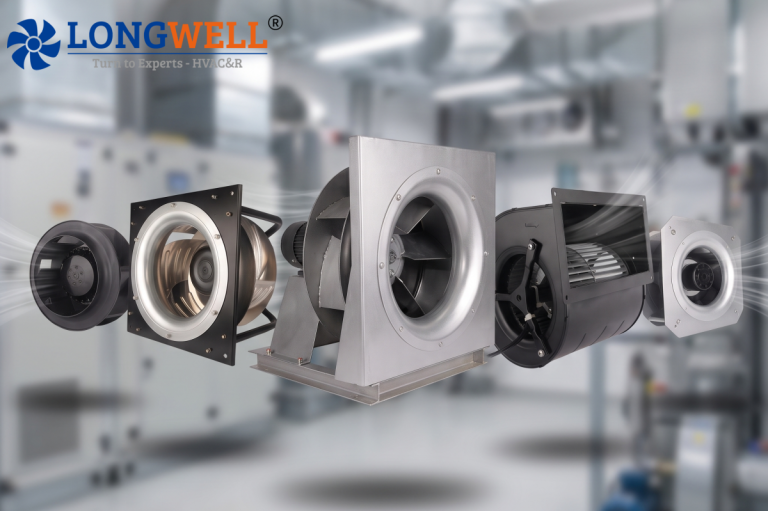
Air movement is essential in an HVAC system to circulate air and regulate temperature. But when you’re specifying equipment for a large commercial or industrial space, not all fans do the same job. Industrial fans usually have large blades, or multiple industrial fans are used together to deliver targeted cooling to immediate zones. Air circulators work differently. They generate a focused and aerodynamic jet that keeps air moving through the entire room. In this blog, we will provide more information about air movement solutions from air circulators to industrial fans. We will also provide a practical selection guide to help choosing the right air-moving solution for your project.
What Is a Industrial Fan?
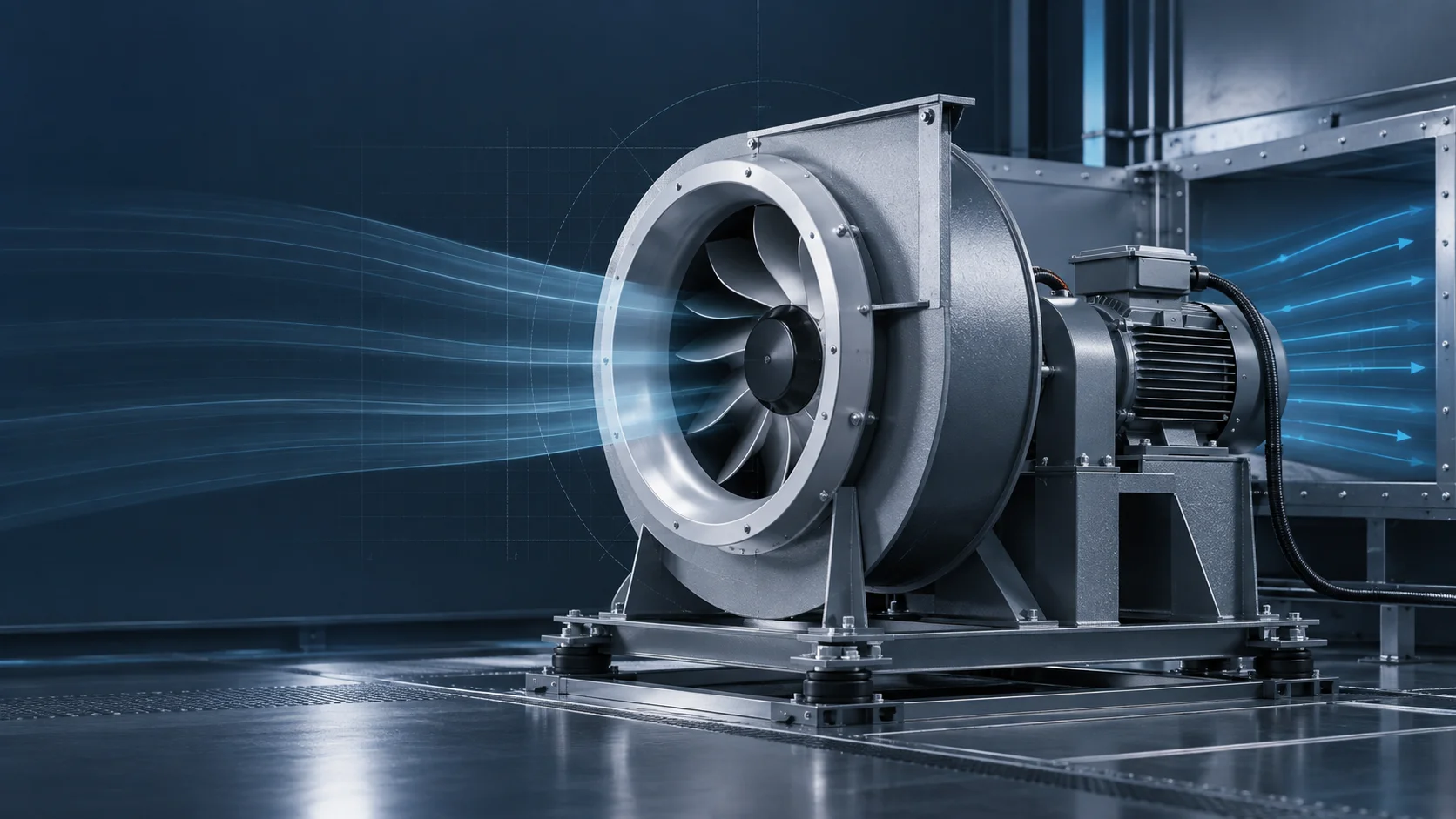
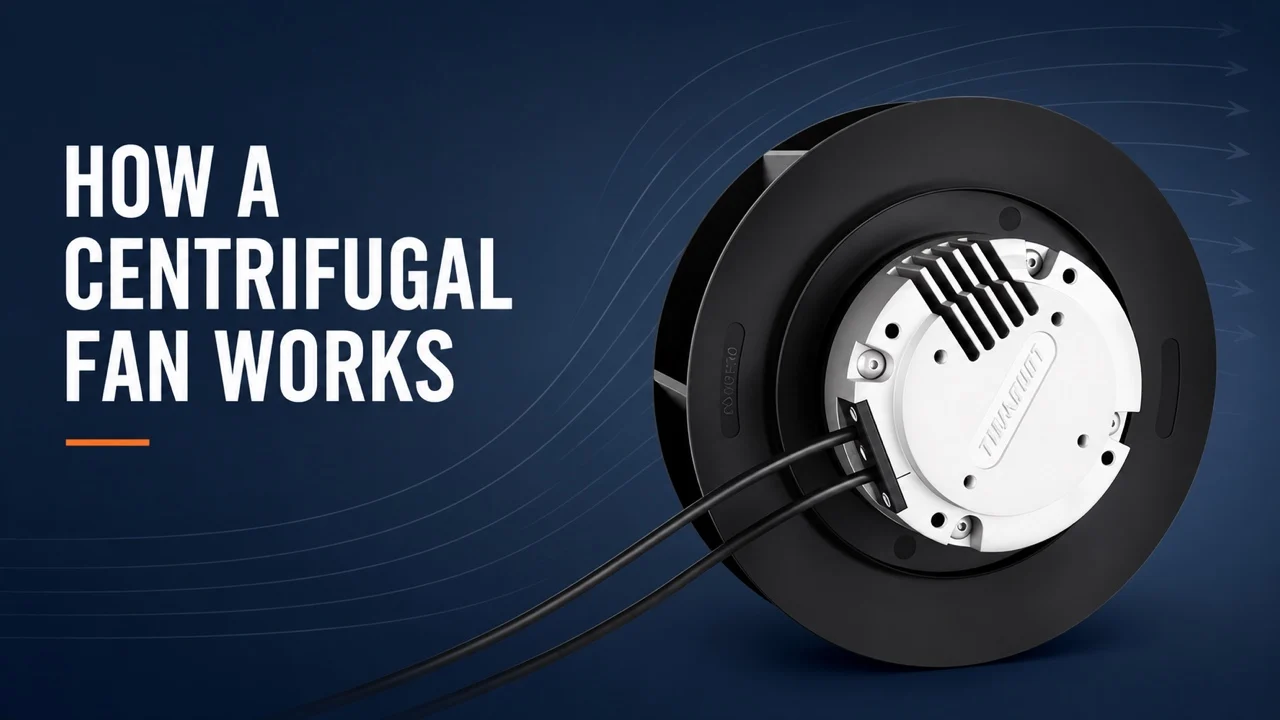
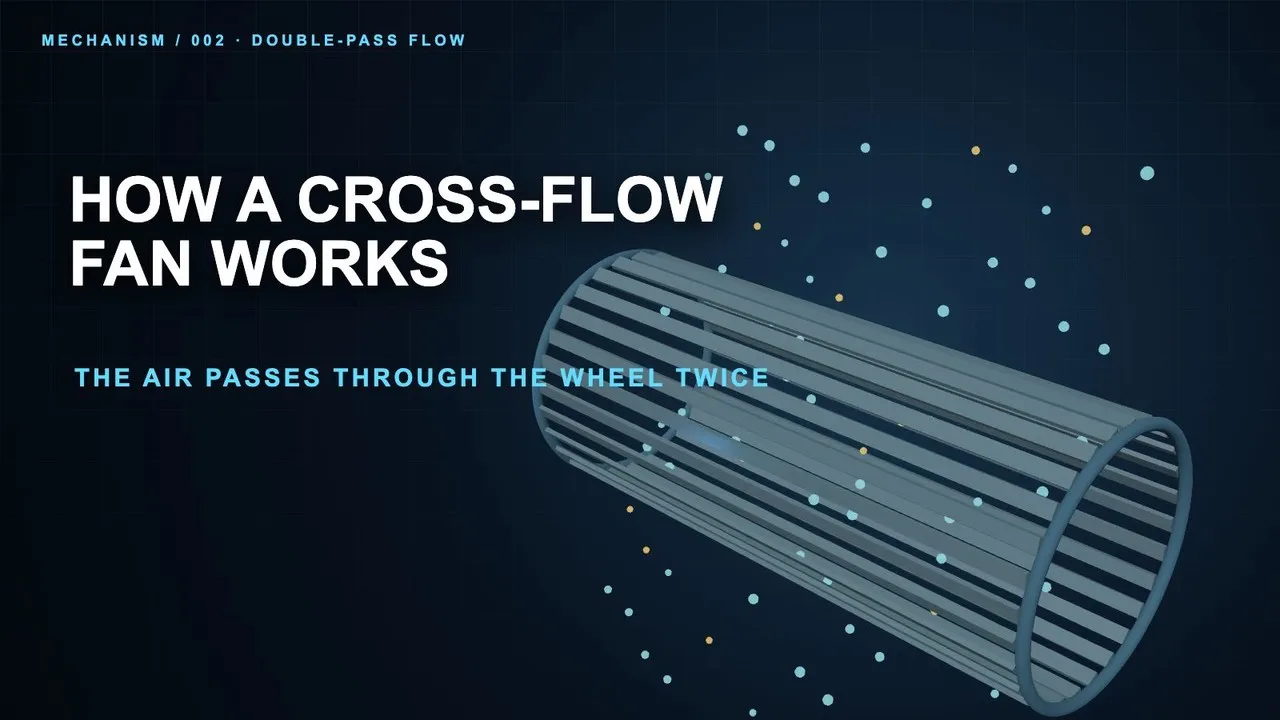
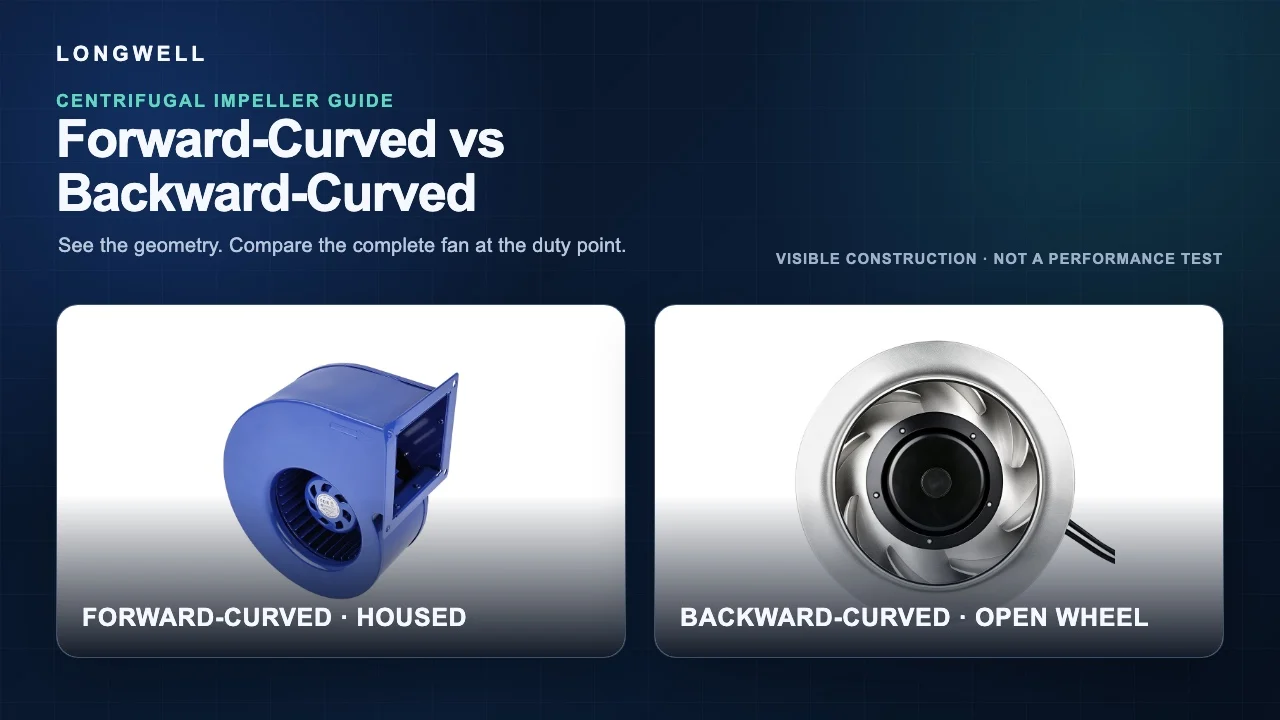
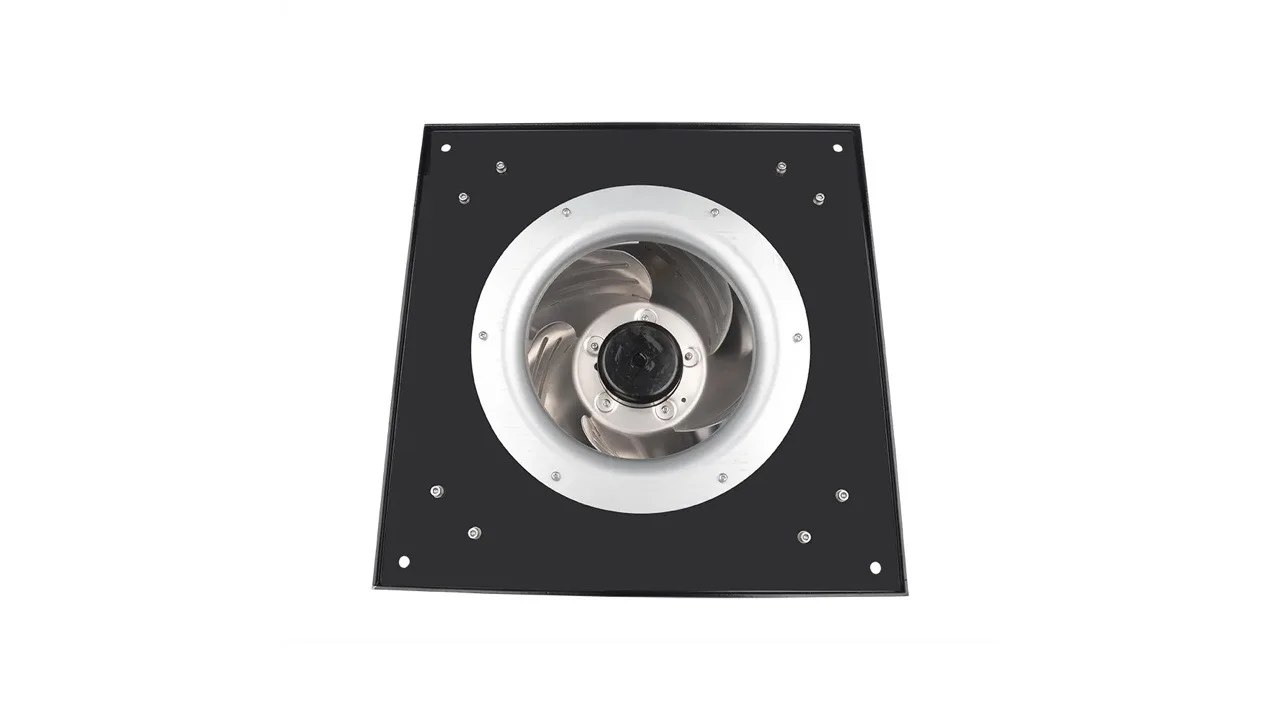
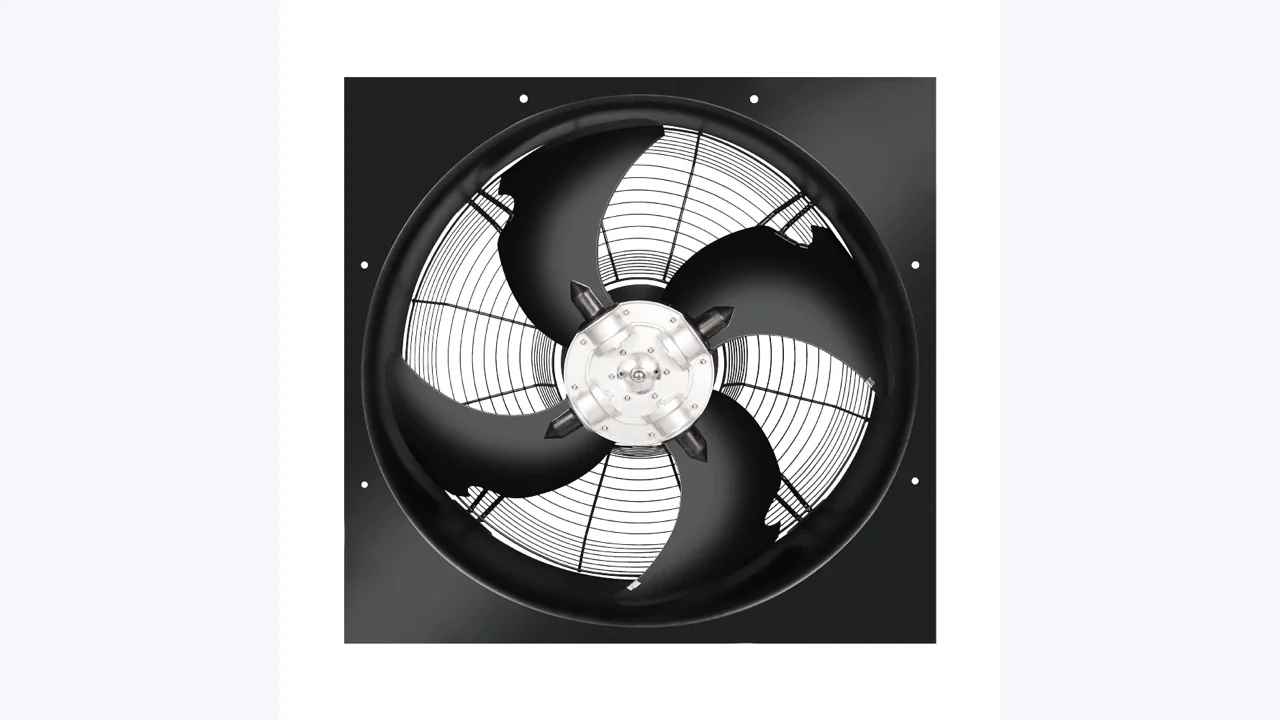
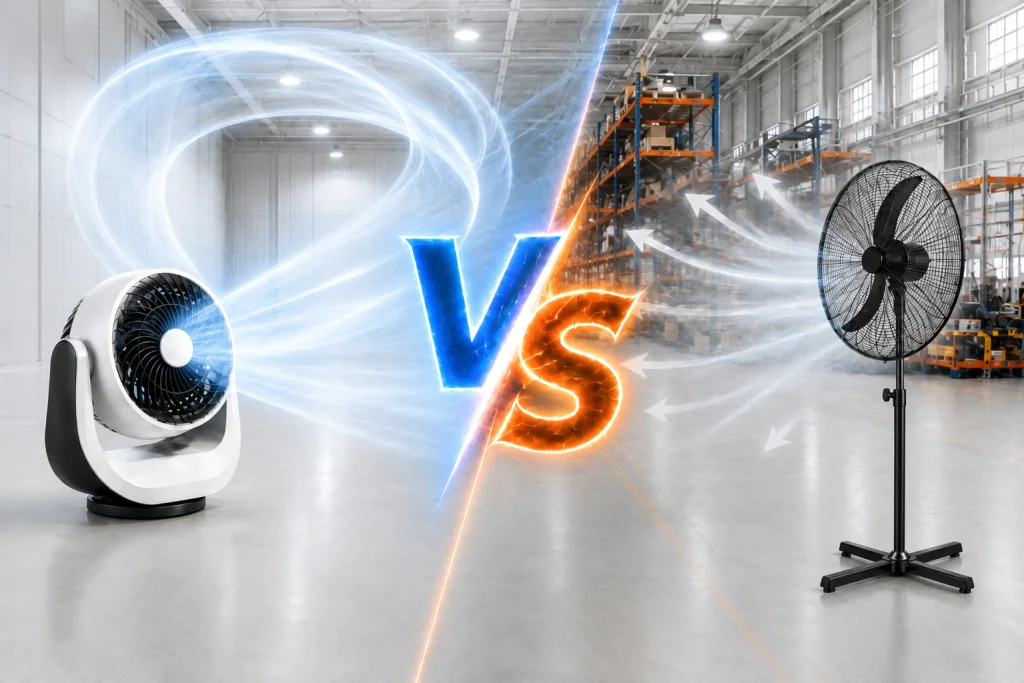
An industrial fan’s rotating blades generate a relatively broad air stream, creating an immediate cooling sensation within the airflow path. It is designed to move air directly to the opposite area. When the fan oscillates, the airflow covers several nearby zones. Industrial fans aren’t one-size-fits-all. For example, centrifugal fans are suitable for HVAC and filtration, axial fans are ideal for high-volume and low-pressure applications, and cross-flow fans are better for wide and uniform air curtains. You’ll find them in HVAC systems, heat pumps, data centers, cleanrooms, factories, and pretty much anywhere that needs reliable, high-volume air movement.
What Is an Air Circulator?
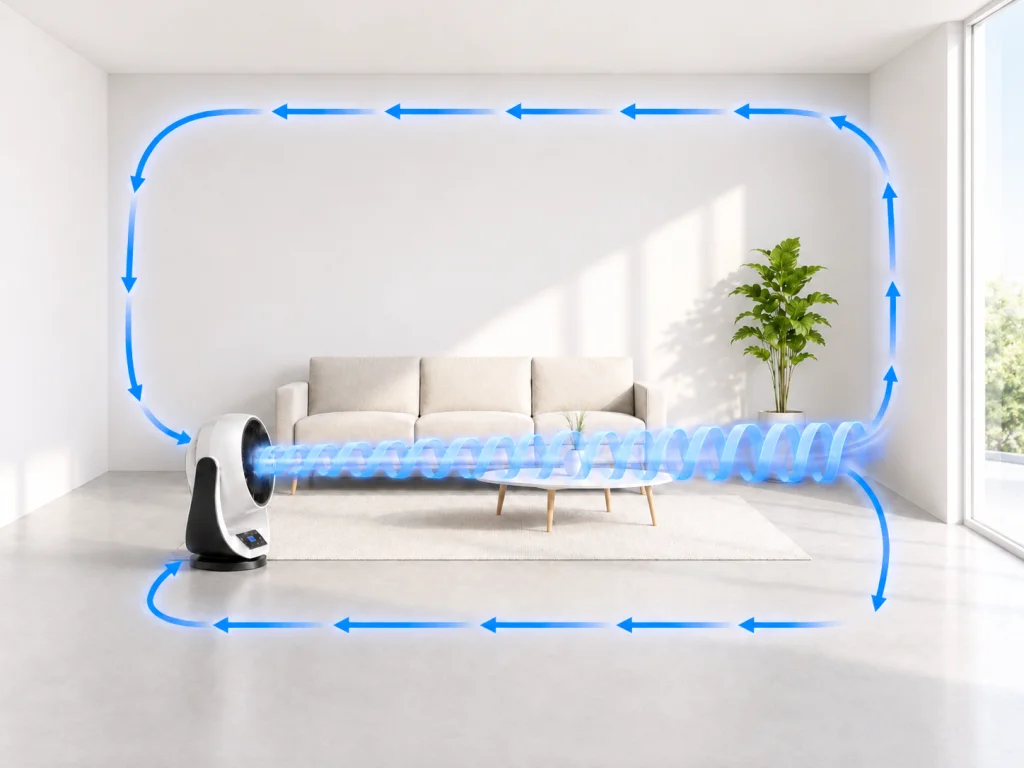
An air circulator is a type of fan designed to keep air moving throughout a space, mostly for home ventilation use. It draws air through the rear of the unit and uses angled or deep-pitch blades, together with a shaped grille, to produce a concentrated, high-velocity stream of air. This focused air stream can maintain its direction over a longer distance. The fast air beam hits a far wall or ceiling. Then, it changes direction and splits along the flat surface. Air moves along the walls back to the fan, creating a continuous circulation path.
This process helps reduce stagnant zones and distribute indoor air more evenly. It can also move warm air away from high ceilings in winter or help spread cool air from an air-conditioning system during summer.
Air Circulator vs Industrial Fan: Key Performance and Application Differences
Airflow Volume
Airflow volume is mainly determined by the fan diameter, blade design, and motor rotation speed. It refers to the amount of air a fan moves within one minute or one hour, usually measured in CFM or m³/h. A large industrial fan provides a higher total airflow volume, while an air circulator is designed to keep the discharged air moving through the space. The LONGWELL industrial wall fan can generate up to 960 m³/min airflow volume.
In small commercial and industrial spaces, an air circulator works with the HVAC system to move conditioned air beyond the immediate supply-air zone. When positioned near HVAC outlets, walls, or long aisles, it can help carry cooled or heated air into areas where the original supply airflow becomes weak.
Airflow Velocity
Airflow velocity affects how far the airflow can reach. In a large HVAC space, it is important to maintain sufficient air speed at the required working distance.
An air circulator generally produces a more directional air stream that can support airflow along the indoor space to promote internal air circulation. For household appliances, the airflow of an air circulator is sufficient. While large factories mostly use industrial fans to provide sufficient airflow. An industrial fan can create a stronger local airflow, but its velocity will slow down sharply over distance.
For large-space HVAC applications, buyers should therefore compare velocity at a specified distance rather than relying only on maximum outlet velocity. Throw distance, mounting height, airflow angle and surrounding obstacles all affect whether the air reaches workers, equipment or low-circulation zones.
Coverage Area
Coverage area describes how much of a space receives useful air movement. Air circulators are well suited to directional coverage, aisles, and stagnant zones. For residential applications, select one suitable size air circulator is enough for room ventilation.
Industrial facilities with racks, partitions, or multiple work zones may need several air circulators or a combination of circulators and traditional industrial fans. Wall-mounted air circulators can be positioned above equipment and aimed along production lines or warehouse aisles, while pedestal units are more suitable for movable or changing work zones. The floor plan, machinery layout, and worker locations therefore influence how many units are required and where industrial fans should be installed.
Noise Level
The noise level performance depends more on the fan design, such as impeller diameter, blade shape, motor type, or grille design. A smaller high-speed circulator may generate more aerodynamic noise than a larger fan operating at a lower speed.
Generally, the residential air circulator will be designed with a lower noise level to satisfy the comfort requirements. In large commercial and industrial spaces, noise level is also an important consideration. The industrial fan or air circulator may operate near workers or customers. When designing the industrial fan allocation, buyers should therefore compare noise level and airflow rate to protect the workplace safety. In louder industrial environments, airflow performance and coverage may take priority over small differences in fan noise.
Power Consumption
Air circulators are often used to keep conditioned air moving and reduce stagnant zones in limited spaces. They can also support an HVAC system by redistributing cooled or heated air instead of allowing it to remain concentrated near supply outlets. This may help reduce unnecessary heating or cooling in some applications.
In a warehouse or production facility, fans may operate continuously. A difference of only a few watts is therefore less important than how efficiently the fan delivers the required airflow across the working area.
Traditional industrial fans can also be energy-efficient when they are correctly sized for the ventilation project. A large fan operating at a lower speed may consume less energy than several smaller high-speed units providing the same practical coverage.
How to Choose the Right Air-Moving Solution?
Step 1: Define Air Movement Requirements
A fan with a higher maximum airflow is not automatically the better choice. For an air circulator, airflow, distance, and distribution are often particularly important. When the goal is to directly cool or move a large volume of air, it is more advisable to consider using traditional industrial fans with high air volume.
Step 2: Match Fan Performance to the Application
Maximum airflow should not be treated as the only selection value. The same fan can deliver different airflow under different operating conditions.
For free-air applications such as warehouse air circulation, static pressure is usually less important than airflow velocity, throw, and coverage. Buyers should look at performance data measured at realistic distances rather than comparing only the maximum CFM or m³/h printed on the specification sheet.
Step 3: Consider Installation Space
The same fan can perform differently when installed in a different place. A concentrated air stream industrial fan may work well along a long warehouse aisle, while a broad industrial fan may be more effective around an open assembly area.
Installation angle also matters. An air circulator aimed toward a ceiling or along a wall can support a larger circulation path. An industrial fan positioned close to workers is better suited to spot cooling.
Step 4: Match Motor Type and Control Methods
Voltage and frequency need to match the facility power supply, while motor type and control method should reflect how the fan will operate. For applications with changing airflow demand, variable-speed control allows output to be reduced rather than running the fan at full speed continuously. Depending on the fan and motor platform, control options may include multiple speeds, 0–10 V, PWM or Modbus.
The right fan is the one that delivers the required airflow where it is actually needed. Do not simply choose the model with the highest maximum airflow. If you cannot decide on which specification or installation space, send the project requirement to LONGWELL for assistance. LONGWELL engineering team will reply within 1 business day.
LONGWELL Air Movement Solutions for Large Spaces
LONGWELL offers a variety of airflow solutions for large-space scenarios, covering multiple fields such as industry, commercial public buildings, and data centers.
The main types of fans provided are as follows:
- Centrifugal Fan: Features high static pressure and large air volume. The LGBE3G series backward-curved can provide high efficiency performance.
- Axial Fan: It can achieve a large air volume output and is specially designed to provide suitable ventilation solutions for industrial and commercial large space scenarios. The LWAE series axial fan compatible with HVAC systems, cooling towers, data centers, and industrial ventilation.
- Cross-Flow Fan: Adopts a long cylindrical impeller design, which can output uniform and directional airflow throughout the entire length range of the air outlet. The LWCE series cross-flow fan is suitable for scenarios such as air curtain machines, heat dissipation of ventilation equipment, and purifiers.
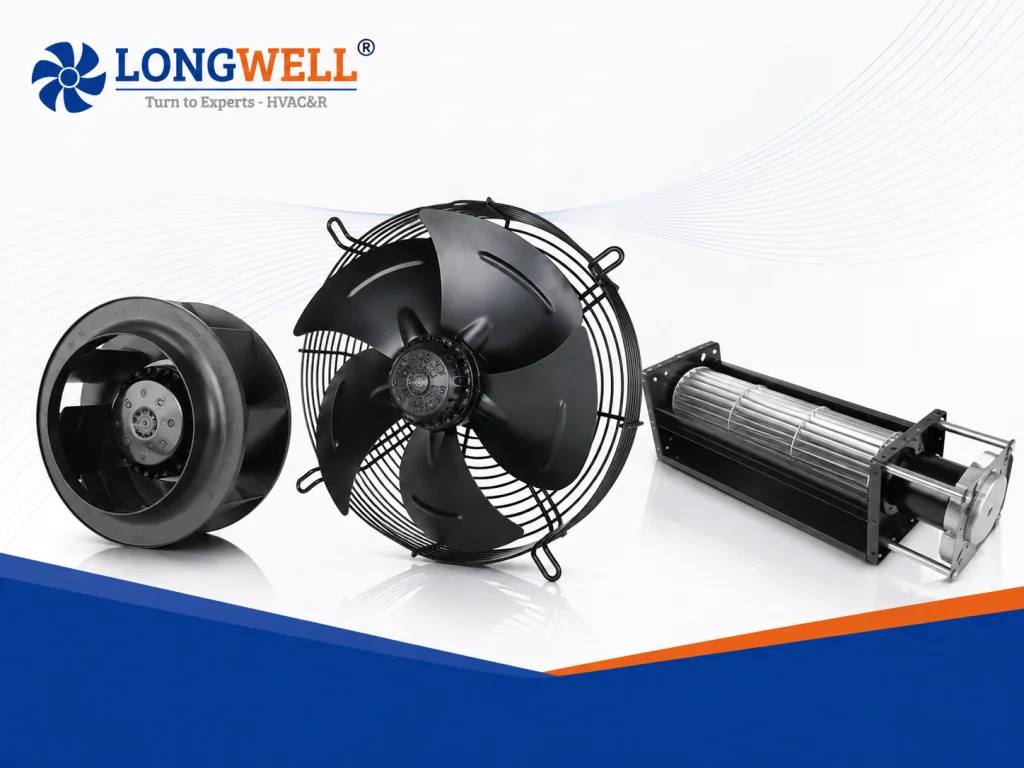
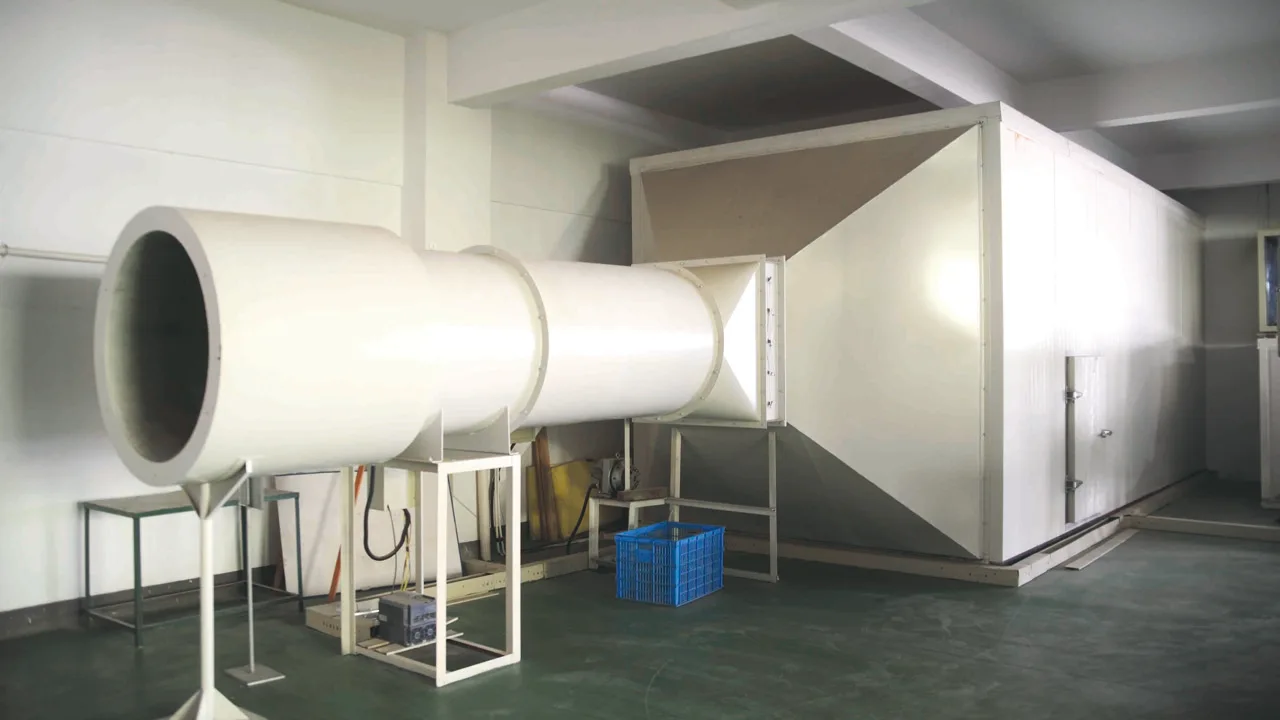
These are parts of LONGWELL’s ventilation product portfolio. For OEM and project-based requirements, LONGWELL also provides customization services and can provide exclusive solutions based on the specific ventilation requirements of the project. Technical drawings, performance curves, and prototype testing can be provided to support system integration.
FAQs
Can air circulators lower electricity bills when paired with HVAC systems?
Yes. In some conditions, the air circulator can help distribute cooled or heated air more evenly. The HVAC system do not need to generate more air to compensate the uneven area.
How do air circulators improve indoor air quality in large rooms?
The air circulator itself cannot introduce fresh air or remove pollutants. It can help improve air movement and reduce air accumulated zones.
When should someone choose a traditional fan instead of an air circulator?
When the airflow movement goal is direct and localized airflow, a traditional fan is the better choice. Applications such as equipment cooling or short-distance, high-volume air movement may benefit more from a traditional fan.
Where can an industrial fan be used?
Industrial fans are designed for continuous operation and high airflow which are often used in HVAC systems, factories, warehouses, data centers, duct collection, and more.
Choose the right industrial fan
Longwell manufactures 38 industrial fans in-house. Send airflow, static pressure and voltage — an engineer replies with a matching model, performance curve and price within one working day.