Thermal Constraints for the 5V DC blower fan
The customer makes small electronic devices. These devices have dense circuit boards. Space is very tight. First, they asked us for a 5V DC blower fan.
They needed a 50x50x10mm 5V DC blower fan. It had to fit their low-voltage power system. Originally, their old unit was a DB5010H05B model. It ran at a fixed 6000 RPM.
As a result, it moved 3.18 CFM of air. Furthermore, it pushed 11.0 mm H2O of static pressure. It made 36 dBA of noise. However, their new hardware needed better cooling.
First, they wanted less noise during normal use. They set a target of 5000 RPM. Therefore, the noise had to be under 33 dBA. Next, they needed a top speed of 8000 RPM.
This speed handles high heat loads. Finally, they wanted a 10cm wire and ball bearings. Meanwhile, they also had a second project. They needed a large 48V axial fan.
This fan had to move 1380 m3/h. Thus, we knew they had strict thermal needs. Ultimately, we had to fix a clear problem. We had to balance high speed and low noise. Even so, we could not change the fan size.
Engineering the 8000 RPM 5V DC blower fan
We looked at a few ways to meet the goals. First, we thought about changing the fan blades. However, a fixed speed fan is not flexible. Furthermore, voltage changes cause torque problems at low speeds.
Instead, we picked a 4-wire PWM design. By using PWM control, the system changes the speed. The system keeps the 5V DC blower fan at 4000 RPM. This happens during normal use at a 50 percent duty cycle.
As a result, the noise drops a lot. Testing showed the noise is just 28 dBA at 5000 RPM. This easily beats the 33 dBA limit. Therefore, the unit is very quiet most of the time.
Managing Peaks in the 5V DC blower fan
Next, we fixed the high heat problems. The system pushes the duty cycle to 100 percent. Consequently, the fan hits its top 8000 RPM speed. At this speed, it moves 4.6 CFM of air.
Furthermore, it makes 17.4 mm H2O of static pressure. By contrast, the old unit only made 11.0 mm H2O. This new pressure pushes air through the tight board gaps. However, every choice has a cost.
We accepted a higher power draw. Specifically, the new LWFD5010KM-10 model uses 1.5W at 8000 RPM. The old unit used just 1.0W. In addition, the fourth wire changed the board plug. Even so, the thermal gains were worth it.
Mechanical Fit for the 5V DC blower fan
Finally, we chose two ball bearings over a sleeve bearing. This mechanical choice costs more money. However, it extends the fan life. Thus, the fan lasts 70,000 hours at 25°C.
Furthermore, the frame uses strong PBT plastic. This plastic has a UL 94V-0 fire rating. The whole fan weighs just 23.8 grams. It works from -10°C up to +60°C.
In short, this custom 5V DC blower fan stops extreme heat. Therefore, it works perfectly in a very tight space.
Technical Specifications of the 5V DC blower fan
| Parameter | Value |
|---|---|
| Model Number | LWFD5010KM-10 |
| Rated Voltage | 5.0 VDC |
| Operation Voltage | 4.0 to 6.0 VDC |
| Input Current | 0.3 A |
| Input Power | 1.5 W |
| Speed | 8000 RPM (±10%) |
| Max Air Flow | 4.6 CFM |
| Max Static Pressure | 17.4 mm H2O |
| Acoustical Noise | 42 dBA (5000 RPM at 28 dBA) |
| Dimensions | 51 x 51 x 10 mm |
| Weight | 23.8 grams |
| Frame Material | PBT Plastic UL:94V-0 |
| Impeller Material | PBT Plastic UL:94V-0 |
| Bearing Type | Two Ball Bearings |
| Operating Temperature | -10°C to +60°C |
| Storage Temperature | -40°C to +70°C |
| Operating Humidity | 5% RH to 90% RH |
| Storage Humidity | 5% RH to 95% RH |
| Drop Testing | 30cm height onto 10mm wooden board |
| Locked Rotor Protection | Impedance protects 72 hours |
| Insulation Type | UL CLASS A |
| Insulation Strength | 10 Meg OHM MIN at 500VDC |
| Dielectric Strength | 5 mA Max at 500VAC |
| Life Expectancy | 70,000 Hours (at 25°C) |
| Rotation | Clockwise view from name plate |
| Lead Wire Type | UL1571 28AWG |
| Lead Wire Length | 120mm +/- 10mm |
| PIN1 (Black) | Negative (-) |
| PIN2 (Yellow) | Positive (FG) |
| PIN3 (White) | Positive (PWM) |
| PIN4 (Red) | Positive (+) |
| PWM Duty Cycle 0% | 0 RPM |
| PWM Duty Cycle 50% | 4000 RPM (±10%) |
| PWM Duty Cycle 100% | 8000 RPM (±10%) |
First, the two noise values show the PWM benefit. Furthermore, the high 17.4 mm H2O pressure is very important. This pressure pushes air past the dense electronics. Finally, the motor protection stops fire damage for 72 hours.
Reference: AMCA 210 covers the test method behind these figures.
Technical Documentation for the 5V DC blower fan
longwell-wi-6981494893-technical-doc-01.pdf
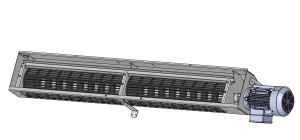
This file has the customer specification for their 48V cooling need.
longwell-wi-6981494893-technical-doc-02.pdf
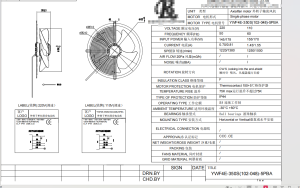
This document shows the final Longwell PWM electrical data.
longwell-wi-6981494893-technical-doc-03.pdf
This file shows the baseline blower data used for acoustic tests.
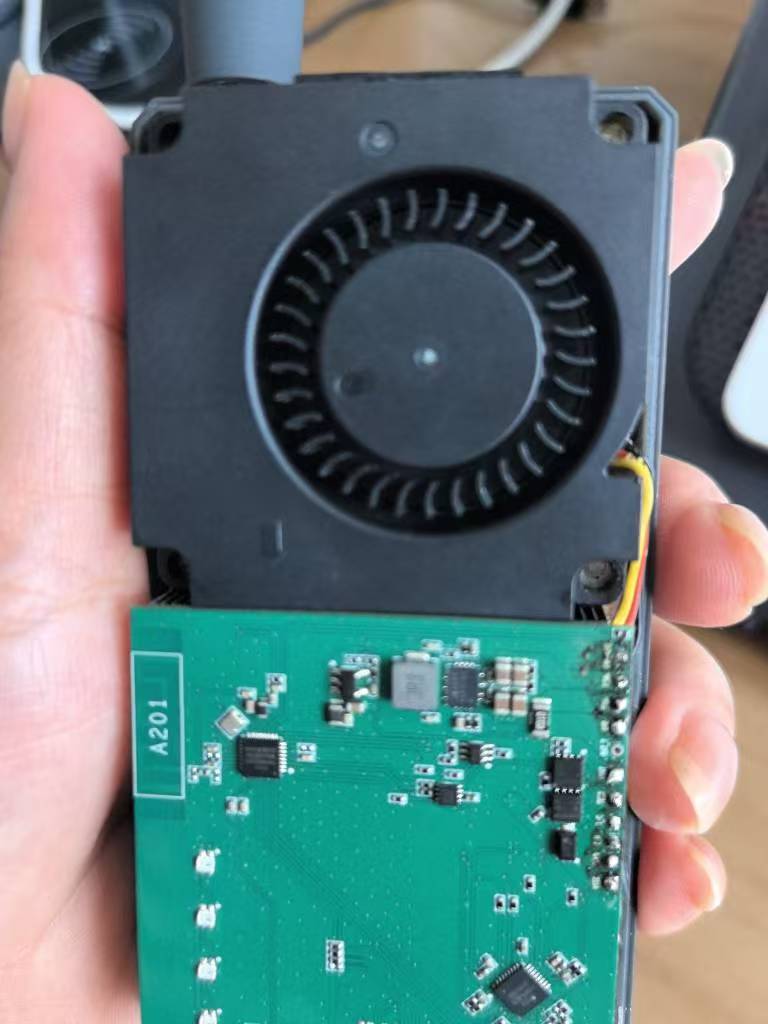
This image shows the strict physical limits for the blower install.
Upgrading Your 5V DC blower fan
Engineers upgrading a small cooling unit face many problems.
- First, find your real acoustic baseline. You must measure your old unit in a quiet room. This shows what noise level causes problems. A 36 dBA noise level might be fine in a factory. However, it will fail in a quiet office.
- Next, check if your board sends a 20KHz PWM signal. This signal controls the fan speeds. Without this signal, the fan runs at full speed all the time.
- Furthermore, higher speeds need more power. You must ensure your board handles the 1.5W draw. If the board only supplies 1.0W, the fan will not reach 8000 RPM.
- Finally, give your factory the P-Q curve of your old unit. We test performance to AMCA 210-16 methods. Thus, we can match your pressure needs perfectly. You cannot guess the static pressure based on airflow alone.
Related: Blowers.
Engineering Questions on the 5V DC blower fan
Technical Documentation & Resources
Browse our blowers range, the exhaust blowers section, or centrifugal blowers.
Have a Similar Fan Requirement?
Longwell’s engineering team delivers custom spec sheets and samples within 90 days. Since 1990, we have supplied EC fans and blowers to OEMs across HVAC, cold chain, data center, and industrial applications worldwide.
🏆 ISO 9001 / ISO 14001 / ISO 45001 | CE (TÜV) | UL/ETL | ATEX Zone 21/22 | AMCA 210-16 / ISO 5801 tested
Choose the right blower
Longwell manufactures 247 blowers in-house. Send airflow, static pressure and voltage — an engineer replies with a matching model, performance curve and price within one working day.