As AI computing, cloud services, and edge computing continue to push higher server densities, server rack cooling has become one of the most important part of data center infrastructure. Modern racks can consume 20–100 kW or more, producing tremendous amounts of heat.
Poor data center cooling doesn’t just increase electricity cost, it may also reduce hardware lifespan and increase downtime to impact your facility’s Power Usage Effectiveness (PUE). According to industry estimates, cooling systems account for 30-40% of total data center energy consumption, making airflow optimization one of the most effective ways to reduce overall operating expenses.
This guide explores primary cooling methods for server racks, ten proven best practices, and how LONGWELL’s EC fan solutions help OEMs build reliable, energy-efficient cooling systems for today’s high-density server environments.
Why Server Rack Cooling Matters?
Servers play an important role in data processing and they continuously convert electrical power into heat. Data center equipment like CPU, GPU, storage drive, memory module, and power supply contribute to thermal load. If the heat is not correctly handled, the data center performance can be impacted. An effective server rack cooling can help maintain stable hardware performance, prevent thermal throttling, and reduce operational and maintenance costs. For mission-critical facilities, reliable cooling is as important as network connectivity.
3 Core Cooling Methods for Server Racks
Modern data centers typically use one or more of the following cooling approaches. Each cooling method has its own limitation or advantages, and we’ll delve into these cooling methods in the following content.
Passive Cooling
The passive cooling relies on the natural movement of air without the need of cooling devices. The warm air generated by IT equipment rises and exits through the top, while cooler air enters from the bottom or side openings. This natural convection process combined with optimized rack placement can help dissipate heat to a degree, but it is not suitable for medium- to large-scale or high-density data centers.
Advantages
- No need for additional fan power
- Minimal mechanical components
- No noise, no vibration, no EMC concerns
Limitations
- Suitable only for sub-10 kW rack densities, Unsuitable for medium- or high-density data centers
- Limited cooling capability and can be strongly affected by temperature
Forced Cooling
Forced cooling is the most common cooling method for modern data center racks. Forced data center cooling use a lot of fans and blowers to enhance airflow. These fans and blowers can help remove hot air away from the server rack to keep proper temperature. Typical equipment include:
- Computer Room Air Conditioners (CRAC): chilled water coil + EC plug fans; primary choice for Tier-3/4 facilities
- Computer Room Air Handlers (CRAH): self-contained DX cooling + fans; common in legacy and small-to-medium DCs
- Air Handling Units (AHU): facility-level air management for large-scale heat removal
- In-row Cooling Systems: rack-adjacent units targeting hotspots in high-density zones
- Precision Air Conditioners: close-tolerance temperature and humidity control for critical loads
Advantages
- Cost-effective cooling method
- High cooling capacity
- Effective for medium to high-density data center environments
Limitations
- Fan failures can lead to overheating and downtime
- Requires monitoring and maintenance
High-efficiency EC centrifugal fans, plug fans, and axial fans are often used in data center server rack cooling because they provide precise airflow control while reducing energy consumption.
Liquid Cooling
As AI computing, high-performance computing (HPC), and ultra-high-density server deployments continue to grow, liquid cooling is becoming an increasingly popular solution for managing extreme thermal loads. Common liquid cooling methods include direct-to-chip cooling, cold plate cooling, immersion cooling, and liquid heat exchangers.
Advantages
- Suitable for extreme heat workloads and extra high-density data center environments
- Reduces contamination risk
- Reduced fan power
Limitations
- Higher initial investment
- Requires more complex maintenance with higher operational costs
- Specialized infrastructure requirements
9 Best Practices for Server Rack Cooling
Effective server rack cooling is more than just installing cooling fans or air conditioners. It requires a well-designed cooling system that combines intelligent airflow management, efficient equipment and proper maintenance. The following 10 best practices can help provide an effective server cooling environments.
Separate Cold and Hot Air
To keep the efficient data center cooling, separate cold and hot air. If the cold and hot air are mixed, cooling systems can work harder to maintain the desired temperature, which can lead to higher energy consumption and uneven cooling. Proper air separation minimizes recirculation and improve cooling efficiency. The common airflow containment strategy is the hot aisle and cold aisle layout. This layout can prevent cold supply air from mixing with hot exhaust air.
Optimize Rack Airflow
The placement and arrangement of servers and racks play an important role in heat management. Efficient airflow through each rack can help each server receive a consistent supply of cool air while allowing hot exhaust air to exist smoothly. Best practices to optimize rack airflow include:
- Seal gaps and cable opening to prevent recirculation of hot air
- Hot and cold aisle containment
- Organize power and network cables to reduce airflow obstruction
- Maintain adequate spacing between racks
- Position perforated floor tiles correctly
Implement the above optimized airflow to improve cooling performance without increasing fan energy consumption.
Choose High-Efficiency EC Fans
Fans are one of the most cost-effective cooling methods in precision cooling equipment. Cooling fans are equipped with different motor. Replacing traditional AC fans with Electronically Commutated (EC) fans can significantly improve efficiency.
Compared with conventional AC fans, EC fans provide:
- Higher motor efficiency
- Variable-speed operation
- Lower power consumption
- Reduced operating noise
- Longer service life
- Lower maintenance requirements
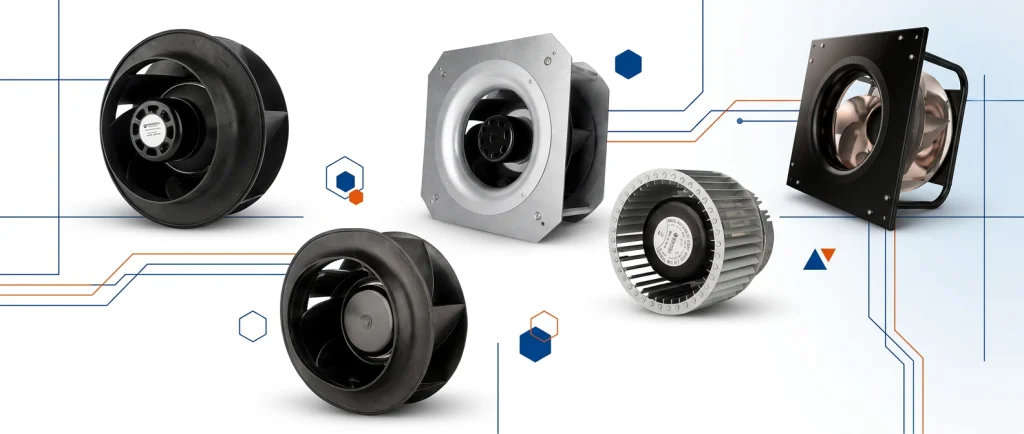
For data center cooling systems such as CRAH units, CRAC units, AHUs, and fan wall systems, LONGWELL EC centrifugal and axial fans deliver stable airflow while reducing energy consumption by up to 52%, with motor efficiencies reaching 92%.
Monitor Temperature and Adjust Proactively
Cooling performance should be based on actual rack conditions. Traditional cooling setups usually cannot immediately respond to dynamic changes in heat workloads, so temperature monitoring is essential for modern data center environments. Here are some facilities that you need to deploy:
- Install sensors and monitor in critical places: Install sensors at rack inlet&outlet, top and bottom of the rack, and aisle for real-time temperature monitoring.
- Set temperature alerts threshold: Establish warning levels to let technical team know if the temperature or heat exceed safe operating limits.
- Use DCIM tools for centralized monitoring: Use DCIM tools to provide the unified dashboards for monitoring, analyzing, and optimizing cooling performance.
Use Variable Airflow Instead of Fixed Cooling
Legacy CRAH and CRAC units run fans at fixed speed. At 8-15 kW per rack, the wasted energy was tolerable. But at 60-100 kW densities, it isn’t. AC fan system cannot hold PUE ≤ 1.3 at these loads. EC fans with integrated motor control modulate speed continuously, ramping down during off-peak compute cycles instead of holding maximum RPM.
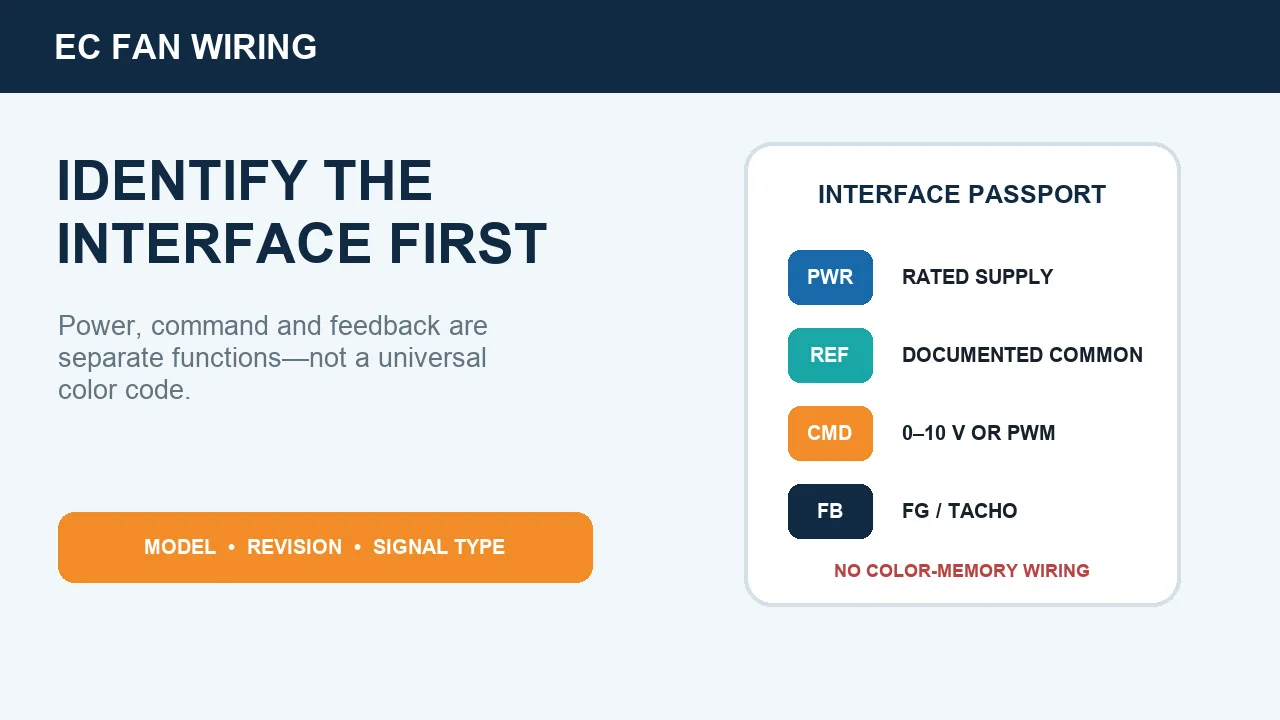
In regard to cooling fans, EC fans integrated with intelligent motor control are more recommended compared to traditional AC fans. For example, when server workloads decrease during off-peak hours, EC fans can automatically reduce speed instead of continuously operating at maximum capacity. Typical intelligent control interfaces including 0–10V, PWM, Modbus RTU, and BACnet, enabling seamless integration with modern BMS and DCIM platforms.
Select Fans Based on System Resistance
In forced cooling, choosing the correct fan is critical for achieving server rack cooling performance. Fan selection should consider the complete operating point, including:
- Calculate System Resistance First
- Use Professional Selection Tools for Precise Matching
- Validate Operating Point on Fan Performance Curves
- Match Fan Static Pressure Capacity to System Requirements
- Verify System Compatibility and Reserve Capacity
Selecting a fan based on the actual system curve ensures stable airflow delivery, prevents insufficient cooling, and avoids unnecessary oversizing.
LONGWELL provides engineering support to help customers match EC fan performance curves with specific cooling system requirements, ensuring optimal efficiency across different operating conditions.
Plan for Higher Rack Densities
With the rapid growth of AI servers, GPU computing, and high-performance computing (HPC), rack power densities can be higher than ever before. Modern cooling system should consider scalability like future rack power increases, higher airflow requirements, and increased static pressure demand.
Maintain Cooling Equipment Regularly
Whether in forced cooling or liquid cooling, regular maintenance of cooling equipment is very important. Dust accumulation, filter blockage, and mechanical wear can gradually reduce airflow efficiency and increase energy consumption.
Recommended maintenance activities include:
- Cleaning or replacing air filters
- Inspecting heat exchangers and coils
- Checking fan vibration and noise levels
- Testing airflow performance regularly
- Confirming control system communication
Improve PUE Through Fan Optimization
Power Usage Effectiveness (PUE) is a key measurement of data center energy efficiency. Optimizing fan performance can directly contribute to lower PUE. By combining efficient fan technology with optimized airflow design, data centers can achieve better cooling performance while reducing operational costs.
LONGWELL Fan for Data Center Cooling
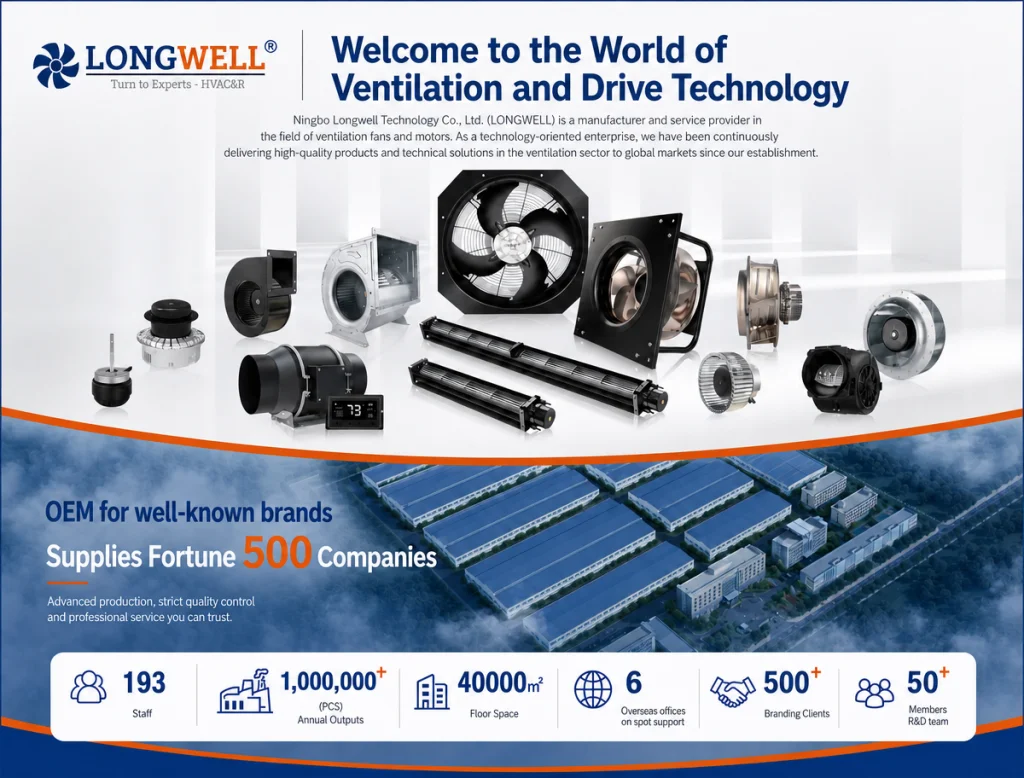
LONGWELL provides comprehensive fan solution across the entire data center cooling chain as a single supplier, from CRAH internal plug fans and precision cooling units to outdoor condenser systems. As both a fan manufacturer and solution provider, LONGWELL delivers end-to-end technical support, helping customers optimize airflow performance, energy efficiency, and system reliability for modern data center environments.
LONGWELL offers professional guidance for data center cooling, fan selection, retrofit projects, and customized OEM solutions.
End-to-End EC Fan Platform for AI-Era Data Centers
LONGWELL’s EC fan platform was designed for the data center duty cycle. LWBE3G backward-curved plug fans serve CRAH FanWall arrays with N+1 redundancy. LWAE3G axial EC covers outdoor condensers and cooling towers. Together: PUE contribution verified at 1.28 (from AC baseline 1.42), 38% fan energy reduction, EMC Class B certified for IT environments, and 90-day spec-to-mass-production NPI. Read Data Center Cooling Solution Pack for full product mapping, certification matrix, and reference BOMs.
Quantifiable PUE Contribution
EC fans from LONGWELL contribute an average PUE reduction of 0.10-0.18. In a verified customer case, a top-3 global precision cooling OEM using the LWBE3G + LWAE3G combination measured CRAH PUE dropping from 1.42 to 1.28, directly enabling Tier-3 and Tier-4 compliance. For a typical 30 MW data center, using LONGWELL’s integrated EC fan solution can cut annual energy costs by over $117,000 and achieve cumulative savings of more than $1.4 million over 10 years .
N+1 Redundancy with Predictive Failure Alerts
Within FanWall arrays, single-unit failure triggers automatic compensation by remaining fans with no service interruption. Optional bearing vibration sensors deliver 30-90 days advance warning of bearing failure, a critical operational feature for data center engineering teams.
EMC Class B Compliance for IT Environments
The full EC platform is certified to EN 55014-1/2 Class B + FCC Part 15 Class B, ensuring no interference with the demanding electromagnetic environment of adjacent IT equipment — a standard most commercial HVAC fan manufacturers cannot meet.
Fast NPI and Stable Mass Supply
Vertiv-class customers can move from inquiry to samples in 6 weeks and to mass production in 90 days. 3-year frame agreements with annual volumes of 80,000+ units demonstrate proven supply chain stability, a hard requirement for data center customers.
Superior Cost-Effectiveness and Delivery Speed
Compared with European premium brands, LONGWELL’s LWBE3G-500-EC Plug Fan offers the best 10-year TCO (€405k vs €446–€458k for competitors) and 15-30 day delivery, while competitors have lead times of 14–22 weeks in 2026. It also supports drop-in replacement for premium fan brands without AHU rework.
Strong Technical Support and Customization Capabilities
LONGWELL offers engineering support including selection software, CFD simulation, CAD library, and 90-day NPI for custom projects. The company can provide standard customization samples in 3 days and deliver complex projects in 7–10 days, with full technical support throughout the process.
Conclusion
Effective server rack cooling has become a critical factor in ensuring data center reliability with the rapid growth of AI computing. The above best cooling practices help reduce energy consumption and improve uptime and hardware performance.
For OEMs and cooling equipment manufacturers, selecting the right airflow technology is important. To help those customer who are designing a new cooling platform for data centers or upgrading an existing facility, LONGWELL provide the technical support and fan technology needs to energy-efficient server rack cooling.
Choose the right ec fan
Longwell manufactures 34 ec fans in-house. Send airflow, static pressure and voltage — an engineer replies with a matching model, performance curve and price within one working day.