What the OEM asked for
The brief arrived with a hard number attached. The BLDC motor driver board had to fit 150mm long, 125mm high and 40mm deep, because the OEM had already tooled the chassis for its new commercial hand dryer.
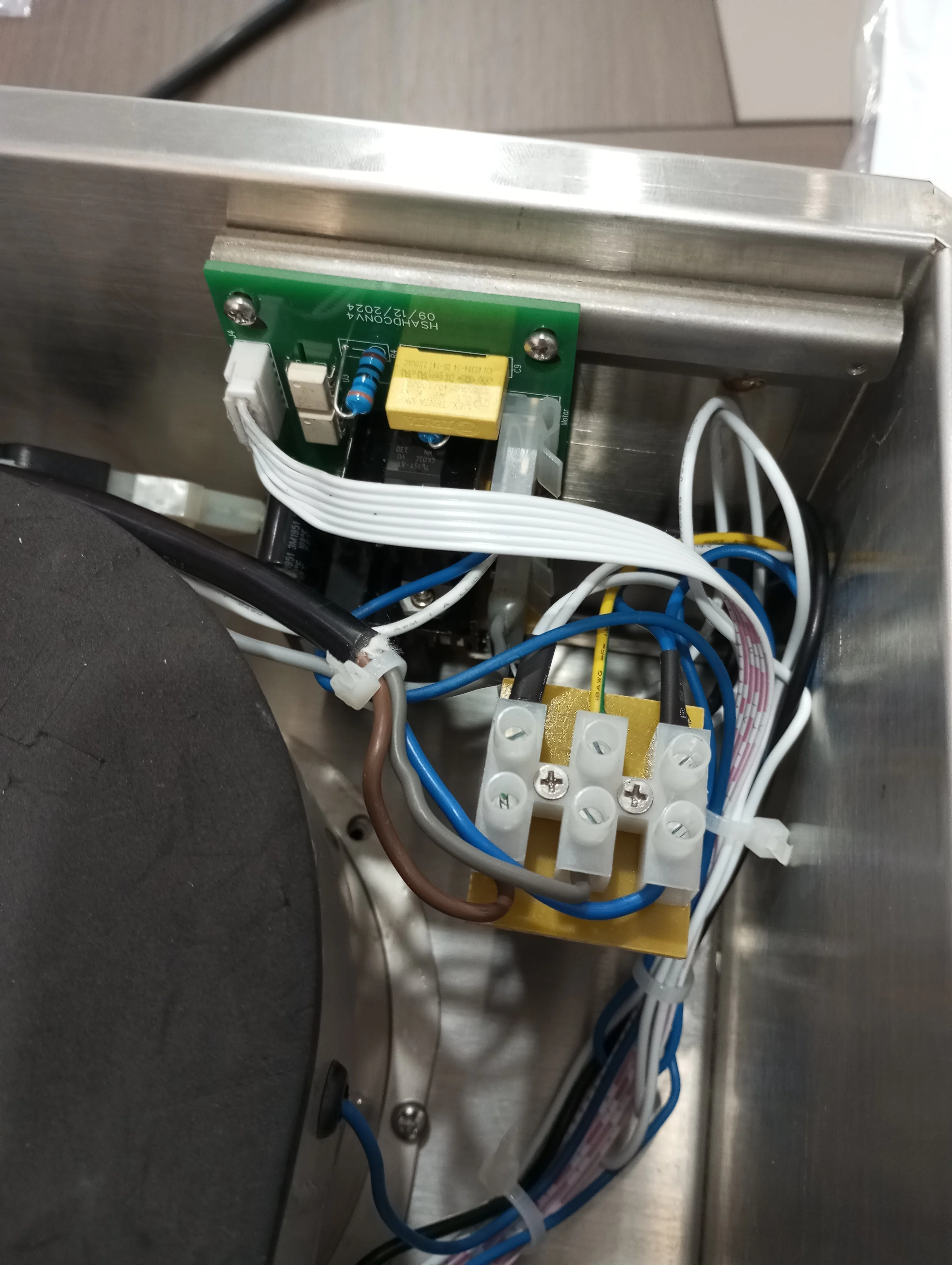
That single constraint shaped everything else. The customer wanted a 500W motor on a 220V, 50/60Hz supply. More importantly, it wanted the motor and the BLDC motor driver treated as one deliverable, not two separate purchases. Teardown photographs came with the enquiry. As a result, the mounting points and cable routes were fixed from day one.
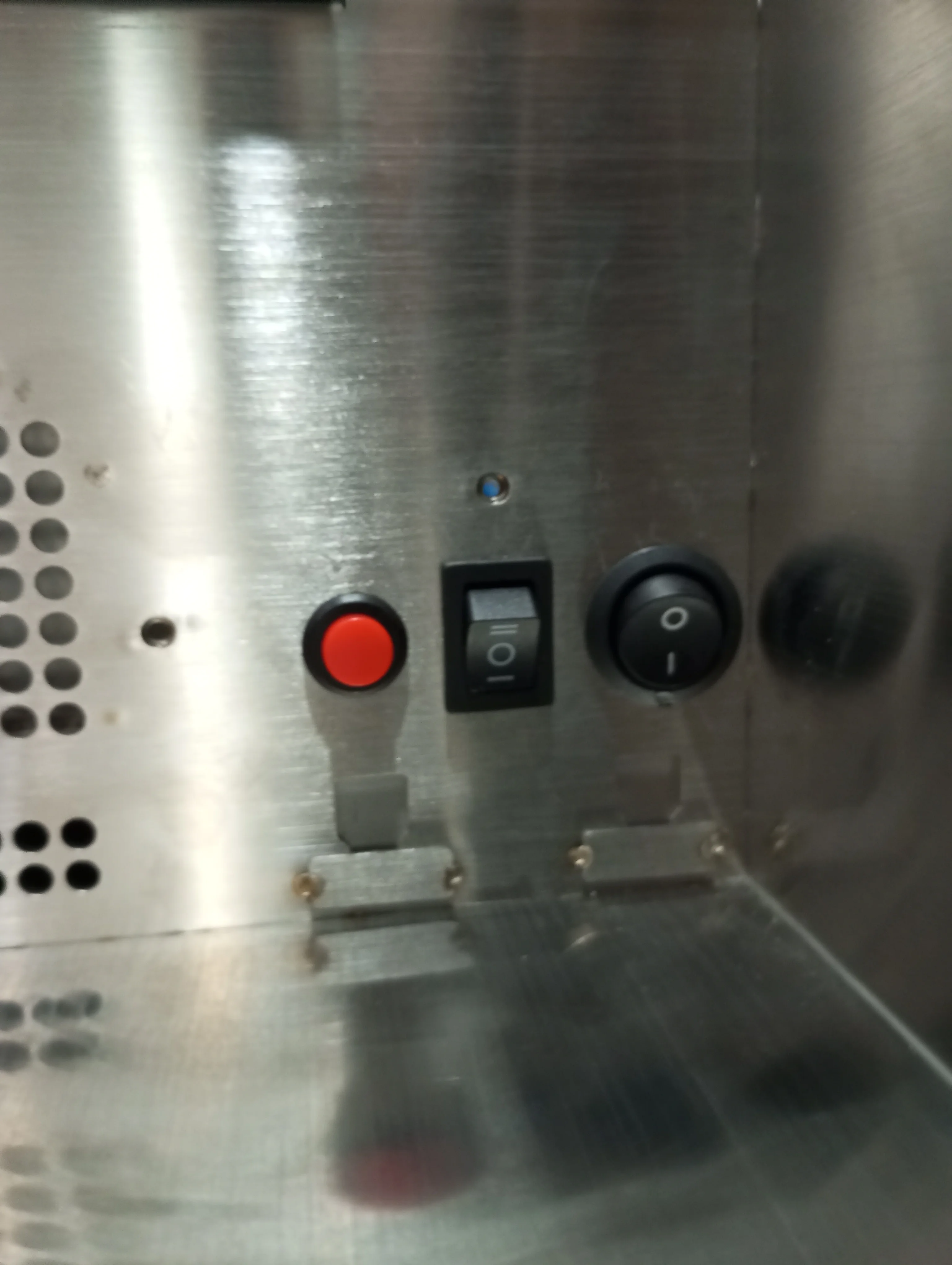
- Three fan speeds at 50%, 75% and 100% power, all selected by a single rotary switch.
- A separate ON/OFF switch for the external heating element.
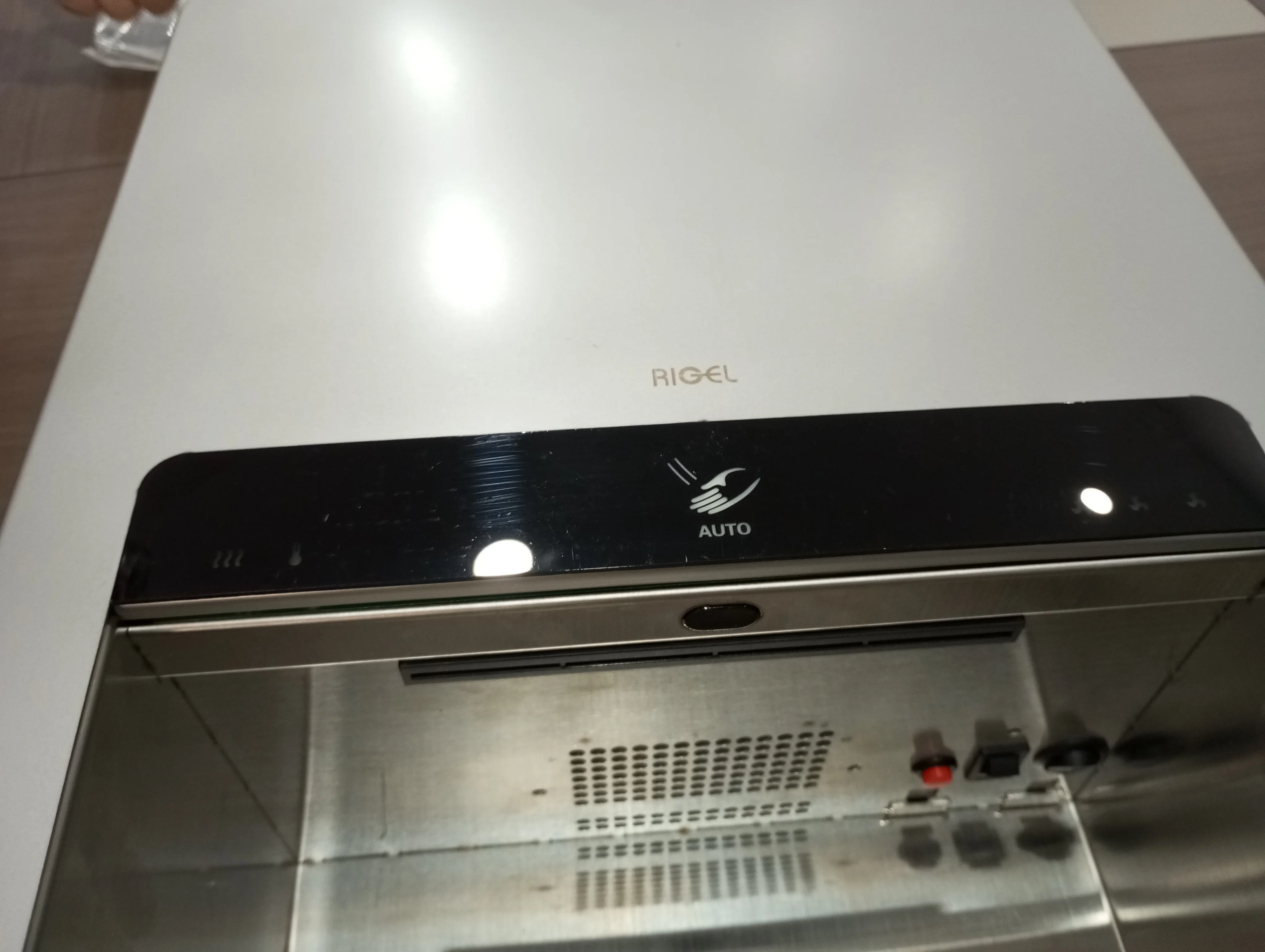
- An infrared proximity sensor for touchless start, adjustable between 5cm and 25cm.
- Automatic power-off after one minute, so a jammed sensor cannot run the unit indefinitely.
- High-voltage and low-voltage tracks physically separated on the PCB.
- Inlet air filtration, and above all a design able to pass EMC and EMI testing.
Here the compliance point mattered commercially. Washroom appliances sold in Europe need CE marking against IEC 60335. Emissions testing, meanwhile, is where a rushed BLDC motor driver usually fails. The enquiry also referenced an earlier sample order. In other words, this was an existing customer extending a working relationship, not a cold approach.
Designing the BLDC motor driver as one unit
A brushless motor was the obvious starting point. The reasons are worth stating plainly. A universal AC motor would have been cheaper. However, brushes wear, efficiency drops, and the noise is wrong for a premium washroom fitting.
The harder question was the board. Off-the-shelf drivers handle speed control competently. None of them, though, also reads an IR sensor, switches a heater relay and runs a 60-second safety timer. Once you need all four in one place, a custom BLDC motor driver stops being a luxury. It becomes the only route.
Our engineers built the design on the SmartEC platform. A single microcontroller therefore carried every input and output. That kept the component count low enough to fit the 150x125x40mm envelope without stacking boards.
Keeping 220V away from the logic
A hardware engineer then laid out the PCB with the 220V section kept clear of the sensor and logic tracks, exactly as the customer had asked. The separation does two jobs at once. First, it protects anyone servicing the unit. Second, it keeps switching noise out of the low-voltage side, which is what emissions testing actually measures.
Firmware turned the three-position switch into PWM duty cycles of 50, 75 and 100 percent. The IR input triggers an interrupt that starts the motor and closes the heater relay together, while an internal timer counts the sixty seconds to auto-off. Sensor range was made adjustable with a potentiometer rather than a firmware setting, so the OEM can tune each installation on site instead of ordering a new build for every mounting height.
What the OEM received
In the end, what shipped was a matched pair. A 500W brushless blower motor, and a BLDC motor driver written for that motor. Both were designed against EN 55014-1 and EN 55014-2 from the first schematic, rather than tested against them afterwards. The scope of those standards is set out by CENELEC, the European body that publishes them.
Technical Specifications
| Parameter | Specification |
|---|---|
| System Power Supply | 220V, 50/60Hz |
| Motor Input Power | 500 W |
| Motor Type | Brushless DC (BLDC) External Rotor |
| Control Logic | 3-Speed (50%, 75%, 100%) |
| Driver Board Max Dimensions | 150mm (L) x 125mm (H) x 40mm (D) |
| Activation Sensor | IR Proximity |
| Sensor Detection Range | 5 cm – 25 cm (Adjustable) |
| Safety Feature | 1-minute auto power-off |
| Compliance Targets | EMC & EMI (EN 55014) |
| Auxiliary Control | Heating Element Switch, LED Indicators |
Meanwhile the specifications detail a fully integrated system, where the 500W motor is precisely managed by a custom controller designed to fit within the customer’s existing product architecture. The adjustable sensor and multi-speed function provide the OEM with the versatility needed for a premium product tier.
Technical Documentation
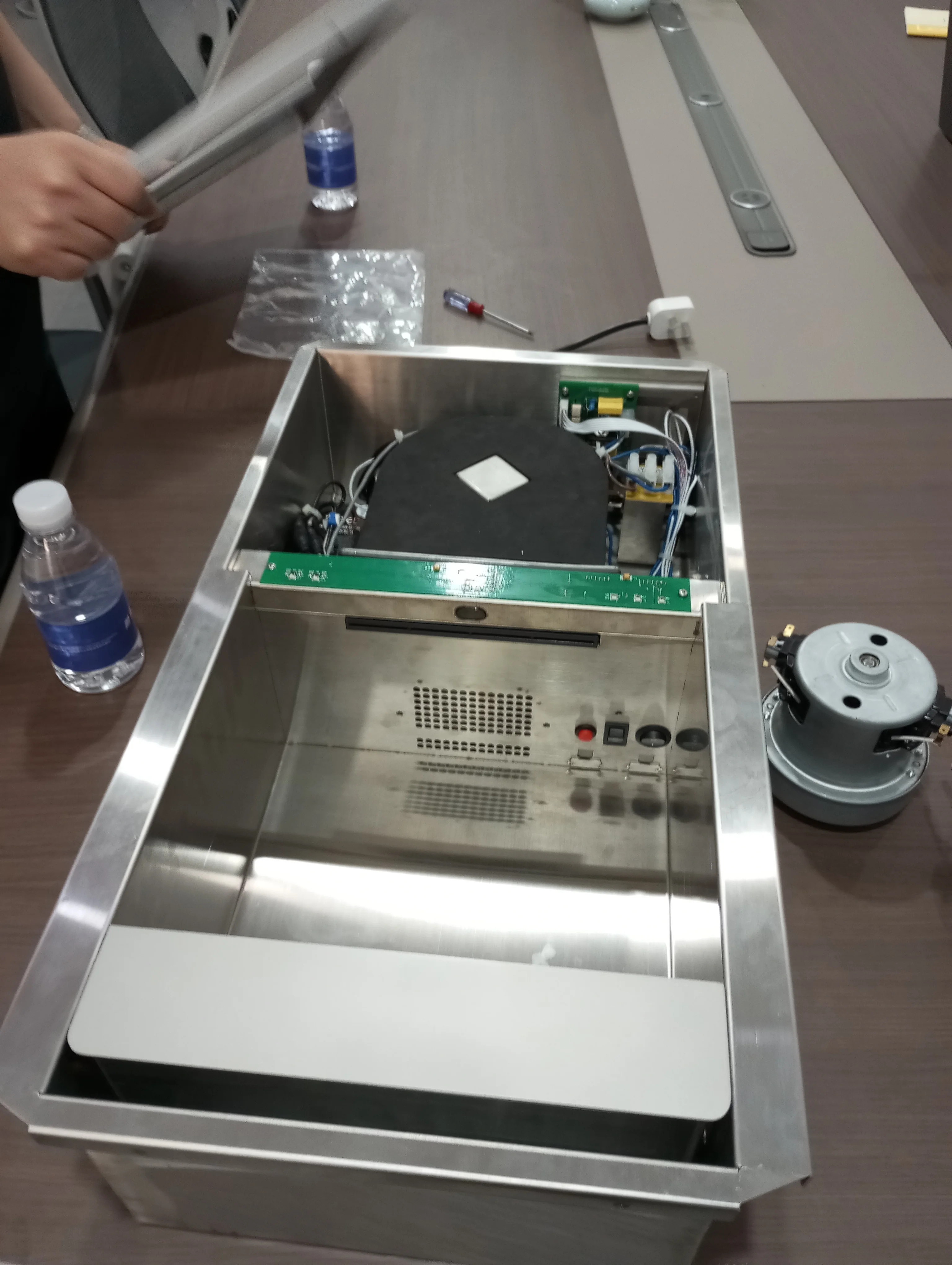
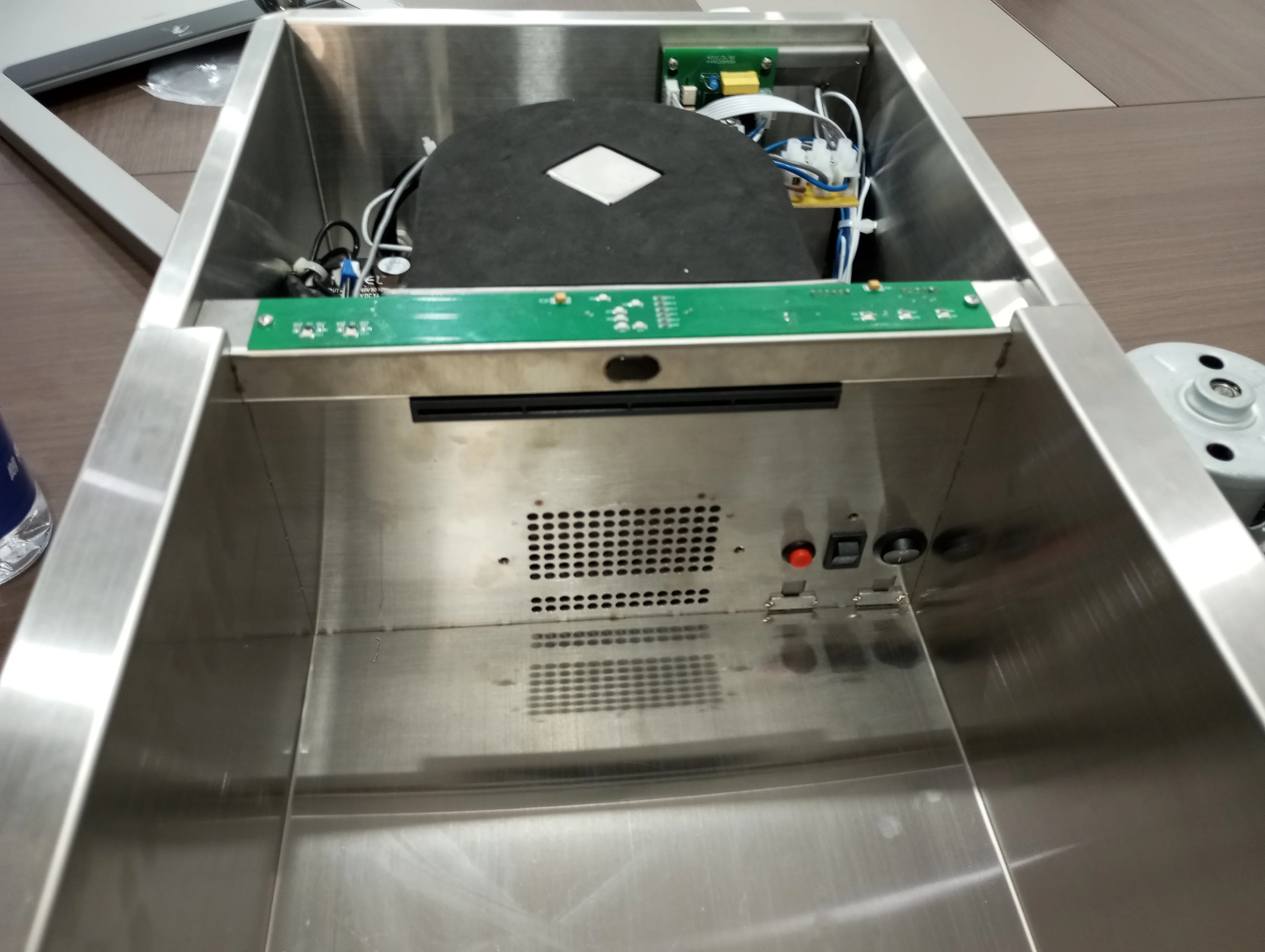
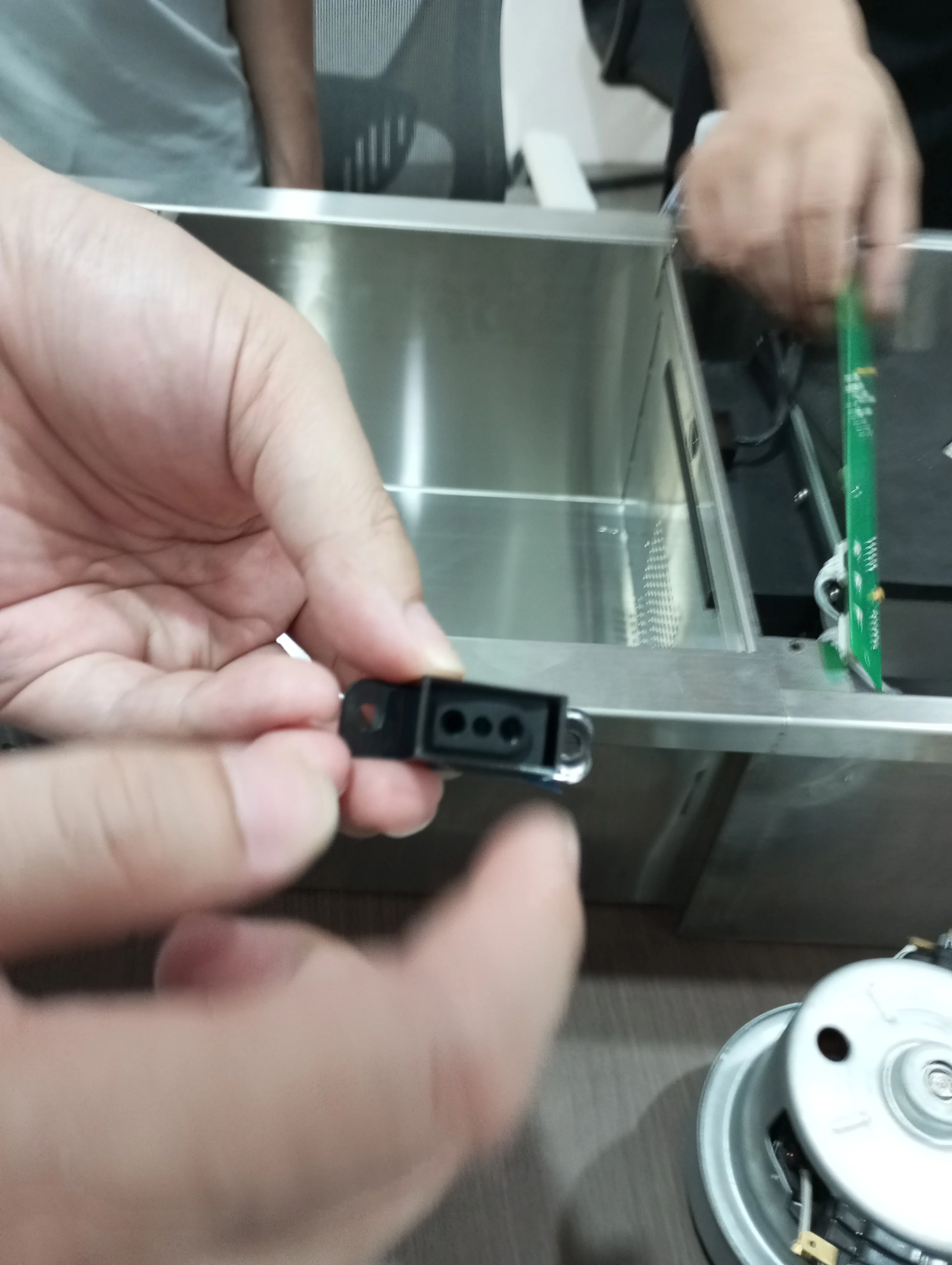
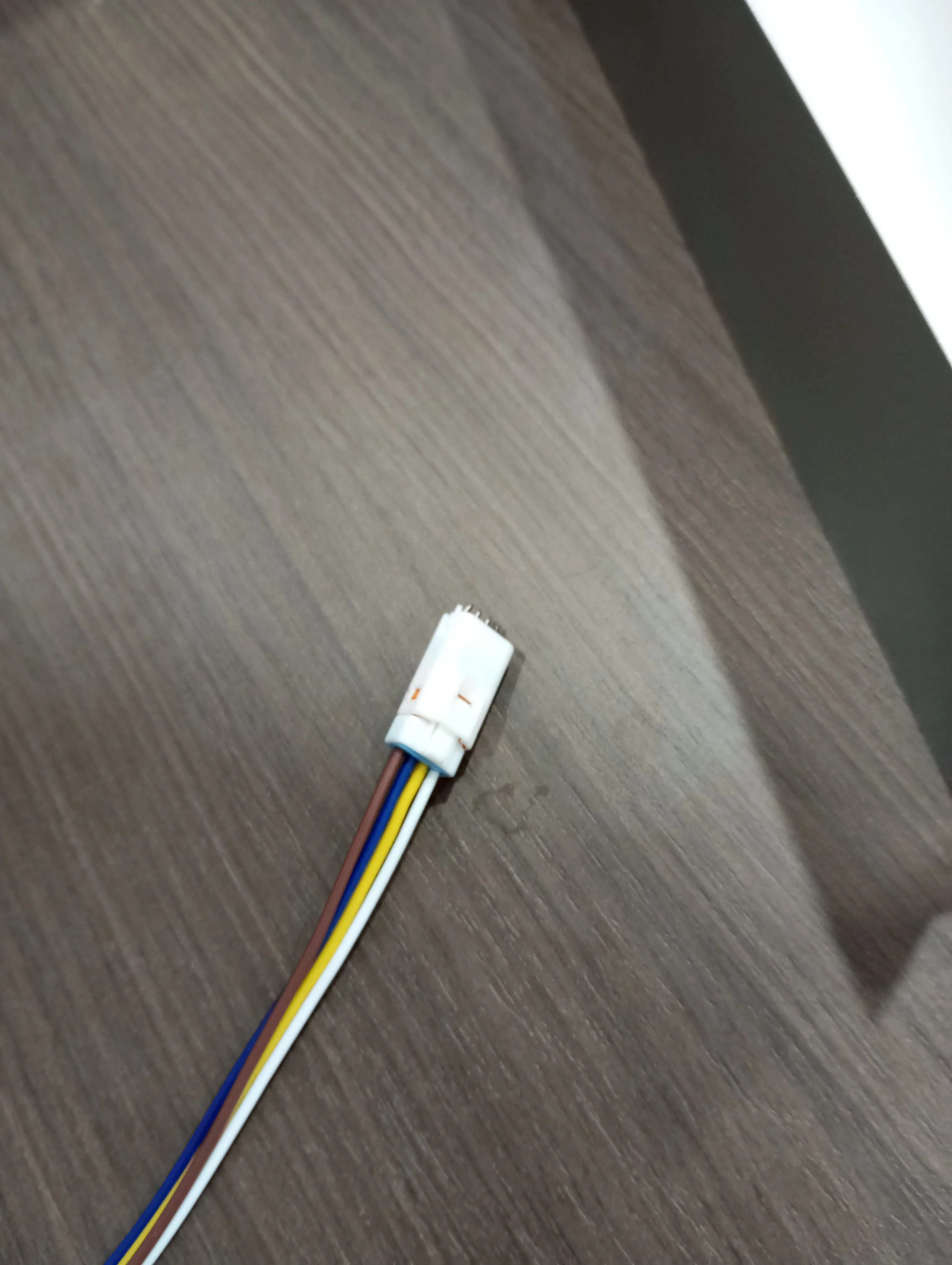
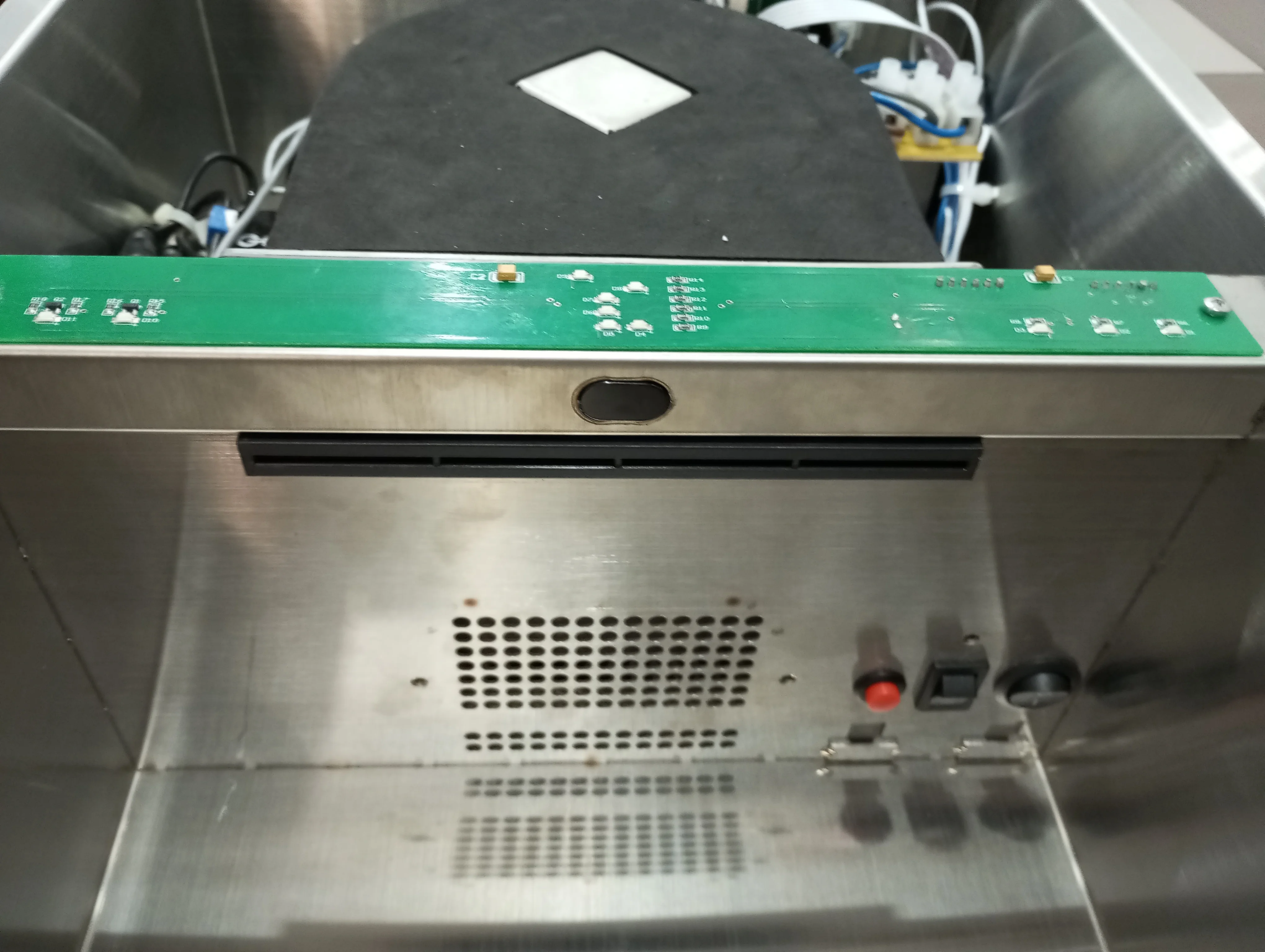
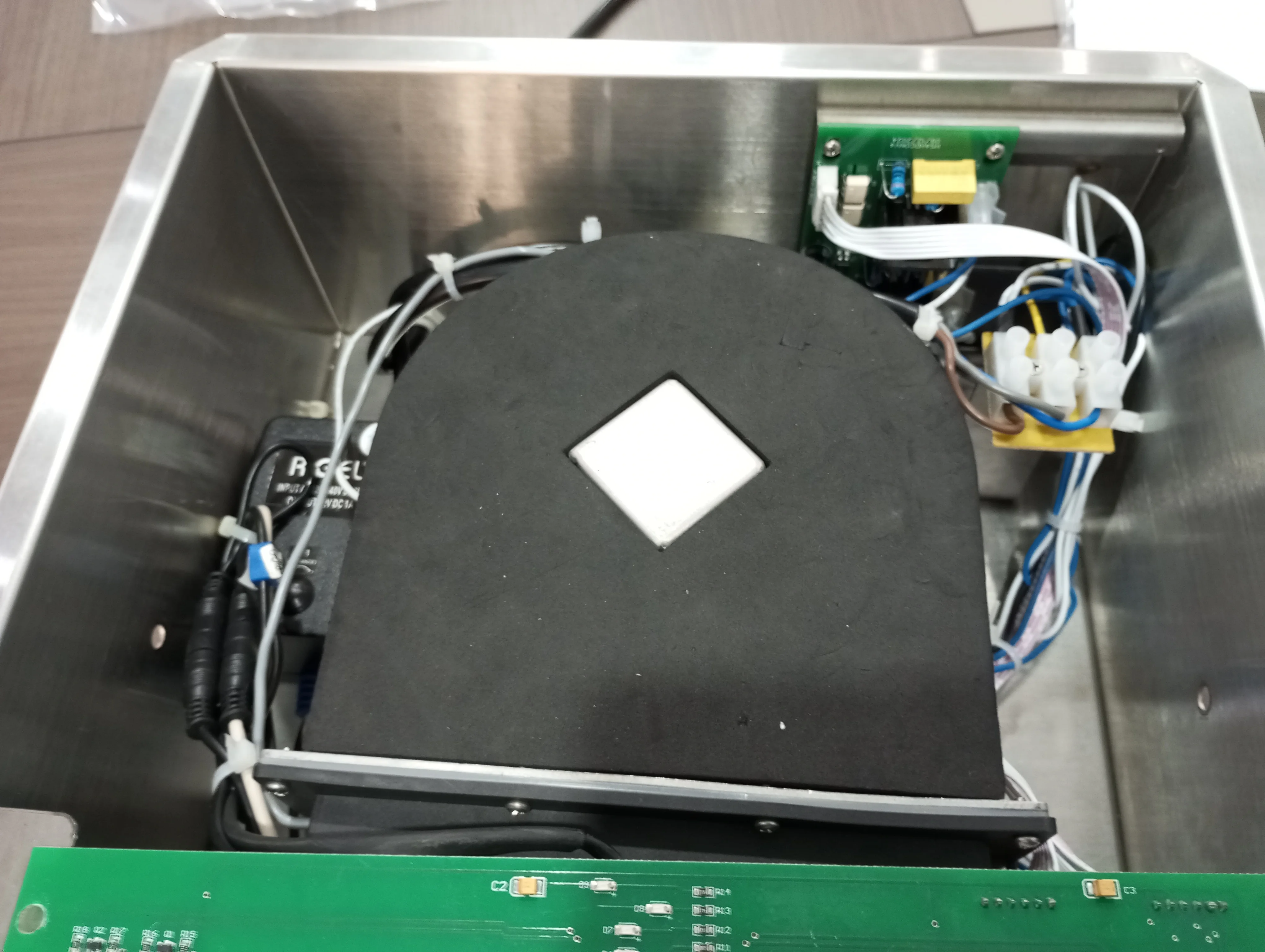
Initial teardown of the customer’s hand dryer chassis, revealing the mounting points and space constraints for the new motor and driver board.
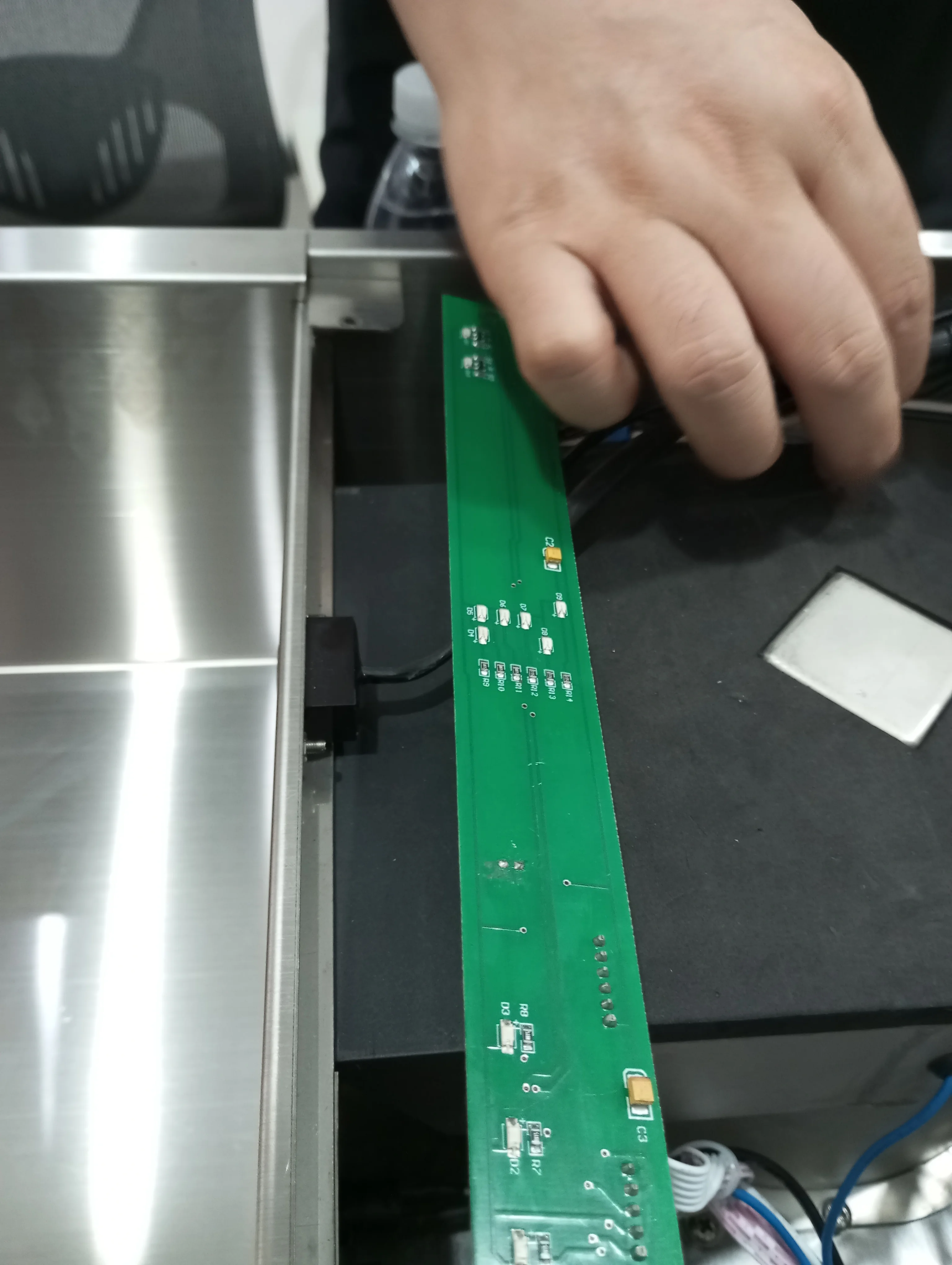
Detail of the custom-designed Longwell driver PCB, showing the layout for I/O, control logic, and power components to meet EMC requirements.
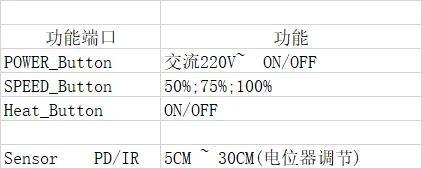
Functional requirements table submitted by the customer, which specifies the 3-speed control, sensor range, and heater interface.
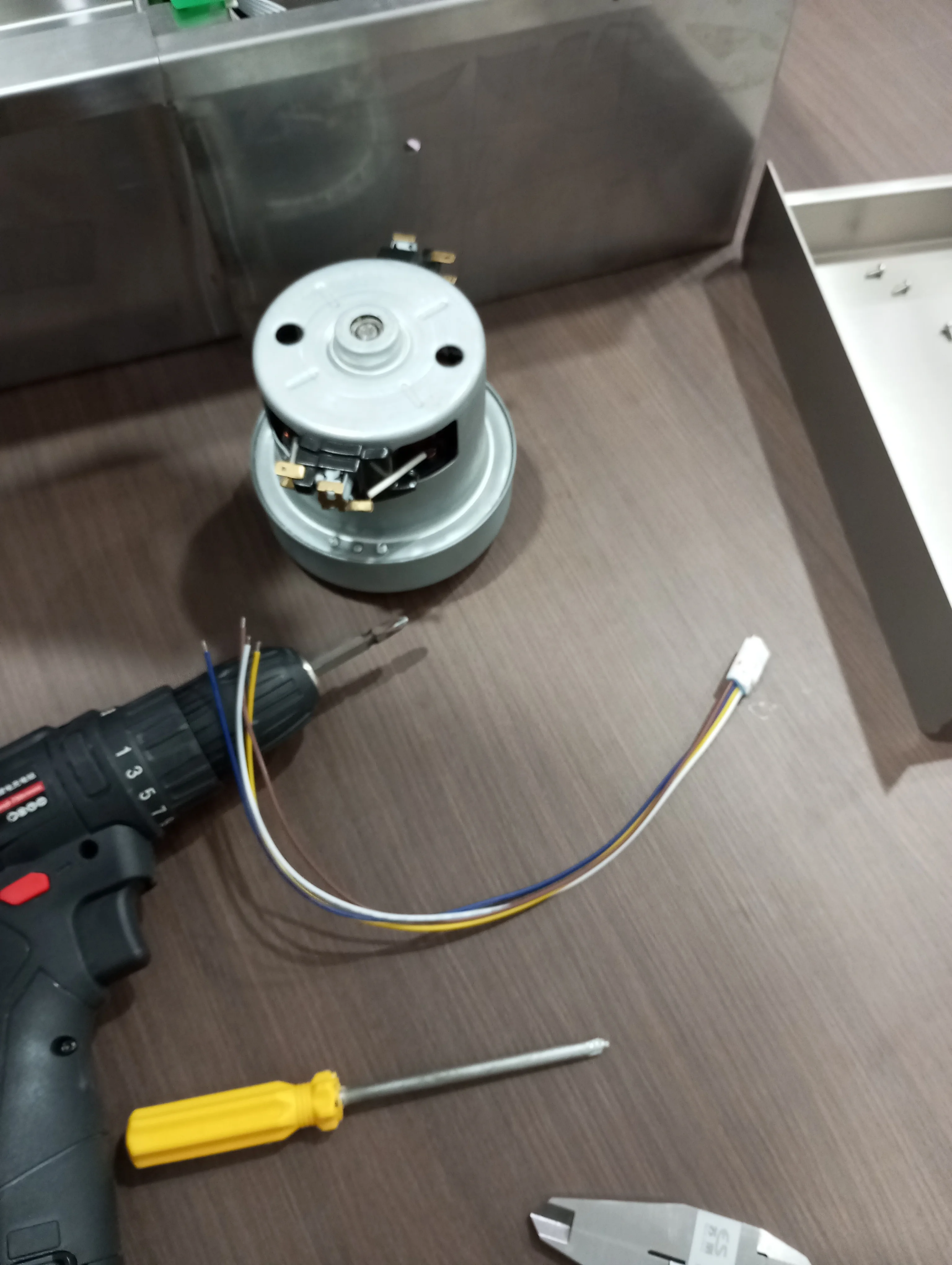
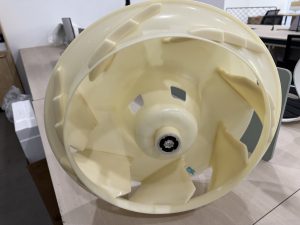
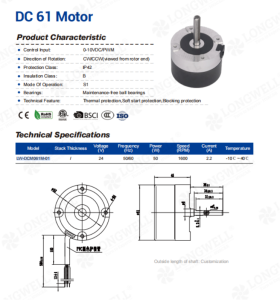
The specified 500W brushless DC motor selected for its high-speed performance and reliability in commercial applications.
Why the work came to Longwell
Four things decided this project. Only one of them was price.
- Motor and drive designed in the same building. Buying a motor from one supplier and a BLDC motor driver from another leaves the integration risk with the customer. Here, by contrast, both sides moved together inside our 90-day NPI framework, so a change to the motor windings reached the firmware engineer the same week.
- Unit cost that survives volume. Commercial appliances live or die on bill-of-materials cost. Because the motor, the drive and the assembly are all made on our own lines, the cost of this custom motor-drive system is one we set rather than one we pass on.
- A shorter path through EMC testing. We pre-test in house before anything goes to a notified body. That is where most schedule slippage happens. Catching an emissions problem on our own bench costs days. Catching it at TUV NORD, on the other hand, costs weeks.
- Capacity behind the first order. Two hundred units was a pilot. Even so, our ISO 9001 systems and the volumes we already run in cold chain and data center fans mean the same line handles launch quantities. No supplier change is needed later.
Explore the full Motors and Drive Systems range. Alternatively, see how the same platform handles BLDC motors.
Questions this project raised
How long does a custom motor and driver project take?
Our NPI cycle runs 90 days from locked specification to first article samples. Afterwards, once you approve those, mass production for a 500W system of this type is typically 30 to 45 days, depending on quantity.
Can the driver logic be changed later?
Yes. The timeout, the speed steps and the sensor sensitivity are all firmware parameters, not hardware. Consequently, revised logic is usually implemented and bench-tested within five to seven working days during the NPI phase.
Which EMC standards does the board target?
EN 55014-1 for emissions and EN 55014-2 for immunity, the pair that applies to household and similar appliances. In addition, we run pre-compliance tests in house and hand over the full technical file for your certification body.
Why brushless rather than a universal motor?
Hand dryers run thousands of short cycles a year. Brushes wear out under that duty, and the noise rises as they do. A brushless motor, by comparison, holds its performance. It also lets the BLDC motor driver vary speed cleanly, which a universal motor cannot do without extra hardware.
Got a duty point you need matched?
Tell us the airflow, the pressure and the space you have. Then we mark your duty point on a tested curve and send the drawing back. Meanwhile samples and custom spec sheets take up to 90 days. Since 1990 we have supplied OEMs across HVAC, refrigeration and industry.
Browse Related Products:
🏆 ISO 9001 / ISO 14001 / ISO 45001 | CE (TÜV) | UL/ETL | ATEX Zone 21/22 | AMCA 210/211 / ISO 5801 tested
Choose the right bldc motor
Longwell manufactures 12 bldc motors in-house. Send airflow, static pressure and voltage — an engineer replies with a matching model, performance curve and price within one working day.