A mini-split blower wheel can collect deposits even when its removable filter looks clean. The long cross-flow drum is only one part of the indoor unit, so reduced airflow or an odor is a reason to inspect the system, not proof that the wheel needs removal. This guide helps an owner decide what to record and helps a service technician define the cleaning and return-to-service checks. The exact appliance manual controls access, isolation, chemistry and test conditions.
Record the symptom before choosing a cleaning method
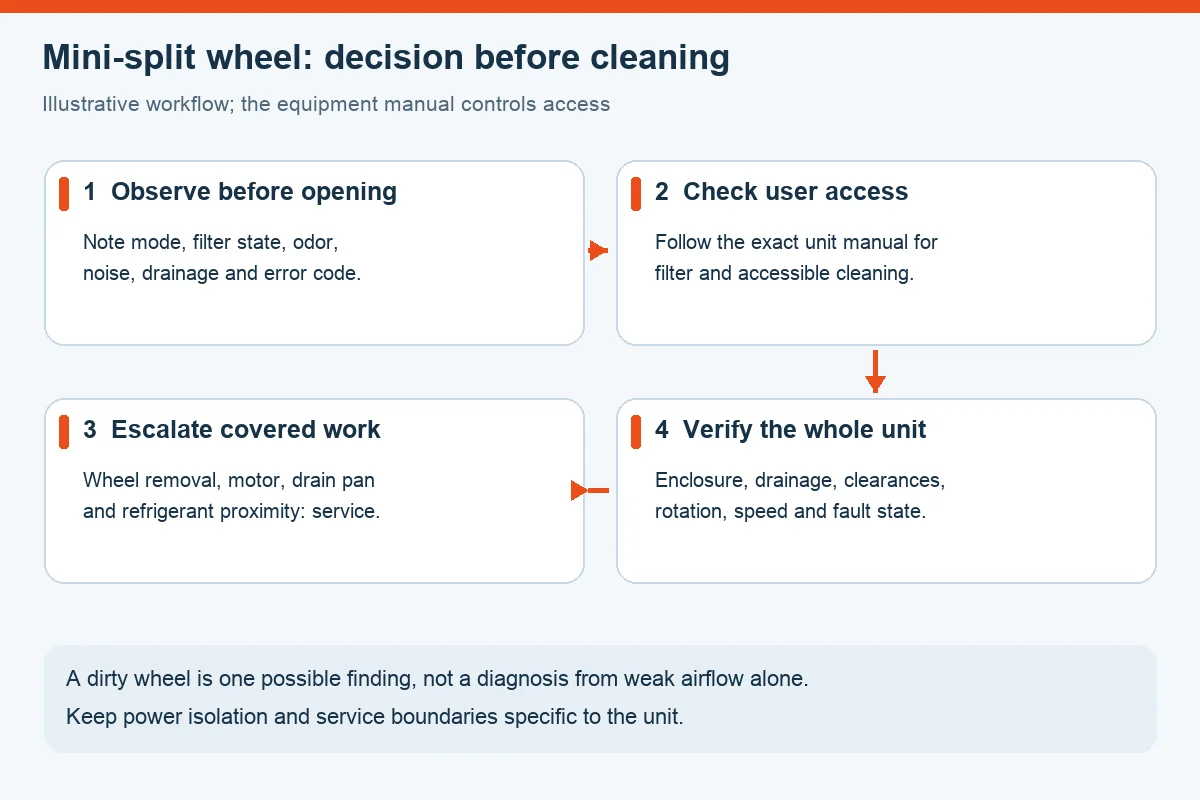
First note the operating mode, selected fan speed, filter condition, error display and when the symptom occurs. Weak airflow can involve a filter, heat exchanger, wheel, control or an iced coil. An odor can have several sources, including drainage. A rubbing sound points to a different inspection path from a smell alone. Keeping these observations separate avoids turning a possible wheel deposit into an unsupported diagnosis.
Daikin’s published maintenance advice treats filter cleaning and inspection of the cooling fan or heat exchanger as separate tasks; it directs owners to contact a local distributor when fan dirt is noticeable. That is a useful distinction, although the instructions for one maker do not replace the manual for another machine. The visible wheel should be assessed alongside the coil, drain and operating state.
Separate owner maintenance from covered service access
A user may be allowed to open a front panel and remove a filter. The permitted steps depend on the exact model. A remote OFF command is not electrical isolation. Before any authorized service work, the technician follows the manufacturer’s isolation procedure and verifies the unit is safe to access. Screws, louvres, drain pans, sensors, motor couplings and wiring routes vary, so a generic hidden-screw sequence is unreliable.
Do not use refrigerant tubing as a handhold or bend it to clear a wheel. If the service path approaches tubing, electrical compartments or the motor, the work needs the proper tools and trained person. A homeowner can record the nameplate and symptoms, photograph the as-found condition without dismantling covered parts, and ask for a service method tied to that exact unit.
Clean the air path without damaging the wheel
The technician should inspect the filter, heat exchanger, wheel, housing and condensate route before deciding what actually needs treatment. Containment matters: protect walls and floors, collect wash water as required, and keep liquids away from electronics. Follow the appliance maker’s instructions and the cleaner’s label and safety data sheet for material compatibility, dilution and rinsing. More chemical or water pressure is not automatically better.
Cross-flow wheels have many narrow blade passages. Deforming or leaving deposits in some passages can affect smooth running. The chosen method should clean accessible surfaces without forcing a tool against the blade edges or changing the wheel’s position. If removal is required, record orientation and original clearances; do not assume a separate LONGWELL cross-flow assembly is a replacement for an appliance wheel. The LONGWELL cross-flow fan family illustrates this fan geometry, but it does not establish fit for a particular mini-split.
Verify the unit after reassembly
A wheel that looks cleaner has not yet passed a return-to-service check. Confirm that the enclosure, guards, fasteners and drain path are restored as the manufacturer requires. Electrical areas must be dry, and the wheel must turn without rubbing at the specified clearance. Then run the unit under the approved conditions and observe speed response, vibration, noise, condensate drainage and fault indications. Any abnormal result sends the job back to diagnosis.
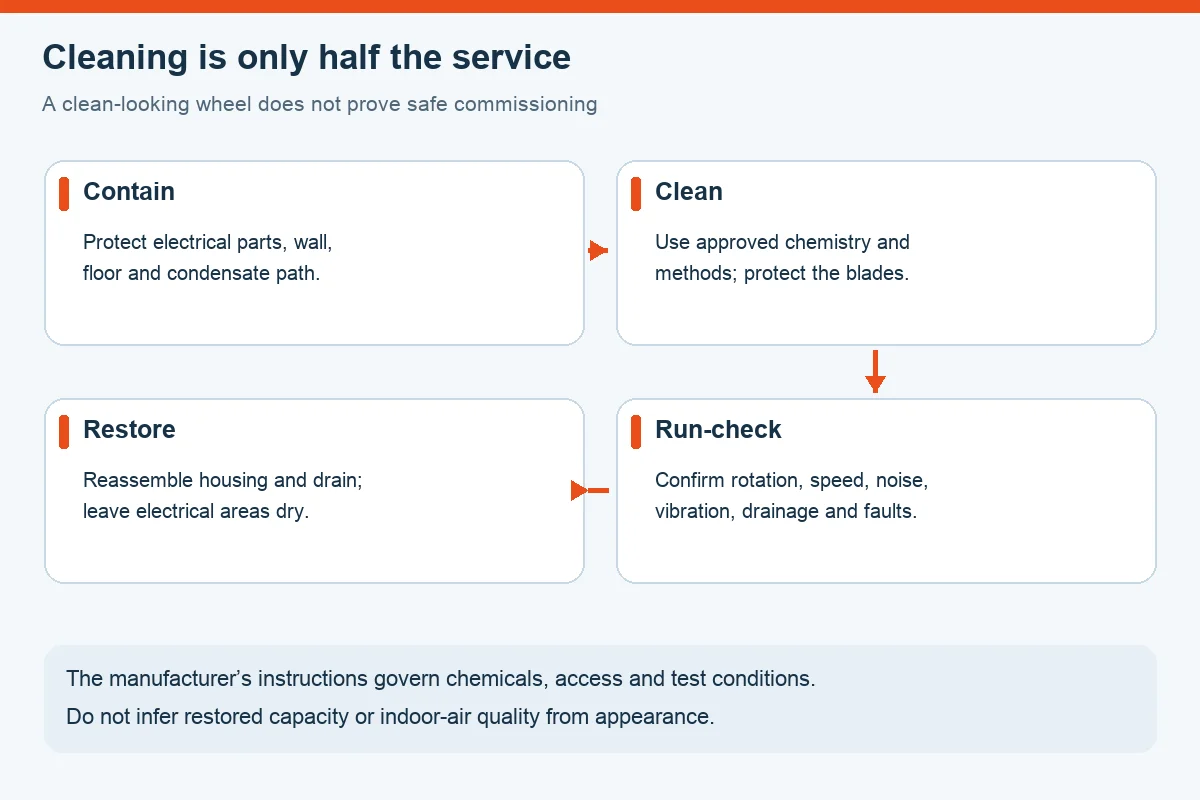
A before-and-after photograph is useful documentation, but it does not by itself prove restored cooling capacity, disinfection or improved indoor-air quality. If a performance claim matters, agree on a measurement method and baseline before work. The same principle applies to replacement selection: match the complete identity, mounting geometry, electrical control and required operating duty before comparing another fan.
Set a maintenance plan for the actual environment
There is no universal cleaning interval for every mini-split wheel. Use the maker’s filter schedule as a starting point, then adjust inspections to dust load, use and observed condition. Follow the manual for any fan-only or dry-mode feature; its presence and behavior differ among models. Keep the condensate route clear and document recurring odor, leakage or vibration so the next visit can compare like with like.
For general cross-flow mechanics, see how a cross-flow fan works. If a service visit reveals a damaged wheel rather than removable deposits, capture the appliance model, original wheel marking, dimensions and motor connection for an engineering review. Avoid choosing by diameter or a similar product photograph alone.
Choose the right fan impeller
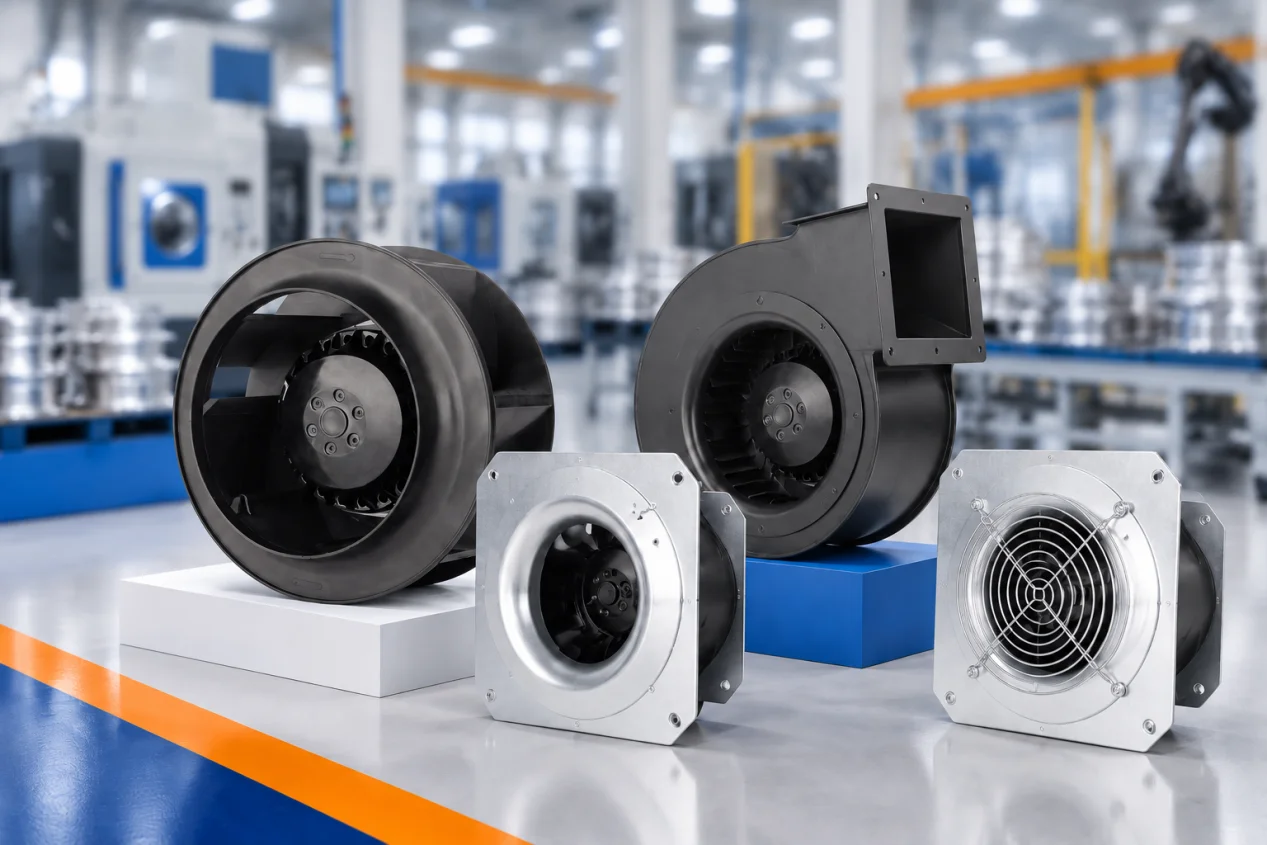
Longwell manufactures 10 fan impellers in-house. Send airflow, static pressure and voltage — an engineer replies with a matching model, performance curve and price within one working day.