Defining the 230v 300mm ec fan Requirement
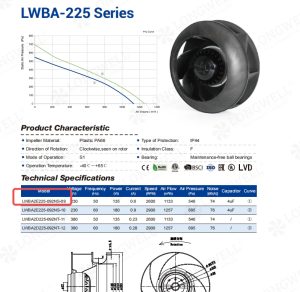
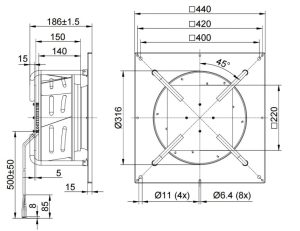
A client needed a 230v 300mm ec fan for an outdoor heat exchanger. First, they sent a catalog image of the LWAE3G300ST-5PNW-02 model. This specific unit pushes air outward. Next, the system had a strict airflow target of 2575 m3/h.
The equipment handles intense thermal loads. It also needed to stay under a 64 dB(A) noise limit to protect workers. Loud fans can cause hearing damage over time. The outdoor location meant harsh winters.
Consequently, the motor had to run reliably from -25 C to 60 C. This wide range prevents motor failure during freezing nights. The main power supply was 230 VAC. However, grid power can fluctuate during peak hours.
Therefore, the motor required an operating range of 176 to 264 VAC at 50 or 60 Hz. The unit draws 1.1 A at full load. This low current draw helps limit total energy costs. Finally, the market demanded strict electrical safety.
This meant the fan had to meet UL 507 standards. Proper certification allows the final heat exchanger to sell in North America.
Evaluating the Blowing Versus Suction Choice
We looked at how the fan sits inside the metal cabinet. The cabinet holds a dense array of cooling fins.
Assessing the Airflow Direction
The customer initially asked for a blowing fan. Blowing fans push air away from the motor. But blowing air directly into a cooling coil causes problems. First, it creates strong, uneven air currents. The air does not spread across the whole metal coil. A tight air jet hits only the center section. Furthermore, the fan motor produces 165 W of heat. If the motor sits in front of the coil, it warms the air before cooling can happen. Heating the air first wastes electrical energy. Instead, pulling air through the coil works much better. A suction fan creates an even pull across the whole opening. Therefore, we told the client to avoid the blowing setup entirely. This decision protects the thermal performance.
Modifying the 230v 300mm ec fan
Next, we suggested the LWAE3G300SS-5PEW-03-00 model. This is a suction version of the 230v 300mm ec fan. It pulls air across the motor last. By contrast, the older ST version pushed air away. This change did require some extra work. Consequently, the client had to change their metal mounting bracket. The new unit has a total depth of 111.8 mm. This depth must clear any internal pipes. Meanwhile, its outer guard measures 361 mm across. The metal guard protects fingers from the spinning plastic blades. Even so, the better cooling performance made the bracket redesign worthwhile. Small changes in sheet metal save massive amounts of cooling energy.
Adding Precise Motor Control
The system needed to run at different speeds. First, the customer wanted to match the cooling load exactly. Running at full speed constantly wastes power. Therefore, we added a control drive that takes a 0-10VDC or PWM signal.
The main computer adjusts this voltage. The drive also sends a tachometer pulse back to the main computer. This gives the client real-time speed data. The system always knows if the fan stops.
In short, the fan spins at 2100 RPM at full speed. It also maintains an IP54 rating to keep out dust and splashing water. This rating is perfect for an outdoor enclosure. The vibration limits follow the JB/T 8689 standard.
Keeping vibration low prevents metal fatigue in the mounting bracket. The motor also includes locked-rotor protection. If an object jams the plastic blades, the motor cuts power. This prevents the internal copper wires from burning up. Over-current protection stops electrical damage during power surges.
Technical Specifications
The final approved engineering documents define the exact working parameters. The table below lists the agreed electrical and physical limits.
| Nominal Voltage | 230 VAC |
| Voltage Range | 176~264 VAC |
| Frequency | 50/60 Hz |
| Speed | 2100 RPM |
| Current | 1.1 A |
| Power Input | 165 W |
| Airflow (Max) | 2575 m3/h (1515 CFM) |
| Noise Level | 64 dB(A) |
| Ambient Temperature | -25 C to 60 C |
| Insulation Class | Class B |
| Protection Type | IP54 |
| Dimensions | 361 mm OD, 111.8 mm depth |
The maximum temperature of 60 C requires a PA66 plastic impeller. PA66 plastic handles high heat without losing its shape. Furthermore, the 3.5 mA leakage current limit meets commercial safety rules. Keeping leakage current low prevents electric shocks. The insulation class is Class B. This means the internal motor windings can safely reach high temperatures. Maintenance-free deep groove ball bearings support the rotor. These bearings have a life expectancy of 40,000 hours at room temperature. Long bearing life reduces the need for expensive field repairs.
Reference: AMCA 210 covers the test method behind these figures.
Technical Documentation
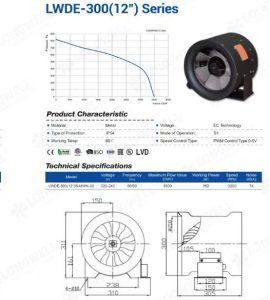
First, the image displays the original blowing fan setup from the buyer. The purchasing team used this image to start the project. Next, the PDF file contains the final suction design details for the mechanical team. The mechanical engineers use these drawing dimensions to cut the steel plates.
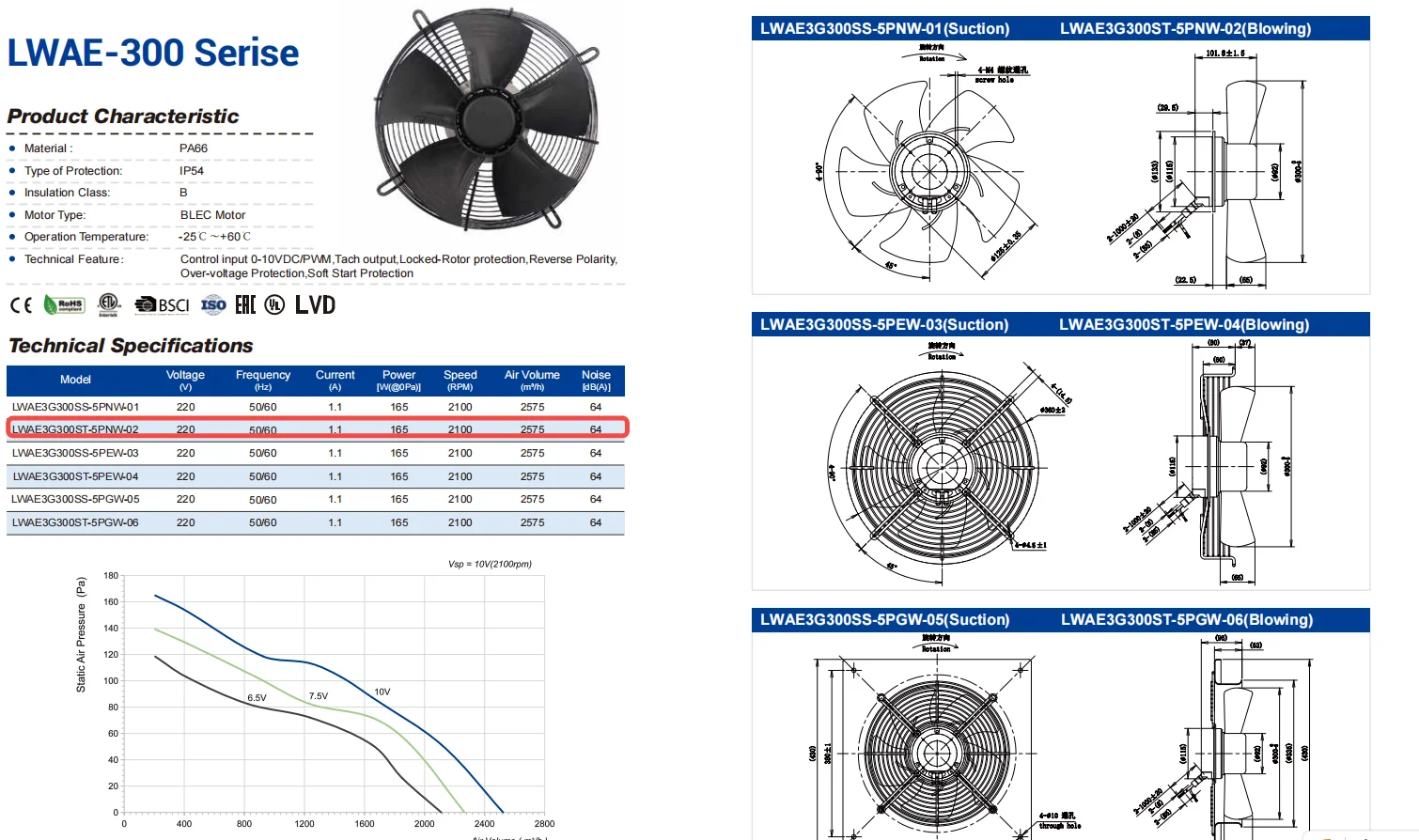
LWAE3G300SS-5PEW-03-00 Technical Specification
Lessons for Heat Exchanger Projects
Designers dealing with tight spaces should pick their airflow direction early. In short, a late change can ruin your sheet metal layout. Changing hole patterns later costs time and money.
- First, check the heat output of your fan motor. A 165 W motor will warm the air if placed before the cooling fins. Put the motor after the fins whenever possible.
- Next, measure the empty space on both sides of your mounting wall. A suction setup puts the 111.8 mm fan depth on a different side than a blowing setup. This affects pipe routing inside the box.
Getting the control signals right prevents future 230v 300mm ec fan motor issues. Testing the 0-10VDC signal early stops communication errors.
Related: Axial Fans.
Common Engineering Questions
Why does a suction setup cool more evenly?
First, pulling air through a tight space creates negative pressure. This draws air evenly across the whole coil surface. Every inch of the metal fins does cooling work. By contrast, a blowing fan creates a fast, narrow jet of air directly in front of the blade. This leaves the outer corners of the coil with no airflow. Therefore, engineers prefer suction for cooling coils.
What happens when the control voltage drops near zero?
The motor drive has a built-in standby mode. First, if the VSP control signal drops below 1.0 VDC, the motor stops spinning. It enters a low-power state to save energy. The computer does not have to cut the main 230 VAC power. Once the signal goes back above 1.0 VDC, the fan starts up again.
How does the drive handle startup power surges?
Turning on a 230v 300mm ec fan instantly can cause a huge power spike. This spike can trip circuit breakers. Instead, this fan uses a soft start feature. It takes under 20 seconds to reach the full 2100 RPM speed. Consequently, this slow buildup protects the wiring and the power supply.
Can this motor handle altitude changes?
Yes, the data sheet covers altitude rules. First, the stated airflow of 2575 m3/h assumes standard air density. The motor is rated for an applicable altitude range under 1000 meters. If you install the equipment high in the mountains, the air gets thinner. Consequently, a thinner air mass reduces the total cooling capacity.
Technical Documentation & Resources
Browse our axial fans range, the AC axial fans section, or EC axial fans.
Have a Similar Fan Requirement?
Longwell’s engineering team delivers custom spec sheets and samples within 90 days. Since 1990, we have supplied EC fans and blowers to OEMs across HVAC, cold chain, data center, and industrial applications worldwide.
Browse Related Products:
🏆 ISO 9001 / ISO 14001 / ISO 45001 | CE (TÜV) | UL/ETL | ATEX Zone 21/22 | AMCA 210-16 / ISO 5801 tested
Choose the right ec axial fan manufacturer & supplier
Longwell manufactures 152 ec axial fan manufacturer & suppliers in-house. Send airflow, static pressure and voltage — an engineer replies with a matching model, performance curve and price within one working day.