
Fans and Blowers for Agriculture
Farms use moving air for very different jobs. In livestock houses it removes heat, moisture and ammonia. In greenhouses and vertical farms it keeps temperature and humidity even around the plants. In grain and potato stores it dries and cools the crop. In fish and shrimp ponds blowers put oxygen into the water. Each job needs a different kind of fan.
This section collects LONGWELL’s agricultural application guides. Each guide describes the air task, how to size it and which fan families fit.

Applications in this section
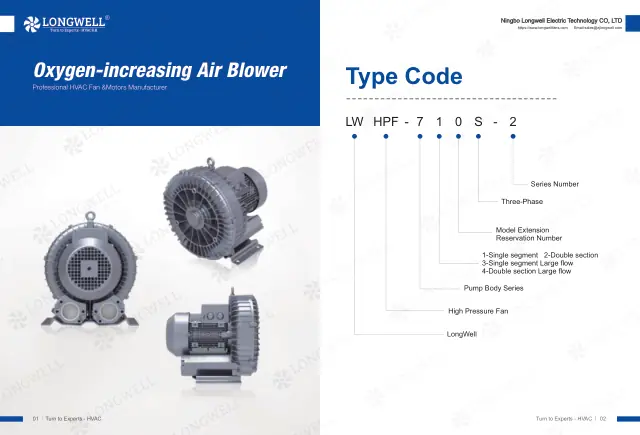 Aquaculture and pond aeration blowersRegenerative (ring) blowers and Roots blowers for fish farms, shrimp ponds and hatcheries.
Kennels, stables and animal sheltersExhaust, wall and stand fans and HVLS fans to remove heat, odour and ammonia.
More agricultural airflow guides
 Agriculture ventilation solutions →Overview of LONGWELL fan solutions for farms and greenhouses.
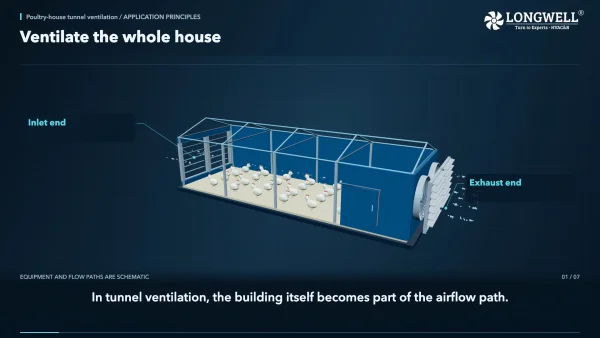 Livestock farmingPoultry and pig house ventilation.
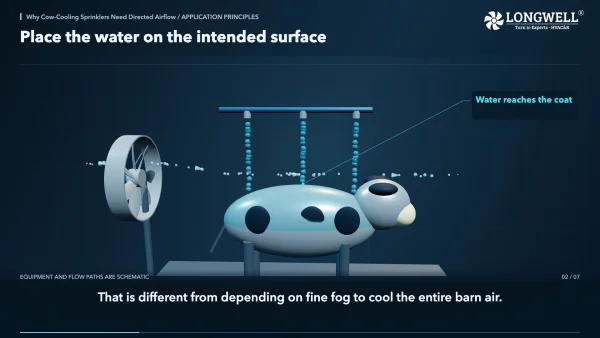 Dairy cow coolingAir movement over cows in barns and holding areas.
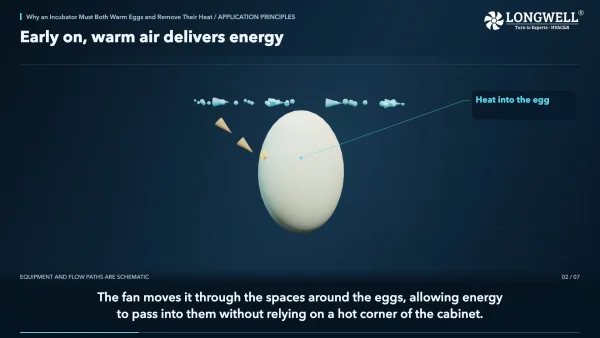 Hatchery incubatorsEven airflow around eggs in setters and hatchers.
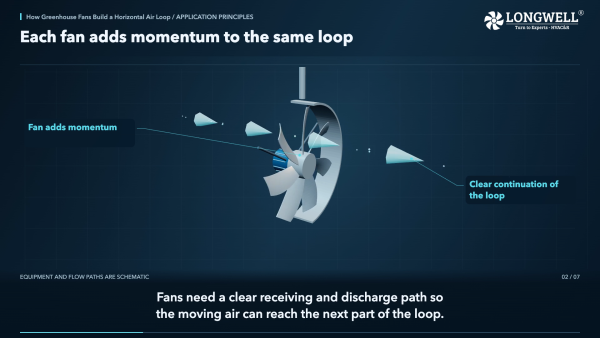 GreenhousesCirculation and exhaust fans for covered crops.
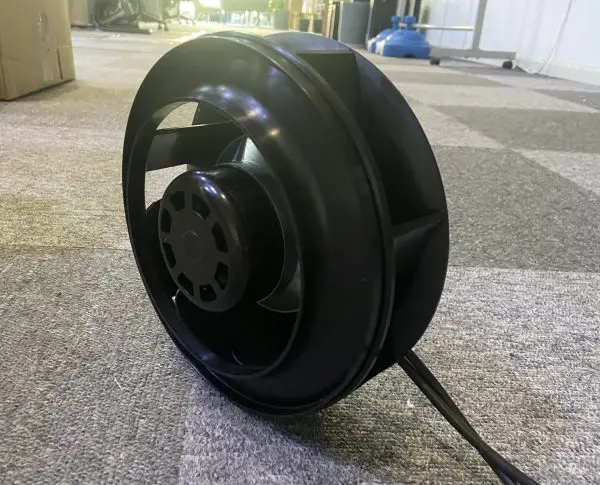 Vertical farmingAirflow between dense growing racks.
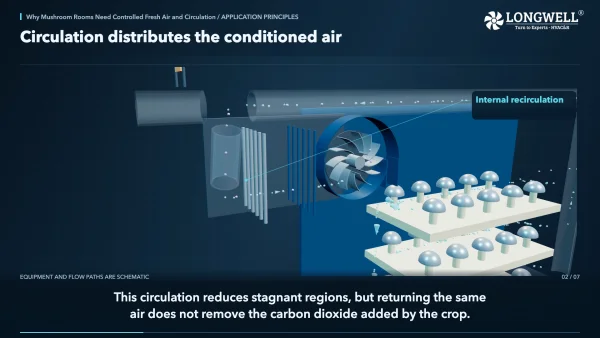 Mushroom roomsFresh air and humidity control in growing rooms.
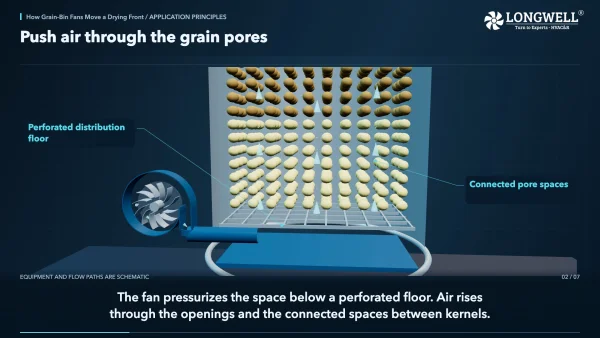 Grain-bin dryingDrying fans for grain bins.
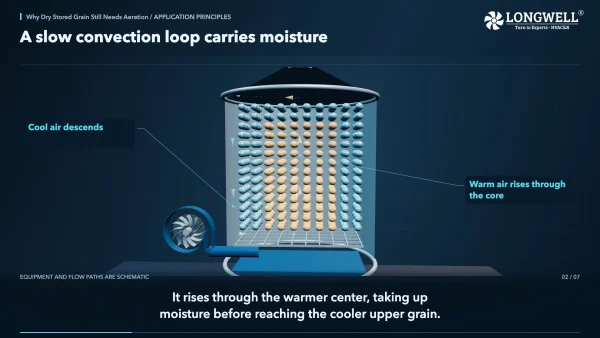 Stored-grain aerationCooling and holding stored grain.
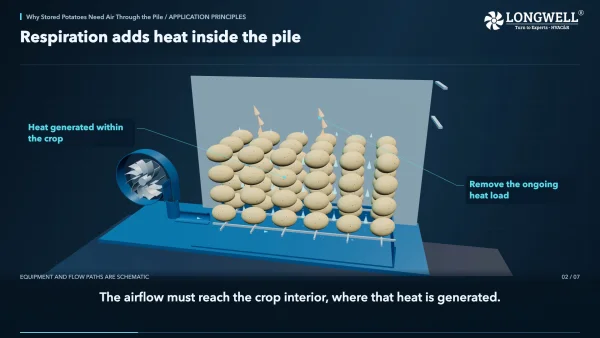 Potato storageVentilation through potato piles and boxes.
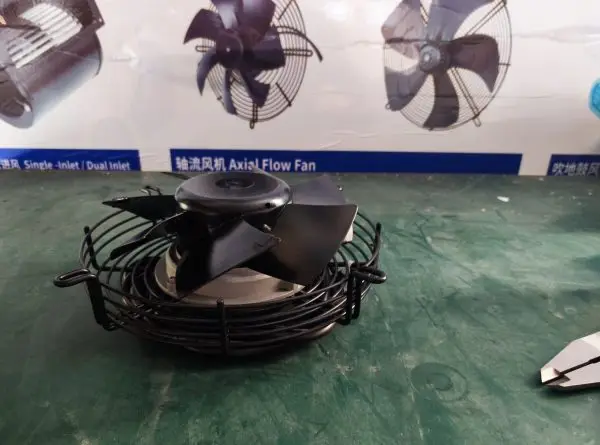 Harvest storeroomsAir movement in produce stores.
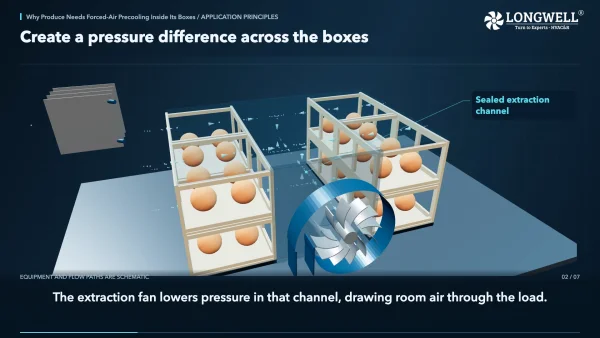 Produce pre-coolingForced-air cooling of packed produce.
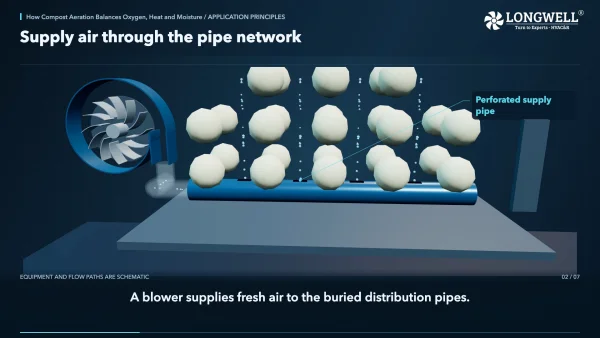 Compost aerationBlowers for aerated compost piles.
How to choose an agricultural fan
Define the air task first
Exhaust (removing stale, warm air), circulation (mixing air inside the building) and aeration (pushing air through grain, produce or water) need different fan types. A circulation fan cannot do the work of an exhaust fan, and a blower for water aeration must deliver pressure, not just airflow.
Check the resistance
Inlets, insect screens, cooling pads, grain depth and water depth all add resistance. Select the fan at the real operating point, not at free-air airflow.
Plan for dust, moisture and cleaning
Farm air is dusty, humid and often contains ammonia. Choose housings, motors and protection levels that suit the environment, and make sure fans can be cleaned and serviced.
Think about power supply and control
Many sites need fans that run all day. Speed control by temperature or humidity can lower power use and noise when full airflow is not needed.
Fan families for agriculture
- Poultry and livestock exhaust fans
- Wall exhaust fans
- Commercial stand and wall fans
- HVLS ceiling fans
- Regenerative and Roots blowers: regenerative blower catalogue · Roots blower catalogue
What to include in your enquiry
- Type of farm or store and the air task (exhaust, circulation, aeration)
- Building or pond size, number of animals or crop quantity
- Climate and the hottest operating conditions
- Voltage and phase; control wanted
- Quantity and delivery location
Send your farm ventilation requirements →
FAQ
What fans are used in livestock buildings?
Large exhaust fans in the walls or gables remove warm, humid air, with circulation fans or HVLS fans moving air over the animals. The livestock farming and dairy cow cooling guides explain the layouts.
Can a fan aerate a fish pond?
Pond aeration needs a blower that can push air against the water depth, such as a regenerative (ring) blower or a Roots blower, feeding diffusers on the pond floor. A normal fan cannot do this.
Does LONGWELL supply fans for farm equipment makers?
Yes. LONGWELL supplies fans and blowers to equipment builders, installers and distributors, including OEM versions. Send the application and quantity for a selection.