A heat pump is used to heat pipes. Heat pump systems have nowadays become an essential in different HVAC applications. From the outdoor heat exchanger to the indoor duct unit, these various airflow paths have different requirements for fans. Among various fan technologies, EC fans stand out for their adjustable speed control and high efficiency in real applications. When choosing a fan, one cannot merely compare the maximum airflow volume or motor efficiency. All aspects of the fan’s performance must be compatible with the design of the heat pump. This blog will introduce the application of EC fans in heat pump systems and how to select the appropriate fan based on different ventilation requirements.
What is Heat Pump Ventilation?
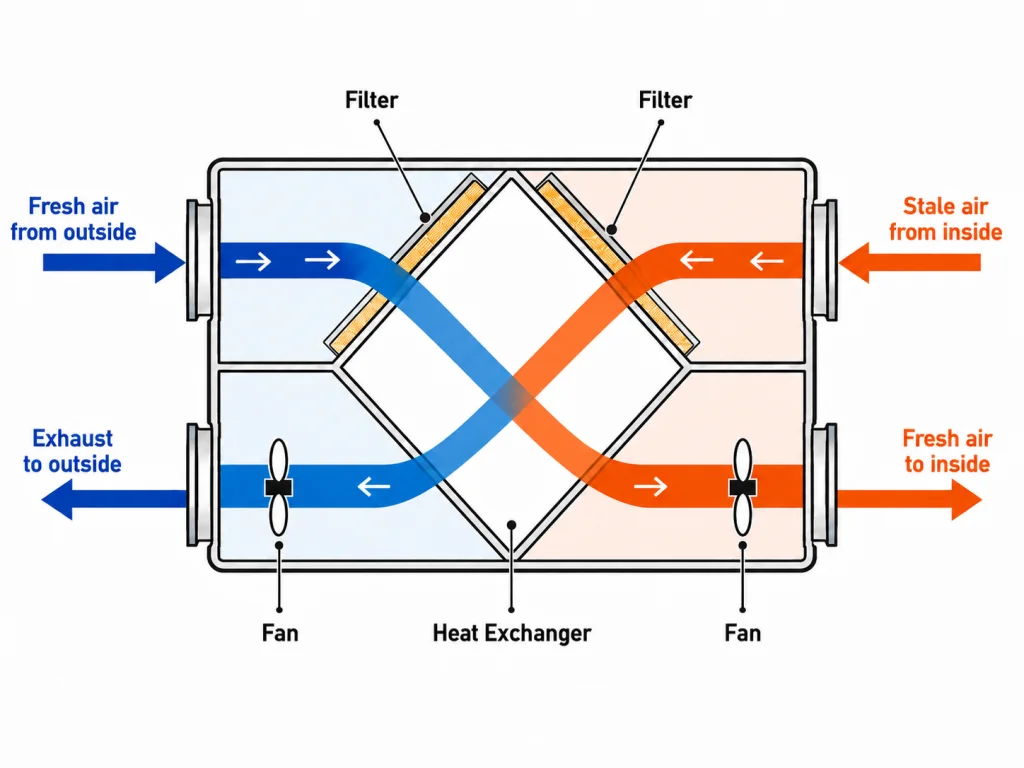
The heat pump ventilation system combines mechanical ventilation with heat recovery technology. It recovers the heat that is normally lost with exhaust air.
In an exhaust air heat pump, warm stale air is extracted from spaces such as bathrooms and kitchens and directed through the ventilation duct to the heat pump. The heat pump recovers energy from this outgoing air and can use it for space heating or domestic hot water, while fresh outdoor air enters the building to maintain ventilation.
What Does an EC Fan Do in Heat Pump Ventilation?
Fans maintain the airflow required for both ventilation and heat exchange. Their exact role depends on the heat pump configuration. A fan draws warm, stale air from indoor spaces and moves it through the duct system to the heat pump, where heat can be recovered.
Fresh Air Supply
In some heat pumps ventilation systems, extracting indoor air creates a slight negative pressure, which allows fresh outdoor air to enter through wall vents. In a balanced ventilation system, the fan draws outdoor air into the unit and moves it through components before the air enters occupied rooms. The components such as filters, heat recovery sections, and heating or cooling coils will bring a relatively high system resistance. The fan must maintain the required supply airflow with enough static pressure against the system resistance.
Stale Air Exhaust
The warm and stale air from bathrooms or kitchens is removed by EC fans. In this process, a heat pump ventilation system can capture some of the thermal from stale air instead of simply expelling it outside. Where both supply and extract fans are used, their airflow needs to follow the ventilation requirements of the complete system. The fan therefore should help maintain a stable airflow path through the heat recovery and ventilation process.
Where Are EC Fans Used in Heat Pump System?
Outdoor Heat Exchange
In the outdoor heat exchange stage, the main challenge is to move a large volume of ambient air. It needed to absorb or release heat during heating and cooling operation. EC axial fans are commonly used in this position. Axial fans can generate a large amount of airflow. Besides, in this position, the airflow path is relatively direct and the static pressure is lower. Outdoor installation also places additional demands on the motor and fan structure, including low-temperature starting, humidity resistance, and suitable environmental protection.
Indoor Unit
The indoor fans have a different task. They need to provide a stable and uniform airflow with a lower noise level. They are used to distribute conditioned air into the occupied areas. The installation space is usually compact. For compact wall-mounted indoor units, the EC cross-flow fan is highly suitable for this role. This is because a cross-flow fan has a long cylindrical impeller. Even when installed in a narrow indoor area, it can still provide sufficient airflow output. For indoor applications, fan selection places more emphasis on compact installation, uniform airflow distribution, controllable speed, and higher acoustic performance.
Ducted Heat Pump
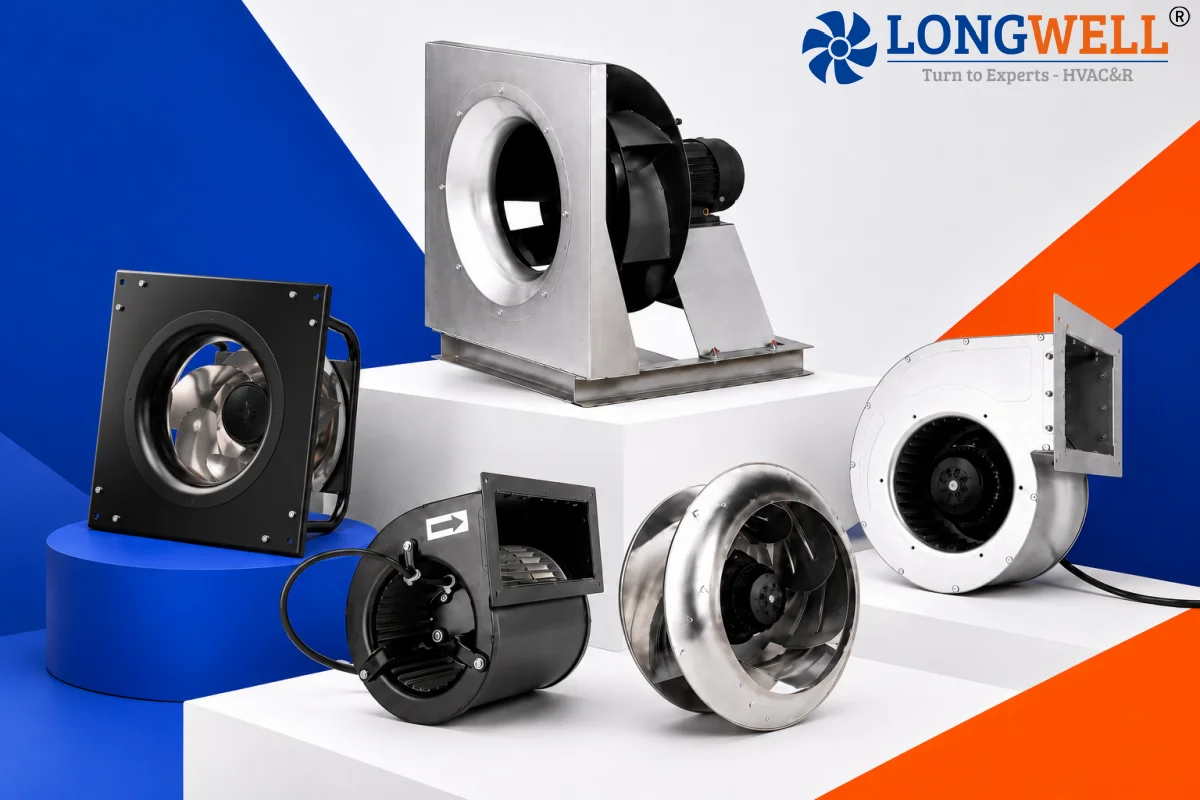
Air may need to pass through filters, coils, heat exchangers, dampers, and a duct network in ducted heat pump systems. These restrictive airflow paths create the requirements of fan that can generate higher static pressure with larger airflow volume. The EC backward-curved centrifugal fan and EC plug fans are better suited to these applications.
The selection of a fan should be based on the actual operating point. When filter loads or dampers change, the system resistance will vary as well. A variable-speed EC fan can adjust its speed to offer the required airflow and static pressure under these changing conditions. When in a part-load condition, lowering the fans’ rotation speed helps reduce unnecessary power consumption.
Choosing an EC Fan for Heat Pump Ventilation: Key Parameters
Airflow and Static Pressure
Airflow and static pressure is the main consideration when selecting an EC fan for a heat pump ventilation system. The selection should be based on the required airflow at a specific static pressure. Combine with the fan’s performance curve, and find out the operation point on the P-Q curve. The operating point should also remain within a stable and efficient area of the fan curve.
For preliminary sizing, engineers can enter the required airflow and static pressure into the LONGWELL EC Fan Selection Calculator to identify a suitable EC fan series and size. The tool uses airflow and total static pressure as primary inputs and evaluates the operating point against fan performance curves.
EC Fan Type
| EC Fan Type | Airflow Capability | Static Pressure Capability | Noise Consideration |
| EC Axial Fan | High | Low to medium | Low-speed operation can reduce outdoor unit noise. |
| EC Centrifugal Fan | Medium to high | Medium to high | Suitable for low-noise FCU and ducted applications. |
| EC Cross-Flow Fan | Low to medium | Lower | Particularly suitable for noise-sensitive indoor spaces. |
| EC Plug Fan | High to very high | Higher | Fan speed and array configuration can be adjusted to match AHU demand. |
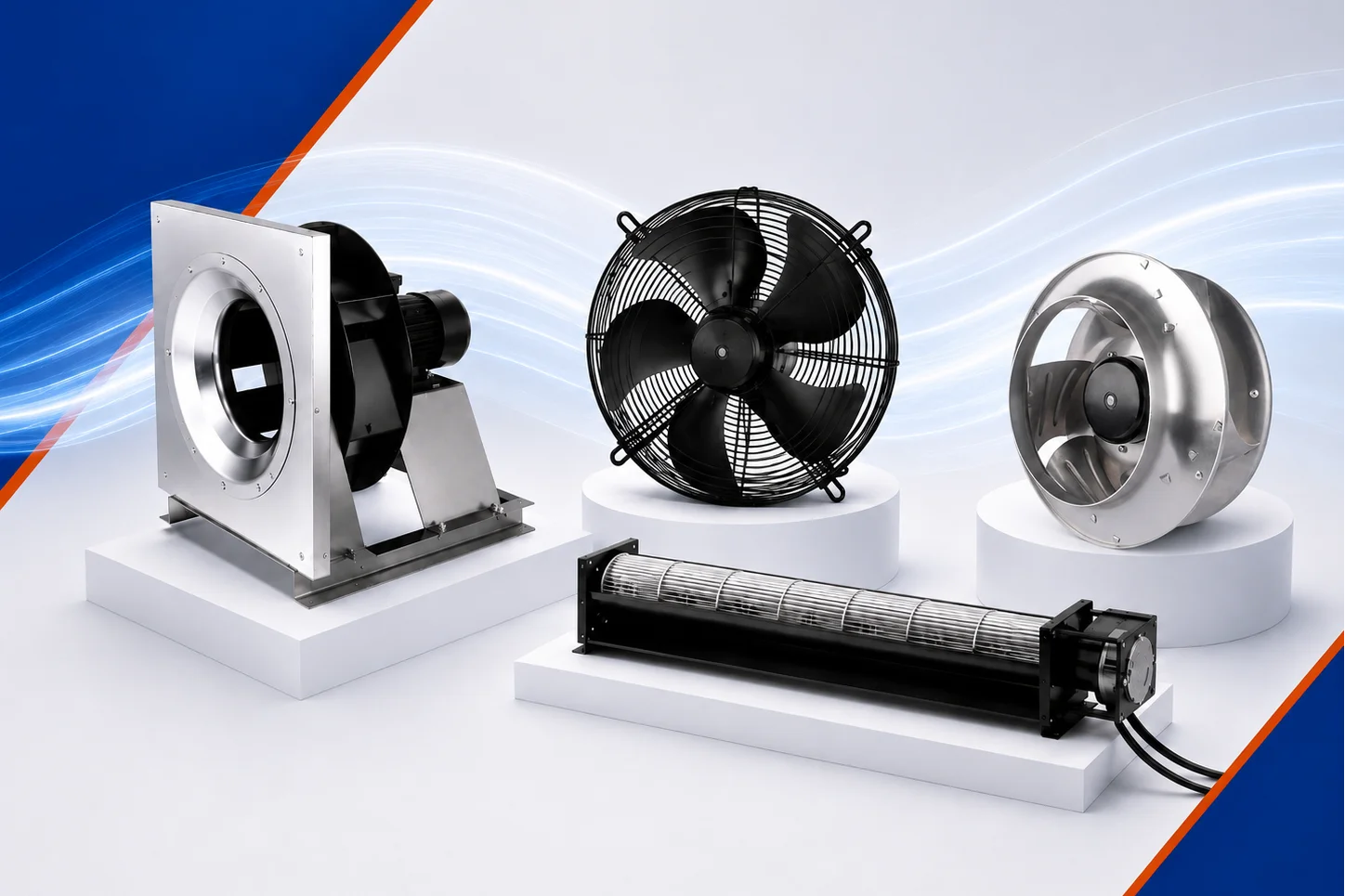
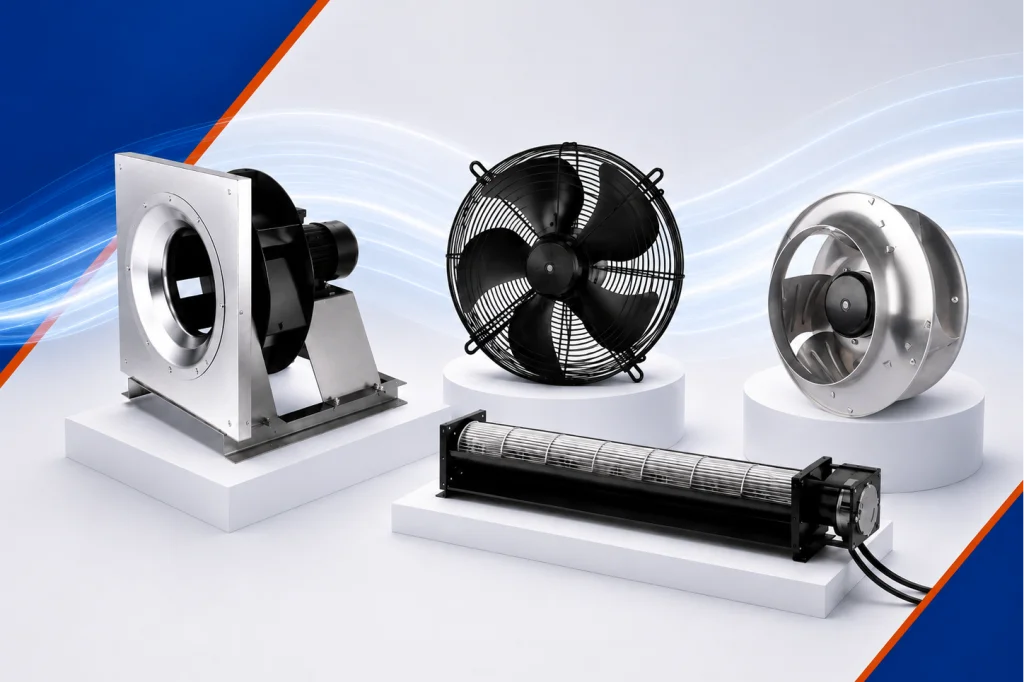
The airflow path in outdoor heat exchangers is relatively direct, so an EC axial fan is a more suitable solution. EC centrifugal fans, particularly backward-curved designs, are more suitable when airflow must pass through several restrictive components, such as filters, coils, heat exchangers, and long ductwork. The plug fan removes the volute of centrifugal fans and allows direct integration into an AHU. EC cross-flow fans are mainly used for indoor air distribution. Their long impeller creates airflow across a wide outlet, which helps distribute conditioned air more evenly into a room. The correct fan type depends on where the fan is installed and what the airflow path requires.
EC Fan Efficiency
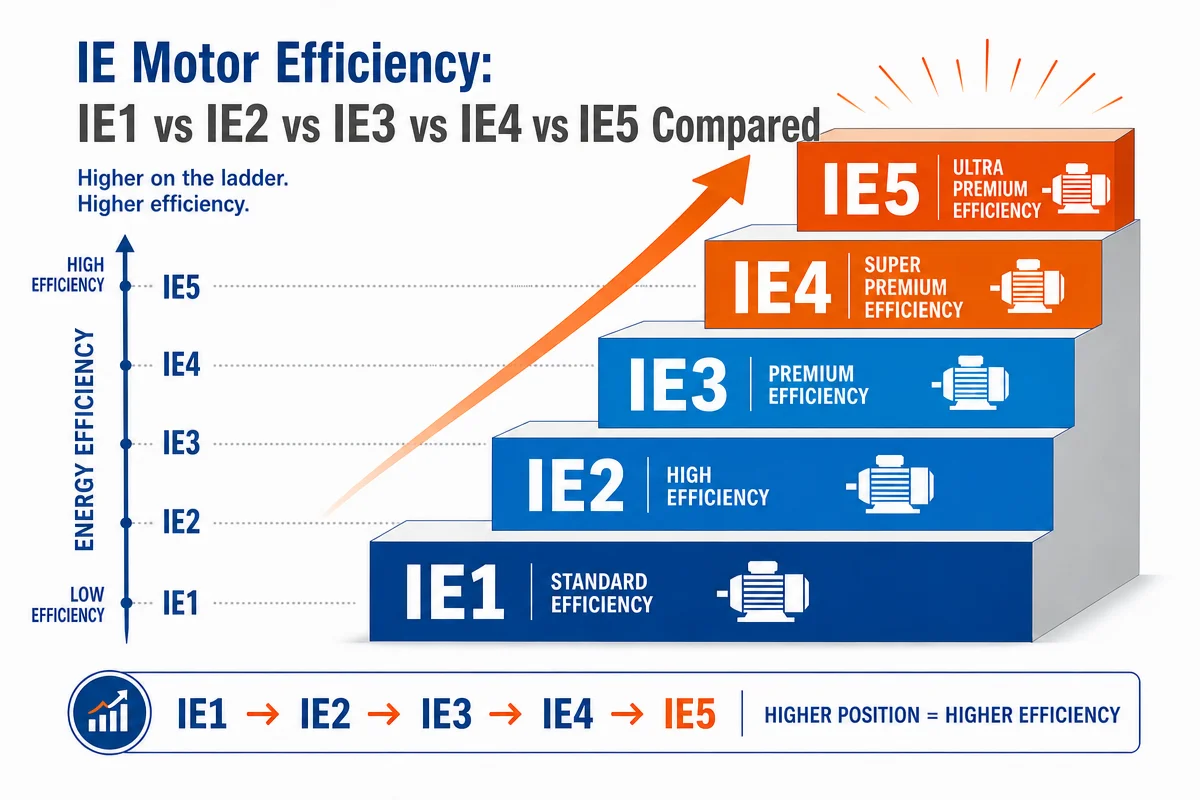
The maximum efficiency of EC fans can reach 90% to 95%. Several factors contribute to this high efficiency. EC fans use a permanent magnet rotor, and the result in operation is minimized losses. Also, EC fans usually combine with flexible speed control like 0–10V, PWM, and Modbus. The on-board speed controller replaces external control devices to reduce reactive current and upstream losses. The aerodynamic efficiency is also high at the speeds the fan actually runs. This approach is adopted by LONGWELL to optimize fan performance not only at the rated operating point but also under real-world, part-load conditions.
EC fans are particularly useful in heat pump systems because heating, cooling, and ventilation loads change throughout the day and across different seasons. When the airflow requirement drops, reducing fan speed can significantly reduce aerodynamic power demand, although the actual electrical saving still depends on the motor, fan curve, and system operating point.
Protection Level
Heat pump fans may operate in environments exposed to high humidity, condensation, rain, or water generated during defrost cycles. Moisture entering the motor or electronic components can increase the risk of electrical failure. The required IP protection level should be considered according to the fan’s installation position.
Outdoor heat pump fan motors are often equipped with IP55 protection when exposed to dust or water jets. Depending on the unit structure and installation environment, additional sealing or protective measures may still be necessary. For indoor units, IP54 may be sufficient where exposure is generally limited to dust and occasional water splashes. However, the IP rating is only one part of environmental protection. Operating temperature and other site conditions should be evaluated separately.
EC Fans for Different Heat Pump Applications
Residential Heat Pump Ventilation
Residential heat pumps system typically put more emphasis on the aerodynamic comfort and energy efficiency. It use an EC axial fan in the outdoor unit to move air through the condenser or evaporator coil. If the system includes wall-mounted indoor units, an EC cross-flow fan can be used to distribute conditioned air into the room.
Commercial Heat Pump
Commercial heat pump systems usually involve more airflow sections than residential units. A typical configuration can combine EC axial fans for the outdoor heat exchanger, backward-curved EC centrifugal fans for FCUs or ducted indoor units, and EC plug fans for larger AHUs. In centralized systems, multiple plug fans may also be arranged as a FanGrid where larger airflow capacity or redundancy is required.
Cold-Climate Heat Pump
Cold-climate heat pumps generally retain a similar outdoor-and-indoor fan arrangement but require fan versions designed for low-temperature operation. The default minimum working temperature may need to be lowered to -25°C or -30°C.
Industrial Heat Pump
Industrial heat pump systems can require several fan types because they may be connected to both process equipment and workshop ventilation. Special environments such as chemical plants may also require corrosion-resistant or explosion-protected variants, but the basic fan combination still follows the different airflow duties within the system.
LONGWELL EC Fan Solution
LONGWELL provides EC fan solutions for different airflow requirements within heat pump ventilation systems. The fan selection process starts from the actual application and operating point. Before fan type and motor configuration are determined, LONGWELL evaluates required airflow, static pressure, installation space, ambient temperature, noise level, and control requirements. This allows the outdoor, indoor, and ducted sections of the same heat pump system to use different fan designs.
LONGWELL EC fan platforms can use unified control methods, simplifying controller integration across different fan types and heat pump applications. LONGWELL fan types are not limited to heat pump ventilation fans. Exhaust fan, duct fan, and industrial fan are also in LONGWELL’s product catalog.
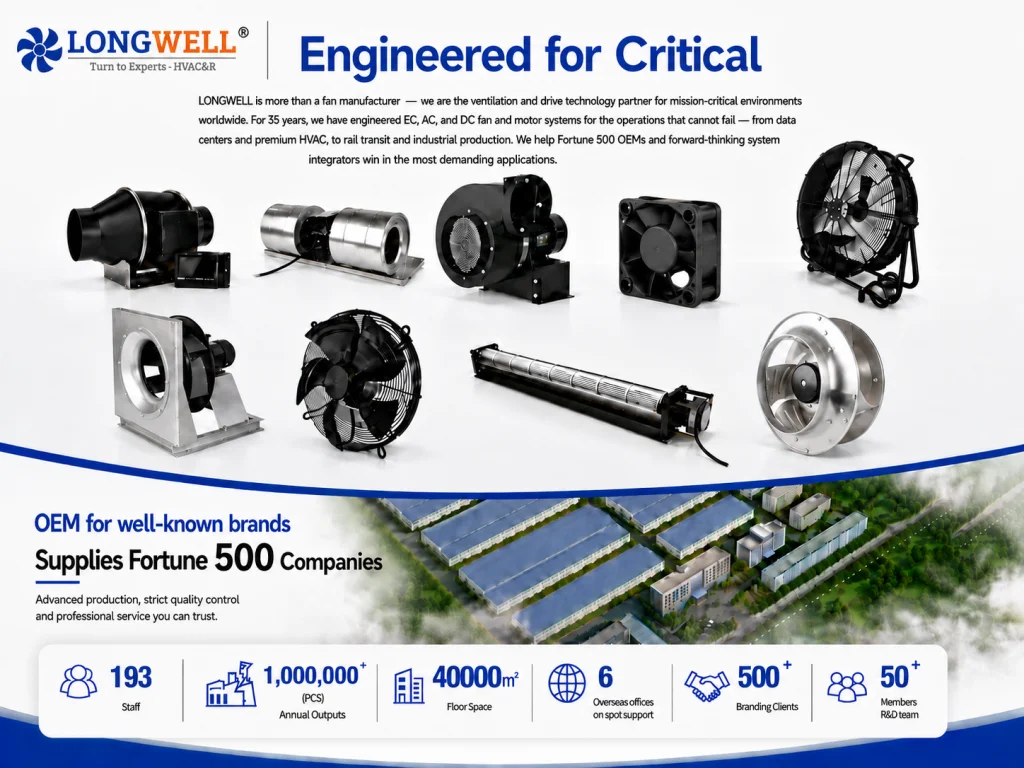
Beyond standard EC fan selection, LONGWELL provides customization services. Fan configurations can be adapted to operate from −40°C to +60°C for cold-climate applications. A 90-day NPI process supports customized projects from fan matching and structural adaptation to control integration, prototype verification, certification support, and preparation for mass production.
FAQ
Which control protocols adjust a EC fan speed?
Common EC fan control methods include 0-10V, PWM, and RS485 Modbus RTU. Some commercial systems also use BACnet for BMS integration.
How do electronic fans reduce energy consumption compared to traditional AC fans?
EC fans combine efficient motors with variable-speed control. The fan can reduce speed when full airflow is not required, helping lower power consumption during part-load operation.
What’s the most economical way to use a heat pump?
Allow the heat pump to operate steadily and modulate according to demand. Keeping filters clean and maintaining proper airflow also supports efficient operation.