When you are deciding which centrifugal fan to use in the systems, you are more assessing the capabilities of the OEM rather than choosing the products themselves. This choice will directly affect whether the project will succeed or not. However, choosing a centrifugal fan OEM is not simply about comparing prices or product specifications. Engineers and purchasing teams need to understand a manufacturer’s technical capabilities, customization options, quality control processes, and long-term support before making a decision. In this blog, we will explore questions that you need to ask when choosing OEMs.
Centrifugal Fan Specifications and Performance
When evaluating a centrifugal fan OEM, it is important to review the key specifications that determine whether the fan can meet your system requirements.
Before choosing an OEM supplier, learn detailed information about the centrifugal fan’s performance, electrical requirements, mechanical design, and operating conditions. Key specifications typically include airflow capacity, static pressure, motor type, voltage, power consumption, speed, noise level, dimensions, and material selection.
Motor Types
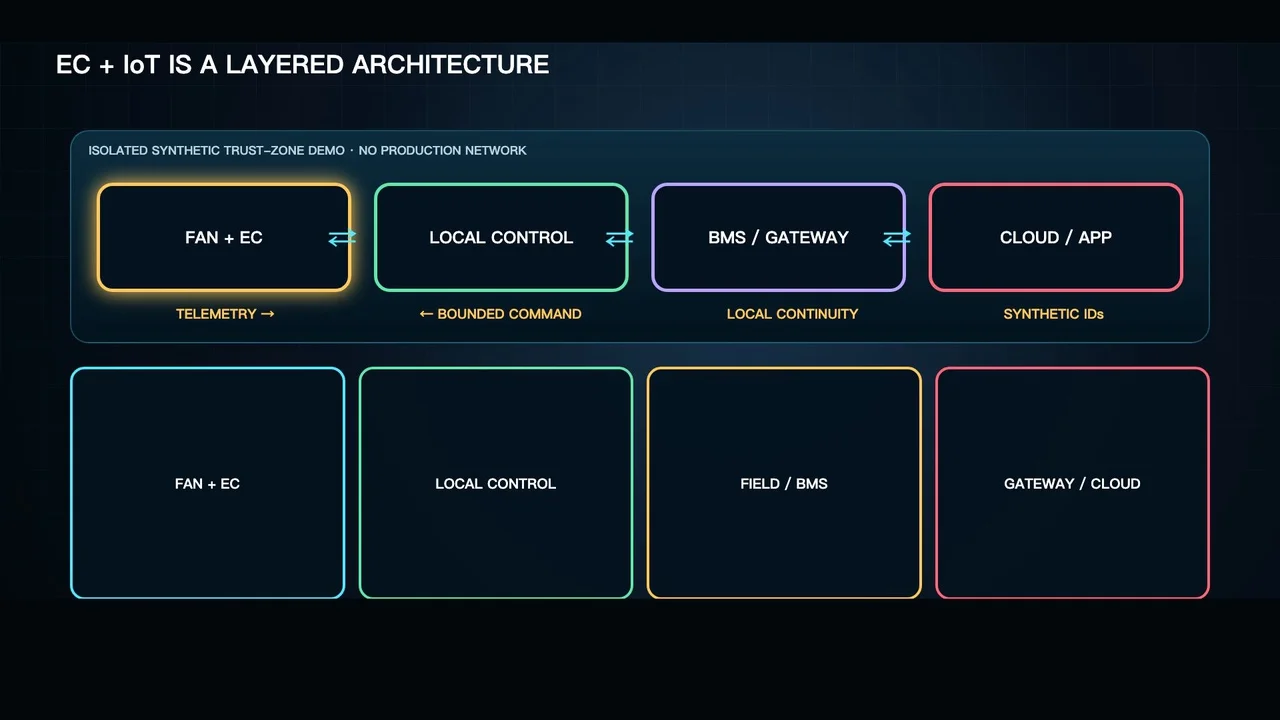
Control options play a key role in system integration and energy savings. The motor determines how well the fan meets your energy efficiency and control needs. You should ask the OEM about the motor types available for the centrifugal fans. The typical motor types are AC, DC, and EC motors. Here is a table that simply compares these three kinds of motors. You should choose the most suitable motor, not the most efficient one.
| Motor Type | Advantages |
| AC Motor | Simple design, reliable, cost-effective |
| DC Motor | Compact size, easy speed adjustment, low voltage operation |
| EC Motor | High efficiency, intelligent control, energy saving |
Performance Curves
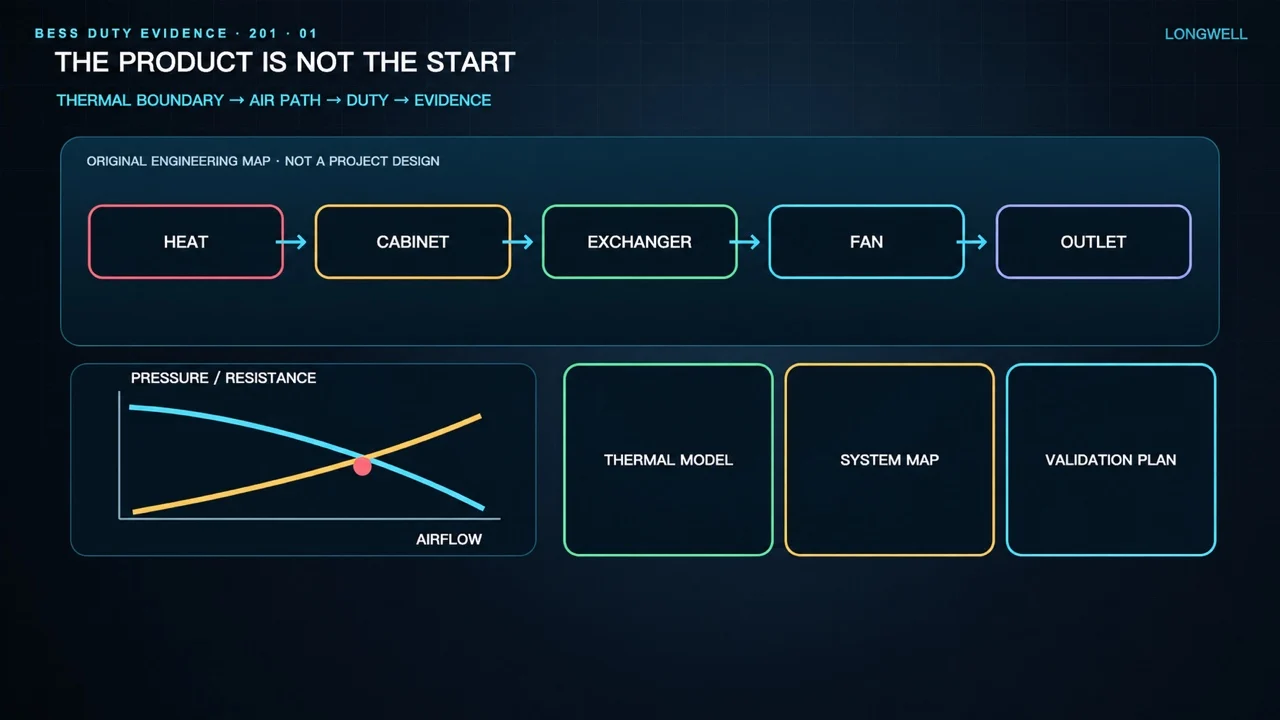
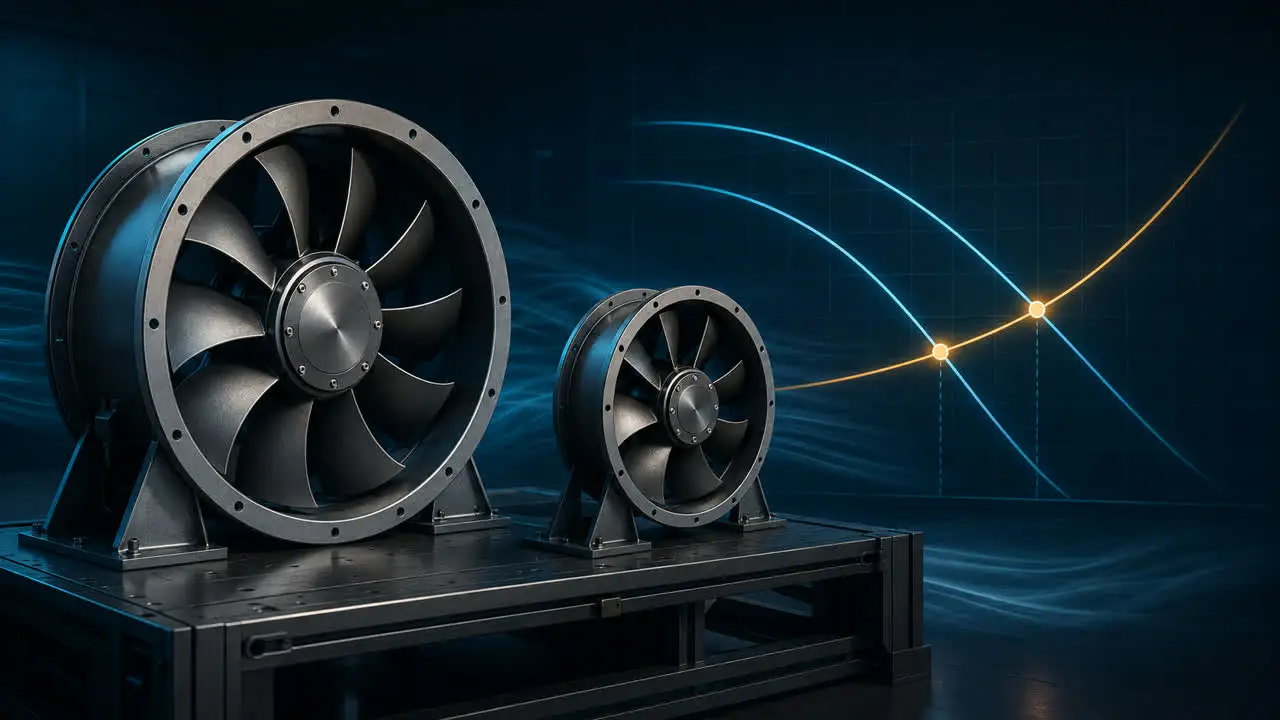
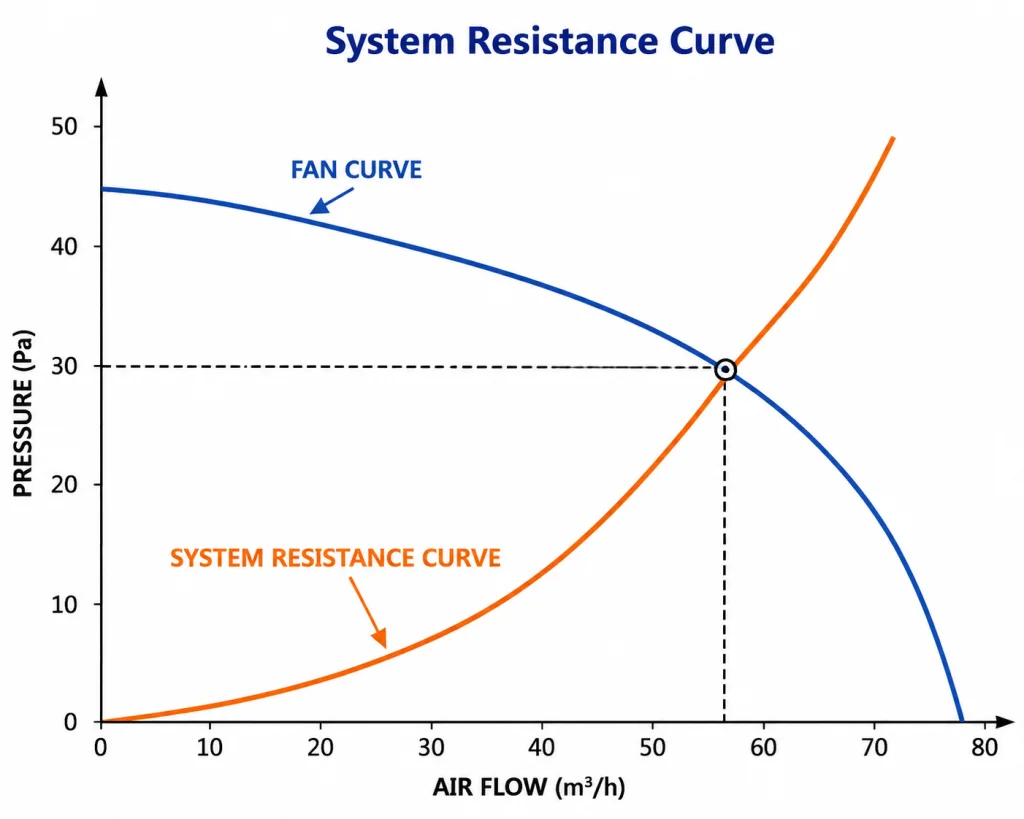
The performance curves show the efficiency of the centrifugal fan under different conditions. You should always request performance curves from your centrifugal fan OEM. What are the static pressure capabilities? What is the centrifugal fan’s efficiency rate? What is the fan’s airflow rate? You should gain the answers and match these parameters with your system curve. By combining the system resistance curve with the centrifugal fan performance curve in one curve graph, the intersecting point is the actual operating point.
Materials and Durability
The centrifugal fans’ material selection affects durability. You should ask your OEM about the materials used for the impeller, volute, motor, and other components. The common materials include stainless steel, galvanized steel, aluminum, plastics, and composites. These materials are suitable for different environments. For instance, composites work well in chemical-resistant environments. The stainless steel centrifugal fans are more suitable in corrosive or humid conditions.
Durability standards are also important. Ask if the centrifugal fan meets international standards like ASTM or EN. These standards ensure the fan can handle high temperatures, humidity, and even explosive atmospheres. This is critical for mission-critical environments such as data centers or industrial plants.
Equipment and Quality Test
Testing capability is one of the key differences between a trading supplier and a centrifugal fan manufacturer. Quality control ensures that each centrifugal fan meets its performance and reliability expectations. Ask the OEM for the test standard and the acceptance criteria:
- Incoming material inspection: chemical composition for impeller stock, bearing brand verification.
- In-process: impeller runout check (±0.05 mm typical tolerance), spot weld inspection, balance correction.
- Final: full-speed run-in ≥ 30 min, vibration reading in mm/s RMS, electrical safety check, sound level spot-check.
However, not all OEMs follow the same strict testing standards. Some will skip several tests. Look for an OEM that documents their quality control process and provides test reports for each centrifugal fan. Also ask about sample size for batch testing. The centrifugal fans 100 % run-in versus AQL sampling makes a big difference when you order 1000 units.
Leading OEMs use advanced equipment to measure airflow, pressure, and efficiency. They also perform vibration and environmental tests. These steps help prevent mechanical failures and ensure long service life.
OEM Certifications and Compliance
What Certifications Are Available?
Certifications show that the OEM meets international standards for quality. Many projects require specific compliance. You need to verify these required certifications while selecting centrifugal fan OEMs.
| Certification | Main Purpose |
| CE Marking | Indicates that the centrifugal fan meets European health, safety, and environmental protection requirements. |
| RoHS | Restricts the use of certain hazardous substances in building a centrifugal fan. |
| REACH | Ensures compliance with chemical safety regulations and material requirements within the European Union. |
| ErP (Energy-related Products) | Assessing energy efficiency to meet EU high-efficiency requirements. |
| UL Certification | Verifies that products meet fire-resistance and safety standards for the North American. |
| ETL Certification | Confirms product compliance with North American quality and safety standards through testing laboratories. |
| ISO 9001 | Demonstrates that the manufacturer has an international quality management system. |
Compliance Documentation
Compliance documentation is an important part of OEM evaluation. These documents allow engineers and procurement teams to verify whether the centrifugal fan’s materials and production process meet the required standards. For verifying airflow, pressure, and efficiency performance, ask for ISO 58801 or AMCA 210 standards. The Mill Test Reports (MTR) as material traceability records for the OEM can also be requested.
For OEM projects, compliance documentation includes testing, certification, and modifications. Reviewing compliance records during the supplier selection stage helps reduce risks related to product approval and system integration.
Before working with an OEM supplier, confirm whether they can provide documentation for your target market. For instance, the European Union has increasingly strict requirements. The new EU Ecodesign ErP 2026 emphasis on fan efficiency and energy performance.
OEM Customization and Manufacturing Support
Does the OEM Provide Engineering Consultation?
For projects involving customized requirements or complex system integration, whether the OEM provides engineering consulting is an important consideration. Manufacturers should participate in the entire process as early as possible, before the production of the prototype. This helps to identify potential issues related to airflow, static pressure, noise, installation limitations, and electrical integration before entering mass production. Only a few OEMs can provide comprehensive support throughout the development process, including requirement analysis, design optimization, prototype development, and final performance verification.
Can OEM Customize the Centrifugal Fan Design?
For many OEM projects, the standard centrifugal fan models may not fully meet the system requirements. There are limitations in terms of installation space, operating conditions, equipment integration, etc. Therefore, centrifugal fan OEMs need to provide additional engineering support beyond the basic product selection, including mechanical design adjustments, material optimization, motor configuration, and performance adjustments.
Therefore, the customization capability of the manufacturer becomes an important factor during supplier evaluation. The most frequent customization requirement is mechanical integration. The fan impeller dimensions, mounting structures, or inlet and outlet configurations may need to be modified to fit specific equipment layouts. Material selection is another consideration. The operating environments may require different solutions for corrosion resistance or temperature tolerance. Performance optimization is also a common customization project for centrifugal fans. OEMs achieve the desired requirements by adjusting the geometry of the impeller, modifying the motor, or the overall fan configuration.
How Does OEM Ensure Consistent Product Quality?
A professional centrifugal fan OEM should not only provide high-quality products but also maintain production consistency. Before delivering the mass products, the manufacturer will conduct condition monitoring on each centrifugal fan to ensure each one is in good working order. For long-term OEM partnerships, a manufacturer’s ability to control production consistency is a key factor in reducing field failures.
What is OEM’s Production Capacity and Lead Time?
For projects that require the design of new centrifugal fans, the main considerations are the production capacity and lead time of the OEM. The ability of the manufacturer to maintain stable output directly affects the project progress and the reliability of the supply chain. It is required that the OEM provide clear sample development and mass production schedules to help you coordinate inventory management and product launch plans.
OEM After-Sales Support
What Warranty and Technical Support Does OEM Provide?
The warranty terms can protect your investment. When choosing an OEM, you need to inquire about the warranty coverage and duration for the centrifugal fan. A crucial factor is the technical support provided by the OEM. It is necessary to confirm whether the supplier offers prompt troubleshooting and maintenance support. Quick response helps reduce downtime and ensures the smooth operation of the system.
Can OEM Provide Spare Parts and Long-Term Service?
When choosing an OEM centrifugal fan, long-term service capability is an important factor. Especially for systems that need continuous operation, a shutdown would result in significant losses. Obtaining technical support for spare parts and maintenance can help reduce downtime and simplify future maintenance. Ask the OEM manufacturer if replacement parts can be provided throughout the product’s lifecycle. For example, whether motor, impeller, or other key fan components can be replaced. At the same time, the delivery time of the replacement parts should also be taken into consideration.
Why Choose LONGWELL as Your Centrifugal Fan OEM Partner?
- Stable Performance
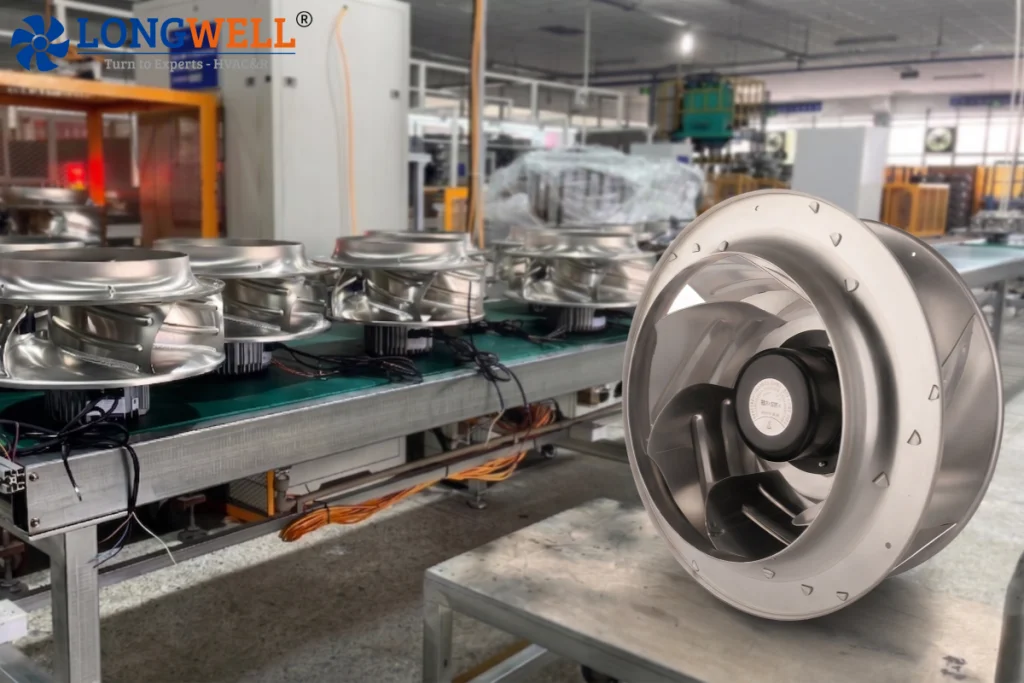
LONGWELL centrifugal fans, especially LWBE3G series backward-curved centrifugal fans, are engineered to deliver high static pressure and consistent airflow.
- Smart Control Features
LONGWELL SmartEC™ technology provides centrifugal fans with higher energy efficiency compared to traditional ones. The integrated smart monitoring system can automatically adjust fan speed based on real-time sensor data, optimizing energy consumption while maintaining required performance standards.
- Certifications
LONGWELL’s product certifications cover major global markets such as the EU, North America, and China. For the tests specified by the clients, LONGWELL handles the plan drafting and provides the original report shipped to the client.
- Short Lead Times
LONGWELL ensures industry-leading delivery efficiency: 15–30 days for orders ≤500 units, and 6–10 weeks for 1000+ unit OEM programs. The average lead time for our competitors is typically from 12 to 22 weeks.
- Comprehensive Customization Capabilities
LONGWELL offers extensive tailor-made solutions for OEM partners, allowing modifications to fan size, airflow characteristics, material selection, and control features to meet specific application requirements. The LWBE3G backward-curved centrifugal fan model covers dimensions from Ø133–Ø900 mm with mounting interfaces that match major international standards.