Fan Selection for HVAC Systems: Advanced Engineering Guide & Technical Specifications
In modern building environments and industrial thermal management, the core of any HVAC (Heating, Ventilation, and Air Conditioning) system lies in the precise control of fluid dynamics. Selecting the right fan is never just about “size matching”—it is a complex systems engineering task that heavily involves aerodynamics, motor efficiency, and acoustic performance.
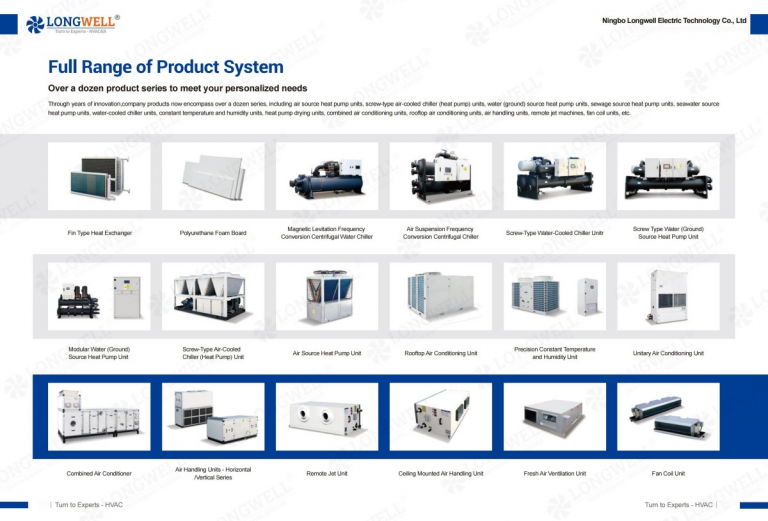
At various international exhibitions in the past few months, the Ningbo Longwell Electric Technology Co., Ltd. (LONGWELL) booth welcomed numerous global engineers seeking high-efficiency ventilation solutions. Based on the technical exchanges from the exhibition, we have compiled this in-depth fan selection engineering guide, complete with detailed product specifications and application cases, to help your next HVAC project achieve the optimal balance between performance and cost.
1. Core Aerodynamics: Defining the Precise Duty Point
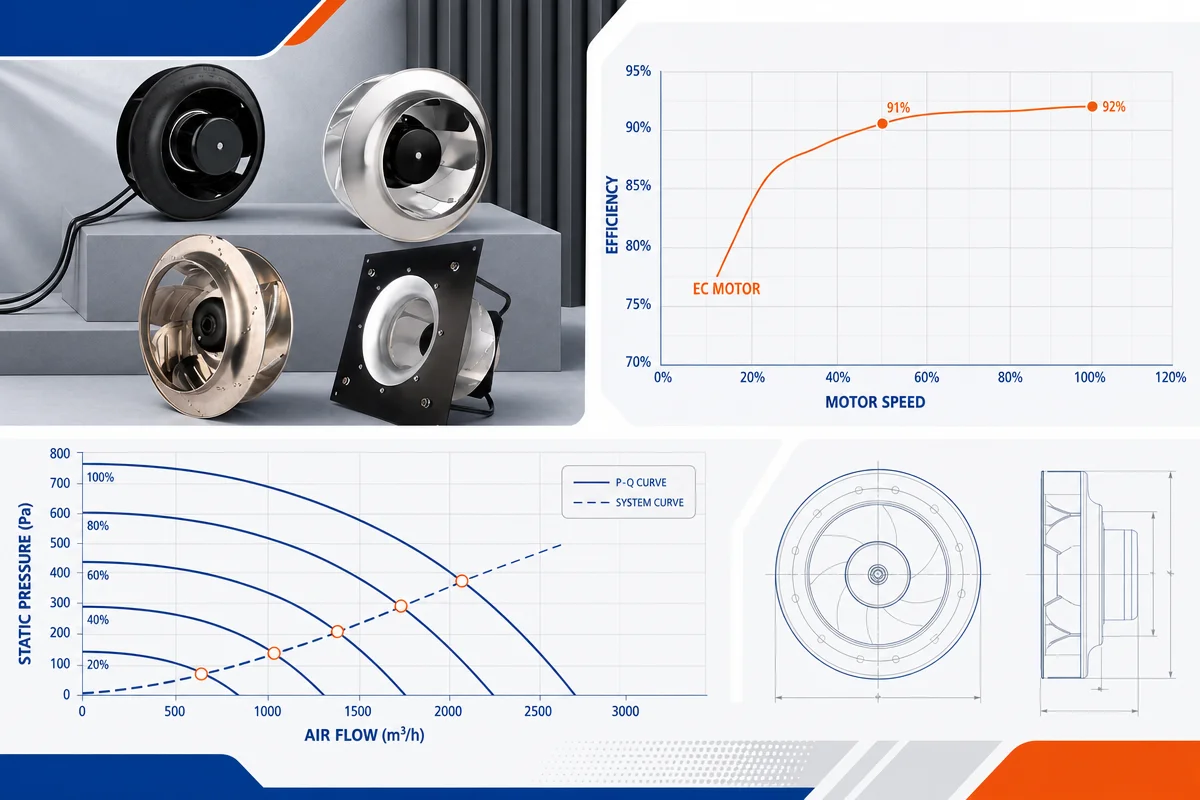
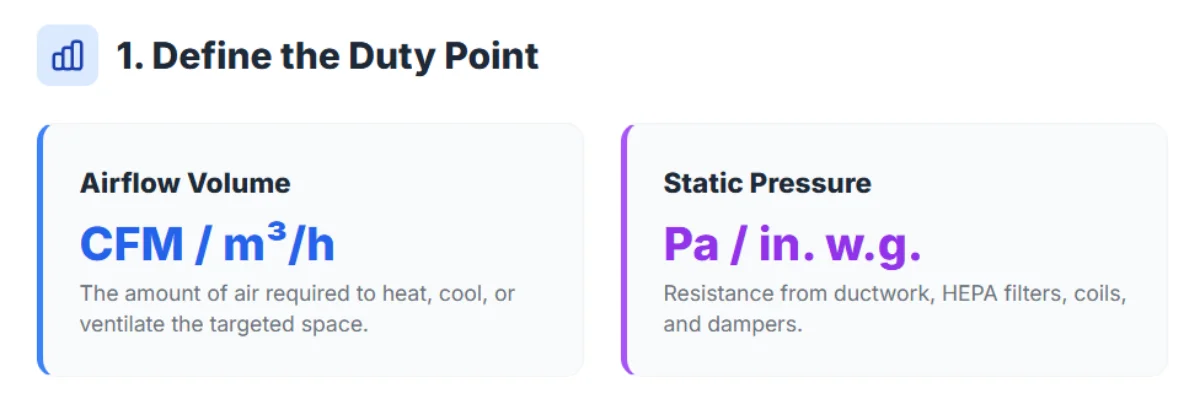
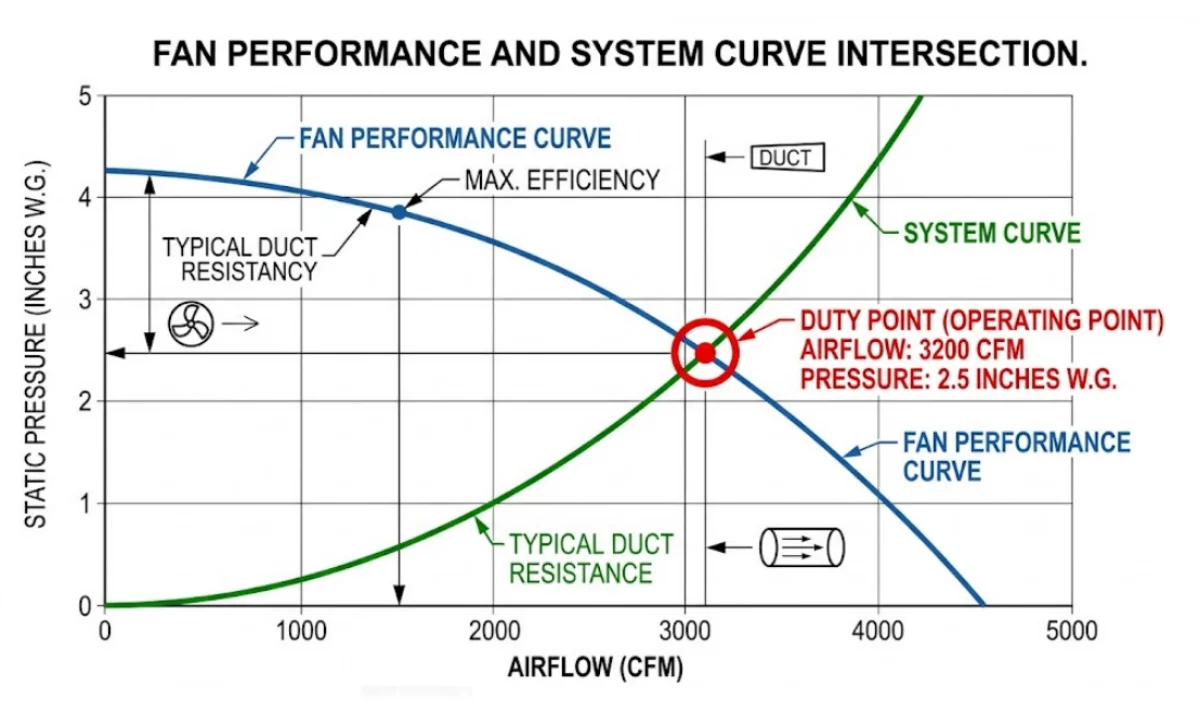
Before any selection begins, engineers must pinpoint the system’s “Duty Point.” This operating point is determined by the intersection of the system resistance curve and the fan performance curve. When calculating, it is critical to distinguish between the following pressure concepts:
- Dynamic Pressure (P_d): The kinetic energy carried by the air movement itself.
- Static Pressure (P_s): The potential energy required for the fan to overcome system resistance (e.g., long-distance ductwork, HEPA filters, heat exchange coils).
- Total Pressure (P_t): The sum of both pressures, expressed as P_t = P_s + P_d. When evaluating HVAC duct systems, static efficiency is often a much more decisive metric than total pressure.
Ensuring that a fan operates within its Peak Efficiency Zone is the only way to guarantee the required airflow while minimizing power consumption and aerodynamic noise.
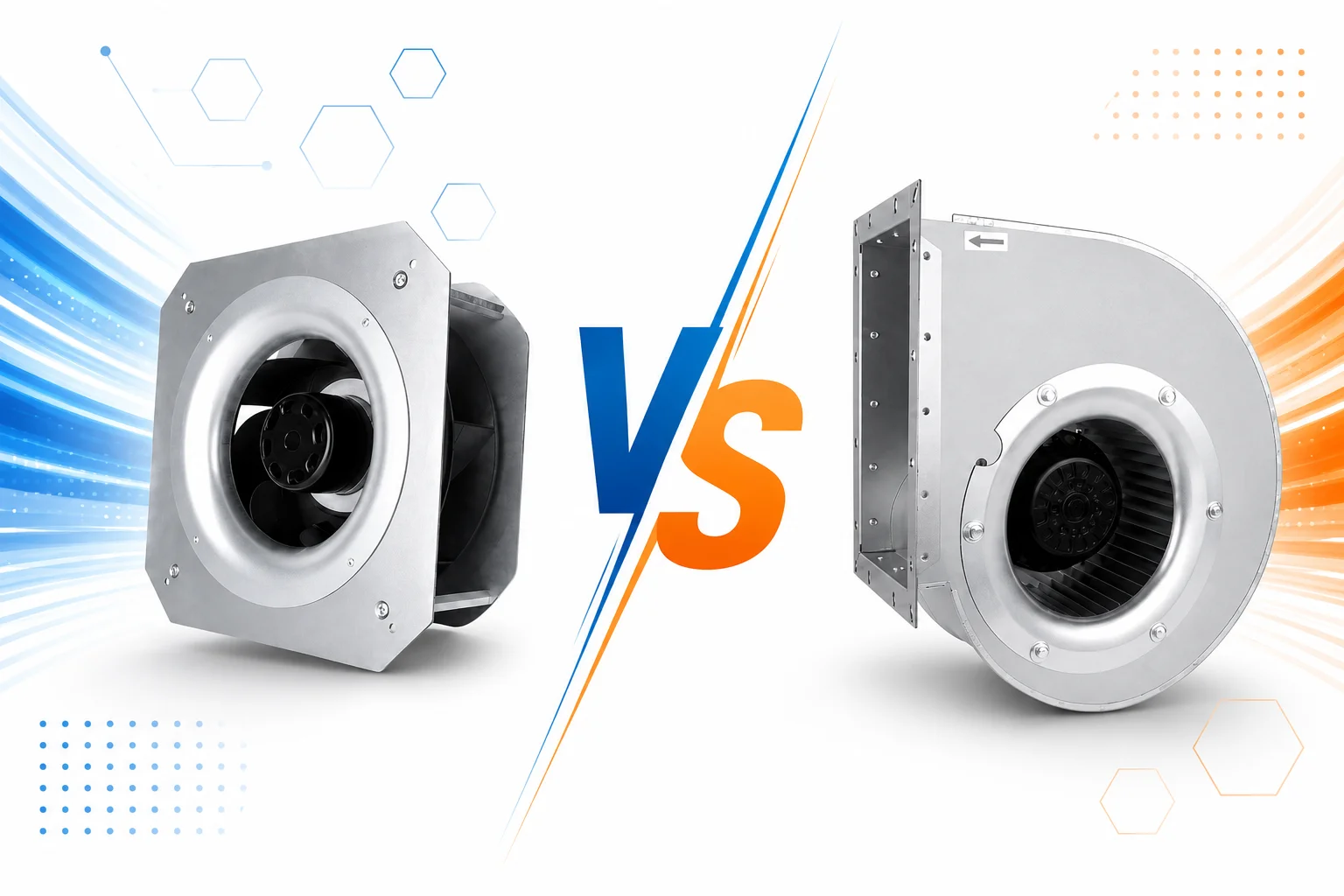
2. Backward Curved Centrifugal Fans: The Performance Core for High-Resistance Ductwork
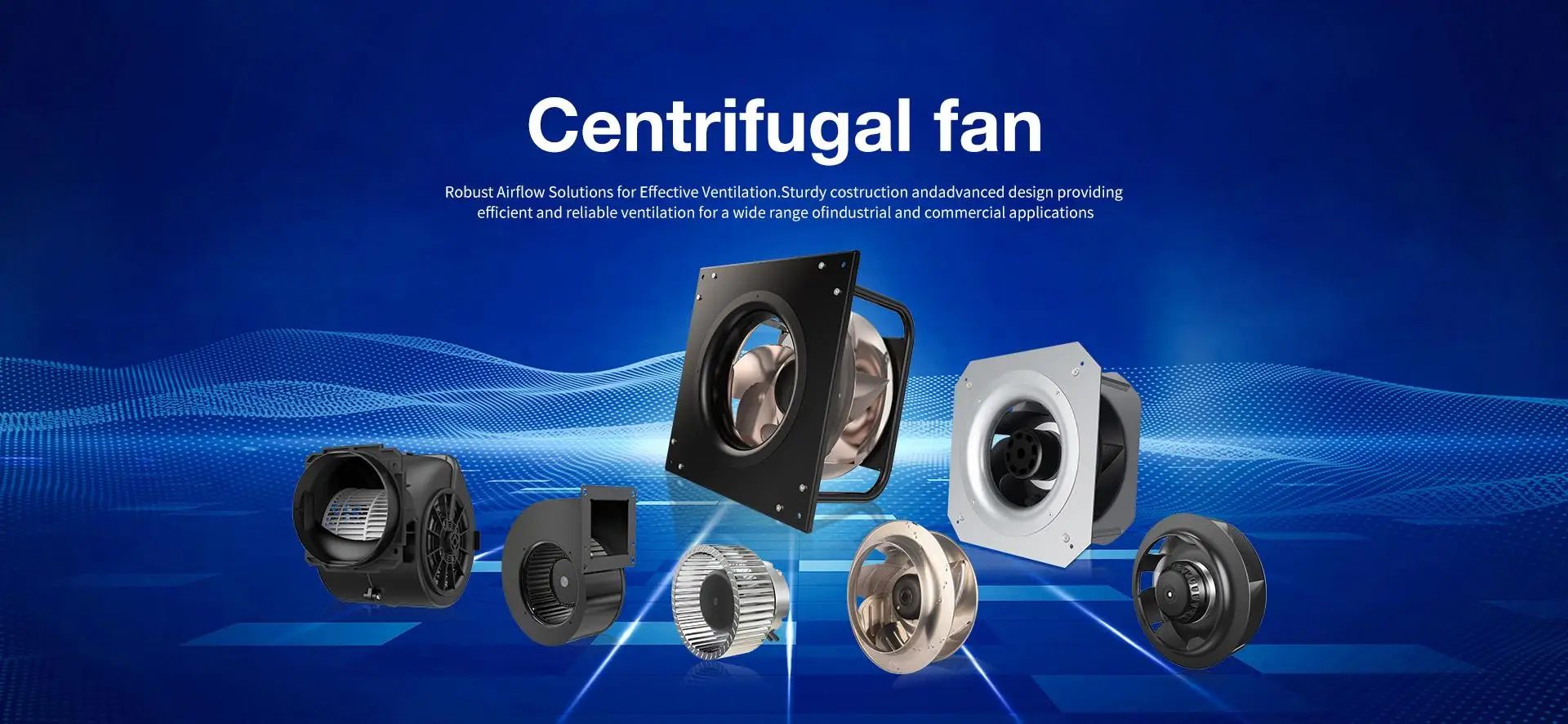
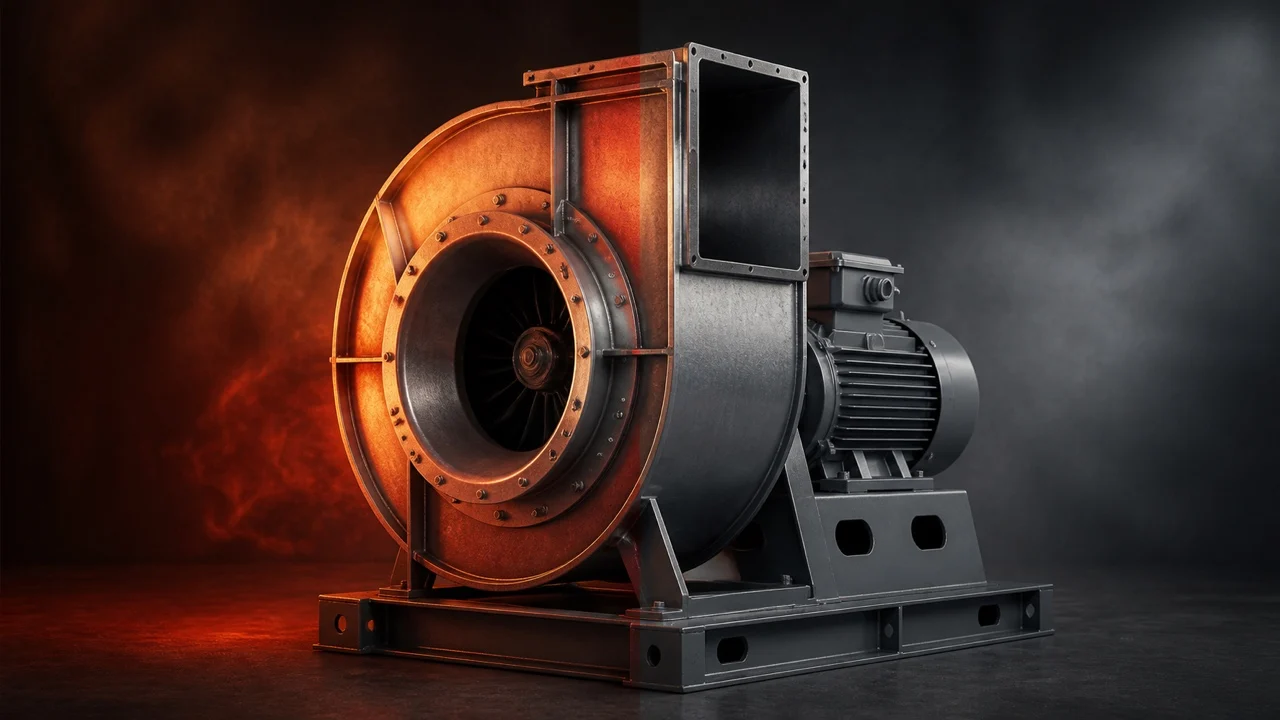
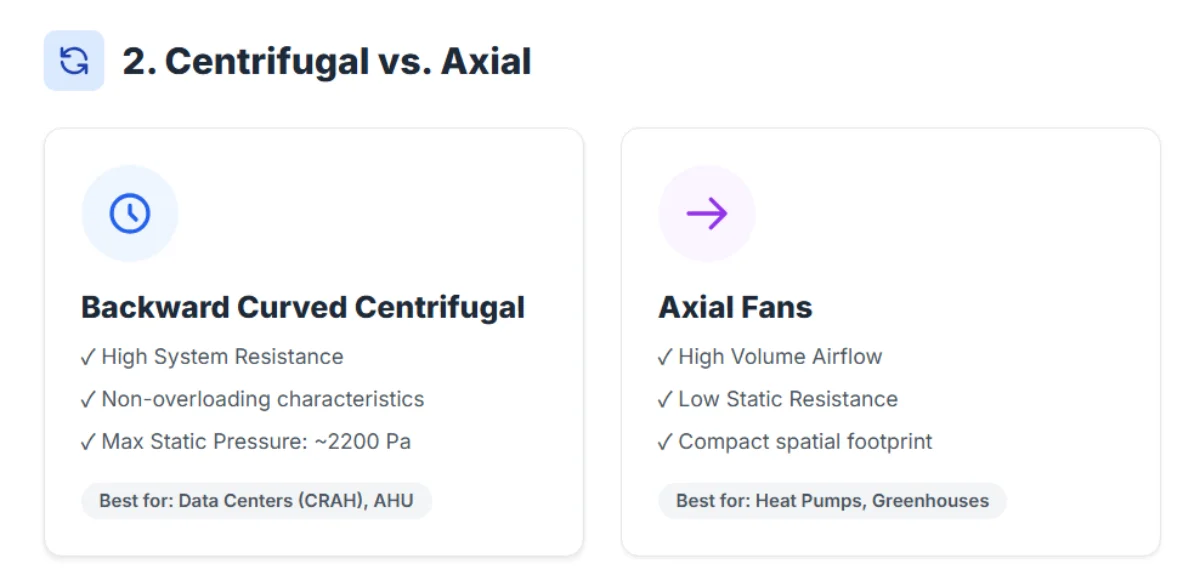
Backward curved centrifugal fans feature a blade exit angle of less than 90 degrees, which gradually reduces the relative velocity of the airflow within the blade channels. This design grants it a highly valuable engineering attribute: the Non-Overloading Characteristic of the shaft power curve. This means that even if there is a sudden change in system resistance, the motor will not burn out due to overloading.
LONGWELL Technical Parameter Highlights:
- Size Range: 133mm to 630mm (matching up to 218 frame size motors).
- Maximum Static Pressure: Up to 2200 Pa.
- Impeller Material Options: * PA66+GF30% (Glass Fiber Reinforced Nylon): Lightweight, corrosion-resistant, and highly cost-effective. Aluminum Alloy/Galvanized Sheet: Suitable for large sizes or high-speed, heavy-duty industrial environments.
- Protection Class: IP44/IP54 as standard, with customizable upgrades to IP55 for harsh environments.
Typical Application Cases:
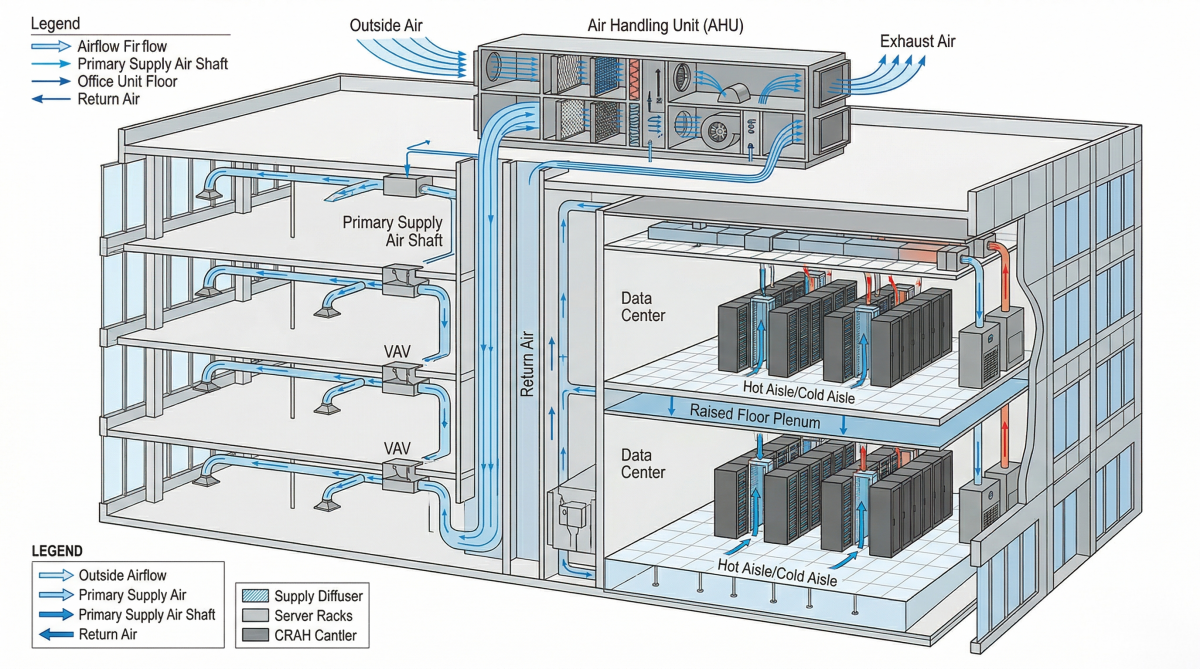
- Data Center CRAH (Computer Room Air Handler): Utilizes exceptional static pressure capabilities to easily push air through high-density raised floors and server rack resistance.
- Commercial AHU & FCU: Provides excellent fault tolerance and operational stability in Variable Air Volume (VAV) systems.
Product Link: LONGWELL Backward Curved Centrifugal Fans
3. Axial Fans: The Perfect Combination of High Airflow and Space Efficiency
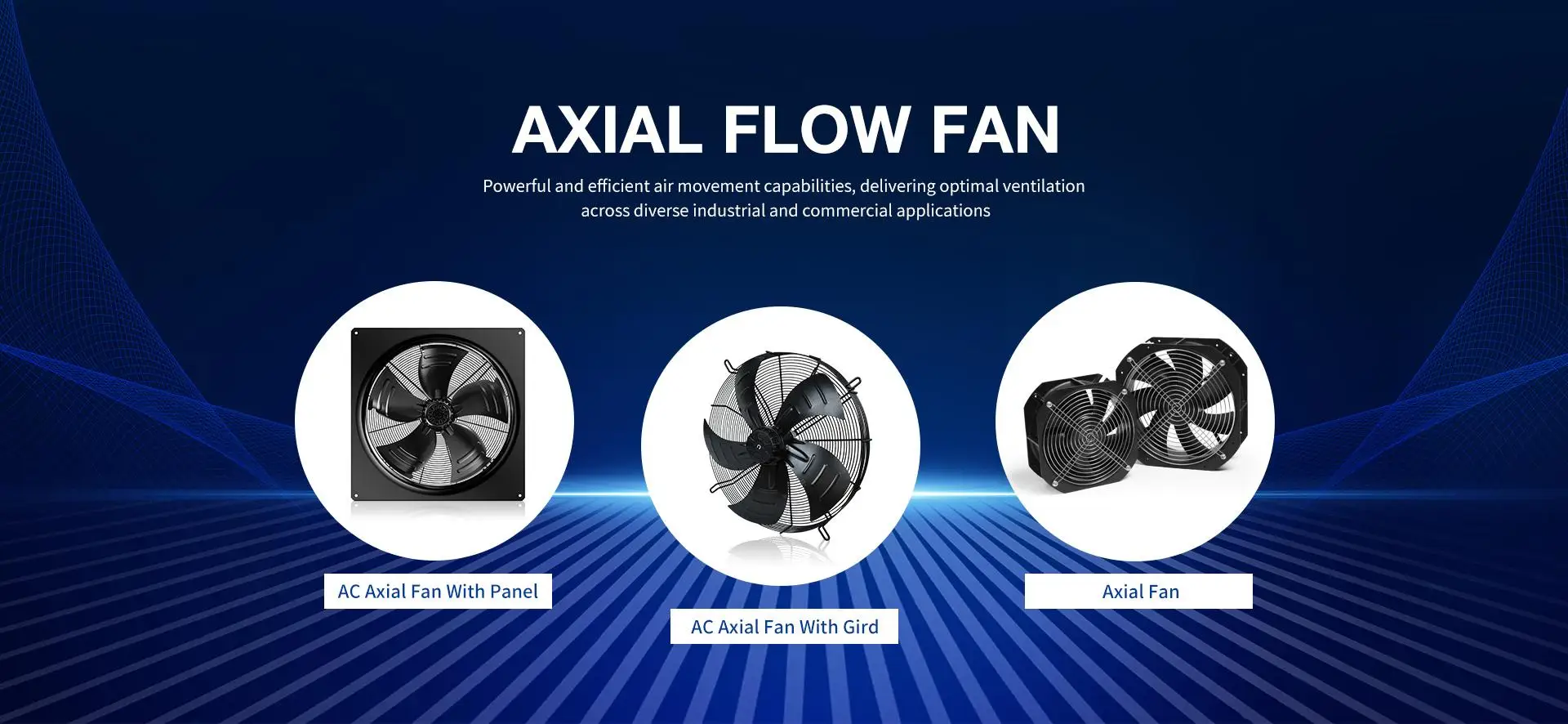 When a system needs to move massive volumes of air over short distances with minimal static pressure resistance, axial fans offer the highest efficiency. Their compact physical footprint gives them an exceptionally high spatial coupling density.
Key Considerations for LONGWELL Axial Fans:
For equipment located in residential areas or near office spaces (such as heat pumps), the noise level (dBA) is a core consideration. LONGWELL utilizes optimized aerodynamic blade profiles that significantly reduce fluid separation and vortex loss, suppressing aerodynamic noise at the source.
Typical Application Cases:
- Commercial Heat Pumps & Condenser Units: Maximizes heat dissipation within constrained equipment enclosures.
- Vertical Farming & Greenhouse Ventilation: Ensures an even distribution of temperature and humidity across vast indoor spaces.
Product Link: LONGWELL Axial Fans
4. EC Motor Technology: Defining Next-Gen Smart HVAC
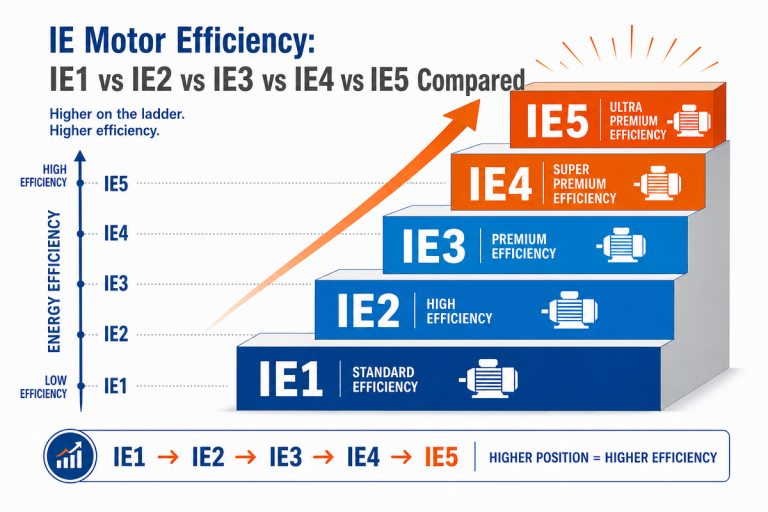
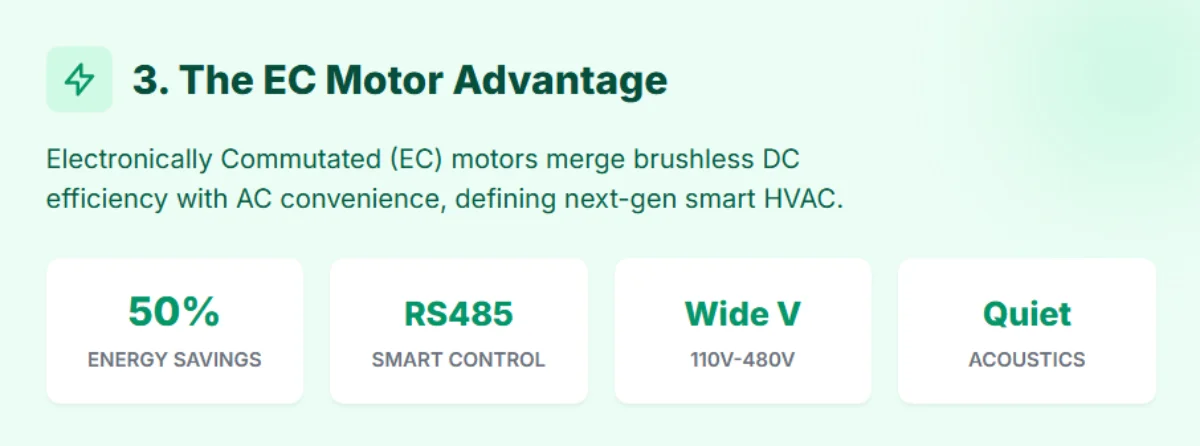
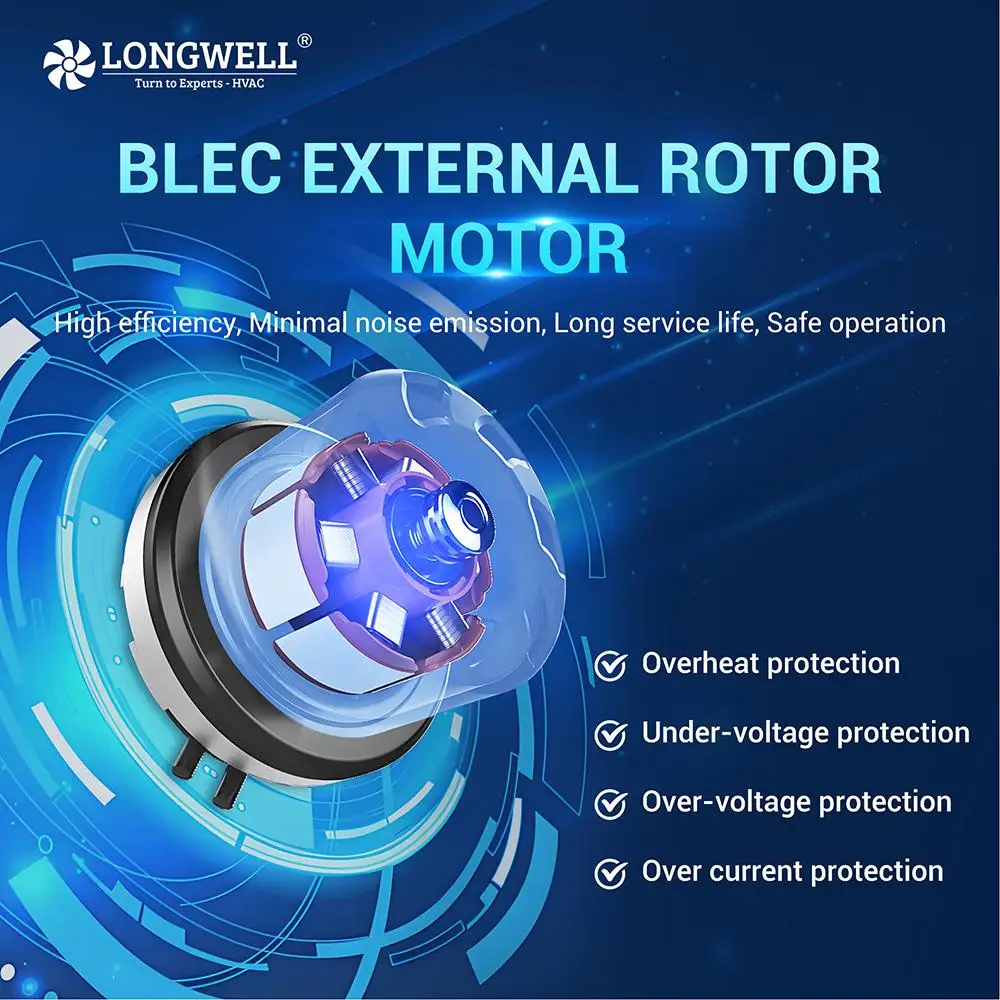
Electronically Commutated (EC) motors perfectly merge the brushless high efficiency of DC motors with the plug-and-play convenience of AC power. Featuring built-in intelligent AC-to-DC conversion and drive control boards, EC motors eliminate the need for traditional AC Variable Frequency Drives (VFDs). Compared to traditional AC fans, EC fans can reduce energy consumption by 20% to 50%.
LONGWELL EC Motor Core Parameters:
- Wide Voltage Input: Single-phase 110-270V, Three-phase 250V-480V (perfectly resolving 50Hz/60Hz grid frequency discrepancies for global equipment exports).
- Intelligent Control Interfaces: Standard 0-10V/PWM, RS485/Modbus, and 4-20mA for seamless integration into Building Management Systems (BMS).
- Environmental Adaptability: Standard operating temperature range of -25°C to 60°C (custom extreme selections available from -40°C to 85°C).
- Built-in Protection Mechanisms: Over-voltage, under-voltage, over-temperature, over-current, phase loss detection, and soft start functionality.
Typical Application Cases:
- Heat Recovery Ventilation (HRV/ERV): Works with sensors for stepless speed regulation, supplying air on-demand based on real-time indoor CO2 concentrations.
- Cleanroom Fan Filter Units (FFU): Utilizes RS485 group control technology to achieve precise, synchronized control of matrices containing hundreds of fans.
Product Link: LONGWELL EC Motor Fans
5. Engineer’s Conclusion & Procurement Advice
Whether you are designing an exhaust system for a commercial high-rise or matching the core drive for an industrial cooling tower, anchoring the system’s operating point within the fan’s peak efficiency zone is the only way to lower the Life Cycle Cost (LCC).
[March 2026 Exclusive Engineering Procurement Season]
To give back to our global clients, LONGWELL is currently running our March Sales Promotion, offering special commercial volume incentives across our entire line of high-efficiency standard and custom fan solutions.
Do not let an mismatched fan become the bottleneck of your system’s energy efficiency. Visit www.longwellfans.com today to connect with our team of aerodynamic and motor engineers—backed by decades of experience—to obtain precise 3D models and acoustic test reports.