
LONGWELL / System retrofit assessment

Fan Retrofit Planning for Existing Air-Handling Equipment

A fan retrofit should begin with the existing equipment’s measured duty and the reason for changing it. Define airflow, pressure, power, sound and service constraints before comparing a proposal. The selected arrangement, control strategy and installation work determine the project; benefits require a documented baseline and verification.

Measured baselineIntegration scopeComparable acceptance
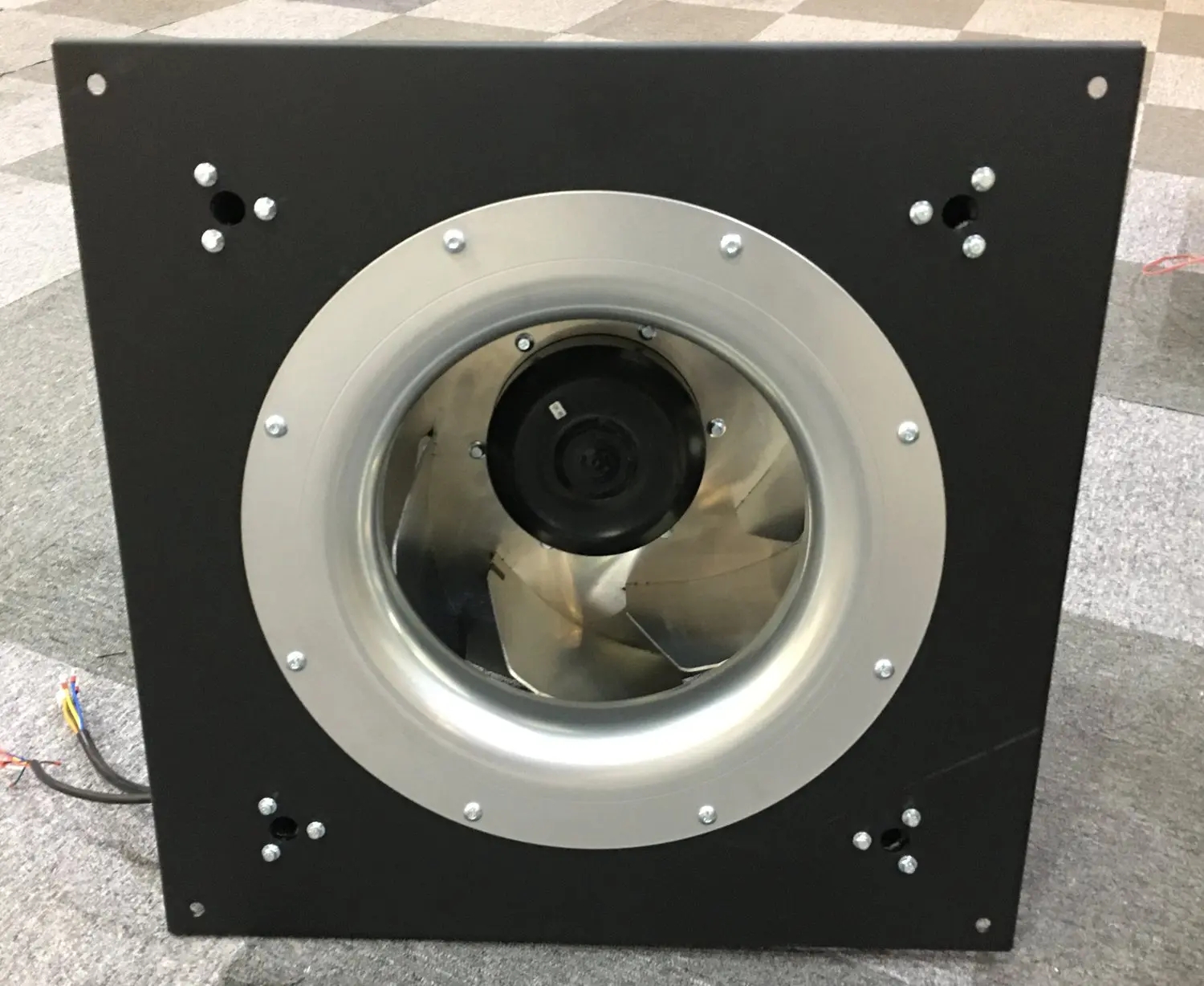
RLM fan assembly with impeller, motor and mounting frame
RLM series assembly example. Motor, mounting and operating duty depend on the complete model.
01 / Application & operating conditions

Compare the installed systems on the same basis

This page supports retrofit planning for ventilation and air-handling equipment. It separates the original condition, the proposed installation and the acceptance measurements. An EC fan or modular arrangement may be considered where its operating range and service geometry fit, with electrical and mechanical work included in the review.

01

Document why the existing system needs change

Record the current fan configuration and the issue being addressed, such as operating power, service access, wear or sound. Measure airflow and pressure alongside input power at representative states. Keep operating hours and measurement conditions so a proposed benefit can be compared with the same delivered ventilation duty.

  • Existing fan configuration and reason for change
  • Measured airflow, pressure, power and sound
  • Operating states, hours and measurement conditions
02

Review the complete installation scope

Compare mounting, inlet conditions, electrical supply and controller requirements for the proposed arrangement. Include access, guards, isolation and any changes to the unit structure. If multiple fans are proposed, define the required performance with a module unavailable and assess the associated control and backflow arrangements.

  • Mechanical work and service-clearance drawing
  • Supply, controls and installation requirements
  • Module-unavailable duty where arrays are proposed
03

Agree acceptance and an operating-cost comparison

Define what will be measured after installation and under which operating conditions. Compare delivered airflow, pressure and input power with the baseline, recording sound consistently where relevant. Estimate annual electricity from power and hours in each state, with installed cost and service assumptions stated separately before discussing payback.

  • Comparable before/after measurement conditions
  • Power and hours for each operating state
  • Installed costs and acceptance documentation
02 / Product routes for this application

Match the fan family to the equipment.

Compare the proposed model at the required airflow and pressure, then check the installation and control interface.

RLM fan assembly with impeller, motor and mounting frame

RLM centrifugal assemblies

Review complete centrifugal assemblies when their motor, frame and service arrangement fit the existing unit. Confirm the selected model and installation scope before comparison.

Explore this fan family →
Panel-mounted centrifugal fan with inlet ring and wiring

Panel-mounted centrifugal options

Review panel-mounted centrifugal options for custom retrofit arrangements. Assess the inlet ring, mounting and controller interface against the original system and the required installed duty.

Explore this fan family →
Select a model for this applicationLONGWELL Fan Selector — every model with its catalogue curve, datasheet and drawing. No login.
Or enter the duty point directly

Airflow and static pressure at the installed condition — the selector returns every model whose curve covers it, with margin, power and noise.

Library: Ø25–1,000 mm, single units up to about 52,000 m³/h — larger duties go straight to an engineer. Prefer to talk it through? Send your specs to an engineer

Product images show family configurations. Request the drawing, curve and electrical information for the exact model being considered.

03 / Prepare a useful selection brief

What should your fan enquiry include?

Share these application details so the fan proposal can be reviewed against your equipment.

01Existing equipment, full fan model and retrofit objective
02Measured airflow, pressure, power and sound baseline
03Operating-state schedule and annual running hours
04Mounting, inlet conditions and permitted structural changes
05Supply, controls, service access and degraded-duty requirements
06Installed-cost assumptions and acceptance measurement plan

Bring the equipment context to the fan review.

A drawing, the operating condition and a clear control requirement make the proposed configuration easier to compare. For a replacement, include the existing nameplate and wiring details.

Discuss your application →
04 / Technical resources

Reference material for the next step.

Catalogs support initial selection. Confirm the current specification and approved configuration with the project team.

Can changing from AC to EC establish a saving by itself?

No. Compare the original and proposed arrangements at equivalent delivered airflow and pressure, including the expected speed-control strategy and operating hours. Use supported power data for those states and include installation costs. The motor type alone does not establish the project’s energy saving or payback.

What belongs in the post-installation acceptance record?

Record the complete installed fan and controller configuration, airflow and pressure, input power and relevant sound measurements. Include ambient and operating conditions, instrument or method details and agreed control/fault checks. Compare those results with the baseline and acceptance criteria rather than an unrelated reference project.

From application to a concrete proposal

Share your equipment and operating conditions.

Send the drawing, target duty and project timing. Add the existing fan details when you need a replacement.

Send your requirements →