The useful way to reduce static pressure in ducts is to remove avoidable resistance while preserving the airflow the building needs. Turning the fan down may lower a pressure reading, but that does not show that a restriction has been fixed. Start with the required airflow, establish a repeatable baseline, then locate where pressure is being lost.
This guide follows that diagnostic sequence. It does not prescribe a universal pressure target, duct size or energy-saving percentage. Equipment limits, ventilation requirements and the actual duct arrangement determine what is acceptable.
Define the airflow that must remain after the repair
Before changing a damper or fan setting, identify the system’s required operating conditions. Include the rooms or processes served, the intended supply and extract balance, and any pressure relationships the design must maintain. A comfortable reading at one grille does not establish that the remaining branches receive their required airflow.
Record the fan operating state, control mode and relevant terminal positions alongside measured airflow. For a variable-air-volume system, identify which demand condition is being tested. Otherwise, a before-and-after comparison may simply capture different loads. The question is not “Can the pressure be lower?” It is “Can this system deliver its required airflow with less avoidable resistance?”
Make the pressure readings comparable
Define each measurement station and its reference. Label the instrument ports, units and measurement locations, and distinguish a reading relative to a reference space from the pressure difference across a component. Keep the instrument’s suitability and uncertainty in the record. Do not combine readings from different reference arrangements as though they were equivalent.
Use suitable existing test points or properly specified permanent ports. A qualified technician should establish safe access and a valid measurement method; drilling an unknown surface can damage equipment or hidden services. Follow the equipment’s isolation requirements wherever access requires it. Repeat measurements at equivalent airflow and operating conditions, with the same defined stations.
Build a component pressure budget before buying a fan
Work through the air path rather than treating the duct system as one unexplained restriction. Check the relevant filters, coils, dampers, fittings, transitions and terminals. Component measurements help identify where further investigation belongs. They do not automatically prove that the component is defective: compare the result with the appropriate clean-condition or design information at the measured airflow.
| Finding to investigate | Next useful check |
|---|---|
| Pressure loss concentrated at a filter or coil | Condition, selected component and the matching airflow reference |
| Restricted or damaged duct section | Crushed flexible duct, obstructions and the approved routing |
| Poor performance on one branch | Branch geometry, terminal demand and damper position |
| Unstable readings as demand changes | Measurement repeatability, operating state and control sequence |
A larger fan is not a diagnosis. First establish whether the constraint belongs to maintenance, balancing, duct geometry or the fan selection itself.
Restore filters, coils and ducts to their intended condition
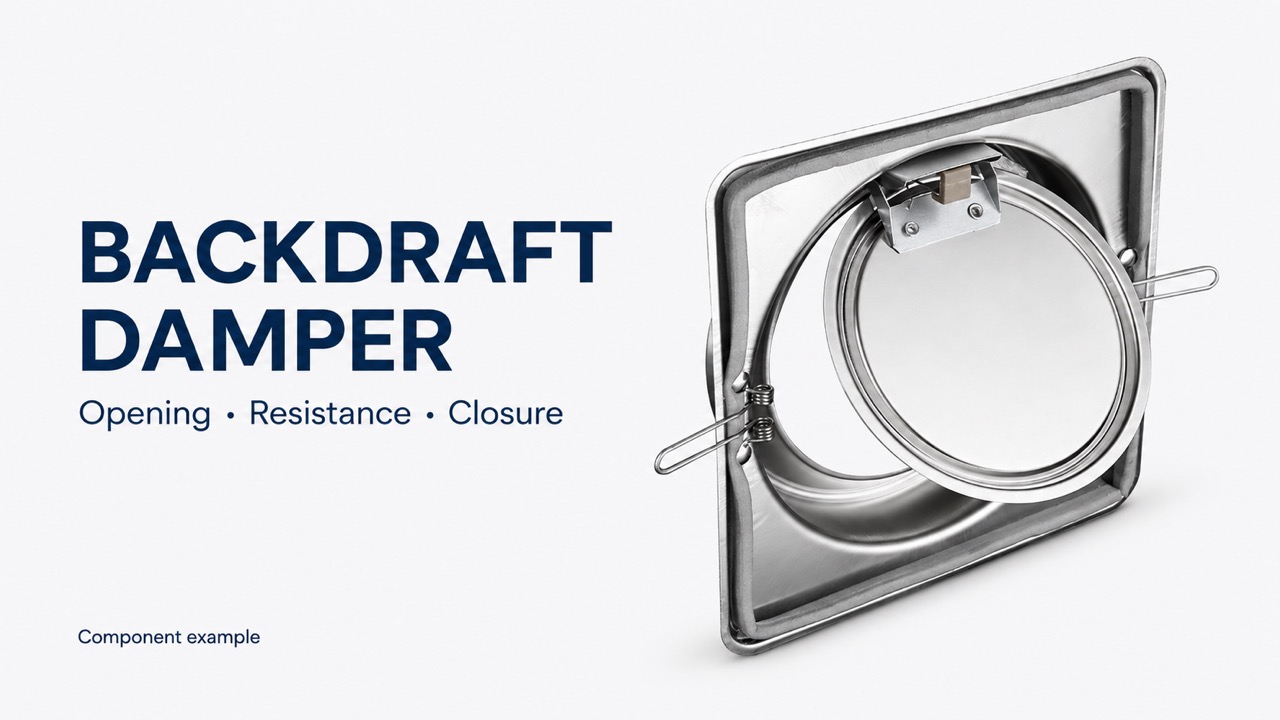
Look for loaded filters, fouled coils, crushed flexible duct and unintended obstructions. Check accessible dampers against their intended position and function. A closed blade may be a fault, but it may also be part of a deliberate control or safety arrangement. Establish which before making a change.
Maintenance should restore the specified condition. Removing filtration, bypassing a fire or smoke device, or leaving an enclosure open is not a valid pressure-reduction measure. Replace or service components according to their instructions and project requirements, then repeat the measurements. Keep the intervention narrow enough that the result can be connected to the change you actually made.
Separate a routing problem from a control adjustment
After maintenance defects are addressed, review abrupt transitions, awkward branch connections, excessive restrictions and undersized sections. These may require a physical redesign, not another control setting. Capture the relevant geometry and access constraints for the designer instead of choosing a replacement size from a generic rule.
Controls come next. Fan speed or pressure-setpoint changes must preserve the required airflow and the pressure needed by the system’s critical path. Do not open every damper indiscriminately: that can change the distribution between branches. Check ventilation, pressurization, combustion-related constraints where applicable, and terminal performance before accepting a revised operating state.
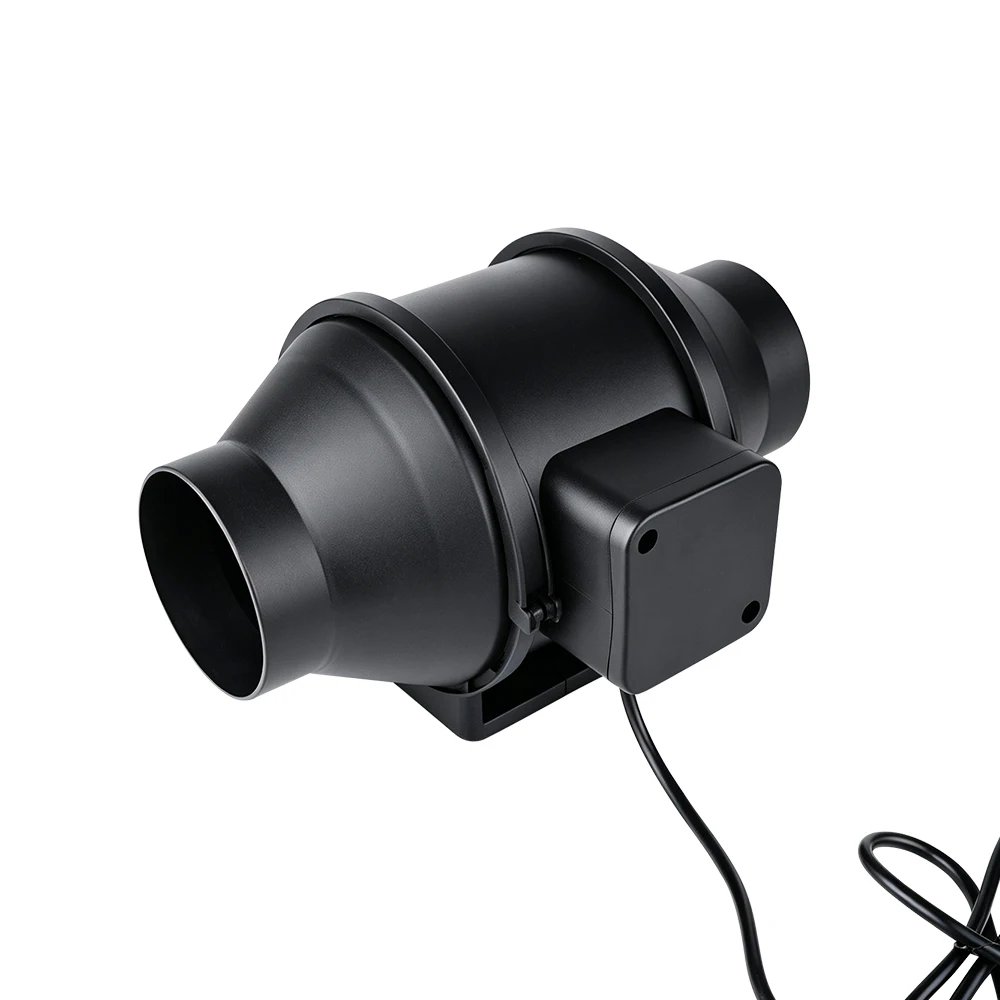
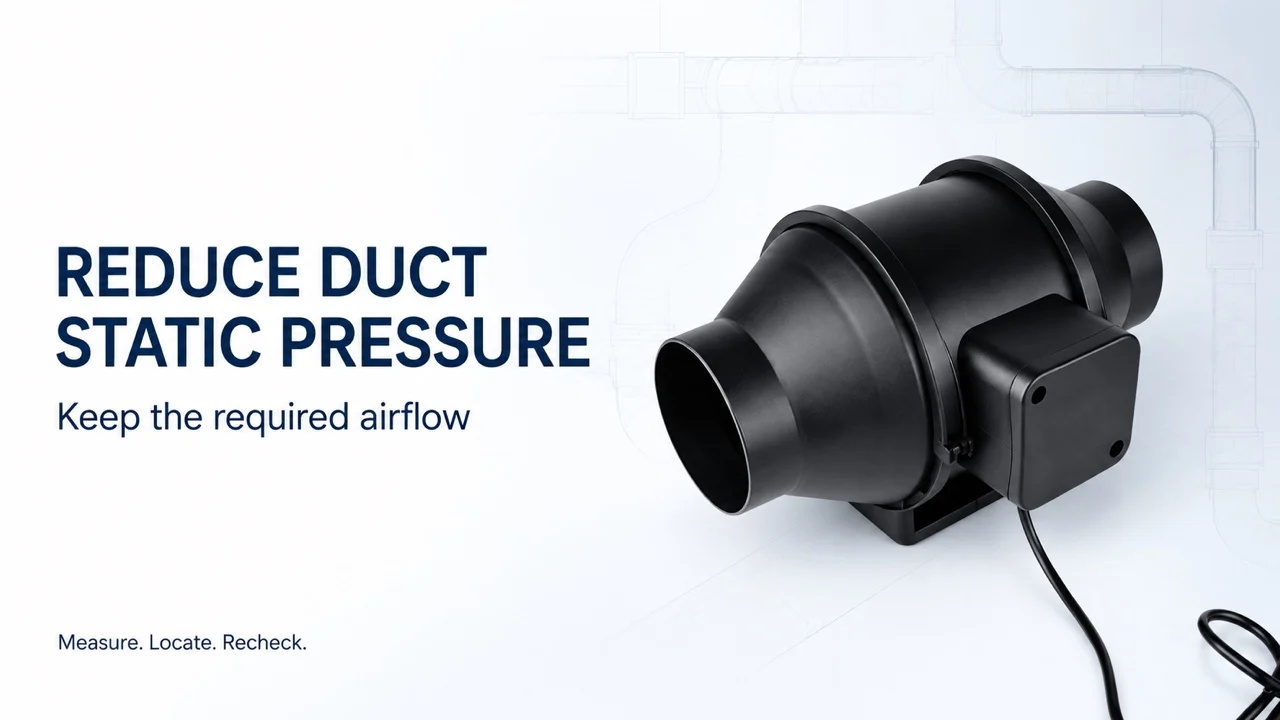
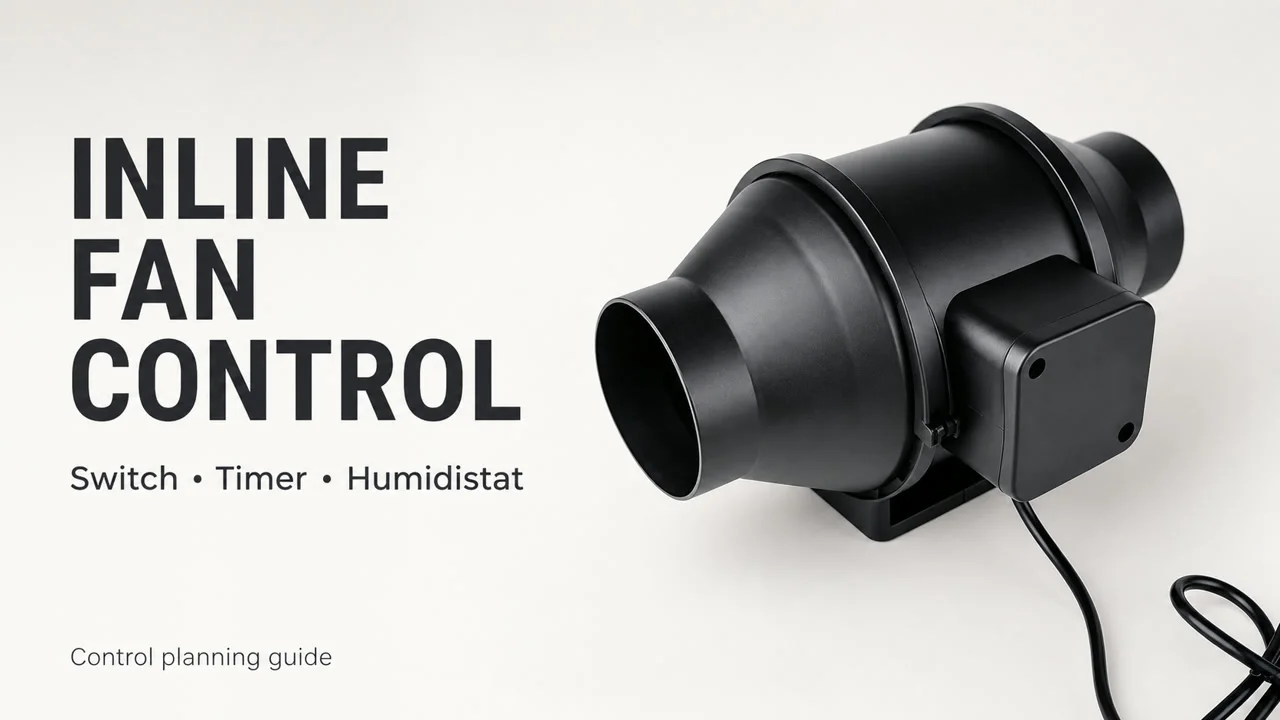
Company reference photograph of an inline fan exterior. It illustrates one component in a duct system, not a verified selection for the installation under investigation.
Recheck the system at matched operating conditions
Repeat the airflow and pressure checks after the approved work. Record fan power, sound and control stability where those are part of the assessment. Keep the operating state, measurement locations and instrument information with both sets of results. A lower pressure reading with inadequate delivered airflow is not a successful outcome.
For systems serving several branches or operating modes, verify the conditions that matter to the design rather than one convenient snapshot. Document any unresolved difference and the next investigation. The duct fan installation and application guide provides background on the fan’s role; it does not replace equipment-specific commissioning instructions.
Prepare a selection brief only after locating the constraint
If the review points to a new fan, prepare the required airflow and pressure duty, duct arrangement, supply and control requirements, and the constraints found during measurement. Use the Longwell EC inline duct fan range to identify a product family for discussion, then confirm the specific configuration against the complete duty. A product photograph or free-air description cannot establish that match.
Keep the baseline, approved changes and final measurements together. That record makes the next maintenance or selection decision much more useful than an isolated “pressure reduced” note.