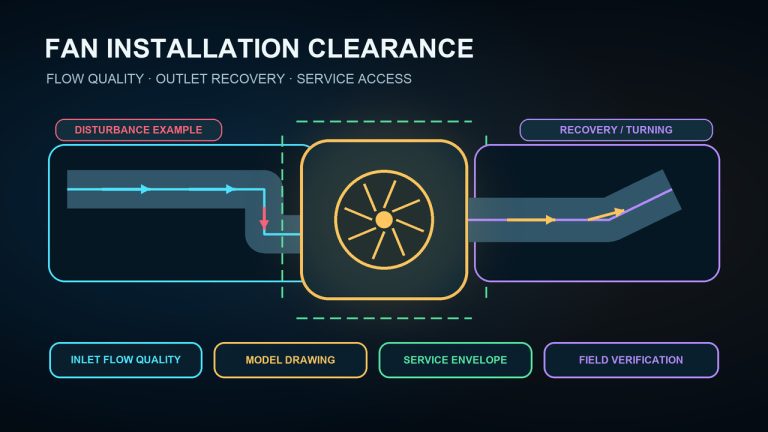
A backdraft damper lets ventilation air travel in the intended direction and closes against reverse flow. The practical question is not simply whether the duct has a flap. It is whether that flap opens at the fan’s lowest intended operating condition, adds an acceptable resistance while running, and closes when the fan stops.
Start with the complete air path. A fan, an exterior termination and a separate damper may each have their own instructions. Adding another closing device without checking the existing arrangement can create a new restriction without solving the original complaint.
When a backdraft damper is worth considering
Investigate a damper when air travels backwards through a ventilation duct during a condition in which that path should be closed. Describe that condition precisely: fan off, another exhaust fan running, a particular wind direction, or a change in building operation. An intermittent cold draught and insufficient airflow with the fan running are different problems.
A closed blade can resist reverse flow; it does not remove the pressure difference that caused it. Before selecting a component, check whether the fan or outlet already includes a damper and whether the equipment instructions permit another one. Shared ducts need a system-level review, not a separate flap added to every branch by assumption.
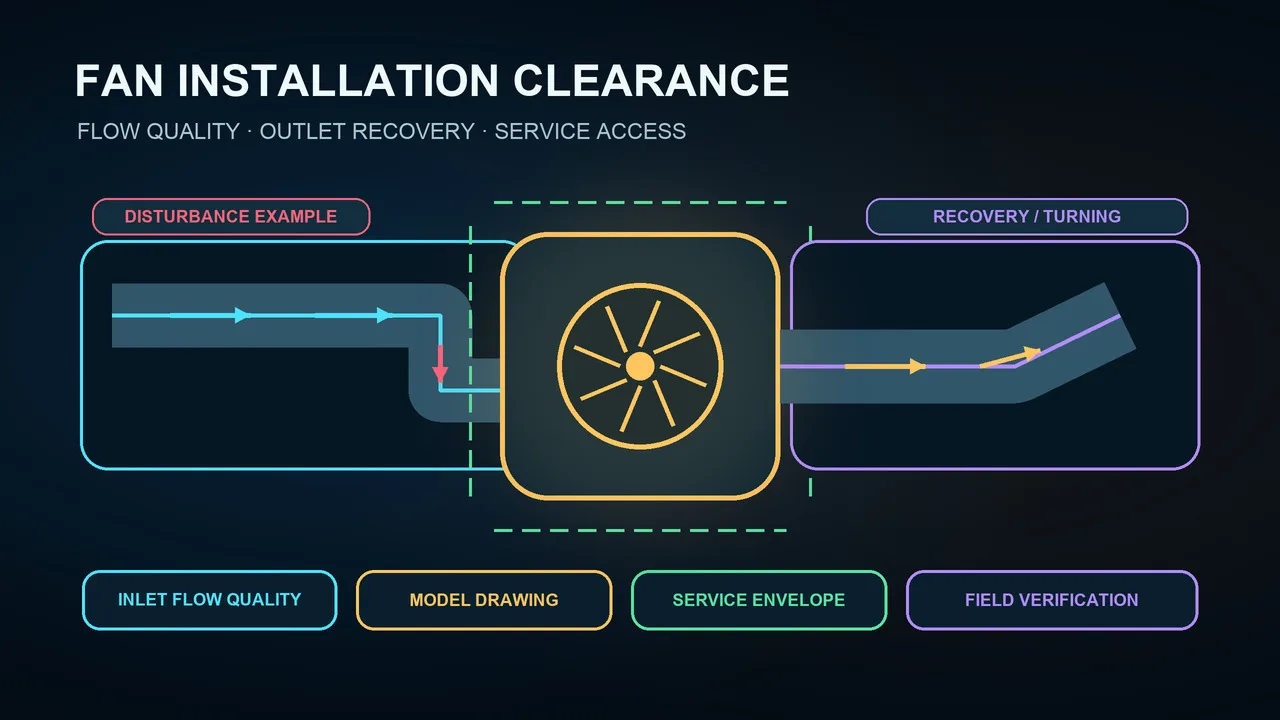
If the fan’s role in that air path is unclear, the duct fan overview provides a starting point. Use the actual installation drawing, rather than a generic diagram, for the damper location.
Opening pressure, running resistance and leakage are different checks
Do not compare dampers using only duct diameter. Ask for model-specific data covering the following operating questions. A photo of a closed blade cannot answer them.
| Question | Evidence to request | Why it matters |
|---|---|---|
| Will it open? | Opening requirements for the proposed mounting position | The lowest intended fan setting must be considered, not only full speed. |
| What resistance does it add? | Pressure-drop data at the required airflow and stated test arrangement | A moving blade is part of the duct’s resistance while air passes through it. |
| What passes through when closed? | Leakage data at a stated differential pressure | Closure should not be mistaken for an airtight seal. |
| Does the rating apply here? | Size, airflow direction, orientation and application limits | A result for another configuration is not automatically transferable. |
Keep these questions separate in a supplier comparison. A low opening requirement does not, by itself, establish low running resistance or low closed leakage. If comparable data is unavailable, record the missing item instead of substituting a claim such as “free airflow” or “zero leakage.”
Choose the mechanism and mounting orientation together
Gravity-operated, spring-assisted and motorized arrangements are not interchangeable merely because their connections fit the same duct. The closing mechanism, blade axis and intended direction of airflow belong in the selection. Check the permitted mounting orientation on the exact model’s instructions before deciding how to fit it into the available space.
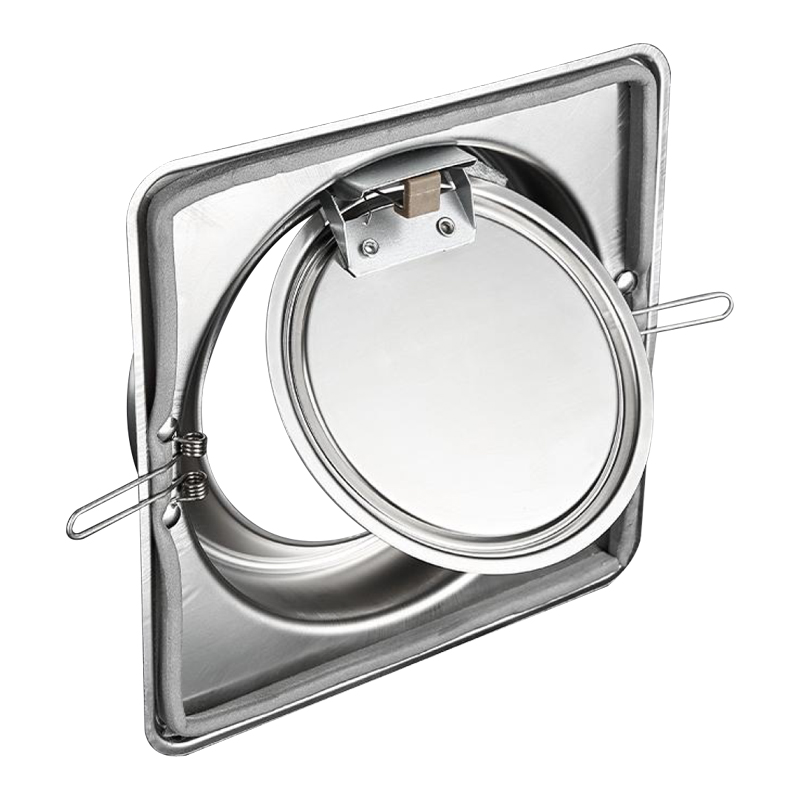
Component example: the photograph shows a flange, hinged circular blade and surrounding frame. It illustrates visible construction only; it does not identify an approved installation orientation or establish a performance rating.
For a motorized arrangement, also define the control sequence and required position when power is unavailable. For a passive arrangement, ask how the blade behaves at minimum flow and after shutdown. Do not modify springs, counterweights or stops unless the manufacturer explicitly provides that adjustment procedure for the selected model.
Check the fan and damper as one installed air path
Include the damper when reviewing the resistance of the finished duct route, together with fittings, filters, grilles and the termination. A fan selected for an unobstructed outlet has not necessarily been checked for the completed arrangement. Review the required airflow at the actual system resistance rather than treating the fan’s headline airflow as an installed result.
When considering the fan side of an ordinary ventilation system, the Longwell ultra-silent duct fan range is a family-level starting point. Check the selected model’s documentation for any supplied damper and permitted accessories before specifying the combination.
Inspect blade clearance before closing the duct
With the equipment safely isolated, inspect the installed frame and the blade’s full travel according to the product instructions. Check that fasteners, sealant, adjacent ductwork and any required screens do not interfere with movement. Confirm the marked airflow direction and the specified mounting position.
Provide access for later inspection. A component hidden behind a permanently closed panel is difficult to investigate when it sticks or rattles. Record its model and location while they are still visible. This is also the time to resolve unclear installation details with the supplier, before the system is commissioned.
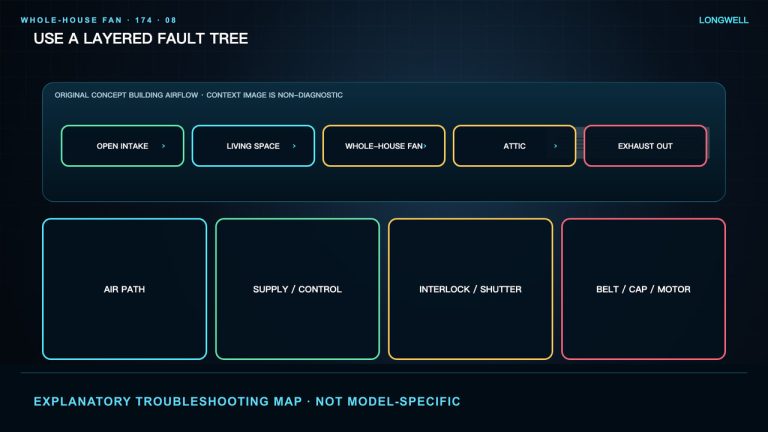
Diagnose the symptom before changing the damper
If a blade does not open, first confirm that the fan is running as intended and that the installed orientation matches the instructions. Then check for interference and compare the operating condition with the damper’s opening requirements. Increasing fan speed is not a substitute for identifying the cause.
If it chatters, note the fan setting and surrounding conditions when the noise occurs. If a draught remains after shutdown, distinguish a blade that stays open from leakage through a blade that has closed. Those observations give the supplier a useful starting point; a recording of the noise alone rarely describes the whole operating condition.
Commission both the running and stopped conditions
Check the intended operating range, observe opening and closure, and verify ventilation airflow using an appropriate measurement method. Record the fan setting, other relevant equipment states and the damper’s behavior. Recheck the specific condition that prompted the installation, rather than judging success only by seeing the blade move once.
This guide concerns ordinary ventilation. Fire and smoke protection, combustion exhaust and pressure-relief duties require their own specified equipment and design review. A general backdraft damper should not be assigned those functions from appearance alone.