Sizing a 6×20 Activated Carbon Filter for Air Exhaust
We received a request to build an inline odor control unit. First, the buyer needed a custom 6×20 activated carbon filter. Next, we looked at the hard limits. The system had to move exactly 480 m³/h.
Also, this air flow equals 282 CFM. Then, we checked the tight space limits. The outer shell could not pass 229 mm in width. Furthermore, the total length had a strict 550 mm limit.
So, we had to fit all parts inside this tight box. Next, the duct connection needed a 150 mm flange. Therefore, our parts had to match standard duct sizes. First, the buyer asked for heavy gas cleaning.
This job required a 38 mm carbon bed depth. However, a thick bed creates a huge problem. Specifically, it blocks the air flow. Therefore, it creates high static pressure.
So, any paired fan must push very hard. Next, the filter works on the exhaust side. The strong steel mesh stops the shell from bending. Finally, we verify all air flows safely.
We test the parts to AMCA 210-16 rules. Consequently, the buyer knows the exact air drag before installing. Also, this project taught us a lot about tight spaces. The 480 m³/h goal is quite high for a small pipe.
Therefore, every single millimeter of the 229 mm shell mattered. First, we mapped the inner air path carefully. Next, we checked the metal screen flow rates. So, we knew the true drag before building the 6×20 activated carbon filter. Finally, we sent the drawing to the engineering team.
How We Chose the Right Filter Specs
The main problem involves balancing air speed and drag. First, we looked at a few different filter shapes. Then, we picked the best one for this 6×20 activated carbon filter.
Trying a Thinner Carbon Bed
First, we thought about using a 30 mm carbon bed. A thin bed lets the air pass easily. So, it drops the static pressure penalty a lot. Therefore, a cheap, small motor could push the 480 m³/h.
However, we rejected the 30 mm bed quickly. The air simply moves too fast through the thin wall. Consequently, the dirty gas does not touch the carbon long enough. Instead, bad smells slip right past the media. So, the thinner bed failed the main goal entirely.
Testing a Longer Cylinder
Next, we looked at a larger 6×24 module design. This idea stretches the length to 600 mm. Also, it gives the air more room to spread out. Therefore, it slows the inner air speed down.
Furthermore, it lowers the total pressure drop across the 6×20 activated carbon filter. But, we rejected this long option too. The buyer had a hard 550 mm total length limit. So, the 600 mm unit would simply not fit in the room.
Finalizing the Thick Bed Design
Finally, we kept the 38 mm carbon bed depth. Also, we set the active cylinder length to 500 mm exactly. First, this setup forces air through a thick wall. Next, it traps all the bad gases safely.
However, this choice comes with a real cost. The thick wall creates a large air drag. Therefore, the buyer must buy a strong backward-curved fan. This type of fan costs more money.
Also, it uses more electric power over time. Furthermore, the 38 mm bed makes the unit very heavy. The final weight hit 6.6 kg. So, the install team needs thick metal hangers.
Instead of light straps, they must use heavy bolts. Meanwhile, the final unit fits the 229 mm width limit perfectly. Finally, the 150 mm flange locks tightly into the metal air ducts.
Technical Specifications
| Parameter | Specification |
|---|---|
| Model | 6″x20″ |
| Airflow (m³/h) | 480 |
| Airflow (CFM) | 282 |
| Flange Diameter | 150 mm |
| Outer Diameter | 229 mm |
| Cylinder Length | 500 mm |
| Total Length | 550 mm |
| Carbon Bed Depth | 38 mm |
| Weight (Net/Gross) | 6.6 kg / 7.4 kg |
| Packaging Dimensions | 241 × 241 × 570 mm |
First, the 38 mm carbon bed depth sets the total air drag. Next, you must match this drag at exactly 480 m³/h. Otherwise, the fan motor will stall out under load. Finally, the 6.6 kg weight means you need strong ceiling hooks.
Also, the 150 mm flange diameter acts as a strict limit. Therefore, you cannot use smaller pipes safely. Instead, keep the duct size large to reduce friction. Furthermore, the 550 mm total length fits into standard ceiling spaces. So, check your clear room before you buy the parts. Finally, the packaging dimensions help you plan your exact shipping costs.
Reference: AMCA 210 covers the test method behind these figures.
Technical Documentation

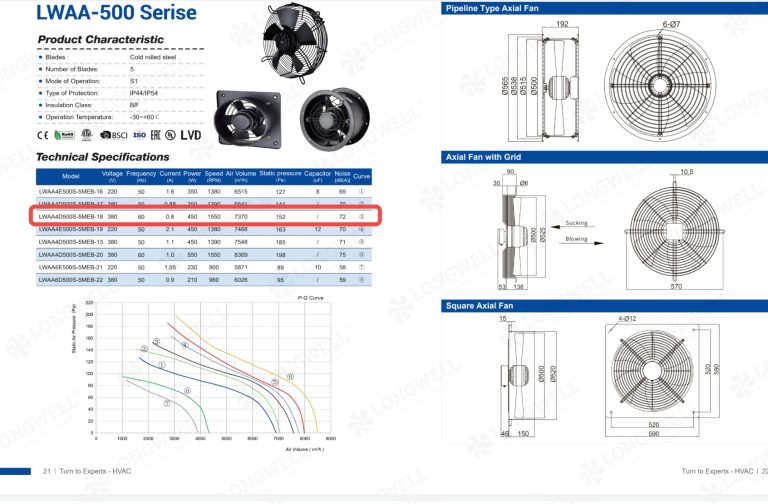
First, this data sheet shows the sizes and air limits for the product line. Also, it lists the exact outer widths.
longwell-wi-6980136382-spec-sheet-02.pdf
Next, this PDF drawing gives the exact flange sizes to help you plan. Finally, send this file to your install team.
Tips for Sizing Heavy Filters
If you face a similar air job, plan for the high drag. First, big filters change how your fans act. Next, follow these simple rules to avoid bad setups.
- First, count the exact static pressure penalty. A 38 mm carbon bed blocks a lot of air. So, your fan must have extra power to hit 480 m³/h. Otherwise, the fan will stall.
- Next, check your metal duct hangers. These parts add 6.6 kg to the line. Therefore, you need heavy bolts and straps. Instead of thin wire, use solid metal anchors.
- Then, verify your true face velocity. Fast air ruins the carbon trap. Consequently, the bad air escapes into the room. Instead, slow the air down to match the thick media wall.
- Finally, give your supplier the exact size limits. We test our parts to AMCA 210-16 rules. So, we can match your pressure goals perfectly. Also, send us your true voltage and air targets.
These strict limits will guide your whole system design. Furthermore, getting the air drag right saves you money on motors later. So, take your time when checking the room space.
Related: Fan Accessories.
6×20 Activated Carbon Filter FAQ
Technical Documentation & Resources
Browse our axial fans range, the AC axial fans section, or EC axial fans.
Have a Similar Fan Requirement?
Longwell’s engineering team delivers custom spec sheets and samples within 90 days. Since 1990, we have supplied EC fans and blowers to OEMs across HVAC, cold chain, data center, and industrial applications worldwide.
Browse Related Products:
🏆 ISO 9001 / ISO 14001 / ISO 45001 | CE (TÜV) | UL/ETL | ATEX Zone 21/22 | AMCA 210-16 / ISO 5801 tested