AC vs DC vs EC Axial Fans: The Ultimate Motor Selection Guide for Global Markets
When designing industrial equipment or thermal management systems, determining the right fan dimensions and airflow (CFM or m³/h) is only the first step. Whether your equipment is built for the domestic market or geared for export to Europe, the motor technology driving the impeller fundamentally dictates the system’s Total Cost of Ownership (TCO), acoustic profile, and ability to pass increasingly stringent global energy regulations.
While Axial Fans are the industry standard for efficiently moving large volumes of air against low system impedance, the choice between AC, DC, or EC motors often directly determines a project’s final profit margins and market access.
If you are currently evaluating an Axial Cooling Fan for your next HVAC, 5G telecom, or industrial automation project, this technical guide will demystify the three core motor technologies, helping you make a selection that meets the rigorous demands of the global market.
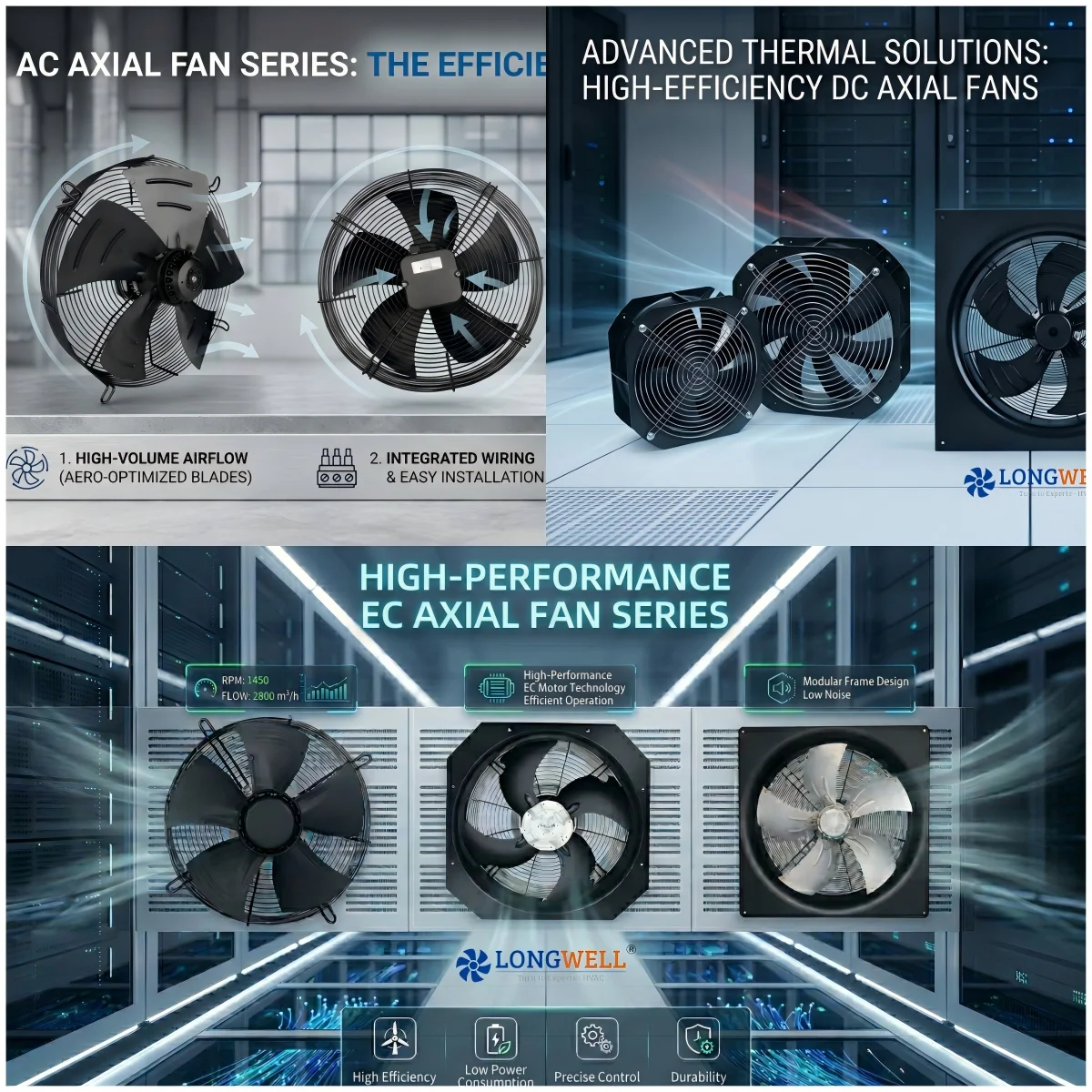
1. AC Axial Fan: The Rugged Traditional Foundation
An AC Axial Fan is designed to connect directly to the standard mains grid (such as the mainstream 230V/50Hz used in China and Europe). The design logic is straightforward: the rotational speed of the fan blades is dictated by the frequency of the incoming AC power supply.
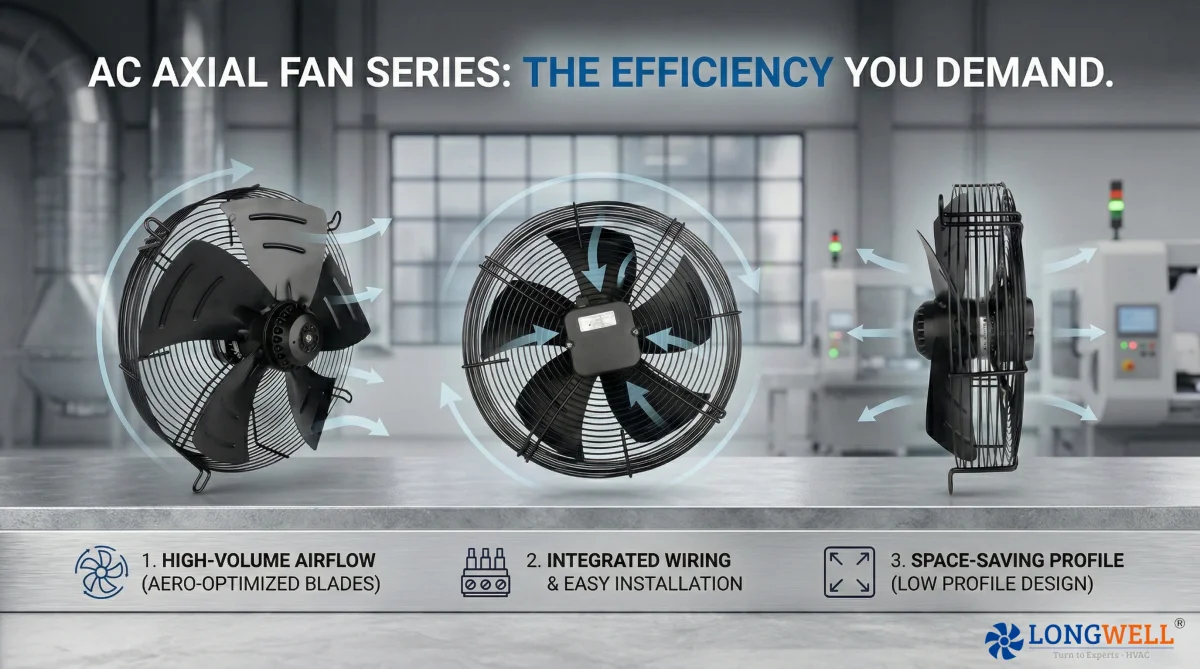
The Engineering Reality: Stripped of complex power conversion electronics, AC fans are incredibly robust, highly heat-resistant, and the quintessential “plug-and-play” components. However, this pure mechanical reliability comes at a price: they typically run at fixed speeds, and the motor slip during operation generates significant waste heat.
· Core Advantages: Extreme physical durability, a highly mature supply chain, simple wiring, and highly competitive initial procurement costs.
· Primary Limitations: Lower energy conversion efficiency. In today’s carbon-conscious European and global markets, traditional AC fans struggle to meet high-tier energy efficiency assessments.
· Best Suited For: Budget-sensitive applications requiring 24/7 full-load operation where energy metrics are not a mandatory bottleneck (e.g., standard electrical cabinet cooling, basic industrial factory ventilation).
2. DC Axial Fan: Low-Voltage Safety and Precision Control
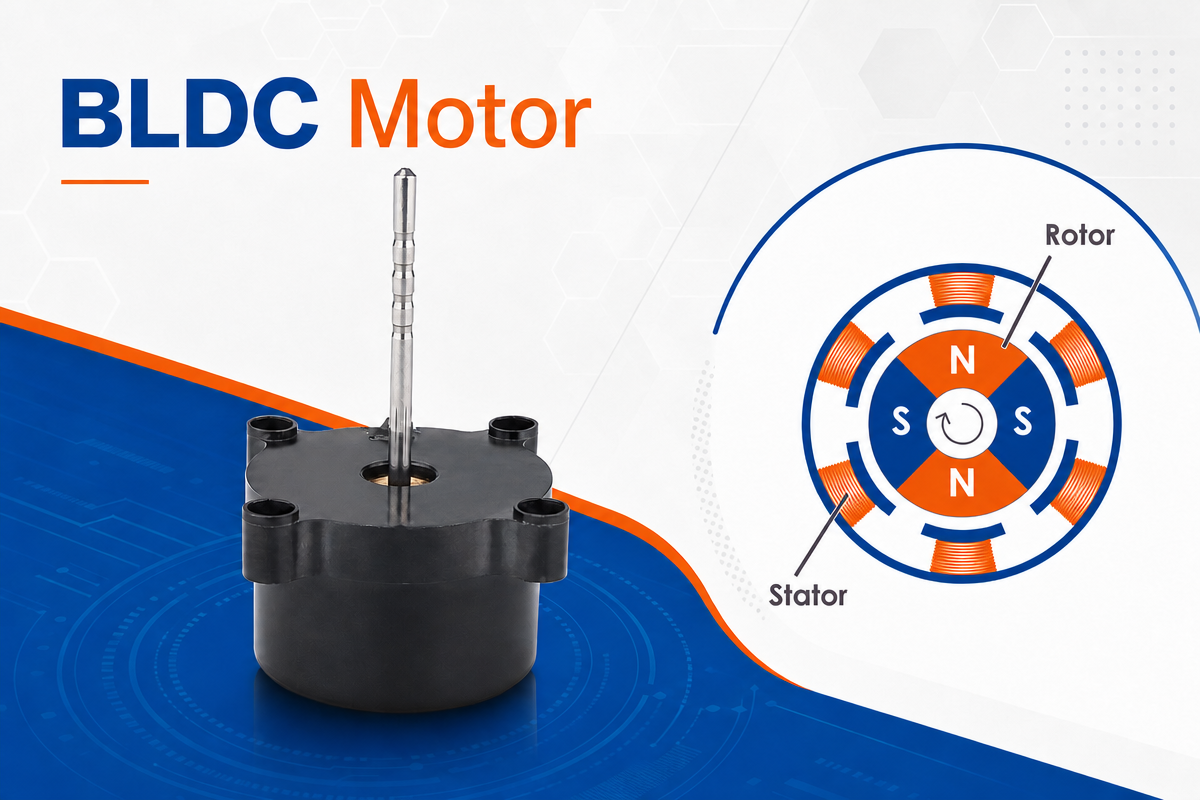
A DC Axial Fan operates on low-voltage direct current—most commonly 12V, 24V, or 48V in the industrial and telecom sectors. These fans feature internal printed circuit boards (PCBs) utilizing cutting-edge brushless DC (BLDC) motor technology.
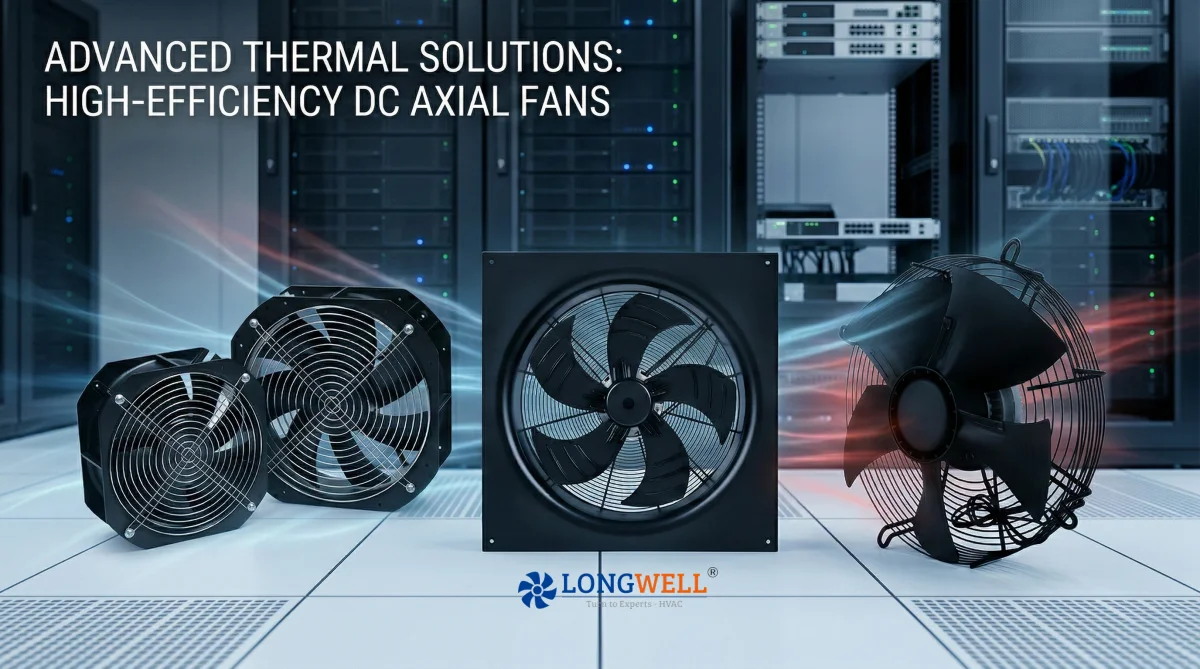
The Engineering Reality: DC technology radically alters the power consumption landscape. At identical airflow outputs, standard DC fans consume up to 70% less energy than their AC counterparts. Crucially, the internal electronics allow for precise, stepless closed-loop control via PWM (Pulse Width Modulation) or voltage regulation. This allows the fan to adjust its speed in real-time according to the system’s fluctuating heat load, eliminating wasted performance.
· Core Advantages: Exceptionally low running power, excellent Electromagnetic Compatibility (EMC), absolute electrical safety due to ultra-low voltage, and extended bearing life (thanks to sharply reduced motor heat generation).
· Primary Limitations: Requires a high-quality switching power supply (AC-to-DC adapter) to run off the mains grid, which adds to wiring complexity and Bill of Materials (BOM) cost.
· Best Suited For: Export-grade precision medical devices, data center server racks demanding ultra-low PUE, energy storage systems, and telecom base stations.
3. EC Axial Fan: The Premier Choice for High-End Manufacturing & EU Standards
The EC Axial Fan represents the pinnacle of modern fluid mechanics and motor drive technology. Essentially, an EC fan is an external rotor brushless DC motor, but it integrates a smart commutation module directly within the stator, allowing it to seamlessly convert alternating current (AC) to direct current (DC) internally to drive the impeller.
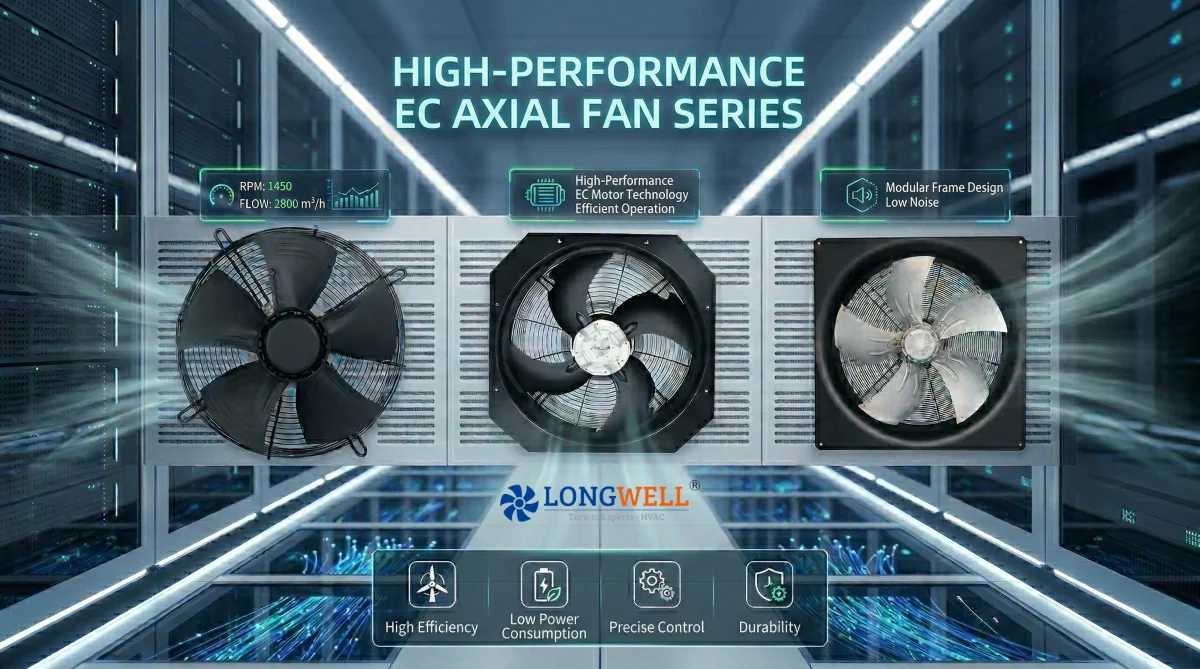
The Engineering Reality: For enterprises aiming to expand into the European market or benchmark against top-tier global energy standards, the EC fan is a “must-have.” It perfectly fuses the ultra-high efficiency and smart speed control of a DC motor with the direct grid-connect convenience of an AC motor. EC fans easily meet the latest mandatory energy efficiency standards globally and consistently surpass the strict EU ErP (Energy-related Products) 2015/2020 Directives.
· Core Advantages: Breakthrough system efficiency, direct-connect design eliminating external adapters, fully programmable speed control (0-10V / PWM / MODBUS RS485), and an exceptionally low acoustic noise profile at partial loads.
· Primary Limitations: Higher initial BOM cost. However, due to massive energy savings and maintenance-free characteristics, end-users typically recover the investment premium within 1 to 2 years.
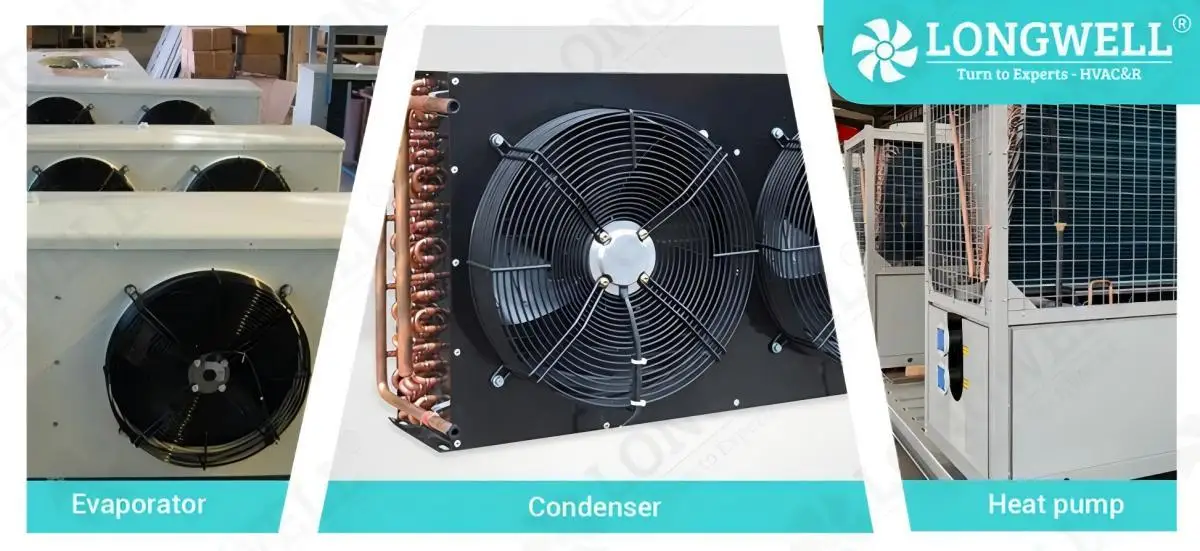
· Best Suited For: Export-oriented commercial HVAC systems, high-end Computer Room Air Conditioning (CRAC) units, premium cold chain refrigeration, heat pumps, and any large-scale project where reducing the “carbon footprint” is a core selling point.
Summary: Formulating Your Procurement Strategy
To quickly guide your R&D and procurement teams, consider this selection logic:
· Focus on Cost-Effectiveness & Mass Market: Choose AC. Ideal for equipment with thin profit margins and foundational ventilation needs unconstrained by strict energy laws.
· Focus on High Precision & Low-Voltage Safety: Choose DC. Perfect for electronic and telecom systems equipped with existing DC power architectures.
· Focus on Premium Exports & Ultimate Efficiency: Choose EC. The optimal choice for commercial and industrial systems exported to Europe or aligned with green building standards, maximizing efficiency through smart closed-loop control.
Partner with LONGWELL to Clear Technical Hurdles in High-End Exports
Sourcing core components is not just about matching technical specs; it’s about securing supply chain stability and strict compliance.
At LONGWELL (www.longwellfans.com), we intimately understand the dual standards of both domestic and European markets. Our self-developed series of AC, DC, and EC axial fans undergo rigorous testing and are fully supported with CE, RoHS, and other critical certifications required for seamless EU market access.
Whether your equipment is serving domestic smart manufacturing upgrades or heading to Europe to face strict ErP efficiency tests, the LONGWELL engineering team is ready to provide tailored ventilation and thermal management solutions—from advanced aerodynamic testing to precise motor matching.
Ready to elevate your equipment’s global competitiveness? Contact LONGWELL today to discuss the perfect motor drive and impeller solution for your application.