
Crawl Space and Basement Ventilation Fans
Crawl spaces and basements sit below ground level, against cool soil, and often get little air movement. Moisture from the ground, plumbing leaks or humid outdoor air builds up, leading to musty smells, mould, rot in timber joists and damp floors above. A small powered fan that steadily exchanges the air helps keep these spaces drier and fresher.
LONGWELL manufactures the inline duct fans, EC inline fans and wall exhaust fans used for crawl-space and basement ventilation, for distributors, contractors and brands.
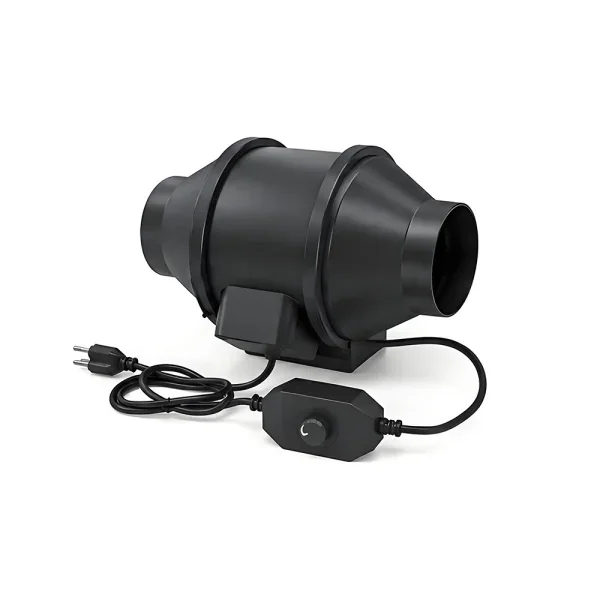
Ventilation, or sealing and dehumidifying?
Ventilation brings outdoor air in. That helps when outdoor air is drier than the air in the space. In hot, humid climates, outdoor air can add moisture to a cool crawl space; many building professionals there prefer sealing (encapsulation) plus dehumidification, with a small exhaust fan to keep the space slightly negative. Check local building practice before you choose a solution.
Typical fan setups
| Space | Setup | Fan type |
|---|---|---|
| Vented crawl space | Exhaust fan in one foundation vent, passive vents on the opposite side | Compact axial fan fitted to the vent opening, or an inline fan |
| Sealed crawl space | Small continuous exhaust to outside, or supply from the house | Inline duct fan, 100–150 mm |
| Basement room (laundry, workshop, storage) | Wall or window exhaust fan | Plastic wall exhaust fan, 6–12 in |
| Finished basement, several rooms | Ducted exhaust from each room to one fan | EC inline fan with speed control |
How to size the fan
- Volume: floor area × height of the crawl space or basement.
- Air changes: use your local code or contractor’s guideline.
- Duct resistance: allow for the duct length, bends and grilles. Inline fans give more pressure than simple vent fans.
- Make-up air: an exhaust fan needs a path for air to enter, or it will pull air from the house.
- Moisture and dust: choose housings and motors suitable for damp, dusty conditions, such as IP54 EC fans.
LONGWELL fans for crawl spaces and basements
- Plastic inline mixed-flow and centrifugal duct fans: 4, 6 and 8 in duct sizes, AC or EC.
- EC metal inline fans (LWDE series): 100–315 mm, 230 V, IP54, 0–10 V/PWM speed control; rated airflow from 324 m³/h (100 mm) to 1,839 m³/h (315 mm). Suitable for continuous, quiet operation.
- Metal inline fans (LWDA series): 100–300 mm, 220 V 50 Hz, 140–3,000 m³/h, up to 230 Pa.
- Plastic wall and window exhaust fans: 6–12 in, 110 V or 220 V, for basement rooms with an outside wall.
Browse: inline duct fans · EC inline duct fans · booster fans · wall exhaust fans
Related: garage and shed ventilation · sub-slab radon mitigation · decentralized ventilation
What to include in your enquiry
- Space type and size (area and height)
- Vented or sealed crawl space; climate
- Duct size and length, or wall opening size
- Voltage, frequency; continuous or controlled operation
- Quantity, branding and target market
Ask about crawl space and basement fans →
FAQ
Do crawl space fans work?
They help when the outdoor air is drier than the crawl-space air and there is a clear path for air to enter and leave. In humid climates, sealing and dehumidifying is often more effective, with a small exhaust fan.
What size fan does a crawl space need?
Calculate the volume (area × height) and multiply by the air changes your code or contractor recommends. Then pick a fan that delivers that airflow through your duct or vent.
Should a crawl space fan blow in or out?
Usually out (exhaust), so moist crawl-space air does not get pushed into the house. Provide inlet vents or a supply path.
Can the fan run continuously?
Yes. EC inline fans are well suited to continuous low-speed operation with 0–10 V or PWM speed control.