Designing a 24V Cooling Unit for a Small Space
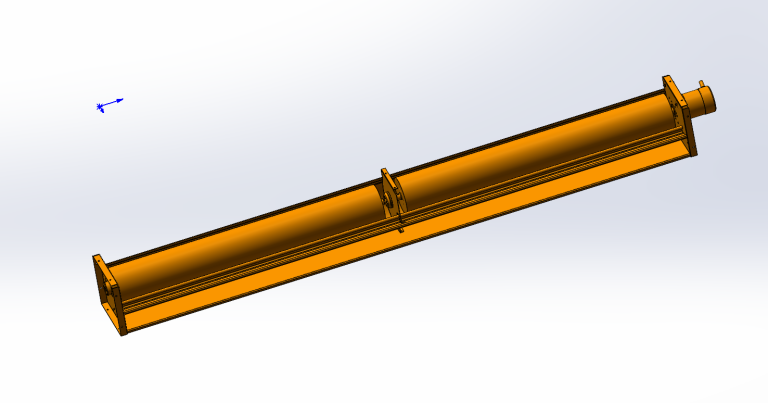
Our team recently took on a tough new cooling project. The customer needed a custom 30mm cross flow blower. Meanwhile, this 30mm cross flow blower had to fit inside a highly restricted hardware space. The host system was a compact thermal unit. Therefore, the physical size limits were strict.
First, the voltage rail had to be exactly 24V DC. Next, the vertical clearance space was extremely tight. The allowed impeller diameter was strictly capped at 30mm. In practice, we could not exceed a 48mm by 50mm external motor housing profile.
Airflow needs were very specific for such a small scale. The client needed two different lengths. The 530mm long unit had to move 137 m3/h of air. It also had to push against 17 Pa of static pressure. Meanwhile, the 650mm long unit faced a harder task. It had to push 168 m3/h of air against 18 Pa of static pressure.
Furthermore, both cooling fans needed a 0-10V speed control link. This told us the main system changes its cooling based on real-time heat levels. A fixed-speed fan would cool too much during quiet periods. It would also make too much noise.
Finally, the operating setup meant we had to follow strict electrical safety rules. To meet safety laws, standard guides like IEC 60335 must apply to the end device. We had to build a strong fan to meet these goals safely.
Balancing Size and Airflow Choices
Fitting the needed air flow into a tiny box was our biggest test. We looked at a few options before making our choice.
First, we thought about using a basic AC motor. We quickly threw this idea out. The 24V DC rule was an absolute hard stop. AC motors simply do not work on a 24V DC power rail. Also, basic AC options lack the required 0-10V speed control interface.
Next, we looked at a standard DC motor with no speed control. We rejected this option too. The heat system needed active changes to save power. Therefore, we picked a custom DC motor. It can run at exactly 2400 RPM. It uses a dedicated white wire for the 0-10V control input. This setup gives the main system full command over the 30mm cross flow blower speed.
Sizing the 30mm Cross Flow Blower Blade
Standard 40mm or 50mm impellers push 168 m3/h of air with ease. However, they broke the strict physical limits. We had to use an aluminum impeller. It had to stay right at the 30mm size limit.
We had to hit the 17 Pa and 18 Pa static pressure goals. To do this at 2400 RPM, we built the 30mm cross flow blower with exactly 20 blades. We looked at plastic blades but rejected them. A 650mm plastic blade spinning at 2400 RPM bends too much. Over time, this bending ruins the bearings. It also creates a loud hum. Instead, we picked stiff aluminum for the main blade and the air plates.
The Physical Cost of the Setup
Every design choice has a real cost. We used a solid 3mm steel shaft. We also used metal housing parts. This choice added weight. The whole unit is heavier than plastic ones. Even so, we had to accept this weight penalty. The extra weight stops the long fan from twisting.
Stretching a 30mm diameter out to 650mm takes extra care. We had to follow the strict GB/T1804-v standard for factory sizing. This rule increased our setup time by several hours. In the end, the chosen design worked well. It hit all the air targets. Best of all, it only draws 0.12A and 0.13A of power. This low power use keeps the system cool safely.
Tuning the 30mm cross flow blower for 24V Limits
We also had to think about the electrical draw. The system power supply had strict limits on extra loads. We could not pull more than a fraction of an amp. To fix this, we wound the DC motor to be very efficient.
Consequently, the 530mm blower draws just 0.12A during normal use. The larger 650mm blower needs only 0.13A to hit top speed. These low current marks protect the host power rail from sudden drops. By contrast, an older motor design would pull double that amount. This exact tuning took extra test time, but it secured the low power goals.
Technical Specifications
| Parameter | LWCD-30530MN-06 | LWCD-30650MN-06 |
|---|---|---|
| Voltage | 24V DC | 24V DC |
| Current | 0.12A ±10% | 0.13A ±10% |
| Speed | 2400 RPM ±10% | 2400 RPM ±10% |
| Airflow | 137 m3/h | 168 m3/h |
| Static Pressure | 17 Pa | 18 Pa |
| Control Interface | 0~10V DC | 0~10V DC |
| Bearing Type | Ball Bearing | Ball Bearing |
| Impeller Geometry | Ø30mm, 20 blades | Ø30mm, 20 blades |
| Housing Length | 530mm (584mm overall) | 650mm (704mm overall) |
| Housing Materials | Aluminum & Iron | Aluminum & Iron |
The very low current draw of 0.12A and 0.13A is the best metric here. In short, these numbers prove the 30mm cross flow blower removes heat without wasting power.
Engineers should look closely at the housing lengths shown above. The 530mm model has an overall length of 584mm. Meanwhile, the 650mm model stretches to an overall length of 704mm. Therefore, you must plan your mounting brackets based on the overall sizes, not just the active blade length.
Reference: AMCA 210 covers the test method behind these figures.
Technical Documentation
LWCD-30650MN-06 Dimensional Drawing
This file shows the full 650mm blower sizes. It includes the wire colors and metal types for the build team.
LWCD-30530MN-06 Dimensional Drawing
This sheet lists the 530mm unit specs. It helps designers plan for a shorter metal box.
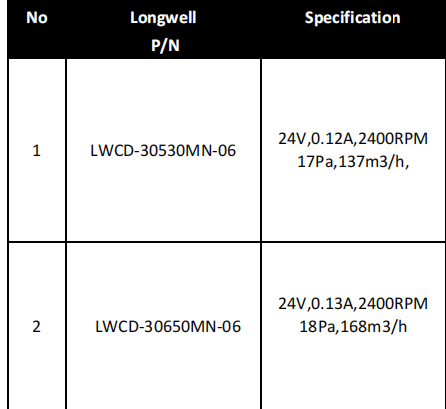
This quick table shows the exact voltage, current, and air flow goals. System coders need these facts to program the heat control loop.
How to Order Small Tangential Blowers
When you face tight space limits, check your mechanical needs before you buy parts.
- First, measure the exact allowed bending space. Long fan blades bend slightly at high speeds. You must leave room for this movement in your metal box.
- Next, find the true static pressure drop of your system. At a small scale, 18 Pa is often a huge barrier. Guessing the wind resistance will lead to a stalled fan.
- Furthermore, pick your speed control plan very early. Putting a 0-10V control board into a tiny motor needs extra care. You must plan the wire routes before you order.
- Because we build the aluminum blades in our Ningbo plant, we can quickly check the balance on odd lengths.
Related: Cross Flow Fans.
Engineering Frequently Asked Questions
Technical Documentation & Resources
Browse our cross-flow fans range, the AC cross-flow fans section, or cross-flow impellers.
Have a Similar Fan Requirement?
Longwell’s engineering team delivers custom spec sheets and samples within 90 days. Since 1990, we have supplied EC fans and blowers to OEMs across HVAC, cold chain, data center, and industrial applications worldwide.
Browse Related Products:
🏆 ISO 9001 / ISO 14001 / ISO 45001 | CE (TÜV) | UL/ETL | ATEX Zone 21/22 | AMCA 210-16 / ISO 5801 tested