Upgrading to a 1.5kW push pull exhaust fan
A customer asked us to build a custom push pull exhaust fan system. Meanwhile, they needed to pull air through dense, wet cooling pads. These wet pads create high air resistance. A standard 1.1kW motor cannot push enough air through them.
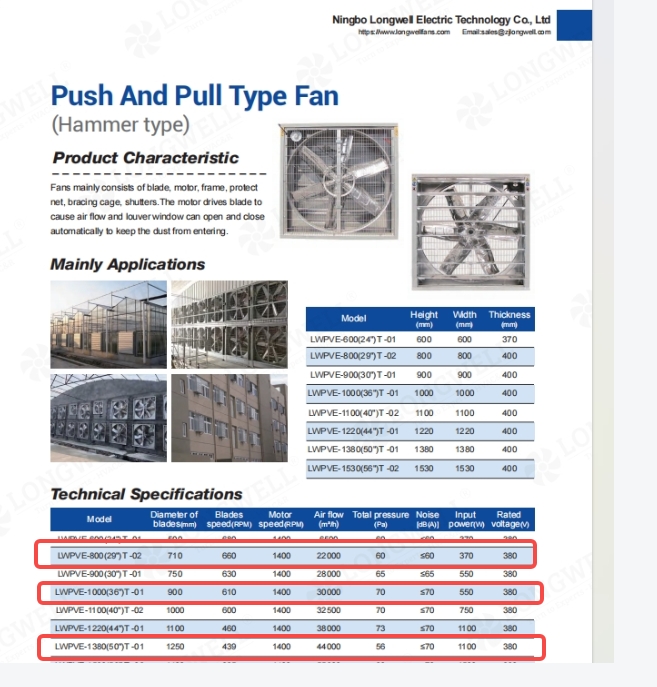
Therefore, the customer demanded a strict upgrade to 1.5kW AC motors. Therefore, the main order required 200 large fans. Each fan frame measures exactly 1380 by 1380 by 400 mm. In practice, these units require 380V, 50Hz three-phase power.
Next, the customer requested 50 identical frames with 220V, 50Hz single-phase motors. Meanwhile, the project also included 25 units of a 1000 mm frame. Furthermore, it included 25 units of an 800 mm frame. Therefore, both smaller sizes use standard motors instead of the 1.5kW upgrade.
Moreover, the facility needed mechanical spare parts. In practice, we provided 20 bare spare motors rated at 1500 RPM. Half run on 220V. Meanwhile, the other half run on 380V.
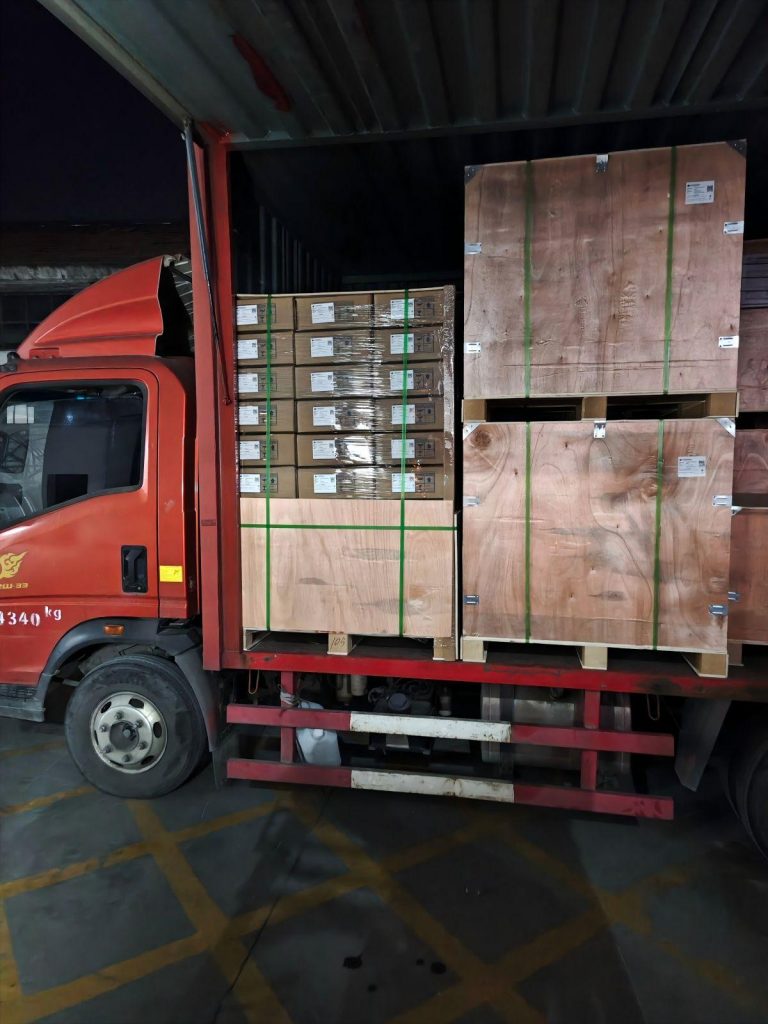
Finally, the customer gave us a strict shipping limit. As a result, we had to calculate exact cargo volumes. They needed to know how many cooling pads could fit inside a 40-foot shipping container alongside our fan crates. First, we test all these agricultural designs to AMCA 210-16 methods. This ensures the fans deliver true airflow under heavy field loads.
Upgrading the push pull exhaust fan Motor
Why did we use a heavier motor? A standard push pull exhaust fan ships with a 1.1kW motor. Meanwhile, that standard motor works perfectly well for free air. However, this farm uses wet evaporative cooling pads. Therefore, pulling air through saturated media adds a massive static pressure penalty.
We rejected the standard 1.1kW motor. In practice, running a small motor against 56 Pa of resistance pushes it past its safe limit. The excess heat causes early thermal failure. Instead, we upgraded the stator to 1.5kW. As a result, this choice costs more money. It also makes the push pull exhaust fan heavier. Even so, the larger motor provides a crucial torque reserve. The push pull exhaust fan will never stall when the cooling pads soak up water.
Designing for Mixed Power Supplies
The farm had different power grids in different buildings. Therefore, we engineered two distinct 1.5kW motor models. Moreover, the 380V three-phase motor spreads the electrical load evenly across three windings. It runs cool. It also starts smoothly.
By contrast, a 1.5kW motor for 220V single-phase power poses a tough challenge. It needs large start and run capacitors. Single-phase motors draw high current. They also generate much more heat. We solved this thermal issue by casting thicker aluminum fins on the motor shell. The clear trade-off is a bulkier capacitor box. Consequently, the overall single-phase assembly is heavier than the three-phase version.
Managing Blade Speed and Noise
The internal motor spins at 1400 RPM. Directly driving a 1270 mm blade at 1400 RPM causes severe problems. The blade tips would break the sound barrier. The noise would deafen nearby farm workers.
Instead, we kept the standard V-belt reduction system. The belt acts as a mechanical speed reducer. It drops the 1400 RPM motor speed down to exactly 440 RPM at the blade. Consequently, the 1380 mm frame moves 43,500 m3/h of air safely. The belt drive keeps sound pressure levels at or below 70 dB(A). The heavier 1.5kW motor extends bearing life. Finally, it keeps internal temperatures low during hot summer months.
Technical Specifications
| Specification | LWPVE-1380S-05 | LWPVE-1380T-04 |
|---|---|---|
| Voltage (V) | 1~220 | 3~380 |
| Frequency (Hz) | 50 | 50 |
| Motor Speed (r/min) | 1400 | 1400 |
| Air Flow (m3/h) | 43,500 | 43,500 |
| Diameter of Blades (mm) | 1270 | 1270 |
| Blades Speed (RPM) | 440 | 440 |
| Total Pressure (Pa) | 56 | 56 |
| Input Power (W) | 1500 | 1500 |
| Noise (dBA) | ≤ 70 | ≤ 70 |
| Dimensions (mm) | 1380 x 1380 x 400 | 1380 x 1380 x 400 |
We base every specification on actual testing data. The table above lists the verified performance metrics for both models. The input power and total pressure rows show the core engineering change. Pushing 43,500 cubic meters per hour against 56 Pa of resistance takes serious effort. Therefore, the fan requires the full 1500W input power limit. This high power stops the motor from stalling under the heavy moisture load.
Reference: AMCA 210 covers the test method behind these figures.
Technical Documentation
LWPVE-1380S-05 Single-Phase Specification: This sheet shows the 220V electrical data and physical dimensions for the single-phase model.
LWPVE-1380T-04 Three-Phase Specification: Engineers check this drawing to verify the 380V motor wiring and frame mounting points.
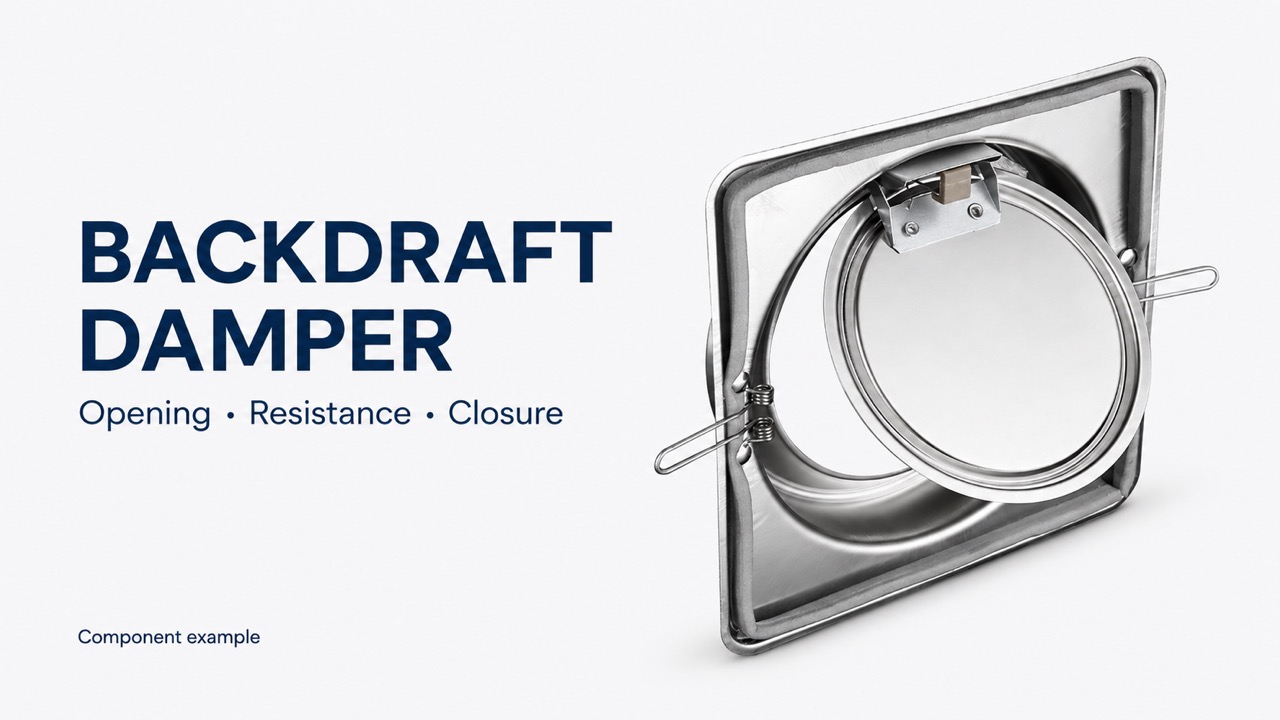
This image shows the push pull exhaust fan hammer device that forces the louvers open during operation.
How to Specify Fans for Evaporative Cooling Pads
When you adapt a standard ventilation frame for wet intake media, you must watch your mechanical limits carefully. Many buyers ignore static pressure. Follow these rules to avoid early motor failure:
- First, measure the true pressure drop of your saturated media. Wet pads block air much more than dry pads. This extra resistance easily pushes a standard motor outside its safe thermal zone.
- Next, verify the exact phase availability at your site. Using large 1.5kW single-phase motors means you must plan for high starting currents. You also need physical room for big capacitor boxes on the motor shell.
- Furthermore, always map your container space before you order. You must fit rigid cooling pads beside huge 1380 mm wooden crates. This task requires exact volume math to avoid expensive shipping delays.
Related: Exhaust Fans.
Engineering Questions About the 1.5kW Upgrade
Technical Documentation & Resources
Browse our axial fans range, the AC axial fans section, or EC axial fans.
Have a Similar Fan Requirement?
Longwell’s engineering team delivers custom spec sheets and samples within 90 days. Since 1990, we have supplied EC fans and blowers to OEMs across HVAC, cold chain, data center, and industrial applications worldwide.
Browse Related Products:
🏆 ISO 9001 / ISO 14001 / ISO 45001 | CE (TÜV) | UL/ETL | ATEX Zone 21/22 | AMCA 210-16 / ISO 5801 tested