Securing the Outdoor Cooling Fan
First, a client asked us to fix the fan motor mounting screws motor mounting screws motor mounting screws on a failing unit. Meanwhile, they built an outdoor cooling unit. It runs all day and all night. Meanwhile, the weather gets very hot in the summer sun.
Then it gets very cold at night. As a result, the metal parts expand and shrink constantly. This puts severe stress on the whole machine frame. They needed new
fan motor mounting screws. Therefore, the old parts were just standard M4x8 round head machine screws. They tried to fix a small axial fan to a steel wire guard. But the standard parts shook loose fast under the load. A loose part is very dangerous here. In practice, it can fall right into a fast spinning blade. This breaks the machine right away. Meanwhile, the blades snap off completely. Then the fan motor mounting screws burns out.
Also, the cooling unit must meet strict safety rules. It must pass the IEC/EN 60335 standard for safe builds. Therefore, this means the parts must stay locked tight forever.
Next, we looked at the tight internal spaces. In practice, the motor case and the wire guard left very little room for tools. The holes provided a very small gap.
In short, the client needed a strong metal part. They wanted a lock that stays tight forever. But they did not want to slow down their factory line workers. The part had to go in fast. It had to stay completely secure in bad weather.
Choosing the Right Fan Motor Mounting Screws
Next, we looked at different ways to solve this problem. We wanted a cheap part that works fast. It had to last a long time in the harsh field.
Testing Standard Factory Parts
First, we tested a normal pan head screw on the line. We added a split lock washer to it. A split washer acts like a stiff spring. However, split washers lose their spring power over time.
The hot and cold weather makes the metal weak. The spring goes totally flat. Also, they add a loose part to the factory line. The fan motor mounting screws workers have to pick up two tiny pieces.
Dropped washers slow down the workers. They fall on the floor and get lost. This costs the client a lot of time and money. By contrast, wet thread fluid works well at first.
It stops the parts from shaking loose. It locks the threads deep inside the hole. Even so, wet fluid is extremely messy. The workers put too much or too little on the threads.
It takes too much time to dry on the moving line. It also makes future repair work hard. A tech in the field cannot break the glue easily. Instead, we chose to change the metal shape itself. We wanted a single, strong part.
Choosing the Serrated Flange Design
Finally, we made a custom M4x10 hex washer head part. We built locking teeth right onto the flat bottom of the head. The wide flange head is 9 mm wide. When a worker turns this part, the sharp teeth bite deep into the metal wire.
This stops the part from turning back. It locks hard into the steel frame. This single piece cost more money to make at first. The tool die took longer to cut in our shop.
It added three days to the lead time for the first batch. However, it removed the need for extra loose washers entirely. Consequently, the workers built the fans much faster. They just grab one part and drive it in.
We also made the screw thread 10 mm long. This gives a deep, safe grip in the blind holes. But it does not hit the dead bottom. These custom parts gave the client exact safety. They stop the shaking from breaking the fan motor mounting screws completely.
Technical Specifications
| Parameter | Specification |
|---|---|
| Thread Size | M4 |
| Thread Length | 10 ± 0.4 mm |
| Head Diameter | 9 ± 0.5 mm |
| Hex Width | 7 – 0.6 mm |
| Washer Thickness | 1 mm |
| Drive Type | Hexagonal with Phillips cross recess |
| Underside Feature | Serrated locking teeth |
Engineers must check the exact 10 mm thread length on the drawing. You have to match it to your exact blind hole depth. Proper length stops the metal screw from hitting the bottom too soon. The teeth must touch the top metal plate fully. If the thread hits the bottom, the head stays high. Then the teeth cannot bite into the wire guard at all. This defeats the whole lock design completely.
Also, the 9 mm head diameter is key. It provides enough flat surface to hold the thin wire. A smaller head might slip through the wide gaps. The hex width of 7 mm fits standard factory tools perfectly. This means the workers do not need special custom bits.
Reference: IEC 60529 covers the test method behind these figures.
Technical Documentation
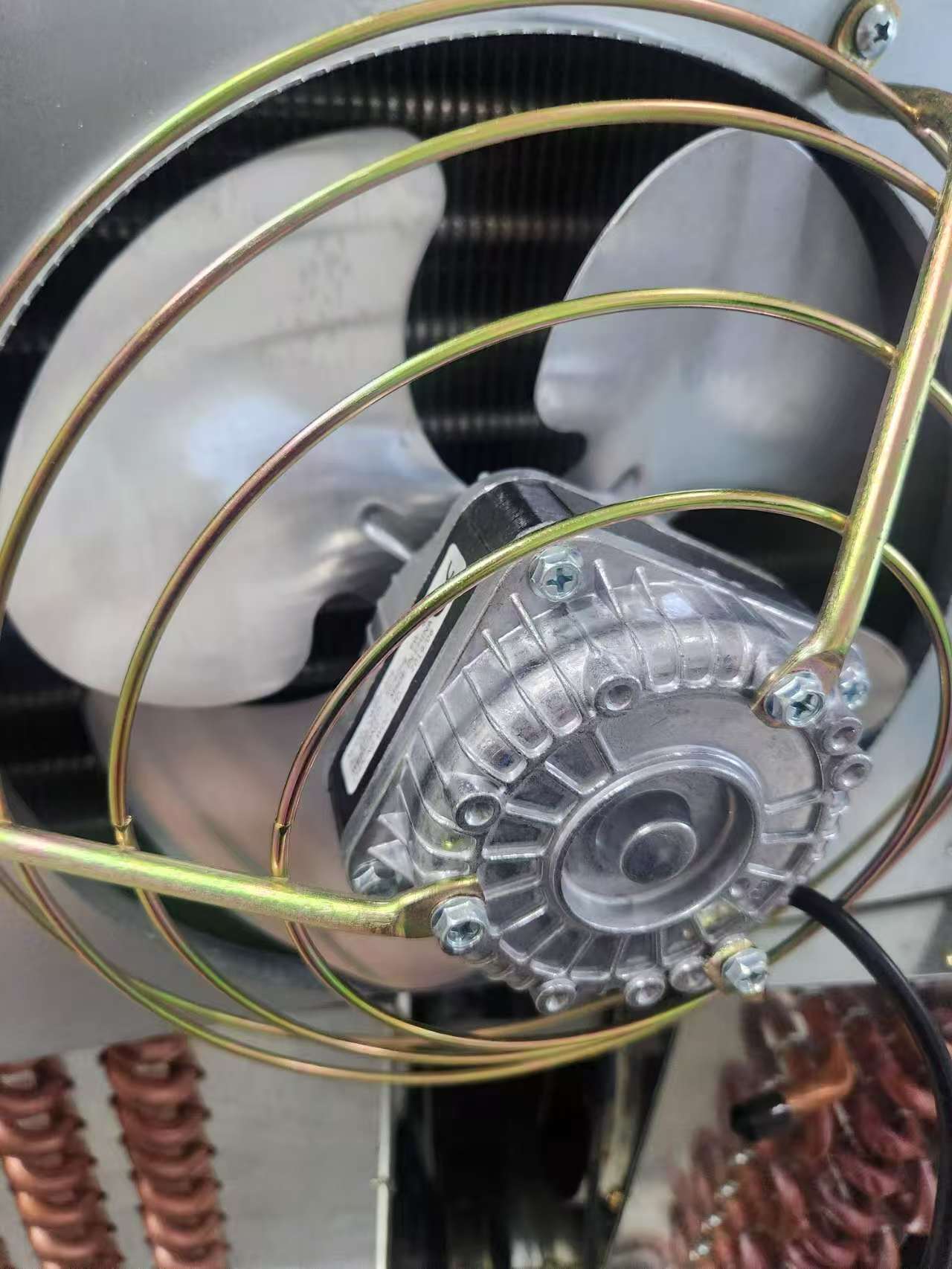
This photo shows the part placed right on the main motor case.
Engineering Drawing: M4x10 Fastener
This page shows the 9 mm head width and the 1 mm thick base.
Customer Application Requirement Document
This file lists the firm rule for locking teeth on the bottom.
Specifying Parts for High Shaking Jobs
If you need new fan motor mounting screws for a shaking fan, check these simple steps. Do this before you send an order to a machine shop.
- First, measure the total depth of your metal mount and pad. You must ensure the strong thread grips well. But it must not hit the end of a blind hole. A bottomed thread will not lock the top head.
- Next, watch your factory line speed closely. A one-piece locking part speeds up the daily work. Workers do not drop tiny loose washers on the ground. They build the cooling units faster.
- Furthermore, check how much turning force your base metal can safely take. Serrated teeth need hard turning to bite the metal. Soft aluminum parts may strip flat if you turn them too hard. Hard steel takes the sharp teeth well.
- Finally, send your supplier a clear 3D model of your metal frame. We make custom fast parts quickly. Our team can look at the exact tight fit right away. So errors get spotted before the metal is cut.
Related: Fan Accessories.
Frequently Asked Questions
Technical Documentation & Resources
Browse our axial fans range, the AC axial fans section, or EC axial fans.
Have a Similar Fan Requirement?
Longwell’s engineering team delivers custom spec sheets and samples within 90 days. Since 1990, we have supplied EC fans and blowers to OEMs across HVAC, cold chain, data center, and industrial applications worldwide.
Browse Related Products:
🏆 ISO 9001 / ISO 14001 / ISO 45001 | CE (TÜV) | UL/ETL | ATEX Zone 21/22 | AMCA 210-16 / ISO 5801 tested