Replacing the Motor in a 210mm Axial Fan Assembly
A customer asked us to fix a bulky cooling unit. First, they needed a new 210mm axial fan assembly. The old setup used a 60W motor. Consequently, this motor had a large 97 mm housing, taking up too much critical room inside their highly cramped equipment cabinet.
Therefore, our job was to make the motor smaller. By contrast, shrinking the motor would leave more open space for other vital internal electronic parts. Next, the system cools sensitive internal parts. It must run at a very steady speed.
In short, the fan must spin at exactly 2300 RPM. This precise target speed guarantees the correct mechanical airflow needed to keep the cabinet from overheating during daily use. Furthermore, the fan goes into a tough factory space. So, it needs an IP44 rating for dust and water defense.
Safety rules are very strict here too. Therefore, the electrical system must handle a 2100V safety test without any dangerous failure or sparking. Meanwhile, the input power relies on a standard 220V and 50 Hz supply line. First, the buyer sent us pictures of their old plastic fan.
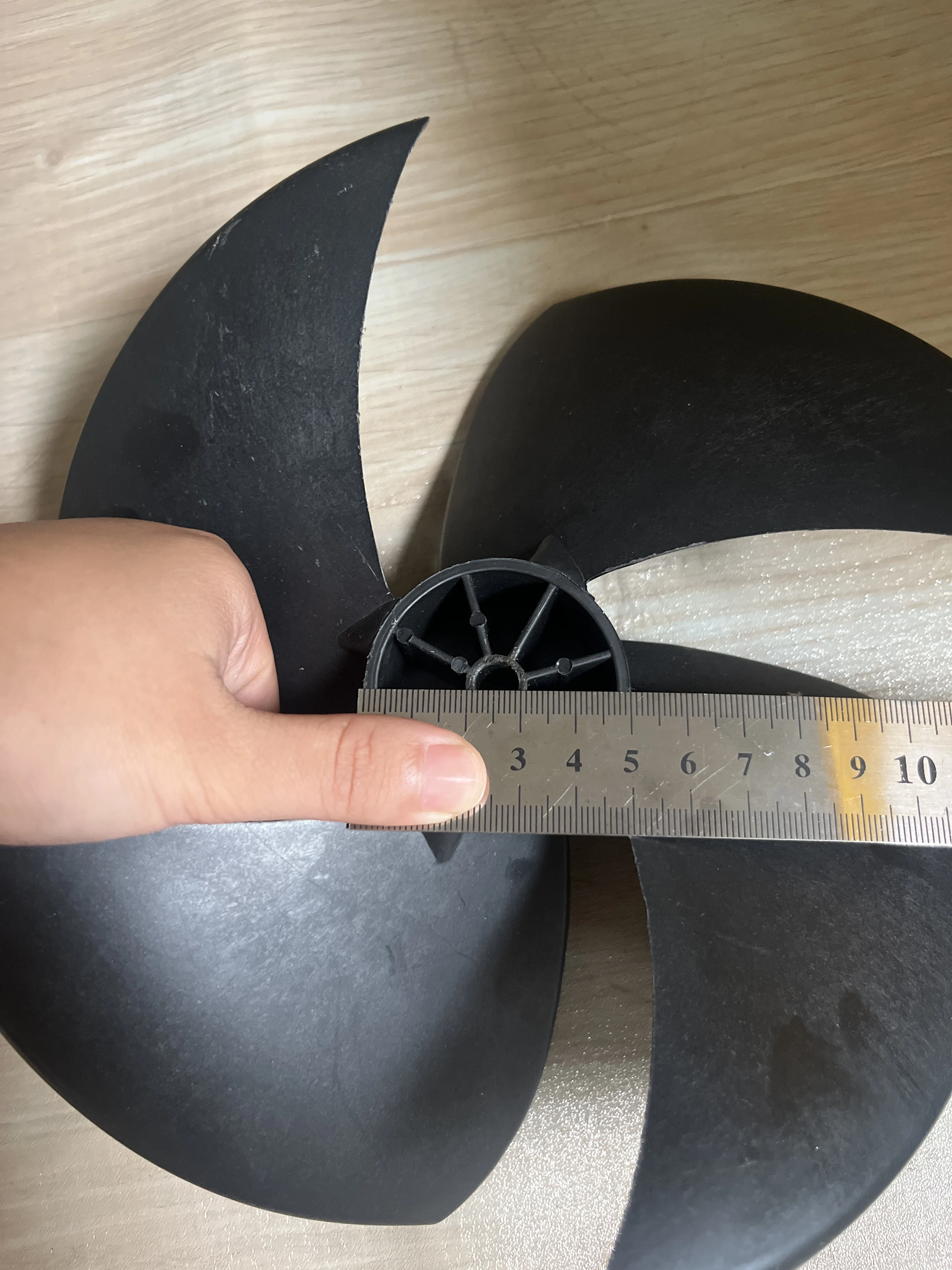
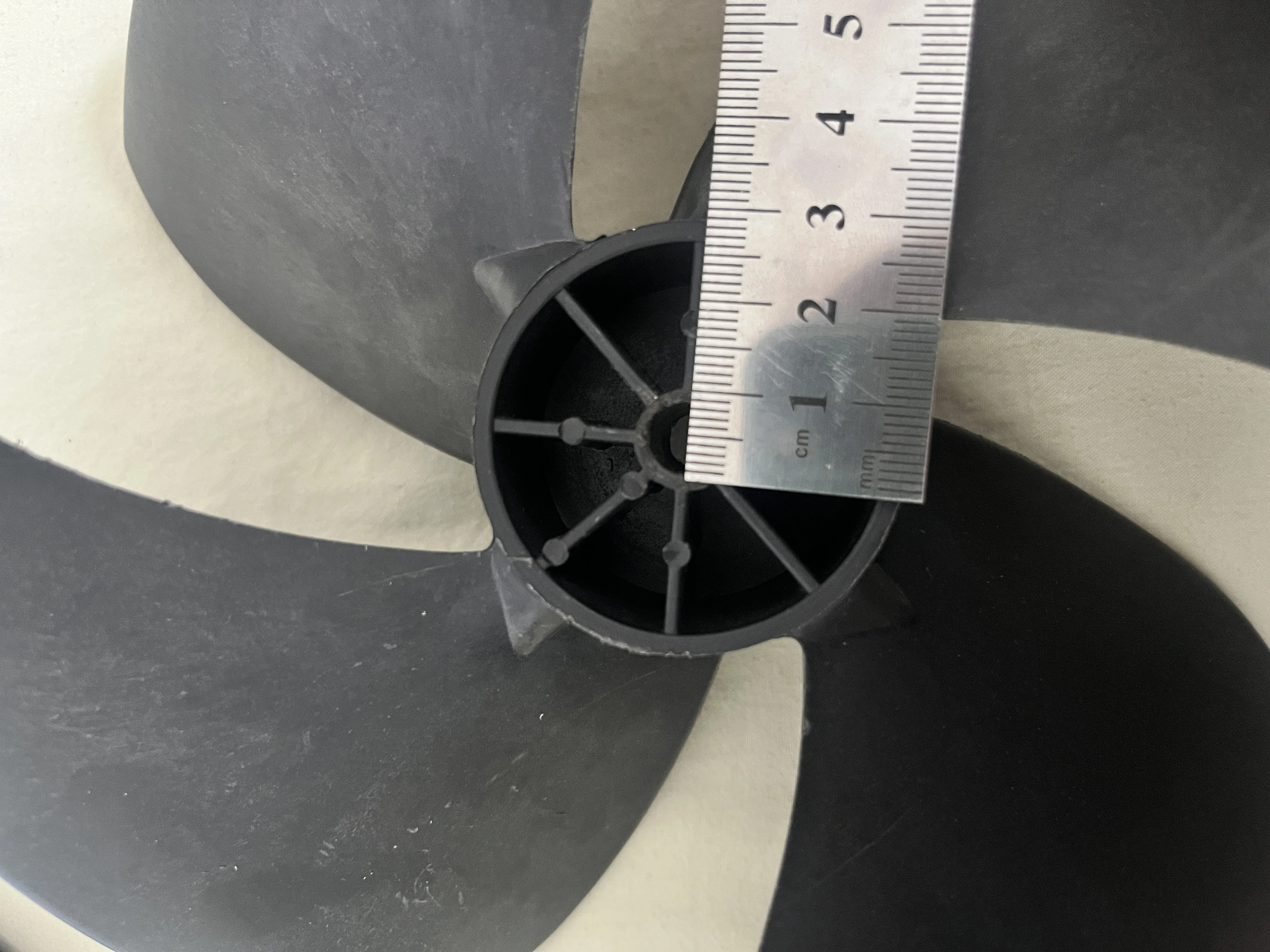
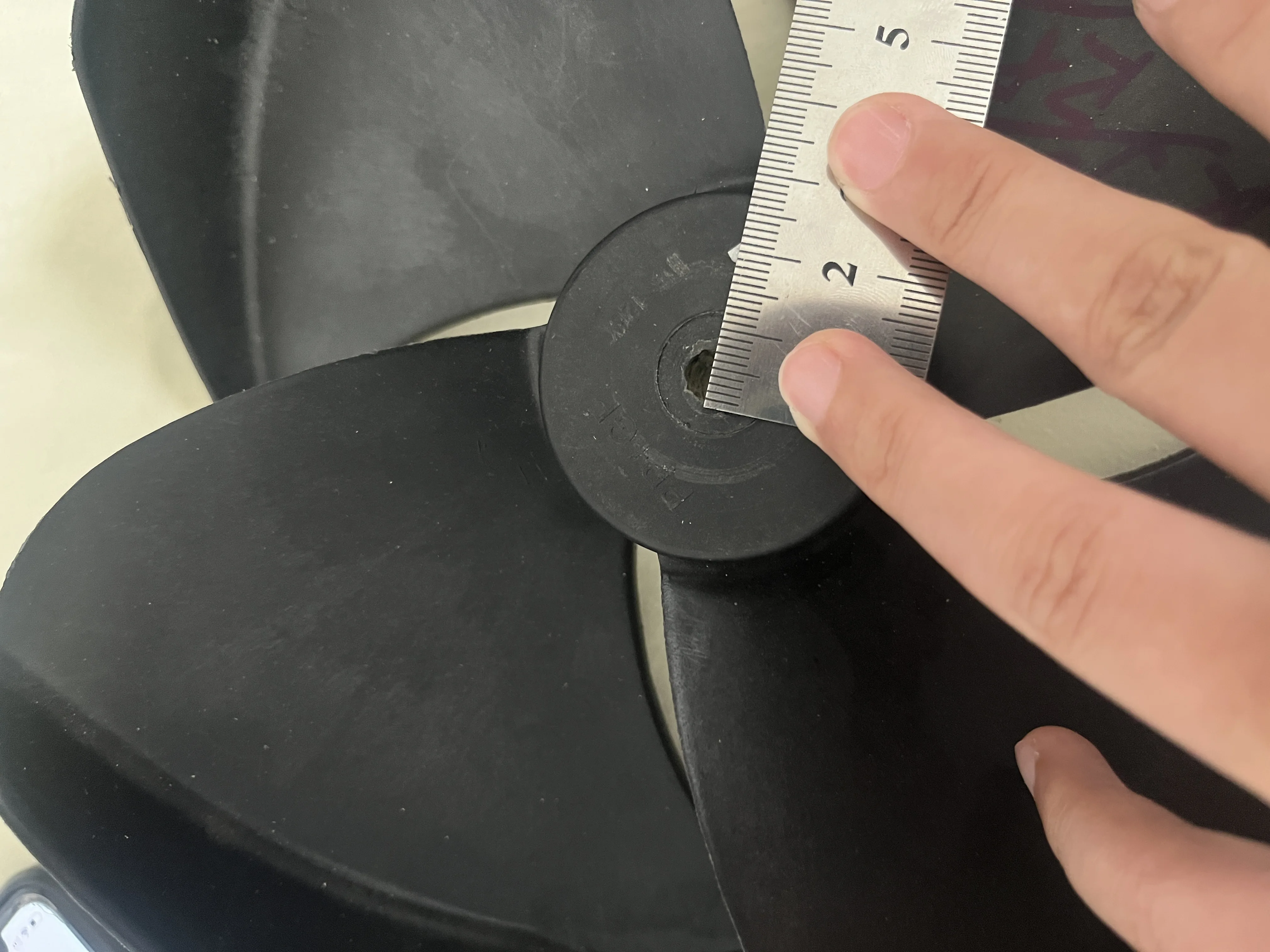
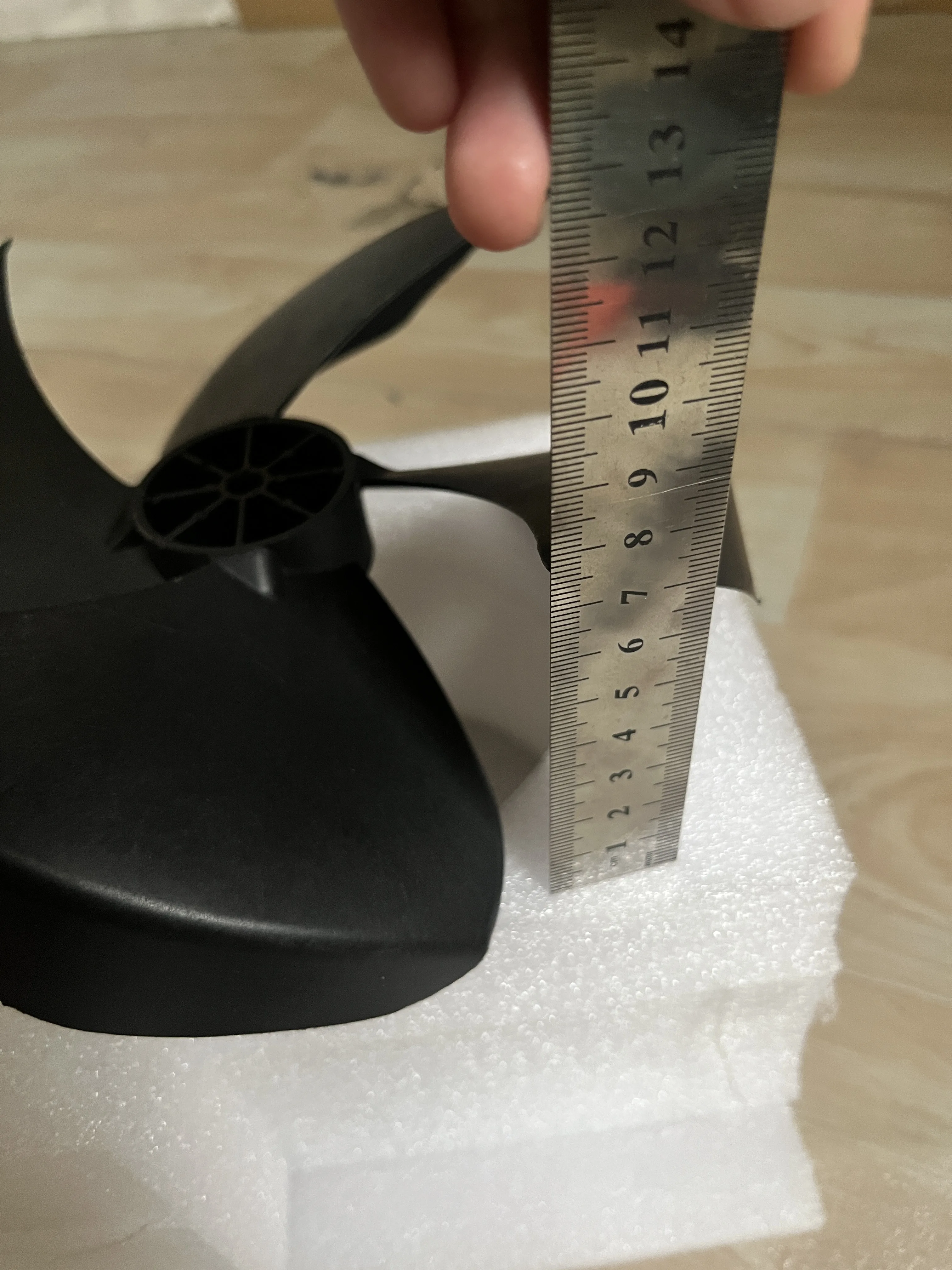
It was a basic four-blade model. Next, we measured the total width of the molded part. It was exactly 210 mm across. Furthermore, the depth of the central hub was exactly 75 mm.
We knew we had to build completely new injection molds for this plastic part. Finally, we test all new fan designs to AMCA 210-16 rules. This strict physical test proves the air flows just right before mass production starts. Even so, the customer needed price options for different internal motor parts. They wanted to see if we could lower the final cost.
Evaluating Motor Size and Wire Types
The old system used a huge 60W motor. However, this choice caused severe design problems inside the tight box. First, a 60W motor is very wide. It blocks fresh air from moving easily across the electronics inside the cabinet.
Consequently, it also makes extra waste heat. Often, builders just pick a standard big size from a vendor catalog. Therefore, they do not measure the real aerodynamic load before buying parts. We did not want to repeat this mistake. Instead, we tested the actual air load of the four-blade fan using accurate lab tools.
Testing the Real Aerodynamic Load
First, we spun the 210 mm plastic fan on our test bench. We checked how much power it really takes to reach 2300 RPM. Consequently, the test showed a very clear result. The plastic blade only needs 25 watts of input electrical power to reach the target speed.
So, the old 60W motor was wildly oversized. It was more than twice as big as the unit actually needed for the physical air load. Therefore, we dropped the old motor size completely. Instead, we designed a custom 25W AC motor for the 210mm axial fan assembly.
This new motor features a much smaller metal frame. Furthermore, it easily clears the old 97 mm hard size limit imposed by the metal enclosure. In short, this simple swap solved the space problem at once. Even so, the smaller 25W motor still moves the exact same amount of cooling air.
Choosing Between Copper and Aluminum
Next, we had to pick the internal wire material. We made two different plans for the new motor. First, we designed the LWYDK-25-2P-001 model. This motor uses standard copper wire.
Second, we built the LWYDK-25-2P-002 model. By contrast, this second motor uses cheaper aluminum wire. Copper is a great choice for shedding heat. Furthermore, it stays cool during long work shifts in hot factory spaces.
However, copper wire costs more money to buy up front. By contrast, aluminum wire costs much less up front. This gives a materially lower cost for the final assembled product. Even so, aluminum gets hotter than copper under heavy physical load.
The internal thermal resistance goes up. Consequently, the motor gets warmer when it runs all day long in the cabinet. We had to test if the aluminum motor was safe to use. So, we ran the 2100V voltage test on both new models.
Finally, both motors passed the shock test easily. They kept a safe insulation resistance fully above the strict 100 M-ohms baseline. Therefore, the buyer can now choose between the two. They can pay more for cool copper. Instead, they can save money with aluminum if their cabinet has good internal airflow.
Technical Specifications
| Parameter | Value |
| Impeller Model | LWA-φ210×75-04 |
| Motor Options | LWYDK-25-2P-001 (Copper) / LWYDK-25-2P-002 (Aluminum) |
| Rated Voltage | 220 VAC |
| Frequency | 50 Hz |
| Rated Power | 25 W |
| Operating Speed | 2300 RPM |
| Rated Current | 0.01 A |
| Withstand Voltage | 2100 V / 1s |
| Insulation Resistance | ≥ 100 MΩ |
| Protection Rating | IP44 |
These numbers show the real test results for the new 210mm axial fan assembly. First, the active power row is the most important fact here. It drops from 60W down to just 25W. Consequently, this huge drop saves vital cabinet space and reduces total electrical energy use. Furthermore, the operating speed stays right at the required 2300 RPM goal. Therefore, the cabinet cooling power remains incredibly strong. Next, the IP44 row shows the unit is safe for damp factory work areas. Finally, the high insulation resistance proves the internal electrical wiring is perfectly safe for daily operation.
Reference: AMCA 210 covers the test method behind these figures.
Technical Documentation
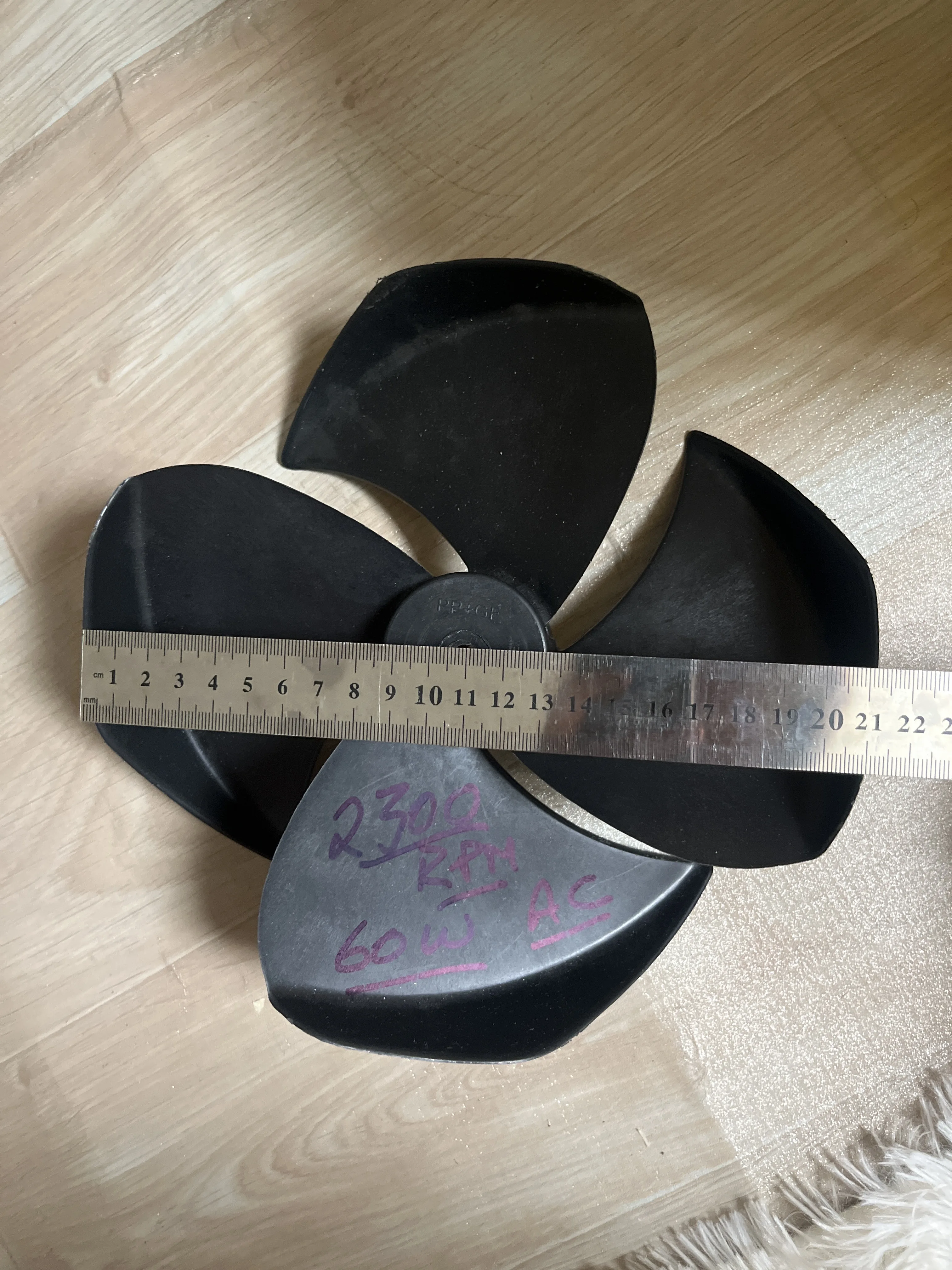
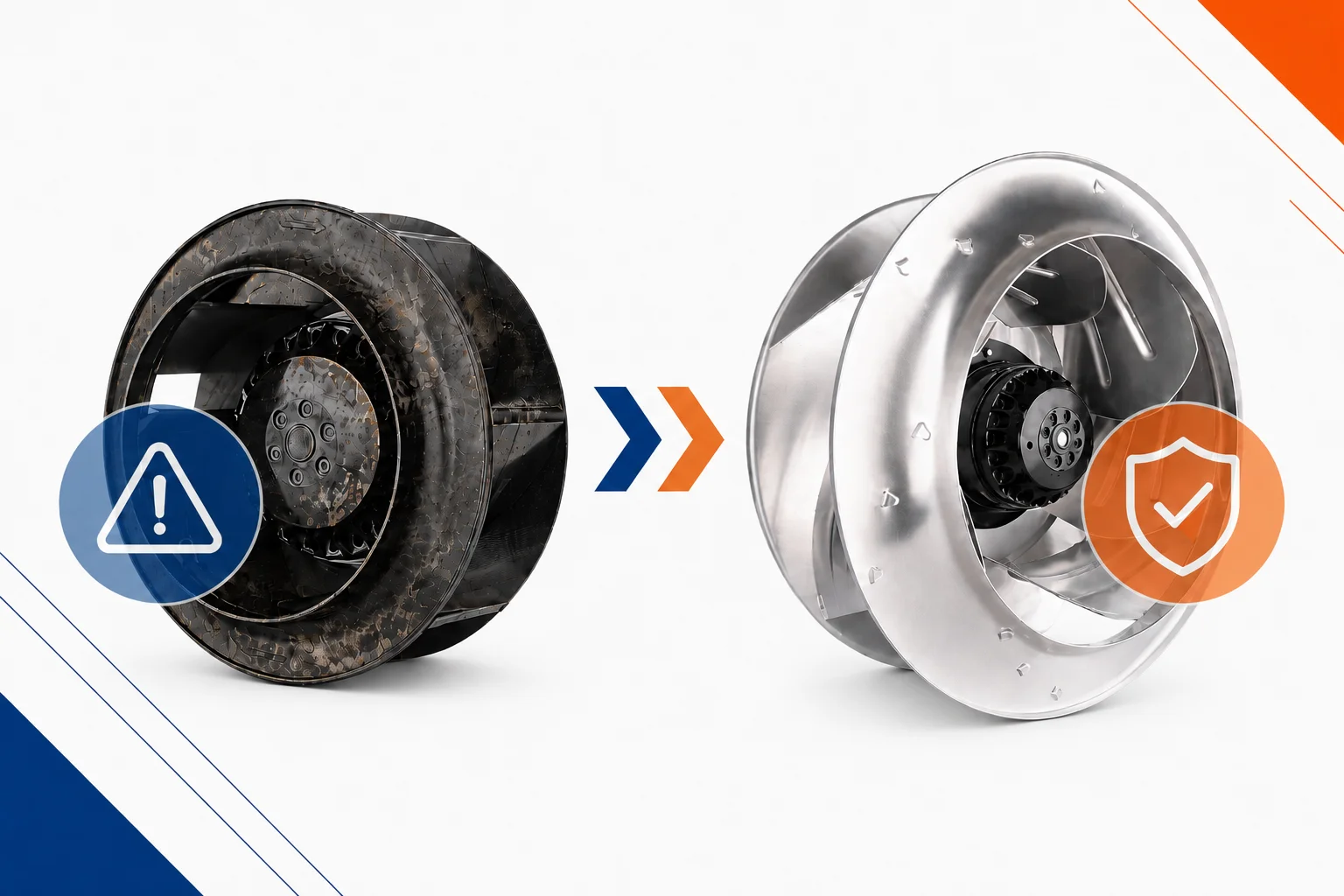
First, this photo shows the buyer’s old plastic fan blade. It marks the old 60W power rating that was far too large for the task.

Next, this customer drawing shows the old 97 mm motor width. We had to beat this hard physical size limit during our engineering phase.
LWYDK-25-2P-001 Copper Motor Specs
Furthermore, this file gives the exact dimensions for the copper wire motor plan.
LWYDK-25-2P-002 Aluminum Motor Specs
Finally, this page outlines the electrical safety ratings for the cheaper aluminum wire motor alternative.
How to Downsize Your Own Fan Motors
Many builders use air motors that are simply too big. However, you can fix this space problem with a few smart engineering steps.
- First, measure the real power your fan needs. Run the blade at your exact target speed inside a testing lab. Then, see how many watts it actually pulls. Do not just guess the air load.
- Next, write down your hard physical space limits early. Measure the tight gap inside your metal cabinet. Finally, tell your supplier the maximum physical width in strict millimeters before design begins.
- Furthermore, think about heat inside your box. You can save money with aluminum motor wire. Even so, you must have good internal airflow to cool the hot aluminum during long running shifts.
- Finally, ask for AMCA 210-16 air tests right away. This crucial test maps the real airflow precisely before you pay money for new plastic injection molds.
Longwell handles this kind of aerodynamic load testing every day. Therefore, we build custom fan parts safely in our rapid 90-day cycle.
Related: AC Motors.
Common Questions About Motor Sizing
Why did the old 210mm axial fan assembly use a 60W motor for a 25W job?
Builders often buy off-the-shelf motors to save engineering time. First, they pick a standard size that is way too big for the physical fan blade. However, our bench tests showed the 210 mm blade only pulls 25W at 2300 RPM. Therefore, downsizing to a custom 25W motor corrects this initial sloppy engineering choice.
How does aluminum wire change the motor performance?
Aluminum wire has much more electrical resistance than pure copper wire. Consequently, an aluminum motor gets much hotter when it works hard. Even so, the lower material cost makes it a very popular choice. You must weigh the lower price against the extra heat inside your cabinet.
What does the 2100V voltage test actually prove?
This safety test checks the plastic skin on the internal wires. First, we hit the internal wires with 2100V for one full second. This intense shock proves the live power will not jump to the outer metal case. In short, it means the motor is totally safe for end users.
Why do you need new plastic molds for the 210mm blade?
A standard store-bought fan blade rarely hits the exact 2300 RPM speed you need. Instead, making a custom 210×75 mm mold lets us shape the air perfectly. Furthermore, it precisely matches the blade to the new 25W motor without wasting any electrical power.
Technical Documentation & Resources
Browse our axial fans range, the AC axial fans section, or EC axial fans.
Have a Similar Fan Requirement?
Longwell’s engineering team delivers custom spec sheets and samples within 90 days. Since 1990, we have supplied EC fans and blowers to OEMs across HVAC, cold chain, data center, and industrial applications worldwide.
Browse Related Products:
🏆 ISO 9001 / ISO 14001 / ISO 45001 | CE (TÜV) | UL/ETL | ATEX Zone 21/22 | AMCA 210-16 / ISO 5801 tested