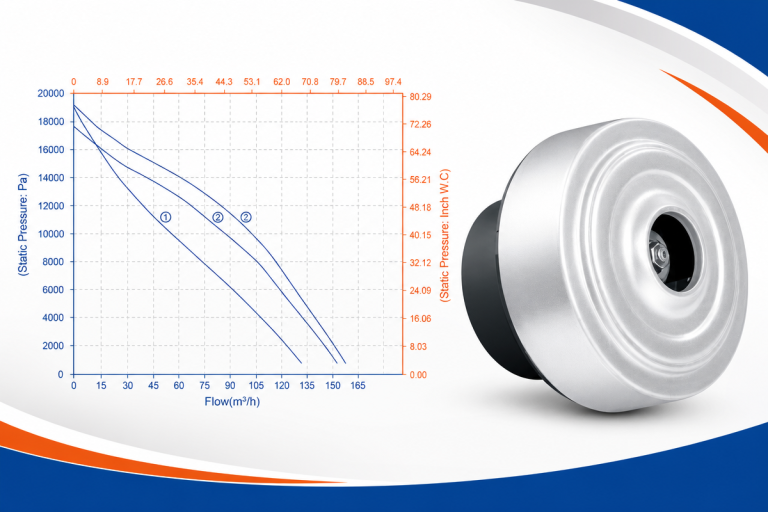
The Commercial Airflow Problem
A commercial kitchen needs strong airflow to clear heavy smoke. But many older buildings only supply standard 220V power. So, engineers must install a single-phase kitchen blower that can push through dense filters. This project began with a strict limit.
First, the customer showed us their old parts. They sent pictures of a 0.75kW motor running at 1367 RPM. Next, they shared a 1.1kW motor spinning at 1400 RPM. These small motors worked fine for their old setup.
However, their new hood required much more power. The new ducts demanded 4100 to 5400 m³/h of air. Also, the static pressure had to hit 630 to 830 Pa. Those old motors would stall entirely under that heavy load.
Instead, we had to build a much larger machine. Any fan moving this much air through thick filters faces high resistance. Meanwhile, the power limit was strictly 220V at 50Hz. We checked the performance gap first.
Then, we looked at the physical size limits. A standard commercial fan uses a three-phase motor to reach 830 Pa. Therefore, forcing a single-phase setup to pull 2200W meant solving heat and starting problems. We test fan performance to AMCA 210-16 methods. This standard testing confirmed the exact limits we had to meet.
Engineering The Single-Phase Kitchen Blower
We looked at several ways to handle this heavy load on 220V power. First, we thought about adding a variable frequency drive. A drive changes single-phase input into three-phase power. This change lets you use a standard motor.
We rejected this idea quickly. The kitchen wall lacked room for a large drive box. Furthermore, extra electronics add another risk of breaking down. Next, we tried keeping the smaller 1.1kW motor frame.
We could adjust the single-phase kitchen blower blades to push more air. We rejected this option too. The small motor would overheat while pushing 5400 m³/h at 630 Pa. Instead, we designed a custom direct-drive fan. We built it around a heavy 2.2kW motor.
Mechanical and Heat Trade-offs
Every physical choice has a real cost. First, a 2.2kW single-phase motor needs huge capacitors to start. So, the single-phase kitchen blower metal housing grew much wider. By contrast, a three-phase motor of the same power is very compact.
Also, a big single-phase stator makes a lot of heat. Therefore, we changed how the motor stays cool. The customer’s old 0.75kW motor had a sealed IP54 rating. But we lowered our new 2.2kW design to IP44.
This choice reduced dust protection slightly. Even so, it let cool air reach the hot copper wires. Finally, the total fan weight went up. We had to add a thick steel base measuring 235 mm wide.
Final Output Limits
This new single-phase kitchen blower solves the building power limits. In short, the LWFDF-11-3A-2.2-4P-1-001 model delivers the exact required air curve. It spins at 1450 RPM on standard 50Hz power. Meanwhile, it moves up to 5400 m³/h at its lowest pressure drop.
Also, it keeps a steady 4100 m³/h at the tough 830 Pa limit. So, the system clears heavy grease smoke without an expensive building power upgrade. We confirmed this stable air curve by testing the fan to AMCA 210-16 standards.
Technical Specifications
| Parameter | Value |
|---|---|
| Air Flow | 4100 – 5400 m³/h |
| Static Pressure | 830 – 630 Pa |
| Input Power | 2200 W (2.2 kW) |
| Speed | 1450 RPM |
| Voltage | 220 VAC |
| Frequency | 50 Hz |
| Ingress Protection | IP44 |
These specific rows matter because they show the real working limits. First, the high static pressure numbers prove the fan works through thick grease filters. Meanwhile, the voltage and power rows confirm it runs on a simple wall supply. So, the buyer knows it will not trip standard breakers. Also, the speed row shows a safe 1450 RPM limit. This keeps noise lower than faster models. Therefore, kitchen staff can work comfortably.
Reference: AMCA 210 covers the test method behind these figures.
Technical Documentation
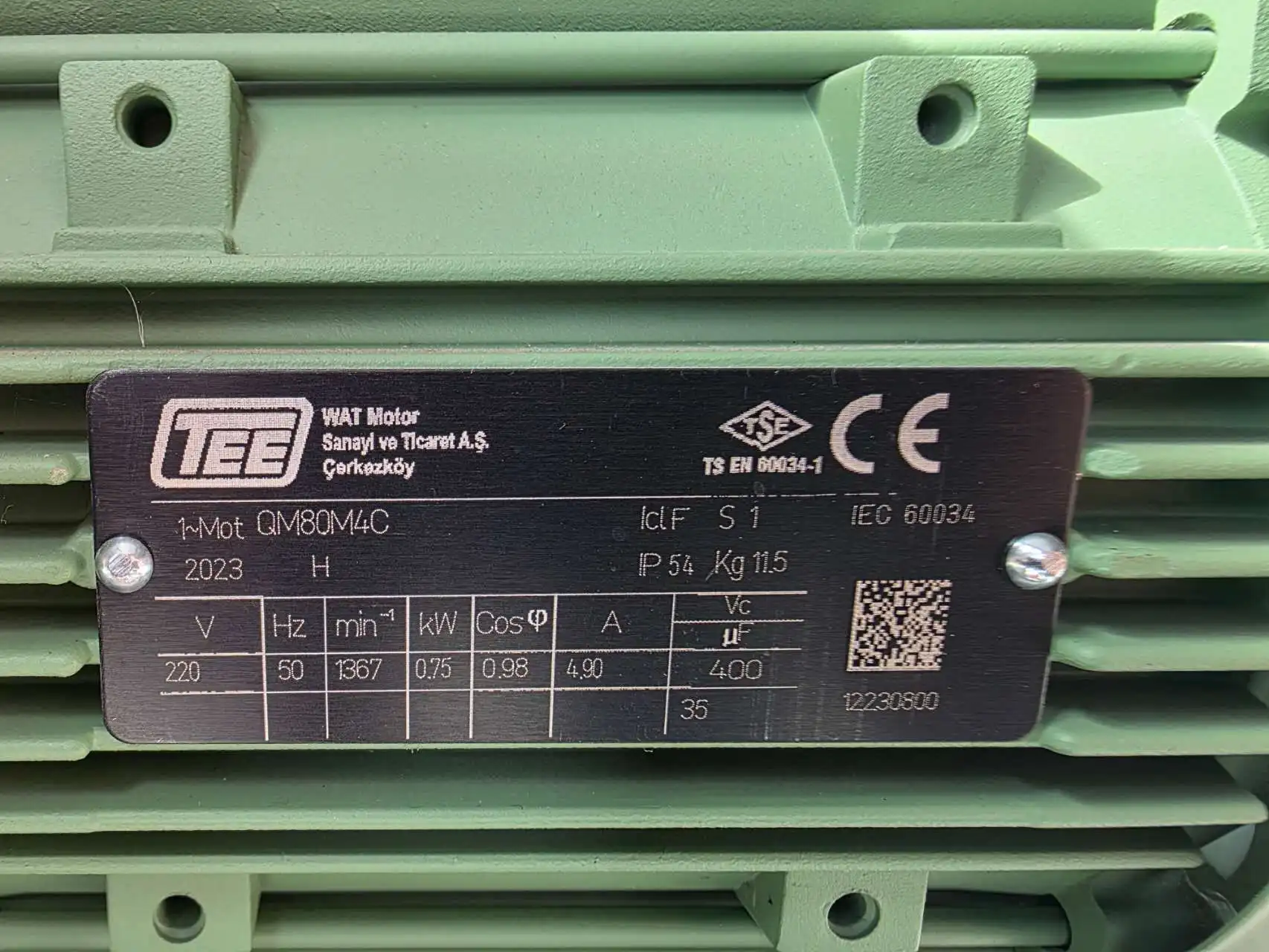
This photo shows the old 0.75kW motor label. It gives the baseline IP54 numbers that the customer wanted to beat.
LWFDF-11-3A-2.2-4P-1-001 Specifications
This file holds the exact part sizes and power limits. Mechanical teams need this sheet to plan the installation space.
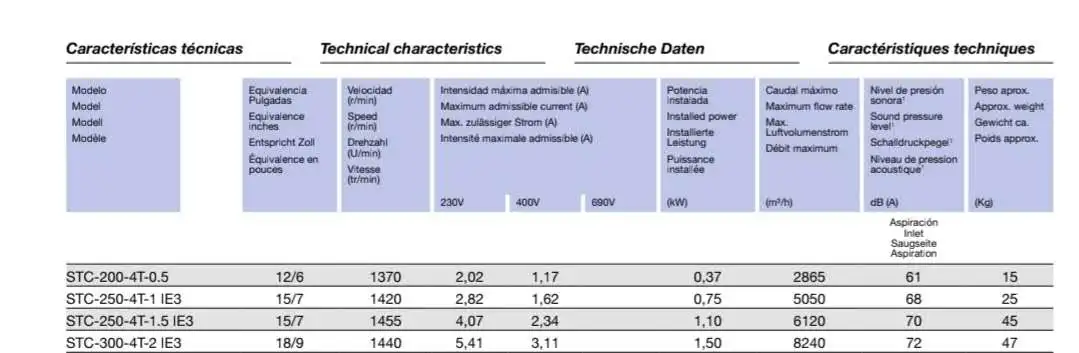
This chart lists common commercial airflow targets. HVAC engineers use these charts to pick the right duct shapes.
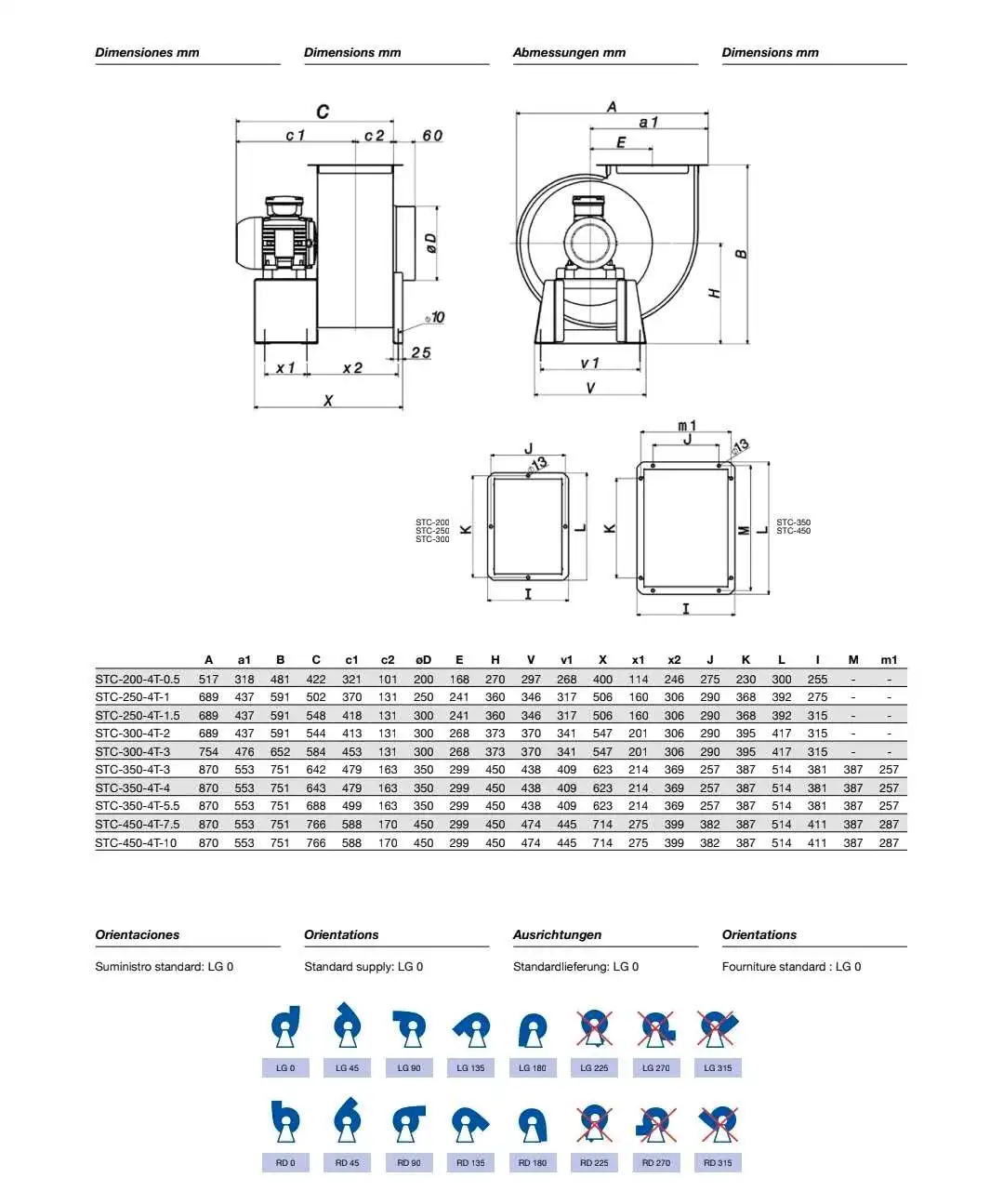
This drawing maps out the exact metal box size. It helps builders see how much floor space the base takes.
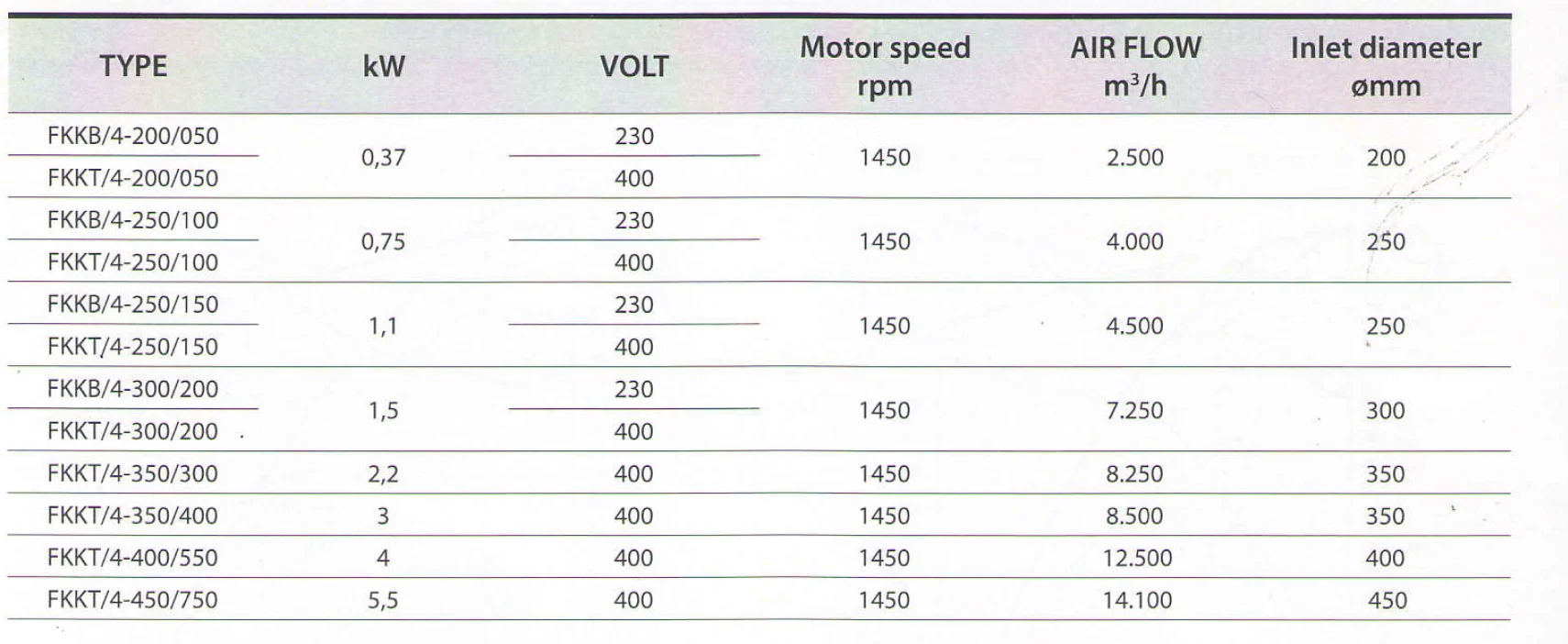
This table shows speed limits for older fan models. It proves that basic 230V units usually stop at 1.5kW of power.
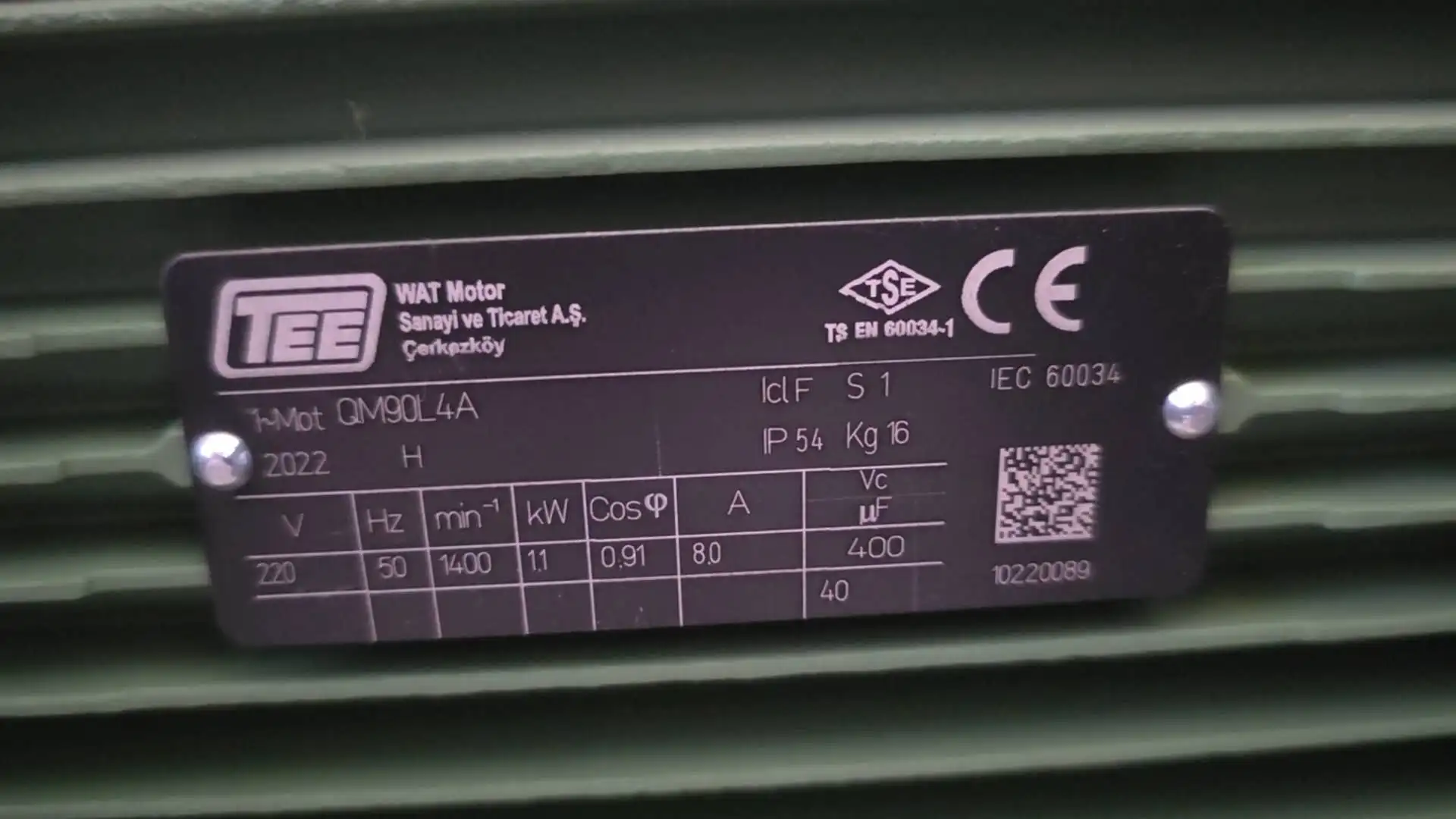
This photo proves the customer tried a 1.1kW motor first. That motor failed to reach the required 830 Pa target pressure.
Planning Your Exhaust System Upgrade
When you need to buy a large single-phase kitchen blower, you must check your building limits.
- First, measure the real pressure drop across dirty grease filters. Dirty filters can double the static pressure in just one week. Many people only measure clean filters, so their fans fail quickly.
- Next, check the starting current at your main breaker box. A 2.2kW single-phase motor pulls a huge power surge when it turns on. A heavy metal fan wheel is hard to spin from a dead stop. You must ensure your wires can handle this brief load.
- Also, accept a lower IP rating if you need maximum cooling. Big copper coils need lots of fresh air. Therefore, an IP44 box is much safer against heat than a sealed IP54 box.
- Finally, send your supplier the exact airflow and maximum pressure you need together. We make our own impellers in our factory. Because of this, we can change the blade pitch to match your exact numbers.
Related: Centrifugal Fans.
Common Engineering Questions
Technical Documentation & Resources
Browse our blowers range, the exhaust blowers section, or centrifugal blowers.
Have a Similar Fan Requirement?
Longwell’s engineering team delivers custom spec sheets and samples within 90 days. Since 1990, we have supplied EC fans and blowers to OEMs across HVAC, cold chain, data center, and industrial applications worldwide.
Browse Related Products:
🏆 ISO 9001 / ISO 14001 / ISO 45001 | CE (TÜV) | UL/ETL | ATEX Zone 21/22 | AMCA 210-16 / ISO 5801 tested