Traditional duct fans always operate at full speed, which results in unnecessary energy consumption in the off-peak period. Commercial building managers often face high operational costs under these conditions. However, there are duct fans with variable speed control to match the real-time ventilation requirements. Integrating variable-speed technology into the HVAC system can yield significant long-term benefits. In this blog, we will introduce the main speed control methods and discuss why a speed controller improves energy efficiency. Besides, we will explore the application of a duct fan with a speed controller.
What is a Duct Fan with a Speed Controller?
What is Duct Fan?
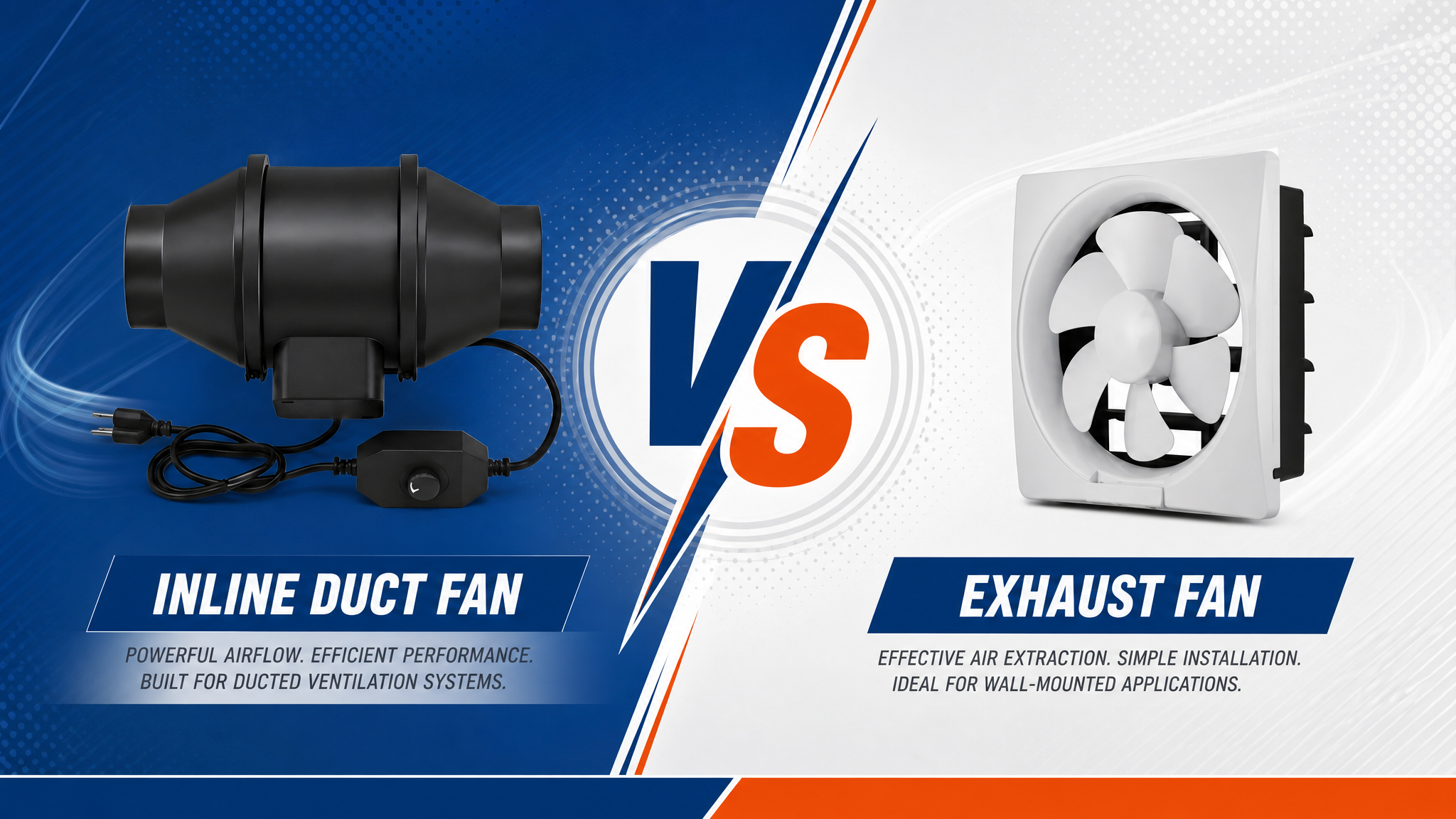
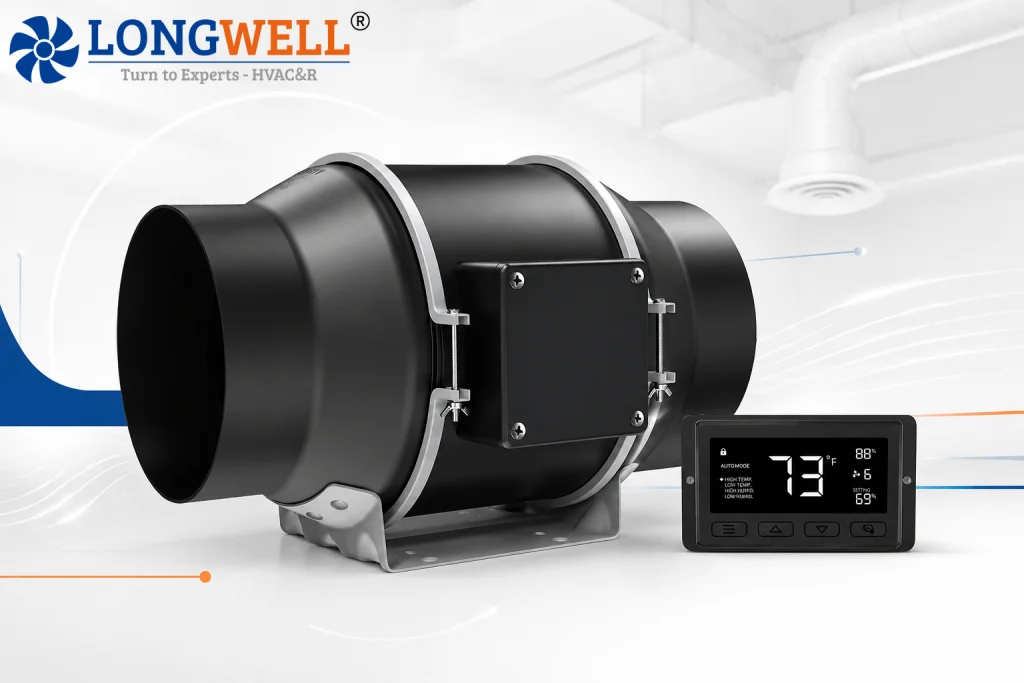
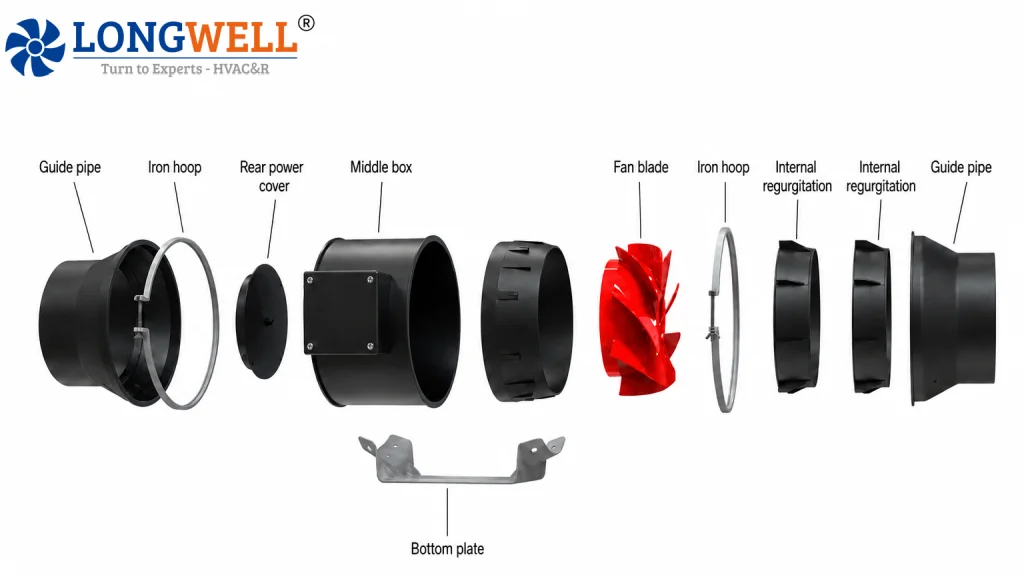
A duct fan is installed directly inside a round or rectangular duct, so its casing becomes part of the airflow path. The basic assembly consists of an impeller, a motor, and the housing. The housing surrounds the rotating components and guides air from the inlet to the outlet. Its shape and connection size must match the duct system. Depending on the motor design, the speed controller may be installed externally or integrated into the motor electronics.
Fixed-Speed vs. Duct Fans with Speed Controller
A fixed-speed duct fan always operates at full motor speed. The output airflow remains relatively constant and ignores the ventilation needs. The air volume of the fixed-speed duct fan can only be changed by altering the system resistance or using a damper. This design is suitable for stable ventilation applications. It may waste electrical power and create bad mechanical noise inside ductwork.
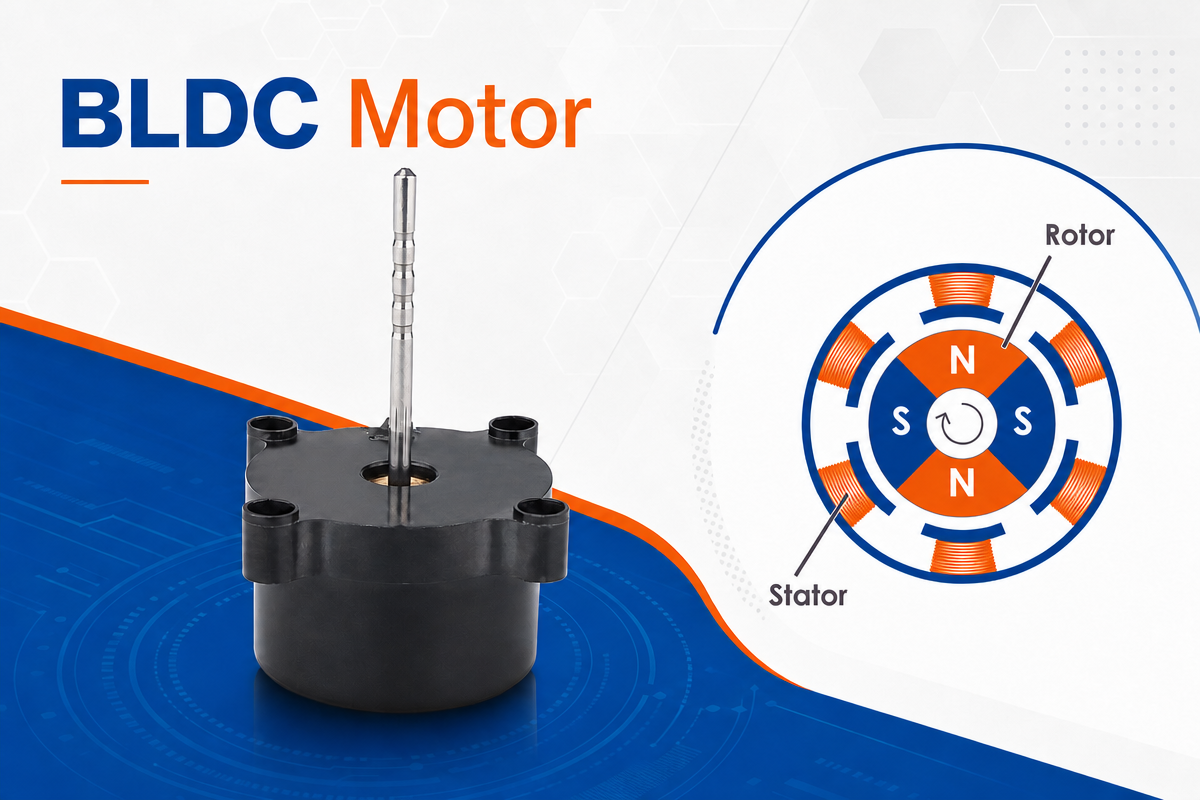
A duct fan with a speed controller can increase or reduce motor speed according to the required airflow. EC duct fans provide more precise regulation and may support control methods such as 0–10V, PWM, Modbus RTU, or manual knob adjustment. The airflow can therefore be matched more closely to actual system demand.
Duct Fan Control Methods
Variable Frequency Drives (VFD)
A variable frequency drive controls an AC motor by adjusting the frequency and voltage supplement. The working principle is to raise or lower the speed of a compatible duct fan according to the required airflow. Therefore, when the ventilation demand is not high, energy waste caused by full-speed operation can be reduced. The acceleration and deceleration settings also provide smoother starting and stopping, reducing mechanical stress.
VFD selection must match the motor’s rated power, voltage, current, and load characteristics. Incorrect sizing, poor ventilation, or improper setup can reduce efficiency or damage the system. VFDs are more commonly used in larger commercial and industrial fan systems.
0-10V Speed Control
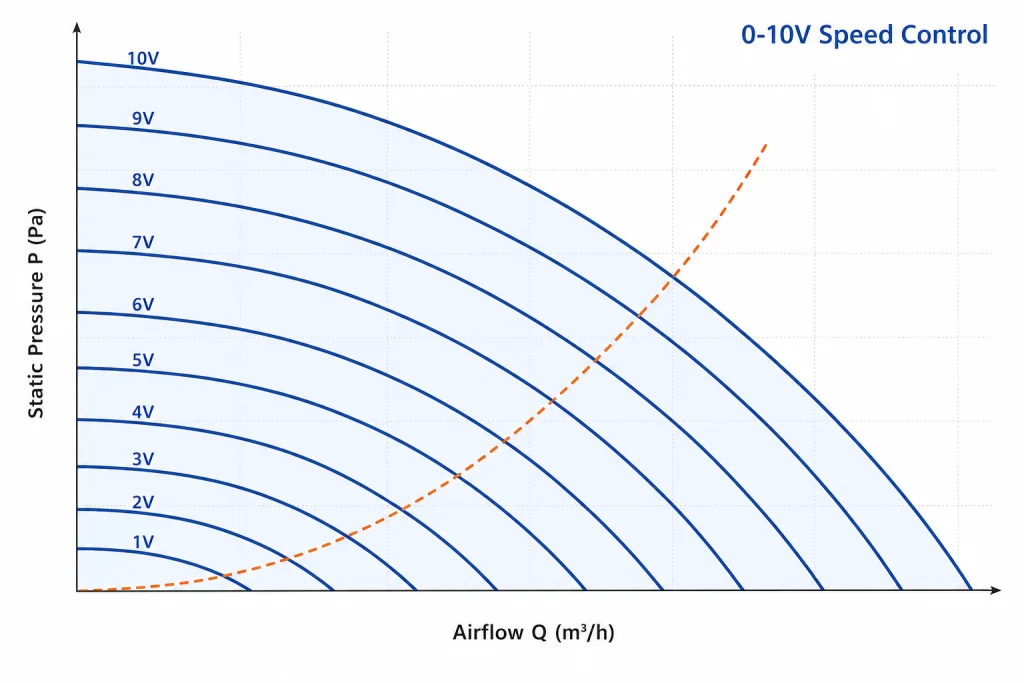
Analog control uses a continuously variable electrical signal to transmit the required fan speed to an EC duct fan. The most common format in HVAC systems is 0–10V control. The 0–10V signal does not power the motor. The fan is still connected to the rated power supply. A separate low-voltage input indicates how much motor speed is required for the integrated electronic device. For example, an analog signal near 6V may represent a mid-range operating point, while 10V generally represents maximum demand. This makes 0–10V control particularly suitable for EC duct fans used in demand-based ventilation.
PWM Speed Control
Another common control signal is Pulse Width Modulation (PWM) control. It controls fan speed through a high-frequency pulse signal rather. The fan continues to receive its rated voltage, while a separate control signal switches rapidly between high and low levels. Fan output is determined by the signal’s duty cycle. A higher duty cycle generally commands a higher motor speed, while a lower duty cycle reduces the speed. PWM Speed control is a common compatible control input signal for EC duct fans.
Modbus Protocol
Modbus is a digital communication protocol widely used in industrial automation and building management systems. Modbus RTU is commonly transmitted through an RS-485 serial network.
Modbus RTU supports two-way communication. The control system can send a speed setpoint to an EC duct fan and read information back. Depending on the fan model, the available data may include actual speed, power consumption, operating status, runtime, alarms, and fault codes. This makes it easier to monitor equipment remotely and identify problems before arranging an on-site inspection. Many EC fan products under LONGWELL feature Modbus RTU as the standard communication protocol, supporting seamless integration with BMS systems.
Comparison of Duct Fan Speed Control Methods
| Control Methods | Suitable Motor Type | Main Advantages |
| Manual knob control | AC/DC/EC Motor | Easy to operate and install |
| VFD | Three-phase AC induction motor | Wide speed range and soft starting |
| 0–10V control | DC/EC Motor with compatible input | Smooth and precise regulation |
| PWM control | DC/EC Motor with compatible input | Stable control and good signal accuracy |
| Modbus Control | EC Motor with Integrated Electronics | Higher reliability and lower cost |
The table above compares different control methods with their suitable motor type and advantages. The intelligent control is based on control methods such as 0-10V, PWM, Modbus, etc., and is connected to sensors. It has the functions of programming settings and remote access. Users can change the fan speed through a mobile application. The command will be sent to the fan’s electronic controller, which adjusts the motor output.
Smart functions may include preset speed levels, operating schedules, timer settings, delayed shutdown, and real-time status monitoring. When connected to temperature, humidity, or air-quality sensors, the controller can also increase or decrease airflow automatically as conditions change.
For example, the LONGWELL EC duct fans with intelligent controller supports temperature and humidity sensing, multi-speed adjustment, delayed shutdown, and IoT app control. Users can remotely check the operating status and adjust airflow for bathrooms, grow rooms, primary air systems, and other applications where ventilation demand changes over time.
How Variable Speed Control Improves Energy Efficiency?
Reduce Unnecessary Airflow Generation
The ventilation requirements are rarely constant throughout the day. Changes in temperature, humidity or equipment operation can all affect the required airflow. Variable-frequency duct fans can be controlled by adjusting the motor speed. When the ventilation demand decreases, the controller will accordingly reduce the fan speed. When a larger airflow or pressure is needed, a greater output of air volume can be provided. This operating mode avoids unnecessary full-speed operation.
The LONGWELL EC duct fan supports several control options, including intelligent control, 0-10V regulation, PWM, and manual adjustment. It can effectively lower electricity bills in households, commercial buildings, and industrial scenarios, achieving the goal of energy conservation and environmental protection
Reducing Energy Loss
Variable-speed control takes a more direct approach, which lowers the motor speed and reduces the fan output. This limits unnecessary pressure generation and airflow throttling losses. Intelligent speed controllers can also use timer settings or delayed shutdown functions to prevent the fan from operating too long.
Improving Part-Load Efficiency
Many duct ventilation systems operate below their maximum design load for long periods. Fixed-speed fans are usually controlled by switches. If it is necessary to adjust the volume of the airflow in the system, the most common method is to increase the resistance of the system. At this moment, the motor is still running at high speed, resulting in unnecessary power waste.
An EC duct fan can operate at a reduced speed under part-load conditions. Lower motor speed generally requires less electrical input while still providing the airflow needed by the system. The actual saving depends on the operating point, duct resistance, control range, and daily load profile.
Variable Speed Duct Fan Applications
Commercial HVAC Ventilation
Ventilation demand vary from day to night in commercial HVAC systems. A duct fan with speed controller can respond to these variations through continuous speed adjustment, which is more efficient. For larger HVAC systems, EC duct fans may also be connected to a building management system. Reduced-speed operation can also lower energy use and acoustic output during part-load conditions, which is particularly valuable in offices and other noise-sensitive commercial space.
Industrial Exhaust Booster
An industrial duct fan can be installed as an exhaust booster when a long duct run, multiple bends, filters, or other restrictions reduce the airflow produced by the main exhaust system. When positioning duct fan inline, it can add pressure to help remove heat, fumes, dust, and process air from factories. Fan selection should be based on the required airflow, total system resistance, air temperature, and the type of contaminants being extracted.
LONGWELL Duct Fan with Controller
LONGWELL LWDE3G series EC inline duct fans combine with several speed control options. Depending on the selected model, users can adjust airflow through a manual knob, a 0–10V signal, PWM control, or Modbus protocol. For applications requiring automated operation, the optional intelligent controller supports temperature and humidity sensing, delayed shutdown, multi-speed adjustment, and IoT app remote control.
The standard LWDE3G series model’s outlet diameter range includes 100, 125, 150, and 200 mm. The listed models provide airflow from 212 to 830 CFM and static pressure from 260 to 720 Pa.
For specific requirements, LONGWELL provides tailored service. The size, air volume, material, and control function of the duct fan can be flexibly adjusted according to the specific usage scenarios to ensure that the product is fully adapted to the corresponding ventilation system requirements.
FAQs
How does a duct fan controller reduce energy consumption?
When the required air volume is not at full capacity, the fan controller will reduce the motor speed to respond to the actual ventilation needs.
Can the controller reduce the noise of the HVAC duct system?
Yes. Reducing fan speed generally lowers aerodynamic and motor noise when maximum airflow is not required.
Why do engineers prefer EC motors for variable airflow?
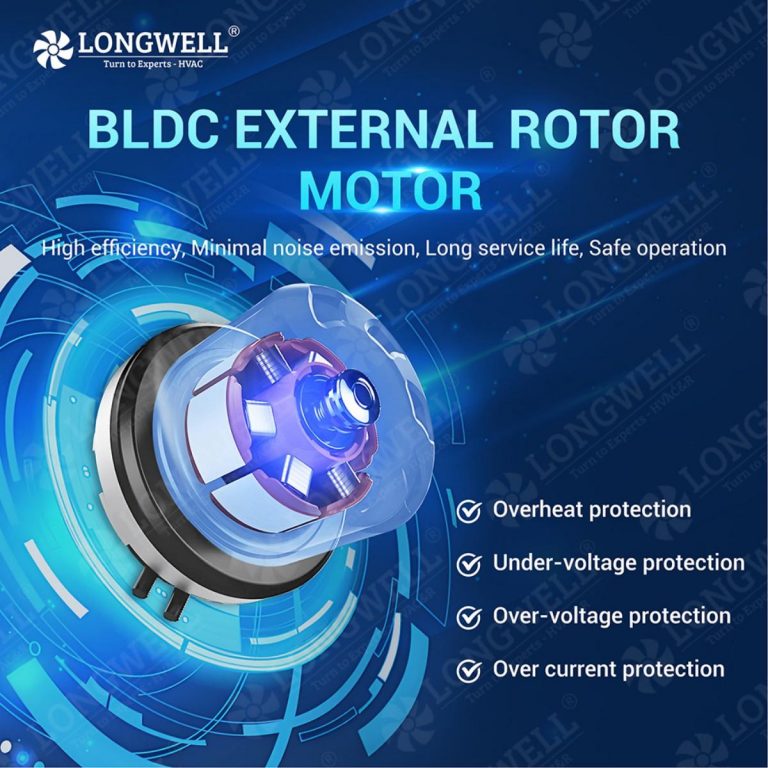
The EC motor enables engineers to better control the operating point of the duct fan. At the same time, it maintains high efficiency even when the ventilation load changes.