Centrifugal fans are widely used in various commercial and industrial HVACR systems to deliver reliable airflow and high static pressure. However, they can also be a significant source of operational noise, affecting workplace comfort, occupant well-being, and regulatory compliance. Reducing centrifugal fan noise has become a critical aspect of HVACR system design and operation.
The noise of centrifugal fans is typically generated by two main sources: one is the aerodynamic noise, and the other is the mechanical noise. This article will explore seven practical and effective methods to reduce the noise of centrifugal fans. From optimizing the impeller and vibration isolation, to the design of the air duct system and the rational selection of fans, these strategies help achieve quieter operation while maintaining high efficiency, reliable performance, and low energy consumption.
1. Impeller Design Optimization
Optimizing the design of the impeller can reduce the generation of turbulence and chaotic flow, thereby lowering the noise level. Most traditional centrifugal fans adopt symmetrical blade designs, which can lead to the generation of periodic noises. Academic research has shown that, when taking into account the balance and aerodynamic performance of the impeller, the uneven arrangement of blades can effectively reduce the noise level of a centrifugal fan. Based on this, considering bionic blades can also effectively reduce the noise level
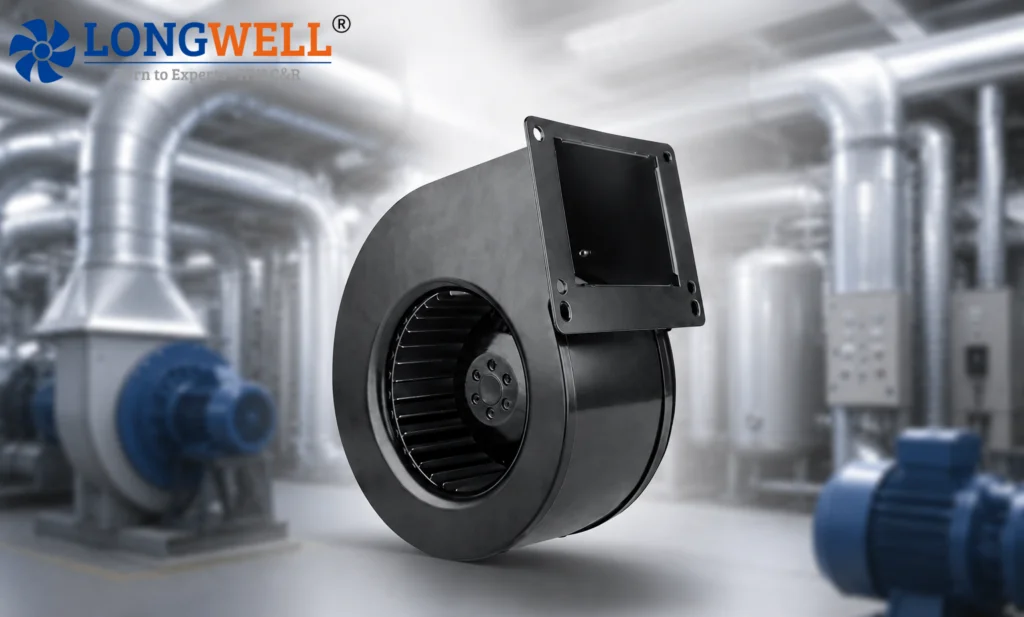
In the selection practices of industrial production, apart from reducing noise through minor arrangement variations, the first issue we encounter is the selection of the main type of blades. The different blade shapes determine the aerodynamic performance base of the fan foundation, which in turn directly affects the upper limit of subsequent noise reduction optimization. For instance, compared to forward curved blades, backward curved blades typically have a lower noise level. When the geometric shape of the blades of the impeller is finely adjusted, the adhesion of the airflow to the blade surface will significantly increase. LONGWELL’s LWBE3G series backward curved centrifugal fan use biomimetic blade profile, which not only reduces noise but also enhances static efficiency. The specific shape of blades means that the boundary layer interference on the airflow is reduced, and the disordered turbulent energy is converted into effective pressure output.
2. Vibration Isolation Installation
In a centrifugal fan system, the noise from the motor usually originates from mechanical vibrations. The machinery will generate noise during operation. If these vibrations are close to the natural frequencies of the surrounding structure, resonance may occur, significantly amplifying the noise level. Over time, these noises can lead to structural fatigue of the equipment.
Viration Isolation can effectively reduce the transmission of noise to the structure and the ventilation duct system. Common practices include:
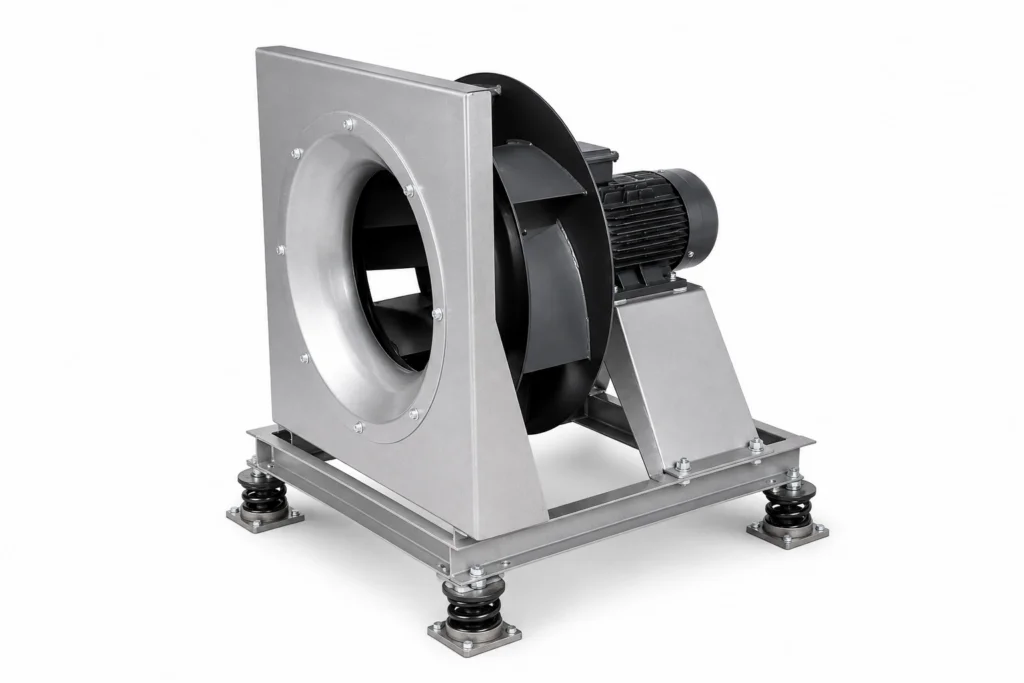
Vibration Isolators
Vibration Isolation can effectively reduce the transmission of mechanical vibrations to the building structure and the ventilation system. By using high-performance rubber shock absorbers or spring dampers, it is possible to effectively absorb the low-frequency electromagnetic vibrations generated during the operation of the motor.
Install Silencers at Inlet and Outlet
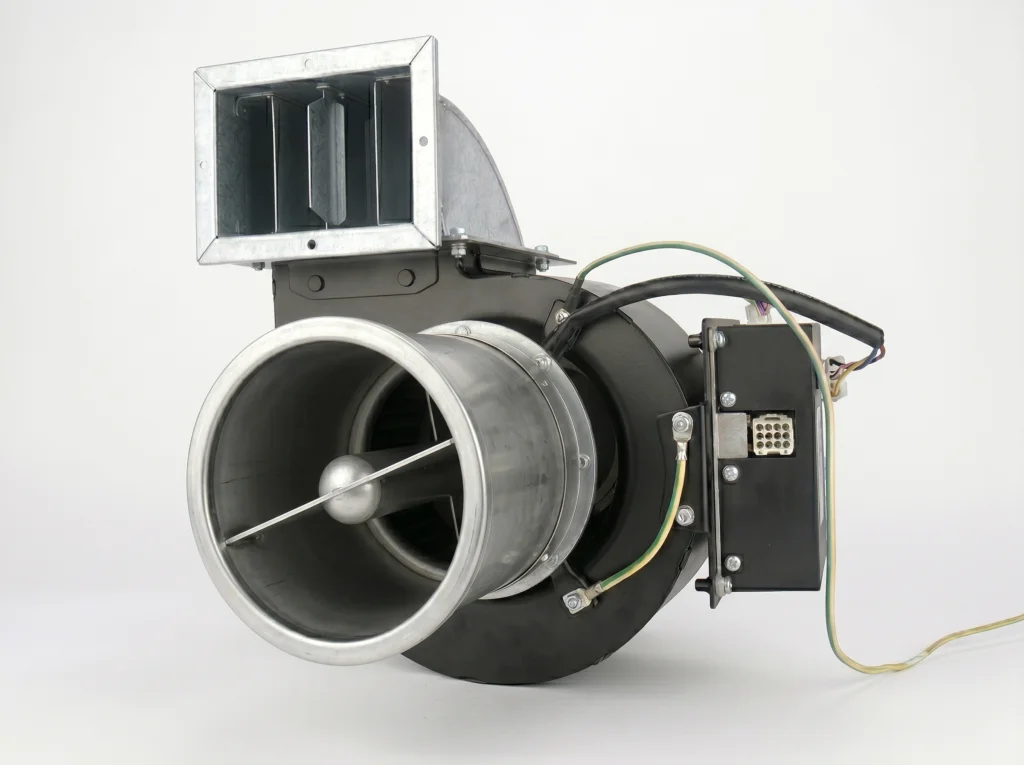
The inlet and outlet of the centrifugal fan are prone to generating noise. At the air inlet of the blade, the sudden acceleration and change of direction of the airflow cause the airflow to become disordered. At the air outlet, there often appears a leakage area where the air flow is very uneven. Installing silencers in these two locations can significantly reduce the noise of the centrifugal fan.
3. Structure Design Improvements
The fan casing and supporting structure not only play the roles of protection and flow diversion. Under high-speed operation conditions, the air pressure and mechanical vibration continuously act on the surface of the casing. If the structural stiffness is insufficient or the design is unreasonable, the casing panel may vibrate and radiate noise to the surrounding environment. Therefore, in the process of reducing the noise of centrifugal fans, optimizing the design of the casing and structure is equally crucial.
Structural Reinforcement
By increasing the thickness of the plates, optimizing the design of the support framework, or adding structural stiffness at key locations, it is possible to effectively reduce structural deformation and vibration amplitude. When the shell wall panels are sufficiently rigid, it can effectively reduce the resonance noise caused by fluctuations in air pressure.
Volute Structure Optimization
Apply anti-noise coating on the fan housing or increase the thickness of volute can reduce noise. In addition, optimize the internal flow channel structure of the volute to ensure that the airflow passes smoothly through the impeller and the volute. This can reduce the occurrence of airflow separation, vortices and pressure fluctuations, which can also reduce noise level.
Structural Damping
Compared to replacing with a thicker and heavier metal casing, adding damping materials is an economical and efficient way to reduce noise. The damping layer can absorb and dissipate the vibration energy of the structure, thereby reducing the vibration of the metal panels. The double-layer casing thus formed can not only enhance the sound insulation performance and structural stability, but also reduce the transmission of noise outward. But all of this is based on the selection of the appropriate materials.
4. Motor Noise Reduction
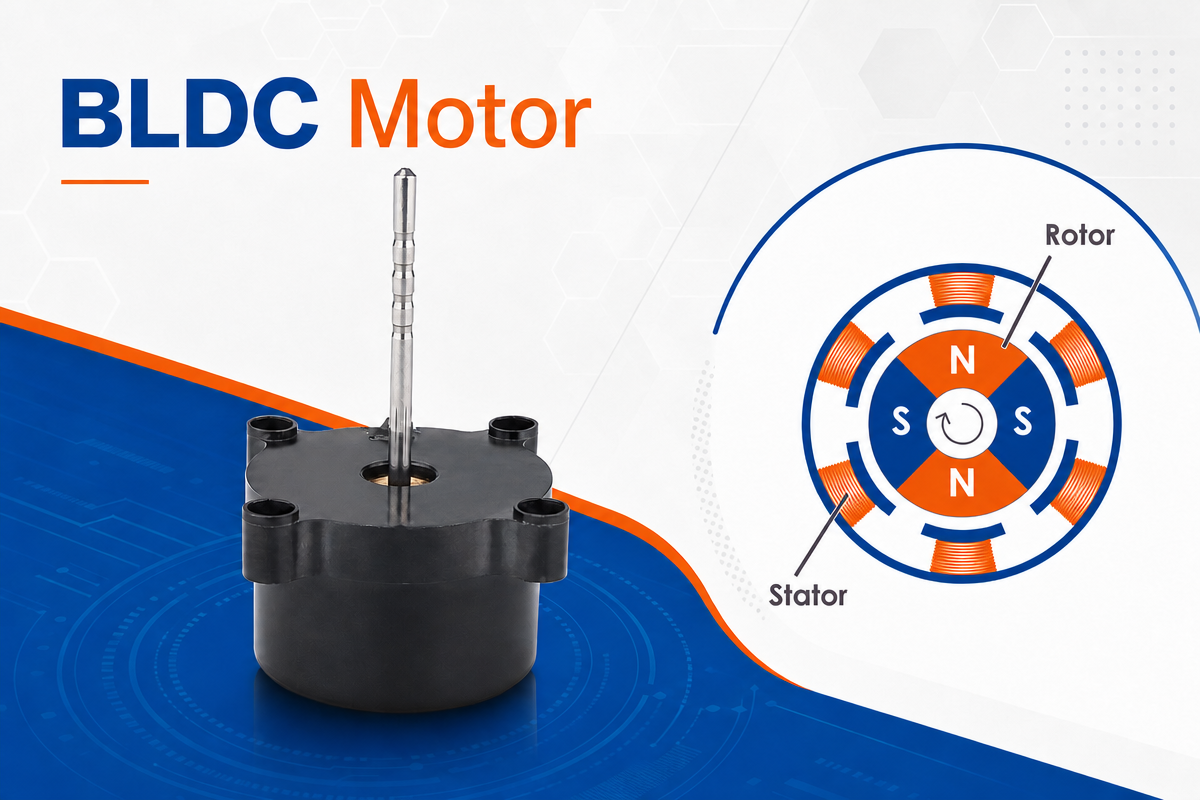
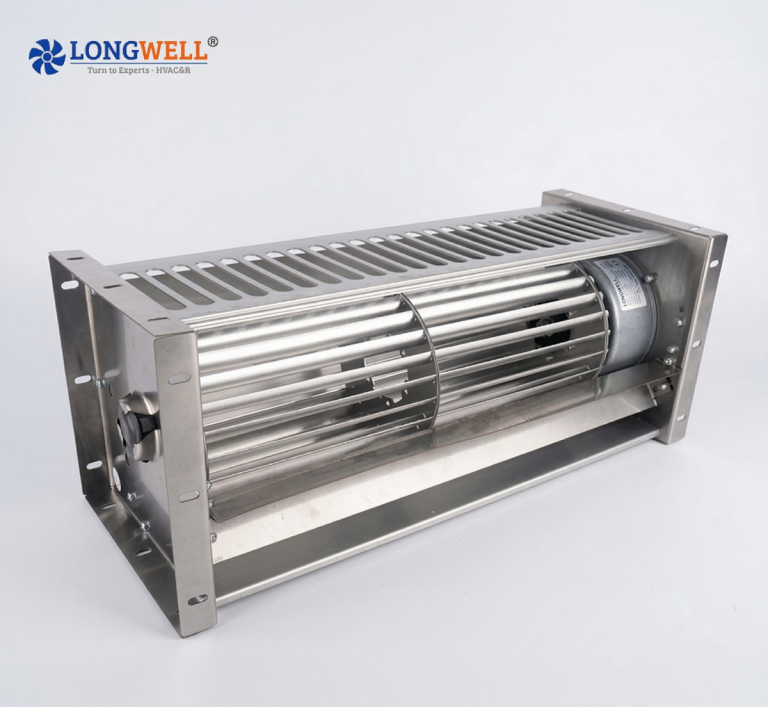
The noise of the motor mainly comes from electromagnetic noise and mechanical noise. In some cases, improper settings of the frequency converter parameters may cause additional electromagnetic noise. Therefore, it is necessary to conduct reasonable debugging and optimization based on the characteristics of the motor. LONGWELL offers a comprehensive range of low-noise EC fan solutions designed for applications where acoustic performance is critical. Selected EC axial fan models operate at noise levels as low as 48 dBA, while certain EC cross flow fans achieve ultra-quiet operation down to 18 dBA. LONGWELL centrifugal fans deliver efficient airflow with minimal noise, making them ideal for medical equipment, air purifiers, HVAC systems, home appliances, commercial ventilation, and other noise-sensitive environments.
Factors such as bearing wear or insufficient lubrication can cause the bearings to make noise. The centrifugal fan equipped with higher precision bearings, such as double ball bearings. This bearing can convert hard sliding friction into rolling friction, significantly reducing the running resistance. At the same time, it can also prevent the metal from wearing the main shaft, and fix the positions of the main shaft and the impeller. During high-speed operation, the bearings can absorb the impact forces caused by the weight of the impeller and the wind pressure. Maintain stable operation to reduce noise levels.
5. Duct System Integration Optimization
The fan is not an isolated component. It is connected to the entire ventilation system through the ducts. The design of the duct system may also cause noise to be generated. When the airflow passes through sharp bends, sudden expansions or contractions of the duct sections, it is prone to cause airflow separation and turbulence, thereby generating additional noise. In the duct system, it is necessary to design the duct layout reasonably, reducing unnecessary bends and resistance components. Moreover, a smooth transition structure should be selected to improve the airflow distribution and reduce the operating noise of the system.
When the air flow rate is too high, it usually leads to stronger turbulence and pressure fluctuations. Therefore, during the design process, noise is often controlled by reducing the local wind speed.
- Increase the Cross-sectional Area of the Duct: When the air volume remains constant, the larger the duct diameter, the greater the cross-sectional area, and the lower the wind speed.
- Avoid Local Diameter Reduction: Most of the noise does not originate from the main ducts, but rather from the reducers, air outlets, duct tees and Dampers. When it is necessary to reduce the diameter, try to adopt a gradually narrowing structure and a smooth transition section.
- Reduce Sharp Turns: Replace the 90-degree sharp bends with large-radius elbows or turning vanes to reduce the local variation in wind speed.
6. Regular Maintenance and Dynamic Balancing
Even during the initial stage of use, if a well-installed and low-noise fan system is employed, after a long period of use, the noise level may gradually increase as the operating time increases. In many cases, abnormal noise is caused by component wear, dust accumulation, imbalance or insufficient maintenance.
Impeller Condition
During the long-term operation, dust, oil stains or particles may gradually adhere to the surface of the blades. This will cause a change in the distribution of the blade’s mass, thereby causing the blade to lose its original balance state. At this point, additional vibrations will be generated during the rotation process, and this will further lead to an increase in noise. Therefore, regularly cleaning the blades and checking for any wear is helpful in maintaining stable operating performance.
Dynamic Balancing
After long-term use, the impeller of the centrifugal fan may experience a shift in its center of gravity due to uneven accumulation of dust on the blades, corrosion, or physical impacts. Even a few grams of mass deviation can, during high-speed rotation, generate tremendous centrifugal force, converting into continuous vibration and noise. We recommend conducting professional dynamic balance calibration after a certain period of operation of the equipment.
7. Selecting the Right Fan
In many projects, the noise from the fans is not a problem with the equipment itself, but rather the selected model is not suitable for the application. During the project planning stage, it is necessary to select the appropriate centrifugal fan, which is essential for achieving long-term low-noise operation.
Air volume and static pressure parameters
The selection of the fan should first accurately match the required air volume and static pressure parameters of the system. If the selected fan fails to meet the system requirements, the equipment may need to operate under high or even excessive load conditions for a long time. This will result in higher noise levels. On the contrary, over-selecting can also cause problems. When the fan continuously operates beyond its optimal operating point (BEP), the energy consumption and noise level will increase. Therefore, the most suitable performance range should be selected based on the actual operating conditions, rather than simply pursuing a larger air volume or higher pressure.
Fan Type
Different impeller structures have different efficiencies and acoustic characteristics. For instance, backward curved centrifugal fans usually have higher efficiency and lower operating noise, and thus are widely used in modern HVAC systems and industrial ventilation fields. However, in certain specific working conditions, specific impeller designs may be required to meet process requirements and environmental demands.
Operating Environmental Factors
The environmental factors to be considered include installation space, air temperature, medium properties, and future load changes. If there are significant fluctuations in the operating conditions of the system, VFD can be employed to achieve flexible speed control, enabling the fan to maintain efficient and relatively quiet operation under different load conditions. Alternatively, the fan characteristics can be customized according to the actual situation.
If you would like to have a more detailed understanding of how to configure the fans, it is recommended to read: How to Choose the Right Centrifugal Fan for Your Application. It provides a detailed analysis of the entire process selection logic, from air volume assessment to condition matching.
Experience Quiet and Efficient Airflow with LONGWELL
Reducing the noise of centrifugal fans does not rely on a single measure. Instead, it requires comprehensive consideration from multiple aspects such as impeller design, vibration control, structural and motor optimization, system integration, and correct selection.
The LWBE3G series centrifugal fan is the clearest expression of that standard. Powered by EC motor technology, it improves at least 10% efficiency compared to conventional AC-driven fans, while keeping operating noise lower about 10 dB(A). Besides, these series equipped with multiple communication methods such as 0–10V, PWM, and MODBUS, facilitating integration into modern automation systems for real-time monitoring and precise speed control. They are used for commercial HVAC and data center cooling systems. The high efficiency, low noise and integration of control system have provided customers with an outstanding improvement solution.
Whether it is the HVAC system, air purification equipment, industrial ventilation system, or other applications with high requirements for noise and energy efficiency, LONGWELL is always committed to providing customers with quiet, efficient, and reliable air delivery solutions, ensuring that each air flow delivery is more stable, efficient, and comfortable.