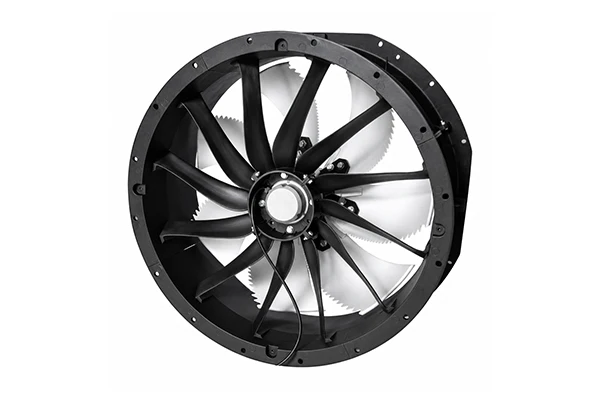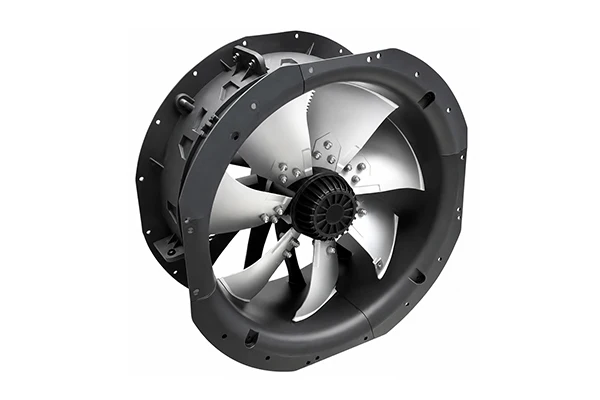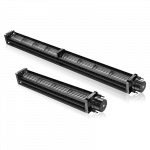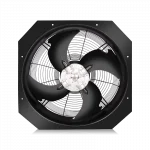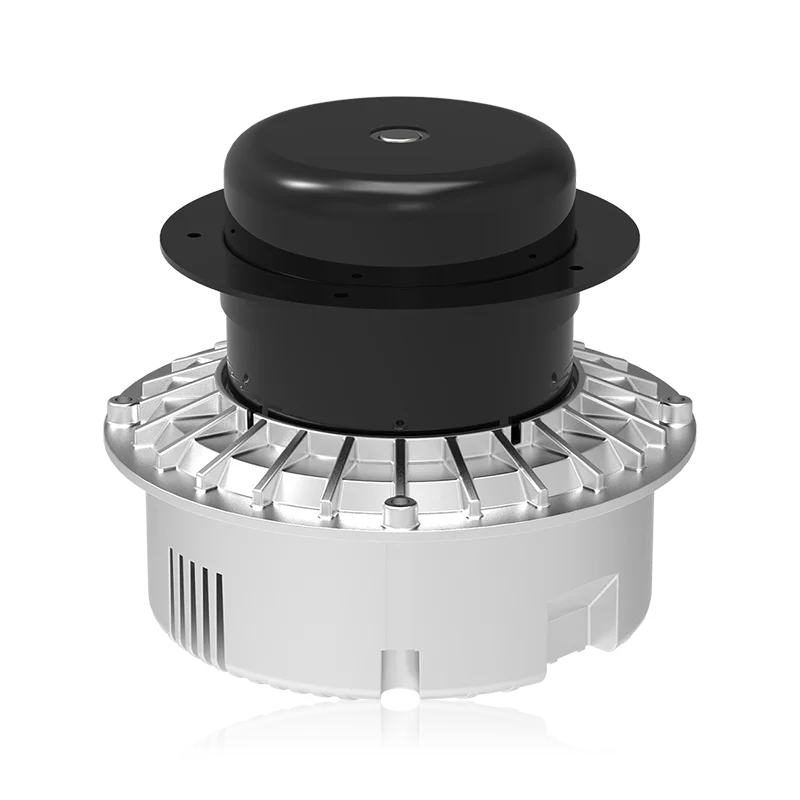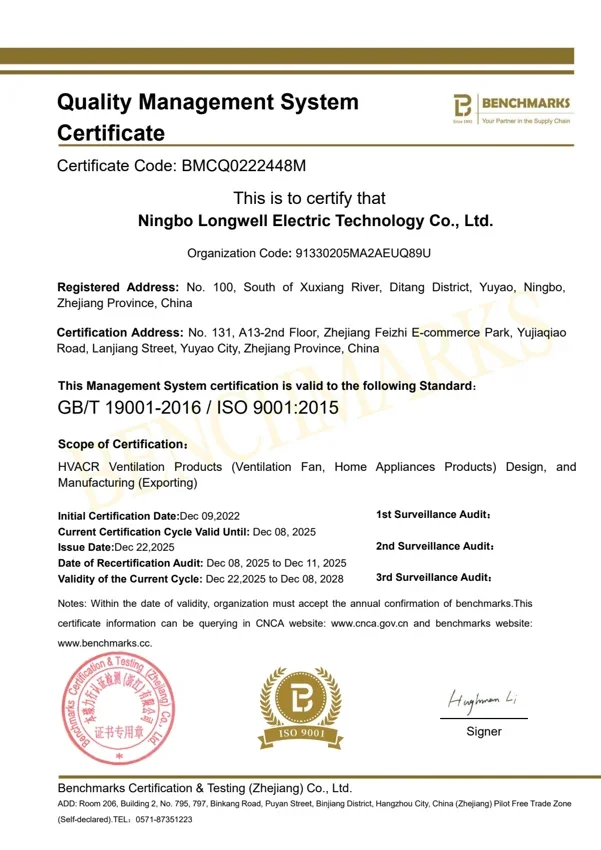
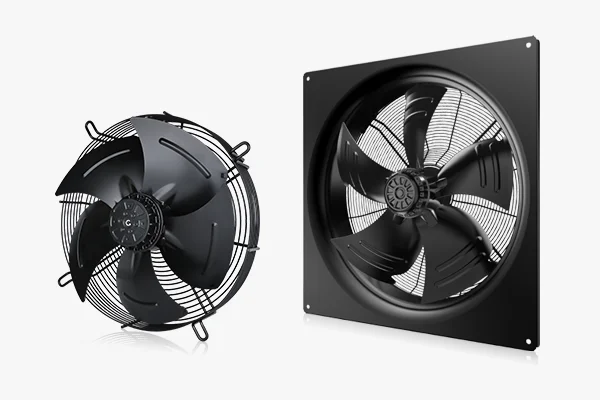
Longwell AC axial fans move large volumes of air at low pressure — straight-line airflow, direct-drive motor, no complicated ductwork needed.
Send blade diameter, airflow and voltage - an engineer replies within one working day with a matching model.
Leave your name, email and phone. Longwell can follow up for specs and model selection.
Need direct technical consultation?
Send your requirements & attachments directly to our senior sales engineers at sales@longwellfans.com.
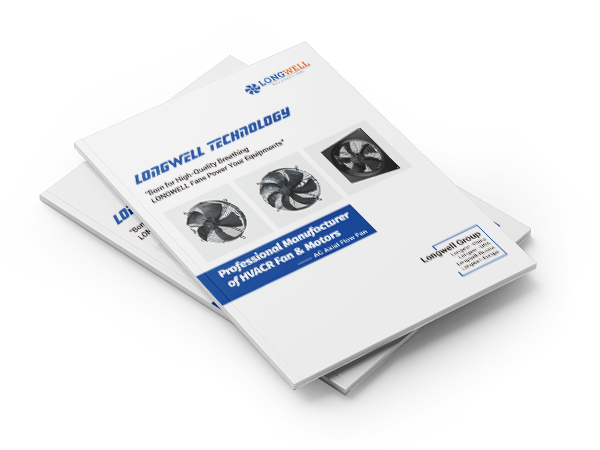
Inside these downloadable PDF brochures, you will find precise aerodynamic performance curves (PQ curves), exact dimensional drawings, wiring diagrams, and acoustic data to help you select the optimal airflow solution for your HVAC or industrial project.
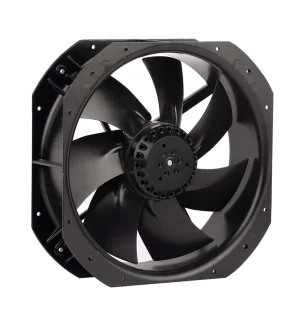
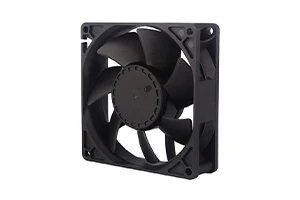
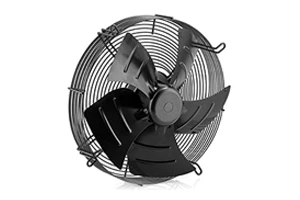
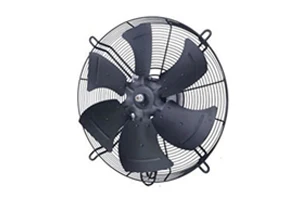
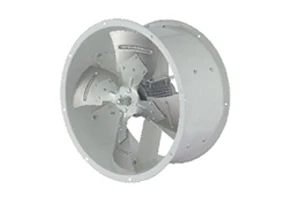
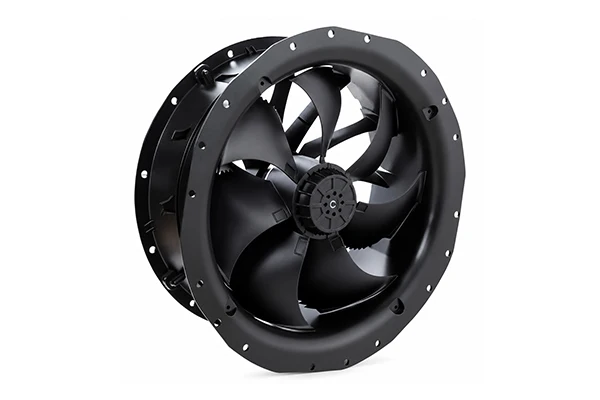
An AC axial fan is a type of axial fan where air enters and exits along the same axis as the rotating impeller. The impeller — a set of blades mounted on a central hub — spins inside a cylindrical or square housing. Air is drawn in from one side and pushed straight out the other, with no change in direction.
The motor that drives it runs on alternating current (AC) mains power: typically 115V, 230V single-phase or 380V three-phase. Unlike DC or EC fans, which require an electronic driver or rectifier circuit, an AC axial fan connects directly to line voltage. This makes it the simplest, most cost-effective way to move large volumes of air in fixed-speed applications.
– Airflow is parallel to the motor shaft
– High volume, low to medium static pressure
– Direct-drive — no belts, no pulleys, no gearbox
– Fixed speed by default (step control via tap switching or VFD on three-phase models)
– Induction motor: shaded-pole or permanent split capacitor (PSC)
– No controller required — wire to mains, it runs
Where they make sense:
When you need to move a lot of air through a short path — condenser coil, louvered wall opening, cooling tower fill, transformer radiator — an AC axial fan is usually the right first choice. The design has fewer parts than a centrifugal blower, costs less to manufacture, and tolerates dirt, heat, and moisture better than electronically-driven alternatives.
In the Longwell lineup, AC axial fans span from 25 mm micro-cooling units to 900 mm industrial workhorses, covering the full spectrum of OEM and end-user ventilation requirements.
LONGWELL 200mm AC Axial Fan, Industrial Axial Ventilation Fan, 380/400V IP44, 1009 m³/h Airflow – LWAA2D200S-7MKW-10200 mm1009 m³/h380/400 VDatasheet, curve & drawing →
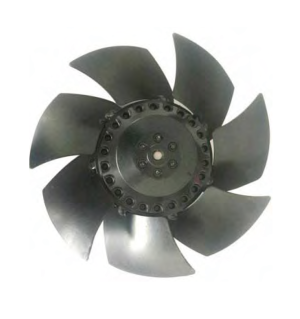
LONGWELL 200mm AC Axial Fan, Industrial Axial Ventilation Fan, 380/400V IP44, 1009 m³/h Airflow – LWAA2D200S-7MNW-02200 mm1009 m³/h380/400 VDatasheet, curve & drawing →
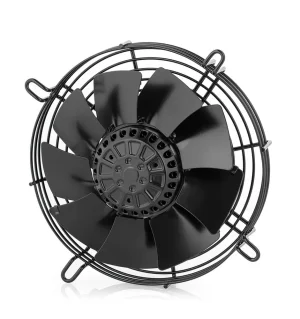
LONGWELL 200mm AC Axial Fan, Industrial Axial Ventilation Fan, 380/400V IP44, 1009 m³/h Airflow – LWAA2E200S-7MEB-04200 mm1009 m³/h380/400 VDatasheet, curve & drawing →
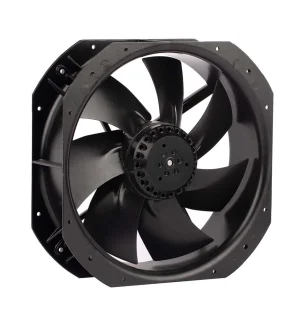
LONGWELL 200mm AC Axial Fan, Industrial Axial Ventilation Fan, 380/400V IP44, 1009 m³/h Airflow – LWAA2E200S-7MKW-08200 mm1009 m³/h380/400 VDatasheet, curve & drawing →
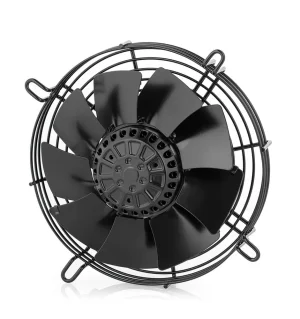
LONGWELL 200mm AC Axial Fan, Industrial Axial Ventilation Fan, 380/400V IP44, 906 m³/h Airflow – LWAA2D200S-7MEB-05200 mm906 m³/h380/400 VDatasheet, curve & drawing →
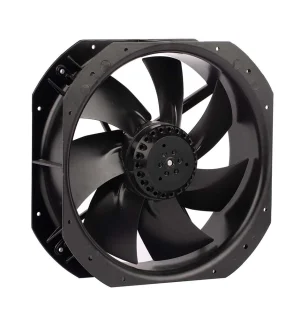
LONGWELL 200mm AC Axial Fan, Industrial Axial Ventilation Fan, 380/400V IP44, 906 m³/h Airflow – LWAA2D200S-7MKW-09200 mm906 m³/h380/400 VDatasheet, curve & drawing →
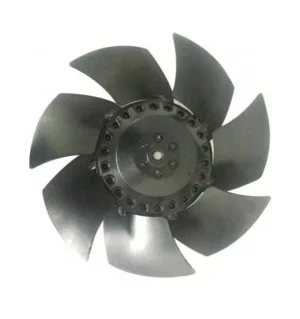
LONGWELL 200mm AC Axial Fan, Industrial Axial Ventilation Fan, 380/400V IP44, 906 m³/h Airflow – LWAA2D200S-7MNW-01200 mm906 m³/h380/400 VDatasheet, curve & drawing →
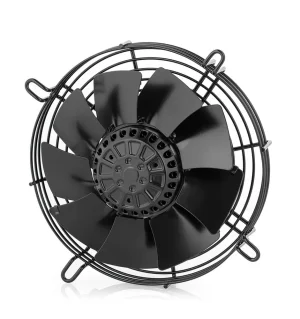
LONGWELL 200mm AC Axial Fan, Industrial Axial Ventilation Fan, 380/400V IP44, 906 m³/h Airflow – LWAA2E200S-7MEB-03200 mm906 m³/h380/400 VDatasheet, curve & drawing →
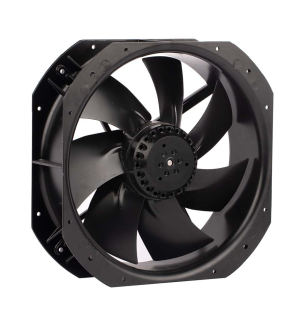
LONGWELL 200mm AC Axial Fan, Industrial Axial Ventilation Fan, 380/400V IP44, 906 m³/h Airflow – LWAA2E200S-7MKW-07200 mm906 m³/h380/400 VDatasheet, curve & drawing →
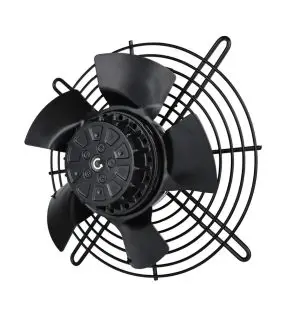
LONGWELL 200mm AC Axial Fan, Industrial Axial Ventilation Fan, for Cold Storage, Air Purifiers, HVAC SystemsView & Inquire
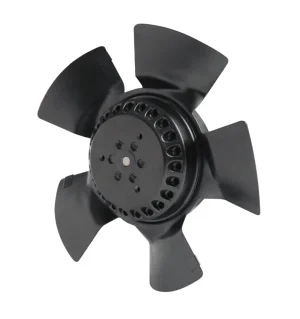
LONGWELL 230mm AC Axial Fan, Industrial Axial Ventilation Fan, 380/400V IP44, 1288 m³/h Airflow – LWAA2D230S-5MNW-01230 mm1288 m³/h380/400 VDatasheet, curve & drawing →
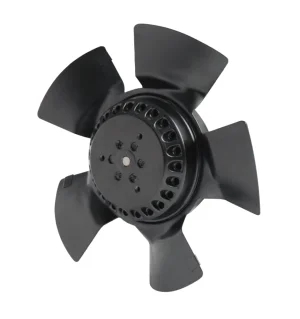
LONGWELL 230mm AC Axial Fan, Industrial Axial Ventilation Fan, 380/400V IP44, 1391 m³/h Airflow – LWAA2D230S-5MNW-02230 mm1391 m³/h380/400 VDatasheet, curve & drawing →Product certificates cover only the models listed on each document — ask which ones apply to your model. ISO certificates cover management systems, not products. Declaration of Conformity for your model and destination on request.
All document scans and what each covers →Specified and drawn by LONGWELL, built to our drawings by qualified partner factories, inspected and released to LONGWELL standards.
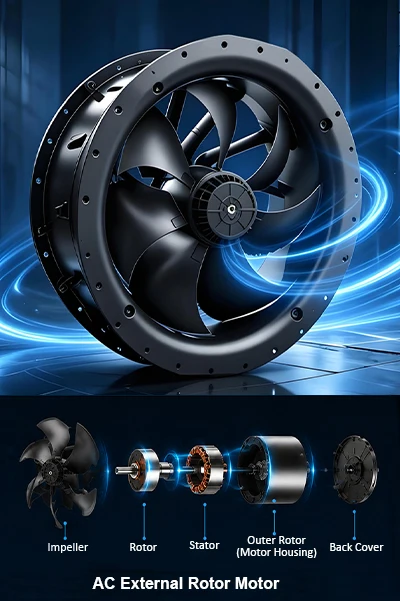
CFD-optimized 5-blade steel impeller. Higher volumetric flow at the same wattage — less tip loss, more air through the coil.
Shaded-pole & PSC motors matched to impeller load curves. Zero standby draw, low inrush. 380V three-phase models accept VFD input.
Factory-balanced to G6.3. Curved blade edges and smooth surfaces cut turbulence noise — lower sound power at blade-pass frequency.
Sealed dual ball bearings, L10 60,000 h at 60°C. Die-cast aluminum housing, Class F insulation. 1,500 VAC dielectric tested on every unit.
One-piece molded nylon or steel blades — higher pressure at lower tip speed. UV-resistant composite; stainless steel option for marine & washdown.
Standard mounting across the LWAA series — ring flange, wall plate, or cube housing. W-lead or T-terminal, tool-free access, hardware included.
These are the standard build specifications carried by every Longwell AC axial fan in the LWAA product line. Custom values can be engineered for volume OEM projects.
Not every cooling or ventilation job calls for the same motor technology. Below is a straight comparison of the three main axial fan drive types — what each one does well, where each one falls short, and which applications they’re built for. If the decision still isn’t clear, our application engineers can size a fan to your exact duty point and walk you through the trade-offs.
Feature | AC Axial Fan | DC Axial Fan | EC Axial Fan |
Power Source | AC mains: 115V / 230V / 380V | DC: 12V / 24V / 48V | AC mains (internally rectified to DC) |
Motor Type | Induction (shaded-pole, PSC) | Brushless DC (BLDC) | Electronically commutated (BLDC + integrated driver) |
Speed Control | Fixed speed. Step control via tap switching or VFD (3-phase). | Voltage or PWM. Wide range, precise. | 0–100% via 0–10V, PWM, or Modbus RTU. Built-in controller. |
Efficiency | 30–50% (motor only; system efficiency higher at duty point) | 60–75% | 75–90% |
Unit Cost | Low. No electronics. | Medium. | High. Integrated driver adds cost. |
Installation Complexity | Wire to mains. Done. | Requires DC power supply or battery. | Wire to mains. Set control signal if variable speed needed. |
Lifespan (L10) | 30,000–60,000 hours | 40,000–70,000 hours | 60,000–80,000 hours |
Noise at Full Speed | Moderate to high | Low to moderate | Lowest |
Noise at Reduced Speed | N/A (fixed speed) | Lower | Very low |
EMC / EMI | Negligible | Moderate | Requires filtering (integrated on CE/UL units) |
Operating Temp Range | −20°C to +70°C (ball bearing) | −10°C to +60°C (electronics-limited) | −20°C to +60°C (electronics-limited) |
Resilience to Harsh Environments | High. No electronics, no semiconductors. Handles dirt, moisture, heat. | Low to medium. Electronics need protection. | Medium. Driver board is the weak point. |
Best For | Fixed-speed, continuous-duty, high-temp, dirty/wet, cost-sensitive | Battery-powered, mobile, electronics cooling, compact spaces | Variable-speed, energy-regulated, smart building, low-noise mandatory |
Example Applications | Condenser, heat pump, cooling tower, transformer, industrial exhaust | Vending machine, server rack, vehicle HVAC, solar-powered ventilation | Data center containment, greenhouse, hospital HVAC, office ventilation |
1. 30+ Years on the Factory Floor
Manufacturing fans and motors since 1990 — not a trading company. We own the lines, the tooling, and the test lab. Custom voltage or modified bracket? The answer comes from an engineer on the floor, not a middleman forwarding emails. Tired of middlemen who can’t answer technical questions?
2. In-House R&D & Testing
ISO 5801 air performance chamber, motor dynamometer, environmental chamber, salt spray cabinet — all on site. Every impeller design goes through CFD simulation before a mold is cut. Prototypes tested to failure so production units don’t fail in the field. No more guessing if the fan will hold up.
3. Full Certification Portfolio
CE, UL/ETL, CCC on standard products. Factory-level: ISO 9001 (quality), ISO 14001 (environmental), BSCI (social compliance). We support RoHS, UKCA, Reach, and customer-specific audit protocols per your market. Need certs for a specific market? We handle it.
4. No MOQ on OEM Development
No MOQ on OEM development. Custom voltage, lead length, connector, or label — we’ll run a trial batch of 50 units for your engineering validation. Production ramp-up after approval. Standard lead time: 90 days from drawing sign-off. Stop fighting suppliers over minimum orders.
5. Factory-Direct, Global Logistics
Factory in China, warehousing partnerships in North America and Europe. Factory pricing with full traceability — no distributor markup. FCL, LCL, air freight, or DDP. All docs — packing list, COO, test reports, certs — provided before the container leaves. Why pay a middleman 30% for forwarding emails?
6. One Supplier, Three Motor Technologies
AC, DC, and EC axial fans under one roof. When your project grows from a fixed-speed AC fan to something needing variable speed or ultra-low noise, you don’t qualify a new vendor. Same quality system, same test standards, one technical contact.
Designed for reliable high-volume airflow across major industrial, HVAC, and refrigeration applications, ensuring robust performance under demanding operational conditions.

Warehouse air exchange, factory ventilation, parking garage CO extraction, workshop fume removal. Axial fans move high volumes through large cross-sections with minimal duct resistance — exactly what open-plan industrial spaces need.
Ventilation fans →
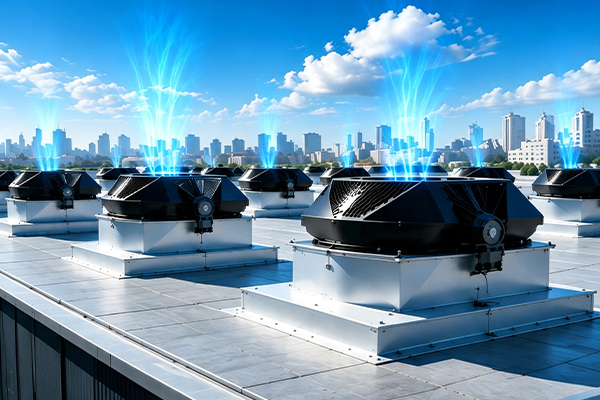
Roof-mounted exhaust for heat stratification control. Longwell axial fans operate in vertical orientation with IP54 or better sealing. Rated for continuous outdoor exposure — sun, rain, snow.
Roof fans →
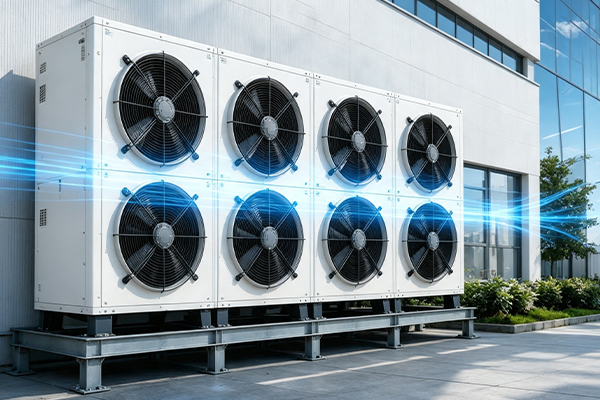
Air-cooled condensers in refrigeration systems, walk-in coolers, cold rooms, and refrigerated display cases. The LWAA platform delivers the static pressure needed to push air through tight finned-coil packs on condenser units.
Condenser fans →
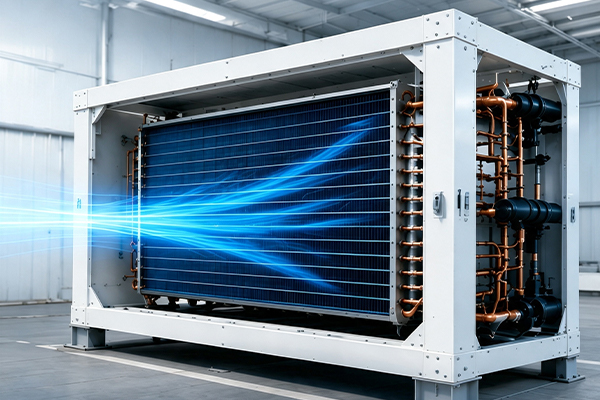
Forced-air evaporator airflow in cold storage, blast freezers, and processing rooms. Consistent airflow keeps coil temperature stable, reduces frost buildup intervals, and maintains setpoint in high door-traffic environments.
Evaporator fans →
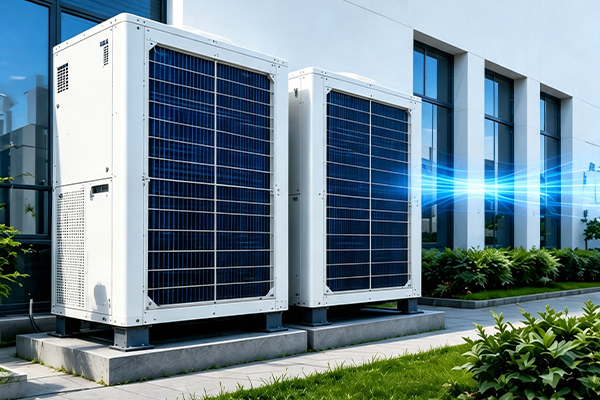
Outdoor unit condenser and evaporator airflow for air-source and water-source heat pumps. Sized to overcome coil resistance and discharge grille losses while keeping noise within residential and commercial ordinance limits.
Heat pump fans →
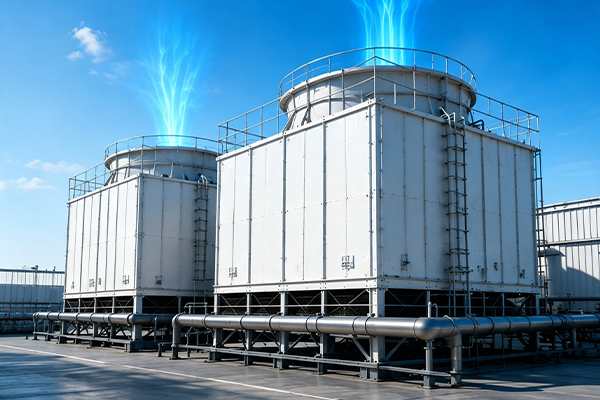
Forced-draft and induced-draft cooling tower ventilation. LWAA-630 and LWAA-800 models deliver the airflow and pressure head needed for tower fill resistance, drift eliminators, and discharge louvers. Corrosion-resistant options for treated water environments.
Cooling tower fans →An AC axial fan moves air parallel to the motor shaft — straight through, inlet to outlet on the same axis. It produces high airflow at low to medium static pressure. A centrifugal blower turns the airflow 90 degrees — air enters at the center and exits radially. Centrifugal blowers generate higher pressure but lower airflow for the same frame size.
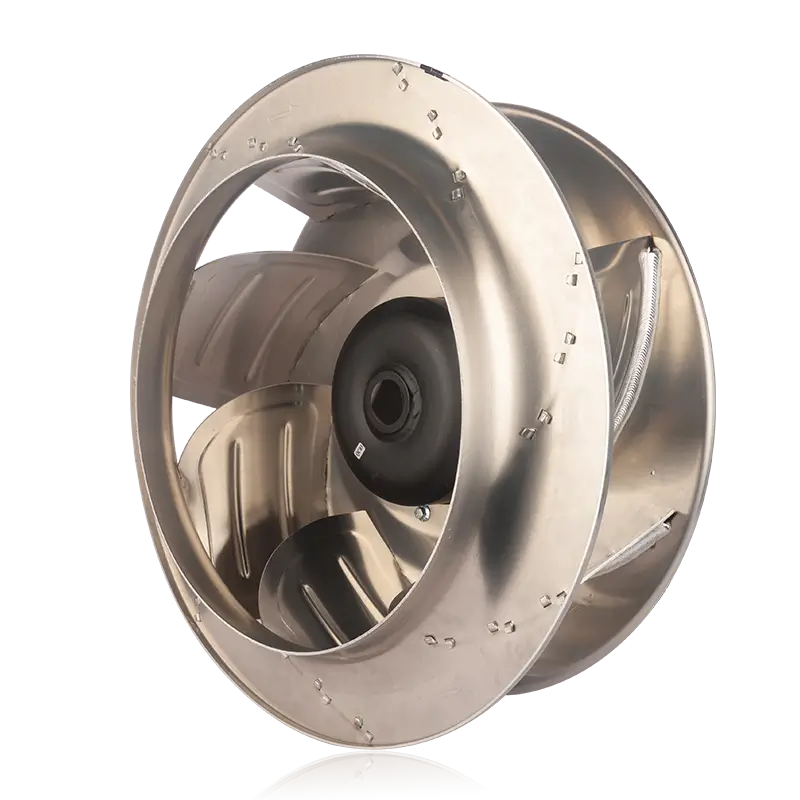
Rule of thumb: if the air path is short and open (through a condenser coil, across a louver, out a wall opening), use an axial fan. If you are pushing air through long ductwork, filters, or tight heat exchangers, use a centrifugal blower.
Longwell makes both. If you’re not sure which one your application needs, send us the airflow (m³/h or CFM) and static pressure (Pa or inH₂O) at your operating point, and we’ll recommend the right fan type and size.
Single-phase AC axial fans are fixed-speed by design — the motor speed is locked to the line frequency (50 or 60 Hz). You can step the speed down using a tap-switching autotransformer or a triac-based speed controller, but the control range is limited and motor efficiency drops off below 60-70% of rated speed.
Three-phase 380V models can accept a variable frequency drive (VFD) input. This gives you true variable speed control across a wide range without sacrificing motor efficiency. If you need stepless, wide-range speed control, we recommend looking at our EC axial fan series — electronically commutated motors with built-in 0-100% speed control via 0-10V or PWM signal.
Tell us your speed range requirement and we’ll point you to the right motor platform.
IP54 is the minimum for outdoor use — it protects against dust ingress in harmful quantities and splashing water from any direction. This is the standard rating on most Longwell industrial axial fans.
For rooftop units exposed to driving rain, or for washdown areas in food processing plants, we recommend IP55 — adds protection against water jets.
For marine environments, coastal installations, or chemical plant service, specify IP66 and stainless steel blades and fasteners. We have done this configuration for data center condenser yards in the Middle East and offshore platform ventilation in Southeast Asia.
IP68 (submersion-rated) is available as an engineered-to-order option for specialized applications.
Standard catalog models — 2 to 4 weeks from order confirmation, depending on order volume and current production schedule.
Custom-engineered variants (modified voltage, blade material, connector, or mounting) — 90 days from drawing approval. This includes tooling modification (if needed), prototype build, in-house testing, and customer sample approval.
Large OEM blanket orders — lead time and delivery schedule are agreed upon during the contract phase. We build to a rolling forecast and hold safety stock of long-lead components (motor laminations, bearing sets, aluminum housing castings) to buffer against supply chain disruptions.
For current lead times on a specific model and quantity, contact our sales team with the part number and annual volume estimate.
Yes. We ship evaluation samples — typically 2 to 5 units — for customer testing and approval. Standard catalog models ship from stock within 1 week. Custom variants require tooling setup and prototype build before samples are available (see lead time in FAQ 4).
Sample policy: sample unit cost is charged at the quoted unit price plus freight. The sample cost is credited against your first production order of 500 units or more.
All samples ship with a full test report: airflow curve (Pa vs. m³/h), power consumption at rated voltage, noise level (dB(A) at 1 m), vibration grade, and insulation resistance test. What you test in your lab is what you get in production.
Leave your requirements and our team will respond within 1 business day.
Fill in the form — your download starts immediately.
* Your information is only used for catalog delivery and professional support.