
Fan selection for roof-mounted building exhaust
Define the extracted air, duct resistance and roof arrangement before choosing a fan format. The installation needs a workable curb connection, discharge direction, weather protection and service route. Bring airflow, sound, electrical supply and control requirements together with the building ventilation brief for the proposed unit.
Review the fan and the roof unit separately
A fan component becomes part of a roof-mounted exhaust assembly with its own housing, curb, dampers and weather details. Use the required airflow and complete system resistance to compare candidates, then review the installation and extracted medium with the equipment and building-system designers.
Define the exhaust-system duty
Provide the airflow required at each operating mode and the losses through grilles, ducts, dampers and discharge fittings. Describe the air being extracted, including temperature and contaminants. Keep ordinary building exhaust separate from grease, corrosive process air or smoke-control duties that need their own equipment specification.
- Airflow and complete system pressure
- Extracted-air temperature and contaminants
- Intended building ventilation modes
Resolve the roof and discharge interface
Show the curb or roof opening, fan position and discharge direction. Include access for lifting, inspection and replacement, plus the proposed weather-entry protection. Review how inlet transitions and nearby structures affect the air path, and coordinate structural supports with the party responsible for the roof assembly.
- Curb, opening and support drawing
- Horizontal or vertical discharge path
- Weather details and maintenance access
Agree controls and installed sound
Confirm the supply, speed command and any damper or building-control interlock. State the required sound assessment positions and operating speeds, considering nearby occupied spaces. Include start-up, shutoff and any backdraft-control arrangement in the unit review so the final assembly can be commissioned against an agreed schedule.
- Building-control and damper sequence
- Sound positions and operating speeds
- Electrical isolation and service requirements
Match the fan family to the equipment.
Compare the proposed model at the required airflow and pressure, then check the installation and control interface.
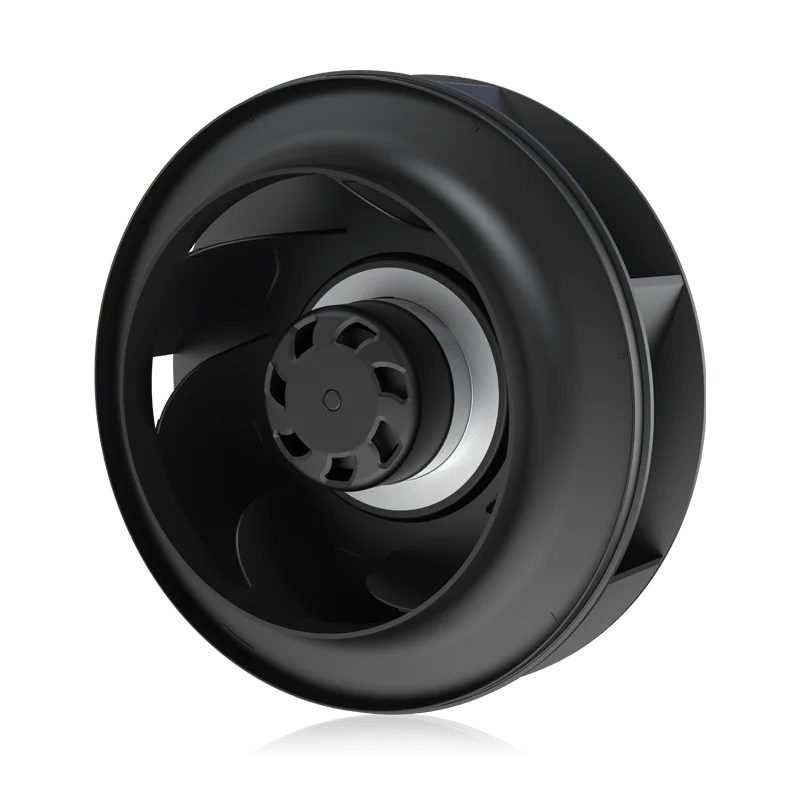
Backward-curved centrifugal fans
Review centrifugal formats for roof units with defined duct resistance and inlet geometry. The fan component must be integrated with the specified housing and roof connection.
Explore this fan family →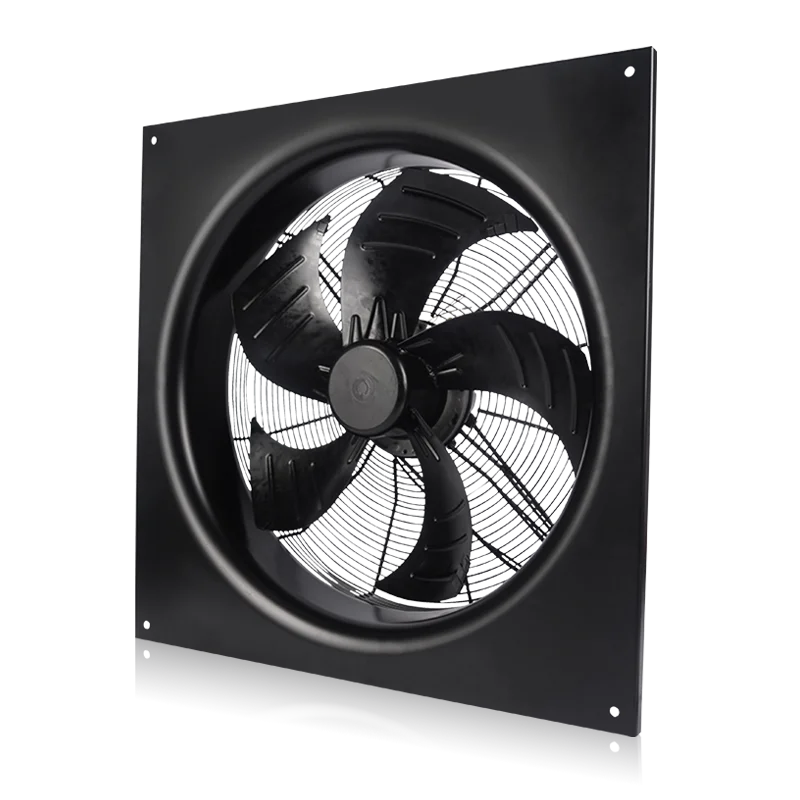
EC axial fan configurations
Review axial configurations for roof-exhaust layouts that suit their pressure-flow duty and mounting. Confirm the complete unit’s discharge, weather and maintenance arrangements.
Explore this fan family →Product images show family configurations. Request the drawing, curve and electrical information for the exact model being considered.
What should your fan enquiry include?
Share these application details so the fan proposal can be reviewed against your equipment.
Bring the equipment context to the fan review.
A drawing, the operating condition and a clear control requirement make the proposed configuration easier to compare. For a replacement, include the existing nameplate and wiring details.
Discuss your application →Reference material for the next step.
Use the series information to narrow the mechanical format; confirm inlet conditions, controls and the proposed model performance separately.
Series catalog · PDFEC axial fans ↗Compare the axial series and installation dimensions before requesting operating-point, electrical and environmental data for the selected configuration.
Engineering checklistFan replacement: fit and controls ↗Check operating duty, mounting, supply, wiring and control behaviour before treating an existing fan and a proposed replacement as interchangeable.
Catalogs support initial selection. Confirm the current specification and approved configuration with the project team.
Is a general roof-exhaust fan suitable for smoke extraction?
Treat smoke extraction as a separate duty with its own equipment and documentation requirements. This page covers selection inputs for ordinary roof exhaust. A general fan category, product photograph or standard catalog does not establish suitability for a smoke-control installation.
Can a replacement be selected from the roof opening size?
The opening is one mechanical constraint. Also compare airflow at system pressure, inlet and discharge geometry, supply, controls, sound and the service arrangement. Review the full roof-unit configuration so a mechanically fitting fan is not mistaken for an equivalent operating replacement.
Continue with the equipment you are designing.
Share your equipment and operating conditions.
Send the drawing, target duty and project timing. Add the existing fan details when you need a replacement.