
Ventilation for Electrical Rooms, Substations and Pump Rooms
Switchgear, transformers, drives, UPS systems and pumps all release heat inside closed plant rooms. If the room gets too hot, equipment is derated, insulation ages faster and protective devices may trip. Some rooms have extra hazards: battery rooms can release hydrogen during charging, and pump rooms are often humid. Mechanical ventilation removes heat and moisture and keeps hazardous gases diluted.
LONGWELL supplies wall, corner, axial and duct fans for electrical plant rooms, substations, pump stations and battery rooms, through electrical contractors and equipment builders.
Room types and fan choice
| Room | Main concern | Typical fan |
|---|---|---|
| Switchgear / LV-MV electrical room | Heat from switchgear, drives, UPS | Sidewall or corner exhaust fans with weather hood and filtered inlet |
| Indoor substation / transformer room | Transformer losses; large heat load | Large axial fans, high exhaust + low inlet |
| Pump room / lift station | Motor heat, humidity, odour | Wall exhaust or duct fans; corrosion-resistant options |
| Battery room | Heat and hydrogen during charging | Exhaust at the high point; explosion-protected fan where the hazard assessment requires it |
How to size the ventilation
1. Heat load
Add the losses of transformers, drives, UPS and other equipment, using manufacturer data.
2. Temperature limit
Take the maximum room temperature allowed by the equipment and subtract the design outdoor temperature.
3. Airflow
Required airflow (m³/h) ≈ 3.1 × heat load (W) ÷ temperature rise (K). Add margin for filter loading and future equipment.
4. Battery rooms
Follow the battery manufacturer’s data and applicable standards for the hydrogen ventilation rate. Exhaust from the highest point; where the hazardous-area assessment requires it, use an explosion-protected fan.
5. Inlet, weather and dust
Provide filtered, weather-protected inlets low on the opposite wall, and keep rain and dust out of the electrical room.
LONGWELL fans for plant rooms
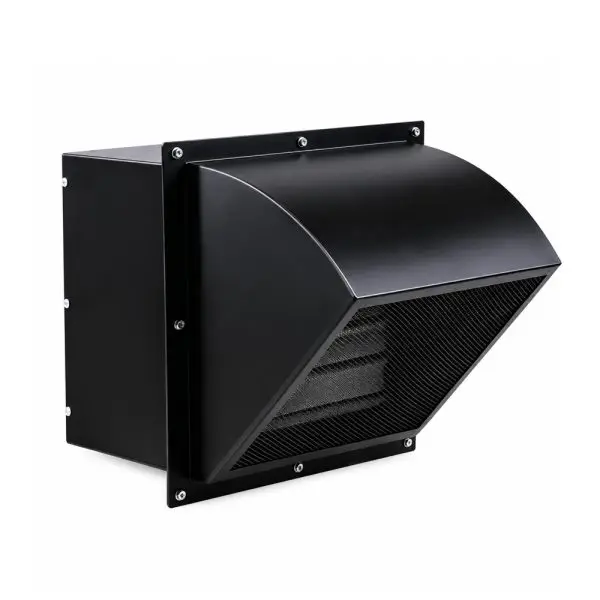
- LWWEX-OR corner exhaust fans: 9 sizes from 200 to 600 mm, up to 13,000 m³/h, external-rotor direct-drive motor, integrated weather hood with rain and insect protection.
- LWWEXD sidewall exhaust fans: 400–900 mm with rain deflector and insect screen; supply and corrosion-resistant versions available.
- LWAF35-11 axial fans: 293–1,140 mm, up to 61,000 m³/h, for large transformer and substation rooms.
- LWSJG mixed-flow duct fans: 200–800 mm, up to 23,700 m³/h, where exhaust must be ducted.
- Explosion-proof fans (EX series) for battery rooms and other hazardous areas.
Product pages: LWWEX-OR corner exhaust · LWAF35-11 axial · LWSJG mixed-flow duct fan · EX-WF explosion-proof exhaust
Related: generator-room ventilation · dry-type transformer cooling · battery energy storage
What to include in your enquiry
- Room type and size; equipment and heat losses
- Maximum allowed room temperature; design outdoor temperature
- Wall or duct installation; available openings
- Hazards: hydrogen, humidity, corrosive air
- Voltage and phase; quantity
Send your plant-room requirements →
FAQ
How do I calculate ventilation for a switchgear room?
Airflow (m³/h) ≈ 3.1 × equipment heat loss (W) ÷ allowed temperature rise (K). Then choose fans and inlet area for that airflow, with margin.
Where should the exhaust fan go in a transformer room?
High on the wall or roof, with inlets low on the opposite side, so cool air sweeps past the transformer and hot air leaves at the top.
Does a battery room need an explosion-proof fan?
It depends on the battery type, charging and the hazardous-area assessment. Where hydrogen could reach a flammable concentration near the fan, use an explosion-protected fan.
Can the fans be used outdoors on substation walls?
Yes. LWWEX-OR corner fans have an integrated weather hood, and LWWEXD sidewall fans come with rain deflectors and insect screens.