
Fans for Auxiliary Medical-Equipment Control Electronics
Control electronics in medical equipment can require airflow through compact enclosures during repeated operation and standby. Define those heat losses and the available air path before selecting a fan. This page covers auxiliary electronics cooling, with motion, patient-support and therapeutic functions evaluated separately by the equipment manufacturer.
Review the controller enclosure through its operating cycle
A control cabinet or power module may sit near sensitive instruments, positioning hardware or other equipment functions. Its fan selection should address thermal limits, mechanical integration and electrical feedback. The proposal remains a component review and does not establish the performance or conformity of the complete medical equipment.
Define controller and power-module losses
Provide the enclosure’s control-board and power-supply losses during active operation, repeated movements where relevant, and standby. Identify component temperature limits and the available ambient range. Use this electronics cooling requirement independently of the equipment’s positioning, load-support or therapeutic output specifications.
- Active and standby electronics losses
- Component temperatures and local ambient range
- Separate cooling and equipment-function requirements
Fit airflow around sensitive assemblies
Show filters, internal partitions, cable bundles and nearby vibration-sensitive hardware. Review inlet and outlet clearance with the installed equipment layout. Define how sound and vibration will be assessed at relevant operating states, and provide the cleaning conditions for the fan’s actual enclosure location.
- Enclosure restrictions and cable arrangement
- Sensitive components and mounting conditions
- Acoustic, vibration and cleaning requirements
Confirm interfaces and loss-of-cooling behavior
Specify the fan supply and command signals separately from motion-control connections. Agree whether the equipment requires rotation feedback or a fault output and how that information is handled. Evaluate the chosen fan under the equipment manufacturer’s thermal and fault-test plan, keeping the exact component version traceable.
- Fan power and command-signal definition
- Rotation feedback or alarm behavior
- Equipment thermal and fault verification plan
Match the fan family to the equipment.
Compare the proposed model at the required airflow and pressure, then check the installation and control interface.
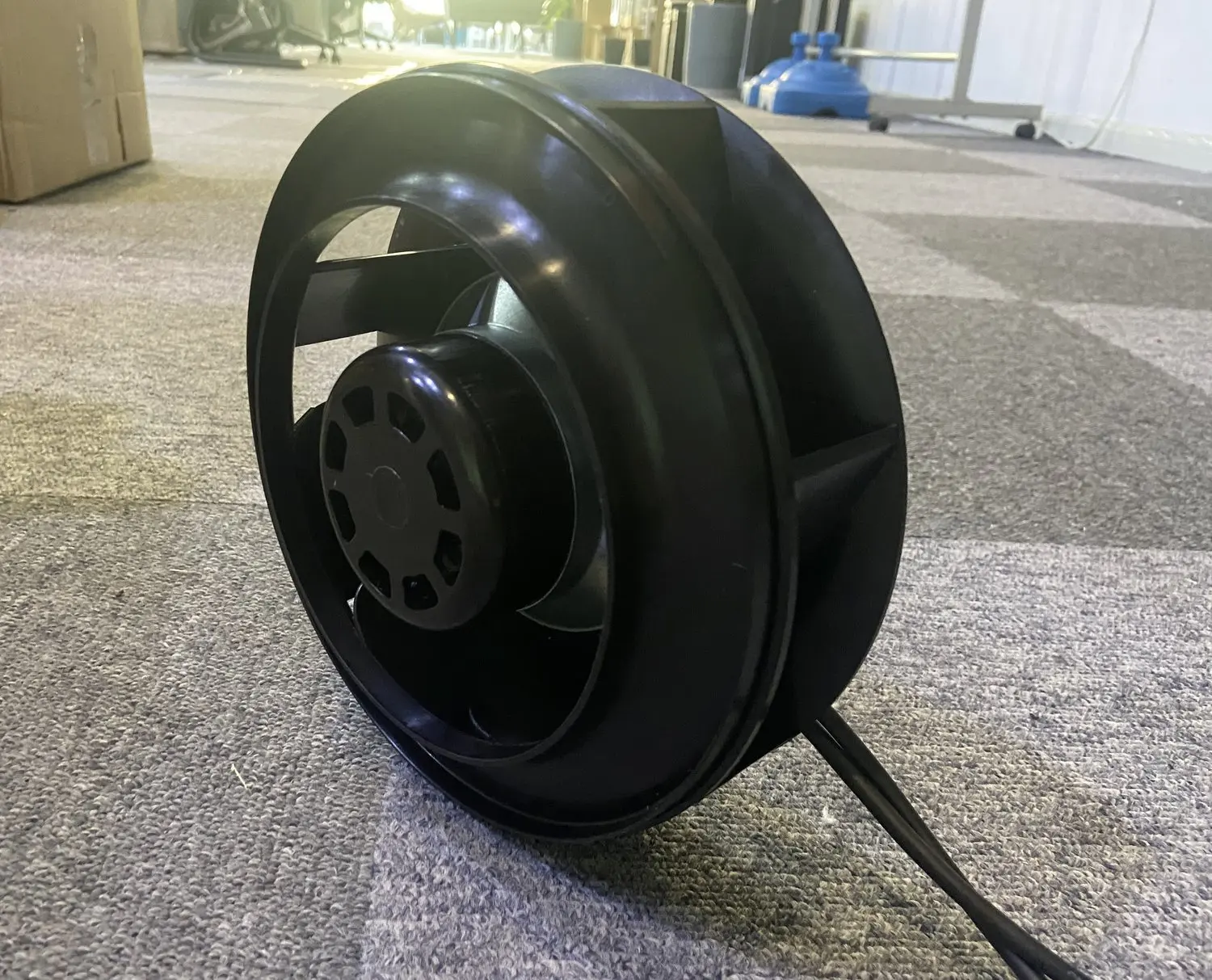
Backward-curved centrifugal fans
Review compact centrifugal formats for restricted control-enclosure air paths. Confirm mounting, inlet clearance and vibration behavior within the equipment manufacturer’s proposed configuration.
Explore this fan family →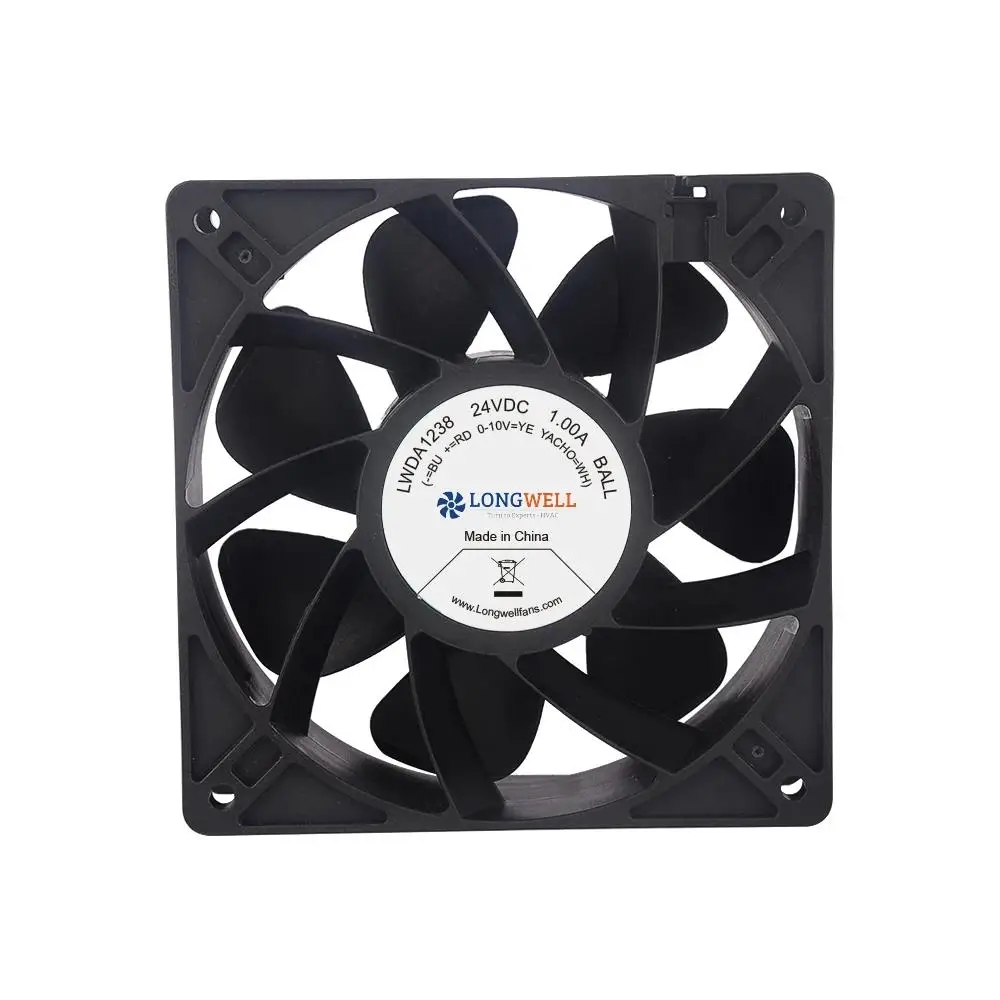
Compact DC axial fans
Review compact DC axial formats for auxiliary control boards and power modules. Match supply, connector and feedback requirements before the equipment-level thermal evaluation.
Explore this fan family →Product images show family configurations. Request the drawing, curve and electrical information for the exact model being considered.
What should your fan enquiry include?
Share these application details so the fan proposal can be reviewed against your equipment.
Bring the equipment context to the fan review.
A drawing, the operating condition and a clear control requirement make the proposed configuration easier to compare. For a replacement, include the existing nameplate and wiring details.
Discuss your application →Reference material for the next step.
Compare compact fan formats and obtain the exact electrical and connection information needed for the auxiliary controller enclosure.
Engineering checklistFan replacement and controls checklist ↗Document dimensions, wiring and feedback before replacing an auxiliary fan; equipment qualification and fault evaluation remain configuration-specific.
Catalogs support initial selection. Confirm the current specification and approved configuration with the project team.
Does the cooling fan provide positioning or motion control?
The fan removes heat from the specified electronics air path. Positioning, load support, braking and therapeutic functions belong to the equipment design. Define any monitoring connection clearly, and assess loss-of-cooling behavior without treating the fan as the actuator or motion-control component.
Can a replacement be approved from size and voltage alone?
Size and voltage are only part of the assessment. Confirm the air-path operating point, connector pinout, control and feedback behavior, mounting, materials and acoustic requirements. The equipment manufacturer should evaluate the exact replacement configuration within its existing thermal and fault-verification process.
Continue with the equipment you are designing.
Share your equipment and operating conditions.
Send the drawing, target duty and project timing. Add the existing fan details when you need a replacement.