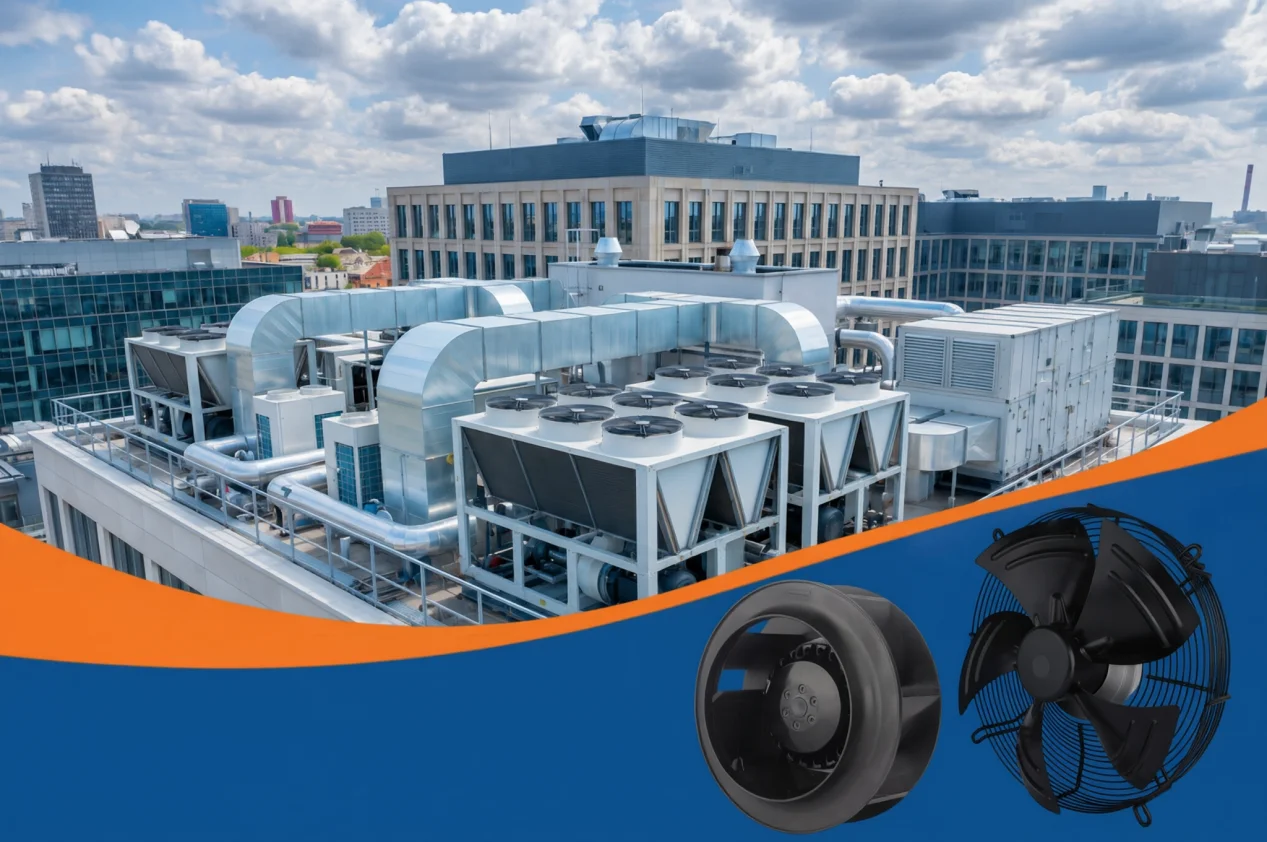
When talking about HVAC, air conditioning is mostly considered. However, the ducts play a crucial role in the performance of HVAC systems. They directly influence the ability of the system to distribute air to every corner of a building, making the optimization of airflow a primary focus for system design. How to increase airflow in ductwork becomes the main focus for designing HVAC systems. In this blog, we will discuss the causes of low airflow in ductwork and the solutions. Additionally, we will explore LONGWELL high-airflow engineering solutions and recommended specs.
Key Factors That Affect Duct Airflow
Duct Size
The size of the duct is not necessarily larger is better. Undersized duct will restrict the airflow, when oversized duct can cause airflow reducing. Duct size should be matched with the system requirements and fan performance curves.
Duct Shape
Duct shape will result in different friction and air velocity. Common duct shapes are circular and rectangular. The circular ducts are better at achieving smooth airflow and a lower noise level. The circular ducts are generally considered more efficient because they provide a continuous surface. This shape allows air to flow more smoothly with lower friction losses. Rectangular ducts tend to create higher resistance, while they are more space-efficient for architectural integration.
Duct Accessories
The duct accessories includes elbows, transitions, end caps, etc. Each accessories introduces local pressure losses due to changes i airflow direction or separation. Among these, sharp elbows and abrupt transitions typically create the highest level of turbulence and energy loss.
Ductwork Airflow Issues
Increasing Friction
Increasing friction is one of the most direct causes of airflow loss in duct systems. As air moves through the duct, friction is generated between the airflow and the internal duct surface. When the resistance increases, the system experiences a higher pressure decrease. It forces the fan to operate under greater load and shifts the system away from its optimal operating point.
Key factors that contribute to higher friction include:
- In long ducts, the airflow will generate the friction losses, which accumulated wall resistance.
- The undersized ducts are more easily to generate high airflow velocity.
- The rough internal duct surfaces impede smooth air passage.
- Multiple bends and directional changes disturb the airflow and will cause turbulence.
Air Leakage
Air leakage refers to unintended air loss from accessories or poorly sealed sections of the duct system. It can cause uneven air distribution and reduce the overall system efficiency. When air leakage occurs, a portion of airflow is lost before reaching the intended outlet. Therefore, a higher output used for compensation is required, leading to higher energy consumption.
Dirty Ducts
Dirty ducts are dust or particles accumulated inside the duct system. The effective cross-sectional area is reduced and surface roughness increases as contaminants build up on internal duct surfaces. This leads to higher friction losses within the system.
Common causes include:
- Lack of regular filter replacement
- High-dust operating environments
- Inadequate system cleaning cycles
4 Tips for Improving Airflow
Improving airflow in duct systems is a system-level approach. The improvement should not focus on a single point of failure. The performance optimization need to consider the entire airflow path from the beginning fans to the terminal outlets.
1. Optimize Duct Design
The duct system is the primary path for airflow. Poor design leads to high pressure drop and unnecessary energy waste. In the design stage, try to shorten the path and avoid sharp 90-degree elbows.
In practical engineering, duct sizing should be carefully matched to the required airflow. The small duct will increase the airflow velocity, resulting in higher friction losses and noise. When the duct is too large, velocity drops and weakens system efficiency.
2. Inspect Ductwork
Over time, the duct system gradually degrades. Small issues such as minor leakage or partial blockages can significantly affect the whole system’s efficiency. Without regular inspection, small issues are often difficult to detect.
The regular maintenance includes inspecting for signs of leak in the duct. Loose connections, damaged seals, or deteriorated ductwork result in duct leaks. Using appropriate duct sealants or finding a professional team for systematic maintenance.
Alternatively, through preventive maintenance, regular inspections can be conducted on components. Change the inefficient components before major problems occur.
3. Clean the Air Filters
Filters are easy to be clogged due to the accumulation of dust, or other airborne particles. As the barrier between the external environment ad the duct system, the air filters are one of the most common sources of airflow restriction.
As dust and particles accumulate on the filter surface, airflow resistance increases and system pressure drops. This forces the fan to work harder when maintaining the same airflow output. The fan’s overall efficiency decreases and energy consumption increases.
Making regular replacements or cleaning is a critical part of ductwork system maintenance. A well-maintained filtration system ensures smoother airflow and more stable long-term performance.
4. Choosing the Right Fan
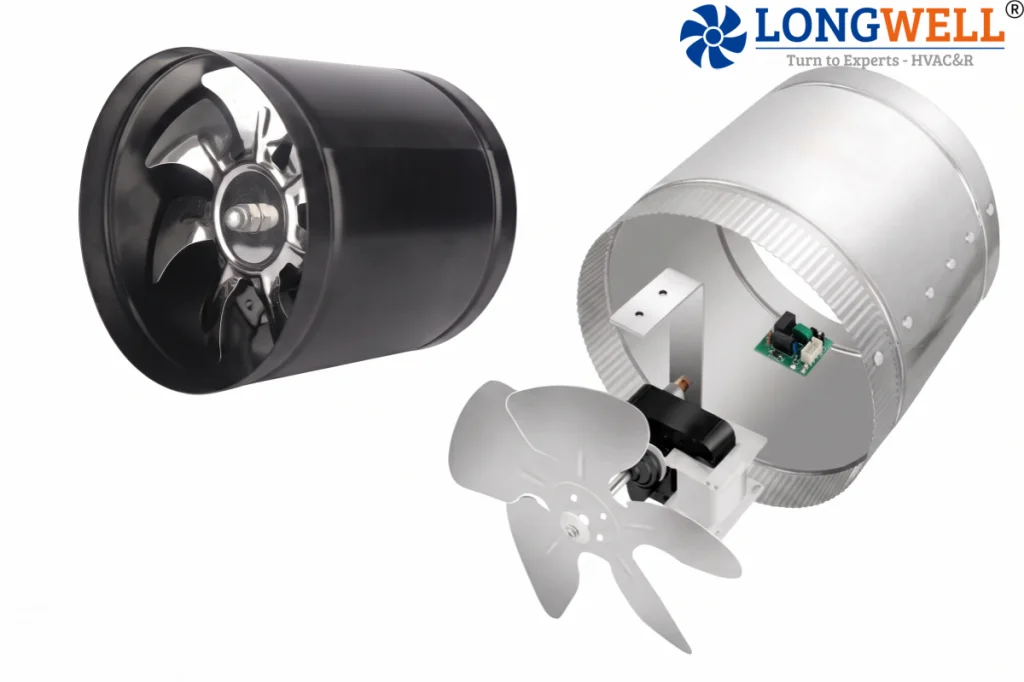
Selecting the right fan for an HVAC system is critical. Incorrect fan selection can lead to insufficient airflow and high energy consumption. In some duct applications, the standard fan design may not be able to overcome the total system pressure loss. A duct fan booster can be introduced to support certain areas of low airflow. It is typically installed within the duct line to increase static pressure and airflow. It is particularly useful in systems where airflow drops significantly at terminal points due to long duct runs or friction losses.
Duct Maintenance Checklist
| Tasks | |
| 1 | Check, clean or replace the air filter every month. |
| 2 | Regularly inspect the duct connections for sealing problems. |
| 3 | Check the visible ducts for physical damages. |
| 4 | Measure the static pressure of supply and return vents. If the static pressure is too higher that the design specification, it may because of leakage or restriction. |
| 5 | Keep the surrounded environment clean, reducing the chance of dust entering the air duct system. |
| 6 | Turn to a professional team when you find out: a continuous air volume issue, abnormal system noise or vibration, or an abnormal increase in energy efficiency. |
LONGWELL Project Case
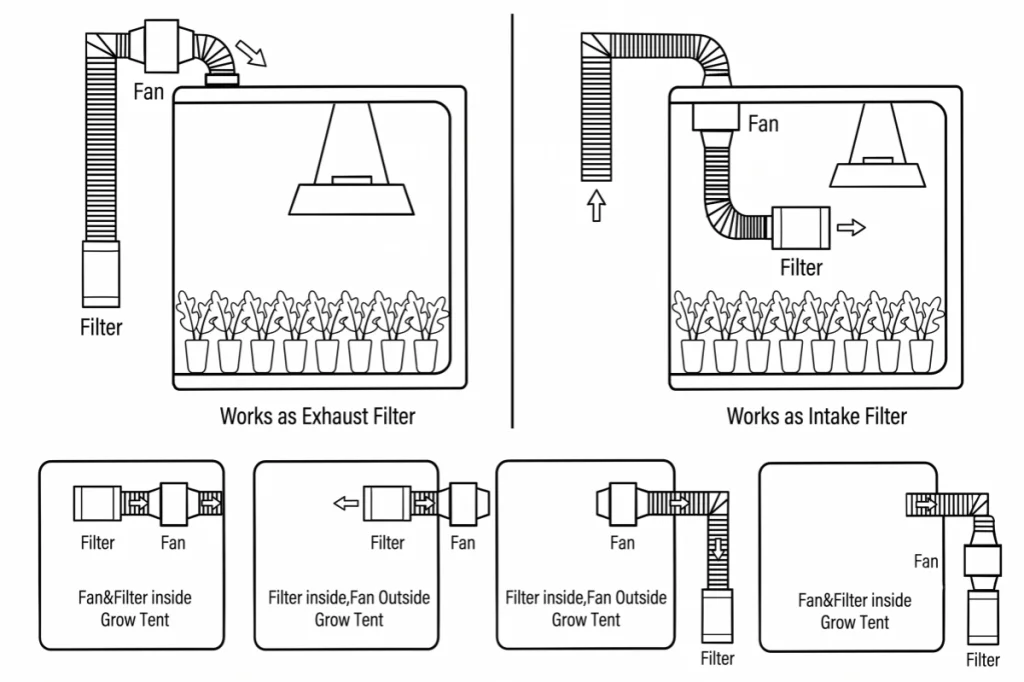
In LONGWELL grow tent ventilation project, increasing airflow within the duct system was achieved. The client required a stable and adjustable airflow solution with low noise and energy efficiency.
LONGWELL’s Solution:
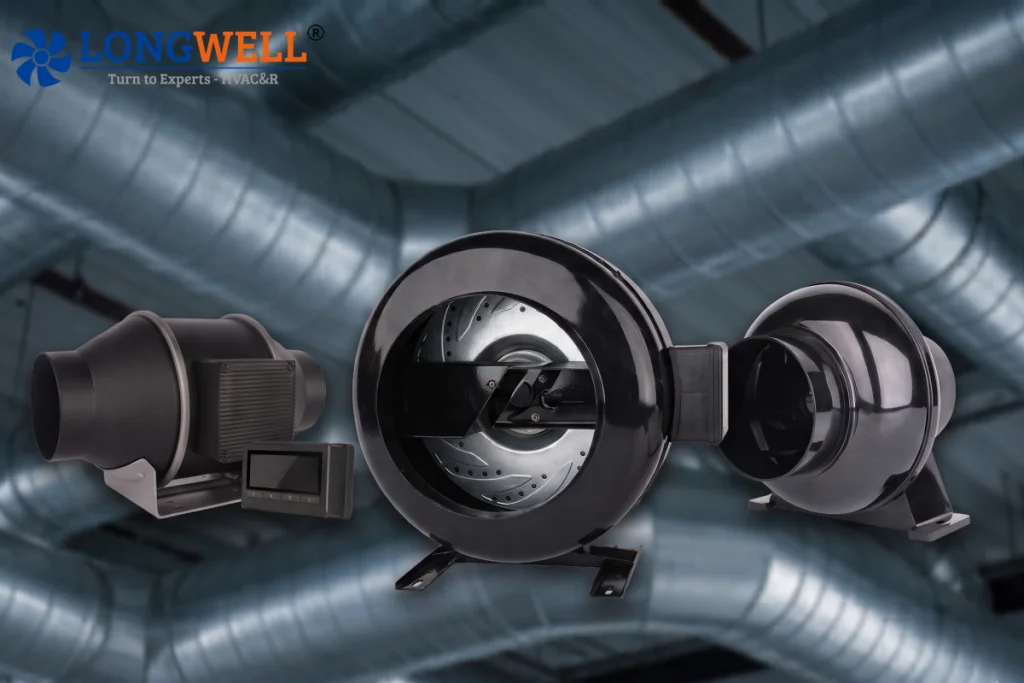
We implemented our LWDE3G series EC Motor Inline Duct Fans equipped with intelligent control, tailored to the specific needs of indoor agriculture.
- Mixed Flow Design: We offered 6 inches and 8 inches models to create a mix flow design.
- Intelligent Control System: The duct fans utilize PWM-controlled EC motors that allow for precise speed adjustments. The user can easily adjust fan speed, which matched the grow tents’ specific ventilation needs.
- Quiet with High Efficiency: Both models deliver powerful airflow. 415 CFM for the 6-inch model and 855 CFM for the 8-inch model, while maintaining noise levels as low as 34 dBA and 51 dBA, respectively.
- Easy Installation: The model is compact and can be mounted in any direction to accommodate various grow tent configuration.
LONGWELL Strong Airflow Specs
LONGWELL produces strong airflow fans. In this chapter, we will introduce three key specs. For LONGWELL fans with EC motors, we provide 0-10V control or PWM control.
LWDE3G Series Inline Duct Fans
This series of duct fans uses PP pure engineering polymer composite raw material, which is anti-aging and corrosion-resistant. These duct fans offer 4 impeller diameters ranging from Ø100mm to Ø200mm. The product features large air volume, high efficiency, low energy consumption, and low noise. Its unique clamp design makes it easier to assemble. The following table shows the detailed parameters of LONGWELL’s LWDE3G series inline duct fans.
| Model | Power (W) | Air Flow (CFM) | Pressure (Pa) |
| LWDE3G100-IS-05 | 35 | 212 | 260 |
| LWDE3G125-IS-01 | 35 | 245 | 275 |
| LWDE3G150-IS-05 | 70 | 402 | 450 |
| LWDE3G200-IS-05 | 180 | 830 | 720 |
LWAE3G Series Axial Fan
Available in 13 impeller diameters ranging from Ø200 mm to Ø900 mm, with maximum airflow reaching up to 32,313 m³/h. The axial fan with metal blades will generate higher airflow volume compared to plastic blades.
Specific airflow ranges by size:
- Ø200mm: 886-1,391 m³/h
- Ø500mm: 6,971-10,605 m³/h
- Ø900mm: 32,192-32,313m³/h
This series of axial fans are ideal for ductwork like data center CRAH, commercial heat pumps, and cold storage dry coolers.
LWBE3G Series Backward-Curved Centrifugal Fan
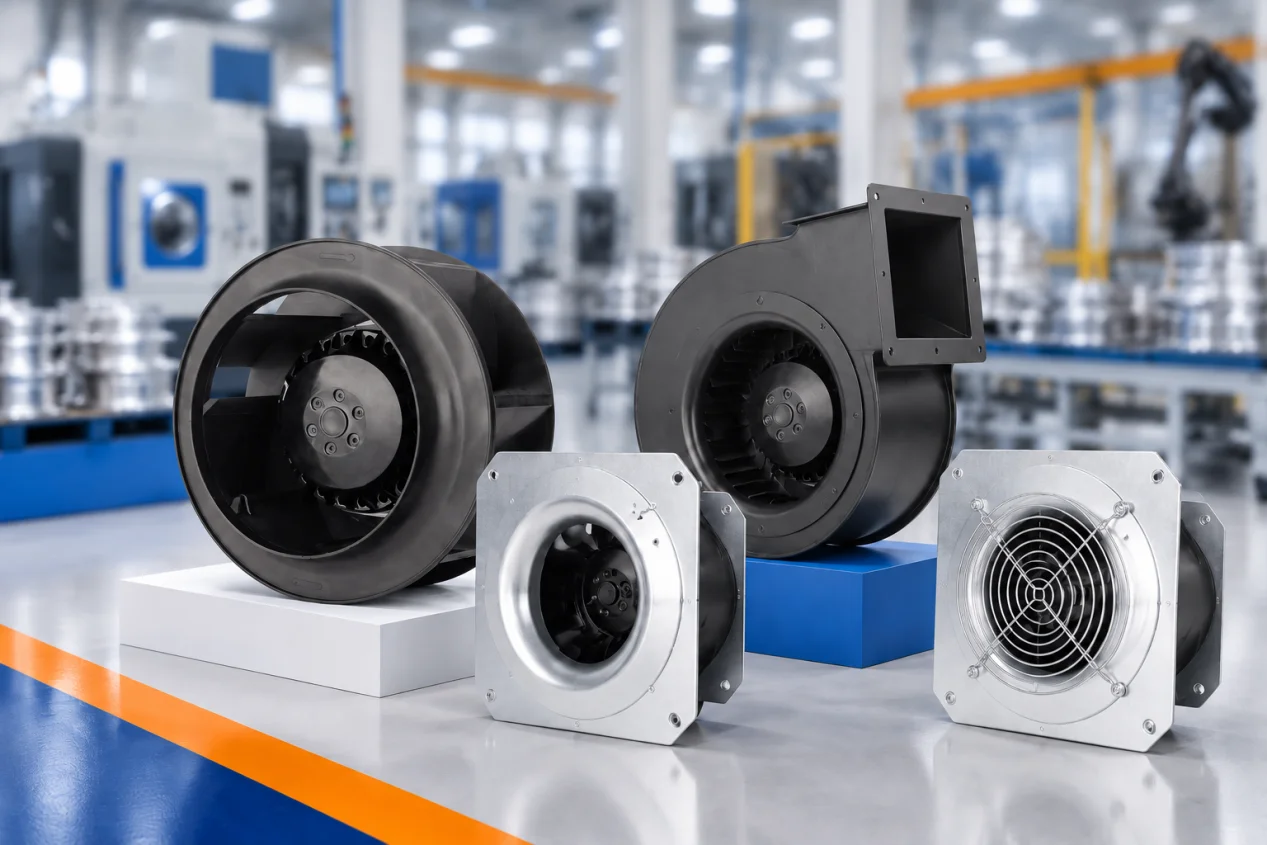
The key feature of this series is that the bending direction of its blades is opposite to the impeller’s rotation direction. This series includes diameters between Ø133 mm to Ø450 mm. The airflow volume ranges from 268 m³/h to 8,652 m³/h, with static pressure ranging from 433 Pa to 1,391 Pa.
FAQ
What are common causes of low airflow in ductwork and how can I fix them?
The common causes include clogged filters and increased duct friction. In order to maintain these causes, you need to publish a regular cleaning routine. Perform a thorough inspection of all duct connections, seams, and joints as well.
Does increasing duct size increase air flow?
There is no certain answer. Although a larger duct can reduce airflow resistance to allow air to move more efficiently, the practical airflow velocity depends on the fan’s performance and system pressure.
Do duct fan booster really work?
Yes, if installed properly, it will increase the static pressure within ductwork system. However, a duct fan booster cannot solve problems such as duct leaks, age, or improper duct size selection.
How can I fix uneven airflow between supply vents?
First, check whether the air filter is dirty and replace it with a new filter. Then check the system’s sealing performance and make sure all the supply and return vents are open.