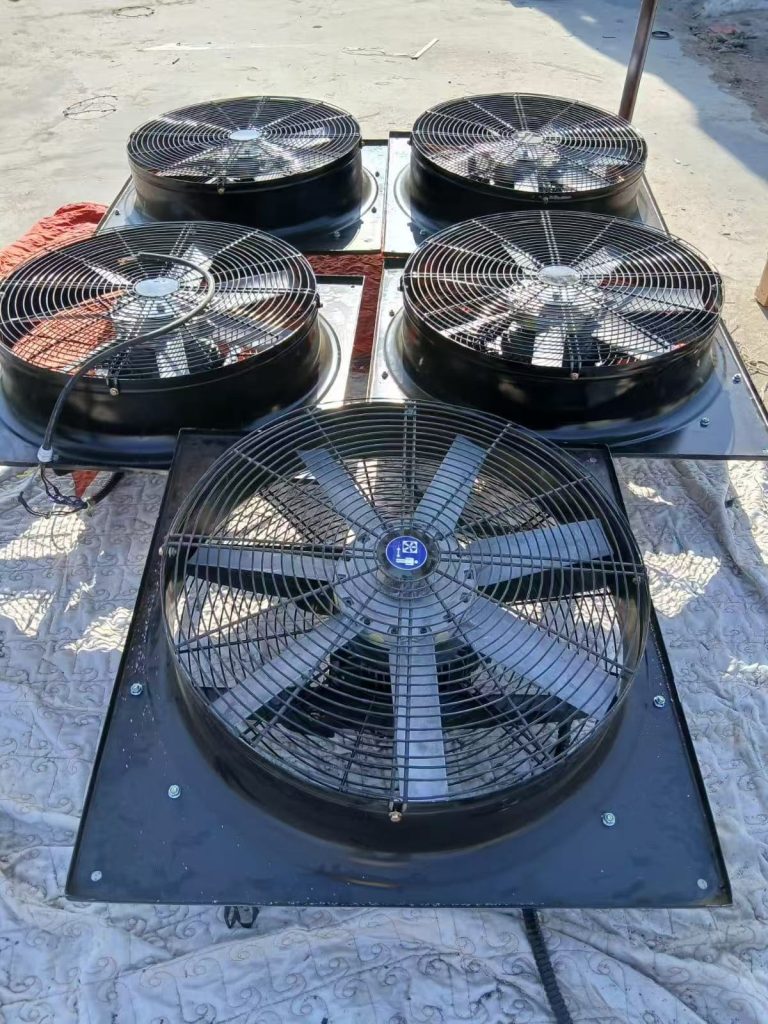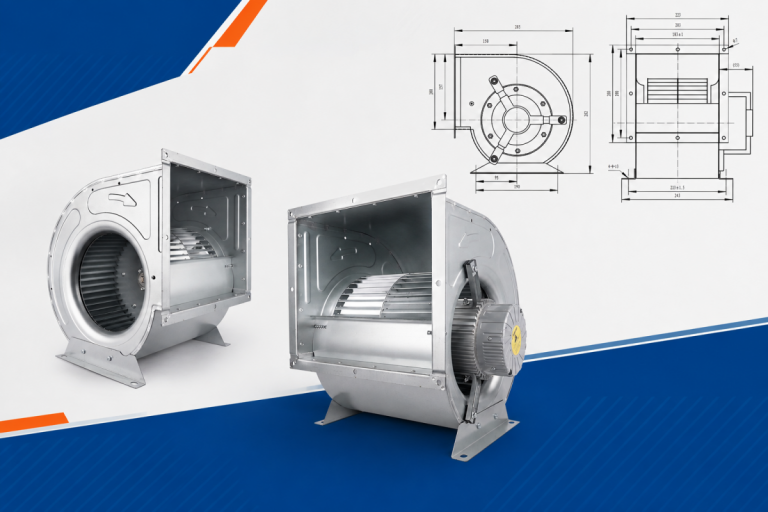
Matching Needs for a 1100W EC axial fan
A customer asked us to replace an old Dunli EC137-A500-C38 cooling unit. Meanwhile, they needed a direct drop-in 1100W EC axial fan. First, the size limits were tight. Therefore, the machine required a 500mm blade.
Next, the outer ring had to fit a 570mm hole. In practice, the total depth could not pass 180mm. Also, the electrical rules were strict. Meanwhile, the old system runs on three-phase 380V power.
The fan must handle voltage swings up to 456V. Also, the control logic is highly custom. The main board sends a PWM speed signal. Therefore, this signal ranges from 200 Hz to 1000 Hz at 12V.
Finally, the machine checks fan health using an RD fault signal. In practice, normal running pulls the line under 0.7V. By contrast, a fault pushes the line to 12V DC. The new fan had to copy this exact logic.
The unit sits outdoors. So, it faces winter chills and summer heat. It must work from -25C to 60C. As a result, the market demands CE marks.
Also, the fan must be tested to ISO 5801 methods. We had to hit these marks without changing the client’s cabinet.
Designing the Right 1100W EC axial fan
We had to balance airflow against electrical limits. First, we looked at the old 1100W EC axial fan. It ran at 1850 RPM. However, running a 500mm blade that fast creates 85 dB(A) of noise.
Also, it pushes power use past 1350W at max load. We rejected this old profile. The customer wanted better energy efficiency. Instead, we chose our LWAE3G500TS model.
This new design uses a PA6+GF glass-fiber blade. It spins at a lower 1650 RPM. Thus, we trade a tiny bit of peak speed for a huge power drop. The new unit draws just 1000W at full load.
Wiring the Control Board
The physical fit was easy. Next, we fixed the control logic. The old system expects a 12V fault signal on error. So, we set up our SmartEC motor with an open-collector output.
During normal running, an internal relay stays closed. This pulls the logic line down to 0.7V. If the motor gets too hot, the circuit breaks. As a result, 12V flows through the client’s external transistor. This triggers their alarm correctly.
The Real Cost of the Design
Every engineering choice has a cost. We lowered the speed to 1650 RPM. As a result, we had to increase the blade pitch. This keeps the total airflow high at 10506 m3/h.
However, a deeper pitch needs a heavier rotor. This heavier rotor raised the baseline weight. It also caused a materially higher cost for the plastic mold tooling. Even so, the trade-off works well.
The new fan meets the exact cooling target. Furthermore, it drops the noise to 84 dB(A). The power limit stays safely at 1000W.
Technical Specifications
| Parameter | Value |
|---|---|
| Airflow (Max) | 10506 m3/h (6180 CFM) |
| Static Pressure (Max) | 340 Pa |
| Input Power | 1000 W |
| Speed | 1650 RPM +/- 5% |
| Nominal Voltage | 3~380 VAC (Range 304~456 VAC) |
| Frequency | 50/60 Hz |
| Current | 1.7 A |
| Dimensions | 570 mm outer ring, 500 mm impeller |
| IP Rating | IP55 |
| Insulation Class | Class F |
| Certifications | CE, RoHS, REACH |
This table shows the final parameters. The old unit drew 1.8A at max load. By contrast, our design pulls only 1.7A. Thus, the old wiring and breakers stay safe. The fan hits 340 Pa of static pressure. This easily pushes air through the tight cooling fins. This 1100W EC axial fan keeps current draw low while moving massive air.
The new fan weighs about 12.5 kg. This matches the original Dunli unit. Therefore, the mounting bolts do not carry extra stress. The IP55 rating blocks dust and water jets. This is perfect for outdoor cooling cabinets. The Class F insulation protects the copper wire from extreme heat. As a result, the fan survives long summer days under full load.
Reference: AMCA 210 covers the test method behind these figures.
Technical Documentation
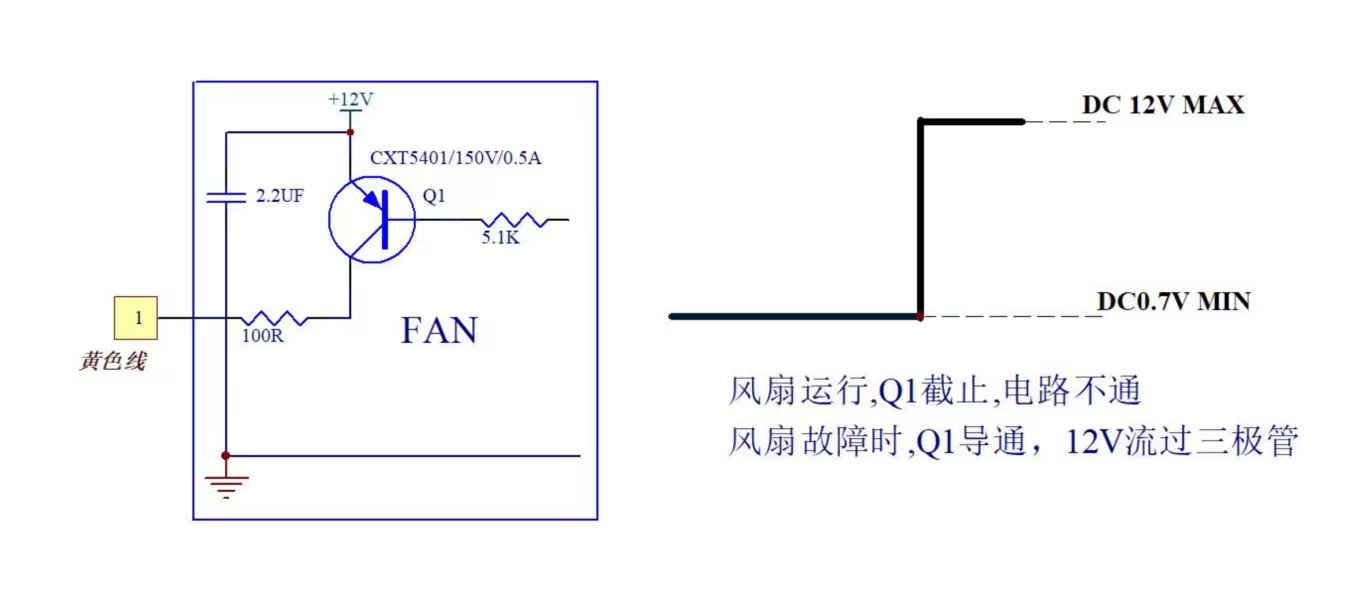
The image shows the exact 12V fault reporting circuit our motor must trigger.
Longwell LWAE3G500TS Specification
Our specification file holds the performance curves and wiring map for the new unit.
Original Dunli EC137-A500-C38 Data
The original datasheet lists the old baseline limits that defined our strict rules.
Guidelines for Upgrading OEM Parts
Replacing an old 1100W EC axial fan takes careful planning. A bad match will trip system alarms. First, check these details.
- Measure the true PWM frequency. Many standard EC boards only read 1 kHz to 10 kHz. Sending a 200 Hz signal will cause bad speed jumps. Our fan handles the rare 200 Hz input without motor whine.
- Map the fault signal logic. You must know if the board wants an active-high or active-low state during a failure.
- Check the true basket depth. A new fan might have the right 500mm ring but stick out too far. This will hit internal cabinet walls. Always measure the space behind the mounting plate.
- Send your supplier the original wiring map. Since we build our own electronics, having the exact pinout helps us match your protocol on the first try.
Related: Axial Fans.
Common Questions
Technical Documentation & Resources
Browse our axial fans range, the AC axial fans section, or EC axial fans.
Have a Similar Fan Requirement?
Longwell’s engineering team delivers custom spec sheets and samples within 90 days. Since 1990, we have supplied EC fans and blowers to OEMs across HVAC, cold chain, data center, and industrial applications worldwide.
Browse Related Products:
🏆 ISO 9001 / ISO 14001 / ISO 45001 | CE (TÜV) | UL/ETL | ATEX Zone 21/22 | AMCA 210-16 / ISO 5801 tested