Efficient airflow is the lifeblood of modern industrial and commercial operations, serving as the foundation for ventilation, HVAC, and cooling systems. As enterprises trying to optimize operational costs and enhance sustainability, improving centrifugal fan efficiency has become a critical objective. However, achieving peak operating efficiency depends on far more than the fan itself. It is a holistic process involving impeller configuration, motor technology, control method, system design, and maintenance practices. This article examines the major factors that impact centrifugal fan efficiency and provides systematic strategies to maximize airflow performance while minimizing energy consumption.
1. Select the Right Fan for the Application
Among all centrifugal fan components, the impeller has the greatest influence on aerodynamic efficiency. While end users cannot easily modify blade geometry after installation, selecting a right fan can significantly reduce energy consumption throughout its service life.
Why Impeller Size Matters?
According to the Fan Laws, under the condition of providing the same air volume and pressure, the diameter of the impeller is inversely proportional to the rotational speed. A large-diameter impeller can generate the required pressure and air volume at a lower rotational speed. This directly reduces friction loss and noise. To achieve the same output, a small-diameter impeller needs an extremely high rotational speed. This will lead to intensified airflow friction on the impeller surface and a greater likelihood of turbulence, thereby reducing efficiency. If the installation space permits, choose an impeller with a larger diameter and a lower rotational speed, which is usually more efficient.
Best Efficiency Point
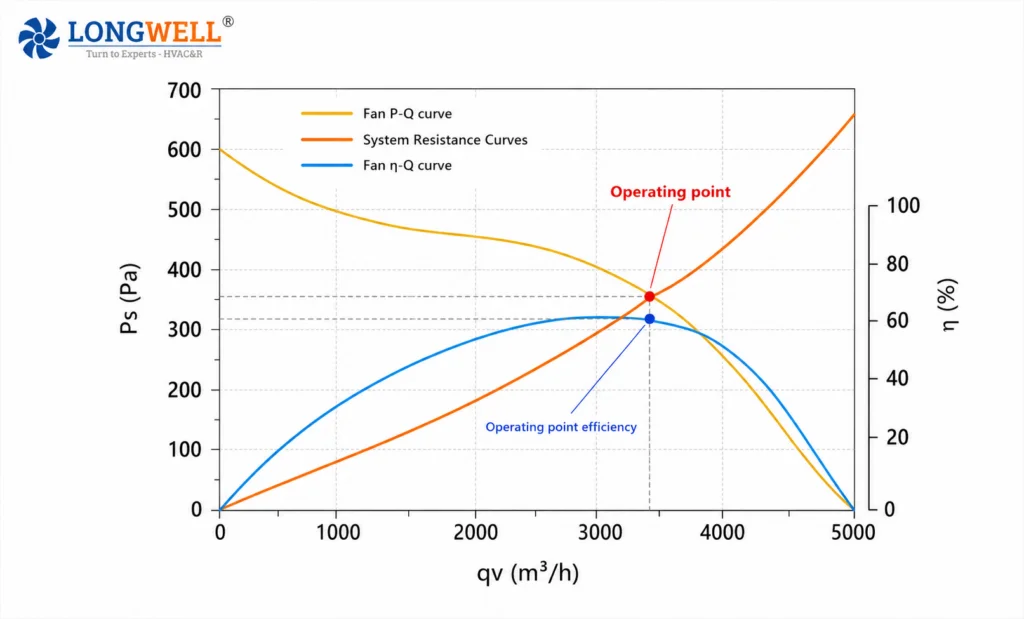
The Best Efficiency Point (BEP) is not merely a theoretical value. It is a critical point that measures the highest energy conversion efficiency and the minimum aerodynamic loss of the fan under this operating condition. It is impractical to maintain the operation strictly at the BEP because the load is fluctuating. Therefore, the focus of actual operation is not on strictly adhering to the BEP. It lies in ensuring that the efficiency curve is sufficiently gentle within the main operating range. If the efficiency curve of the fan remains at a high level within a wide range around the BEP, even a slight deviation of the operating conditions will not cause significant efficiency losses.
How Impeller Size Influence Fan Efficiency?
Selecting the right impeller size is essential for achieving optimal ventilation performance and maximizing centrifugal efficiency. An oversized fan typically operates away from its Best Efficiency Point (BEP), which may result in unnecessary energy consumption, increased noise levels, and higher operating costs. In contrast, an undersized fan may be unable to provide the required airflow and static pressure.
Ultimately, the energy efficiency of the fan is not only determined by the design of the fan, but also by the degree of match between the centrifugal fan and the actual application scenario. The goal is not always to operate at the BEP, but to ensure that the normal operating range is as close as possible to the efficient area near the BEP. Therefore, choosing the appropriate fan size is the foundation for achieving energy-saving operation, and it should always be considered before implementing other optimization measures.
2. Upgrade to High-Efficiency Motors
Limitations of AC Motors
At present, many enterprises still rely on centrifugal fans powered by traditional AC motors. This model has inherent flaws in terms of energy efficiency.
- Lack of Speed Adjustment: Traditional AC motors cannot adjust their speed.
- Installation and Compatibility Complexities: Speed control requires the connection of a variable frequency drive (VFD), which increases installation difficulty and necessitates consideration of motor-VFD compatibility.
- Operational Drawbacks: Starting current can be several times the rated current, significantly impacting the power grid. Operation at full load leads to relatively high temperature rises and significant noise.
The EC Motor Advantage
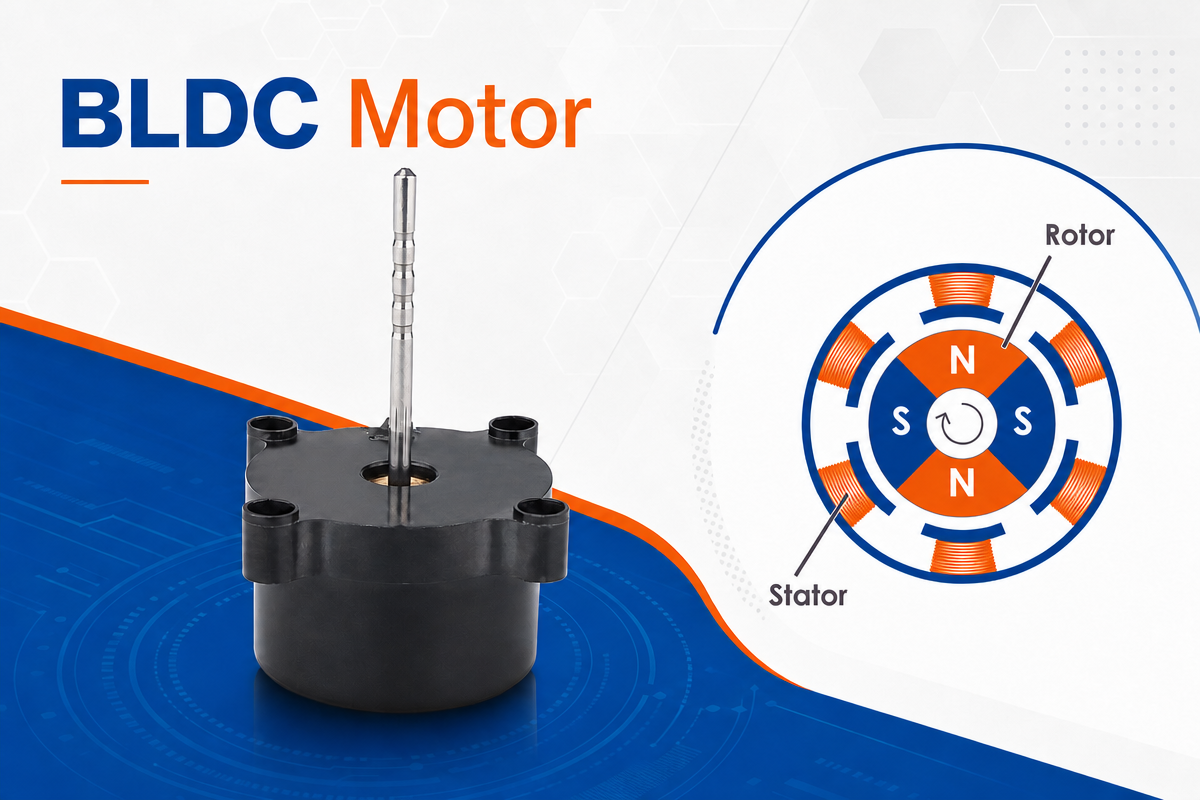
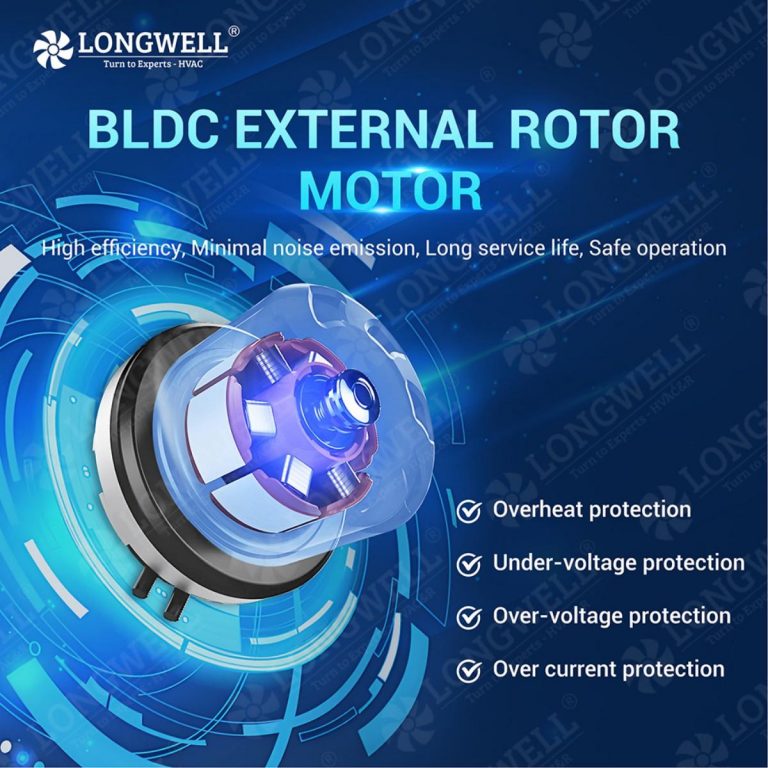
The EC motor centrifugal fan is equipped with an integrated drive electronics, which eliminates the need for cumbersome VFDs and reduces the amount of external wiring. This significantly reduces the installation cost and makes it possible to achieve plug-and-play functionality. At the same time, system integration brings many advantages. For instance, it can be compatible with the Building Management System (BMS), supporting remote monitoring and automatic control, and capable of outputting speed feedback signals. The EC motor can achieve low-noise operation. At the same time, the electronic commutation reduces mechanical wear, and its service life is significantly longer compared to other motors. For users, this not only enables high-precision speed control but also allows them to obtain real-time information about the motor’s operating status, energy consumption data, and fault warning messages.
3. Use Variable Speed Control
In many practical applications, the load of the fan is fluctuating. For example, in the HVAC system, the ventilation requirements can be adjusted according to changes in the number of people in the room, the environmental temperature, and the air quality. However, traditional centrifugal fans typically operate at a fixed speed continuously. If you need to change the air volume, you will have to use the air valve or the damper. This will increase the system resistance and cause additional waste. In contrast, variable speed control can reduce system pressure loss by adjusting the rotational speed, and make the fan easier to remain within the operating range of its BEP. Pulse Width Modulation (PWM) and 0-10V analog signals are the two most common speed control methods for centrifugal fans.
Pulse Width Modulation
PWM is commonly used in EC centrifugal fans. It is used to achieve precise speed control and can automatically adjust the air volume based on temperature, pressure or air quality feedback. It is commonly used in places such as data centers, clean rooms, and central ventilation system where the air volume needs to be adjusted frequently. It can enable the fan to operate according to the actual load, ensuring the ventilation effect and high energy efficiency.
0-10V Analog Signals
The fan speed can be adjusted by changing the control voltage. It is simpler than PWM control and is widely used in BMS, AHU and commercial building ventilation systems. By linking with the sensors, the fan can automatically adjust its operating status according to actual needs. The closed-loop regulation has been achieved. The greatest advantage of the 0–10V control lies in avoiding the additional pressure loss caused by the traditional throttling regulation of the air valve.
4. Optimize System Design
In practical applications, many operators only focus on the efficiency of the fans, while neglecting the efficiency of the entire system. However, reducing unnecessary pressure losses in the air system is usually one of the fastest and most cost-effective ways to lower energy consumption. The main sources of system resistance are the accumulation of dust on the filter and the layout of the ducts.
Accumulated Dust
If the filters or air handling equipment accumulate dust for a long time, it will significantly increase the local resistance. This will cause the fan to consume additional energy. Therefore, especially for the blades of centrifugal fans, regular cleaning is necessary. You can wipe the blades with a mild cleaner or equip a professional vacuum cleaner. At the same time, it is necessary to regularly check the pressure gauge and replace the filters or filter materials in time to reduce the efficiency loss caused by the increased resistance.
Ducts Layout
An unreasonable duct design can cause the airflow entering the centrifugal separator to be unstable, resulting in uneven load on the fan blades, and ultimately leading to instability of the airflow throughout the entire system. The improper positioning of the air inlet and outlet ports can both lead to this consequence.When designing, it is important to minimize the number of turns in the ducts within the system and avoid sharp bends. The outlet duct should be kept as straight as possible and ensure that the airflow is evenly distributed within the duct. Any design that hinders the airflow from passing through the inlet and outlet ports will lead to a decrease in fan efficiency.
5. Regular Maintenance and Inspection
Even for an efficient centrifugal fan, its operating efficiency will decline over time. Issues such as dust accumulation on the impeller, wear of the bearings, slack of the belt, and mechanical vibration will all increase energy loss, causing the fan to fail to maintain its designed efficiency. The unexpected shutdown of the fan equipment can easily cause significant economic losses. The traditional maintenance methods are no longer sufficient to meet current demands. Because they mainly relies on fixed schedules, such as inspections conducted every quarter or annually. However, preventive maintenance takes advantage of the feature that EC motors can be integrated with intelligent systems. It directly feeds real-time data back into the system.
Key Indicators of Fan Health
To achieve effective monitoring, three key indicators need to be given special attention.
- Vibration Monitoring: When the fan is operating normally, it should maintain a relatively stable vibration level. An abnormal increase in vibration level usually indicates that there are potential problems within the equipment. For instance, imbalance of the impeller, loosening of the structure, or wear of the bearings, etc. It is necessary to detect these minor errors in advance to reduce the possibility of more significant problems occurring.
- Temperature Monitoring: When friction increases or cooling fails, the temperature will exceed the limit first, which is often a precursor to a major accident. Usually, it is necessary to monitor the motor, bearing, VFD or EC controller. The abnormal temperature rise of these components usually significantly increases the risk of the fan stopping.
- Power Consumption Monitoring: The power of the fan is the most direct indicator of efficiency changes. Real-time power monitoring can detect the most quickly those hidden faults that have not yet changed in their physical appearance but whose system energy consumption has begun to deteriorate. By continuously recording the power consumption during the stable operation of the fan, an energy consumption baseline can be established. When abnormal data is detected, it enables the maintenance team to intervene earlier.
6. Longwell Solutions
In order to achieve systematic optimization of the energy efficiency of centrifugal fans, Longwell offers a comprehensive professional solution covering selection, drive, control, system and operation and maintenance.
- Precise Model Selection Optimization: By offering a variety of fan types, such as: backward curved, forward curved, airfoil, etc., we ensure that the fan performance is compatible with the application scenarios.
- Efficient Motor Technology: Focuses on high-efficiency EC motors, while offering DC and AC optimization solutions, significantly reducing energy consumption.
- Intelligent Speed Control: Relying on the built-in PCB and intelligent speed regulation system, it supports various control protocols such as PWM and 0-10V, achieving dynamic and precise adjustment of air supply as needed.
- Optimized System Design: Utilizing aerodynamic optimization for the impeller and flow channel design, it ensures strong airflow while reducing resistance and noise. Through modular design, it simplifies installation and provides extremely high flexibility for complex working conditions and system upgrades.
- Preventive Maintenance Management: Offers an operation and maintenance system based on professional guidelines and high-performance, quality components. While ensuring the long-term stable operation of the system, it significantly reduces the maintenance costs throughout the entire life cycle.
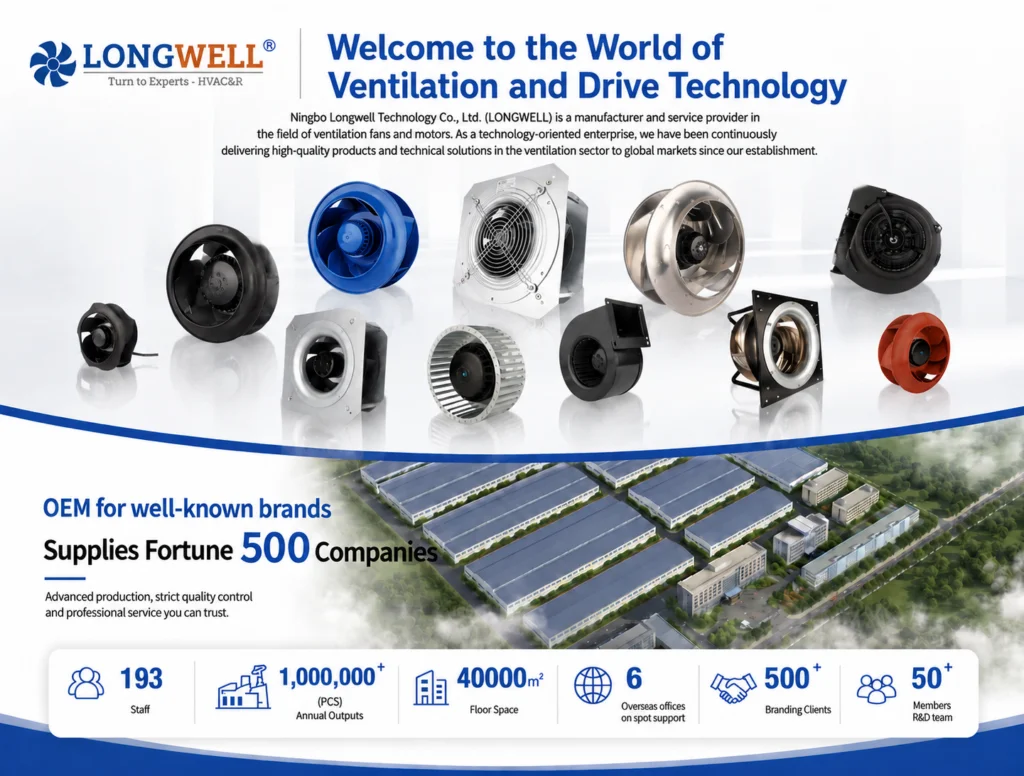
Case Study
- Shopping Mall HVAC Reconstruction: The customer replaced the traditional AC models with Longwell EC centrifugal fans, and also equipped them with an intelligent control system. The final energy consumption was reduced by approximately 30%, the maintenance frequency was lowered to once a year, and the delivery and recycling period was less than two years.
- Industrial Application: By equipping Longwell’s EC centrifugal fan with an intelligent control system, the ventilation system of the clean room in an electronics factory operates stably under high pressure. The fan can last for more than 5 years in an anti-corrosion environment, and its energy consumption is at least one quarter lower than that of the original system. The equipment downtime is reduced by more than half.
The energy efficiency optimization of centrifugal fans is not achieved through the improvement of a single aspect. It is a comprehensive project that encompasses the selection, drive technology, intelligent monitoring, and system layout. The competitiveness of the fan system will not only be reflected in the initial purchase cost, but also in its real-time response ability to environmental demands and the full life cycle management of assets. Choosing Longwell for a specialized ventilation solution is a wise move to ensure the equipment operates at a stable and high efficiency condition over the long term.