How to Select the Right Centrifugal Fan: An 8-Step Selection Guide
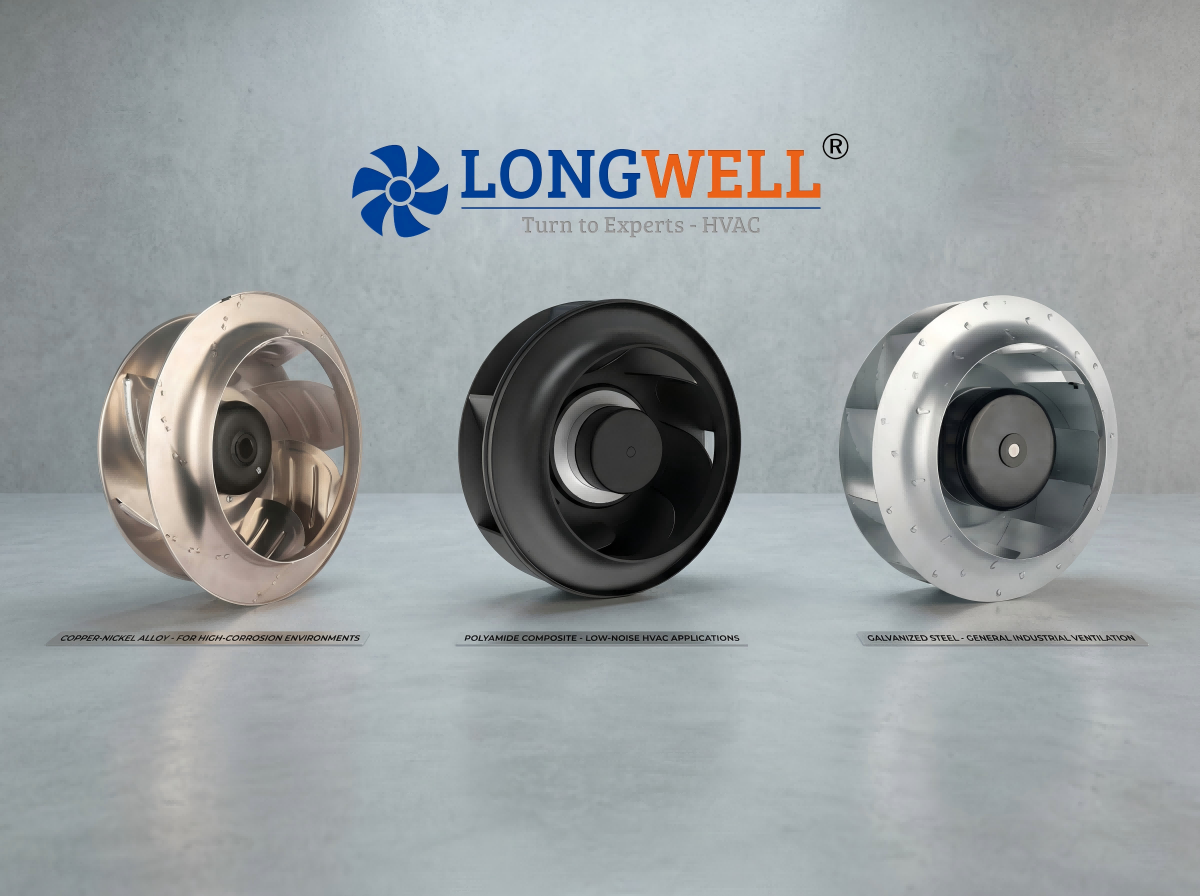
Are you designing a new HVAC system, upgrading telecom cooling, or engineering a medical cleanroom? If so, you already know that moving air efficiently is the heartbeat of your project. But picking the exact centrifugal fan for the job isn’t always straightforward. Get it wrong, and you’re looking at skyrocketing energy costs, annoying noise levels, or premature motor failure.
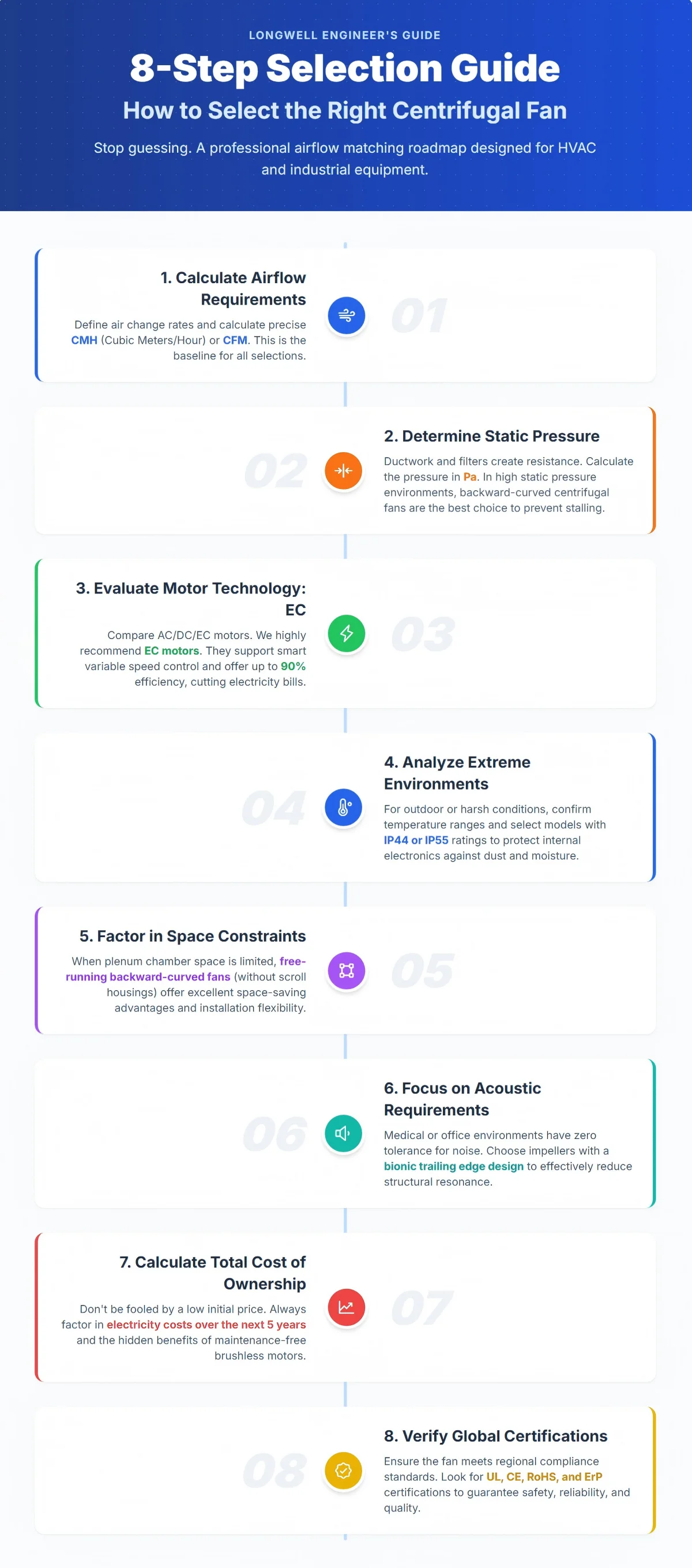
At LONGWELL, we tackle these exact airflow headaches every single day. To save you the trouble of sifting through endless technical catalogs, we’ve broken down the engineering jargon into a practical, 8-step selection guide.
1. Calculate Your Precise Airflow Requirements
First things first: how much air do you actually need to move? This is usually measured in Cubic Meters per Hour (CMH) or Cubic Feet per Minute (CFM).
Instead of guessing, calculate the total volume of your space and the required air change rate. Once you have that baseline number, you can start filtering your options efficiently.
2. Determine the System’s Static Pressure
Air doesn’t travel through complex ductwork, thick HEPA filters, and heat exchangers without putting up a fight. This resistance is your static pressure. You need a fan that won’t stall under load.
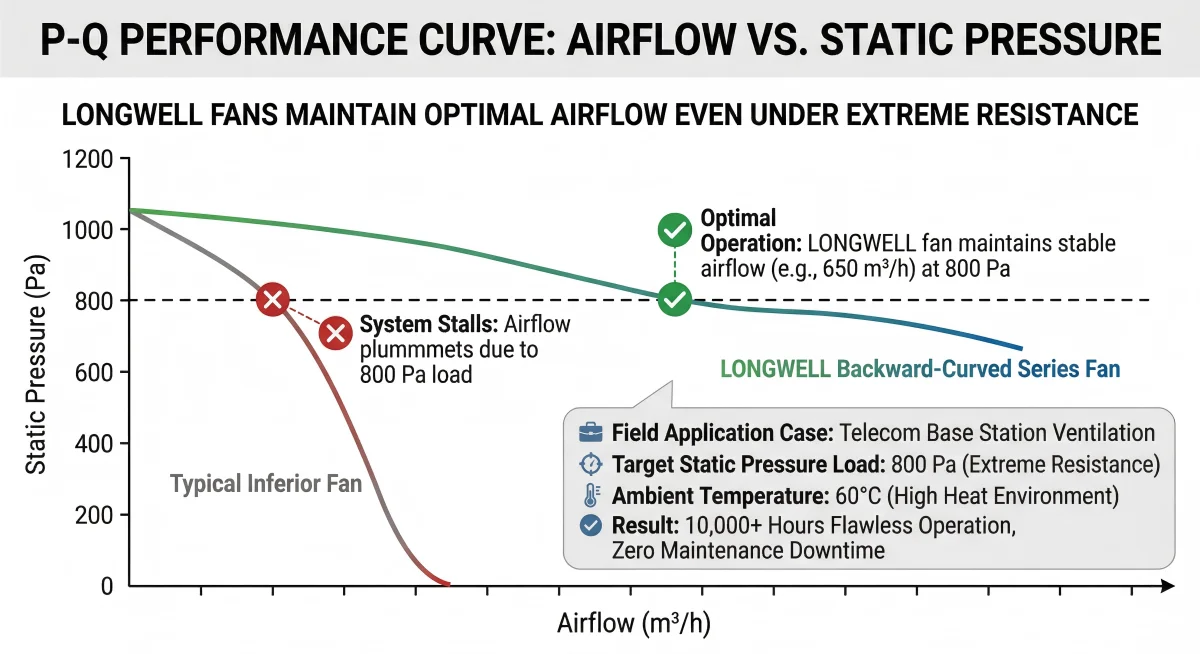
📌 Field Application Case: > Static pressure is exactly where inferior fans fail. Recently, a client came to LONGWELL after their telecom base station ventilation units kept stalling under a heavy pressure load of 800 Pa. Worse, the equipment was exposed to ambient temperatures hovering around 60°C. We deployed our IP55-rated backward-curved series. Thanks to the robust aerodynamic design, their system has now been running flawlessly for over 10,000 hours with zero maintenance downtime.
3. Evaluate the Motor Technology
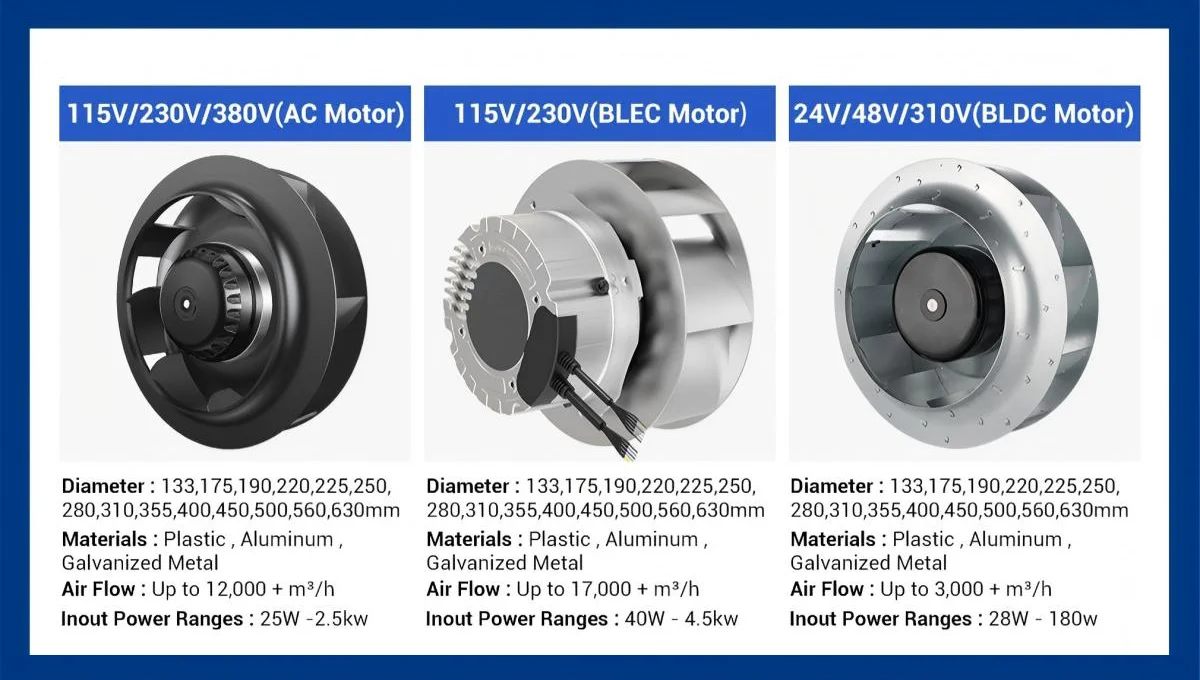
The motor is the engine of your airflow. You generally have three main paths, and choosing the right one significantly impacts your energy bills:
· AC Motors: Rugged, traditional, and cost-effective for standard operations.
·DC Motors: Highly efficient and compatible with intelligent systems via PWM control.
·EC Motors (Electronically Commutated): The current gold standard for industrial efficiency. They offer dynamic variable frequency control and can hit up to 90% energy efficiency.
📌 ROI Case Study: > During our conversations with European HVAC contractors at the AIRVent exhibition in Moscow, upgrading legacy systems was a recurring challenge. We recently helped a German facility manager replace outdated AC fans with our LONGWELL 250mm EC backward-curved fans. By utilizing the EC motor’s variable speed control, they slashed daily energy consumption by 32%. The upgrade paid for itself in just 14 months.
4. Analyze the Operating Environment
Where is this fan going to live? A fan installed in an outdoor cooling tower faces entirely different weather challenges than one inside a server room. Map out your temperature extremes.
Furthermore, if your environment is exposed to harsh elements, ensure the fan has the correct Ingress Protection (IP) rating (like IP44 or IP55) to shield internal electronics from dust and water jets.
5. Factor in Space and Mounting Constraints
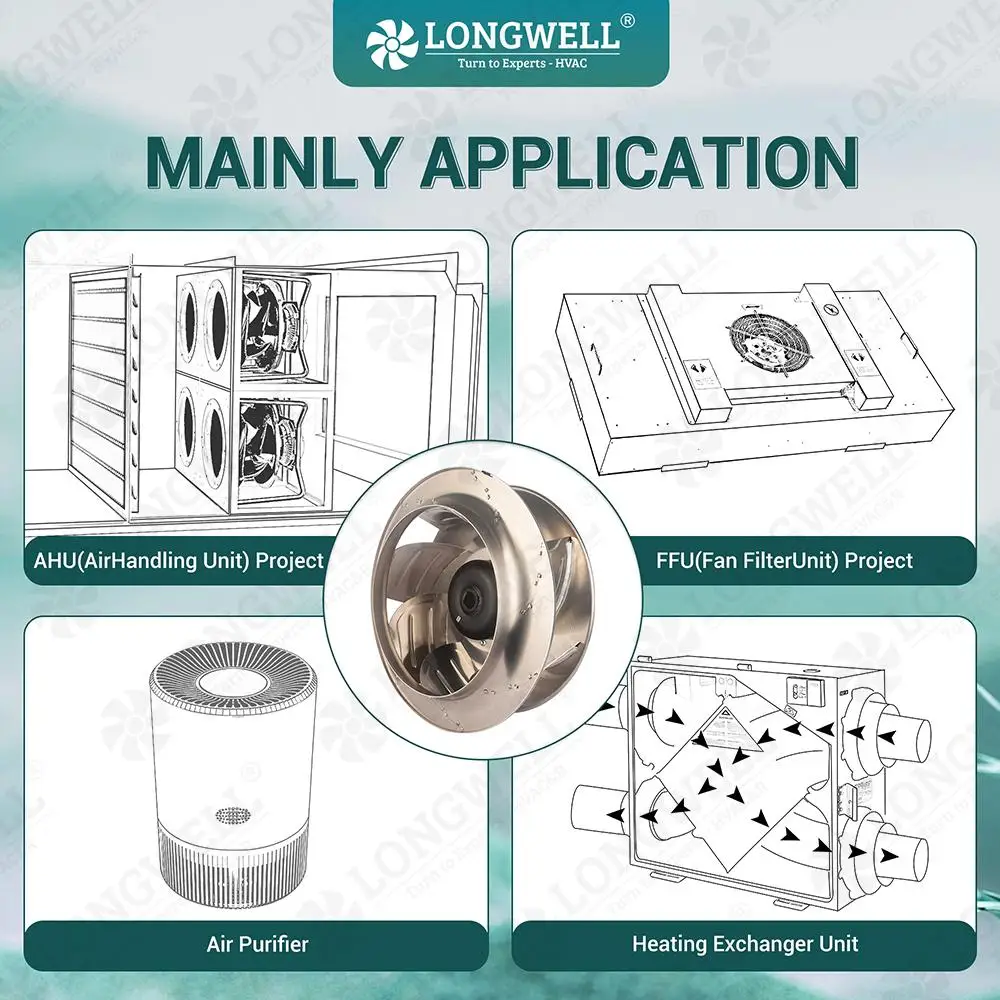
You could find a fan with perfect performance specs, but if it doesn’t fit your plenum chamber, you are back to square one. Decide whether you need a free-running fan or a modular built-in setup. Backward-curved centrifugal fans often provide excellent space-saving advantages because they don’t require a bulky traditional scroll housing.
6. Don’t Ignore Acoustic Requirements
High-speed airflow naturally creates noise, but smart geometry solves this. Acoustics aren’t just about comfort; in specific industries, they are a strict regulatory requirement.
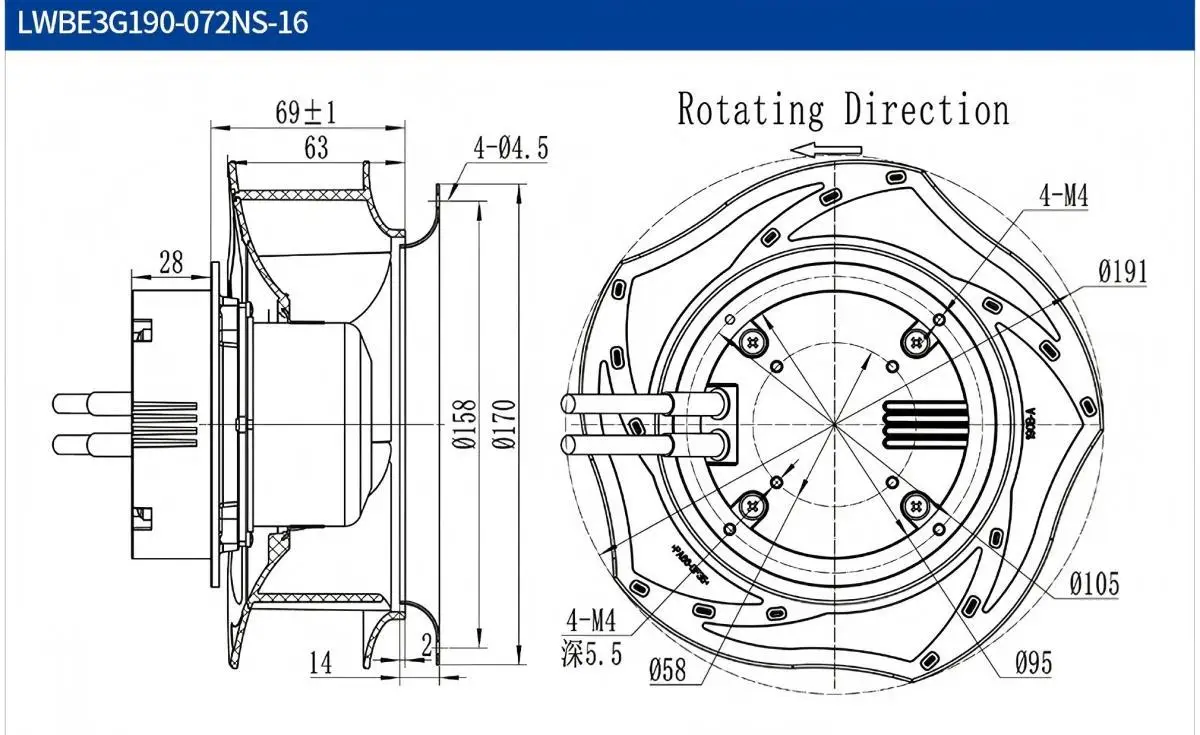
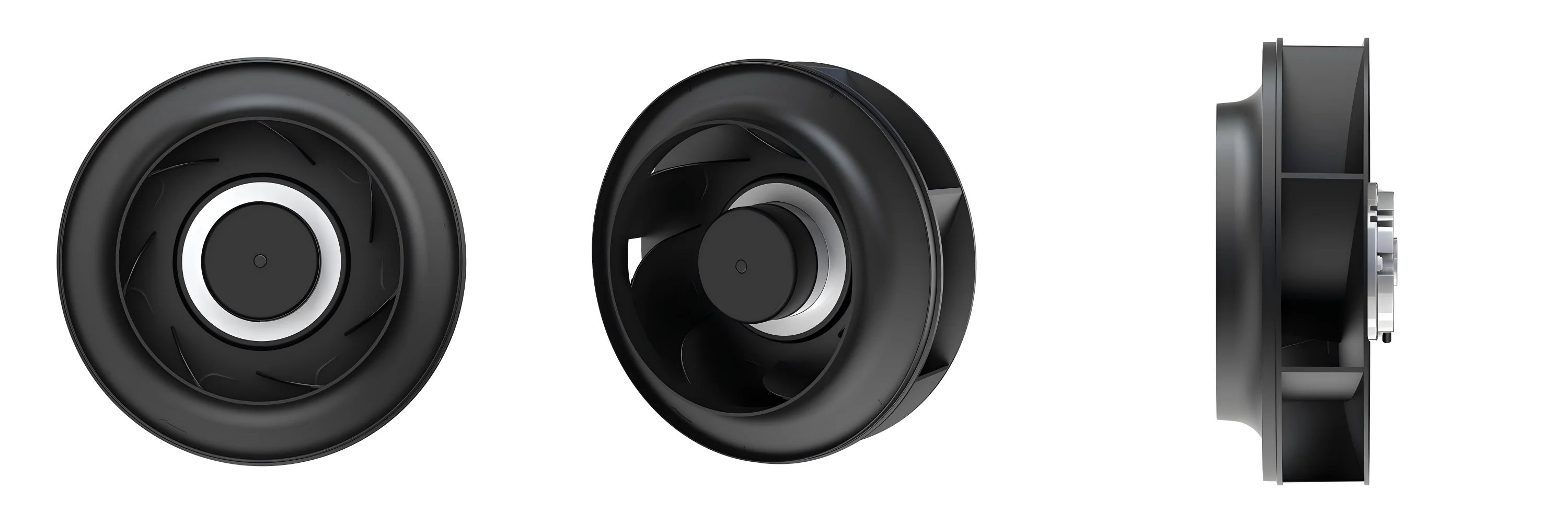
📌 Engineering Solution: > A manufacturer of high-end clinical air purifiers was struggling with structural resonance; standard fans were simply too loud for hospital environments. Instead of compromising on airflow, our team integrated a customized 190mm impeller featuring our bionic trailing edge design. We successfully dropped the overall noise output by 6 dB(A) while fitting the assembly into a heavily restricted 200mm clearance space.
7. Calculate Total Cost of Ownership (TCO)
A cheaper fan upfront will almost always bleed your budget dry through electricity bills and maintenance over the next five to ten years. When you factor in the massive energy savings of an EC motor alongside a brushless design that practically eliminates maintenance, the TCO heavily favors high-efficiency models. Always look at the 5-year cost, not just the purchase order price.
8. Verify Industry Certifications
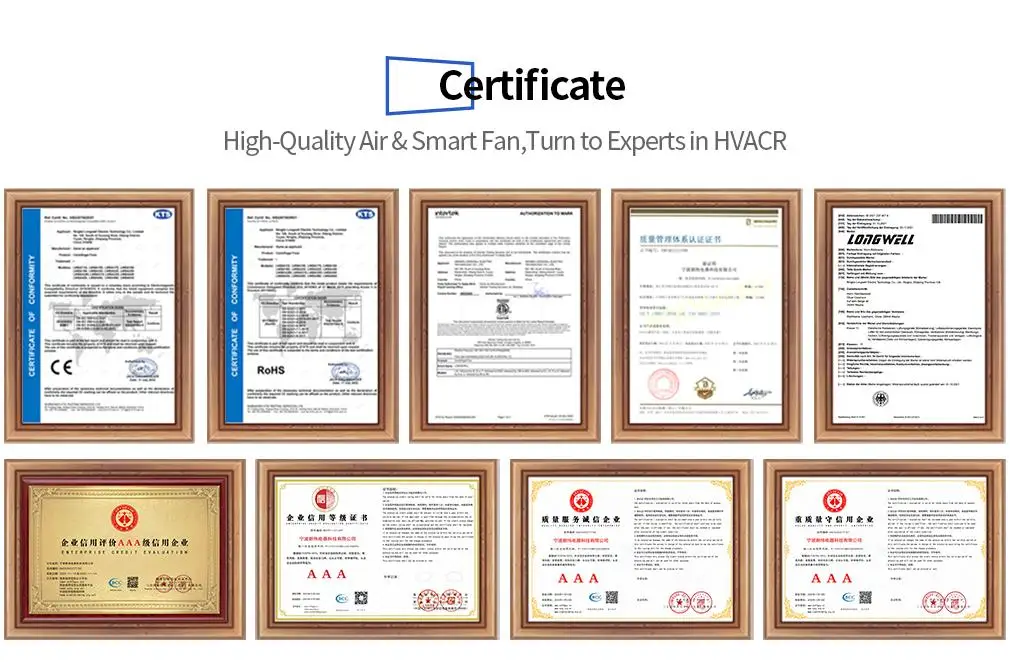
Never skip the paperwork. Ensure your chosen fan meets global compliance standards to guarantee safety and reliability. Look for:
·UL / CE Marks for regional safety compliance.
·RoHS for hazardous substances restriction.
·ErP Directives for European energy efficiency standards.
·ISO Certifications ensuring top-tier manufacturing quality controls.
Powering Your Equipment Forward
Choosing the right centrifugal fan is a delicate balancing act between pressure, volume, efficiency, and physical size. “Born for high-quality breathing,LONGWELL Fans Power Your Equipments !” isn’t just a tagline for us; it’s the result of rigorous engineering and real-world testing.
Attached image:
If you’re still trying to figure out which exact model aligns with your system’s resistance curve, don’t guess.
👉 Contact the engineering team at LONGWELL today, and let’s customize the perfect airflow solution for your next project.