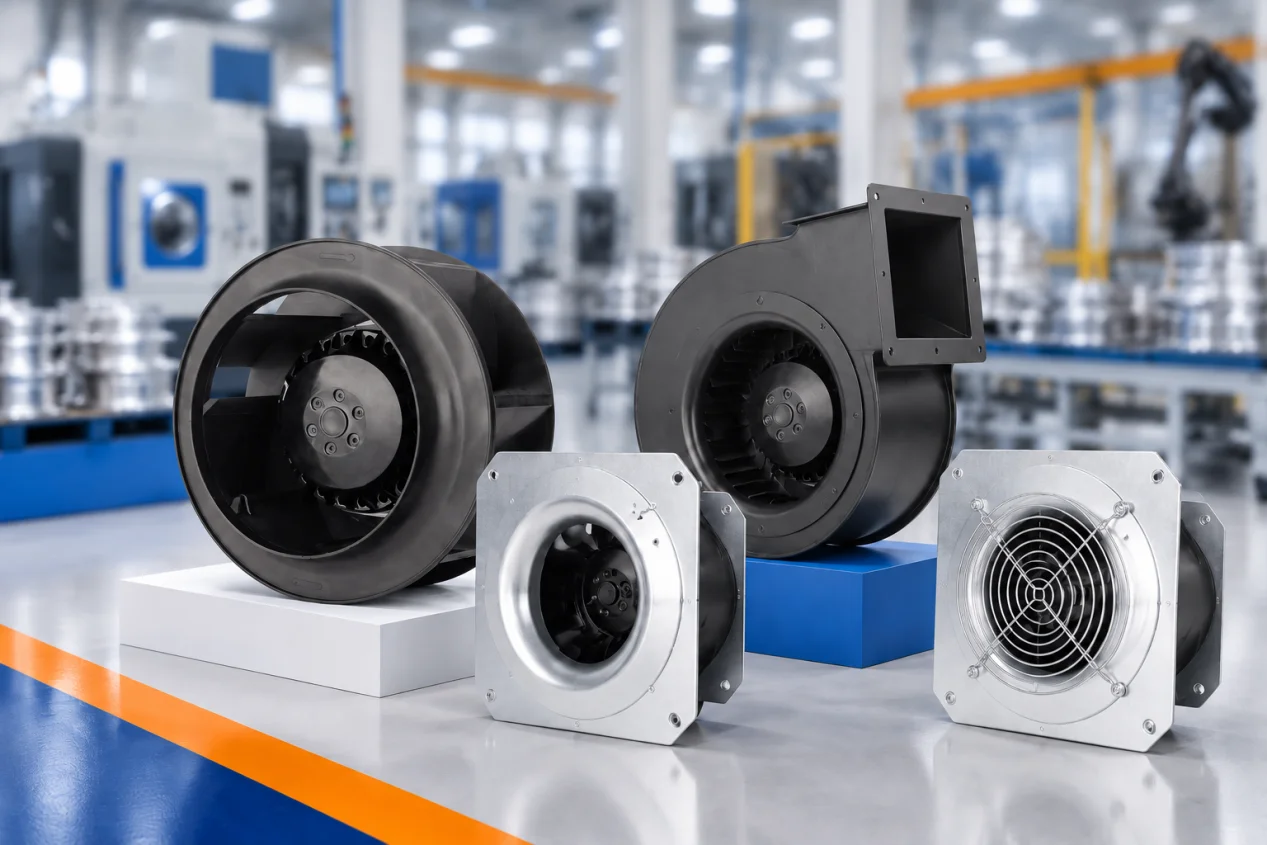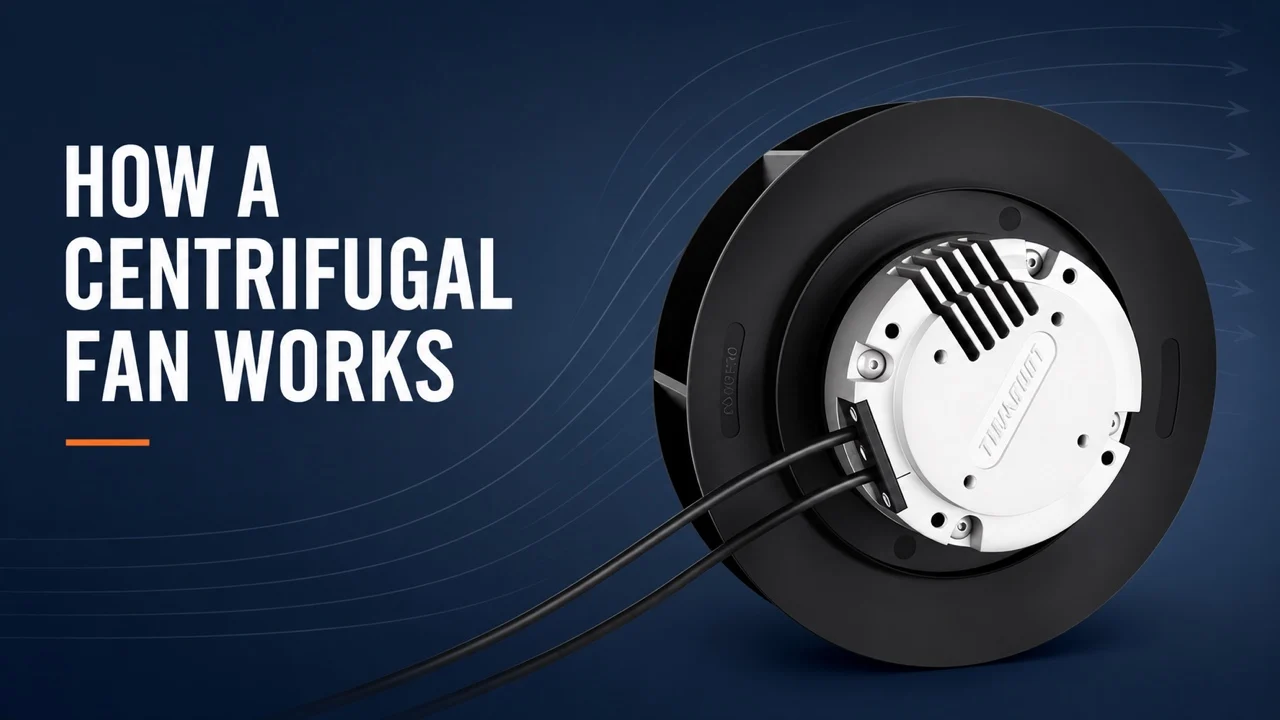
The centrifugal fan is one of the most efficient solutions for moving air across a wide range of applications. Unlike a simple household fan, it is an engineered system that uses a rotating impeller to drive air outward from the center, converting kinetic energy into pressure for controlled and powerful airflow. Centrifugal fans play a critical role in modern ventilation, HVAC systems, and industrial processes from air control to cooling and drying systems.
So, what exactly is a centrifugal fan? How does it work? And where is it used? This guide combines practical engineering insights with beginner-friendly explanations to help you fully understand centrifugal fans.
What is a Centrifugal Fan?
A centrifugal fan is a mechanical device designed to move air or gas by increasing its velocity and converting that velocity into pressure. Air enters the fan through the center of a rotating impeller, is accelerated outward by centrifugal force, and then discharged at a 90-degree angle through the outlet. Because of this design, centrifugal fans are especially effective in systems that require:
- High-pressure airflow
- Stable performance under resistance
- Air movement through ducts, filters, or long piping systems
Centrifugal Fan vs Axial Fan
HVAC systems rely heavily on both centrifugal fans and axial fans for ventilation, cooling, and efficient air movement. While these two fan types serve similar purposes, they operate in very different ways and are designed for different performance requirements.
The main difference between centrifugal fans and axial fans lies in how they move air. Centrifugal fans use a rotating impeller to draw air into the housing and discharge it at a 90-degree angle, generating higher pressure and more controlled airflow. In contrast, axial fans move air parallel to the fan shaft, delivering low pressure airflow with high efficiency.
Axial fans are commonly used in industrial environments such as factories, warehouses, tunnel ventilation, and underground mining operations where high airflow is essential. Centrifugal fans, on the other hand, are widely applied in air conveyor systems, material handling processes, dust collection, filtration systems, gas boosting, cooling equipment, and industrial drying applications where higher static pressure is required.
Understanding the differences between centrifugal and axial fans is essential for selecting the right solution for your application. Explore our detailed guide axial vs centrifugal fans to learn more about their working principles, performance characteristics, advantages, and ideal use cases.
Centrifugal Fan Components
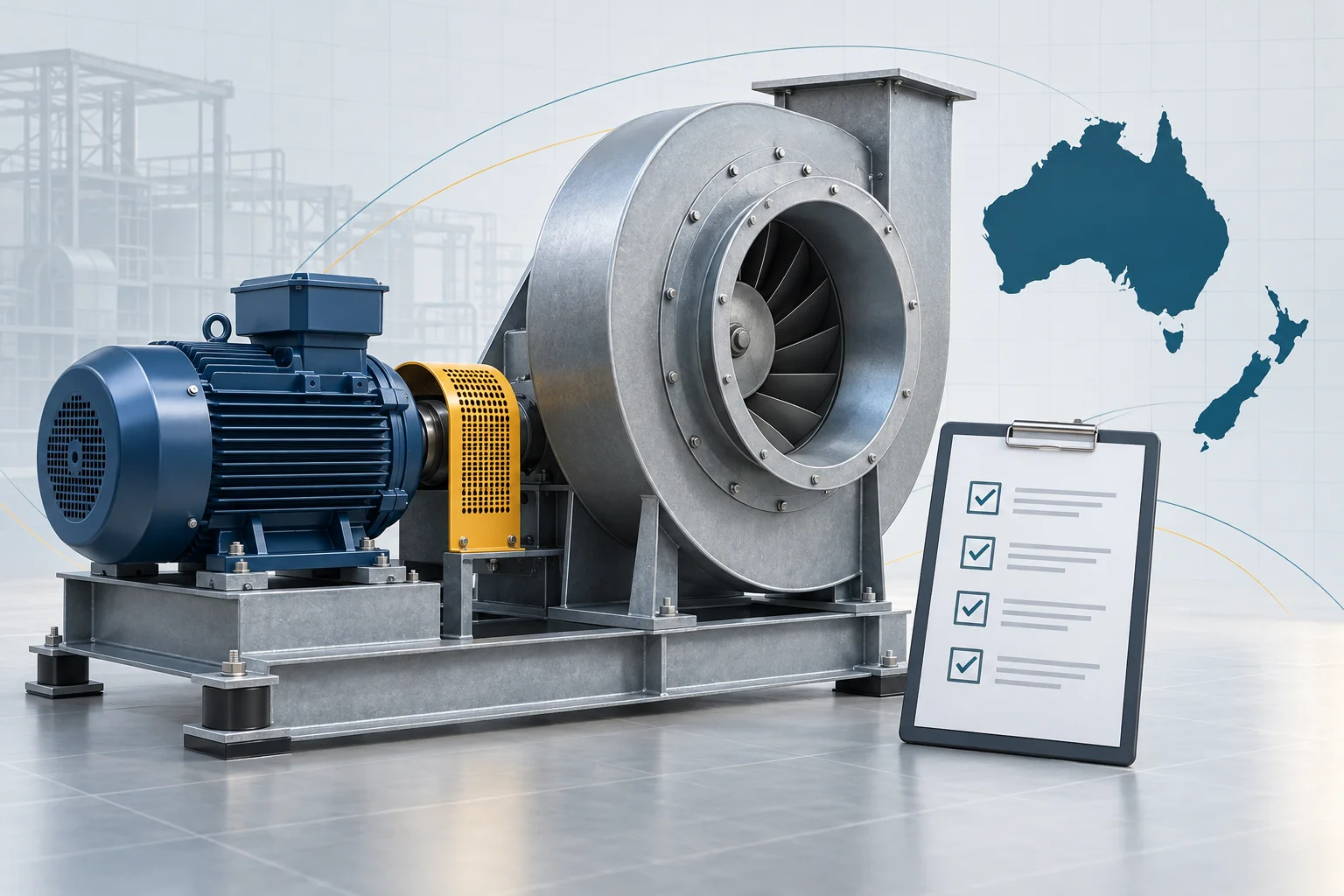
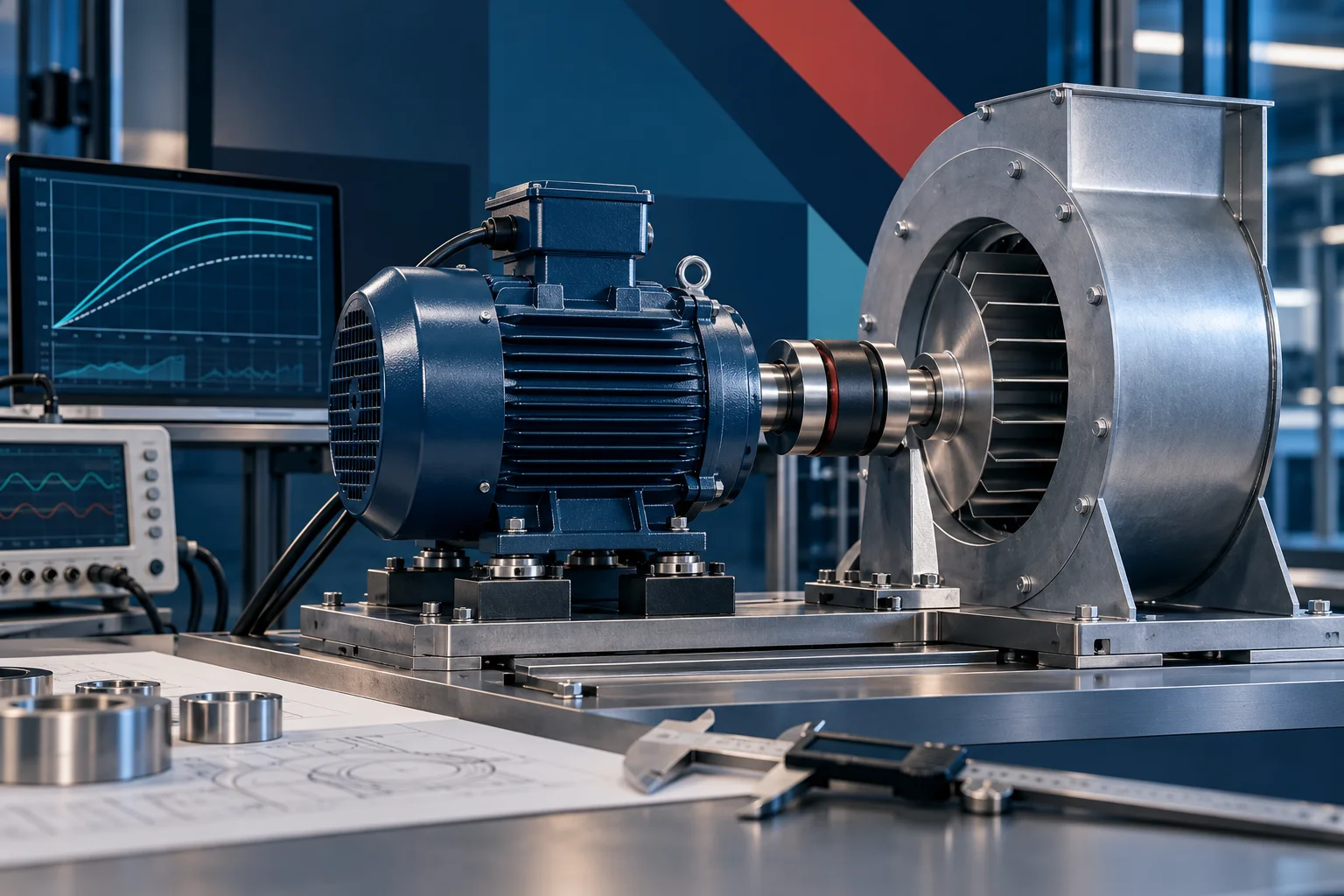
Centrifugal fans have a structure designed to efficiently move air by converting rotational energy into airflow and static pressure. A typical centrifugal fan mainly consists of an impeller, housing, air inlet, air outlet, motor, and several auxiliary components.
- Impeller: The impeller is the core component of a centrifugal fan. It consists of multiple curved blades mounted around a rotating hub. When driven by the motor, the impeller spins at high speed, drawing air into the center of the fan and forcing it outward through centrifugal force. The impeller design directly affects airflow volume, pressure, efficiency, and noise performance.
- Housing: The housing, also known as the fan casing, surrounds the impeller and directs the airflow toward the outlet. It helps convert air velocity into usable pressure while improving airflow stability and efficiency. Centrifugal fan housings are commonly manufactured from steel plates and assembled through welding, riveting, or precision fabrication processes to ensure durability and structural strength.
- Air Inlet: The air inlet is the entry point where air is drawn into the fan. It is typically positioned at the front or center of the centrifugal fan housing. The inlet’s size, shape, and positioning play an important role in determining airflow efficiency, pressure performance, and overall fan operation.
- Air Outlet: The air outlet is where the processed air is discharged from the fan, usually positioned on the side of the housing due to the 90-degree airflow direction of centrifugal fans. Proper outlet design helps optimize airflow distribution, reduce turbulence, and improve system efficiency.
- Motor: The motor provides the power required to rotate the impeller. Depending on the application, centrifugal fans may use AC motors, DC motors, or high-efficiency EC motors. Motor power, speed, and efficiency significantly influence the fan’s airflow capacity, energy consumption, and operating performance.
In addition to the main components, centrifugal fans may include various auxiliary parts to enhance performance and reliability. These can include dampers for airflow control, vibration isolators or shock absorbers for smoother operation, and soundproofing materials to reduce operating noise. Advanced systems may also integrate variable frequency drives (VFDs), protective guards, and monitoring devices for improved energy efficiency and operational safety.
Centrifugal Fan Working Principle
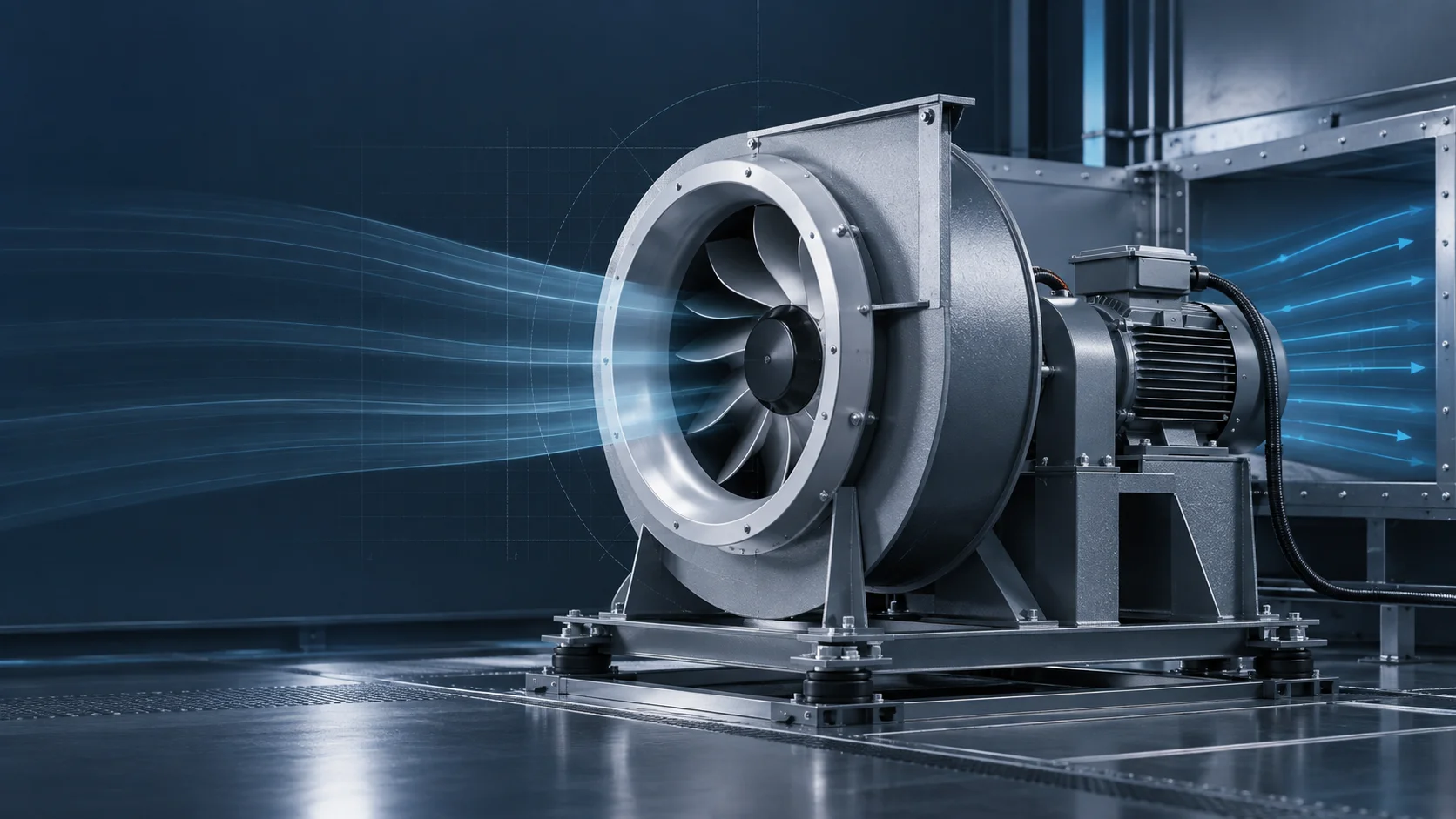
A centrifugal fan works by converting the motor’s mechanical energy into airflow pressure and velocity. During operation, the motor drives the impeller to rotate at high speed inside the fan housing. As the impeller spins, air is drawn into the center of the impeller through the air inlet.
The curved blades of the impeller accelerate the air outward due to centrifugal force. As the air moves along the blade channels, both velocity and static pressure increase. The pressurized air is then guided through the scroll-shaped casing and discharged through the outlet in a controlled direction.
This continuous process allows the centrifugal fan to generate stable airflow and higher air pressure, making it ideal for systems that require resistance handling, such as HVAC ventilation, air purification, industrial cooling, exhaust systems, and air handling equipment.
Centrifugal fans are commonly powered by AC or EC motors.
Types of Centrifugal Fans
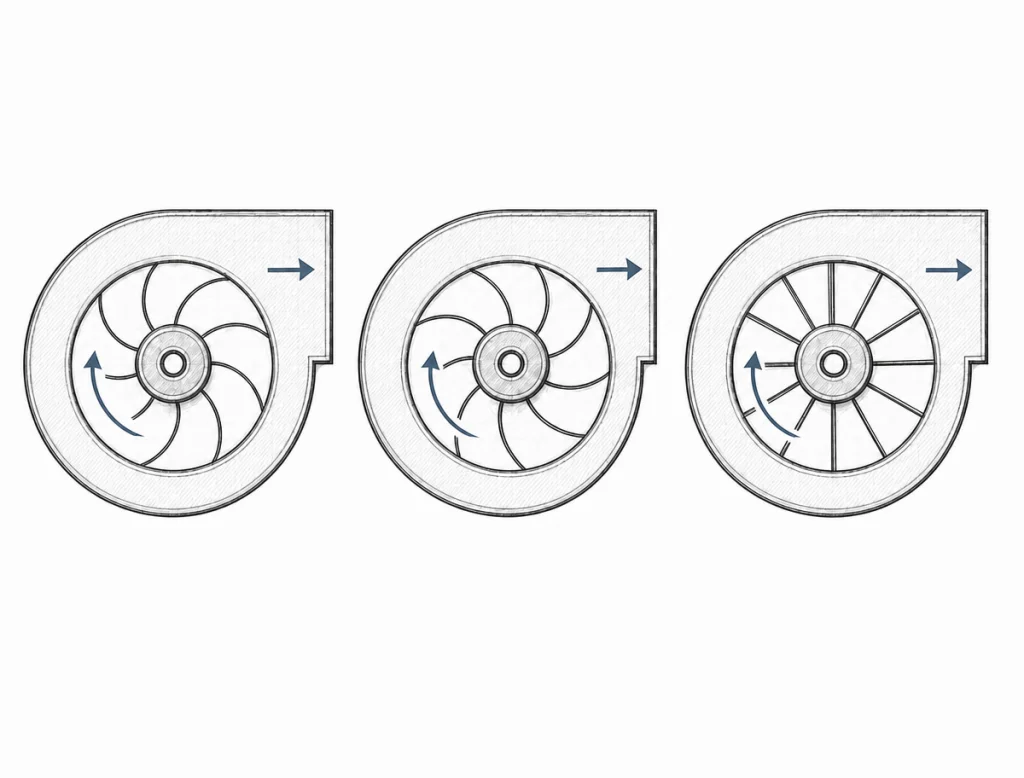
Centrifugal fans are available in several designs to meet different airflow, pressure, efficiency, and noise requirements. The main difference between fan types lies in the shape and direction of the impeller blades, which directly affect performance characteristics and application suitability.
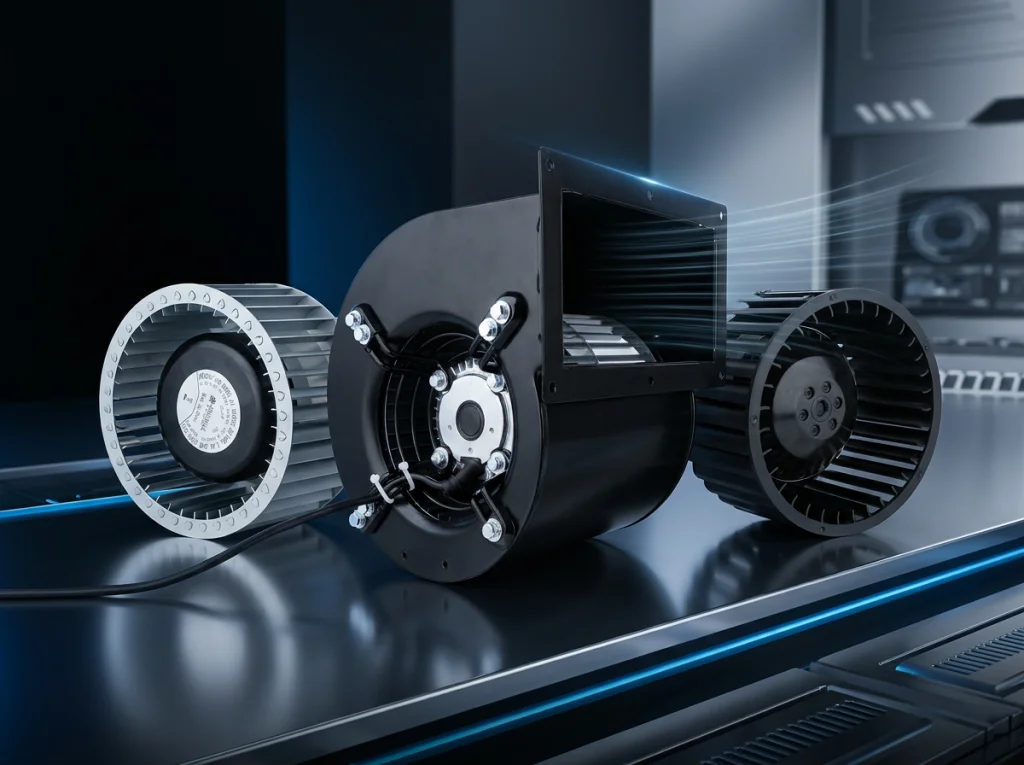
Forward Curved Centrifugal Fans
Forward curved centrifugal fans have many small, curved blades that point to the direction of rotation. These fans are designed to deliver high airflow volume at relatively low static pressure and low operating noise. Forward curved centrifugal fans usually have a compact structure, large airflow capacity, and low noise operation. They are typically suitable for HVAC air handling units, fan coil units, air purifiers, indoor ventilation systems, and residential or commercial air conditioning.
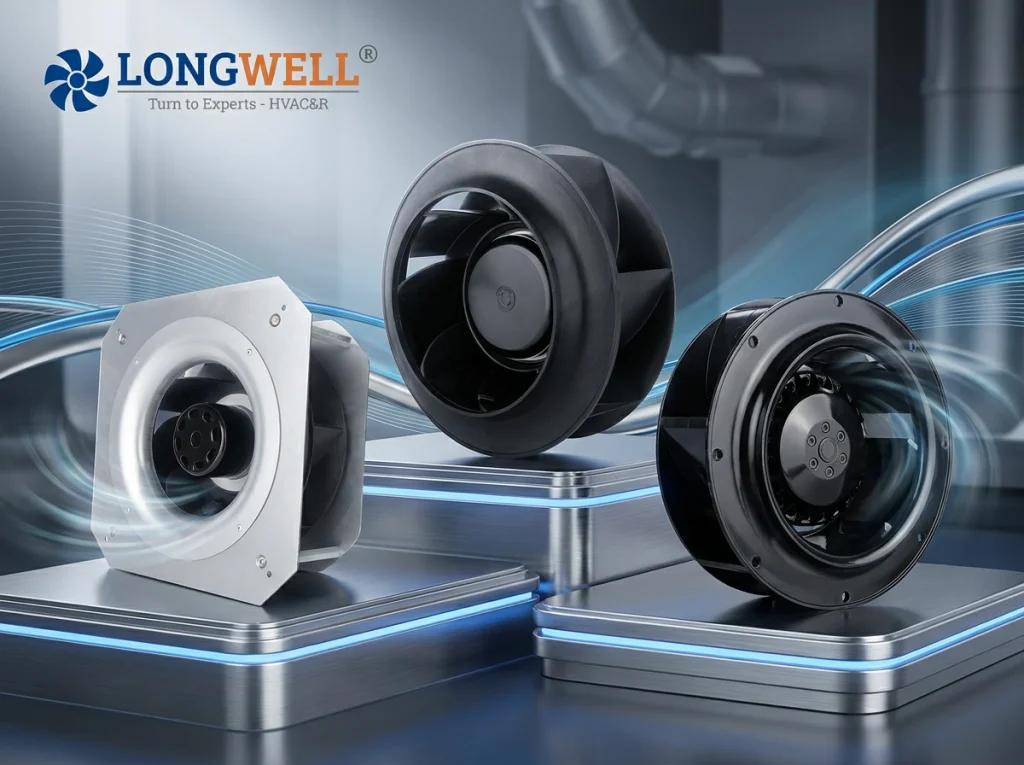
Backward Curved Centrifugal Fans
The blades of centrifugal fans are usually curved from the direction of rotation. This design improves aerodynamic efficiency and reduces energy consumption. Backward curved centrifugal fans have the key features of high efficiency, higher static pressure capacity, and lower power consumption, making them ideal for industrial ventilation, commercial HVAC systems, data center cooling, and clean room ventilation.
Radial Blade Centrifugal Fans
Radial blade centrifugal fans feature straight blades that extend radially outward from the impeller. Designed for demanding industrial environments, these fans are highly durable and capable of handling harsh operating conditions, including dusty, dirty, or particle-laden air.
Thanks to their rugged construction and high-pressure performance, radial blade centrifugal fans maintain stable airflow even in challenging applications where contaminants or debris are present. They usually have extremely durable construction, high-pressure performance, and high resistance to dust and particles, which are ideal for dust collection systems, industrial exhaust, material conveying, and high-temperature ventilation.
Centrifugal Fans Applications
Centrifugal fans are widely used in both industrial and commercial environments because they can generate high static pressure and maintain stable airflow even in systems with resistance such as ducts, filters, or heat exchangers. Their versatility makes them suitable for ventilation, cooling, air handling, and process air movement across many industries.
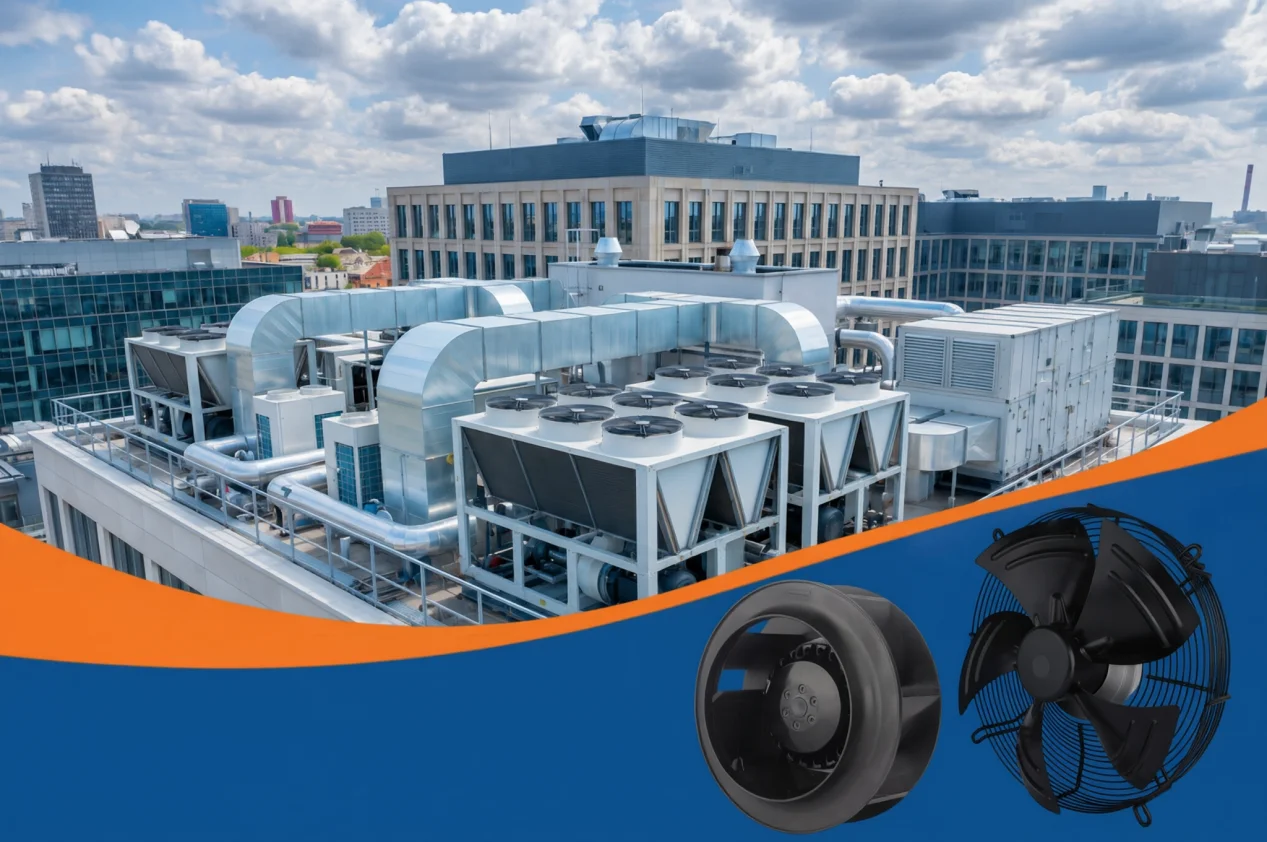
- HVAC Systems: Centrifugal fans play an important role in modern HVAC systems where controlled airflow and pressure are needed. Typical uses in HVAC systems include air handling units (AHUs), fan coil units, building ventilation systems, and air distribution.
- Industrial Ventilation and Exhaust: Centrifugal fans can help remove fumes, dust, and airborne contaminants to main safe manufacturing environments. Typical applications include factory ventilation systems, workshop exhaust systems, fume extraction, and welding smoke removal.
- Dust Collection Systems: Centrifugal fans play a key role in air pollution control systems by moving air through filters and separation equipment. They play an important role in dust collectors, baghouse systems, and industrial air purification systems.
- Data Centers and Electronics Cooling: Reliable cooling is critical in sensitive electronic environments where temperature stability is essential. Centrifugal fans are often used in server cooling systems, rack-mounted ventilation systems, and Telecom equipment cabinets.
- Clean Rooms and Medical Environments: Centrifugal fans are used where clean, controlled airflow is required to maintain strict environmental conditions. Airfoil centrifugal fans are commonly used due to their low noise and high efficiency.
- Clean Rooms and Medical Environments: Many machines rely on centrifugal fans for process air movement, drying, or cooling like drying systems, ovens and furnaces, printing machines, packaging equipment, and material conveying systems.
- Energy and Environmental Systems: Centrifugal fans are also used in systems focused on energy recovery and environmental protection. Typical applications include waste gas treatment systems, heat recovery ventilation (HRV), industrial emission control systems, and power plant ventilation.
How to Choose the Right Centrifugal Fan?
To ensure you choose the right centrifugal fan, you need to consider the following factors:
Ensure Your System Requirements
Before selecting a fan type, define the key operating conditions:
- Required airflow (m³/h or CFM)
- Static pressure (resistance from ducts, filters, coils)
- Air quality (clean air vs. dusty/dirty air)
- Noise limitations
- Energy efficiency goals
- Operating environment (industrial, commercial, high temperature, etc.)
Consider Airflow and Pressure
Low Pressure and High Airflow: Forward curved centrifugal fans can be the best choice when you need large air volume but low resistance systems.
Medium to High Efficiency Systems: Backward curved centrifugal fans are usually the best for modern HVAC and industrial ventilation.
Go for radial blade centrifugal fans for high resistance or contaminated air.
Consider Energy Efficiency (Long-Term Cost)
When selecting a centrifugal fan, it is important to look beyond the initial purchase price and evaluate the total cost of ownership over the equipment’s lifetime. In many applications, especially those running continuously, electricity consumption becomes the largest operating expense.
Even if a fan with lower upfront cost seems attractive, it may lead to significantly higher long-term energy costs if efficiency is poor.
- Backward curved centrifugal fans → High efficiency: Ideal balance between airflow performance and energy savings, widely used in HVAC and industrial ventilation.
- Airfoil centrifugal fans → Very high efficiency: Best-in-class aerodynamic design for maximum energy savings, especially in modern, high-performance HVAC systems.
- Forward curved centrifugal fans → Moderate efficiency: Suitable for compact and low-pressure systems where cost and size are priorities.
- Radial blade centrifugal fans → Lowest efficiency but highest durability: Designed for harsh environments, dust, and high-pressure resistance rather than energy optimization.
Consider Noise Requirements
Noise performance is another critical factor, especially in environments where human comfort or acoustic control is important.
Noise levels are influenced by blade design, airflow turbulence, and operating speed.
Noise performance by fan type:
- Quietest: Forward curved / Airfoil centrifugal fans
These fans produce smoother airflow with reduced turbulence, making them ideal for indoor and noise-sensitive environments.
- Moderate noise: Backward curved centrifugal fans
Balanced aerodynamic design provides good performance with acceptable noise levels for most commercial and industrial applications.
- Loudest: Radial blade centrifugal fans (especially under load)
Designed for industrial durability and high-pressure operation, often used where noise is not a primary concern.
If you want to know more about how to choose the right centrifugal fans, contact LONGWELL team for the fan solution.
LONGWELL EC Centrifugal Fans – When critical environments demand more than airflow, they demand intelligence
LONGWELL offers a comprehensive fan solution with products like centrifugal fans, including forward-curved, backward-curved, and industrial centrifugal fans. Engineered with advanced aerodynamic design and intelligent control systems, our centrifugal fans deliver high efficiency, low noise, and reliable performance for diverse applications.
What makes LONGWELL EC centrifugal fans the specification-grade choice
Three integrated engineering disciplines — motor intelligence, aerodynamic precision, and smart system control — converge in every LONGWELL EC centrifugal fan. Each pillar directly translates to measurable performance outcomes in your application.
EC Motor Architecture: Precision Control at Every RPM
AC/DC hybrid commutation Unlike conventional AC induction motors, LONGWELL’s EC motor integrates AC input compatibility with DC-side permanent magnet control — eliminating rotor copper losses and achieving motor efficiencies exceeding IE4 classification.
Closed-loop speed regulation Electronic commutation enables ±1% speed accuracy across the full operating range. For building engineers, that means airflow profiles hold steady through load shifts — no hunting, no overshoot.
Up to 50% energy reduction vs. AC motor alternatives Because EC motors eliminate reactive current losses and run without brushes or slip rings, energy draw drops significantly — with the greatest savings realized in variable-load HVAC applications where the fan rarely runs at full speed.
CFD-optimized Impeller: High Pressure, Low Turbulence
Airfoil blade profile Each impeller blade cross-section follows an aerodynamic airfoil curve rather than a flat or simple arc. This reduces boundary-layer separation — the primary source of turbulent noise and pressure loss — enabling high static pressure output with significantly less power input.
Long-duct pressure head capability The optimized blade geometry sustains pressure across extended ductwork runs — critical for large commercial buildings, data center hot-aisle containment systems, and hospital HVAC where supply distances routinely exceed 100 meters.
Structurally integrated noise attenuation Blade count, sweep angle, and tip clearance are tuned together to push tonal frequencies below perceptible thresholds — not added acoustic foam after the fact. The result is quieter operation without the weight, maintenance burden, or flow restriction of external silencers.
Intelligent PCB control: from monitoring to BMS integration
Real-time performance monitoring and speed trim The onboard PCB continuously measures motor current, speed, and temperature. Commissioning engineers can fine-tune airflow delivery without balancing dampers or returning to the mechanical room — adjustments are made at the fan via 0–10V, PWM, or Modbus signal.
Thermal and mechanical fault detection Over-temperature thresholds and bearing vibration signatures trigger pre-fault alerts before a failure event occurs. For mission-critical facilities, this shifts maintenance from reactive to predictive — extending service intervals and eliminating unplanned downtime.
Native BMS / BACnet integration LONGWELL’s intelligent PCB exposes fan status, speed setpoint, and alarm conditions directly to building management systems via standard open protocols. Facility managers gain full visibility and remote override capability without additional gateways or proprietary middleware.Backed by our cutting-edge EC (Electronic Commutation) technology, a 40,000㎡ intelligent manufacturing base, and a globally recognized certification system, LONGWELL has become a trusted partner for Fortune 500 companies and clients in over 30 countries worldwide. Whether for HVAC systems, commercial air conditioning, or industrial ventilation, LONGWELL provides energy-saving and robust air movement solutions tailored to your needs.
Choose the right centrifugal fan
Longwell manufactures 1,130 centrifugal fans in-house. Send airflow, static pressure and voltage — an engineer replies with a matching model, performance curve and price within one working day.