
80,000-Unit Smart-Home ERV Product Launch · Matter 1.2
A composite reference case based on representative Asia smart-home brand ERV launch programs — supplying Matter 1.2 certified EC blowers for 80,000-unit volume ERV SKU with HVI 920 + ErP Lot 6 + 24 dB(A) bedroom-proximity acoustic, hitting the brand's holiday-shopping launch window.
1 · Challenge
- Brand committed to Matter 1.2 ERV category launch for holiday shopping season — 6-month engineering-to-shelf window.
- Original component spec (premium European PHI blower) had 16-week lead time, blocking launch.
- Required: HVI 920 + ErP Lot 6 + Matter 1.2 CSA certification + 24 dB(A) bedroom-proximity acoustic floor.
- Cost target: blower BOM ≤45% of premium European PHI alternative to hit retail price point.
- 80,000-unit ramp over 12 months with weekly SKU rotation cadence.
2 · Solution Architecture
Bill of materials
| LONGWELL SKU | Type | Qty | Key spec |
|---|---|---|---|
| LWBE3G-250-EC-Matter | EC backward-curved blower | 80,000 units | Ø250 mm, SFP 0.41 W/(m³/h), 24 dB(A) @ 1 m, Matter 1.2 + Thread + Zigbee + Wi-Fi triple-radio, HVI 920 + ErP Lot 6 + optional PHI |
| LWM-ERV-residential | Mixed-flow inline EC fan | 40,000 units | Ø150 mm, paired with LWBE3G in 2-stream ERV configurations |
3 · Modelled Outcomes — Typical Range
How to read these figures: the values below are modelled for this composite scenario — LONGWELL platform specifications combined with industry-standard deltas for residential ERV programmes. They are a planning range, not measured results from one named project. Verified data from real deployments is in Section 6.
4 · Implementation Timeline
5 · Engineering Lessons
- Matter 1.2 CSA certification eliminated brand-by-brand custom firmware integration. Single SKU lists on Apple Home + Google Home + Alexa + Mijia + Aqara + Tuya without per-platform fork.
- SFP delta of +0.09 W/(m³/h) vs ebm-papst PHI was acceptable for non-Passivhaus retail SKU. Brand positioned product as 'Smart Home Ready' rather than 'Passivhaus Certified'.
- 24 dB(A) bedroom-proximity acoustic floor was binding — every smart-home buyer review filters on noise. Competitor product reviews at 28–32 dB(A) lost market share.
- Component cost saving of 58% vs PHI premium enabled retail price 35% below PHI competitor — opened mid-market that was previously price-gated out.
- Weekly batch shipment (not monthly) aligned with brand's SKU rotation velocity — kept warehouse storage cost on LONGWELL side rather than brand side.
6 · Verified Project Evidence
Everything below comes from actual project correspondence and from photographs taken during sampling. Model numbers, duty points and test conditions are stated as they occurred. Customer names are withheld; no pricing is published.
Belgium — residential ERV OEM, 160 mm 24 V EC backward-curved fan
- Supplied: LWBD3G160-060PM-01 — 24 V DC, 22 W, 3,040 rpm, 10-pole, Class F insulation, IP23, 1,800 mm lead length.
- The hard requirement was the bottom of the speed range, not the top. The unit had to run continuously at 400–500 rpm. Starting directly from a low control voltage risks the motor failing to commutate, so the recommended control logic is to start at a higher voltage and then ramp down.
- Speed response characterised and issued: 4 V → 500 rpm · 9 V → ~1,100 rpm · 12 V → ~1,500 rpm · 15 V → ~2,000 rpm · 23 V → 3,100 rpm.
- Bearing life: NMB bearings with an ISO 281 calculation and accelerated-test report — L10 of 70,000 h at 40 °C (Weibull MTTF 490,000 h).
- Tooling: a dedicated metal mounting plate was tooled for this customer’s housing.
- Neutral supply: no supplier marking on product or packaging, per the OEM programme.
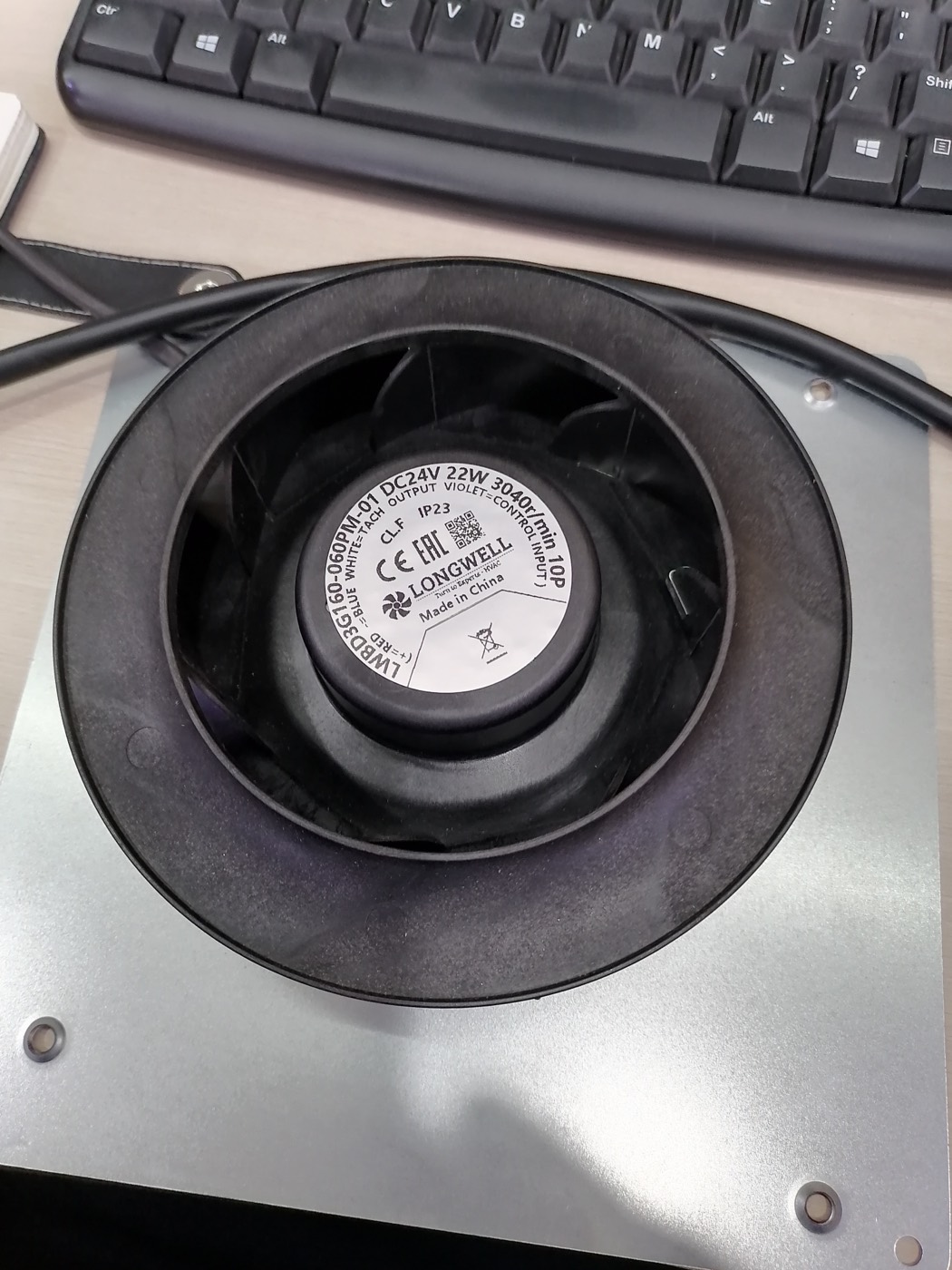
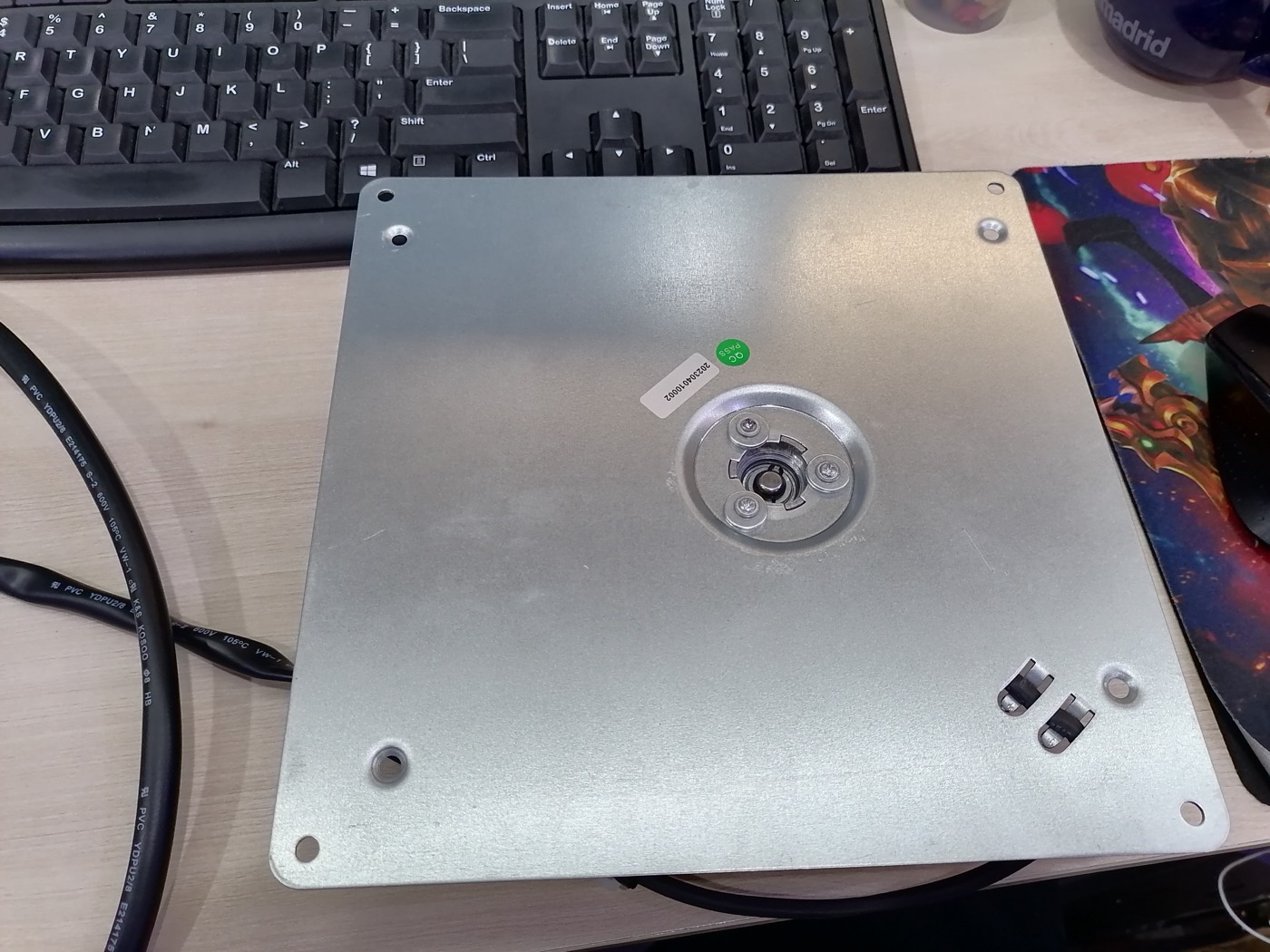
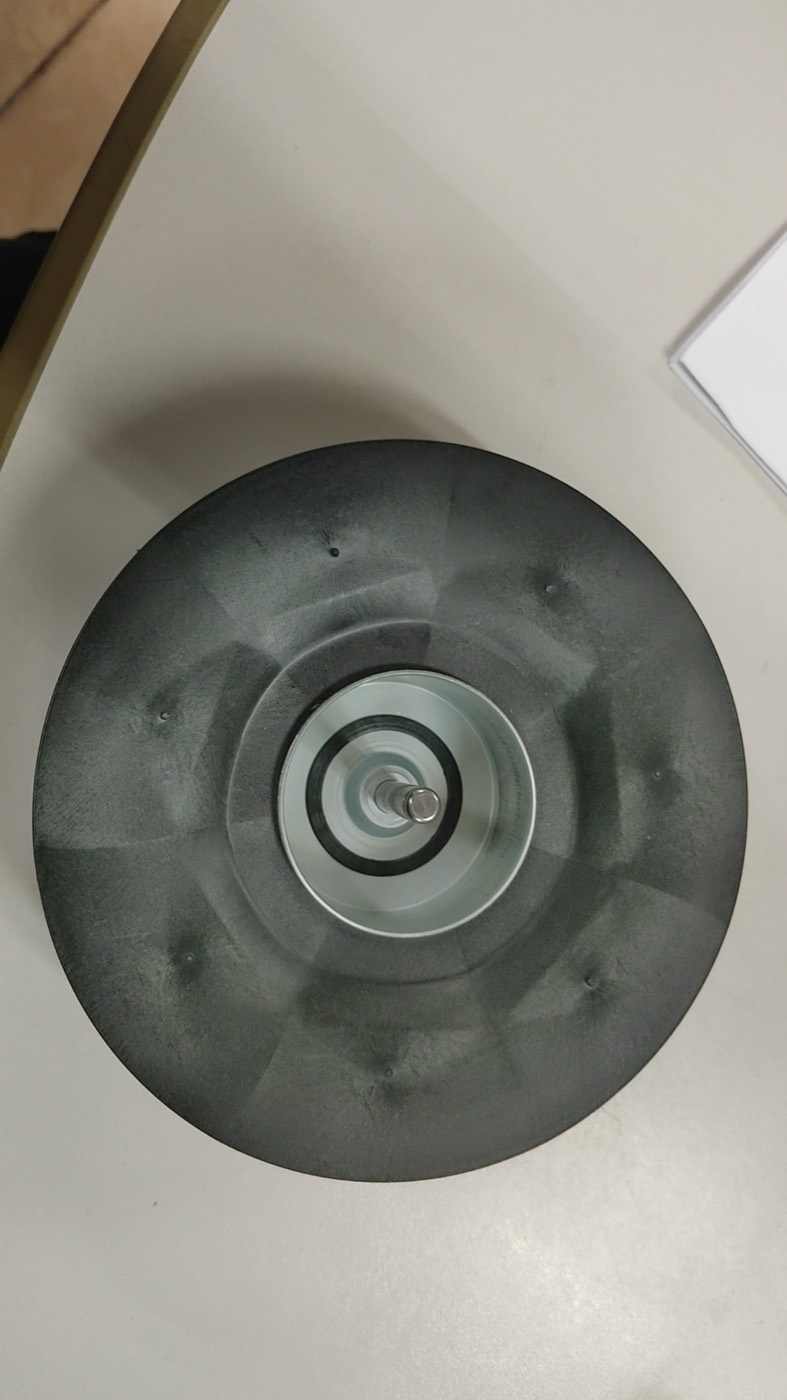
Belgium — CE compliance and label engineering for a compact ERV fan
- CE-LVD certification issued against EN 60335-2-80 / EN 60335-1 with a 68-page test report covering the LWBD3G160 series.
- An Equivalence Declaration was signed and stamped so the customer’s own internal part number could share the certificate — circuit design, wiring diagram, components and internal structure certified as identical. This is what lets an OEM file the appliance without re-testing.
- A label problem worth knowing about: on the 190 mm fan the rotor face offers only about 35 mm of radial space. The customer was concerned that a label lifting at speed would shed debris into a clean-air appliance. The fix was to move the rating plate off the rotating face onto fixed structure and place the wiring label on the cable 30–40 cm from the motor.
- Existing European stock was re-labelled rather than scrapped: 450 plates for 160 mm and 200 for 190 mm were supplied for local rework.
United Arab Emirates — ERV and central ventilation, high ambient
- Supplied: LWBE3G280-102PS-07 — 230 VAC (176–264 V), 50/60 Hz, 3,000 rpm, 2.3 A, 500 W, 3,193 m³/h max, 1,879 Pa max static, IP55, −25 to +60 °C, with 0–10 VDC / PWM / RS485 control.
- Paired with LWAA6D800S-7GB-01 AC external-rotor axial fans for the bulk air-change duty.
- Model change handled mid-development: a separate ERV programme had been sampling LWBE3G280-102NS-25. When that variant was withdrawn, LWBE3G280-102NS-30 (230 VAC, 2,950 rpm, 3.1 A, 700 W, 3,880 m³/h, 1,010 Pa, IP54) was issued with a full old-versus-new comparison and drawings so the customer’s prototype schedule did not slip.
- ERV units run a supply and an extract fan; the two have to be aerodynamically matched and their control signals synchronised — that pairing, not single-fan performance, is what decides the unit result.
Fan performance figures are quoted from LONGWELL controlled datasheets and are tested per AMCA 210/211 methods; third-party reports available on request. EC versus AC energy saving is approximately 30%, higher under strongly varying load — confirm against your own load profile. Final selection must be confirmed against the actual duty point (airflow / static pressure / voltage / control method) and project validation.
Get a sized BOM for your project
Send your application duty point (CFM, Pa, ambient T, IP, certification scope). LONGWELL Engineering returns a sized BOM, AMCA test data, and reference deployment schedule within 1 business day.
📧 Request Sized BOM Browse All 10 Case ProfilesOfficial LONGWELL Product Categories
Browse the live product range and request quotes directly on longwellfans.com