
Trench Convectors & Hydronic Heating Terminals · Ø30–Ø65 mm DC 0–10 V Cross-Flow Programme
Compiled from LONGWELL’s real project correspondence with trench-convector, floor-convector and radiator-booster manufacturers — a long-running supply programme built on Ø30 to Ø65 mm cross-flow fans in single-, twin- and triple-impeller coupled assemblies, 24 V DC with 0–10 V stepless control alongside 230 V AC variants for legacy product lines.
1 · Challenge
- Trench convector cavities leave almost no vertical space. Impeller diameters go down to Ø30 mm, and barrel lengths run from 200 mm to over 1,080 mm — covered by coupling one, two or three motors on a single shaft rather than by tooling a new impeller for every length.
- Underfloor installation means safety extra-low voltage: 24 V DC supply, with a 0–10 V input so the terminal tracks a room thermostat instead of switching between fixed speeds.
- The same manufacturer usually keeps a non-smart product line running on 230 V 50 Hz AC. One supplier has to carry both drive types against the same mechanical envelope.
- A hard physical limit: 230 V AC shaded-pole and small centrifugal motors run out of torque at roughly 620 mm of barrel length. A Swedish over-door heating terminal specified 720 mm and 870 mm barrels, which no AC motor in the range could drive.
- That same terminal specified off → maximum speed in 1.2 seconds on a door contact, plus an earth conductor on every motor.
- Model proliferation is the real commercial risk: a single order can carry dozens of barrel lengths × control variants × left/right motor positions, and the customer needs a firm lead time written into the proforma before payment.
2 · Solution architecture
Series supplied into this segment
| Series / example model | Impeller | Drive | Control | Typical application |
|---|---|---|---|---|
| LWCD-30 xxx M (LWR30) | Ø30 mm aluminium, with grill | 24 V DC brushless, 2,400 rpm | 0–10 V stepless (LW375 board) | Shallow trench convectors, 200–1,080 mm barrels |
| LWCD-40198M / LWR40 | Ø40 mm aluminium, with grill | 24 V DC brushless, 2,400 rpm | 0–10 V stepless (LW375 board) | Deeper trench and floor convectors |
| LWCD-45300NG-01 | Ø45 mm, 290 mm barrel, no grill | 24 V DC, 8.4 W, 0.35 A, 2,000 rpm | 0–10 V, 500 mm lead, RH motor | 210 m³/h heating terminals |
| LWCD-45350NG-01 | Ø45 mm, black coating | 24 V DC, 9.6 W, 0.4 A, 2,000 rpm | 0–10 V, 500 mm lead | 238 m³/h heating terminals |
| LWCA series (LW481 / LW482 motors) | Ø30–Ø60 mm aluminium | 230 V 50 Hz AC | Fixed speed / tapped | Legacy AC terminal product lines |
| LWLB-DC065720 / DC065870 | Ø65 mm, 720 / 870 mm barrels | 12 V & 24 V BLDC | Door contact, 1.2 s ramp, PE on every motor | Over-door heating terminals / warm-air curtains |
| LW375 / LW500 control boards | — | 24 V DC | 0–10 V input | Speed control for the LWCD range |
3 · Verified figures
Fan performance figures are quoted from LONGWELL controlled datasheets and product nameplates and are tested per AMCA 210/211 methods; third-party reports available on request. EC versus AC energy saving is approximately 30%, higher under strongly varying load — confirm against your own load profile. Final selection must be confirmed against the actual duty point (airflow, static pressure, ambient temperature, certification scope) of your machine.
4 · How these programmes run
5 · Engineering lessons carried forward
- Check motor torque against barrel length before quoting. The 620 mm AC limit is a physical property, not a commercial position — discovering it after a customer has designed a 870 mm terminal costs a redesign.
- Publish a selection code table and BOM template on day one. In this segment a single customer routinely carries dozens of barrel lengths across single/twin/triple configurations; without a shared coding scheme, internal and external part numbers drift apart and the wrong assembly ships.
- Check the ratings of third-party accessories early. On one over-door programme a 6 A magnetic door contact carried a two-month development lead time; re-evaluating the actual switching current confirmed the standard 3 A part was adequate and the schedule was saved.
- For long-running accounts, agree a written route for non-conforming components — credited on the periodic reconciliation — so quality issues never block the next shipment.
- Split the order, not the relationship. Where a customer faced logistics or cash-flow constraints, breaking one large order into independent proformas with staged despatch kept the programme on schedule.
6 · Project evidence
Every item below is a real project thread from LONGWELL’s own correspondence. Each carries an anonymised case reference, the counterparty described by industry and buying role only, an evidence grade, the actual dates from first contact to close, the length of the email thread and, where an invoice is on file, the order value band. Customer names, domains, prices and commercial terms are withheld — including from the photographs. Evidence grade A means controlled documents or test reports are on file for that thread; grade B means a structured enquiry and specification are on file. Order value bands are read from the proforma or commercial invoice held on file for that thread and are rounded to a band; the invoice currency is shown as invoiced. A band is only given where the invoice currency is unambiguous — 20 of the threads on these pages carry one. Unit prices are never published.
Trench convector programme — multi-size DC and AC cross-flow supply
- Supplied the full Ø30 mm and Ø40 mm range (LWR30-200-1 through the long variants) in single-, twin- and triple-motor coupled assemblies, all with aluminium impellers and protective grills.
- 24 V DC units built on the LW375 board with 0–10 V control at 2,400 rpm; 230 V 50 Hz AC units on LW481 / LW482 motors for the same mechanical envelope.
- The order was split into independent proformas with staged despatch and a flexible deposit arrangement to work around logistics uncertainty; the programme continued rather than stalling.
Ultra-slim DC cross-flow for a very shallow terminal
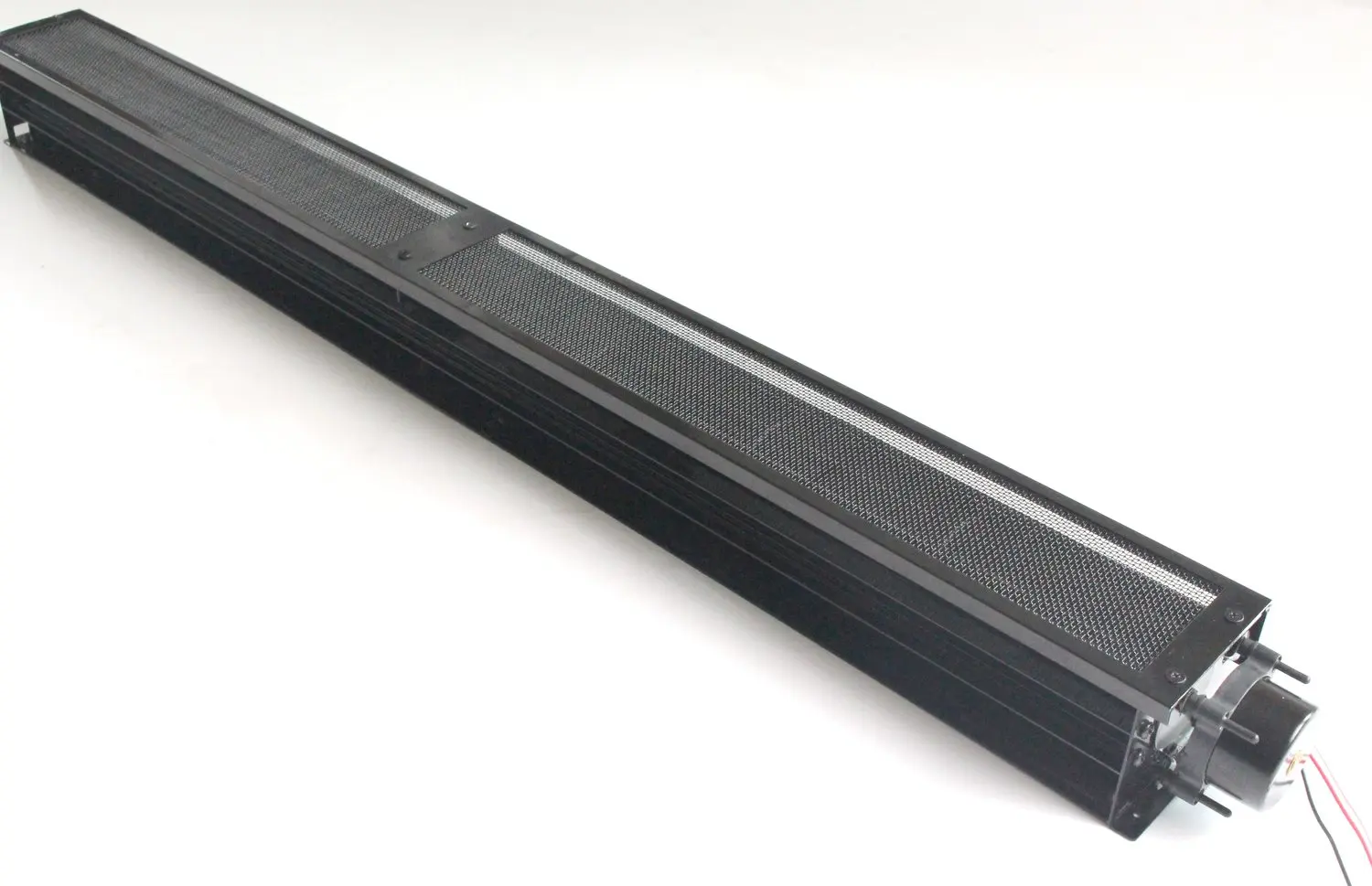
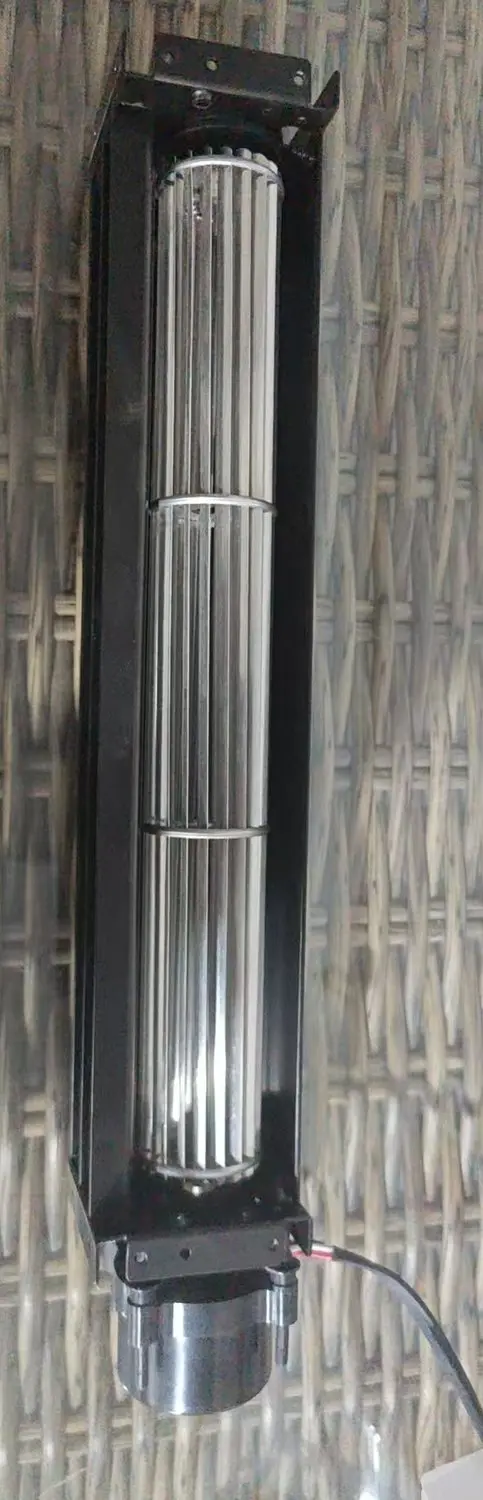
- The terminal cross-section could not accept any standard assembly. Structure was iterated over several sample rounds until a slim bracketed cross-flow assembly with an external-rotor DC motor and 0–10 V lead fitted the cavity.
- Photograph below shows the assembly as sampled: bracket, aluminium barrel, protective cage and the 0–10 V control lead.
Over-door heating terminal — 720 / 870 mm barrels, 1.2 s start-up
- LWLB-DC065720 (789 × 732 × 720 mm) and LWLB-DC065870 (939 × 882 × 870 mm) at 12 V and 230 V, with an earth conductor required on every motor.
- Engineering confirmed that 230 V AC could not drive barrels beyond roughly 620 mm; the whole long-barrel range moved to 12 V / 24 V BLDC, which also delivered the specified 1.2 second off-to-maximum ramp on door contact.
- A 6 A magnetic door contact would have required two months of development. Reviewing the real switching duty confirmed the standard 3 A part, and the build schedule held.
Twin-side anti-vibration AC cross-flow, customer-verified on their own bench
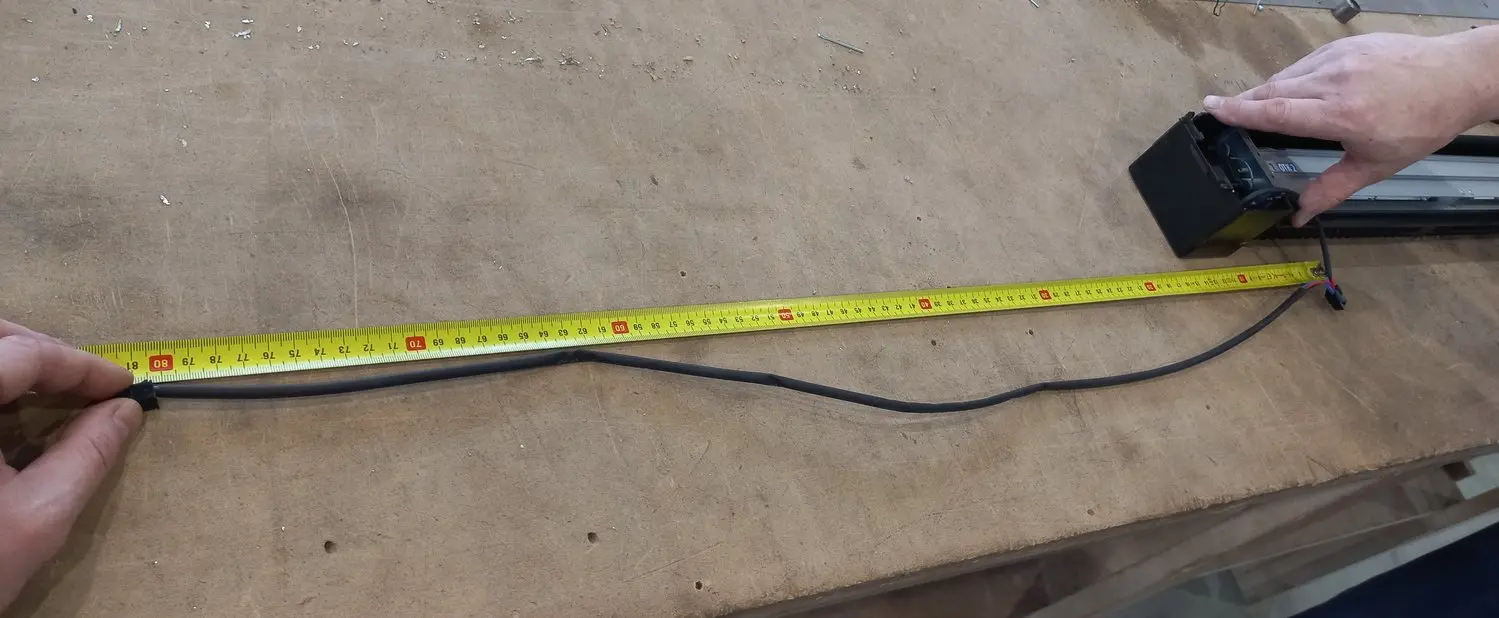
- AC cross-flow assemblies with anti-vibration mounts on both ends, plus a daisy-chain plug harness so multiple units in one trench run share a single feed.
- The customer measured the delivered harness on their own workbench against the drawing before releasing the batch — photograph below.
Mounting and protection plates supplied as part of the assembly
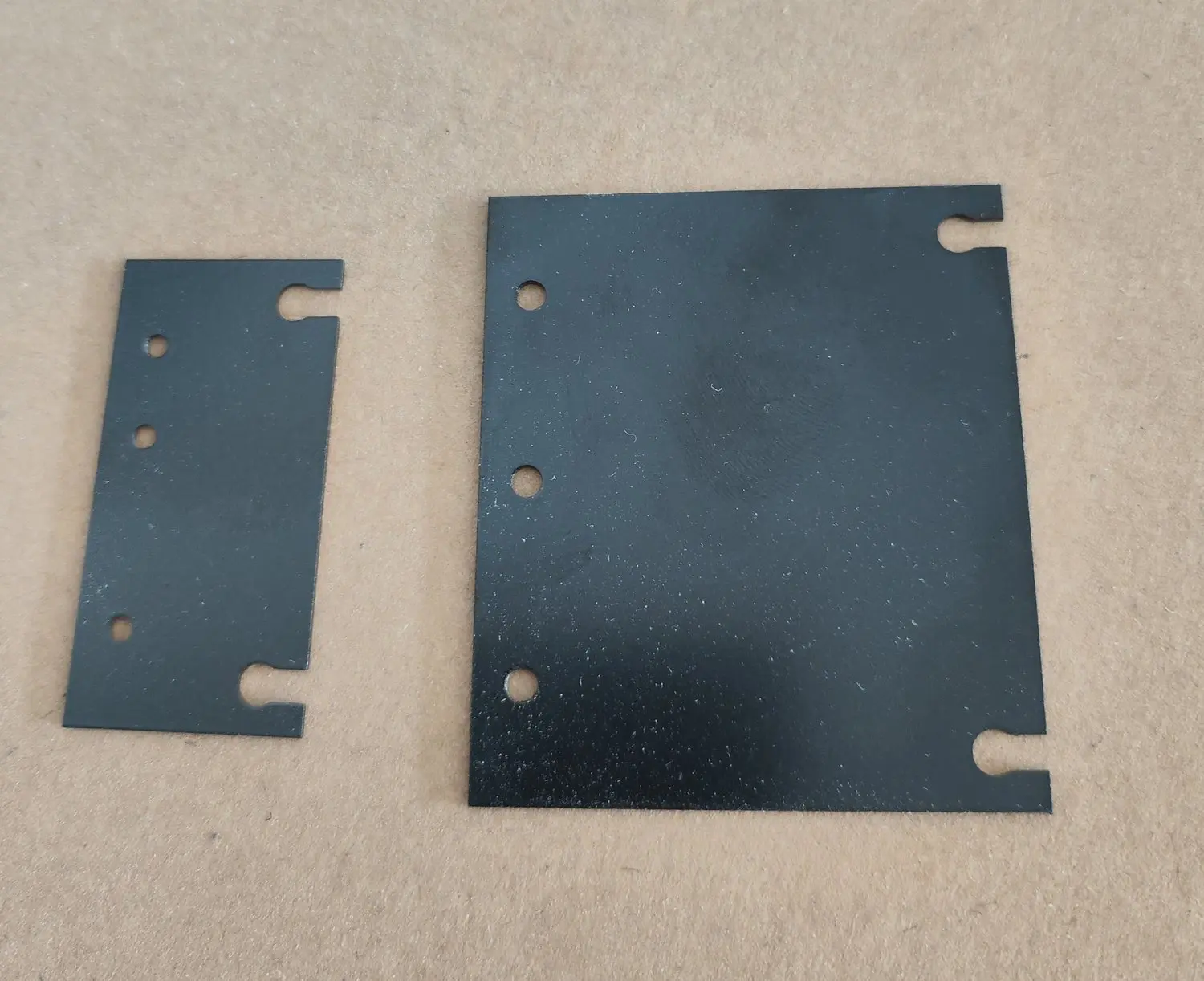
- Beyond the fan itself, the customer required cut-and-formed mounting / protection plates in two sizes with matched slot and hole patterns, so the fan block drops into the convector housing without site drilling.
- Delivered as a kit with the 24 V DC cross-flow assemblies.
Fan performance figures are quoted from LONGWELL controlled datasheets and product nameplates and are tested per AMCA 210/211 methods; third-party reports available on request. EC versus AC energy saving is approximately 30%, higher under strongly varying load — confirm against your own load profile. Final selection must be confirmed against the actual duty point (airflow, static pressure, ambient temperature, certification scope) of your machine.
Get a sized BOM for your project
Send your application duty point (airflow, static pressure, ambient temperature, IP and certification scope). LONGWELL Engineering returns a sized BOM, test data and an indicative build schedule within 1 business day.
📧 Request Sized BOM Browse All Case ProfilesOfficial LONGWELL Product Categories
Browse the live product range and request quotes directly on longwellfans.com