Leave your requirements and our team will respond within 1 business day.
Industrial-Grade, High-Volume, Corrosion-Resistant & Low-Noise Ventilation Solution
| Image | Name | Airflow(m³/h) | Voltage(V) | Frequency(Hz) | AC/DC/EC | Dimensions(mm) | Sound Pressure(dB(A)) | Sound Power(Bel) | Speed |
|---|---|---|---|---|---|---|---|---|---|
| No products found in this category. | |||||||||
For more information, compare product specifications, applications, and get a quote for your unique requirements.
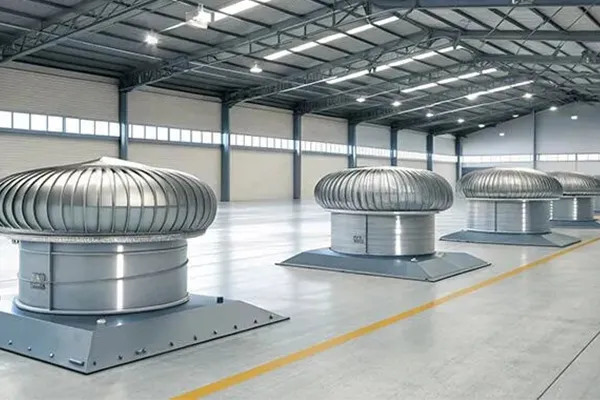
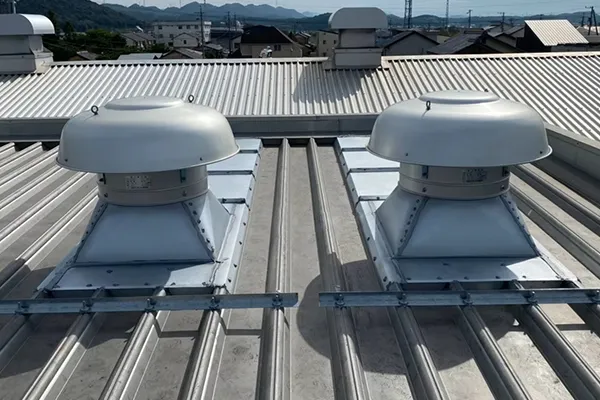
Ventilation is of paramount importance in industrial settings such as workshops and warehouses. The use of roof exhaust fan facilitates the rapid expulsion of harmful fumes, mitigates heat accumulation within industrial spaces, and ensures safe production operations.
In commercial structures—including shopping malls, supermarkets, and office buildings—the deployment of roof exhaust fan reduces reliance on air conditioning, thereby lowering energy costs. By maintaining continuous airflow, these systems ensure that indoor air remains fresh and clean.
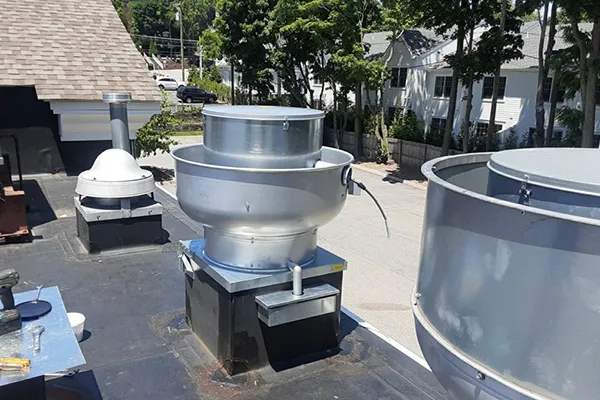
Thanks to the “Upblast” design, the roof exhaust fan can avoid oil residue. It has a stronger suction force than ordinary axial flow fans or wall exhaust fans, thoroughly extracting harmful gases such as cooking oil fumes, steam and carbon monoxide to the outside.
Public venues—like hospitals, schools, and airports—typically accommodate large gatherings of people; consequently, continuous air exchange are absolutely essential. The use of roof exhaust fan serves to reliably ensure air purity and prevent the accumulation of viruses and bacteria.
To provide a healthier environment for poultry and livestock, air quality is a critical factor that cannot be overlooked. By reducing humidity levels and promoting robust air circulation, roof exhaust fan significantly lowers the risk of respiratory diseases among farm animals.
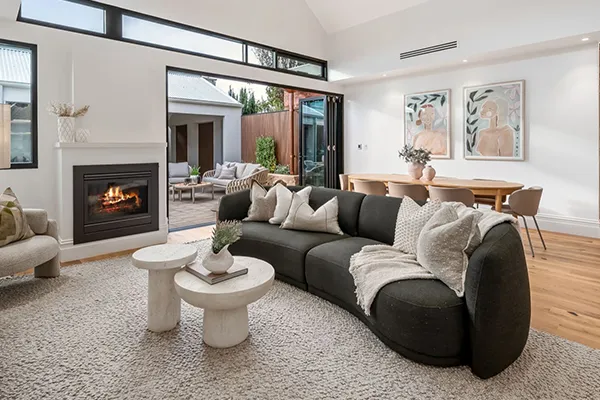
In residential environments, roof exhaust fan is commonly utilized to regulate temperature, reduce humidity, and enhance air circulation, thereby creating a more comfortable living atmosphere. Additionally, it is frequently employed for bathroom ventilation purposes.
Have you ever wondered why roof exhaust fan must be installed on the roof of a building? In fact, it is because the density of hot air and foul gases is smaller than that of air, and they tend to gather upwards. Therefore, installing the fan on the roof can most efficiently expel hot air, odors and impurities, maintaining a fresh and comfortable indoor environment.
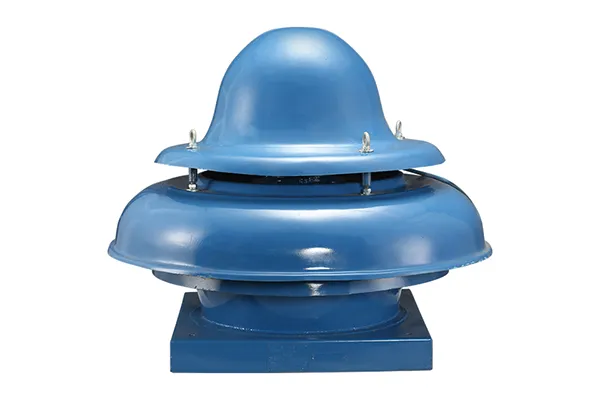
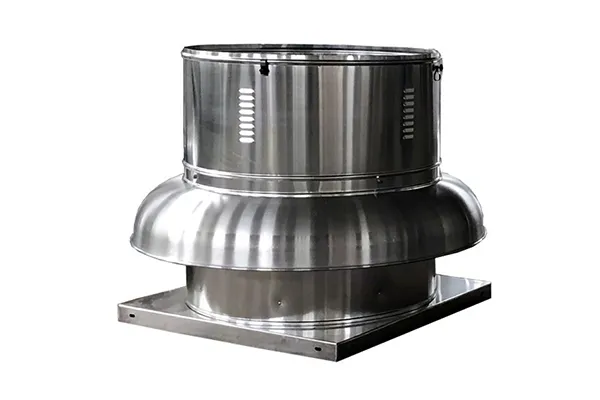
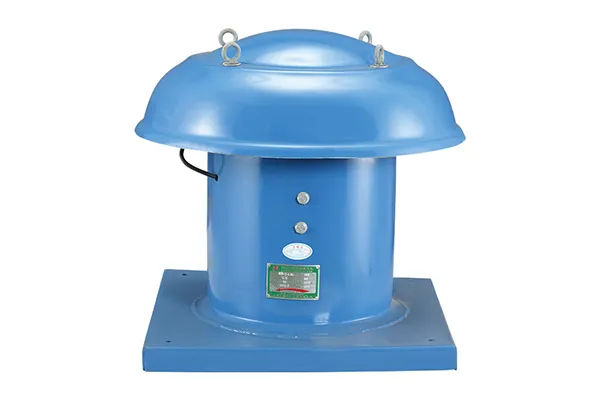
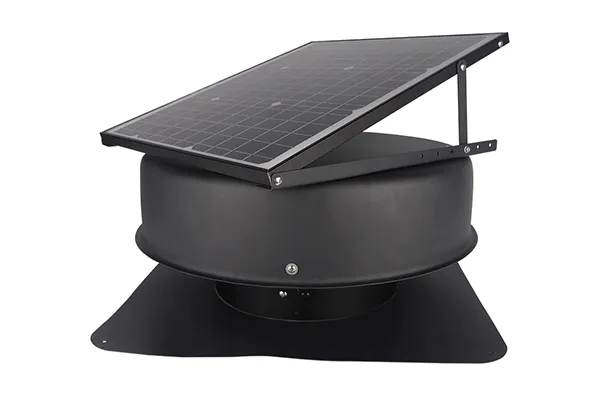
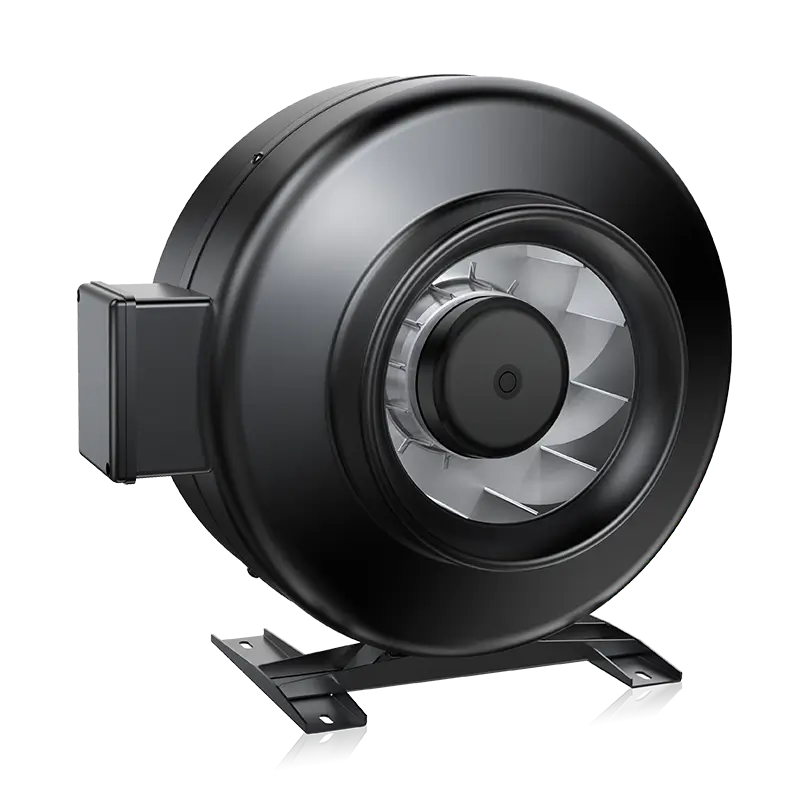
The working principle of a roof exhaust fan is quite simple. It is composed of components including an impeller, motor, exhaust hood, casing, and bracket. The motor drives the impeller to rotate, and the blades cut through the air, generating centrifugal force (centrifugal fans) or pushing the air along the axial direction (axial fans), thus creating a stable air flow.
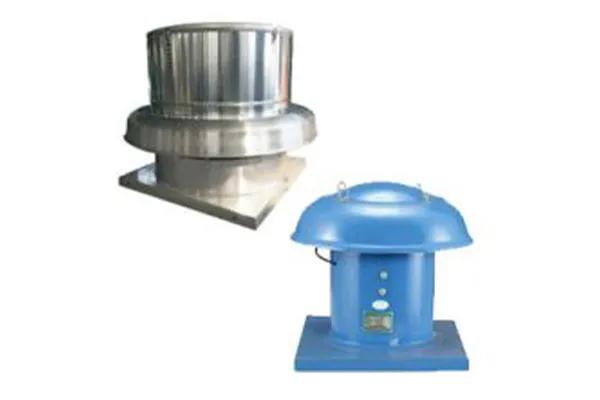
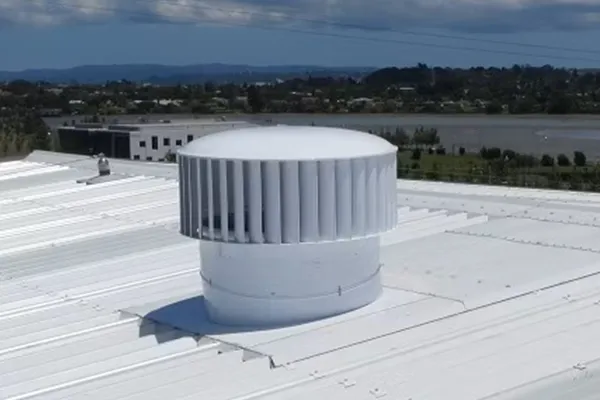
The impeller is available in materials such as galvanized steel, stainless steel, and aluminum alloy, all of which are highly corrosion-resistant. Roof exhaust fan with louvered or exhaust hoods can prevent rainwater from entering while optimizing air flow. It can meet all your ventilation and exhaust requirements for industrial, commercial, and public buildings.
The roof exhaust fan adopts large-diameter streamlined wind cap, labyrinth structure and roof curb design. Its protection level reaches IP55 or above, effectively preventing rainwater from flowing back into the air duct.
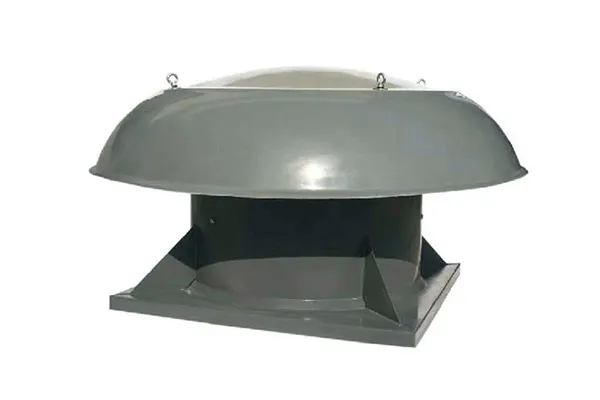
FRP (fiberglass reinforced plastic) is a commonly used material for roof fans. We also apply a layer of resin-rich gel coat on its surface, which can filter out over 90% of ultraviolet rays and prevent the shell from aging.
Equipped with acoustic lining or dedicated sound-absorbing base, the high-frequency airflow noise of Longwell roof exhaust fan is effectively absorbed, making it suitable for hospitals and schools ventilation.
Longwell roof exhaust fan with the EC motor can achieve efficiency of over 90%. It can provide a powerful airflow of up to 6000-7000m³/h, saving 30% – 50% of energy and meeting the IE5 energy efficiency standard.
● Materials: stainless steel, aluminum alloy, FRP, galvanized steel, etc.
● Impeller Type: axial flow, centrifugal flow, mixed flow/oblique flow
● Common Impeller Diameter: 280mm to 2410mm, or customized
● Air Flow: 1,000 to 50,000 m³/h
● Static Pressure: 50 to 500 Pa
● Motor Power: 0.37 to 15 kW
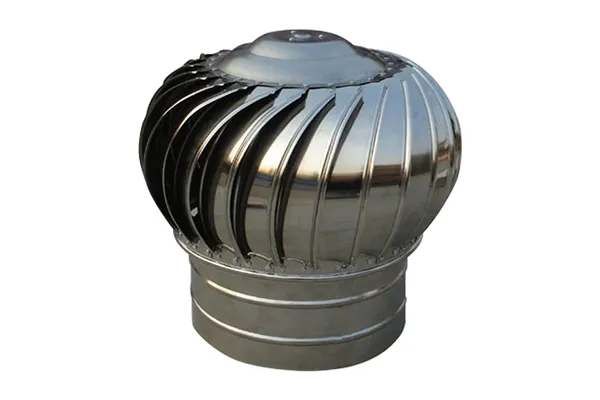
● Wind Speed: 730-1450r/min (centrifugal roof fan); 3.2-16m/s (no power roof fan); 320-2850r/min (axial flow roof fan)
● Noise Level: 55–85 dB(A)
● Protection Levels: IP44–IP65
● Power Supply: single-phase 220V, three-phase 380V, or custom voltage
● Order Quantity: 10 pcs
● High air volume, suitable for industrial plants, warehousing and logistics centers, commercial buildings,and other large-space ventilation.
●Raw materials including galvanized steel, stainless steel or aluminum alloy, the roof exhaust fan is adaptable to high humidity, high temperature and outdoor environments.
● The optimized impeller shape and casing flow channel reduce the noise of the fan operation.
● Optional variable frequency or DC motors further reduce operating energy consumption.
● The detachable impeller and motor facilitate regular maintenance and cleaning.
● Various impeller types such as axial flow, centrifugal and mixed flow can meet your different air volume and static pressure requirements.
The operation of the roof exhaust fan mainly consists of 3 stages:
Step 1: Suction Air
The motor drives the impeller to rotate, and the indoor air is drawn into the fan casing by the impeller and then enters the center of the impeller.
Step 2: Increase the speed of the air
Depending on the different types of impellers, the direction of the air movement after being sucked into the fan varies.
Axial fans cause the air to flow along the axial direction, with a large volume of air but relatively low pressure.
In centrifugal fans, the air is subjected to centrifugal force by the impeller and is discharged radially. In this case, the static pressure is relatively high, and the air can overcome the resistance of the long duct.
Mixed flow/angled flow fans combine the principles of axial flow and centrifugal flow, having large volume of air, high static pressure, and high exhaust efficiency.
Step 3: Remove Air
After being pressurized in the step 2, the air is continuously expelled outside the room, achieving indoor air circulation and ventilation.
Longwell is a professional manufacturer specializing in roof fans and industrial ventilation equipment. We are dedicated to providing high-performance ventilation solutions for industrial, commercial and engineering projects worldwide. We have a complete range of fan production lines, including axial fans, centrifugal fans, and cross-flow fans, and can offer OEM/ODM customization services.
Having ISO9001, ISO14001, CE, ETL, as well as IE/IEC energy efficiency grades, IP protection grade certifications and other certificates, Longwell roof exhaust fan boasts the advantages of safety and reliability, stable performance, energy saving and low noise.
In order to further ensure that the roof exhaust fan sold to you are of high quality and efficiency, we will conduct strict quality tests, corrosion resistance tests and noise tests on each fan after production. You can rest assured to purchase products from Longwell. We promise to provide you with the most reliable roof exhaust fan at an affordable price.
Please Click Here to contact us now. Send us your industrial ventilation requirements and we will reply promptly within 24/7. We will provide you with the most professional solution! You can also contact us via email at sales@longwellfans.com or via WhatsApp at +86-18358274663.
We build these units to sit on a roof for a decade without you having to worry about them. You won’t see brittle plastics or rust issues here. We primarily use heavy-duty FRP protected by a UV-resistant gel coat, or fluorocarbon-treated aluminum. They easily handle salt spray, acid rain, and intense sun. Plus, the oversized weather caps and heavy EPDM gaskets make sure water stays out, period.
The drop in OPEX is substantial. Traditional AC motors burn a lot of unnecessary power, especially when you try to throttle them down. Our EC (Electronically Commutated) fans usually cut energy use by 30% to 50% right out of the gate. Because they run efficiently at any speed, most facility managers see a full payback on the price difference in about 12 to 18 months.
Nobody wants to spend hours on a hot roof tearing ductwork apart just to clean an impeller. That’s why we use a hinged housing design. Your maintenance crew can simply unlatch it, swing the motor and impeller section open, do their inspection, and close it back up. It cuts maintenance time in half and makes the whole process much safer.
Yes, absolutely. Off-the-shelf fans often miss the mark if you’re dealing with long duct runs or heavy kitchen filtration. Because we have our own R&D team, we can tweak the blade pitch or housing geometry to hit your exact duty point. If you have a totally unique spec, our engineering team can go from concept to a custom, CFD-verified fan ready for delivery in under 90 days.
We know noise issues can stall building permits, so we take acoustics seriously. A lot of fan noise comes from bad airflow design causing air turbulence. We use CFD modeling to smooth that out, and every impeller is dynamically balanced so it doesn’t shake the roof deck. If you’re specking a noise-sensitive site like a hospital or school, let us know—we can add acoustic silencers and vibration isolators to meet local codes.