Application Constraints for the Enclosure
A customer needed a cooling fan for an outdoor telecom cabinet. They asked for a custom 280mm EC centrifugal fan. This specific enclosure holds very sensitive data gear. If the parts get too hot, the whole network node crashes.
Therefore, the system had very strict limits. First, the 280mm EC centrifugal fan had to move 3182 m3/h of free air. Next, it needed to push against a huge static pressure of 1072 Pa. The thick dust filters on the cabinet door cause this massive air resistance.
Outdoor gear also faces rough weather all year. Consequently, the operating temperature range spanned from -25°C to 60°C. The cabinet supplied a 230V AC power line. However, the local grid voltage could swing between 176V and 264V at 50/60Hz.
So, the 280mm EC centrifugal fan had to handle these shifts while keeping power draw under 700W. Safety rules guided the whole build. We designed the unit to pass UL 507, CE, RoHS, and REACH standards. Furthermore, we tested the airflow results using AMCA 210-16 and ISO 5801 methods.
The buyer also wanted an easy control setup. They needed native 0-10V and PWM inputs to lower the speed on cool days. Finally, their control board required a 10VDC power output from the motor itself.
Engineering the 280mm EC Centrifugal Fan
Meeting these strict goals required hard choices. We tested different parts to reach the 1072 Pa pressure target. First, we looked at a plastic impeller. Plastic parts are cheap to make and very light.
However, the motor had to reach 3135 RPM to hit the pressure goal. Spinning that fast creates heavy stress on the blades. At the -25°C low temperature limit, plastic becomes very brittle. Therefore, the plastic blades could easily crack under the heavy wind load.
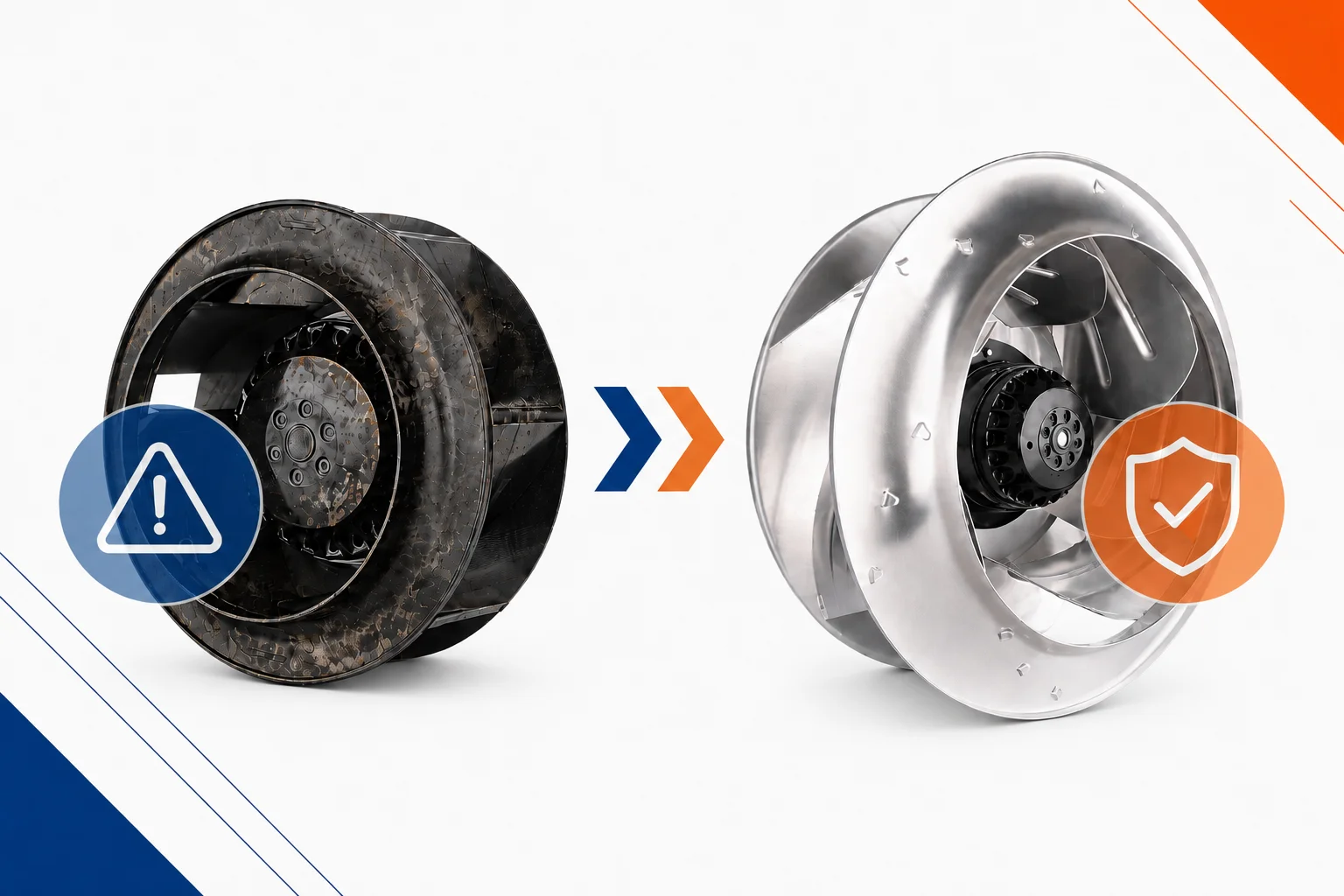
We rejected plastic because field failure is too costly. Instead, we picked an aluminum alloy for the fan blades. Metal keeps its strong shape in deep freezing weather. This choice added mass to the spinning rotor.
Consequently, the heavier metal part cost more to build. Even so, the aluminum design ensures safe running during winter storms.
Balancing Speed Against Noise
Size limits forced us into a tight corner for this project. The customer cabinet only allowed a fan diameter under 286mm. The total height could not grow past 170.5mm. Normally, we would use a wider fan turning slowly to push air quietly.
By contrast, we had to spin this small fan extremely fast. The 3135 RPM top speed pushed the noise level up to 82 dB(A). We accepted this loud noise profile during the design review. Getting the required 1072 Pa pressure was the top rule.
If the fan slows down, the telecom cabinet will overheat. Therefore, the loud acoustic penalty was a fair trade for system safety.
Motor Control and Protection
We used our SmartEC design to keep the power draw strictly under 700W. The motor features Class F insulation to survive the 60°C heat. Next, the internal logic stops electrical spikes from burning the copper wires. A soft start routine slowly spins the heavy aluminum rotor.
It takes nearly 30 seconds for the unit to reach full speed. So, the local electrical grid sees no sudden current spikes. The running fan draws exactly 3.2A at 230V. Furthermore, the motor controller sends four pulses per turn back to the main board.
This tachometer output lets the customer know the fan is spinning. Finally, we used deep groove ball bearings. They give the fan a 40,000-hour L10 life at 40°C.
Technical Specifications
| Airflow (Max) | 3182 m3/h (1872 CFM) |
|---|---|
| Static Pressure (Max) | 1072 Pa |
| Input Power | 700 W |
| Speed | 3135 RPM |
| Voltage | 230 V AC (176-264 V Range) |
| Frequency | 50/60 Hz |
| Current | 3.2 A |
| Dimensions | 286 mm diameter x 170.5 mm height |
| IP Class | IP44 |
| Insulation Class | Class F |
| Certifications | CE, ETL (UL 507), RoHS, REACH |
These specific numbers show the true working limits of the completed 280mm EC centrifugal fan. The massive 1072 Pa pressure rating is the most vital detail here. It proves the fan can push cooling air right through thick dust filters. Consequently, the telecom box stays cool even when dirt completely blocks the outside vents. The wide voltage range is also very helpful. The 176V to 264V window means the motor survives bad grid power. Therefore, rural cell towers can use this fan without breaking down. Finally, the IP44 rating stops splashed water from harming the electronics inside.
Reference: AMCA 210 covers the test method behind these figures.
Technical Documentation
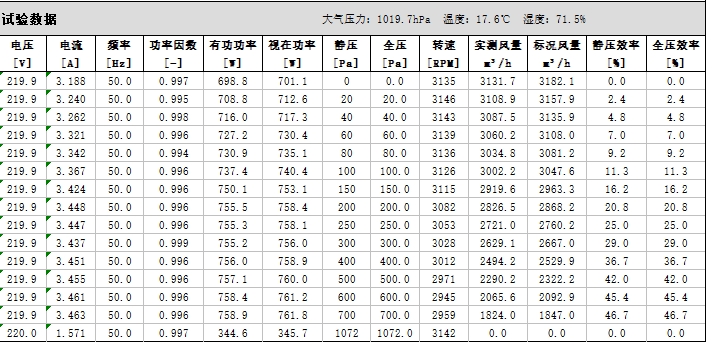
First, this data sheet lists the 700W power limit and all electrical bounds.
Download Technical Drawing PDF
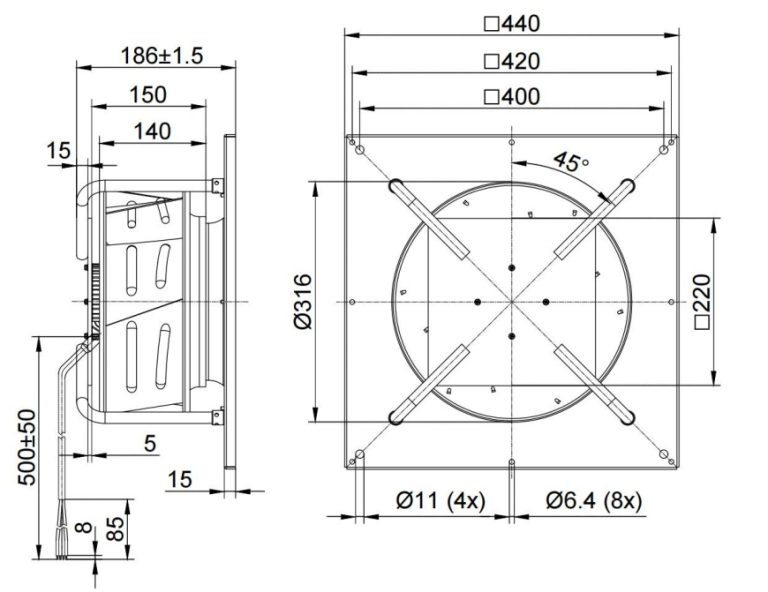
Next, the drawing shows the strict 170.5mm height and the exact mounting hole spots.
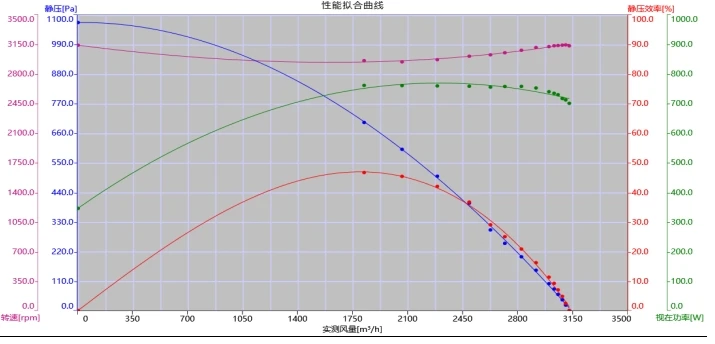
Finally, the performance curve maps the 3182 m3/h airflow against the cabinet air resistance.
Specifying a High-Pressure Fan
If you are specifying a 280mm EC centrifugal fan, avoid common design traps. Consider these simple steps before you ask a factory for a new quote.
- Calculate your true airflow resistance carefully. So, make sure your normal working point sits well below the absolute peak 1072 Pa mark.
- Check the winter weather data for your target city. Next, ask for an aluminum impeller if temperatures ever drop below zero degrees. Deep cold weather cracks plastic fan blades very easily under stress.
- List your exact control signals clearly in your first message. Therefore, tell the supplier if your control board uses a 0-10V signal or a PWM signal.
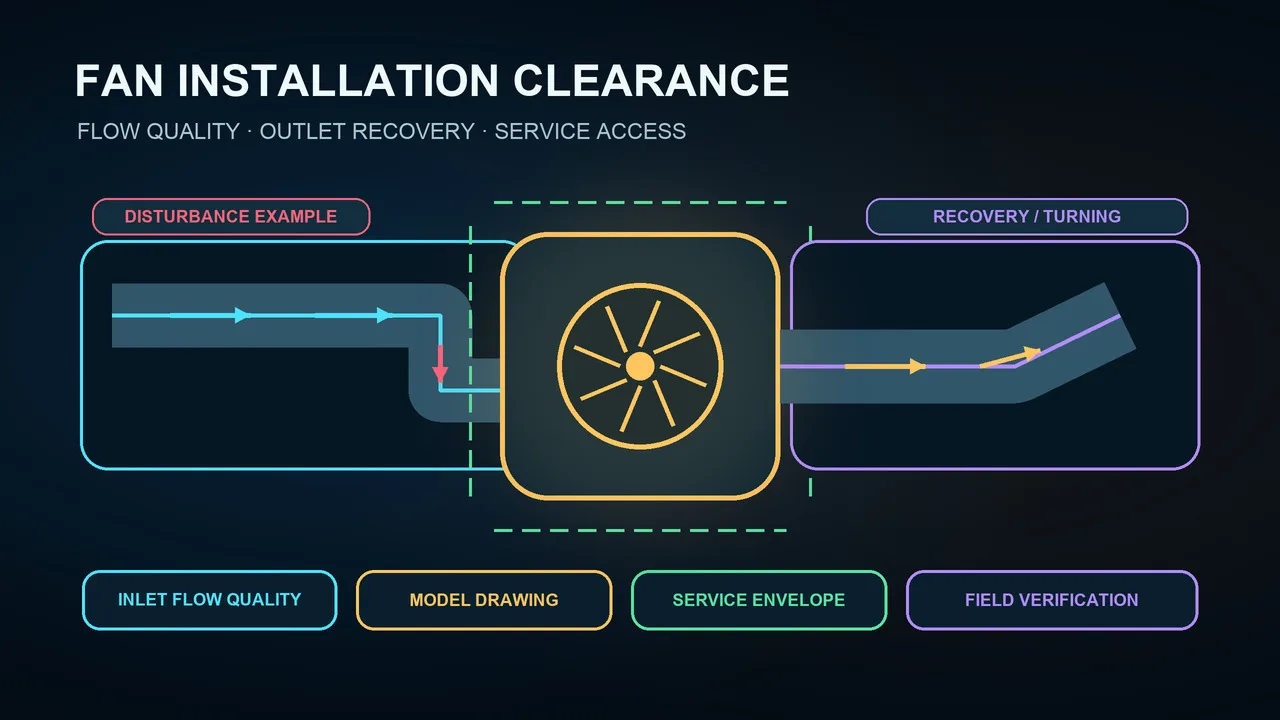
- Leave empty space directly behind the main fan intake. Furthermore, placing a high-speed fan too close to a solid back wall ruins the airflow entirely.
- Verify your maximum power limit early. Consequently, a fan pushing extreme pressure will always draw more watts than a standard model.
Our factory builds and balances our own impellers to fit tight spaces quickly.
Related: Centrifugal Fans.
Common Engineering Questions
Technical Documentation & Resources
Browse our centrifugal fans range, the backward-curved fans section, or forward-curved fans.
Have a Similar Fan Requirement?
Longwell’s engineering team delivers custom spec sheets and samples within 90 days. Since 1990, we have supplied EC fans and blowers to OEMs across HVAC, cold chain, data center, and industrial applications worldwide.
Browse Related Products:
🏆 ISO 9001 / ISO 14001 / ISO 45001 | CE (TÜV) | UL/ETL | ATEX Zone 21/22 | AMCA 210-16 / ISO 5801 tested