Axial fans are widely used in ventilation systems to convey large amounts of air. When the system resistance increases, the axial fan design becomes crucial. The slight design differences can affect the pressure generation. Although the tube axial flow fans and the vane axial flow fans have similar appearances, their internal airflow structures result in different pressure performances. In this blog, we will compare the vane axial fan and tube axial fan from their working principle to higher-pressure applications. With this guide, engineers can select the most suitable axial fan for their systems.
What is a Vane Axial Fan?
Design and Guide Vanes
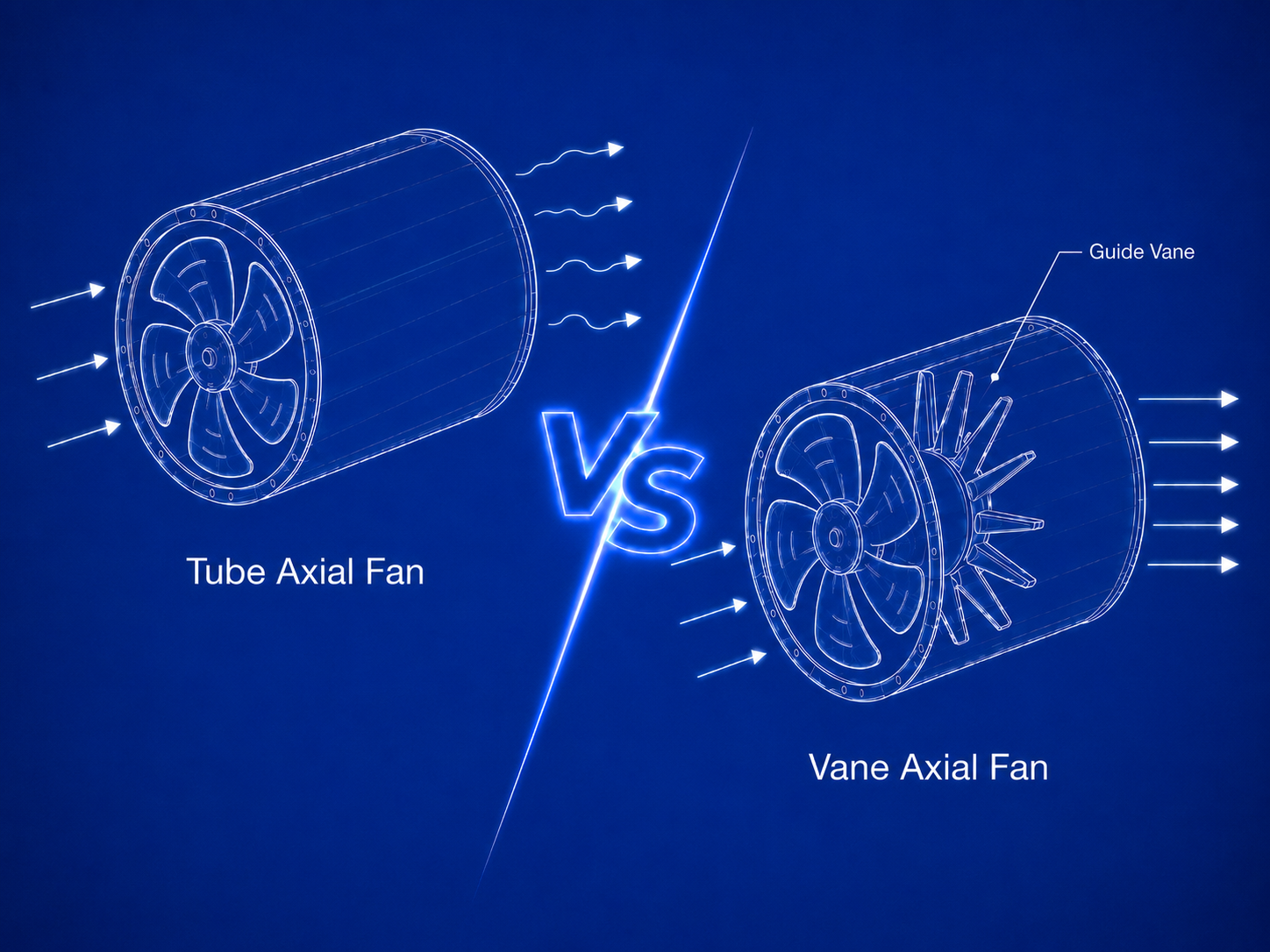
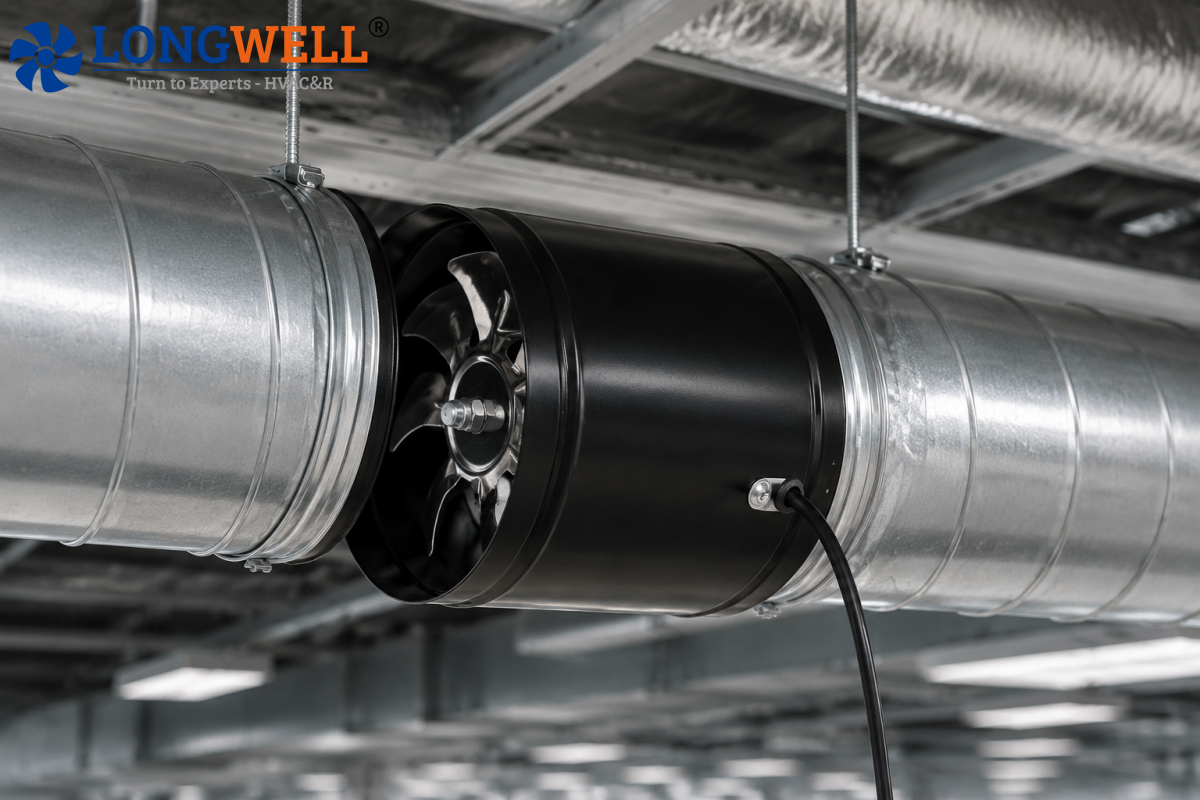
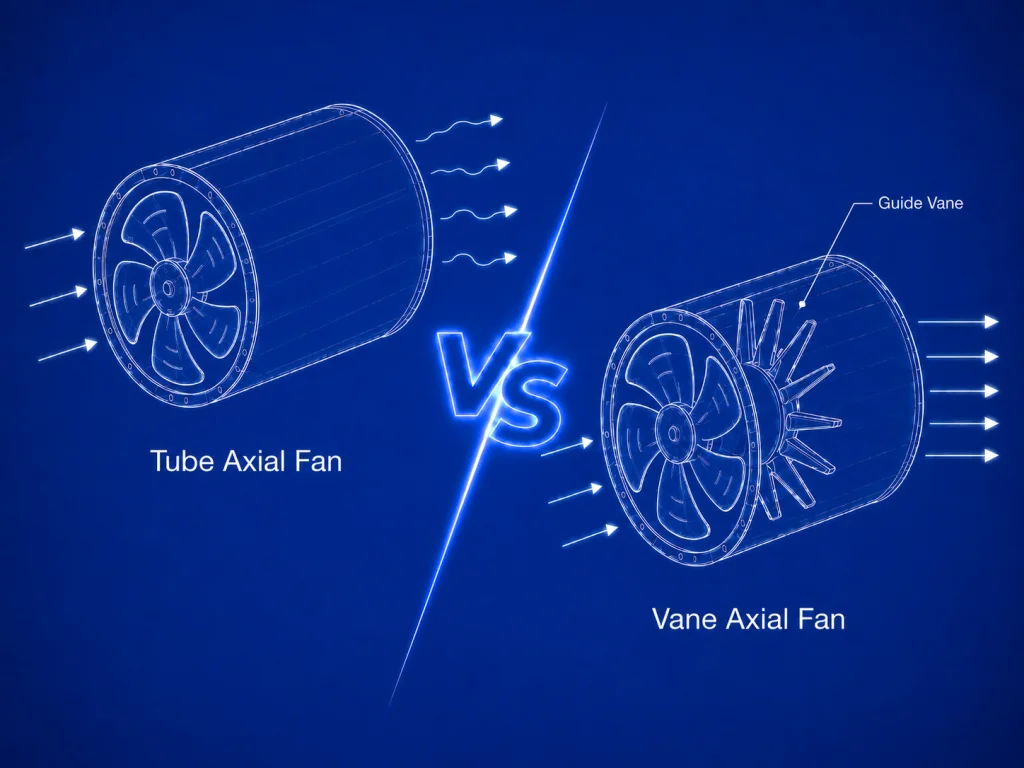
A vane axial fan is designed to provide higher pressure capability while maintaining the high airflow characteristics of axial fan designs. The main components of a vane axial fan include the impeller, motor, cylindrical housing, and guide vanes. It uses an impeller installed inside a cylindrical housing to move air.
During operation, the rotating impeller transfers energy to the high-velocity airflow. The guide vanes straighten the air as it leaves the impeller, reducing turbulence. This design makes vane axial fans suitable for applications with higher system resistance.
Pressure Capabilities
The biggest advantage of a vane axial fan is its ability to generate higher static pressure. The rotational energy recovered from the guide vanes enhances the aerodynamic efficiency. This special design enables the fan to maintain its airflow performance even when the resistance increases. In higher-pressure applications, a vane axial fan can provide more reliable performance.
What is a Tube Axial Fan?
Propeller Design and Housing
The tube axial fan consists of an impeller, motor, and cylindrical housing. The impeller is the key component responsible for generating airflow. When the blades rotate inside the housing, the air is accelerated along the fan axis. The lower complexity of the fan structure allows manufacturers to achieve relatively low costs.
The cylindrical housing provides structural support and helps maintain a stable airflow passage through the fan. Compared with open propeller fans, the enclosed housing improves airflow direction control and allows easier installation within systems.
Pressure Range
A tube axial fan is primarily designed for low- to medium static pressure applications. Their straight airflow path allows them to move large volumes of air efficiently. However, the simple impeller and housing design limits the ability to overcome high system resistance. When air passes through the impeller, the rotating blades generate both axial airflow and rotational movement. This reduces the fan’s ability to convert motor power into useful static pressure, as part of the airflow power is lost as turbulence. The tube axial fans are better suited for systems where airflow volume is the priority and pressure demand remains relatively low. Their simpler structure also provides advantages in maintenance and installation flexibility.
Vane Axial Fan vs Tube Axial Fan: Key Differences
Static Pressure and Airflow
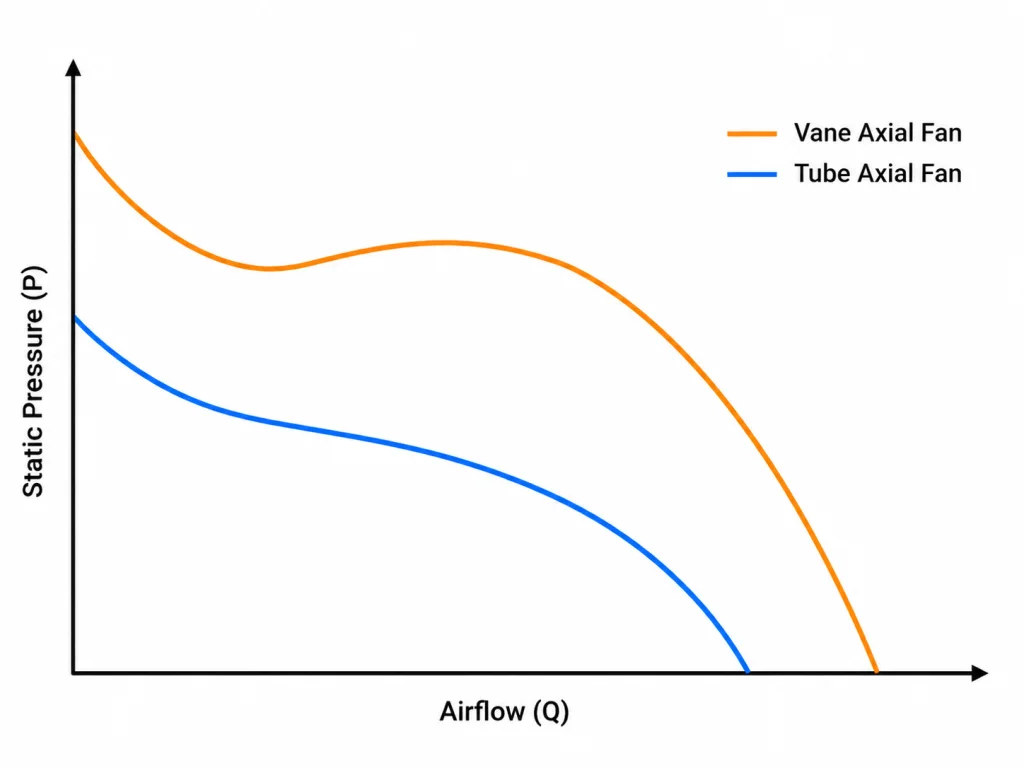
Both vane axial fans and tube axial fans can deliver high airflow volumes. Their main difference lies in static pressure capability. The guide vanes behind the impeller reduce airflow swirl and improve pressure recovery, allowing the fan to maintain performance in duct systems. Tube axial fans provide excellent airflow capacity in low-resistance systems but experience a faster performance drop as static pressure increases. The following PQ curve shows the working trend between these two axial fans.
Noise Levels
In practical applications, the noise level impacts comfort and safety. Vane axial fans operate quietly because their guide vanes streamline airflow. This feature reduces the turbulence and benefits environments where low noise is important. Tube axial fans produce more noise at higher airflow rates. They may cause a higher noise level because of the turbulence around the impeller.
Cost and Value
Cost depends on the fan’s design complexity and performance. Tube axial fans offer a simple construction, which lowers manufacturing costs. They provide value in applications where high airflow is needed, but pressure requirements are low. Vane axial fans cost more than tube axial fans. Their guide vanes and robust construction lead to the higher cost.
Installation and Maintenance
Both vane axial fans and tube axial fans feature compact cylindrical designs. They are all allowed flexible installation in ventilation systems. Tube axial fans feature a simpler design with fewer internal components. This makes installation easier and reduces maintenance needs. Vane axial fans have a more complex structure. With an additional guide vane, the maintenance worker needs to conduct regular checks to ensure that the vane axial fan operates efficiently.
Energy Efficiency
When selecting fan type, energy efficiency plays a key decision factor. In low-pressure applications, tube axial fans can provide efficient airflow at a lower initial cost. When operating against higher resistance, vane axial fans generally achieve better efficiency because of their recovery of rotational airflow energy.
| Tube Axial Fan | Vane Axial Fan | |
| Airflow Path | Straight airflow | Straight airflow with airflow recovery |
| Guide Vanes | No | Yes |
| Structure | Simple | More complex |
| Airflow Capacity | High | High |
| Static Pressure | Low to medium | Medium to high |
| Energy Efficiency | Moderate | Higher |
Key Differences in Pressure Handling
The main difference between a vane axial fan and a tube axial fan lies in how each handles pressure. Vane axial fans use guide vanes that straighten the swirling airflow after the impeller. This design recovers rotational energy and converts it into static pressure. A tube axial fan has a simpler structure. The airflow can pass straight through the housing. This imposes a limit on the generation of high pressure. As a result, vane axial fans can handle higher pressure compared to a tube axial fan when maintaining stable airflow.
How to Select the Right Axial Fan?
Choosing between a vane axial fan and a tube axial fan depends on the system requirements.
- Determine the airflow requirements. Airflow is typically measured in m³/h or CFM.
- Evaluating the total system resistance, including duct length, filters, dampers, and other components that affect airflow performance. These are the system resistances that need to be calculated.
- Identify the axial fan working environment. Factors such as temperature and humidity will affect the selection. If working in an industrial environment, an additional protection rating should be required.
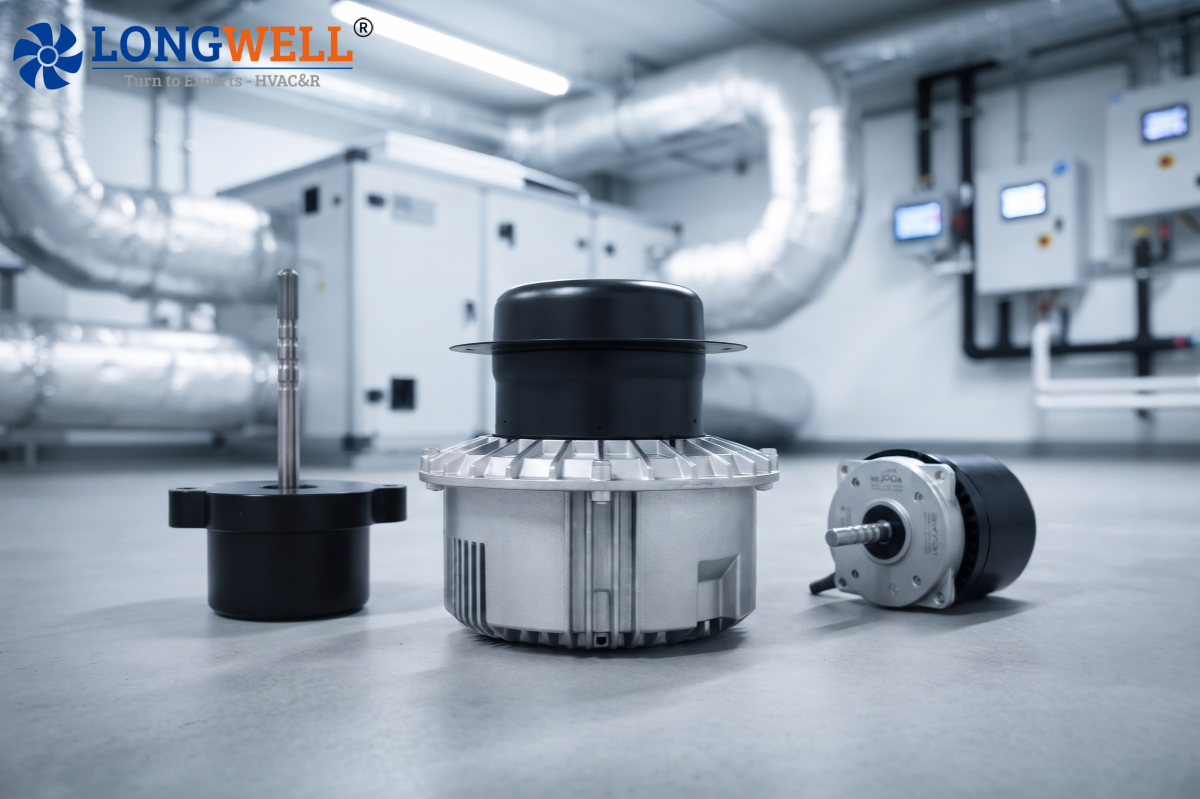
- Choose the motor for lower maintenance frequency and high efficiency. The EC motor typically has higher efficiency. If engineers do not know which EC axial fan to choose, LONGWELL provides an EC fan calculator. By entering the airflow and static pressure, you can get the sized LONGWELL EC fan SKU.
- Decide between a vane axial fan and a tube axial fan. They have different suitable applications.
Vane vs Tube Axial Fans Applications
Applications of Vane Axial Fans
Vane axial fans are commonly used in higher system resistance applications while maintaining large airflow performance. The guide vane improves pressure recovery and allows the fan to operate more efficiently.
- HVAC Duct Systems: Large commercial HVAC systems often include filters, dampers, and extended duct networks that create additional pressure losses.
- Tunnel and Underground Ventilation: It needs to move air through long airflow paths with significant resistance. Vane axial fans provide the pressure capability needed for smoke extraction, fresh air supply, and continuous ventilation.
- Industrial Process Ventilation: Industrial facilities may require airflow through complex ductwork, filtration equipment, or exhaust systems.
- Large Cooling Systems: Equipment cooling applications, such as power generation facilities or industrial machinery, often require fans to overcome resistance from heat exchangers or protective structures.
Applications of Tube Axial Fans
Tube axial fans are widely used in applications where high airflow volume is required, but system pressure demand is relatively low. Their high airflow capacity makes them effective for moving large volumes of air through short ventilation paths. Typical applications include:
- General Exhaust Ventilation: Tube axial fans are frequently used for removing heat, fumes, and contaminated air from factories, warehouses, and commercial spaces.
- Agricultural Ventilation: Greenhouses and stockbreeding facilities often require continuous air circulation with limited airflow resistance.
- Cooling and Air Circulation: For equipment cooling or general air movement where there are minimal restrictions, tube axial fans can deliver sufficient airflow without requiring the additional pressure capability of a vane axial fan.
- Short-Distance Ventilation Systems: With simple duct layouts, the system resistance is lower.
LONGWELL Axial Fan Solutions
LONGWELL’s engineering cases highlight real-world success. Clients reflect that using LONGWELL products can reduce energy costs and improve system reliability. Our global support technical team ensures assistance and fast response.
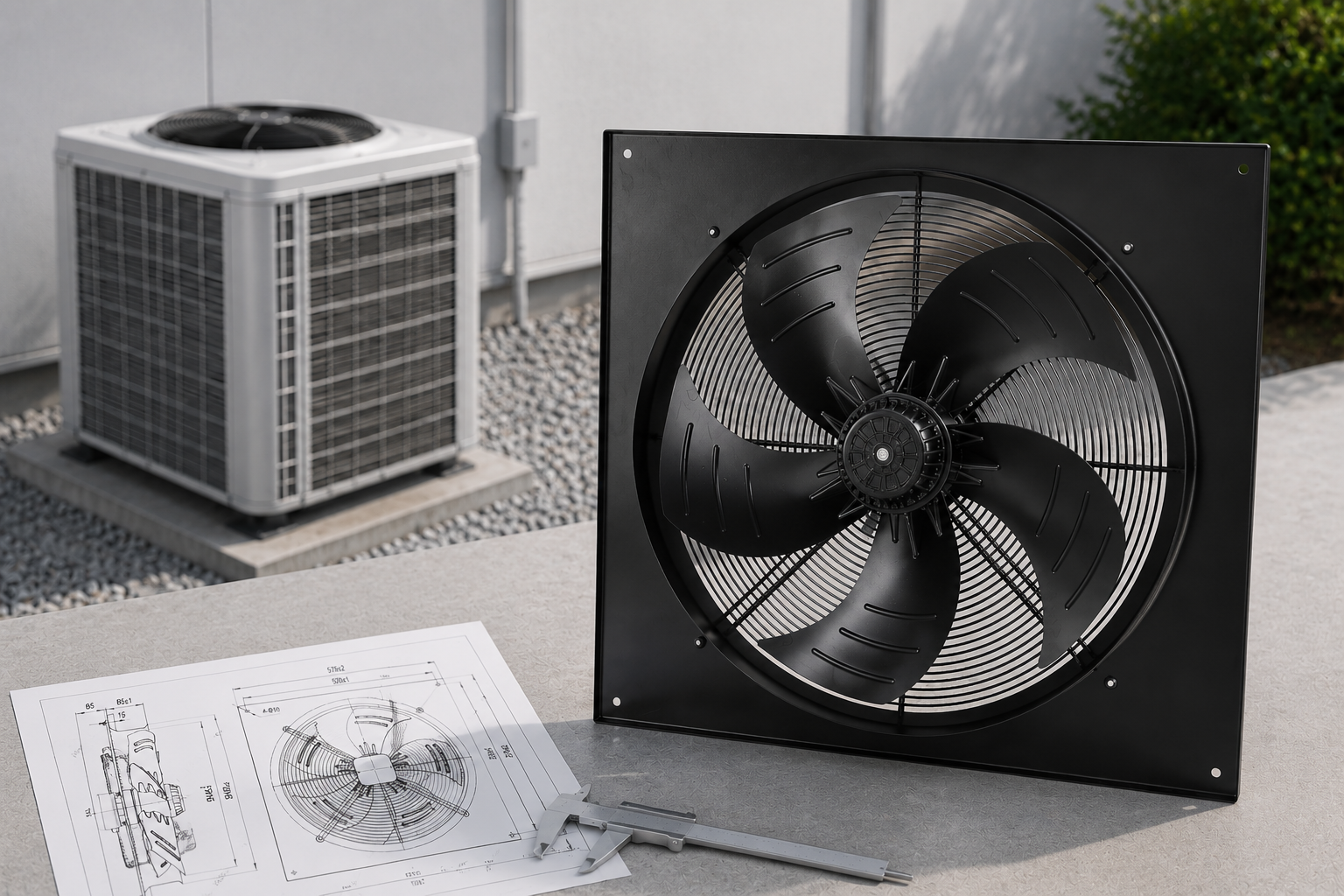
In one typical 10,000 m² cold storage configuration, LONGWELL EC axial fans play a crucial role. They are the main components of outdoor condenser units and industrial NH₃ cold storage. The selected size from Ø400mm to Ø800mm. Among them, the LWAE3G-500 is designed for R744 (CO₂) refrigeration systems, providing reliable airflow support for high-pressure cooling applications.
LONGWELL’s solutions adapt to a wide range of system requirements. LONGWELL standard axial fans come in AC, DC, and EC motor options, allowing engineers to select the best fit for each project. The product range covers impeller diameters from compact models for tight spaces to large units for industrial-scale airflow.
From standard refrigeration equipment to customized OEM projects, LONGWELL provides fan selection support, performance optimization, and application-specific solutions to help choose the right axial fan for their system requirements.
FAQs
Which fan type works best for high-pressure environments?
The vane axial fan has an additional guide vane and performs better in high-pressure environments.
Are vane axial fans noisier than tube axial fans?
The answer is completely the opposite. The guide vane of vane axial fan can reduce the turbulence noise. Tube axial fans may produce more noise at higher airflow rates due to increased turbulence.
What factors should engineers consider when choosing between vane axial fans and tube axial fans?
Engineers should evaluate airflow requirements, static pressure needs, installation space, noise levels, and budget. Whether the axial type is suitable for the application depends on system resistance and desired performance.
How does fan efficiency impact energy costs?
Higher efficiency means less energy wasted. Vane axial fans recover more energy, while tube axial fans offer moderate efficiency. Selecting the right fan improves energy savings and system performance.