High Efficiency Plug Fans for HVAC & Air Handling Units: The Ultimate Guide

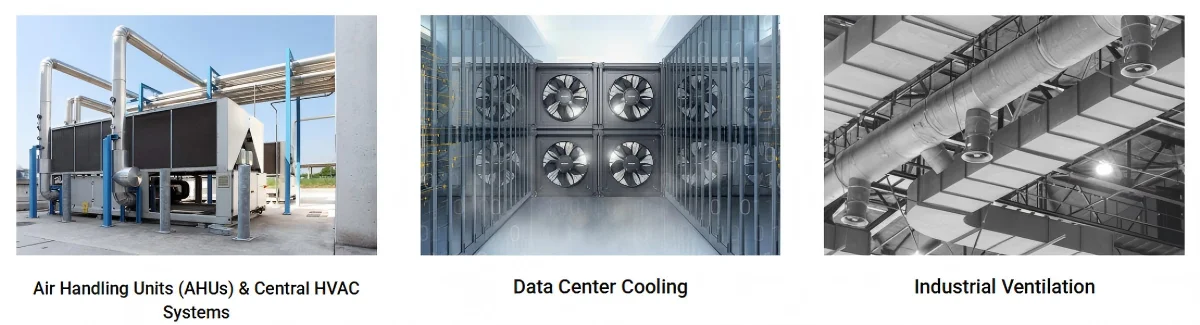
In the competitive landscape of HVAC engineering, the shift from traditional belt-driven housed fans to direct-drive plug fans (also known as plenum fans) is not just a trend—it’s an industry standard. Whether you are designing a new Air Handling Unit (AHU) for a data center or retrofitting an aging ventilation system in a commercial building, the fan choice dictates the system’s overall efficiency, hygiene, and maintenance profile.
You are likely looking for a solution that balances high static pressure capabilities with minimal energy consumption. This guide explores the engineering behind high-efficiency plug fans, particularly EC plug fans, and details how to select the right unit from a reliable plug fan manufacturer to optimize your air movement strategy.
What is a Plug Fan and Why is it Essential for Modern HVAC?
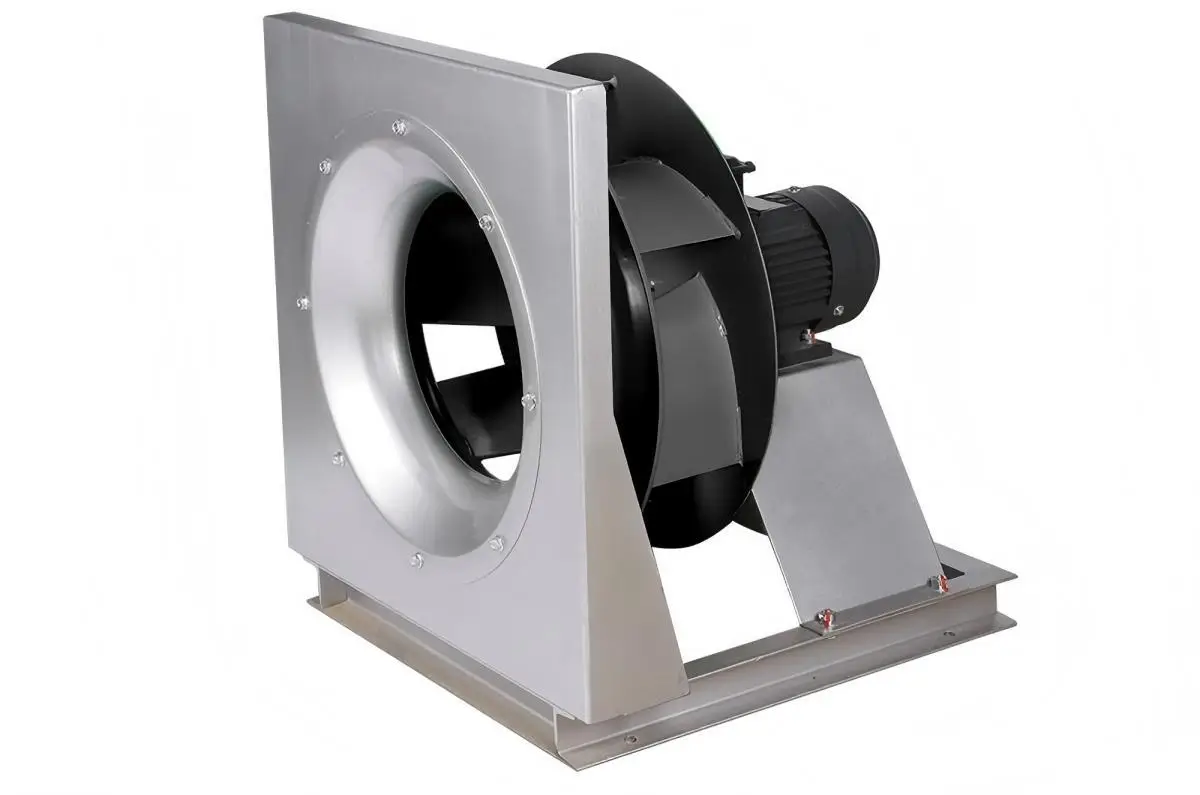
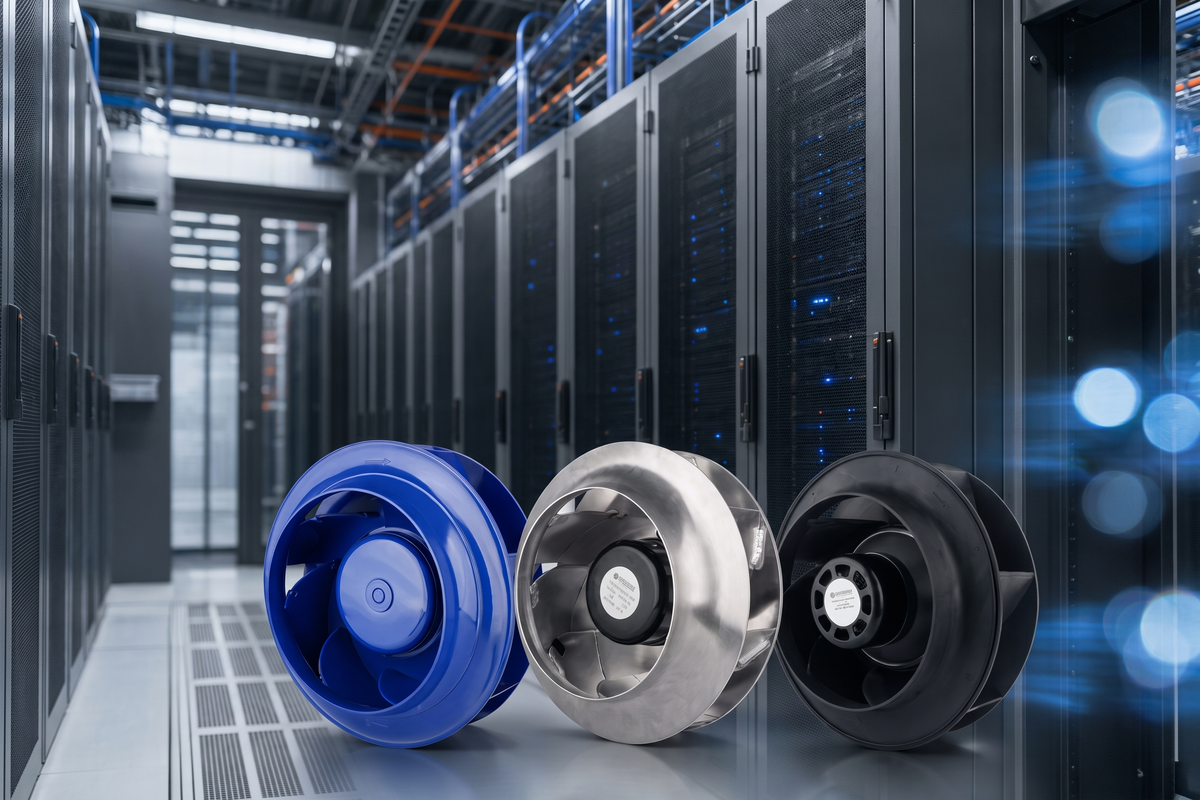
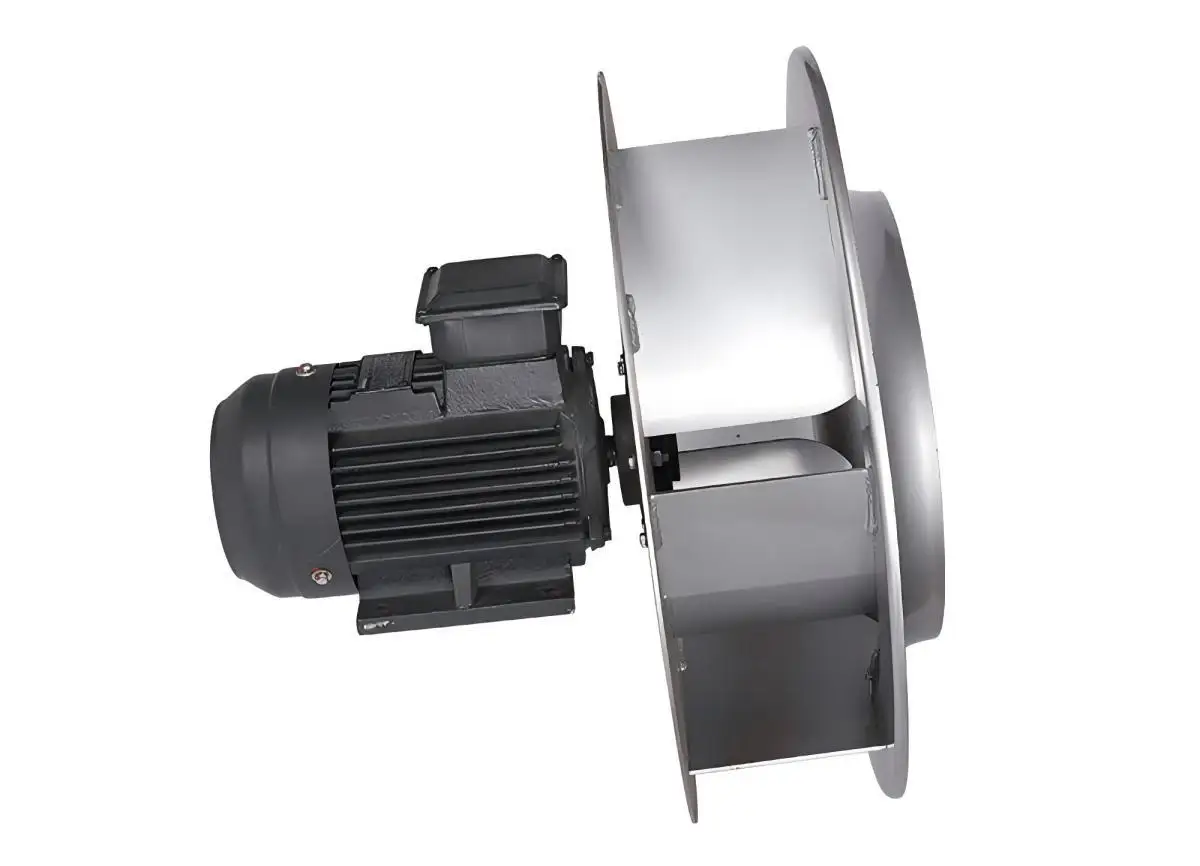
A plug fan is essentially a centrifugal fan without the traditional scroll housing. Instead of directing air through a focused outlet, the plug fan features a backward curved impeller that pressurizes the entire plenum chamber in which it sits. This design allows for multiple duct take-offs from a single plenum box, making it incredibly versatile.
Understanding the “Unhoused” Design (Plenum Fans)
Unlike housed fans that accelerate air into a scroll, a plug fan relies on the plenum structure itself. This “unhoused” configuration is critical for applications where space is at a premium. By eliminating the bulky housing, you gain flexibility in duct design. The air is drawn into the inlet cone and discharged radially 360 degrees, pressurizing the casing evenly. This is particularly advantageous in AHUs where you need uniform airflow across a heat exchanger or filter bank.
Direct Drive vs. Belt Drive: The Maintenance Revolution
If you have ever dealt with the downtime caused by snapped belts or worn pulleys, you know the pain of traditional systems. Plug fans are almost exclusively direct-drive. The impeller is mounted directly on the motor shaft.
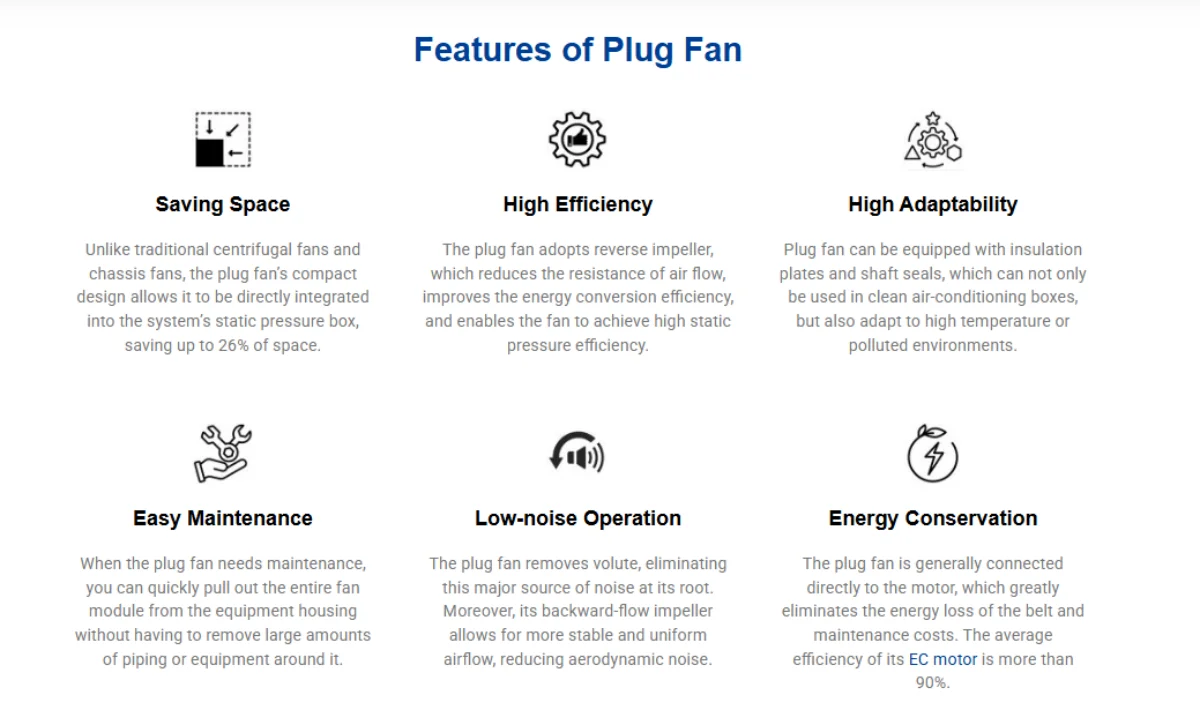
· No transmission losses: You don’t lose energy through belt friction.
· Zero belt dust: This is a game-changer for cleanrooms and hygienic applications (hospitals, food processing) where particulate matter from wearing belts is unacceptable.
· Reduced maintenance: No belts to tension, align, or replace.
Why They Are the Standard for Air Handling Units (AHU)
Modern AHUs require high efficiency and compact footprints. Plug fans deliver on both. Their ability to handle significant static pressure drops—caused by HEPA filters and cooling coils—while maintaining a compact form factor makes them the default choice for AHU manufacturers. Furthermore, the open design simplifies cleaning, as there are no hidden corners inside a scroll housing where mold or dust can accumulate.
 Key Types of Plug Fans: AC, DC, and EC Technologies
When sourcing from a plug fan OEM factory, you will typically encounter three main motor technologies. Understanding the difference is vital for balancing initial cost versus long-term operational savings.
AC Plug Fans: Robust and Traditional
AC (Alternating Current) plug fans are the traditional workhorses. They are reliable, cost-effective to manufacture, and simple to operate. If your project is budget-sensitive and does not require variable speed control, an AC backward curved plug fan is a solid choice. However, they typically lag in energy efficiency compared to newer technologies and often require external VFDs (Variable Frequency Drives) for speed control.
EC Plug Fans: The Pinnacle of Energy Efficiency
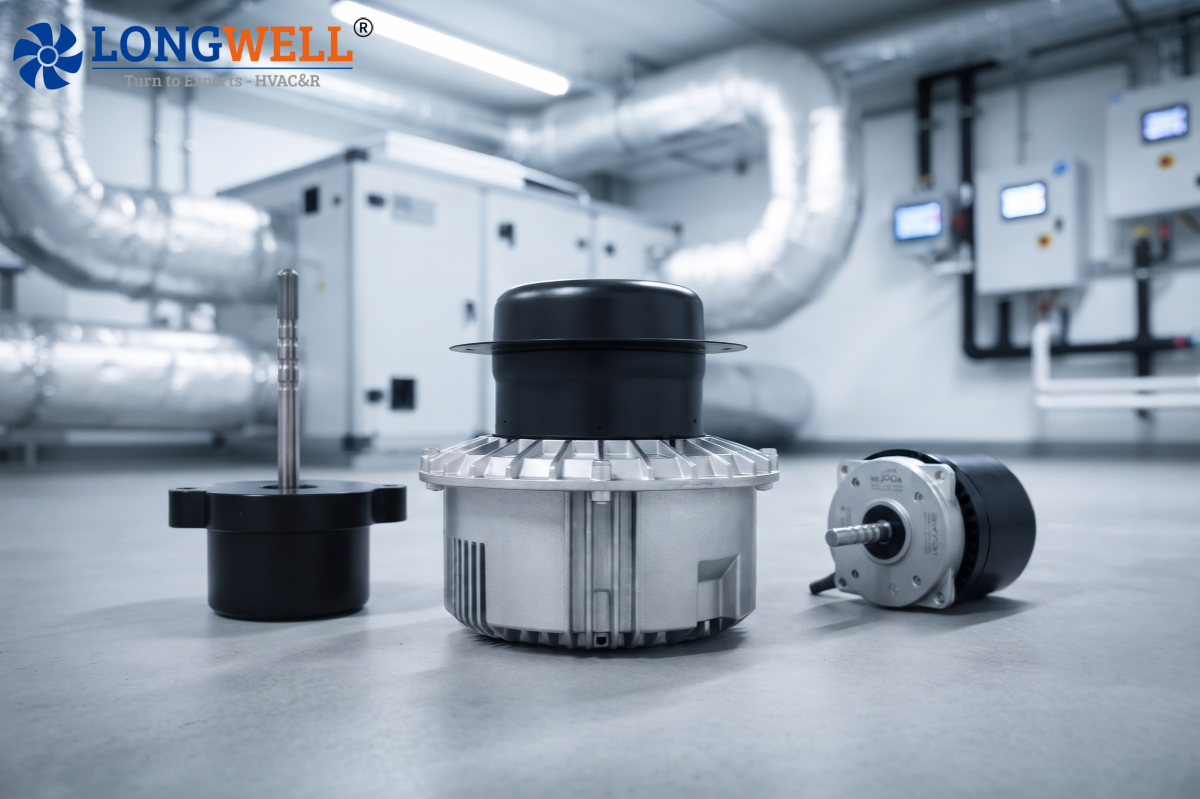
EC (Electronically Commutated) plug fans combine the best of AC and DC technologies. They run on mains voltage (AC) but use permanent magnets and integrated electronics to operate like a DC motor.
· Efficiency: EC motors can achieve efficiency levels of up to 90%+, far exceeding IE4 standards.
· Control: They come with built-in speed control (0-10V, PWM, or Modbus), allowing you to dial in the exact airflow required without an external VFD.
· Soft Start: This reduces mechanical stress on the impeller and electrical spikes on the grid.
Backward Curved Impeller Design Explained
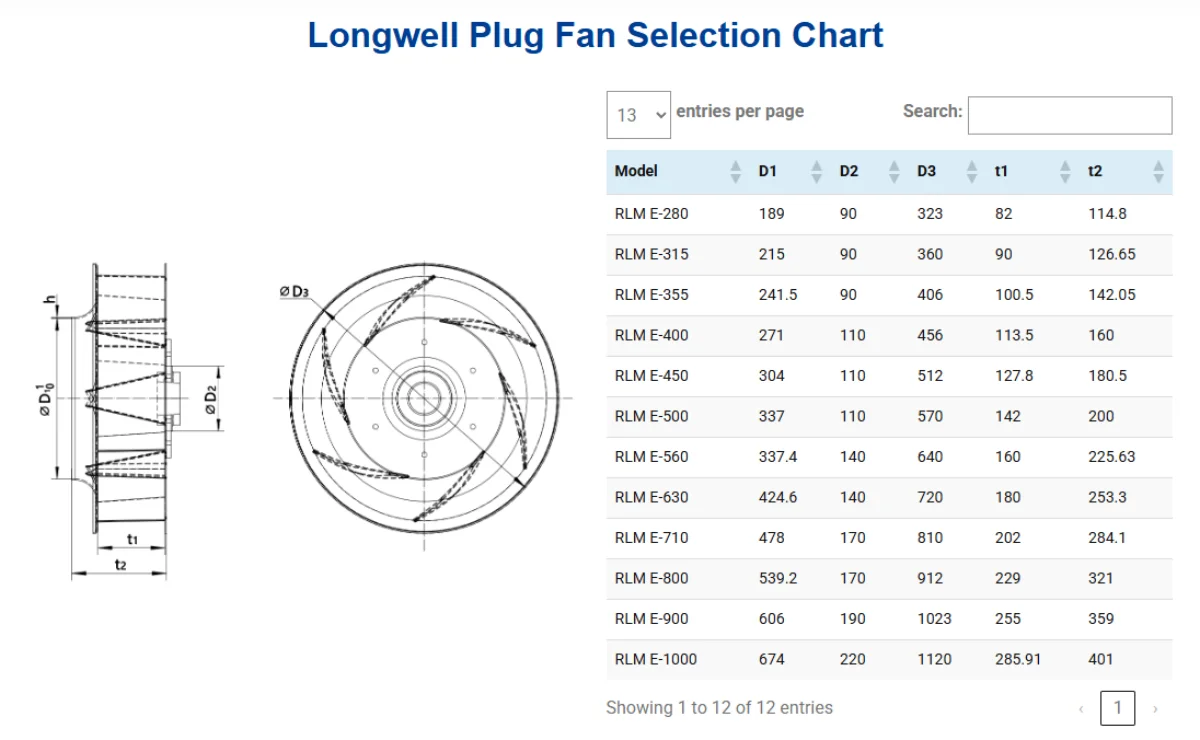
The geometry of the impeller defines the fan’s character. Backward curved plug fans are designed to be “non-overloading.” This means that as static pressure decreases and airflow increases, the power consumption does not spike dangerously. This stability makes them safer and more predictable for variable air volume (VAV) systems compared to forward-curved options.
|
Feature |
AC Plug Fan |
EC Plug Fan |
Belt-Driven Housed Fan |
|---|---|---|---|
|
Energy Efficiency |
Moderate |
High (Up to 90%+) |
Low (Belt losses) |
|
Speed Control |
Requires External VFD |
Integrated |
Requires VFD + Pulleys |
|
Maintenance |
Low (Bearings) |
Very Low |
High (Belts/Pulleys) |
|
Hygiene |
Good |
Excellent |
Poor (Belt dust) |
|
Initial Cost |
Low |
Moderate |
Moderate/High |
Top Benefits of Upgrading to High-Efficiency Plug Fans
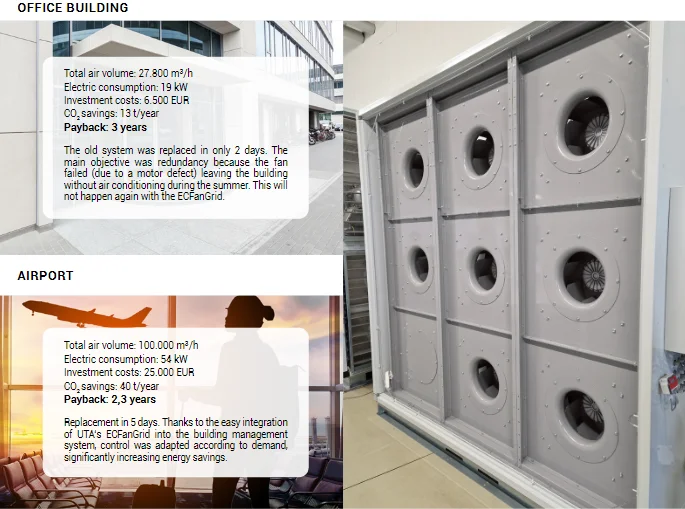
Retrofitting existing air handlers with a Fan Array (a wall of multiple smaller plug fans) is a growing trend. Here is why facility managers are making the switch.
Energy Savings and ROI Analysis
Switching from an old AC belt-driven fan to a modern EC plug fan typically yields energy savings of 20% to 50%. While the initial unit cost of an EC fan is higher, the Return on Investment (ROI) is often realized within 12 to 24 months through reduced electricity bills alone.
Hygienic Design and Easy Cleaning (Crucial for Cleanrooms)
In sectors like pharmaceuticals and electronics manufacturing, air purity is non-negotiable. The open structure of a plug fan allows maintenance teams to easily access and wipe down the impeller and the motor surface. There is no scroll housing to trap contaminants.
Compact Footprint for Retrofit Projects
Space is often limited in mechanical rooms. Plug fans are significantly shorter in length than housed fans. This compactness allows engineers to fit high-capacity ventilation into tighter plenums, or to add extra filtration stages within the same AHU cabinet dimensions.
Selecting the Right Plug Fan Manufacturer and OEM Factory
Not all fans are created equal. When choosing a partner for your supply chain, specifically a plug fan manufacturer, you need to look beyond just the catalog specs.
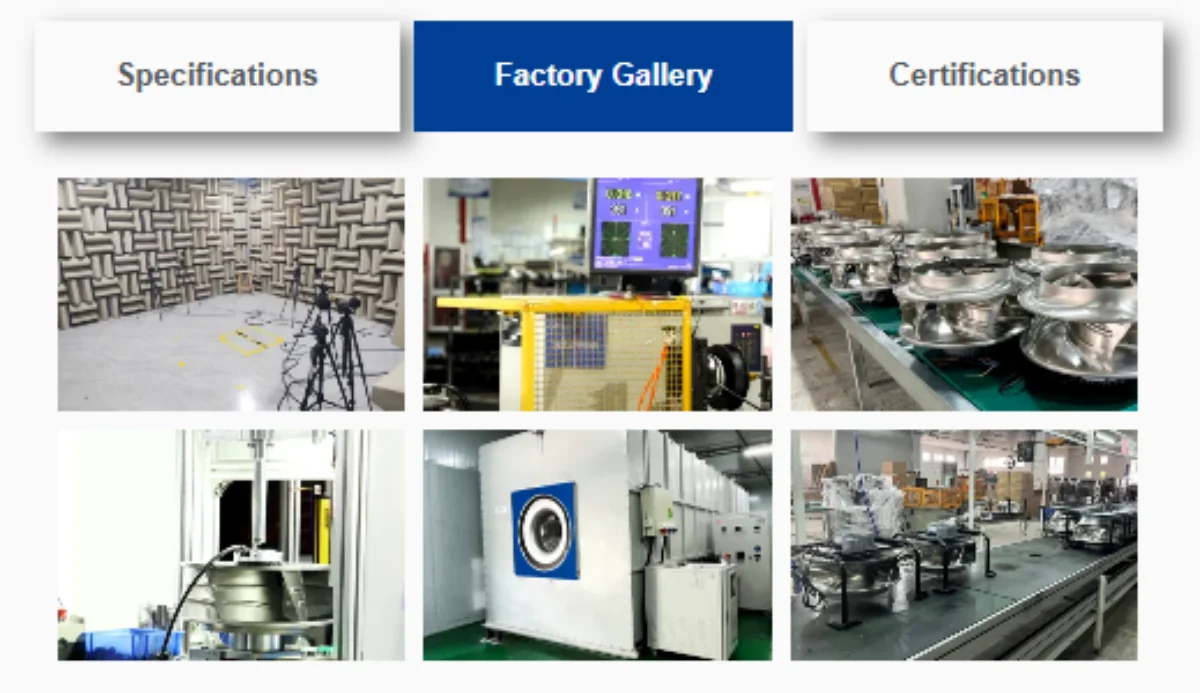
Production Capabilities and Quality Control
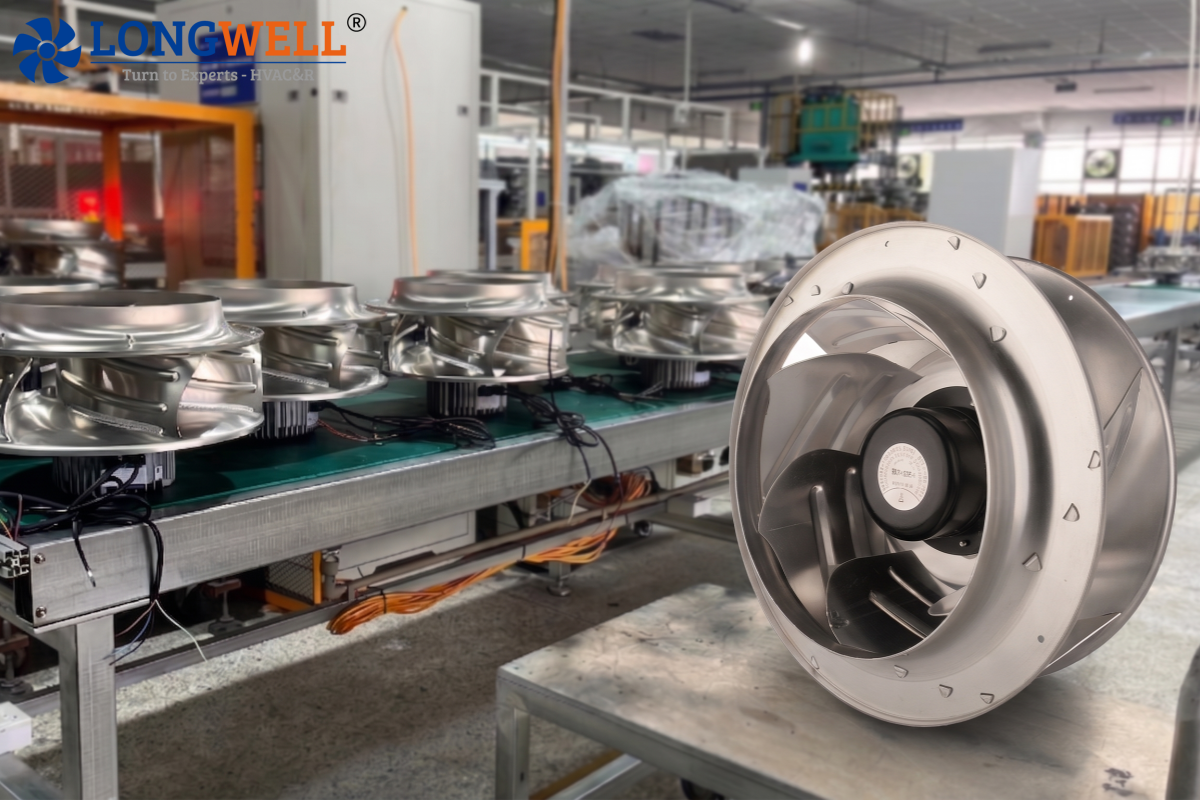
A reputable plug fan OEM factory should have robust testing facilities. Ask your supplier if they perform dynamic balancing on every impeller and if they have an AMCA-accredited laboratory for aerodynamic performance testing. The durability of the impeller—often made from aluminum alloy or reinforced composite—is critical for safety at high RPMs.
Customization Options (Voltage, Mounting, Control)
Your project might require specific voltage inputs (e.g., 480V 3-phase for US industrial sites) or customized mounting brackets. A flexible manufacturer will offer tailored solutions, including specific IP ratings (IP54/IP55) for harsh environments.
Brand Spotlight: About LONGWELL
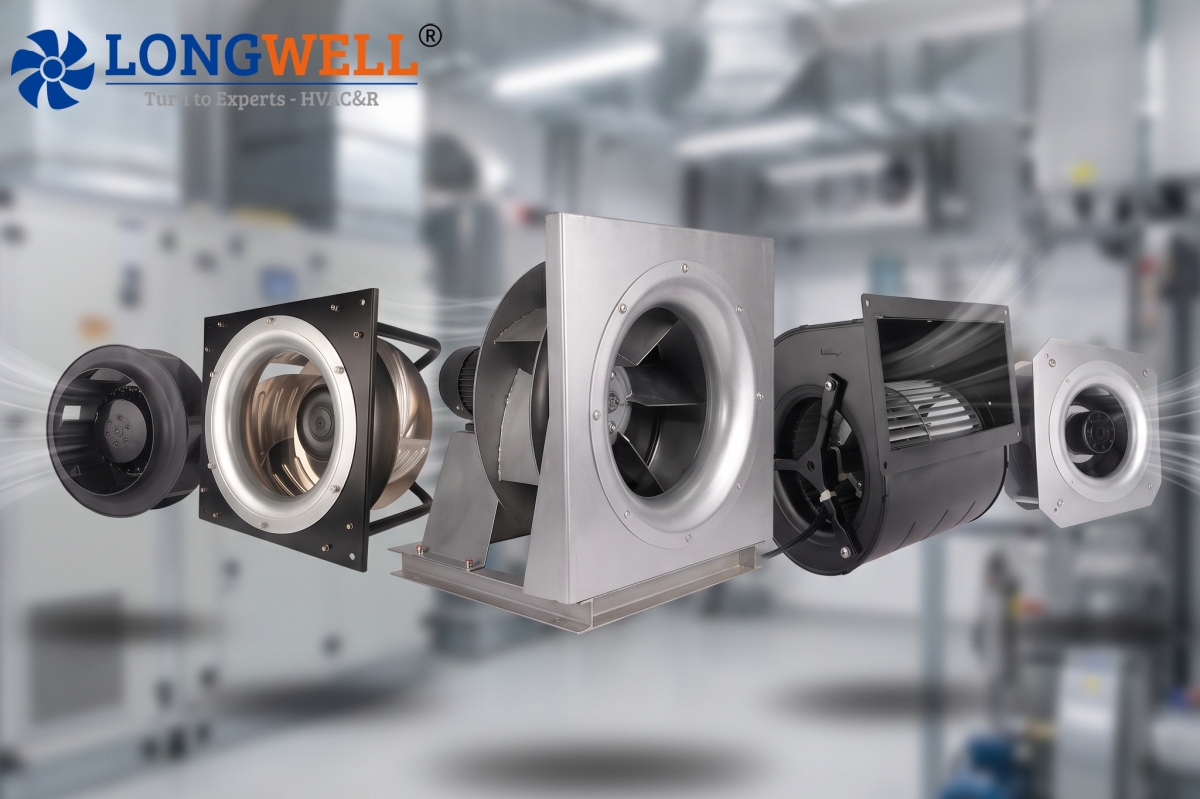
Ningbo Longwell Electric Technology Co., Ltd. (Website: www.longwellfans.com) is a premier professional manufacturer of HVAC fans and motors. We specialize in delivering high-performance aerodynamic solutions, including EC/DC/AC plug fans, centrifugal fans, axial fans, and cross-flow fans.
Our products are engineered for demanding applications in HVAC, refrigeration, cold chain, and industrial purification. With a strong focus on innovation and quality, Longwell serves as a trusted OEM partner for global clients, ensuring every plug fan meets rigorous international standards for efficiency and reliability.
How to Size and Select the Best Plug Fan for Your Application
Proper sizing is the difference between a quiet, efficient system and a noisy, energy-hogging nightmare.

Calculating Airflow (CFM) and Static Pressure
Start with your duty point: What is the required Airflow (CFM or m³/h) and the Total Static Pressure (Pa or in.wg)? Remember to account for the pressure drop across all system components (filters, coils, dampers, ducts). A backward curved plug fan is ideal for medium-to-high pressure applications. You can explore our range of Plug Fans here to match your specific duty point.
Noise Considerations in Sensitive Environments
Sound power levels are critical. Because plug fans lack a housing that naturally attenuates some high-frequency noise, the design of the plenum and the impeller’s aerodynamics play a huge role. Look for impellers with optimized blade profiles that reduce turbulence.
Tip: EC fans can be run at lower speeds during off-peak hours, significantly reducing noise levels compared to constant-speed fans.
Control Systems: PWM, 0-10V, and Modbus
Modern building management systems (BMS) require smart components. EC plug fans from Longwell come equipped with intelligent control interfaces.
· 0-10V / PWM: Simple analog control for speed adjustment based on sensor inputs (e.g., pressure or CO2 sensors).
· Modbus (RS485): Allows for digital communication, providing real-time data on fan speed, power consumption, and error status directly to your BMS.
 Installation and Maintenance Best Practices
Even the best EC plug fan will underperform if installed incorrectly.
Optimizing the Plenum Chamber
The distance between the fan inlet and the plenum wall, as well as the fan discharge and the cabinet walls, is crucial. If the walls are too close to the impeller, it chokes the airflow and increases noise (“system effect”). Ensure you follow the manufacturer’s guidelines for minimum clearance distances.
Vibration Isolation and Structural Support
Direct-drive fans run at high speeds. Although they are balanced, mounting them on proper vibration isolators (spring or rubber mounts) is essential to prevent structure-borne noise from traveling through the building.
Routine Checks for Long-Term Reliability
While plug fans are low maintenance, they are not “no maintenance.”
1. Check the impeller: Look for dust buildup which can cause imbalance.
2. Inspect connections: Ensure electrical connections remain tight.
3. Listen: Listen for bearing noise, which is usually the first sign of wear in a direct-drive motor.
FAQ: Common Questions About Plug Fans
Q1: What is the main difference between a plug fan and a centrifugal fan?
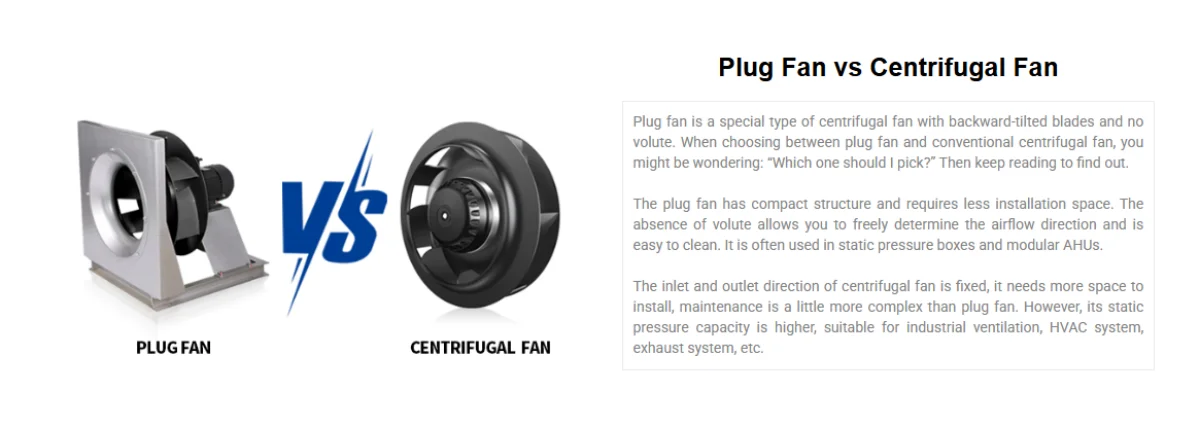
A: A plug fan is a specific type of centrifugal fan that lacks a scroll housing. It is designed to be installed directly inside a plenum or AHU casing, pressurizing the entire box, whereas a housed centrifugal fan directs air to a specific outlet.
Q2: Can I replace my old belt-driven fan with a plug fan?
A: Yes, this is a very common retrofit application. Replacing a belt-driven unit with a direct-drive EC plug fan (or a fan array) improves efficiency, eliminates belt dust, and frees up space inside the air handler.
Q3: Why are backward curved impellers used in plug fans?
A: Backward curved plug fans are non-overloading and highly efficient. They generate high static pressure, which is necessary to push air through filters and coils in an AHU, and they are structurally robust for high-speed operation.
Q4: What are the benefits of using an EC plug fan over an AC model?
A: EC plug fans offer superior energy efficiency (often exceeding 90%), integrated speed control without external VFDs, lower noise levels at partial loads, and a longer lifespan due to lower operating temperatures.
Q5: How do I choose a reliable plug fan manufacturer?
A: Look for a manufacturer or OEM factory like Longwell that offers comprehensive performance data, certification (such as CE, UL, or AMCA compliance), and customization options for voltage and mounting. Reliable technical support for sizing is also a key indicator.
Q6: What is a “Fan Array” or “Fan Wall”?
A: A Fan Array involves using multiple smaller plug fans in parallel to replace a single large fan. This provides redundancy (if one fan fails, the others continue to run), easier installation (smaller units are easier to carry), and more uniform airflow.